This week I am coming at you live from sunny Wales, where I’ve escaped for a bit of a break from the old routine. It’s been a fairly hectic couple of months and with opening looming excitedly on the horizon I can’t imagine it’s going to get any less so. The weather for the first day was a bit stormy so there was a lot of TV watched, including two good films (A Complete Unknown and Deliver Me From Nowhere). Both Timothy Chalamet as Bob Dylan and Jeremy Allen White as Bruce Springsteen were excellent, even keeping me awake past 10.30pm which is a miracle. A couple of glasses of wine, good company and good music made for a relaxing start to the long weekend.
Even if it was only a three and a half day week for me it felt busy, with every day in the office for various meetings. I am so over internal meetings on Teams that I’d rather brave the commute and do them in person. This meant, too, that I got to see the site twice this week – the changes over even a week are so fast, with railings in place and things coming together. The novelty of being able to see people’s faces on what’s essentially a high tech phone call has very much worn off.
On Wednesday I actually got to remind myself why I got into this career, which was to get people all excited about visiting not just us but all the other spaces where they can see art and culture and history and stuff. I also like hearing their ideas as they look at the world in a very different way to me. It’s been a while since I’ve delivered a talk of any kind, and I do love it.
The session in question was an online chat with the fine art, graphic design and photography students from Medway School of Art and came about thanks to a chat with lovely Babs at the World Skills UK Finals last year. Serendipity is a wonderful thing! I heard some of the students’ ideas about what matters to them and how they’ll communicate that through their various art forms, and told them in turn all about the Centre. I can’t wait to get them all on site.
We also met the next tranche of our volunteers at a session on Wednesday afternoon: illustration and animation students, people who were volunteers in our old home in Granary Square, people who loved Quentin Blake’s illustration growing up, people who want to get their hands dirty in our new gardens. There’s so many poeple who want to get involved, and it’s really heartening at times of stress to meet them.
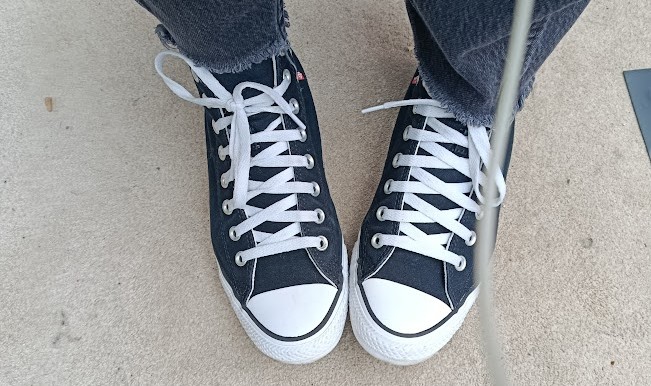
The ‘young people’ in the office telling me my outfit on Thursday ‘slayed’ and I was dressed very Gen Z. Basically I was wearing what I’d worn in the 90s as a Gen Xer. Jeans, slip dress, baseball boots and top. There’s nothing new under the sun… But I’ll take it from the cool kids I work with!
Coach drivers who tell you to look at the pretty sheep when you’re stuck in traffic.
Buying Easter eggs for my team as they’re amazing.
Hanging out with cuddly dogs.
A random evening in the pub with Jill and Miriam midweek – prosecco and a lot of giggling like idiots.
National Express being much classier than the Megabus. No one was throwing up, for a start.
Long walk with Thing 2 through Tawney Common last Sunday. Sometimes we chat, sometimes we have our earbuds in and just walk but whatever – it’s lovely that she wants to spend time doing things with her mum!
This week I’m looking forward to another four day week, with a dinner date with Kersti (one of my oldest friends) and Nicky (back from NZ for holiday – it’s been wayyyy too long!)
Same time next week, and may the Easter lagomorph bring you all the Mini Eggs your heart desires.
Kirsty
What I’ve been reading:
Light Perpetual – Francis Spufford Restless in the Grave/Bad Blood/Less Than a Treason/No Fixed Line/Not The Ones Dead – Dana Stabenow Silent Bones – Val McDermid
Well, gang, this has been a week indeed for a whole variety of reasons, both professional and personal. I won’t go into too much detail but suffice to say that by Saturday I really needed some moments of sanity.
The week started with a lovely evening in Hackney with friend Rhiannon, where we had tickets to watch the recording of an episode of Zack Polanski’s podcast. He was interviewing the Green party candidates for Mayor of Hackney, who are running on a presidential style two-for-one ticket. The mayoral candidate, Zoe Garbett, is running in Dalston and is a member of the London Assembly. The candidate for Deputy Mayor (running in Hackney Downs) is Dylan Law and he’s remarkable – passionate about representation in politics and about seeing people like him reflected. Both were articulate, engaged with their communities and almost had me wishing I lived in Hackney so I could vote for them rather than the omnishambles of Epping Forest District Council. We had dinner at Nando’s beforehand and put the world to rights as usual – it’s wonderful to have such cheerleaders in my life, especially at the moment.
I also got to onboard our new Community Gardener on Monday and visit the Centre for the first time in a while. My Creative Studio is looking fabulous – light and airy, and the creamy yellows and blues I chose for the joinery and floors look lovely. I wanted a space that would work for all our visitors, rather than being aimed at adults or children, so thought in neutral tones. I can’t wait to actually start delivering programmes in there!
Tuesday afternoon saw three of us meeting about 15 of our successful volunteer applicants, talking to them about what volunteering at the Centre will look like. It’s so heartening to have had such a great response from people all over London, from 18 year olds through to retirees, all of whom are excited about being part of this new team.
Wednesday and Thursday were freelance days, supporting a sustainable business expo at the Business Design Centre in Angel. As they were early starts this meant I had two nights in a hotel – blissfully peaceful with triple glazing and only a few minutes from the venue although apparently my location failed to update on Life360 so I could have been ANYWHERE. These are busy days so not having to commute at the end was a real treat. I was on speaker registration and tannoy announcements, using my smily voice at all times and generally being helpful. I must have been being particularly charming, as I got asked out for a drink by one of the exhibitors – a very bluff Jeremy Clarkson type, so I politely declined. It’s so long since anyone chatted me up that I probably wouldn’t have noticed if he hadn’t actually made the request. I suspect he was impressed with my charming ‘drink up and go home’ technique at the drinks reception the previous evening.
The nice lady at Pret gave me my hot chocolate on the house too, for being friendly and cheerful at 7am. Despite swearing I absolutely did NOT need any more notebooks and pens, I came home with seven of each and some nice chocolate. I don’t think I need to buy another notebook until I retire but you never know…
I’ve said before that supporting these events is a really good way to remind yourself that there’s a world outside the one you work in – chatting to people from across the UK about their industries, recommending places to eat of an evening, catching up with people you only see a couple of times a year at these things. One event last year, World Skills, has led to a project with Medway School of Art, so they can lead back to your day job as well.
Friday was back to work with a bump – almost 100 emails lurking in my inbox which all needed to be dealt with, guest lists to be created for upcoming events, questions to be answered, dependencies to be considered. Still, it was Friday and I wound up the day with a five mile walk spotting deer and bunnies in the fields. It’s a good way to clear your head at the end of the week as well as getting 15000 steps in on a desk day.
I decided that Saturday needed to be a day of relaxation, so Miriam and I headed off to Harlow where we installed ourselves in Starbucks to catch up with some admin before heading to the Nailbar for her to get a manicure and me to get a pedicure in the hope that the sun will come out soon….I chose a slightly sparkly orange/red colour for my toes and they make me happy. I never get my fingernails done as they get trashed with typing and crochet but a good pedicure is a treat. I even got my eyebrows done and my fringe trimmed so I can see out of it rather than peering at people. Miriam made me avocado and bacon on toast for lunch and in the afternoon we went out again, did some more admin in a friendly pub where we met an excellent black labrador and an enormous Chinese Red Dog who was very generous with his paw. Thing 2 cooked dinner and I felt much more amenable to everything.
Today has long walks, finishing off the admin and probably laundry – but I feel better about the whole thing,
I have been asked to point out that I did, in fact, do something of note in week 313 and that was to attend a Best Practice sharing session on making our arts programmes more inclusive. Facilitated by the fabulous Kate Oliver (hi Kate!) who, as well as being a freelance educator extraordinaire, was my predecessor in my current role. The session explored what being radically inclusive looked like for people working in community and SEND settings, and as always was filled with excellent insights from people working in the field, and sparked great discussions and a call for dismantling the patriarchy. Hurray!
It was held at Tate Modern on the 5th floor on a glorious spring day, so we were treated to London looking shiny in the sunshine. I treated myself to an orange hot chocolate from a nice lady with a van and watched the world go by for a while. I love watching people and boats and all the things happening around me in the sun, and then making my way back across the bouncy bridge to St Pauls.
This week I have spent a lot of time hanging out in Myddelton Square, near our new site, while we held public meetings about an aspect of our operations. I stationed myself on the door, greeting people and catching them again on the way out to make sure they went away with a smile. I have to say I was surprised to see a pair of woodpeckers in the trees in the middle of Islington as well as the ubiquitous parakeets, blue tits and pigeons. There was also a squirrel foraging for scraps who hung out with me for a while.
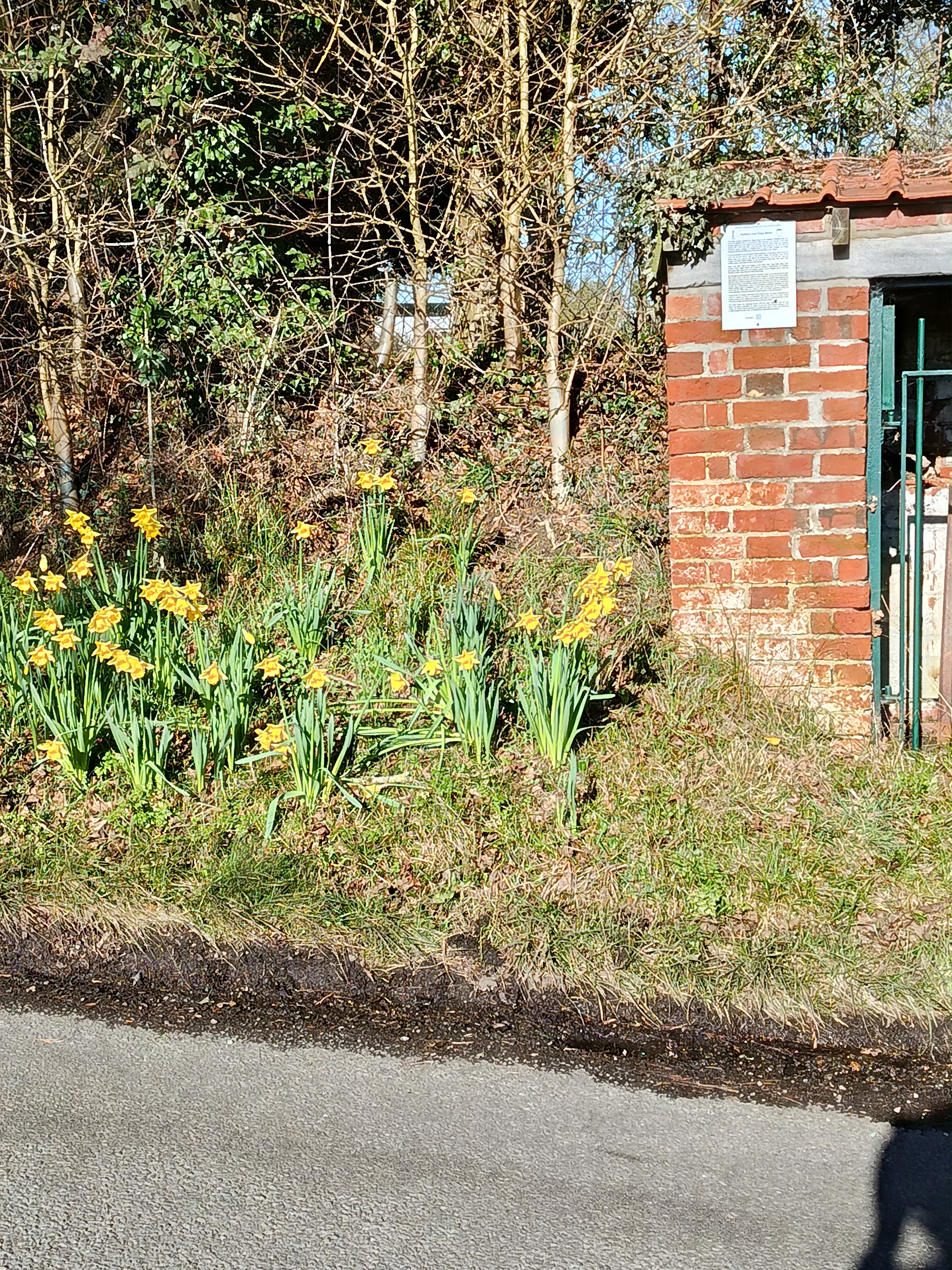
Spring does finally feel like it’s getting a grip, though the paths through the fields and forests are still quite badly churned up. The byway through the woods is particularly bad, thanks to idiots in 4x4s who seem to have no consideration for other users of the space, leaving foot deep clay ruts filled with lakes. They’re even removing fences and damaging the forest itself, and the Essex Way is a mess.
This week (well, Friday 20th) marked the sixth anniversary of my very first post on this blog way back in 2020 and it appears I am still burbling about squirrels, flowers and forests. Thanks for hanging out with me all this time…
One of the great joys of parenting is the almost constant sense of bewilderment and the nagging feeling that you’ve missed something quite important somewhere along the line which will, in short order, come back to you just that little bit too late to do anything about it. Like being the only parent who forgets it’s non-uniform day, or odd socks day, or that it’s an INSET day and you’re the only parent who has taken their child to school (sorry, Thing 1). I’m nineteen years plus into this mothering lark and I still haven’t got the hang of it. If I end the day with the same number I started with I’m counting it as a win, even now. If they’re fed and clean, all the better though these days they take care of the latter themselves and they’re getting better at the former.
Don’t get me wrong, dear readers. I did not start this journey with quite such a cavalier attitude to my offspring.
When I started down this road I had visions of being the sort of parent who’d have all the kids’ clothes out ready for the morning, all co-ordinated and cute. I’d do baby led weaning and nary a jar of Cow & Gate cauliflower cheese would grace my shelves let alone baby crack (aka Petit Filou). Annabel Karmel would be my guru. They would be breakfasted on something healthy and be at school ready to learn with their socks up and their hair in plaits (not Thing 3, at least until Covid hit and his response to our DIY haircut was to refuse to have his hair touched for the next two years).
I wouldn’t be that parent who was in Tesco at 8am shoving the food tech ingredients into a basket and hissing ‘measure them when you get there!’. I would remember parents’ evening and to buy end of term cards for teachers, but not Roses or Quality Street. I too would be immaculately turned out, possibly with grown up shoes, tamed hair and flicky eyeliner. I’d be on time to the childminder, and would have meal plans that didn’t involve fish fingers. I would remember to book the appointments for parents evening.
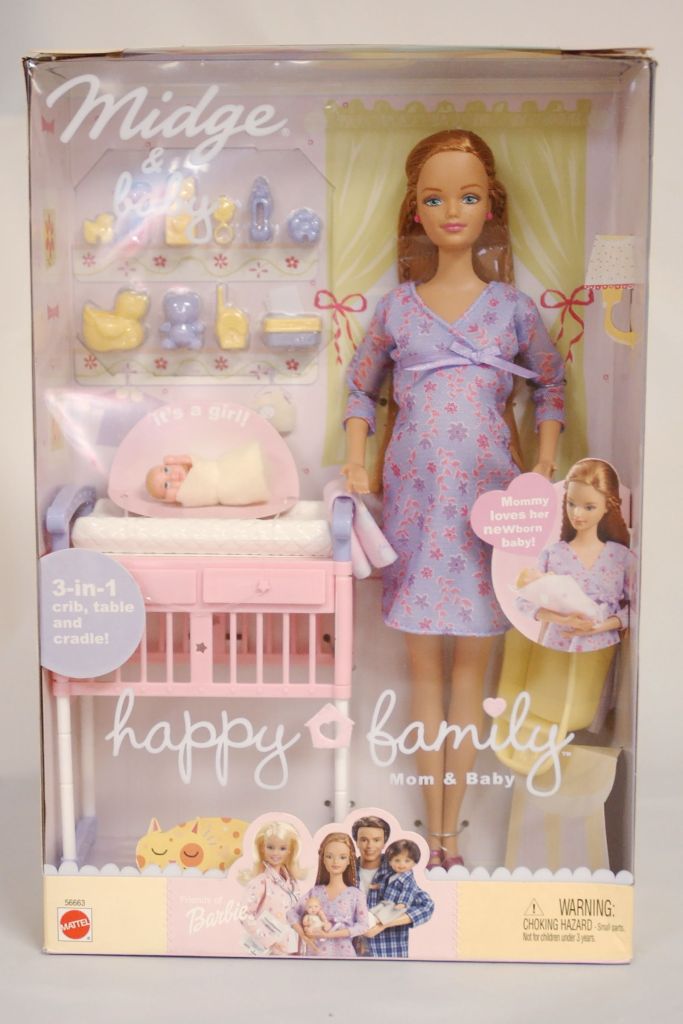
Mum Barbie (TM) lived rent-free in my head, as the youth would have it.
I am sure I could have been Mum Barbie, really, except for that thing called real life that kept getting in the way. Thing 1 was a fussy eater, colicky when she was small and then she didn’t like pureed butternut squash and sweet potato, or green things. She would like one thing for a week so you’d lay in a stock. Big mistake. Huge mistake. I learned. Petit Filou to the rescue, as at least she was eating. At 19 she’s still a fussy eater. Still, I loathe beans and pulses of all description because of the texture so I can’t really criticise. Things 2 and 3 – jars all the way. Sanity saved. Thing 2 has turned out to be a foodie and will try anything – her favourite food was always ‘someone else’s’ and if we mislaid her in a restaurant she was to be found peering over a table at other people’s food, with an unnerving hard stare similar to that patented by Paddington.
As for the co-ordinated cute clothes – well, there were clothes and thank heavens the kids were cute. Tracy the childminder/lifesaver used to say that the parents at the school knew which parent had been responsible for dressing the child that morning. Three days a week I’d be off to work at 6am and Daddy was in charge of clothes. Just because everything has stripes it doesn’t mean they match. My own dressing for several of those early years was more ‘has anyone been sick on me? Nope? Good to go!’ than a ‘fit check’ as Thing 1 tells me these are called.
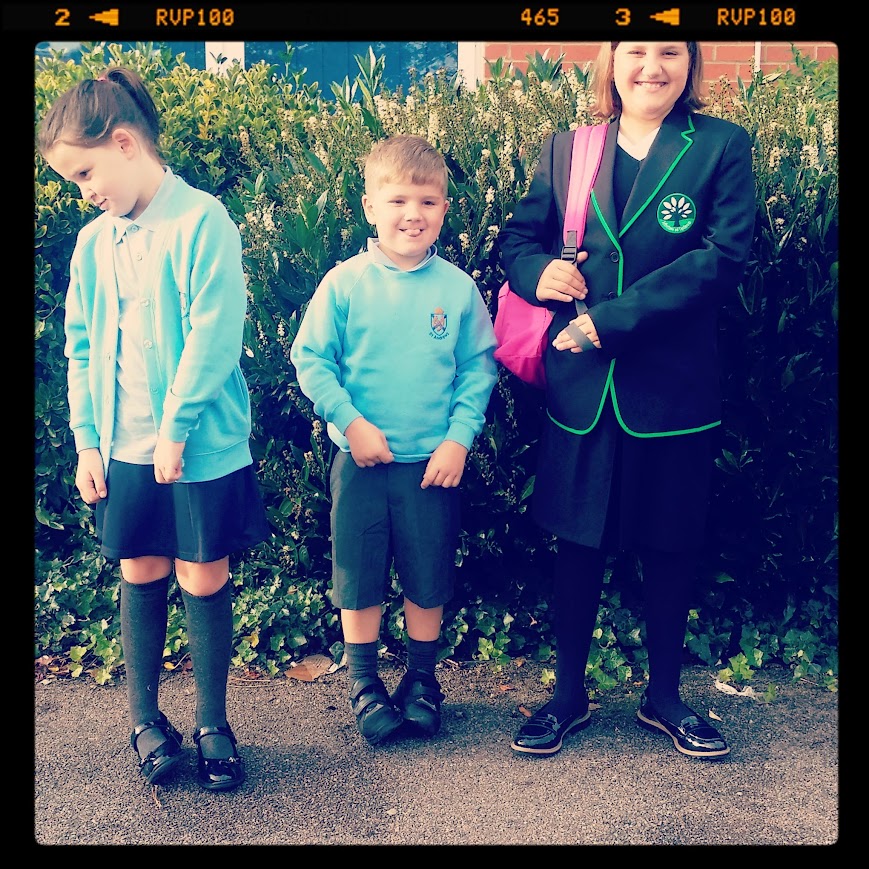
At no point did my children arrive at school with their socks up. Thing 1 was often handed over straight to first aid thanks to her ability to fall over from a standing start, while Thing 2 was usually screaming in fury at being left at school. Thing 3 was a dirt magnet. I gave up: they were there. I wasn’t late, although my hair remained (and remains) untamed and I still live in DMs and Converse. I tried ballet flats but with my Hobbit feet they’re never going to work. Flicky eyeliner remains beyond me even with felt tip pens and a stencil.
2017. First day of new school. Note socks.
I was in awe of those parents who managed with swan-like serenity to juggle their offspring from school to activity to gym to bed on time, probably via something home cooked and nutritious. The ones with the perfect blonde highlights, yoga pants and immaculate children with big bows in their hair. Their kids probably came home with the same clothes they started with and didn’t lose whole PE kits (twice). The ones who made things for cake sales, ran the PTA (in school hours – way to alienate the working parents, folks!) and who always managed to make it to school assemblies and sports days in time to sit at the front to cheer their child on, even though we weren’t supposed to. I hated sports days as a child and as a teacher, and even as a parent that never changed.
The Playground Mum Barbie cliquey mums at the gates who gathered in twittery groups and went for coffee at Costa and yoga classes together while I hared off down the hill to the station. Who collared mums they’d never usually deign to speak to when they wanted your support to get a child with what would turn out to be ADHD removed from the school ‘for his own sake, so he can have the care he needs (simper simper)’. The ones who share carefully curated family pictures on their socials with hashtags like ‘making memories’ and ‘so blessed’. In my head I knew that these weren’t ‘real life’ and their reality was probably much like mine, but one thing you learn when you live with mental health issues is that your head is a bloody liar at times.
No one carefully curates the moments when your phone rings with the school number on it and your heart sinks. Is it the umpteenth courtesy call of the week to say that Thing 2 has clashed heads with her inseparable buddy again and just to be aware. The fourth call in one day to say that the three year old had got overexcited playing dinosaurs in the playground before school and bitten someone, and did we need to have a chat about his behaviour before he started school six months later?
Not my son
No one curates the moment when you’re trying to wrangle three kids out of the door and you wonder when it’s your turn to have the meltdown at the idea of putting shoes and coat on and going somewhere. The cluster feeding when they’re either attached to you or screaming and you can’t put them down, so you walk for hours pushing the buggy and crying quietly knowing that as soon as you get back to the house it’ll start again. The moment when they found the crayons or the maple syrup and redecorated the walls or carpet, or when they refused the carefully cooked fish fingers but ate the compost from the plants, or when you decided that enough was enough and everyone was having the same dinner. Stroganoff Gate remains one of the worst evenings of my life. When you’re on the phone trying to explain to the doctor that no, I can’t bring in the one with the suspected ear infection as the other one has confirmed chicken pox. I can laugh now about the year I begged – only half in jest – for just 24 hours without a sick child. I made it to 25 and it started again. No really, I can laugh about it now.
Post-Natal Depression Barbie has never taken off, for some reason. Even poor old Pregnant Barbie was discontinued. There’s probably a reason for that.
Never caught on, for some reason
Eventually you find your playground tribe. Often it’s the ones also dashing up the hill from the train, cursing the existence of Platform 1 and having to cross the bridge and the fact that there’s never a bus when you really need one. I was lucky and had a childminder who did pick-ups three days a week but on the rare occasions… We moved schools when Thing 1 went to secondary school: Things 2 and 3 started at the primary school in our village, where the worst thing that I heard on the first day was ‘They tried to play with me and they didn’t even introduce themselves!’. The playground parents were much friendlier, and the school was more welcoming. I think I got the hang of it all eventually – I still miss the odd parents evening, as telling me about a March date in the previous September, and sending 13 page newsletters is too much to wade through.
I think I’m winning. There’s three kids here and I’m pretty sure they’re mine – I’ll take it! #soblessed
Not this little thug, who attempted to hamstring me earlier for having the temerity to walk past her
Making a job offer to a new team member – made my day!
Thing 2’s new obsession with sourdough – cinnamon and raisin has been my favourite this week, though the rosemary and confit garlic is pretty impressive
Bridgerton. So frothy and flirty and fun. Benedict is redeemed
First of March! A Happy St David’s Day to all who mark the day, and those who don’t.
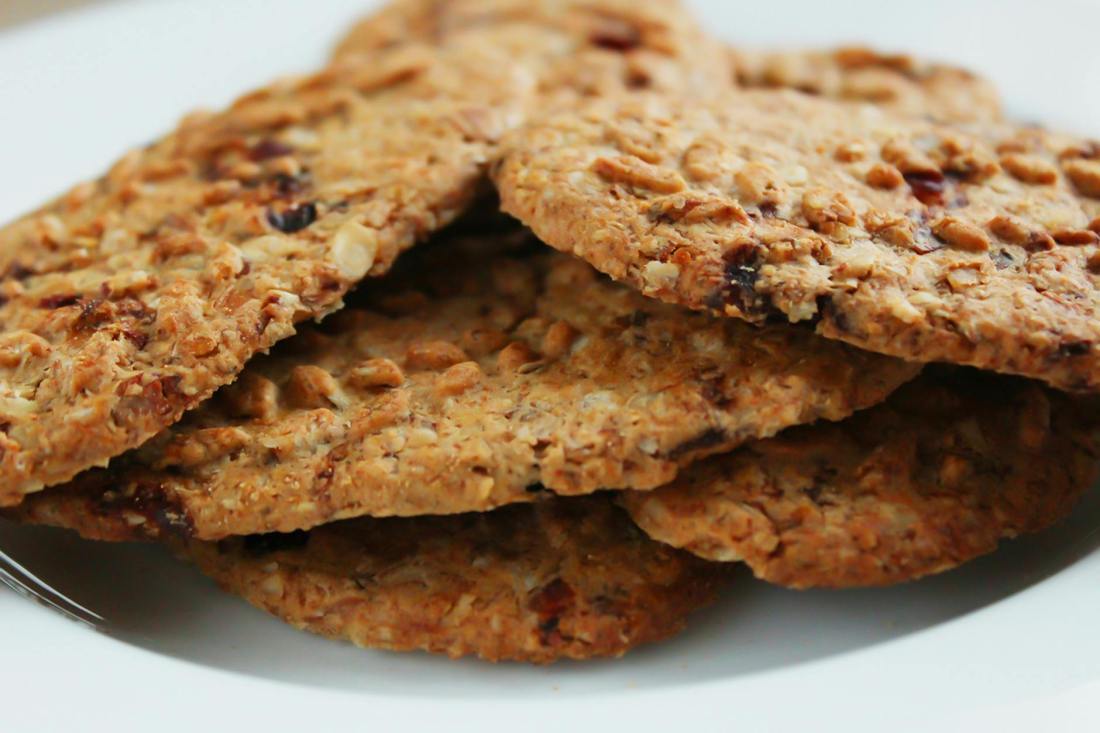
Thank you to the lovely people who reached out to me after last week’s post, and especially Alicia who brought me cookies. Oat & Raisin, in case you were wondering, which just happen to be my favourites.
This week has been better – there’s been the odd 4am wake up when my brain was convinced my alarm had gone off. It played Bowie’s Starman. I told it to be quiet and my Beloved informed me that it hadn’t actually gone off and now he was awake too. Ah well.
On Wednesday neighbour Sue and I went on an excellent evening out courtesy of Sadlers Wells’ occasional culture sector free tickets. They’re how we went to see Tutus a few weeks ago and Quadrophenia last summer. Our new site is next-door-but-a-couple to Sadlers Wells, so it’s very convenient for the office.
Sue and I met at Angel and wandered down to Banana Tree for a good pad Thai and a natter about the joys of parenting teens, prom dresses, being functional adults – that sort of thing.
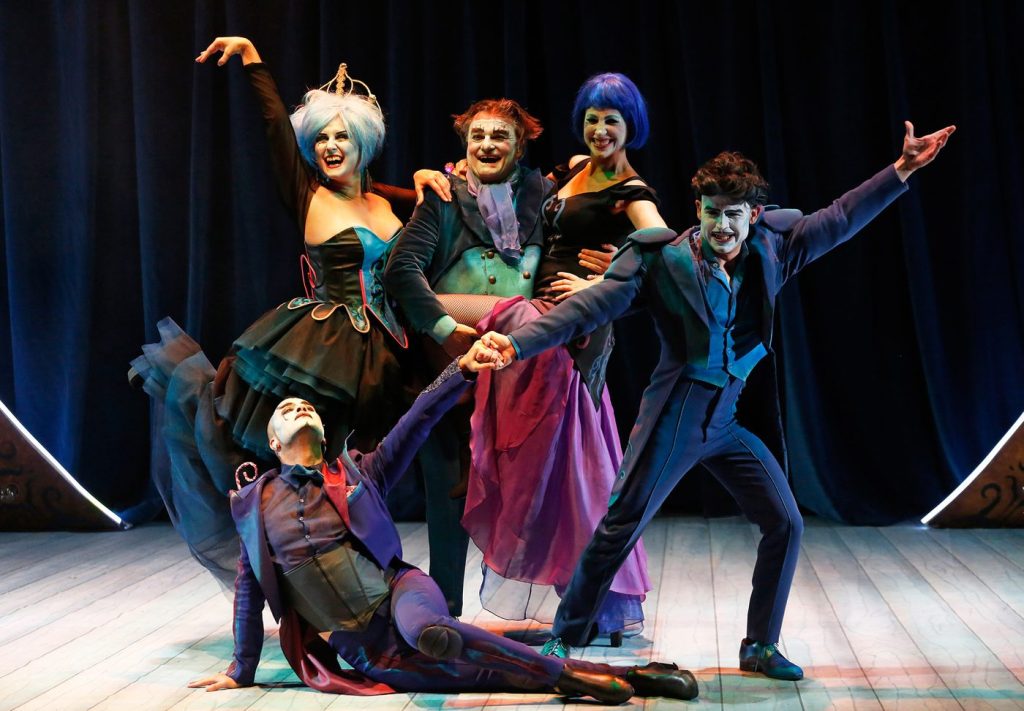
The performance was The Opera Locos by Yllana. Described as a comedy opera where Puccini meets Elvis (via Mika, Whitney Houston and more), we really didn’t know what to expect. I know nothing about opera other than Terry Pratchett’s Maskerade.
Two and a half love stories, audience participation in the form of an opera masterclass and an unsuspecting love interest, much slapstick, flamenco, mugging to the audience and some gorgeous singing was what we got, and it was SO much fun. We giggled like idiots, had an ice cream in the interval (mint choc chip) and then I took Sue on a historic walk through my favourite bits of Clerkenwell on the way back to Farringdon. I didn’t show her the Clerk’s Well as it was dark and I can’t give away everything all at once, can I?
The only issue I had was the full face mask make-up that the performers were wearing – I am phobic about masks and dolls. Working at the Museum of Childhood was an exercise in aversion therapy which did not work.
We continued giggling all the way home on the train, which is not the usual response to the Central Line. Probably I should try ‘proper’ opera (propera?) at some stage.
Other things making me happy this week
A long catch-up chat with an old friend on Saturday morning
Lunch with Thing 2, London sister and brother-in-law on Saturday at Hare and Tortoise
Reading a lot as my thumb is misbehaving and won’t let me crochet
Rediscovering the joy of reading out loud – though there really is a limit to the number of times one can read The Tiger Who Came To Tea with full cast of voices.
Bridgerton season 4, part 2. Oh Benedict, you fool.
Attending a Foley and animation workshop with Laura Copsey and Simon Hamlyn as part of our project with a local school
On Wednesday my feet did not want to go to the office. They didn’t want to leave the house, get on the bus or step onto the Central Line either. It was a wobble day – the worst I’ve had for a while, and I very nearly gave in and let them take me home again. Only the fact that I had a day of interviews ahead of me kept me moving forwards.
I stopped at Pret on the way to the office in the hope that a hot chocolate would be an excellent brain reset. It wasn’t and the final stretch between Pret and the desk was like wading through treacle. A couple of hours burning through emails at least felt practical, and then I had to switch on the smile and chat to people who want to work with us. They’ve put the effort in to apply, so they deserve a good interview. We met some really lovely people, and I think I fooled them.
I reached out to an old friend who also has the odd wobble, and they checked in on me through the day and over the next couple – as I’d done for them a couple of weeks ago. This helped a lot, especially as they know enough not to ask why it’s a bad day. There’s often no reason.
As the organisation’s Mental Health First Aider – and as a parent, step-parent and friend of people who live with mental health issues – I know the advice I would give to a colleague, the kids or my friends. It would not have been ‘go to work and pretend everything was OK’, but to take a step back, go and talk to someone and see if there was a way to take a break for a few days. What I told myself, though, was that I would be fine once we got going. I chunked up the day into manageable bits so I only had to survive the morning, lunchtime, and the afternoon and not a whole day. Sounds weird but it worked.
The text message – brief but cheering – from my Beloved, simply saying ‘I’m cooking’ was a big help, taking something potentially stressful out of the equation. I can’t remember the last time he cooked spontaneously, so this was a nice surprise. I was able to go home, eat dinner and go and drink tea and read a book in a hot bath – much needed as the interview room had been freezing.
Thursday was marginally better, and Friday was a WFH day where some of the day was spent keeping Miriam’s house elves company. I survived the week with the help of a good playlist and kind friends. Every day I can say ‘I’ll phone the doctor tomorrow if I don’t feel better’ is another day I’ve functioned and another day fighting off the black dog. I do not have time to be unwell, as my late and much-missed mother-in-law used to say. I have too much to do.
Still, now I’m levelling out and hopefully this week will carry on the upward trajectory. If not, I can always phone the doctor….tomorrow.
EDIT: I intended also in this post to talk about Mychal Threets, a lovely librarian and Reading Rainbow presenter on NPR, who blew up Threads this week when he spoke candidly (as he always does) about his mental health. As he says, another day he can talk about it is another day he’s on the planet. However…some women took it upon themselves to complain to his employers about his use of his personal platform, calling him threatening and triggering. NPR supported him as did the people of Threads, who were saddled up and ready to ride at dawn to protect him. He champions libraries, library kids, autism, books, mental health. He’s great, and he’s right to use his platform for his issues. If we don’t talk enough about mental health the stigma attached to it continues, especially in the culture of toxicity which can exist in some corners of social media.
Ballet with Thing 2 last Sunday – very, very funny. I thought the person next to me was going to fall off her chair laughing. I like matinee performances, as you can be home for teatime
The abundance of mindless trash on Kindle Unlimited that requires no thinking (and is not listed below!)
Lemon Drizzle cake courtesy of Thing 2
Getting round to making this yellow bag from a Merchant and Mills pattern
Discovering new music
The comfort of a warm furry cat tucked up on my shoulder as I write
How happy Dobby & Kreacher were to see me on Friday morning
Here’s hoping this week is better! I’m off to the ballet with Sue on Wednesday, this time to see something with opera in it, and we have more interviews to do before we start shortlisting and meeting volunteers.
Same time next week, people. Chin up!
Kirsty x
What I’ve been reading:
House of Flame and Shadow – Sarah J. Maas (Audible)
This week has been brought to you with the help of paracetamol, ibuprofen, Tiger Balm, Deep Heat and a wide selection of microwaveable heat ups. Not a migraine, just a persistent and nagging headache that took three days and a dizzy spell to subdue. Headaches, if you’ll pardon the pun, are a pain in the neck.
Luckily, the wonderful Mackenzie Crook’s latest offering went a long way to making everything a whole lot better.
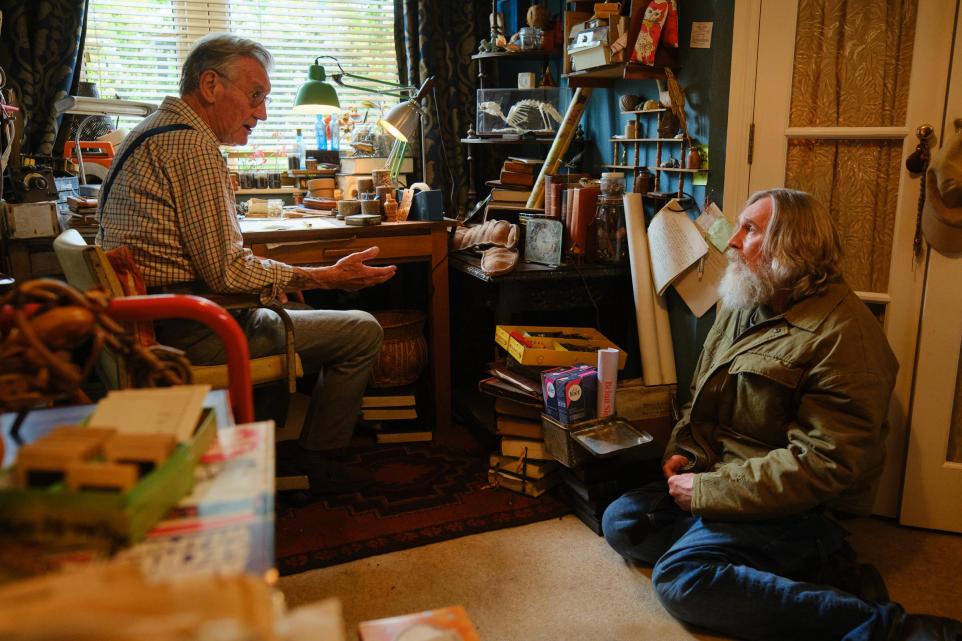
Small Prophets, starring Pearce Quigley, Michael Palin and Lauren Patel alonsgide Crook and the always-good-value Paul Kaye, is described as a ‘comedy about a man who creates magical prophesying spirits that can predict the future’ but it’s sooooo much more. As with Detectorists and Worzel Gummidge, Crook’s gentle humour and eye for the magic in the nundane makes a simple six part comedy into something that invests you in these people’s lives.
Image copyright BBC, 2026
Quigley plays Michael Sleep, a man working in a DIY superstore, being bullied by the trolley attendant, bossed by ineffectual Crook (with a truly hideous ponytail). His dad (Palin) is in a nursing home and forgets that Michael’s girlfriend Clea disappeared seven years previously. There are nefarious people looking for her, her brother wants the house, the neighbour wants him to do something about the garden and all he wants to fnd out if Clea is alive and coming home. His dad comes up with a plan inspired by a mystic he met in Cairo on National Service – and magic ensues in the form of tiny homunculi grown in the shed.
But – this being Crook – the magical beings are not the only magic in the series. The magic lies in the burgeoning friendship between Michael and Kacey, in the perfect Christmas Michael is creating in case Clea ever comes home, in the tiny moments of mischief Michael brings to his boring job. Crook makes gentle, human comedy – never punching down or being cruel. Even the bully comes across as sad and is given no power. This has been a theme across Crook’s creations. The homunculi are almost secondary to the rebuilding of Michael’s life and re-engaging wiith the world without Clea. I’m known for crying at telly on a regular basis, but the last episode was worth a weep…It’s on BBC iPlayer, binge it now. The reviews are great, and they still don’t do it justice.
Taking some personal development time to do one of the V&A Academy’s In Practice courses – this time Illustrating Dresses with Erin Petson. I’m still no good at drawing people, but it was fun to have a go.
The dance scene with Diego Calva and Tom Hiddleston in series 2 of The Night Manager. Heavens, but that man knows how to wear a suit.
A long walk with Thing 2 again, She got hangry at 8 miles and we had to stop for a hot chocolate before tackling the home stretch.
Tea and biscuits with Heather, her Thing 3 and a giant cat last Sunday
Valentines Lego from my Beloved
Lots of music recommendations flying back and forth
There’s a meme that goes about every so often which reminds you that when a two year old is very very quiet you should be very very worried. This was brought home to me last night while I was babysitting for one of the grandbabies. I was sleepy. He was not sleepy as his dad had let him have a nap. He was cuddled up next to me on the sofa, wrapped in a blanket, and I dozed off and thought he had too, watching CBeebies Bedtime Stories. It was 11pm, after all, and I’d had a hard day of staring at recruitment software (again).
Dear readers, you will not be surprised to find that I was wrong, and he was not asleep. I awoke to find that the small boy had discovered Thing 1’s stash of day cream and moisturiser (which, to be fair, I had asked her to take upstairs several times) and had anointed himself, the sofa and the Batman plush he’d been snuggling up to with liberal quantities of both. I was not impressed and told him so in my best firm granny voice while I cleaned him up. His response was to put me on time out for telling him off. ‘YOU’RE on time out, KK!’
It’s been a long while since I’ve had to negotiate with small children and I am out of practice, clearly. Last time we had an incident like this was when Thing 2 had had a fight with her sister, when they were about four and six, and in revenge she had very carefully put a large smear of Sudocrem on every single one of Thing 1’s dresses in the wardrobe. Sudocrem is a bit of a pain to get off things it isn’t meant to be on. I don’t think I’d ever considered grounding a four year old before, but she didn’t get to go to her friend’s birthday party that afternoon. I was not her ‘bet wend’ after that, but I was justifiably annoyed about all the extra laundry.
Her brother used to phone the police on his Thomas the Tank Engine toy phone when I wouldn’t let him play Lego Batman, and if magic wands really worked I’d have been a ‘FWOG’ many times over for being a bad mummy. Telling off small people is a hazardous business.
Anyway. Batman is now in the tumble drier and doesn’t seem to be any the worse for his impromptu facial. And his cape is so soft!
This week – like last week – has been very much about recruitment for our new team. Advertise, gawp at number of people applying, shortlist, interview, appoint. Straightforward, yes? Yes! We’re lovely people with a track record of building a team of people who bring new talents and perspective to our rapidly growing team. We like meeting people and we’re very relaxed in our interviews – one person said this week that they’d never been offered a cuppa in an interview before. Why not? We’re not trying to scare people. You don’t get the best out of people if they’re a bag of nerves, and the likelihood of you ever having to perform in the same way again when you’ve got the job is slim. I had a line manager in a previous role who was an absolute teddy bear, but looked so serious in interviews that everyone was scared of him. He made serious notes, never smiled, and kept the chat to a minimum. Eventually we got him to smile, which made interviews a lot less stressful all round.
I find that being human and smily is a good way to get the best out of people. The role we’ve been interviewing for this week is an early career position, so the interviewees have all been young and most don’t have a huge amount of interview experience. It’s been lovely chatting to them, watching them relax when they realised we actually want to hear about their experiences, letting some of their personality come through – these are the moments when we know whether or not we can work with them and whether they’ll be good in the welcome team. Sure, we’ve had to prompt them at times to answer the whole question – but I have lots of interview experience and these days I write the question down and blame the brain frog. We send about half our questions in advance so they have time to prepare answers, and encourage them to use their notes to answer. For some roles we send all the questions in advance – there are so many people in the arts, culure and heritage sector who have some form of neurodivergence and they really appreciate this. If one candidate asks for the questions in advance then everyone gets them, so everyone has the same opportunity.
Many of our candidates also attend our online or in-person info events, where they can meet some of team – including their potential line manager – and ask any questions they like. Almost like interviewing us, really, before they apply for the role. We’ve had questions about access, toilets, chances to use their other skills, progression routes – nothing is too daft.
Trust us – we want to give people who want to work with us every chance to get to interview stage and to get the job. Our job packs are comprehensive. We’re London Living Wage employers, we’re Disability Confident and feedback (unsolicited!) from applicants both successful and unsuccessful thanks us for making the application process open, easy and inclusive, telling us that they felt more confident about applying after the info evenings.
Inevitably some people don’t get to the interview stage, and while we obviously can’t interview 300 plus people (or 200 plus for the one closing tomorrow) and some people won’t get through, here’s my top tips for getting to the interview stage and beyond from the point of view of a shortlister/interviewer/line manager.
Look carefully at the essential criteria and tailor your supporting statement to these. We don’t look at your employment or education history (often they’re redacted) and this is all we shortlist on.
Provide examples of how your experience meets the essential criteria. Saying ‘I am a great team player’ is fine, but why are you a great team player? What in your experience makes you say that? Tell us about a time when you worked as part of a team, and how you contributed. Think about transferable skills if you’re early in your working life.
Use AI sparingly – it’s a useful tool, but when we’ve seen the same opening paragraph so many times we can recite it by heart and in unison, you aren’t standing out to us. If you do use it, make sure you read it through and personalise the output to your own experience. We’ve also run the job description through ChatGPT and asked it to write the job application, so we know what it looks like.
Don’t write ‘please see attached CV’ instead of a letter. If we’ve asked applicants to complete a form there won’t be an option to add a CV, so all your time has been wasted. And ours.
Writing ‘I’d be great at this job and when you interview me I’ll tell you why’ is neither big nor clever, and just ensures we won’t be interviewing you (actual example from a role in my previous job. Just don’t.)
Don’t write ‘I haven’t actually downloaded and read the job pack but this is what I assume will be needed to do the role’.
Remember that we’re looking for the right person for the job, so show us that you’re that person in a logical way.
If you have questions about the role and there’s an option to ask – ask!
If you don’t get to interview stage, we can’t always provide feedback on why – when there’s 300 plus applicants it’s just not possible. We – unlike some other places – always tell you if you’re unsuccessful, but can’t give individual responses.
We understand it’s frustrating not to get an interview, especially when you’ve been trying for ages to get a job and nothing is working, but my top tip here if you’re early career is to ask someone who’s in a management position, or a teacher or lecturer, to have a look at your application vs the job description and to give you some feedback. It is soul-destroying, I know, and the heritage/art sector is saturated at the moment with people looking for work.
Through to the interview stage? Well done!
We’ve chosen YOU out of all our applicants. This means we believe you can do the job, so show us why you’d be the best at it.
Smile! Not in a mad way, but be open and friendly. We’re excited to meet you.
Look smart – it doesn’t have to be a full-on business suit in our sector, but looking clean and shiny creates a good impression.
If you’ve been sent questions in advance, prepare for them – test them out on other people at home to make sure you’ve covered everything. It’s fine to use and take notes in an interview. We aren’t trying to catch you out!
Ask the panel to repeat the question if you need to – writing it down also gives you thinking time. Top tip.
Try not to patronise the panel. We notice that sort of thing. We’re quite bright underneath the friendly exterior.
There’s usually a chance to ask questions at the end – come with some pre-prepared ones about the organisation, that show you’re keen to work with them, that haven’t been answered in the job pack.
Try not to use the word ‘trainspotter’ in an interview with a well-known transport organisation. It’s all downhill from there. Trust me on this.
Didn’t get the job? Ask for a debrief on why – usually they’ll be happy to give feedback at this point, and if they’re not the sort of organisation who will provide it then you don’t want to work for them.
Didn’t get the job at interview? My Dad tells me it’s all good interview experience. Use the feedback and you’ll be more confident next time. The right role is out there, I promise.
Turning an £8 Tesco duvet cover into a dress and a skirt, both by Sewing Therapy. Super easy to layer and wear, and the skirt came together from print to finished garment in a couple of hours.
Early morning coffee with an ex London Museum colleague, catching up and exchanging capital project progress – reassuring each other that photographing accessible door furniture and obsessing over chair finishes is perfectly normal






 What Kirsty did next