273: stories are a superpower

A selection of illustrated children's books

On Wednesday I attended – from the comfort of my living room – a session of the What Next? culture group. This is a wide-ranging, first-thing-in-the-morning, ‘free-to-access movement that brings together small and large organisations and freelancers to debate and shape arts & culture in the UK’. I don’t get to attend them very often as Wednesdays are usually my later-into-the-office days due to teenager wrangling responsibilities.

Anyway, this week’s was about the power and importance of reading to small children from a very early age. One of the speakers was the Children’s Laureate Frank Cottrell-Boyce who pledged at the start of his Laureateness (Laureacy?) to campaign to reduce reading inequality through the Reading Rights campaign. The first report has recently been published, calling on national and local leaders in early years, health, education and culture to come together and make reading a part of daily life for every child in the first seven years of life.

Mr C-B spoke about visiting the Babylab at Queen Mary’s in East London, where he watched in real time as a mother and baby were wired up to a brainwave thingy and the mother read a story to the baby on her knee. The act of being read to by a loved one visibly calmed the baby’s chaotic brain waves, their heart rate, and their breathing came into sync. He called it ‘love at a synaptic level’. From this mum’s point of view, too, there is nothing quite like the feeling of a warm, sleepy baby or toddler snuggling in for a story at the end of the day. I recognise, too, that the act of reading is also a privilege.

“If you’ve been read to, as a child, by someone who cares about you, you have been given an enormous invisible privilege. If you haven’t been given that privilege, then you’ve been left with an enormous mountain to climb.”

Frank Cottrell-Boyce

According to BookTrust’s research, 95% of families know that reading is really important but only 42% of children in lower-income families get a regular bedtime story. There are a whole lot of reasons for that – aside from parents possibly not having that experience themselves as a child, or lacking the confidence in their own reading skills to read a story ‘properly’ – but a key reason is that living in poverty or need is really, really hard. You spend time in meetings with benefits people. You spend time getting to places on public transport getting to meetings or the supermarket with the cheapest food, or on hold to government organisations, or sorting out housing, or working one or more minimum wage jobs, or worrying about your electric or gas or other bills. All this as well as caring for your small person…. the mental bandwidth this all takes up is enormous and things like bedtime stories aren’t always top of the list. Survival is.

Those of us who grew up with being read to nightly – and, with the benefit of younger siblings to listen in on later – for many years are lucky. I did the same with my own children – I was certainly still reading chapter books to my reluctant reader Thing 2 when she was eight or nine and Things 1 and 3 were listening in. M.M.Kaye’s The Ordinary Princess was a favourite, as was Jill Tomlinson’s The Owl Who Was Afraid Of The Dark which we took on holiday and I read a chapter a night to my three and my niece. Bedtime story time was one of the joys of being a parent, honestly, even when I was in the depths of PND and could barely function. It was a moment of peace and routine in what were some very hard days, but then books are my own go-to moment of sanity as an adult so this makes sense for me. Admittedly there were days when the fifth or sixth reading of the same book got a little wearing, but there we are.

Cottrell-Boyce also made the excellent point that children who aren’t read to at home then encounter books for the first time when they get to school and they’re suddenly being asked to sit down and decode things they have no experience of. Books become difficult and scary, and not something to be experienced as a joy: these children aren’t making the connection between the words in front of them and the pictures on the page because they don’t have the literacy capital to do so. He likened this experience of reading as being presented with a recipe to cook before you have ever experienced food – the pain without the pleasure, as it were. Illustrations are the first encounters with visual art that children have. Illustration – as I say a lot to people in my day job – is art with a job to do, it’s art that communicates.

The wonderful BookTrust are working with Cottrell-Boyce on this campaign. The BookStart scheme, which provides families with free books via health visitors and libraries, is the last man standing from the brilliant SureStart scheme that was one of the great successes of the New Labour government. Early Years provision has been steadily eroded over the last 14 years which has removed an enormous and incredibly important level of support from the people who desperately needed it. Increasing free childcare is all very well, (before someone says ‘but they’re doing this for parents’) but – in reality – that’s aimed at getting adults back into work and isn’t a benefit for the family. The other problem with increasing free childcare provision, of course, is that it’s not properly funded so early years settings are closing as they can’t actually afford to pay the staff to provide the care. That’s a rant for another day, however – another conversation this week was about the cost of childcare.

In our local Tesco’s they have a ‘free children’s books’ stand by the checkouts, which is brilliant – adult books are offered for a donation but for small people they are free. There are Little Free Libraries popping up in disused phone boxes and bus shelters and train stations. Libraries – thank the lord – are still free and anyone can use them, even if (like my local one) they’re only open two days a week. Librarians – a big shout out to this amazing bunch of people – still do free RhymeTime or Storytime sessions. But if people haven’t grown up with libraries as part of their lives they may not have the confidence to go in – like museums and galleries, there’s an ‘is this for me?’ barrier to get through. I’m not sure what the answer is, but this campaign might be a good start. I’m in a position to be part of the change as I start to plan what our Early Years and Families programme will look like when we open in 2026: there has always been a plan for regular storytime, sharing books and illustrations with our visitors, but now I can back it up with science and stuff. Hurray!

Things making me happy this week

  • A catch up with Emma T on Friday, covering cats, small people, and what’s going on in the world of museum research. She’d been to Cardiff the weekend before to visit a mutual friend, and she also got to meet one of my force-of-nature cousins. Honestly, we are EVERYWHERE.
  • An afternoon at Copped Hall last Sunday, chasing around the GT2. I am out of practice at the toddler thing!
  • Salad. I like salad. A lot.
  • This Pangolin amigurumi – I love pangolins! They always look like they need to tell you something very important.
  • A happy commuter moment on Friday when I was crocheting on the tube, finishing off a little apple amigurumi. A family opposite me were off on a day trip and the little girl was very excited watching me give the apple a leaf and a mouth. When I’d finished it I gave her the apple and I think it made my day. They were off to Paddington Station to see the bear statue and then to see the Natural History Museum, so I extracted a solemn promise that she’d say hello to Paddington and give him a marmalade sandwich. ‘We’ve GOT marmalade sandwiches!’ she said in very serious tones. I hope they had a good day – I know I did after this joyful exchange.
  • The strawberries coming ripe in the garden in large quantities.
  • Meeting Oliver Jeffers, who wrote one of our all-time favourite bedtime stories. I probably should be a bit more chilled about these things by now but I’m not. I was very well behaved though.

Things I am withholding judgement on this week include Thing 2’s prom skirt which she had a very clear plan for and which I am making from duchesse satin with an embroidered tulle overskirt, and (of course) pockets. I may try and negotiate on the pockets and provide a matching wrist bag instead. She also wants a ‘train’ so no one can see her feet, despite the invention of shoes. I’m glad I fitted a tissue paper toile on her yesterday morning as the size we’d printed going on her measurements wasn’t big enough, so I could reprint at the next size up and do another fit check before cutting the fabric. I’ve bought from this designer before and have always had to contact her about missing instructions, or fabric quantities, and the instructions always assume a lot of prior knowledge so I wouldn’t buy from her as a beginner. The one moment of joy (for me, at least) is that she was hoping a pair of my glam and presumably now vintage heels would fit her but NO, they’re all too small. Actually – I’m also quite joyful that she bought the corset top and didn’t ask me to make that. She had a very clear idea about what she wanted to wear, and what colour, and of course she couldn’t find the perfect thing in the shops… this summer I will be teaching her to use a sewing pattern. It would have been more helpful if she’d stayed home with me so I could start sewing, but nooooooo…..that’s my day gone today then!

Things not making me happy this week include the doctor’s surgery. By Wednesday evening I had spent more than two hours on hold to the surgery just waiting to speak to the reception team. Phone call one had been in mid-May, where I’d asked for a prescription to be updated to reflect an increase in my medication prescribed by their out of hours doc. The surgery just reissued the existing prescription. Phone call two – Monday – repeated request. They texted me and said the prescription had been issued. Chemist says yes but it’s two separate prescriptions so you need to pay twice, phone the surgery again and ask for them to be issued as a single script. Phone call three – explain again that I don’t actually want to pay £20 for what’s basically one prescription, could they issue this as one script with the full dose on it. This apparently made sense to me and the receptionist, but not to the doctor whose response – not to me, of course – was that they don’t make 30mg pills. I discovered this in phone call four, which was where I channelled my inner Dad and explained that I was FINE taking a 20mg and a 10mg tablet at the same time but I’d rather not be charged twice. Yes, said the receptionist, I understand and it shouldn’t have taken this many phone calls. Phone call five after waiting for eight hours wasn’t answered after 1 hr 40 minutes even though surgery was open. Phone call six, the following morning, was with YET ANOTHER receptionist (how many do they have?) who was adamant that what I was asking couldn’t be done even though I’d been assured that it could by our amazing village pharmacist – who presumably knows what can and can’t be done with a prescription and who I’d phoned in sheer desperation. He offered to send a note to the surgery explaining the problem in case it helped. I asked to speak to a doctor, who phoned me back two hours later, and three minutes and three seconds later (including pleasantries) I had the prescription, it was sent to the chemist and was ready for me when I tumbled through their door four minutes before closing. It should not have been so hard….

So, I am fully medicated, and today I will be finishing the prom skirt (I hope!). Watch this space…

Kirsty x

What I’ve been reading:

Shadowlands – Matthew Green

Woodston – John Lewis-Stempel

Between the Stops – Sandi Toksvig

Ring the Hill – Tom Cox (Audible)

Greetings from Bury Park – Sarfraz Manzoor (Audible)

267: stop the week I want to get off

Last week’s paean to four-day weeks (or three, at least) has been overtaken by the experience of this week’s four-day week which didn’t go nearly as well. Not for any specific reason, but…

…on Tuesday I took Lulu to the vets for her annual inspection – this minimises the actual experience of my Beloved and I acting in a pincer movement to wrestle her into the cat carrier, me forcibly lifting her out again as she clings to the sides like the facehugging xenomorph from Alien so she can be weighed and checked over, and watching her slinking back in in an attempt to make herself invisible afterwards. I popped to the library to pick up my holds (another recommendation from a colleague and a couple of Ann Cleeves), came home, set up my table, logged in…..and realised I was supposed to be in the office as we were interviewing in the afternoon. Cue throwing tidy clothes and my face on, racing for the bus and heading for the office. The Central Line was misbehaving with delays on both journeys. On the way home I had to get rescued from South Woodford by my Beloved as there were no trains and luckily he wasn’t far away.

The rest of the week continued to fluster me: never quite working out what day it was, not being able to finish one thing before starting the next. Part of it is the continued joy of menopausal brain fog, part of it is just trying to do too much at once on too many different things (but they all need doing!). Whatever it is, this week wasn’t working for me. I did get to meet some interesting interview candidates – I like interviewing – and had coffee with Amanda on Thursday.

Friday was great, on the other hand. As my communities colleague was off on her holidays I got to sit in on the first session of our new co-creation project. This is the third project of four before we open the Centre next year, and this one is in partnership with Islington Centre for Refugees and Migrants and the artist MURUGIAH. These are a series of projects exploring heritage and what it means to people. MURUGIAH grew up in South Wales (like me!) with Sri Lankan parents (not like me!), and our participants yesterday came from the Ukraine, Cameroon, the Democratic Republic of Congo, Morocco and Turkey. Their co-ordinator is Polish/British so we had a broad set of heritages to draw on. MURUGIAH’s work builds worlds of colour and shape, and always reminds me of the Beatles’ Yellow Submarine.

We thought about the things that make us ‘us’ – memories, language, family, food, music, the journeys we have made, the things that have happened to us. One of the things that I love about these projects is sitting with the group, working alongside them as they’re drawing their stories. Done, from Turkey, drew her childhood garden and told me about climbing the mulberry tree to pick the fruits from the top as she sat in the branches. She drew baskets of cherries, birds coming the eat the mulberries – she liked the sour ones rather than the sweet – and the bees who’d come to the flowers. There was a green house with a red roof, and she missed the garden when they moved to the city. The Ukrainian pair drew big blowsy poppies and sunflowers, flower headdresses framing blue sky and golden wheatfields, rivers – there are always rivers, they said – and a soldier standing to attention. Herve, from Cameroon, drew flags and a monument; our Congolese participant shared her memories of beach parties where they’d dance and catch tilapia to eat cooked in banana leaf parcels, and the colourful clothes they wear. Our Moroccan lady drew things from her country and their London equivalents – taxis, trains and buses, food, flags and more. It started quietly and as they started to draw the stories came out, and our two hours flew by – I’m not usually in on Fridays but I’d quite like to drop in on these sessions. Regular readers will remember previous experiences working with refugees and asylum seekers have made a massive impact on me (and also that this is why I am doing the Cardiff Half Marathon in October for the Choose Love charity, and any pennies you can spare towards my target are much appreciated! I have £170 to go….).

I also got to catch up briefly with Jhinuk Sarkar, another of our community illustrators who is delivering a co-creation project at Bethany House – this is a supported housing project for women from Islington experiencing homelessness/houselessness for a wide variety of reasons. They’re making bunting and flags and I can’t wait to see them – enough to stretch from Bethany House to the Centre is the ambition!

Other things making me happy this week

  • An Easter Monday swim with Jill and Rachel followed by simnel cake and hot chocolate
  • More Northern Exposure – we’re up to Season 3 now and I can’t find my Season 4 box set anywhere
  • Crocheted jellyfish. Curiously satisfying to make with their curly tentacles! I like the neon green one – the photo doesn’t do it justice!
  • Running into TT2 with GT2 at the station on Wednesday – how is he two already? It’s his party today and Thing 2 has created a gorgeous birthday cake.
  • Seeing the trampoline populated by bouncing kids – next door’s small people like to come and run round our garden and see what my Beloved is up to, as well as say hi to the cats
  • A ten mile ramble through fields on Saturday in a wide loop around Toot Hill, Stanford Rivers and Tawney Common. Not too warm, with a lot of geese around for some reason, a muntjac, a bouncy deer (without benefit of trampoline) and a lot of consulting of my OS map.
  • Being talked into signing up for another half marathon next month – it took Tan all of five minutes to convince me,

That’s all, folks! Have a good week.

Kirsty x

What I’ve been reading:

The Makioka Sisters – Tanizaki

The Trouble with the Cursed/Demons of Good and Evil – Kim Harrison

A Letter to the Luminous Deep – Sylvie Cathrall

Talismans, Teacups and Trysts – K Starling

The Last Continent – Terry Pratchett

253: whose voice is it anyway?

On Monday afternoon I had one of those newfangled online chats with Claire Adler, a heritage, culture and community consultant who – a long time ago when she was still at Hackney Museum and I was still a teacher – was the person who got me involved in museum learning through a teacher focus group. A few months ago she posted on LinkedIn about the idea of ‘capable environments’, which are those where everyone can thrive. You can read more about them here. As I may have mentioned once or twice, my current job is at a small arts charity which is in the process of building a new home in the heart of Islington, and we are committed to being radically inclusive, and a place of belonging and welcome for everyone.

This is a big ambition for a small organisation, but one we’re passionate about and we dedicate significant time to looking at what we’re doing through the lens of access and inclusion. I spend a lot of time talking to other organisations, and to people who may not have ‘a visit to a gallery’ on their to-do list, and for whom cultural activity comes quite a long way down the list of priorities for a whole range of reasons. This is particularly so while we’re still mired in the depths of the cost-of-living crisis. Even a ‘free’ venue has things that need to be negotiated, especially when you have children who can spot a museum shop or cafe a mile off.

Cultural confidence is another blocker: is this a place for me? Will people know I’ve never been to a gallery before? What do I do while I’m there? Will there be ‘people like me’ there too? Can I take my own lunch? Is there a prayer room/quiet space/changing places toilet? What happens if my son/daughter/family member has a meltdown? For so many people, a spur-of-the-moment visit isn’t an option, and this is doubly so if it’s out of the comfort zone or a new place.

Physical access is another concern. We’re in an extremely fortunate position in that we’re not redeveloping an existing museum or gallery but rather bringing a derelict building back into use and so have a pretty blank slate when it comes to designing out any barriers that prevent access. Bolting on mitigations after the fact is always harder, especially in historic buildings. There’s lots of handy regulations and information out there to help you, too, and consultants who’ll assess your site, your offer and so on.

But…. if there’s one thing I’ve learned in the past seven years of co-design, co-creation, co-production, co-curation and conversation (isn’t that a nicer word than ‘consultation’?) it’s that you can read up all you like, you can bring your own experience to bear and that of those you care for and spend time with (‘lived’ experience and ‘loved’ experience, as it was described in a webinar I attended not long ago) but there’s no substitute for going out there and asking the people who you hope will become your core audience and the best future advocates for your site.

Obviously you can’t recruit a representative of every single group of people to sit on an ‘access panel’ and (since we believe in paying people for their time) we definitely can’t afford to. So how do we ensure that people and their needs are not only represented but included in what we’re doing? Particularly as including specific groups of people automatically excludes others, which is the opposite of what we’re going to do with the Centre.

First, we’re taking the Social Model of Disability as our starting point, and working from the principle that removing barriers and considering people’s needs before we build makes things better for everyone – for example, if you’re hanging an exhibition consider who needs to see the images before you put them up rather than having to provide ramps or steps after you’ve opened. Trust people to know what they need, and be open to hearing them. When we committed to co-creation at Young V&A we spent a lot of time considering what this meant in practice, and what it meant in the end was that everything we thought we knew – as people who had been children at some point – was wrong, so we needed to throw preconceptions out of the window and be open to being guided by the participants. I called it ’embracing the chaos’ and some of those projects were absolutely chaotic but truly joyous and mind-opening experiences. I still have the odd conversation where people want an idea of what the outcome of a co-project will be, but I remain committed to genuine co-ness. It would be easier if I could say ‘yeah, it’ll be x or y’ but that’s imposing our wants on people and not being guided by theirs.

Admitting you don’t know everything when you’re supposed to be the experts is quite hard – but people of all ages are the experts in their own lives, and doubly so when you consider intersectionality as well.

And this is where conversation comes in, of course – chatty, informal moments as part of other events such as our play activities over the summer where one of the questions we asked was what would help them to visit as families. We’d made it explicit when we recruited families that everyone was welcome, and considered their needs when we planned events. As guided by the social model rather than the medical model, we asked what they needed to make their visits easier rather than asking for unnecessary medical information. Someone telling me they have a diagnosis of this or that is meaningless, but telling me that their visit can be made easier with ear defenders, a well-signposted accessible toilet, a quiet room, step-free access etc – that’s helpful, non-intrusive and ensuring these and other facilities and equipment are freely available and that this information is easily found on a website benefits everyone.

Working with organisations like Euan’s Guide and looking to people like the accessible museum award-winning Barnsley Museums is also good practice – and one of the best things about museum and galleries and the people who work in them is that as a general rule we love talking about what we do to other people so there’s lots of advice available about how to do things well. Yes, it would be quicker if we didn’t talk to people about everything from physical access through to exhibitions via signage, play, learning programmes and what people want to do when they’re through the doors, but how can we be radically inclusive and representative of all our visitors, staff and volunteers if we’re selective about the voices we hear and the people at the metaphorical table?

My vision as Head of Learning and Participation is that when we open the doors we’ll be somewhere that’s part of people’s daily routine: on the way home from school families stop in to spend time in the gardens or trying their hand at whatever’s on offer in the creative space; that we’re the go-to for somewhere to go on a rainy day; that teens come and hang out with us because they know they’re welcome; that we get to know our locals by name. Last week’s inspiring talk by Amy Akino-Wittering at Young V&A about their successful and radically inclusive front-of-house recruitment process will hopefully guide our own process later in the year. Watch this space….

Things making me happy this week

  • Interesting inclusive faith training on Thursday
  • 12k walk on Saturday morning
  • A great meeting with someone about a project related to one of my favourite writers
  • Bumping into Jill at St Paul’s though I was unable to convince her to sack off her meeting and head home with me instead!
  • A visit to talk to the team at Langley Academy, where museum learning is built into the curriculum…
  • …which meant I got to stay overnight with London sister and have coffee with my Eton buddy
  • A visit to Lift Youth Hub to meet the team and envy their views over London
  • Coffee with Miriam on Saturday afternoon

Today I am off to Waltham Abbey Wool Show with Heather for a day of squishing and possibly sniffing yarn.

Same time next week then!

Kirsty x

What I’ve been reading:

Fearless Fourteen/Finger-Licking Fifteen/Sizzling Sixteen/Smoking Seventeen – Janet Evanovich

My Animals and Other Animals – Bill Bailey

Million Dollar Demon – Kim Harrison

Guards! Guards!/Men At Arms – Terry Pratchett (Audible)

236: Saturdays are Library days

It’s Saturday evening and I am typing this in an advanced state of ‘is it nap time yet?’ after a day at the British Library’s ‘Marvellous Me!’ Family Day. This was the last of our pop-up appearances for the summer and I was joined by illustrator Beth Suzanna and Marina from our Artistic and Creative team. We were making paper portraits using collage in Beth’s signature style which is full of bold colour and opportunities for families to add as much detail as they liked. We had a great day, meeting more than 100 people and seeing some amazing creations – one of the families from our summer play project came to see us, too.

The BL runs three family days a year, and this one is in partnership with the British Museum and the Frank Barnes School for the Deaf – an opportunity for D/deaf and hearing families to learn together. There were interpreters on hand, performances by a signing choir, BSL storytelling and sensory spaces and the whole day felt inclusive and welcoming. I had a wonderful conversation with the mobile evaluator team and will definitely be stealing their ideas – and inviting them to be part of our access panel. We spoke about the need for 360 degree reflection at the end of projects, and the importance of understanding why things go wrong sometimes.

I say this every time, but…. yes, I am absolutely shattered, but I’ve met 100 people of all ages, from babies up to grandparents, and every single one of them reminded me why we do what we do (and why we bloody love it),

In other work news, we had a fundraising event at our new site – the last one before we start the build, which is PRETTY FLIPPING EXCITING – and despite promising myself I would not be completely overexcited at meeting illustrators I failed. It was all fine until Nick Butterworth, creator of Percy the Park Keeper and Tiger and Jasper’s Beanstalk turned up and Tom Gauld, whose cartoons for Guardian Books speak to me very loudly.

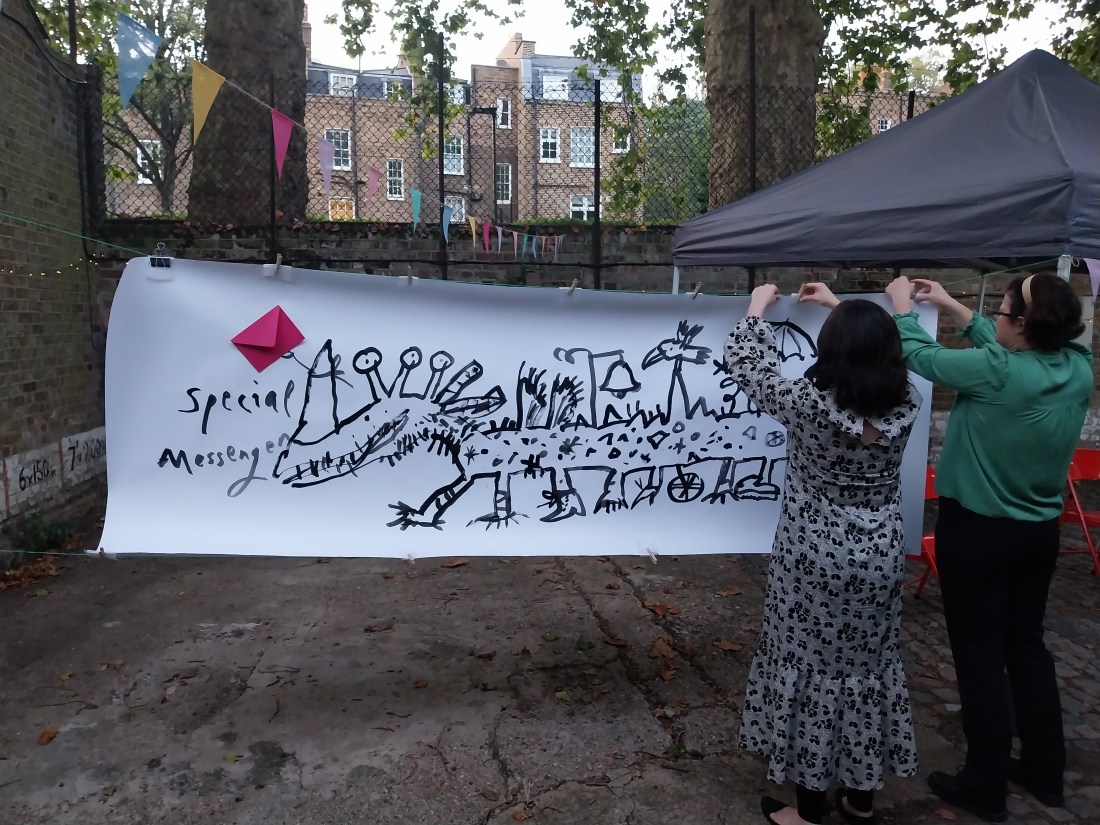
There were delicious macarons, and Quentin Blake sent us a special message via monster.

On the less happy side, we also said goodbye that evening to our lovely Head of Comms and Content who is off on a seaside adventure – but I did get to hand over her leaving gift. I will miss her very much!

Other things making me happy this week

  • Crochet mice. I like making these!
  • Coffee with my LEN (Lovely Ex-Neighbour) Emma after WAY too long. Our midkids (aka Bonnie and Clyde) have been besties basically since birth, and we used to open the gate between our gardens and drink wine while they rampaged.
  • A Sunday morning swim
  • Finding a lot of Eddie Izzard included in my Audible subscription and laughing out loud on the tube
  • The cat being signed off as healthy by the vet. We knew she was better when she savaged a small visiting child but it’s nice to have the official word

Right! My family require feeding… have a good week!

Kirsty x

What I’ve been reading:

The Distant Echo -Val McDermid

That Mitchell and Webb Sound (and various Suzy Eddie Izzard shows) (Audible)

Dead Lions – Mick Herron

Murder at the Monastery – Rev. Richard Coles

231: are you coming out to play?

Friday was the first day of our new community co-design project. You remember, the one that was giving me sleepless nights last week in case no one turned up or it rained all day or it was a total disaster, that sort of thing. I have form for this sort of thing – on one school trip all those years ago I managed to lose two children and a parent helper – so it’s not unreasonable to worry!

Luckily it all seemed to go very well – 18 people came along and we took 18 very similar people back to Islington so I am counting it as a win. The Panda coach turned up on time – one of the children was very excited, as they had apparently ALWAYS WANTED to go on a panda bus. I didn’t know Panda Buses were a thing, but there we are. A bonus point to me… Another child had never been on a coach before so the adventure started early for her! No one was sick and we had exactly the right amount of snacks for the day. Pom-bears were the most popular – Valentina, my colleague, hadn’t heard of them before, although my director says they go very well with red wine. We’re a cultured bunch, us.

The visit this week was to Royal Botanic Gardens, Kew, where they have a children’s garden which explores in a very playful way all the things plants need to grow – sun, water, earth and air – in four zones. The idea of the project is to take local families to different playful green spaces (next week is Holland Park Adventure Playground) and then in the final week we’ll work with a play artist to construct models of play opportunities which will be shared with the architects and landscape designers to inspire our own new gardens. Each day is being live illustrated by illustrators, so we can see what families engage with most, and what captures their imagination. We also gave all the participants their own sketchbooks to record whatever they wanted, and one to a small girl who was fascinated by illustrator Grace Holliday’s sketching and was peering over her shoulder. We told her dad all about the Centre – no engagement is ever wasted!

Valentina and Grace met us at the entrance to the Gardens, having left me in charge of the bus journey, and we headed off to the Children’s Garden and Earth area where we found huge sandpits, slides like earthworms and wooden playhouses as well as logs and ropes to help people up a large mound. The younger children enjoyed the sand while the older ones (the group ranged from 5 – 16) enjoyed the sunshine. The second space was Water, where there were pumps and rivulets, with a paddling zone complete with stepping stones. Climbing structures were, again, more popular with all but the youngest children. The round structures you can see in the images above were in the Sun area next to Water, along with some huge eucalyptus trees and some very cheeky baby jackdaws. I loved the use of coloured perspex in the tunnel. Few people seemed to use this area, perhaps because it wasn’t obviously ‘playful’.

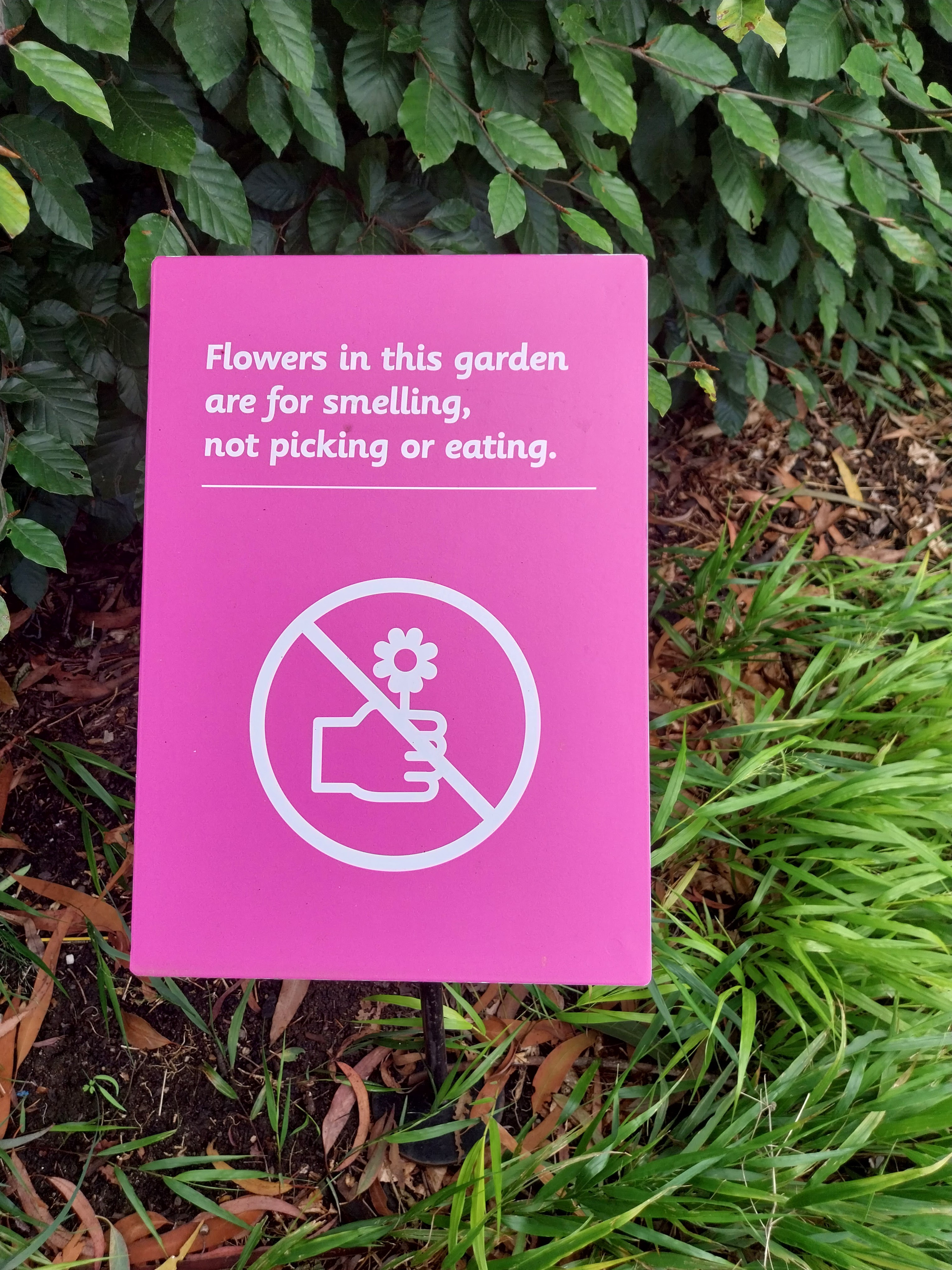
We liked the ‘rules of enjoyment’ scattered through the gardens as well as at the entrances – ‘Our trees are for hugging not climbing’; ‘Our plants are for smelling not picking or eating’ and others – offering alternatives to engagement rather than ‘don’ts’. There are clear paths to each area as well as stepping stone paths through flower beds to encourage exploration. They close the space for quiet sessions but the space overall didn’t feel as if it had been designed with accessibility in mind – there weren’t obvious alternatives to climbing frames or the paddling area for wheelchair users, for example, and I couldn’t find any information on the accessibility map on the website (which is also hard to read). I would have liked to have seen this information in a variety of easy to find formats on the website, particularly as we had at least two children with Austistic Spectrum diagnoses on the visit. Kew has a great facilitated community and access programme but for independent visits the information isn’t obviously available. I am happy to be corrected on this, of course, but this is the sort of information we know our visitors need to have.

We went to the Family Kitchen for lunch, where we provided children’s lunch boxes and pizzas for the grown ups. The toilets are sensibly located there too, and a playful handwashing station. Kew have also put a shop in there and an extremely expensive Hackney Gelato ice cream parlour, which I am quite sure a lot of parents could have done without, especially as entry to Kew isn’t cheap.

After lunch we went to the Air space, which was the most popular with our families – little trampolines sunk into the floor, rope swings, colourful windmills and a giant hammock, and lots of things (pollen, apparently) to jump from and on and over. Again, things to climb on were most popular – the Oak Circle, a huge oak tree ringed by a high level walkway, attracted all the children, while a bench ringing the tree provided some much needed seating and shade for us! Grace Holliday, our illustrator, captured so much movement and joy in this zone.

The usual herding of kittens through a final visit to the loos and retrieving them from the shop ensued, and then it was back on the bus to Islington through a lot of traffic which seemed to be Taylor Swift’s fault, at least according to the coach driver who had to battle back round to Harrow afterwards. I’m looking forward to the next adventure, and hopefully the families are too!

In other news…

Poor Lulu cat had to have a sleepover at the Royal Veterinary College this week, which meant a long car journey each way. She was at pains to tell us how unhappy she was about this, especially when speed bumps and potholes made their presence felt. We finally have a diagnosis though – she has not one but six bladder stones and an operation is needed to get rid of them as they aren’t the sort which can be zapped or dissolved. Thank heavens for insurance, which covered the £1548 cost of her stay. She now has bald patches on her legs, chest and belly and took a good 48 hours to forgive me.

Cat attempting to disappear

Thing 3 had his ingrown toenail operated on (and they did his other foot just in case). He was very brave and looked like a duck when he came home. No photos of this, though.

Things making me happy this week (aka ‘The Happy List’)

  • Thing 1 got an A in her first T-level exams – we are incredibly proud of her and her hard work after a rough year last year.
  • Thing 2 finally gave in and made me a lemon drizzle cake. It was excellent.
  • I put my quilt top together and stuck a lot of paper hexagons onto fabric hexagons, for which I have a cunning plan.
  • Making the Sew House Seven Wildwood dress. No photos, it needs to be on to look its best. I managed to get the skirt front backwards so it wraps the wrong way. Who knows how I did it, but there we are. It’s green.
  • Seeing the London Museum’s new logo make it into Private Eye‘s ‘Pseud’s Corner’ not once but twice….in the same issue. I love the Museum, having worked there for 12 years, but loathe the pigeon and ‘splat’
  • Three days off – some sewing, some sleeping, some KFC with Thing 1, some reading
  • The finale of The Umbrella Academy – such a good series, and great use of Megan Mullally and Nick Offerman. It made me want to rewatch DC Titans though.

And that’s it from me for the week – I must go and throw pizzas at teenagers in the hope of pacifying them. Thing 2 has three friends over for a sleepover – ‘sleep’ being a very relative term.

Same time next week then 🙂

Kirsty x

What I’ve been reading:

The Covent Garden Ladies – Hallie Rubenhold

Honeycomb – Joanne M. Harris (Audible)

1989 – Val McDermid

The Full English – Stuart Maconie

The Last Voice You Hear – Mick Herron

205: it’s very nice…what is it?

One of the things we believe at work is that – given the right tools – everyone is an illustrator, and we don’t limit illustration to picture books which is the answer virtually all school children give me when I ask ‘what is illustration?’ at the start of a session. That includes the Year 10s I worked with last week, and even post-graduate illustration students seem puzzled when I ask them how they’d define illustration.

We say it’s art with a job to do, the art we see all around us, the art which helps us make sense of the world. It’s art that communicates without words – though typography is part of illustration – and it’s art that’s been around since before words. There’s a lovely animation here that illustrates (see what I did there?) all this much more eloquently that I have.

I love all these definitions and the learning strategy I’m currently writing has this as its mission, and I’m quite prepared to think of myself as an illustrator but…not a very good one, and I’d never apply the word ‘artist’ to myself. For that I blame school. Art, after second year comprehensive, was for people who were ‘good at’ art. I was not ‘good at’ art – the best mark I ever got was a B- for a drawing of mum’s avocado plant which I was very proud of, but that mark was all the feedback I got – nothing constructive, no next steps, no ‘try doing this’. I don’t remember ever being taught to draw, or indeed to use watercolours, to try typography, or collage, or any other art form – these were things you either could or couldn’t do, and no real effort was made to change this state of being. Presumably this changed when you got to do art GCSE, but I don’t know – maybe the teachers gave that sort of feedback then as exam results depended on a certain level, but also there was an expectation that if you were doing the subject you were already good at it. This still makes me sad, and I can see the impact that this sort of school experience has had on a lot of the adults we engage with: ‘I haven’t done this since school’, ‘I used to love painting in school but I was no good at it.’

Thing 1 did art at GCSE, and Thing 2 is in her first year of GCSEs and she gave me a tour of her sketchbook the other day – I was very impressed. I am biased but they’re a talented pair – they get it from their Dad, who did Art to A-level, and who is able to help them with this subject. I was impressed with their teacher, who didn’t require that they should be ‘good at’ the subject, only that they were passionate about it and prepared to put the time in. This, I think, is the right way to think. How will young people ever find out if they are artists (of any calibre) if they never get the chance to find out? Even if they find out that they aren’t ‘good at it’, they might find they get great joy out of it – mot a quantifiable outcome but still a very valid one.

The artist Bob and Roberta Smith said that every school should be an art school, and even Ofsted said last year that ‘art should command an important place in every school’. I’ve written about the importance of creativity – not just on wellbeing but on general thinking – previously and posed the query ‘what happens if you replace the word craft with the word art?’ Obviously I understand the pressures on the curriculum (which sadly begins in the early years, just when children should be free to explore all the amazing art and craft materials around them) and the pressures for schools to achieve certain levels of GCSEs and A-levels, and the EBacc, blah blah blah, but I also understand the importance of being given the space to create and explore and scribble and doodle (sorry, boss) and generally play with art and craft materials, even if you’re not ‘good at it’. I understand, too, that at primary school in particular the majority of teachers are not art specialists, and have been given only the most minimal training in how to deliver the subject.

The creative industries contributed £115.9billion to the UK economy in 2023 – OK, this is only 0.4% of UK GDP, 260,000 full time jobs, but this is growing year on year. The soft skills that come with creative learning – empathy, creative thinking and problem solving among others – are among those most highly valued by employers according to research by the Edge Foundation. Unfortunately the current pressures from government, tightening budgets throughout the education, bad PR around ‘creative’ degree subjects and more are drying up the pipeline of young people into these industries.

All this, by the way, was just a lengthy preamble to what I’ve been attempting to do this week, which is to try and draw the things I’ve seen around me – from Sunday to Tuesday I did the ‘draw my day’ thing but on the days I was in London I didn’t have time. I took photos of the things I saw on my travels though – I am finding myself drawn (if you’ll pardon the pun) to signage and buildings, as well as my usual plants, Landscapes are nice but I have no urge to draw them – I like small details rather than the big pictures, it seems. I don’t think I’ll be any threat to the livelihoods of any artists out there but I am really enjoying stopping and looking and then spending time focusing on details. So keep your B-, Mrs Allan, I’m having a go at drawing whether I’m any good at it or not.

Other things making me happy this week…

  • Making an effort to go for early morning walks on the days I work at home
  • A long walk yesterday morning- the floodwaters have receded so I managed to complete the loop I tried last week
  • Volunteering in the garden at Copped Hall with my Beloved and Thing 3 last week, except there was mud.
  • Interesting site tour with colleague Laura and Studio Weave. I like people who get excited at the potential of our site.

And that’s it from me for the week – half term this week, at least for the Horde.

Kirsty x

Cover image: Dial House – https://www.radical-guide.com/listing/dial-house/

What I’ve been reading:

The Cold Calling/Mean Spirit/Marco’s Pendulum/Marco and the Blade of Night – Phil Rickman

Greenwitch/The Grey King/Silver on the Tree – Susan Cooper (Audible)
Map Addict – Mike Parker

118: what do you want to be when you grow up?

This week I was invited to be part of an event at New City College’s Epping Forest campus, which is where Thing 1 is going in September to study Theatrical, Special Effects, Hair and Media Make-up. She has a plan: she wants to do this A-level equivalent qualification and then wants to be apprenticed to a tattoo artist. It’ll use her art skills, she enjoys it and there are a number of career routes she can go down after this. University is not for everyone, and if that’s the route she wants to take then my job is to support her (I may draw the line at being a tester for mad make up though). I had no clue what I wanted to do at 16 (I was 29 by the time I worked it out) so this sort of plan is pretty impressive.

The event was a business breakfast followed by a speed-dating style mock interview session with some of the students, which I always enjoy as I’m really nosy I like interviewing people. It was also an opportunity for me to network with the curriculum managers whose courses the museum could be supporting. We discussed cultural capital, which has slipped down the priority list even further since Covid. I have already been in to the college a few times to work with the childcare students about learning through play, and a few years back I spoke to the Skills for Life group about careers.

Organised by Jill, the Industry Placements and Work Experience Manager for the New City College group, the breakfast and interviews were a great event where I got to meet an adorable wedding and bespoke evening dress designer, a local policeman, people from the local secondary schools, people from a nursery franchise who have worked with my beloved for years, an ex-policeman now specialising in safeguarding and business development, and a transformational life coach (OK, this was my friend Miriam) as well as others.

I met lots of students, too – well, 12 of them, as we each saw three students in each ‘speed’ session. We’d been given a set of questions in three sections, and the plan was that with the first student we’d ask questions from the first section (the usual ‘why this role/why you’ queries); with the second question and student we’d ask them more about themselves; and the third student would be asked questions about career and ambition. None of the students had any idea they were about to be subjected to this, and had been dragged kicking and screaming (or at least slouching and mumbling) from their learning rooms.

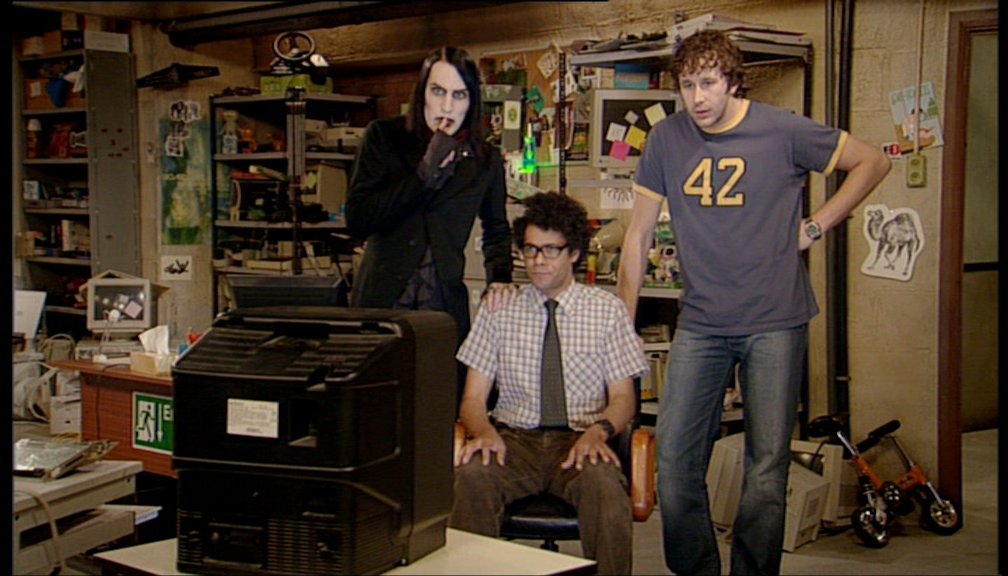
We had a real mix of abilities and courses: childcare and cabin crew in the first session; drama and Skills for Life in session two; and business and IT in sessions three and four. Some of the students were clear, confident and launched into the spirit of things. One of the cabin crew students made me laugh (internally of course) when I asked her what she’d do if a customer arrived who was late for check in and was being quite forceful: her immediate reaction was ‘call security’ and if – and only if – the customer apologised to her properly then she’d talk to them. Then she told me that the most important skill needed in the cabin crew role was communication and customer service. Bless. The business students all wanted to do events management, as they’d clearly just had a module on this, and the IT students just wanted to lurk in a basement and solve people’s problems remotely (why yes, The IT Crowd was actually a documentary, didn’t you know?).

Based on a true story?

My favourite group were the Skills for Life students, many of whom needed a lot of encouragement to come and talk to us. Jill brought me a particularly anxious one with a ‘come and talk to my friend Kirsty, she’s lovely’. The student, A, was so clearly uncomfortable that I set aside the questions and we just had a chat: A told me that they didn’t know what they wanted to do, but they really loved video games and drawing. Their parents had told them that this was rubbish and they’d never get a job doing that, so we talked about all the different aspects of game design (storyboarding, writing, artwork, sound design etc) that weren’t coding and I told them about Rex Crowle and his career in game design. I asked them if they’d heard about Big Creative Education who do game design courses as well as other creative skills, and then at the end of the session I introduced them to another lovely person rather than leave them floundering. I made a point of speaking to them at the end of the session, giving them the web address of BCE, and suggesting they looked at the journey planner on TfL.

I spent some time after meeting A fuming quietly about people who don’t support their kids: it’s really hard to remember at times, but our dreams are not theirs.

Me.

Another student from this group, E, was also brought over to me. Her passion was drag shows, which she travels all over the country to see, and she wanted to be a make up artist because of this. She had no idea about the theatrical and special effects make up course, so I signposted that and suggested she spoke to her tutors about it. We didn’t do any interview questions, but both A and E went away feeling reassured and having broken through a barrier about talking to unknown adults.

Miriam and I debriefed over lunch at Fresko in Debden Broadway and put the world to rights before heading home for an afternoon of meetings, an evening mercy dash bearing coffee to Harlow, and ferrying the kids to Scouts where Thing 3 managed to get covered in tie dye despite wearing an apron.

Things making me happy this week:

  • the epilogue for the last D&D campaign
  • building my character for the next campaign
  • a cool pool on very hot days
  • fresh strawberries, loganberries and raspberries from the garden
  • watching the parakeets
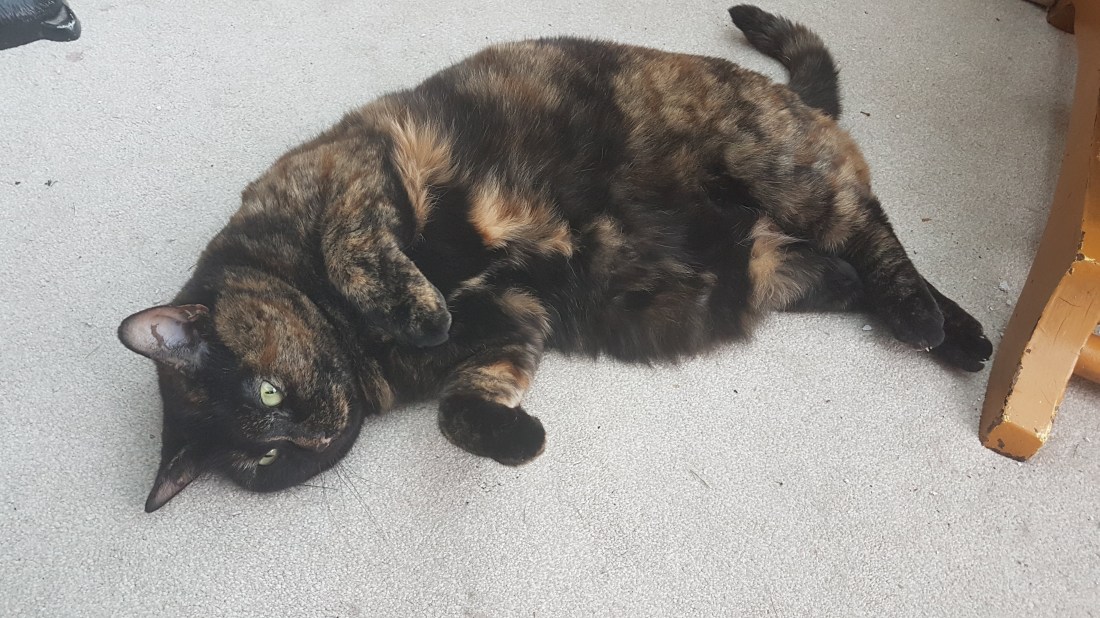
  • the 11 degree drop in the bedroom temperature last night! The cats were also grateful (see a melted Lulu in this week’s cover image)
  • more excellent course feedback
  • making jewellery for the school fete
  • tiny coot chicks cheeping on the lake this morning

See you next week!

Kirsty x

What I’ve been reading:

A Question of Identity/The Soul of Discretion/The Comforts of Home/The Benefit of Hindsight- Susan Hill

The Midnight Hour – Elly Griffiths

113: magic carpet ride, anyone?

This week was my first day out with the Imagination Playground big blue blocks since last summer – as is now traditional whenever I’m down for delivery, it rained, but fortunately not enough to put the children off their play! This booking came as a result of one of my teacher training sessions, where I used the tabletop version of the blocks as part of a DT session.

The school, Children’s House, is one I have visited before briefly: it has a very beautiful but sadly at risk mural by the artist and writer Eve Garnett whose One End Street books I loved as a child. It’s an interesting place – designed by architect Charles Cowles-Voysey based on Maria Montessori’s vision of an ideal learning environment for young children, opened by the author H.G. Wells in 1923 and visited by Gandhi when he stayed at Kingsley Hall as a guest of Muriel Lester. It’s a nursery school, so filled with tiny, curious little under fives who love to play.

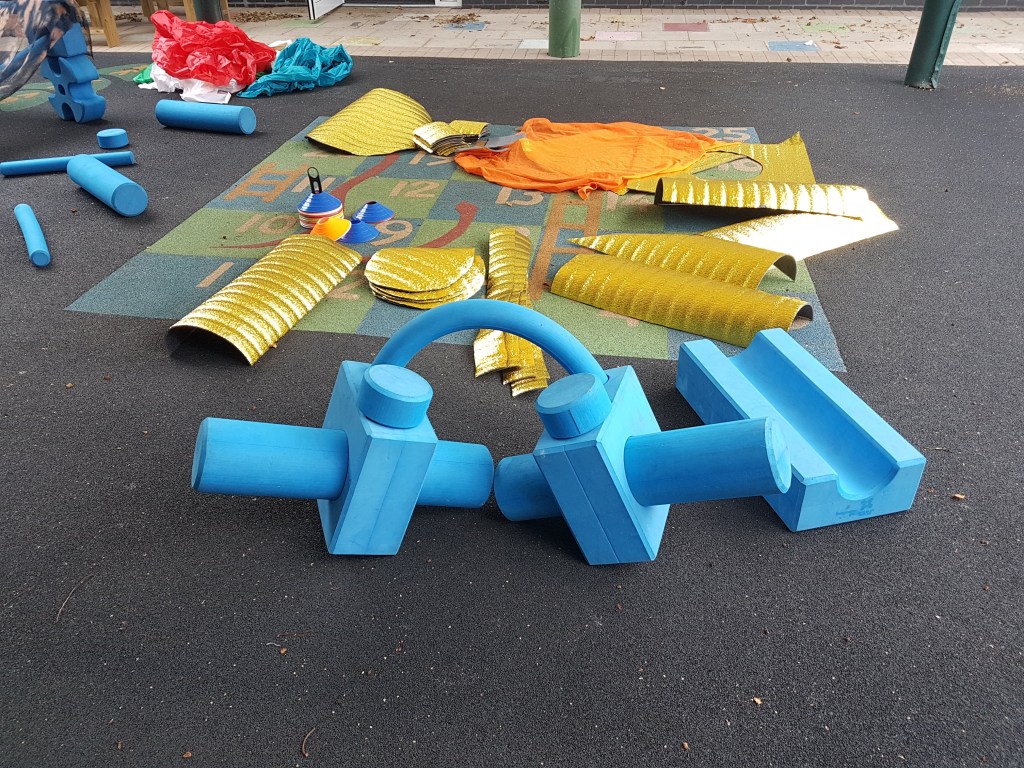
Planned as an opportunity for parents to join their children for a play session, we kicked off with a small group of adults and children but it quickly grew as more kids decided to join in. We had our blue blocks, swathes of fabric in different textures and colours, marker cones and plastic play balls, and piles of shiny crinkly emergency foil blankets, and laminate floor underlay cut into strips and shapes. Kids adore these last two things for some reason!

Way back in the mists of time I trained as an early years teacher so am a big supporter of open-ended play and loose parts as part of child development. The big blue blocks were designed by Cas Holman for just this purpose. We have the largest version – just over 100 pieces, from long ‘pool noodles’ to chunky rectangles which were bigger than the children. We have added various other bits (see above) to the kit to bring more colour and what we have ended up with is a bright, pop-up experience that works for all ages.

I had a great day, and so did the children and adults: the headteacher was unable to resist appearing in the sessions to get down on the floor and play, which is always a good sign, and we’re going to visit their federated school in a few weeks as well. The channels in some of the blocks inspire creations like marble runs which work with the plastic balls, and the size of these runs mean a group of children can all join in. Once one child starts, the others join in, adding to structures and building on ideas to make them bigger and better. The sheer size of some of the blocks means co-operation is necessary to manoeuvre them into position. With the aid of adults, dens were created using fabric and the playground structures, allowing all sorts of imaginative play.

With the younger groups (the three year olds) there was a high level of additional need in the form of hearing impairments so the bright colours and textures of the kit became sensory experiences. The wonderful thing about open-ended play is that it’s impossible to get it wrong and the possibilities are endless.

The older children – four year olds – brought their story telling powers out to play with them. We built the tallest tower in the world so we could reach the teachers’ biscuits, and we built a boat to go on the sea with. At one point I got taken on a magic carpet ride to the seaside where we had ice creams and went for a paddle before going on a rollercoaster and then flying back home. All around me I could hear other adults discussing what was happening around them and making plans to buy fabrics and other things to add to their own blocks. I was quite sad to leave at the end of the day!

This week I am working with Key Stage one and two children as well, which is a less open-ended but just as creative session. Let’s just hope (for my team’s sake!) that the rain holds off.

Hope your week was as much fun as mine!

Kirsty x

I also…

What I’ve been reading:

Abbatoir Blues/When the Music’s Over/Sleeping in the Ground – Peter Robinson

101: Let us play

Over the last few weeks I’ve listened to a four part podcast from the BBC World Service’s The Compass, called ‘Why We Play‘. Each part explored a different phase of life, from childhood through to old age, and the impact and potential benefits of play. It covers things like video games, which can help adolescents navigate issues around anxiety and depression; why we shouldn’t stop playing in old age; the importance of play in making sense of the world in the early years; and how play can increase productivity at work. I won’t go into too much detail here but it’s an interesting listen.

As part of a team developing a museum dedicated to young people, where play is one of the key themes, we bang on about play a lot. I even go off to colleges and universities occasionally and talk about how important it is, referencing people like Johann Pestalozzi, Friedrich Froebel, Maria Montessori alongside toy designers like Patrick Rylands.

PlayPlax, 1968, Photograph: David Levene/Guardian

You may not recognise Rylands’ name but for people of my generation his toys will have been part of your childhood. He was the creator of Playplax, which – along with its direct descendant Super Octons – was still a staple part of nursery kit in the late 1990s. He talked about Playplax as something that was ‘just stuff’: there were no pre-determined outcomes, only what the child made of it.

“A toy that does everything by itself, does nothing for the child. The main purpose of a toy is to enable children to enter into a world of make-believe, as it is in this way that children relate to reality.”

Patrick Rylands

The power of these little perspex squares is amazing: when we were doing some training with a childcare setting in the summer on how to use the big blue blocks we took the Super Octons along and several of the adults latched onto them and spent ages with them. A teenage girl at Epping Forest College made a set of sunglasses in a session which she was very proud of. People love the simplicity of slotting the shapes together, of mixing the colours and building up and out. The blue blocks (and Lego, and any building kit!) have the same effect – they are an invitation to play, to build and create.

Where was I? Oh yes, banging on about play again. Going out and talking to teenagers can get a bit depressing at times as a) they don’t want to talk back to me, so getting them to answer questions is like squeezing money out of HMRC and b) they often tell me that you stop playing when you stop being a child. The definition we often use, both in the sociology and the play sessions, is that childhood lasts from birth to puberty, although we do discuss legal and social definitions as well. They talk about play – when I can get them to talk at all – as something they ‘used to do when they were young’ (thanks, 15 year olds!) or as something they do with younger siblings or cousins.

There are many definitions of play, especially when you start getting all academic about types of play and things (it’s Sunday, so I won’t) but the very simplest one, the one I use when talking into the teenage void, is that it’s something you choose to do for enjoyment and recreation, rather than for a serious purpose. If you ask them what they do for fun, they tell you that they go and hang out at Westfield (other shopping centres are available, apparently), play online games and so on. Some may play football or skateboard, some might have a hobby that they enjoy, and some – very occasionally – admit to enjoying the odd board game at Christmas or with family. They then often mention Monopoly, which to me is less a game and more a form of hideous torture, but there we are. I’m still not sure they agree that their non-game activities are ‘play’ but at least they are talking to me.

Before I joined the museum, the Importance of Play session finished with a chance for the students to play with various toys that they had seen in the galleries – a teddy bear’s picnic, dolls house, Playmobil sets, building blocks etc – and their task was to set them up as they might if they were inviting nursery children to join in and then we’d discuss what children might learn. This might be fine or gross motor skills, social skills, colour matching or maths. After several months of the teenage void I noticed that as we walked into the classroom the students were more interested in the activities than in the talk, so I flipped the session and invited them to play at the start of the session. It was a revolution, as far as I was concerned, and the sessions became much more open: they’d play, and then we’d ask them the same questions about what young children might learn. But now they’d answer me, and they’d talk about their own activities, and were more confident in sharing their prior knowledge.

The podcast (see, you knew there was a point) made me think about whether I was practising what I preached, to coin a phrase. Am I playful enough in my adult and work life? You all know what I enjoy doing – I make things, I hurl myself in lakes and so on – but do I play?

Sometimes, I admit, I forget: having to be a proper grown up and keep other people alive, negotiating peace settlements among children, being the grumpy one that makes them turn the Minecraft off and so on are not conducive to playfulness. But I sing and dance in the kitchen while I cook those dinners and spin passing children into a twirl, and sometimes have the urge to bake a cake and smother it with Smarties ‘just because’. When London sister and I went to Ireland for our niece’s First Communion there was a bouncy castle and we regressed entirely, spending a lot of the afternoon on it and ganging up to bounce our mum off the apron at the front; playing with the niece and nephew and being entirely silly. When we have our big family holidays the various children often accuse us of being childish, as we tend to get a bit giddy.

Things 2 and 3 do enjoy board games and both of them will help me if I get a jigsaw out at Christmas, and Thing 2 likes to play with beads and make things. Thing 1 enjoys playing with make up and will be doing a course at college next year which will teach her about special effect make up. Popular games here have been Tsuro, Mijnlieff and Horrible Histories’ Stupid Deaths games, as well as traditional fare like Pop-up Pirate, Hungry Hippos and Connect 4. My mum bought us Sorry!, in a vain attempt at revenge for the Christmas when she got so annoyed at being sorried once too often that she threw it across the room and we’ve never let her forget it. It failed – I just saved it till she came to stay and made her play it with them.

Last September I joined a Dungeons and Dragons campaign – I used to play when I was at uni, so when I was invited to join this set of characters that I’d already made voodoo dolls of at the Dungeon Master’s request, I jumped at the chance. So every Thursday night I wander off down the road with my dice and my tablet and for a couple of hours I’m a bardic gnome (or possibly a Gnomic Bard) with a magical dragon plushie I haven’t brought into play yet, a set of spells and a good excuse to make extremely silly puns on a regular basis. And I love it – I’m still finding my feet and sometimes my dice hate me and conspire to kill me, but it’s so much fun. Some weeks are tense and battle filled (I got grappled by a giant monstery thing!) and other weeks are completely daft and giggly (last week we ‘helped’ someone with the world’s most uncomfortable first date) but I love it. Some weeks, if we have people missing, we end up playing board games and that’s great too. One of my lovely colleagues also plays D&D, and we often sit over coffee and talk about our campaigns – neither of our partners play, so we can nerd out in safety!

A secondary school I visited a few months ago, which is for boys with social, emotional and behavioural needs, has a D&D room. These boys can go and work through different scenarios in a safe space, giving them a set of coping skills they can apply in real life. They might not run into owlbears or svartalves in the streets of East London but the skills they learn are very much real.

All our new learning sessions will have elements of play as well as imagination and design, so I’m learning to build it more into my work life. Enforced playfulness in work life can be excruciating, especially when confronted with ‘role play’ activities in training sessions, but being more playful in how I build activities is definitely more fun!

So, I might not be entirely playful – but I’m working on it….

With that, I’m off to do the ironing and then I’m going to play with some yarn. See you next week!

Kirsty x

The House at the End of Hope Street/The Dress Shop of Dreams/The Witches of Cambridge – Menna van Praag

The Memory Shop – Ella Griffin

The Innocent – Harlan Coben

Doctor Who: Tenth Doctor Novels vol 1 (Audible)
100: What I did in half term

This feels like a pretty momentous week, what with it being my 100th blog post and so on, but in reality it’s been one where I have mostly been unconscious at 8.30pm every night after a full-on day – yes, even on Friday when London was being battered by Storm Eunice, for which I have been soundly told off by the clan.

As I may have mentioned once or twice before, the museum I work for is in the middle of a spectacular reinvention and part of the process is making sure we have young voices throughout the museum, reflecting what’s important to them in the 21st century and co-creating work with them which will be on display. I am attached to the Design gallery, where we are exploring some key messages – one of which is around sustainability. Our target age range (though anyone can use the space) is 11-14, and so we’re working with a local youth service called Spotlight.

Spotlight is the sort of youth space that I would have loved to have access to growing up (heck, I’m pretty keen on it now!). It has media spaces like a radio station and tech rooms, a boxing gym, dance studio, cafe, games room, fully equipped music studio, health and wellbeing services on site, friendly and accessible youth workers who have a great relationship with the young people and (where we’ve been working this week) an art and fashion studio. This last is underused, as it’s a space where the young people aren’t quite sure what they can do in there, but hopefully we’ve changed that this week!

The project kicked off on Tuesday with a trip to the V&A all the way over in South Kensington, with 15 young people, the designer Scott Ramsay Kyle who was the creative on the project, one of our freelance team, a few Spotlight staff and me all on a minicoach bringing back memories of school trips for the adults at least. In stop/start London traffic it was a miracle we only had to pull over once for a girl to be sick, but it was a close call!

The V&A is still closed to the public on Tuesdays so the young people (YP) were in VIP mode – we fed them lunch, where they were joined by our Director and some of the curatorial and learning teams, and then we took them to Gallery 38 where our collection is currently being stored and conserved in preparation for going back on display in 2023 when Young V&A opens. Katy and Trish, two of the curators, showed them some examples of historic clothes and talked them through some of the processes used to make them. The YPs were amazed that sustainability was a ‘thing’ several hundred years ago although not so much in the 1960s. I won’t go into too much detail here as I have to write an ‘official’ blog post about the project soon.

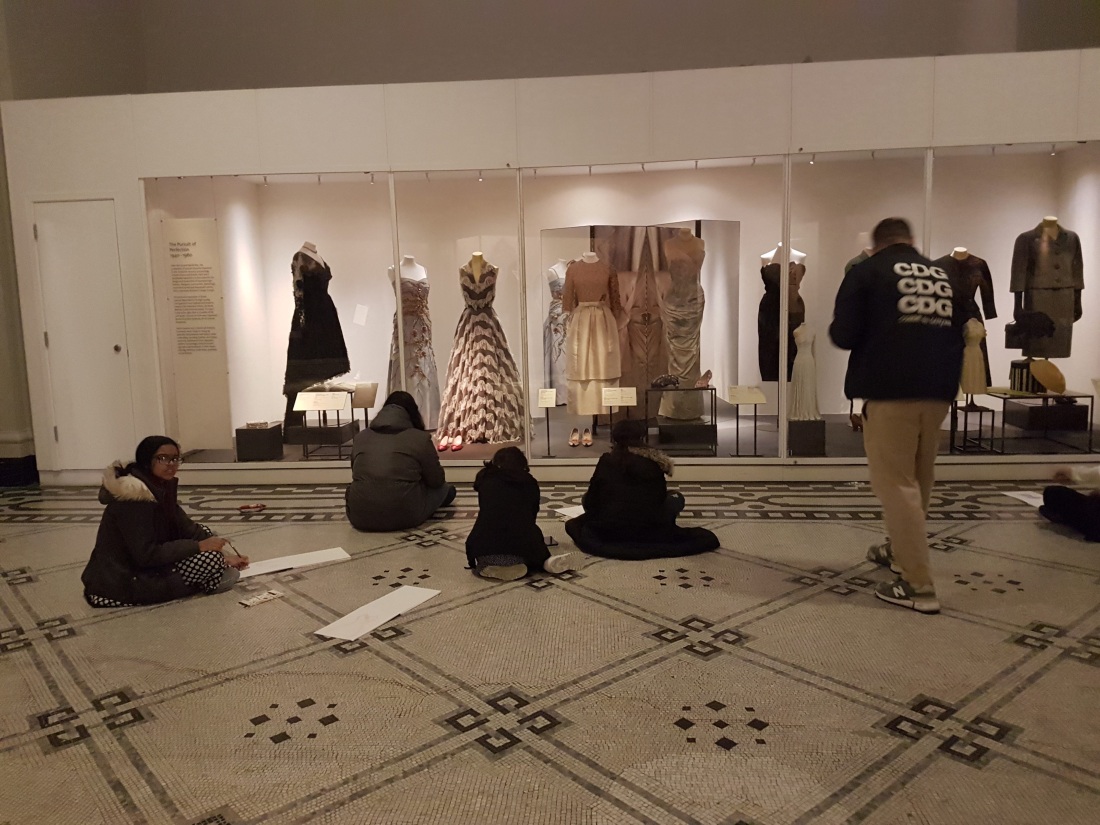
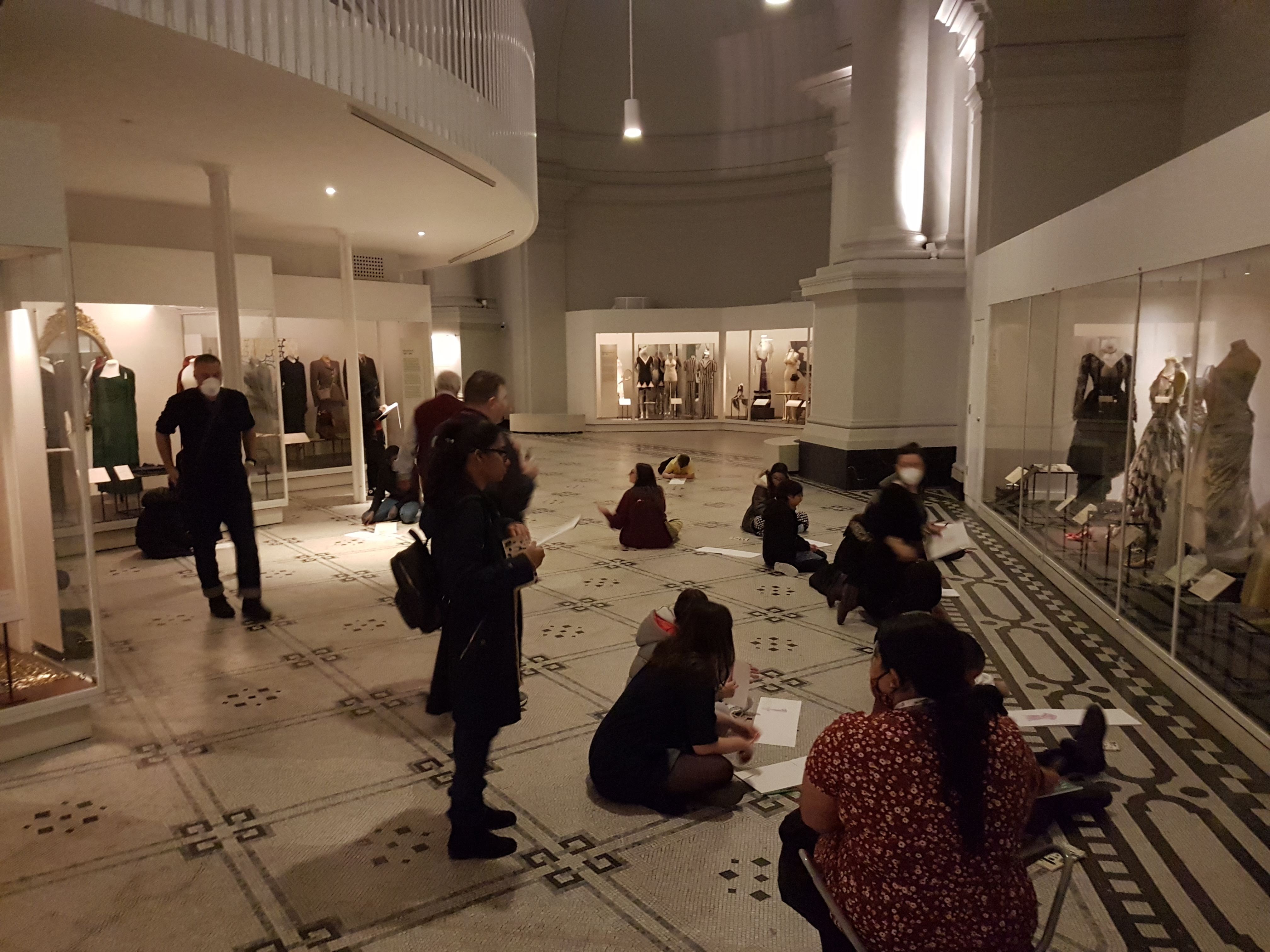
We spent some time in the fashion gallery exploring clothes through the ages, mark making in their new V&A sketchbooks and focusing on detail and embellishment. Watching children and YP make the mental connections between new and existing knowledge is always a joy – the gaggle of Year 8 Bengali girls who had been learning about the East India Company in school spotted a dress made from the very fabric they’d been learning about, which caused a twitter of excitement and recall of history lessons. Only one of the YP had been to the museum before, on the previous project so the space was very new to them. South Kensington is a long way from Poplar both physically and psychologically, and while many had been to the Science Museum or the Natural History Museum the V&A hadn’t figured. Being able to sprawl on the floor to draw, to have access to all the knowledge they needed from curators and to navigate the space on their own terms made the galleries accessible.

VIP access to the fashion gallery

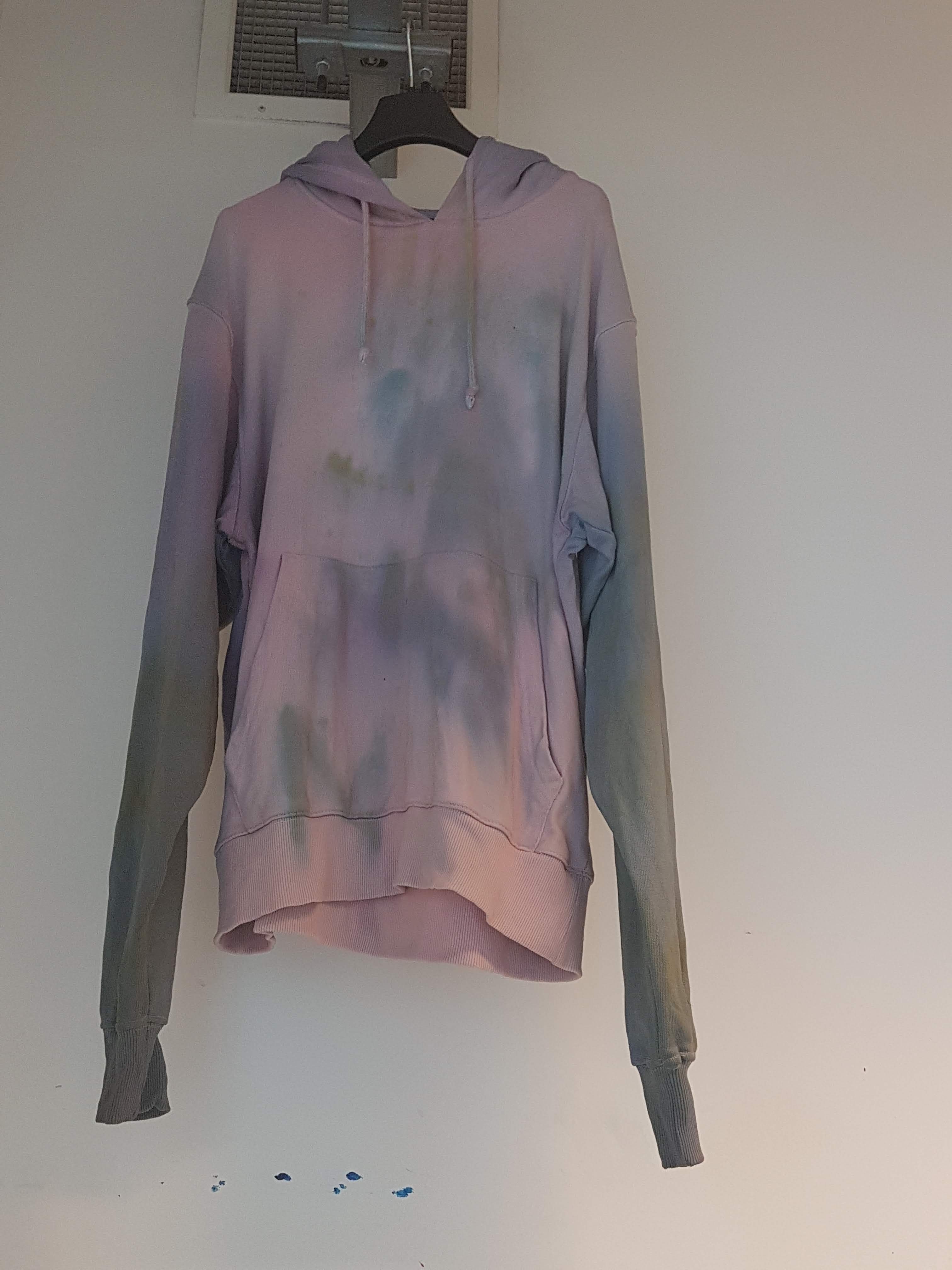
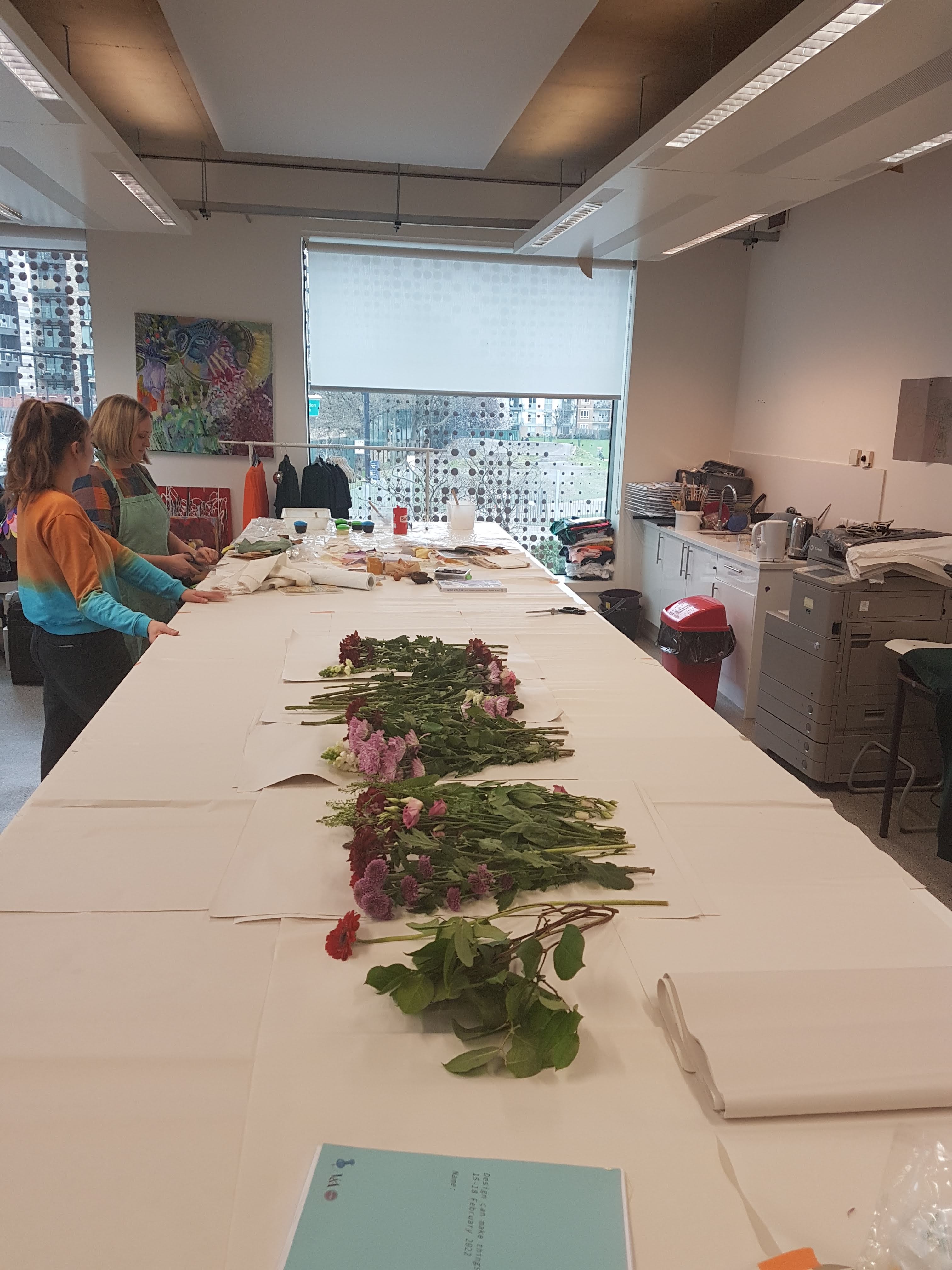
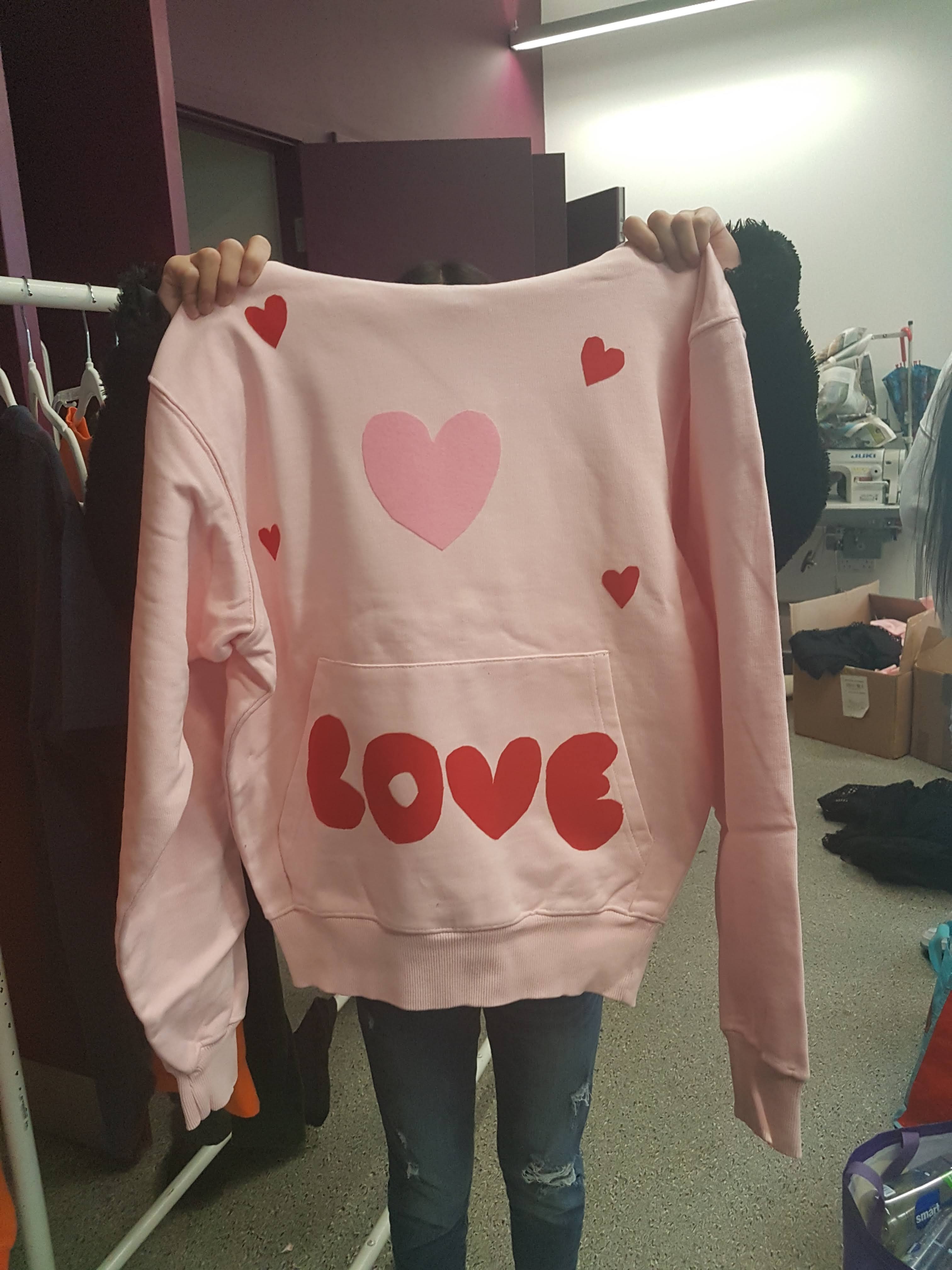
The rest of the week was back at Spotlight with fluctuating numbers of YP – but always a hard core of two or three who came along all week and surprised themselves with what they created. Wednesday was all about fashion and nature, so we worked with two creatives on different aspects of this. Hanna Whiteman explored natural dyes with the YP, helping them create swatches from red cabbage, turmeric and safflower and exploring the effects of different additives. Memunatu Barrie worked from cut flowers and textures found in the park outside, exploring how to create texture and line on paper. We finished up with a dye experiment, hanging the sleeves of a pink hoodie into the dye vats overnight. We only had four YP that day which given the messiness and excitement of the dying was probably a good thing! We were also joined by Maraid Mcewan, our inclusive designer in residence who came along for the rest of the week.

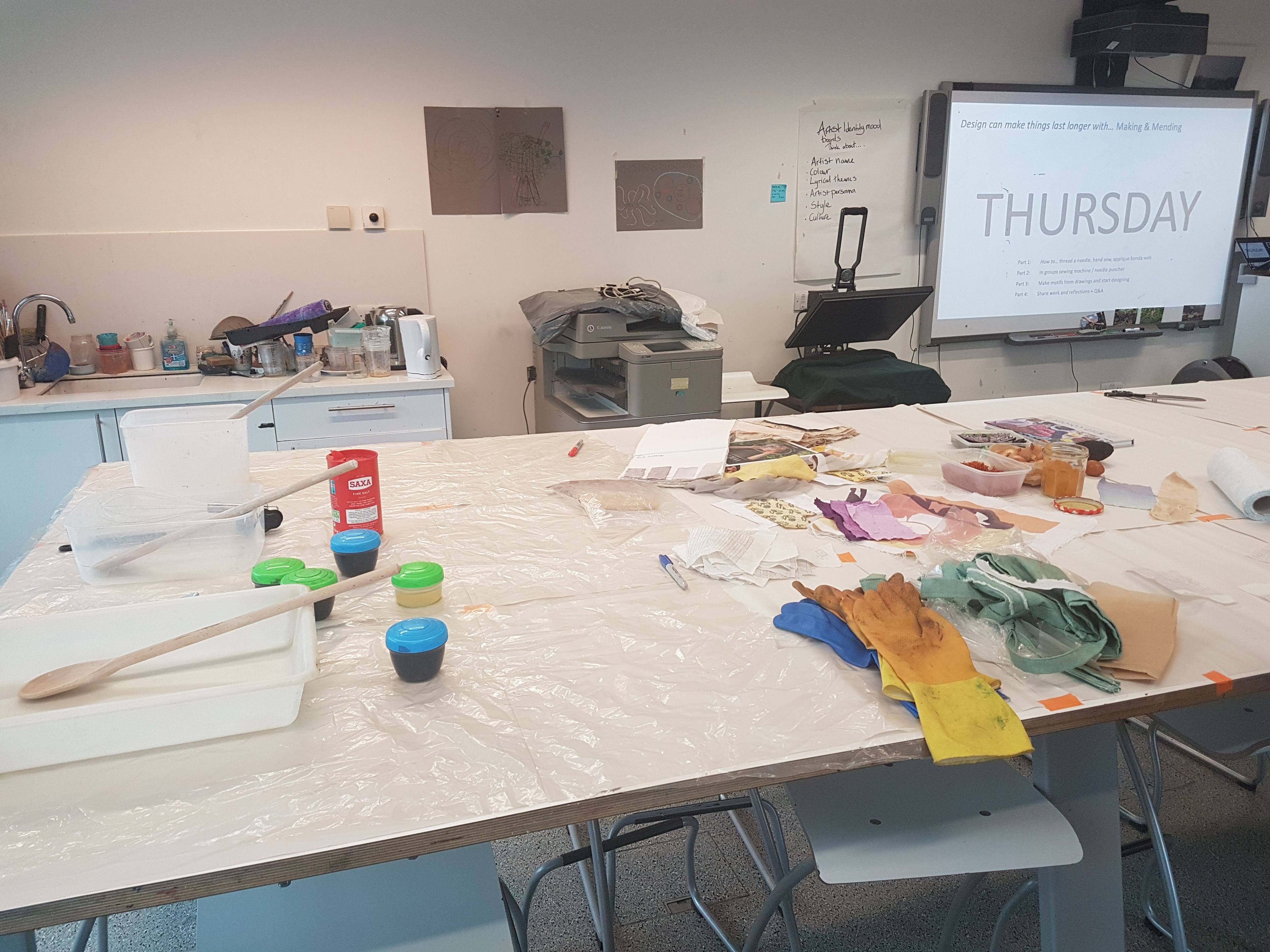
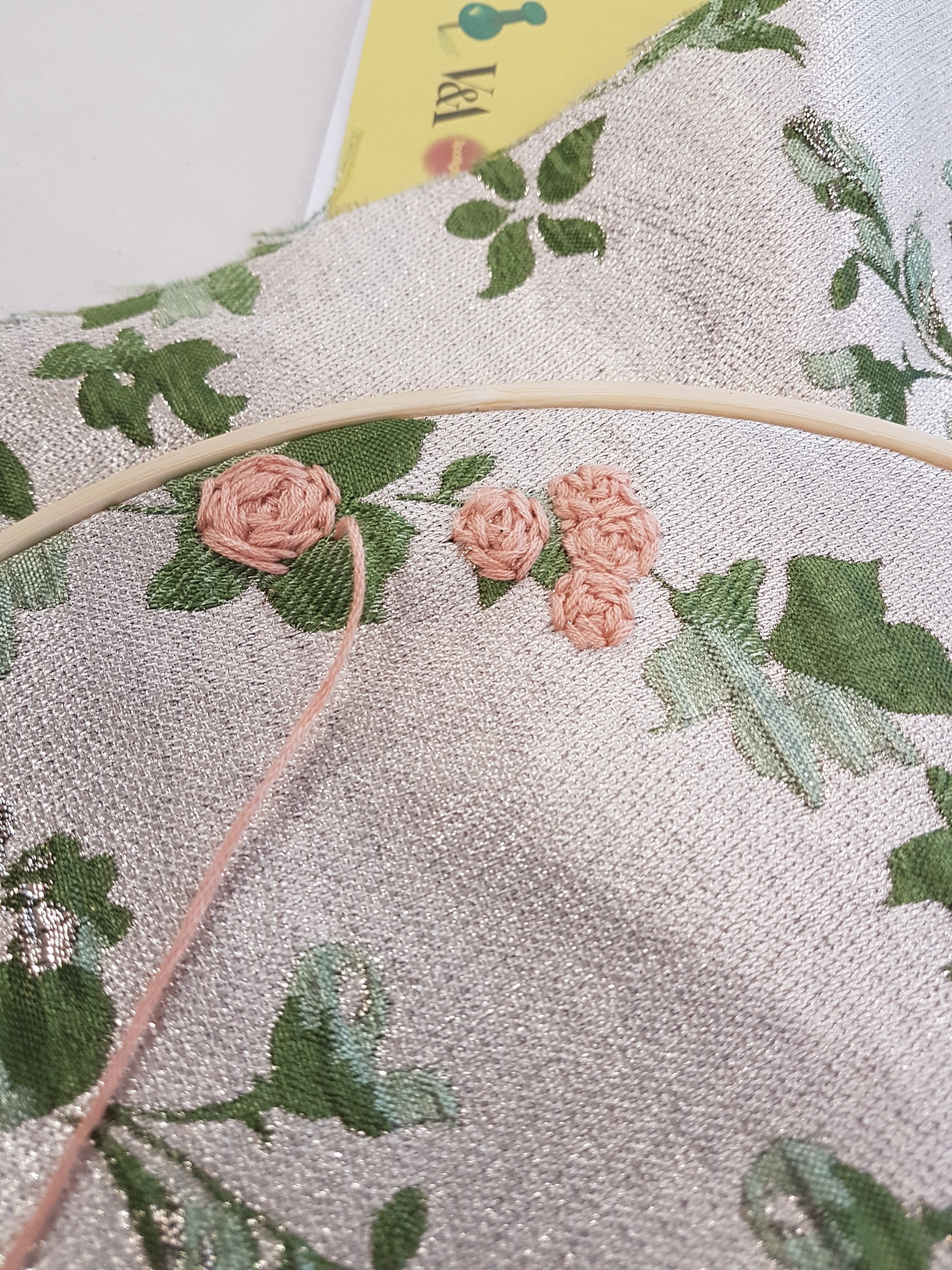
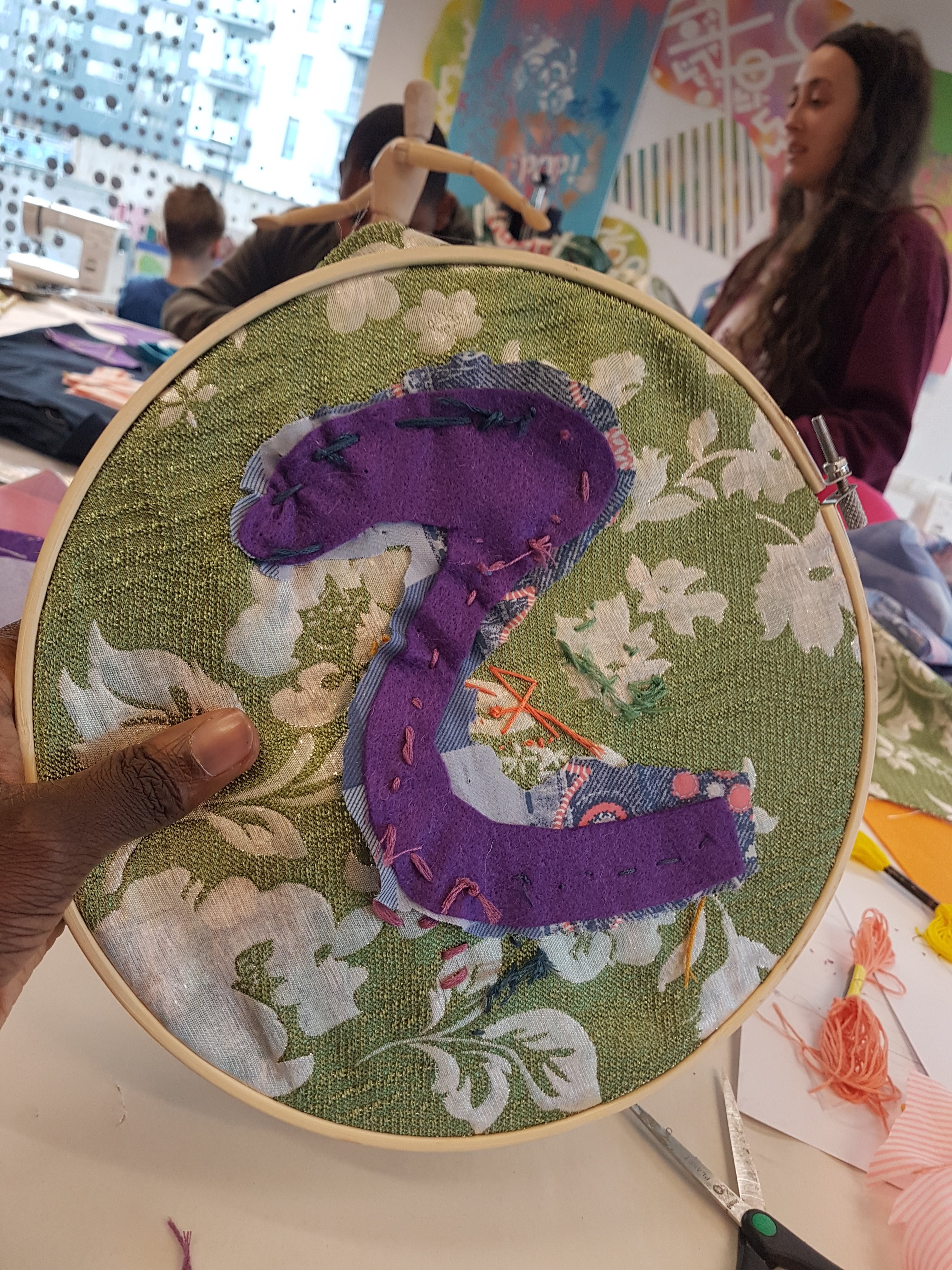
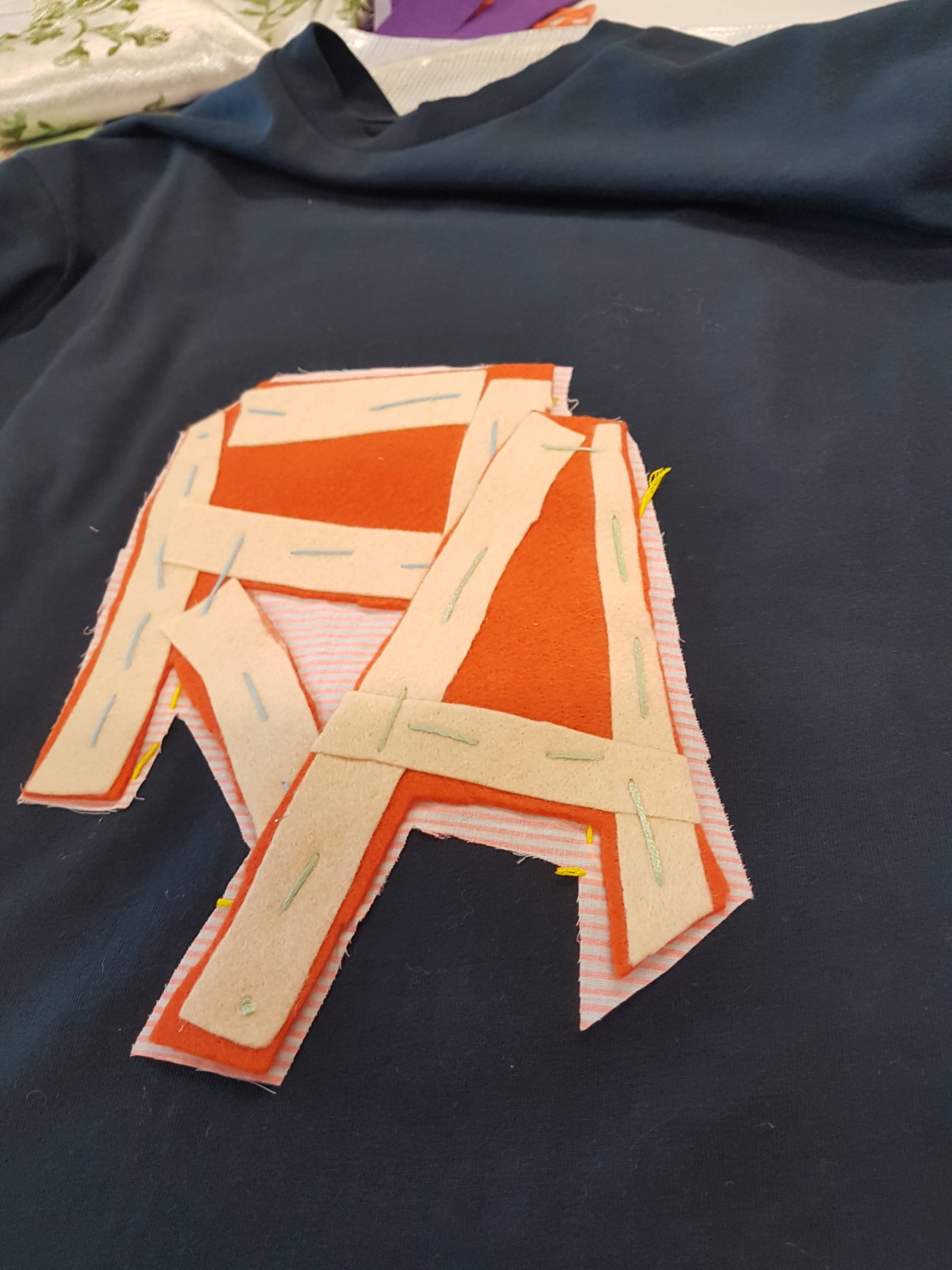
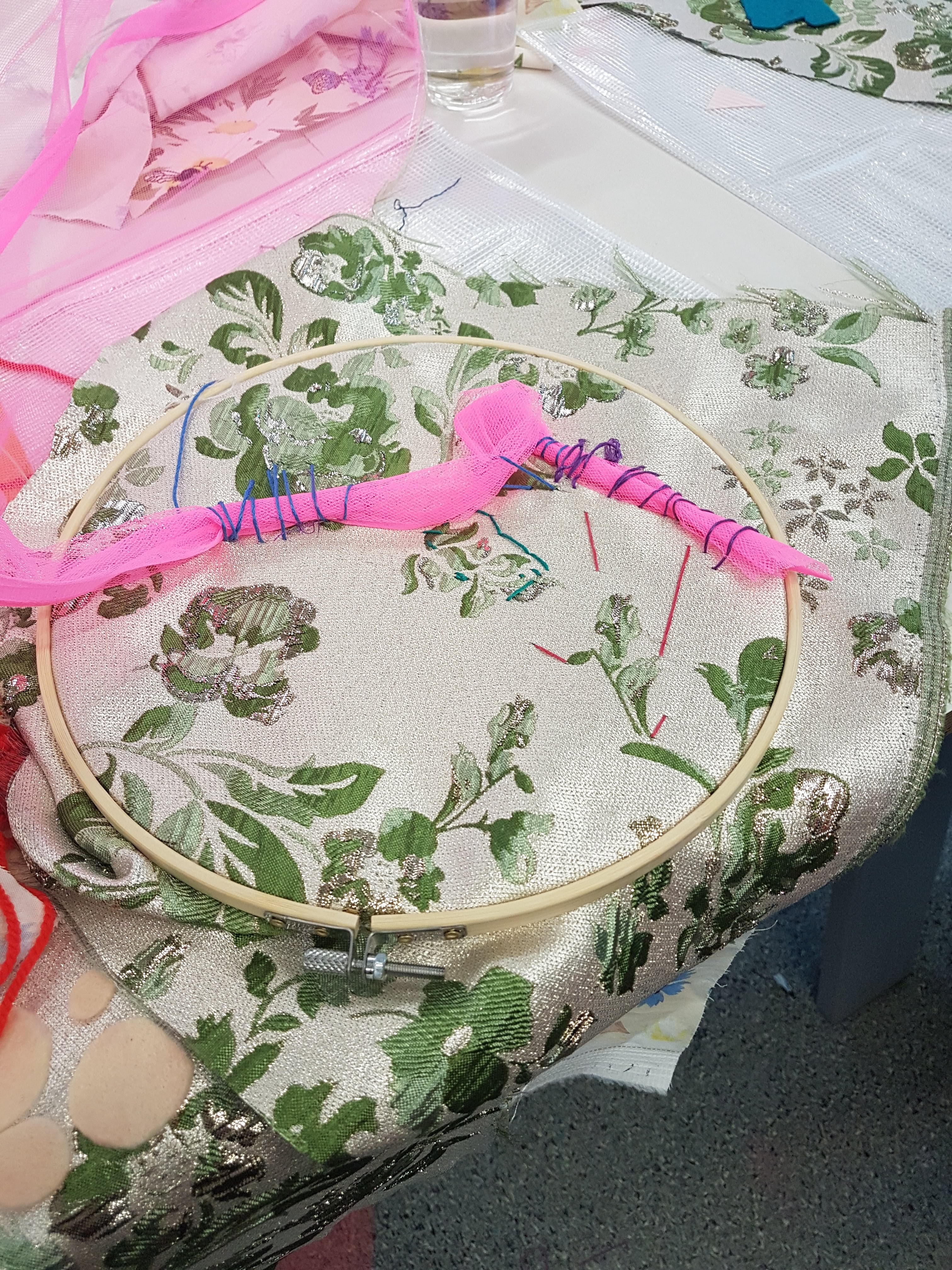
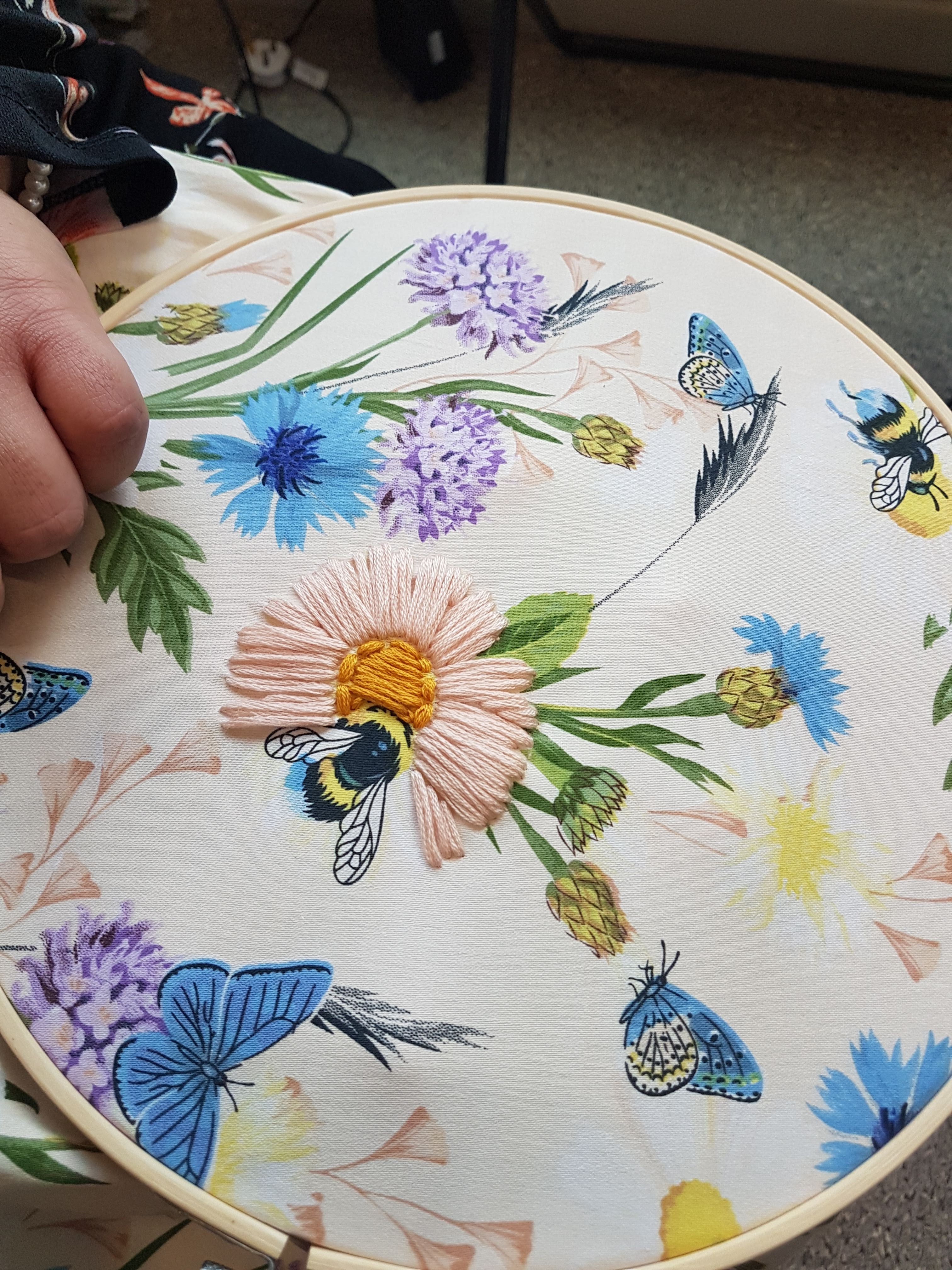
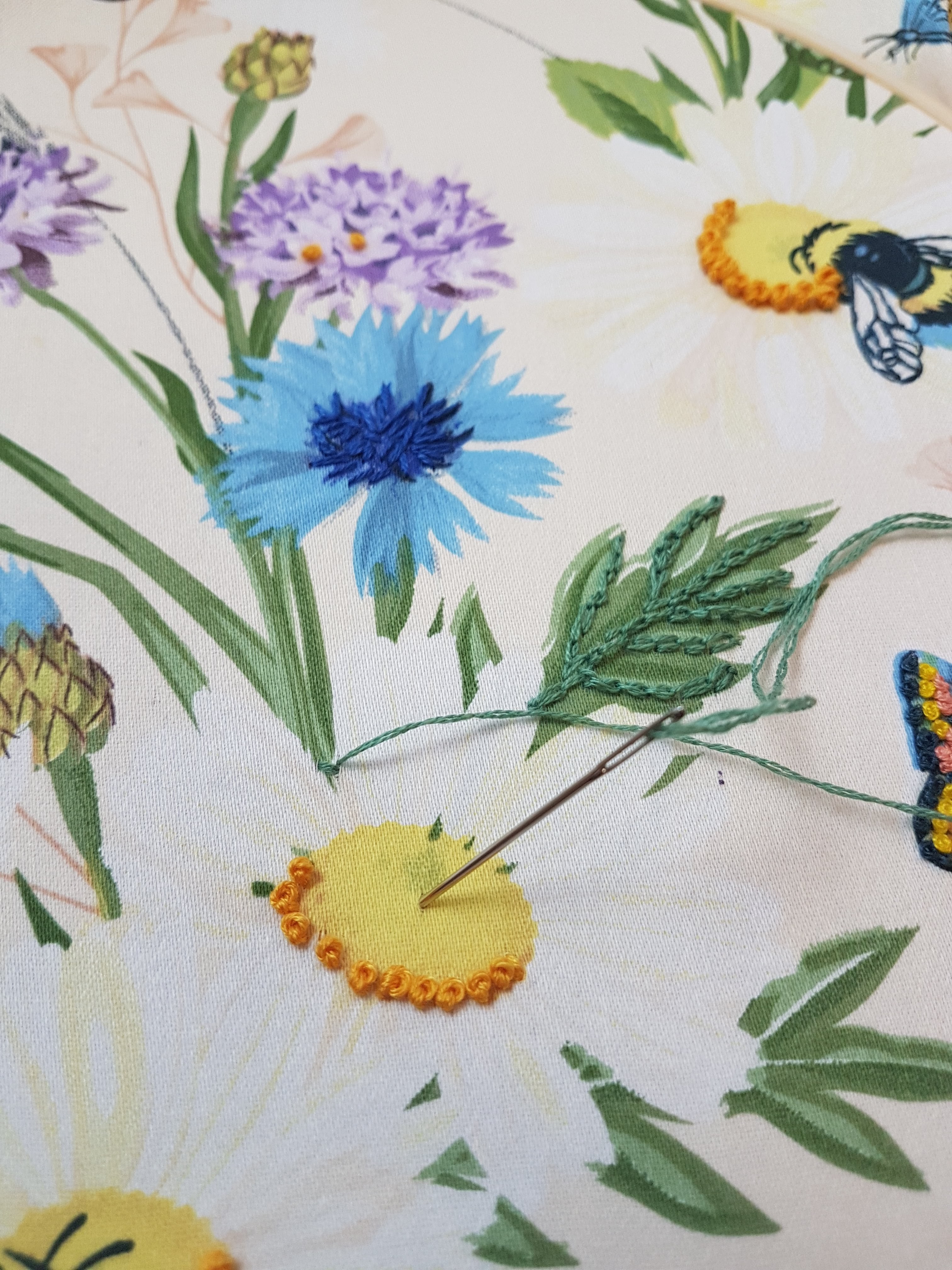
On Thursday we broke out the deadstock fabric and charity shop finds and introduced some sewing skills – curator Trish joined us again, and we explored mark making on fabric with embroidery thread and layering using bondaweb and felt. Some of the YP took their hoops and threads home to work on, as they were so engaged in the process. Trish, Maraid and I also got pretty attached to ours, as did Lydia the brilliant youth worker. There had been an SEND open day in the morning so we attracted a range of YP with different needs in the afternoon, and as there were so many adults it worked really well in terms of the level of assistance we could provide. As I know from helping the Things sew at home, it’s much easier with many pairs of hands to help thread needles and untangle knots! Although our target range for the project was 11-14, the centre works with YP with additional needs up to the age of 25 and we will be an inclusive museum so everyone was welcome to join the session.

On Friday, despite Storm Eunice making an appearance just before midday, we saw 15 YP over the day – some carrying on with their embroidery, some remaking clothes by embellishing and adding materials, some discovering the studio for the first time as they had only signed up to the centre on the previous day. There was some knitting, some draping on mannequins, fabric painting, more bondaweb as the YP customised clothes, but such a creative buzz all afternoon. We sent them all away with their hoops and embroidery (‘what – we can keep them? They’re for us?’) and the things they’d made. The injection of coffee mid afternoon from the cafe was much needed – if you find yourself down in Poplar in need of refreshment, the cafe makes quite possibly the best chocolate brownies I have ever tasted, and a good range of other food at very reasonable prices too.

Other quotes from the week included ‘I’m eleven years old and I’ve made two outfits in two days!’ (one of which was his own interpretation of a 17th century waistcoat he’d sketched on Tuesday), and ‘This is the best place EVER’ from one of the new sign-ups.

Although Scott and I were shattered by the end of the week, we were blown away by the talent and creativity we’d seen over the week and we can’t wait to go back to finish up their co-creation at Easter.

See you next week!

Kirsty x

What I’ve been reading:

Torchwood – First Born (Audible)
Ninth Doctor Novels vol 2/Tenth Doctor Novels vol 1 (Audible)

The Lost Art of Letter Writing/The Witches of Cambridge – Menna van Praag

Ink and Sigil – Kevin Hearne