This week I’ve spent a lot of time on buses on my way to and from visits to interesting people. I like London buses. They are reliable, cheap and almost never involve changing at Bank station. They’re also above ground so hopping on buses around the borough is helping me consolidate my mental map of Islington – this week I connected the dots between Highbury and Islington Green, for example. I now know that the number 4 bus will get me back to Barbican from Finsbury Park, and that it’s no slower than taking various trains.
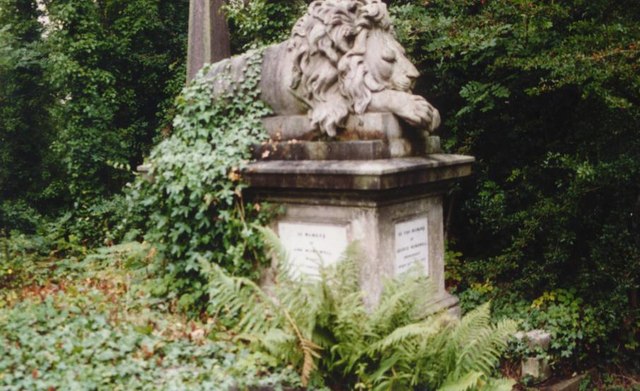
I like to sit on the top deck when I can, as you’re above the shop fronts and can see the bones of the buildings above them. Islington, bordering the City, has elegant squares (especially in the bit around New River Head where we’re building our new Centre) and brick villas and terraces – home to the Charles and Carrie Pooters of Victorian London. There are modernist council estates like Berthold Lubetkin’s Spa Green Estate and Bevin Court. Interesting buildings include a gorgeous Art Deco cinema (now a community hub) in Upper Street. Exmouth Market has traditional tiled pub fronts, and the old Metropolitan Water Board HQ (also New River Head) oozes Edwardian grandeur at the front and 1930s sweeping glass brick glamour at the old Laboratory building. There’s Islington Green, a tiny square where the statue of Bob the street cat holds court. There are also ridiculously posh corners like Highgate Village, and of course the gothic glories of Highgate Cemetery.
The Pooters, residents of Islington – Diary of a Nobody, George and Weedon Grossmith
There are railways and stations and canals, including the very long Islington Tunnel, and for some reason a lot of theatres in pubs, and medieval wells where people would go to take the waters. The more time I spend on buses and visiting new places, the more I like it. I’ve even stopped getting lost on my way back to the office.
A visit to Artbox in Islington, an arts organisation working with adults with learning needs
Coffee with Amanda
Finishing Silent Witness – all 27 series!
Mike Bubbins’ sitcom Mammoth (BBC) and Deadboy Detectives (Netflix)
A walk in the early morning woods on Monday
Book recommendations from a colleague – finding a fellow fantasy fan is always good. Also, I read the start of a book over someone’s elbow on a busy tube and it looked really good so I had to buy it. Not even sorry.
What I’ve been reading
A Court of Mist and Fury/A Court of Wings and Ruin/A Court of Frost and Starlight/A Court of Silver Flames – Sarah J. Maas
Notes from a Small Island/A Walk in the Woods – Bill Bryson (Audible)
I have had much more of a grip on reality this week – whole sentences have tripped off my tongue, tasks have been completed, and the world is a less fuzzy place entirely.
This is just as well, as there have definitely been days this week when I’ve had to use all (both?) my brain cells to thwart the machinations of Transport for London.
On Wednesday I had an appointment to meet Enfield Museum Services team. Enfield is one of the boroughs on the New River between our site at New River Head and the source springs at Great Amwell in Hertfordshire. In 2013 they held an exhibition celebrating the 400th anniversary of the river and they’d kindly offered to show me some of their objects relating to the river.
The closest station to their object store is Brimsdown on the Hertford East line – geographically a 25 minute drive from here, but as a public transport user it appears to located somewhere north of Alpha Centauri on the astral equivalent of an unclassified road. Options provided by the TfL journey planner included two buses and a 60 minute walk from the next town; a bus, a tube, two overground trains and a National Rail train; three buses and a twenty minute walk; two buses, a short unicycle ride and an extra-dimensional portal; but not – whatever tweaks I made to the planner options – the very simple route I eventually took which was the bus to Epping, the tube and a single change for Brimsdown. I got buses back – all three of them – which was simple but still took the best part of two hours to go 12 miles.
There is currently no joined-up public transport equivalent of the M25, or even the North and South Circulars. There are plans for a series of ‘Superloop’ buses which basically follow the circular roads, but these won’t solve the problem of the lack of connection in places like Essex, where to cross the borough by public transport inevitably involves either travelling into Central London and out again, a multitude of expensive buses with limited timetables (Chelmsford only exists once a week on Tuesdays, apparently) – or driving, as although the ULEZ extends out almost this far, the London transport network with its cheaper fares doesn’t.
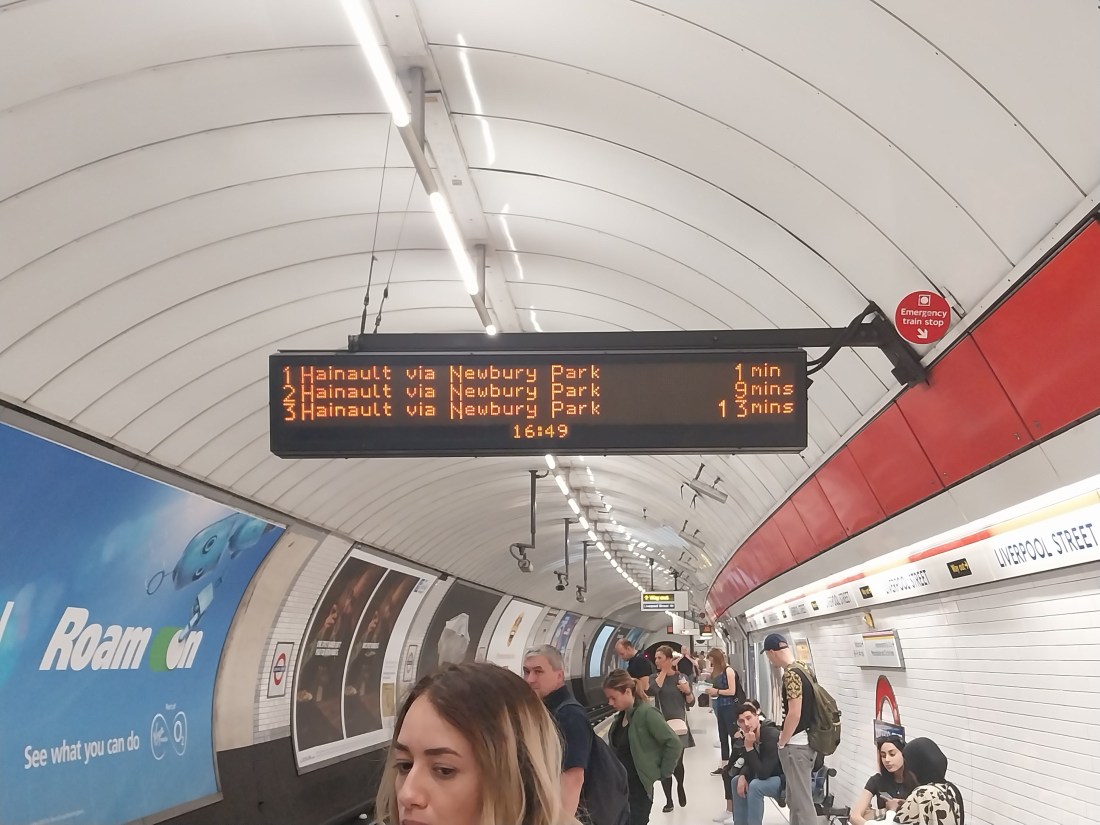
Thursday morning also demonstrated how disconnected the public transport system is at this end of the world. Epping, my closest tube station, is the end of the Central Line and is essentially a dormitory town for London. The station car park holds the dubious honour of being the largest on the TfL network, and so many people drive in from all over north Essex to access the tube as it’s cheaper to park and ride than it is to pay £25 a day peak-time return from Harlow, our closest national rail station. The car park’s 538 spaces are full by 7am Monday – Friday. It doesn’t help that since the line beyond Epping was closed in the early ’90s there has been extensive residential development in both North Weald and Ongar, which used to be served, and a steady erosion of an already erratic bus service.
‘Peak time’ service between Epping and Loughton has been steadily reduced: pre-covid we were told there would be ‘temporarily’ reduced service while they replaced tracks. We regularly have 20 minute waits for trains to Epping at peak times – stealth obsolescence, according to a friend, who is TfL-adjacent. If enough people are driven back to the roads by poor train service, they’ll have an excuse to close the line due to lack of use. At one point we were given hope by one of the proposals for Crossrail 2, which would have seen this branch picked up by that service and linked to Harlow and Stansted, but our optimism was misplaced. Crossrail 2 was paused in 2020 and the route will eventually link up already existing stations over the border in Hertfordshire, leaving us still disconnected.
A casualty on the tracks shortly after 7am on Thursday meant the line was suspended from Liverpool Street to all eastbound destinations, and unlike further into London there are no alternative lines. If you’re in London and heading east at the end of the day your heart sinks if the line goes down anywhere east of Stratford: the Elizabeth Line has made it marginally easier but there’s still an hour’s bus ride to reconnect with the Central Line (which you hope has been restored by then) and two more buses home if not. This was the route I used on Thursday morning: bus from Epping to Loughton, another to Ilford and then the Lizzie Line – 2 hours and 45 minutes in total. This was only because the 167 arrived first – otherwise I’d have gone via Chingford or Walthamstow. Equally long times for a 25 mile journey into the City. If the government at various levels want us to use public transport and get cars off the roads, there needs to be a joined up piece of thinking that genuinely works for underserved areas which connects up the different services – and we aren’t even particularly rural.
Luckily my day improved immensely: my first meeting was about the new heritage/STEM session that I’ve asked the wonderful Chris Bailey to develop. I first met Chris when he stepped in to cover a Victorian sailor session at Museum of London Docklands and we hit it off over a wide-ranging conversation covering ladies of negotiable affection, Doctor Who, Isambard Kingdom Brunel, how to demonstrate gravity and the dome of St Paul’s with a trampoline, and the wonders of STEM in museums. This week’s conversation covered gravity with the help of a tumble-dryer hose, Samuel Johnson and the variety of beards required for historic interpretation.
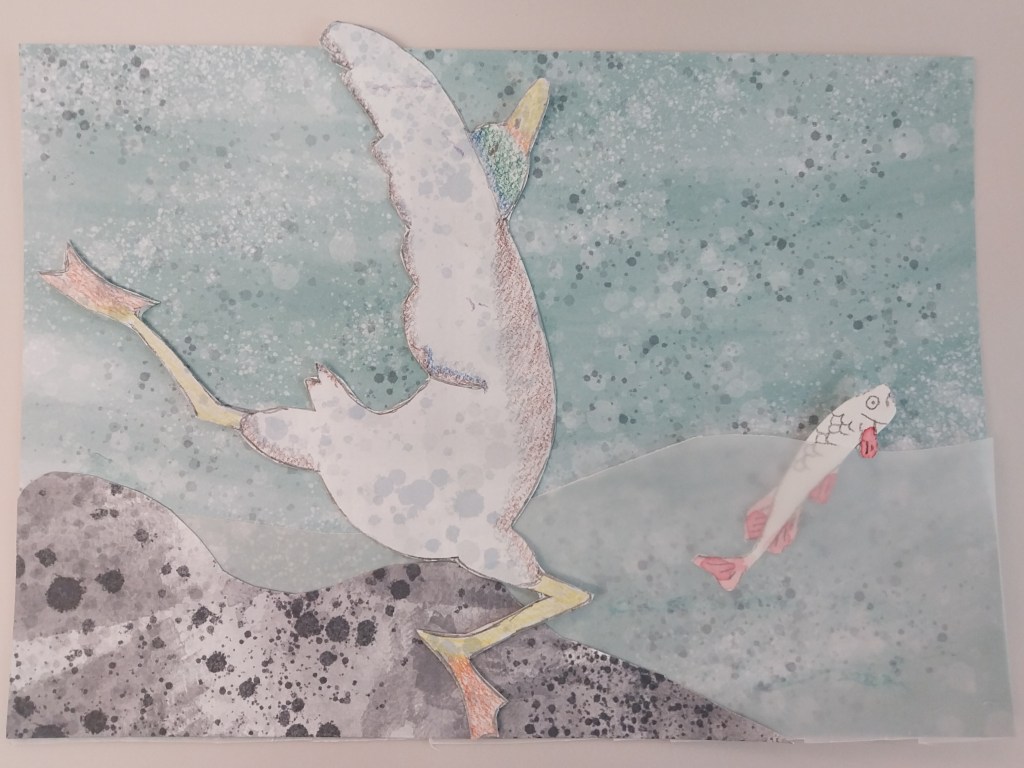
In the afternoon I joined Isabel Benavides at Finsbury Library for a family illustration session as part of the Summer Reading Challenge. Issy has just launched her first picture book, Yogi Duck and the Little Chick, inspired by RSPB Newport Wetlands and utterly charming. It’s the end of the summer holidays and parents are in survival mode, plus the weather was very changeable, so the session was quiet. The people who did attend stayed for almost the whole two hours, and we had some wonderfully fantastical conversations about our crafty creatures in yoga poses.
Either a duck in half-moon pose or me hurling myself into the lake.
Other things making me happy this week:
a site visit with illustrator Toya Walker to develop a spotter sheet for families at our Open House event and beyond.
Mooch round the market followed by coffee with Miriam.
This week I am off work and intend to do some serious pottering, with a side of mooching and and some siestas. Tomorrow is the Copped Hall August Open Day and we’re dragging all the Things this year. There are also school shoes on the horizon but I am trying hard to remain in denial about that.
Kirsty x
What I’ve been reading
Asterix omnibuses volumes 3&4 – Goscinny & Uderzo
Open Sesame – Tom Holt
Miss Benson’s Beetle – Rachel Joyce
Unseen Academicals/Pyramids – Terry Pratchett (Audible)
Rivers of London graphic novels – Ben Aaronovitch etc
Miss Percy’s Guide to the Care and Feeding of British Dragons/Miss Percy’s Travel Guide to Welsh Moors and Feral Dragons – Quenby Olson



 What Kirsty did next