
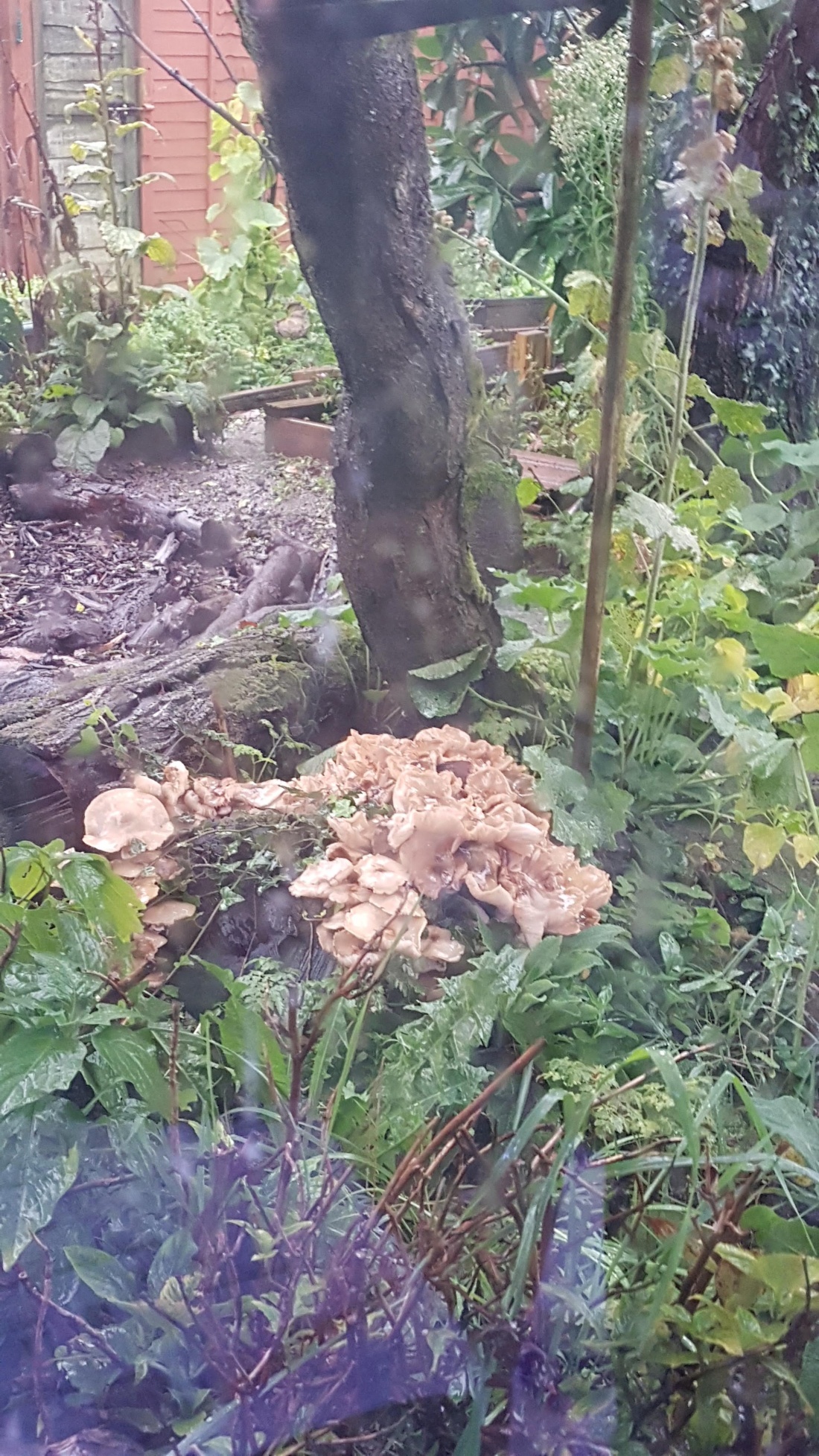
This week I have been braving the Central Line (well, on two days at least) and going back into the museum to make a start on sorting and decanting the Learning Collection. The tube is still quite busy in the early mornings, and I am puzzled by the number of people who don’t know how to wear a mask properly.
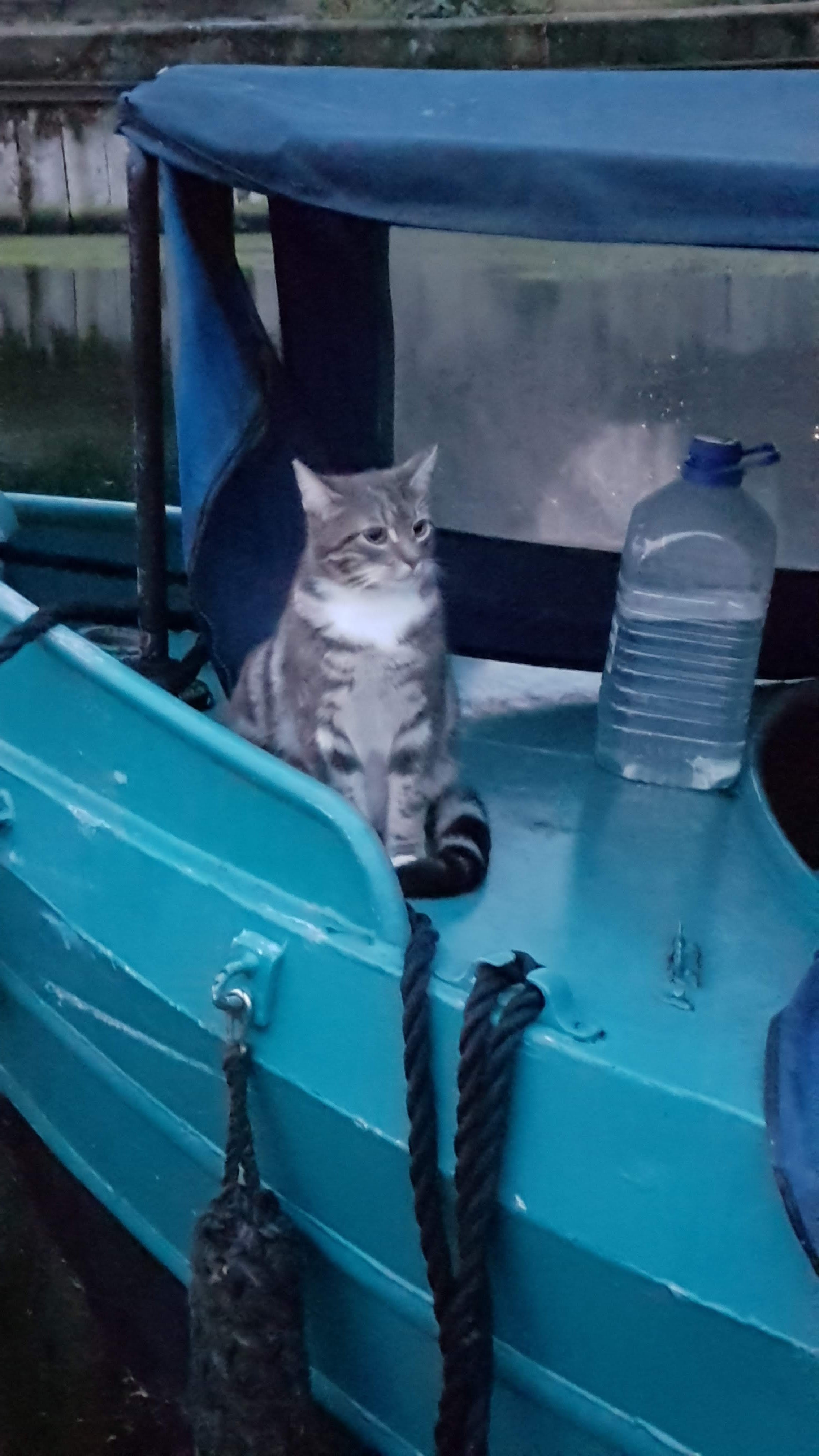
One morning I got off the tube at Mile End and walked up the canal to Victoria Park, which meant I spotted this gorgeous kitty watching the world go by from one of the houseboats.
The learning collection, as it currently exists, is a large, unwieldy and somewhat random selection of items relating to childhood: toys and games, dolls and teddies, children’s clothing and shoes, nursery items, dollhouse items and so on.
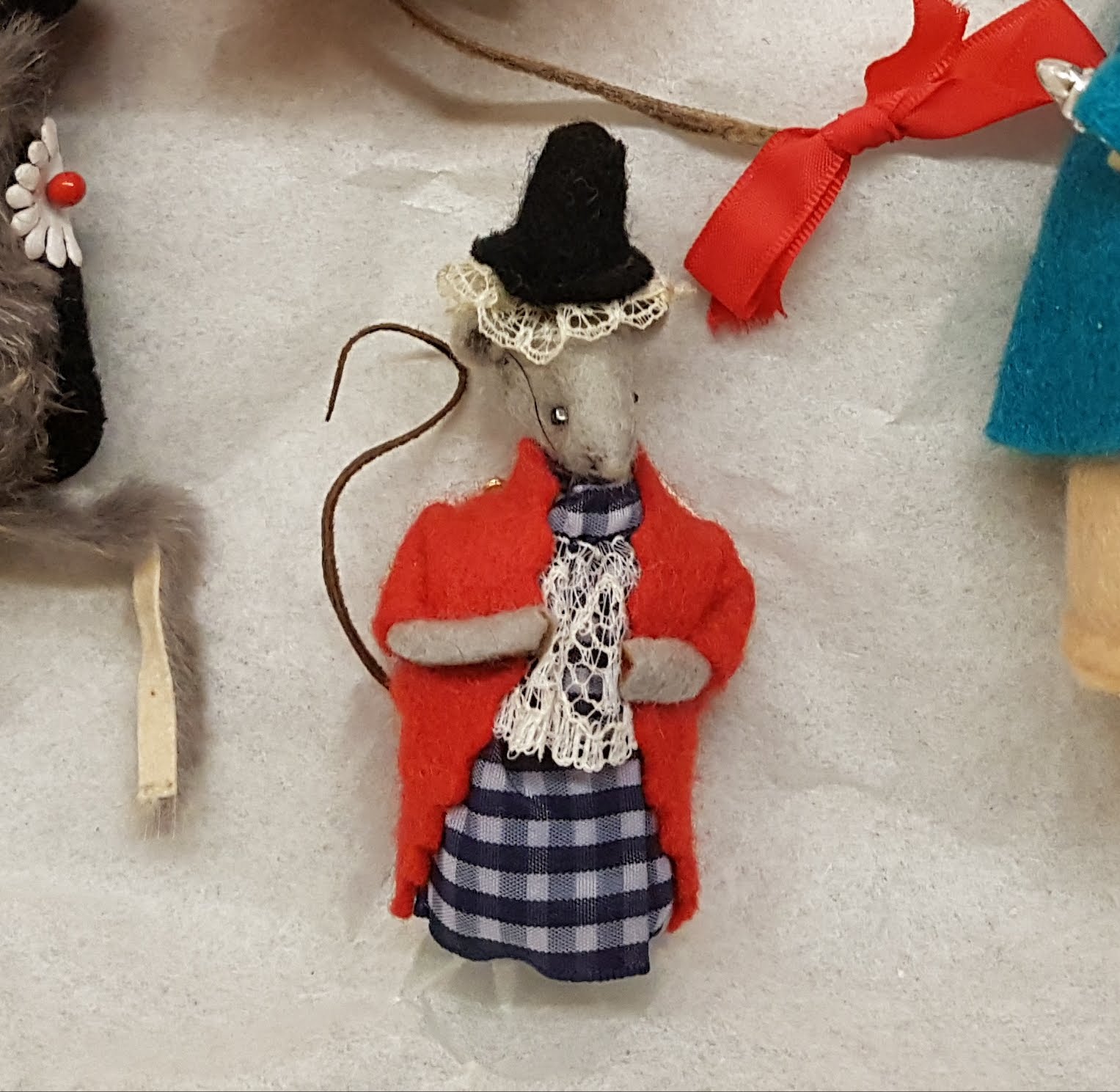
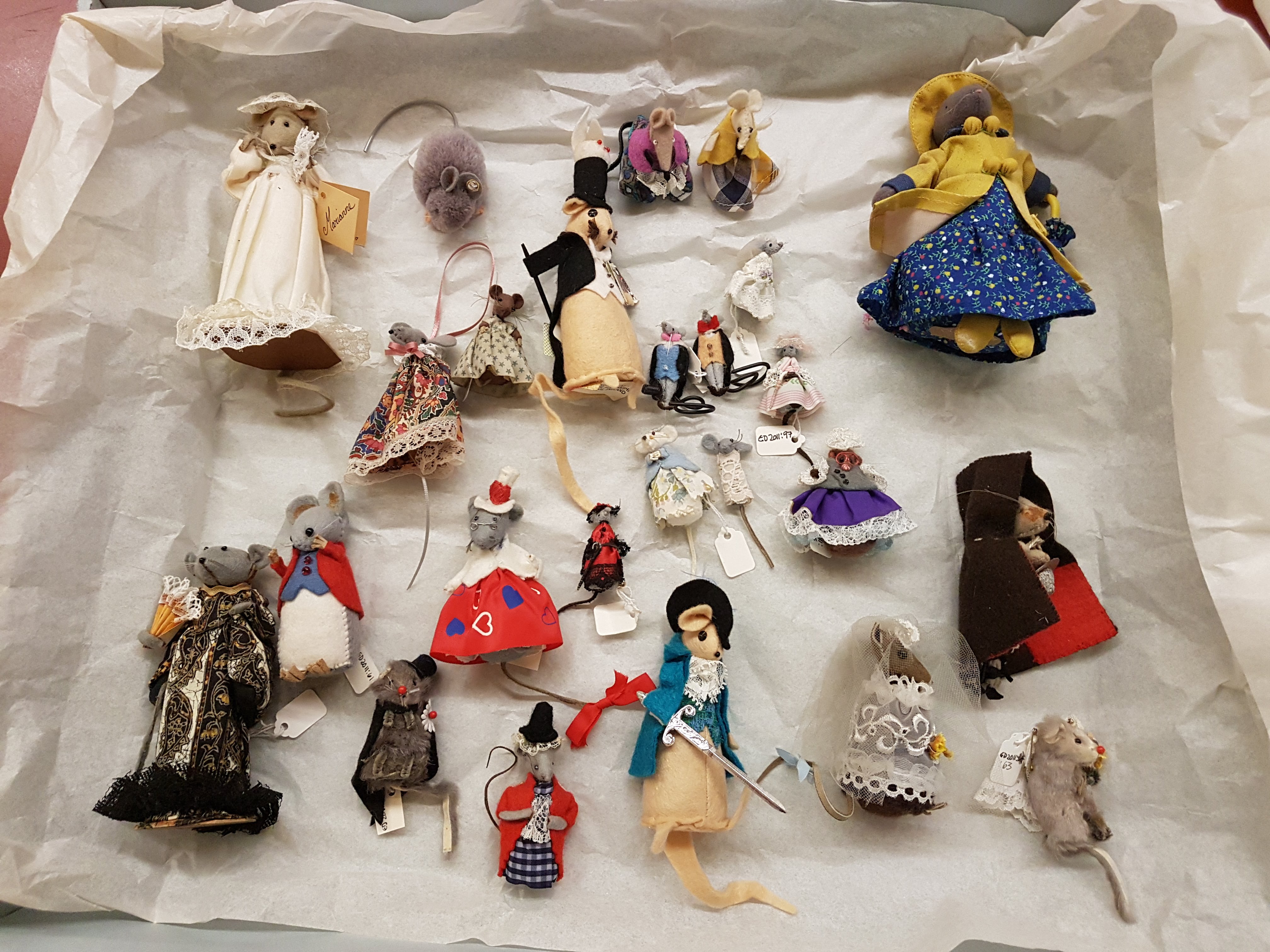
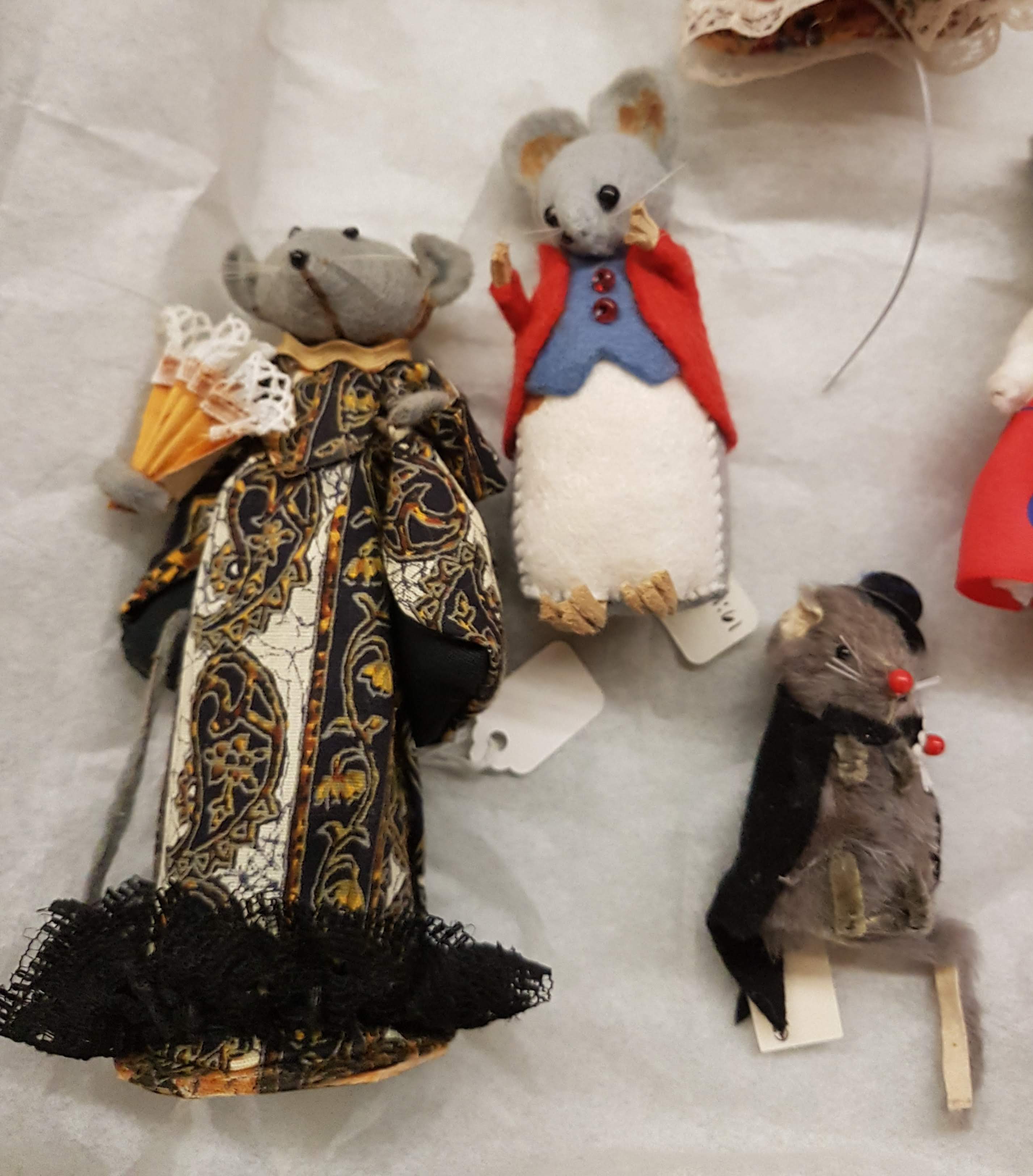
Some things are charming – the collection of tiny mice, for example. Bride and groom mice, magician mouse, Welsh lady mouse and many more. They are dressed beautifully in Liberty fabrics, and the detail is wonderful – but what are they for? They aren’t the sort of things children would play with, being more ‘collectable’ than practical, but they are a wonderful example of a child’s collection. How does a collection like this start? How did the child display them? What can I do with them?


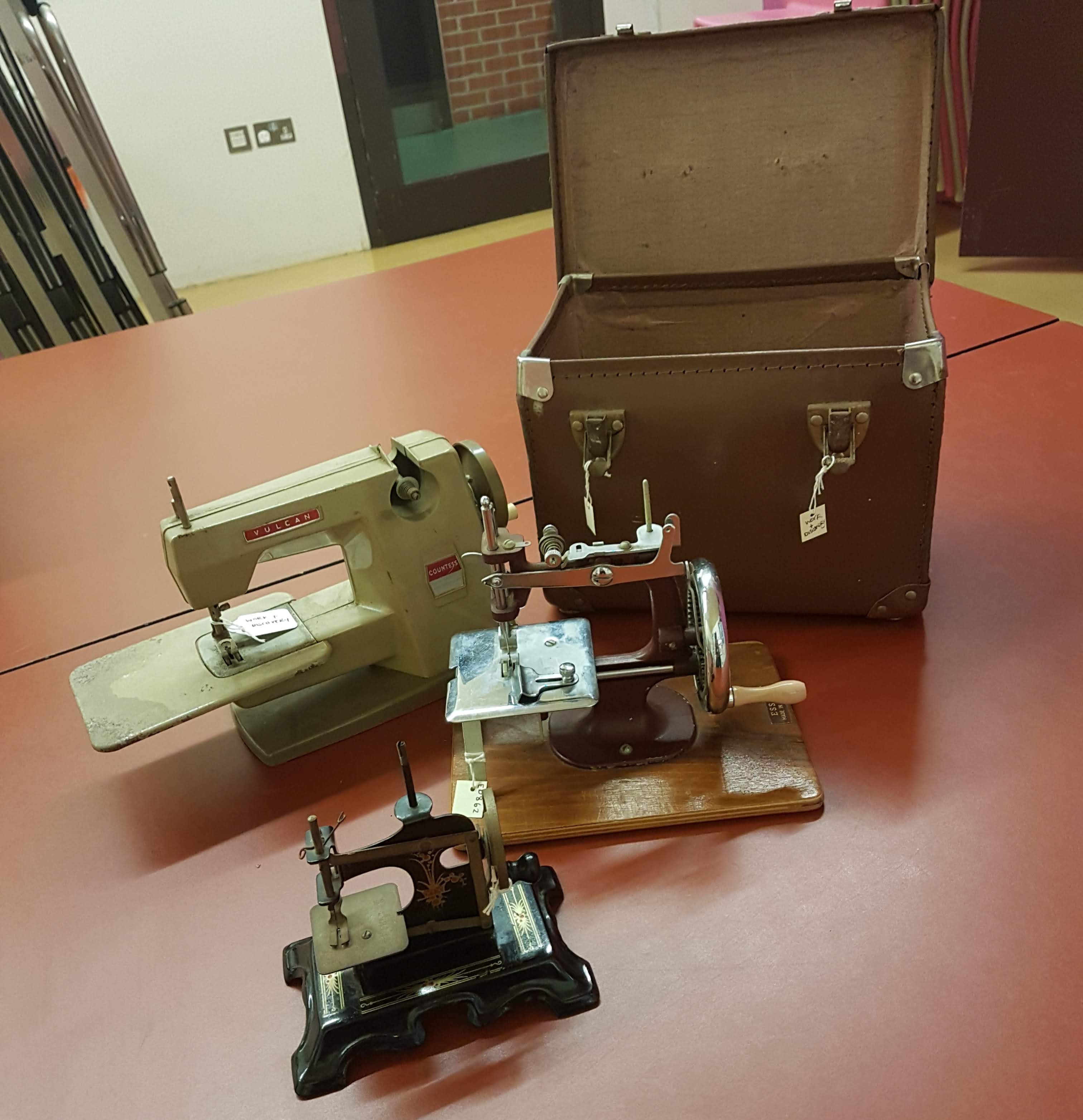
Some are practical – objects designed to introduce a child to the grown up world of work. Working sewing machines and typewriters, small tool kits – in solid metals and woods, not the brightly coloured plastics of today. These are objects designed to be used, to build a child’s skills.
There are, of course, hundreds of items of children’s clothing, from the ceremonial to the practical, and a lovely dressing up collection which echoes the museum’s own collection of fancy dress costumes. Some are handmade or hand embellished, some are worn and much loved. Many predate the fashion for colour as a gender identifier for children – the older clothes are white and cream and colour comes in with the more modern items. Like in many collections, it’s often the ‘fancy’ clothes that have survived – the ones bought for special occasions or ‘kept for best’. But there are so many examples – how many baby bonnets and barracoats does one collection need? And how do I decide which are the ones to keep?
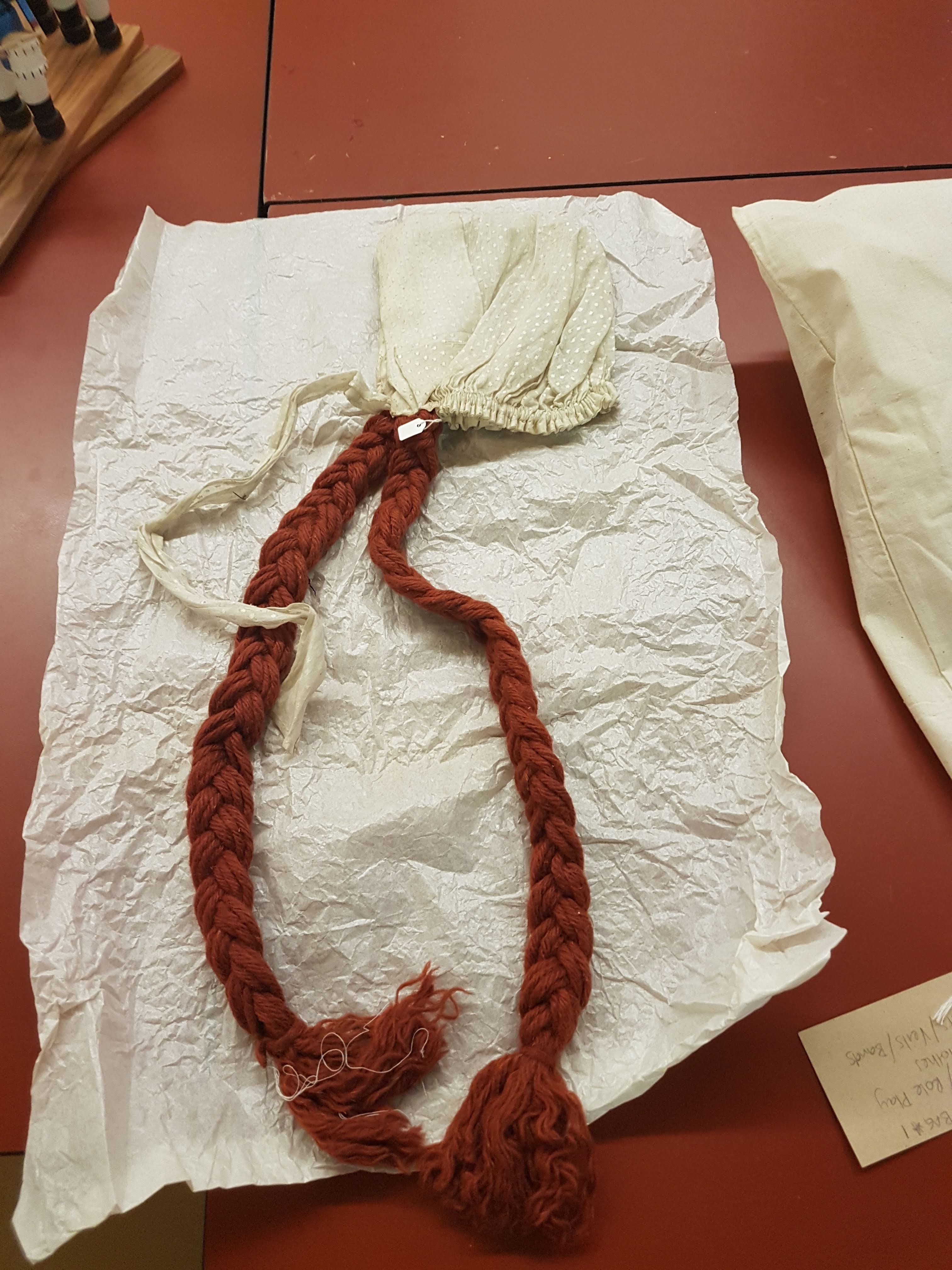
Long woollen plaits 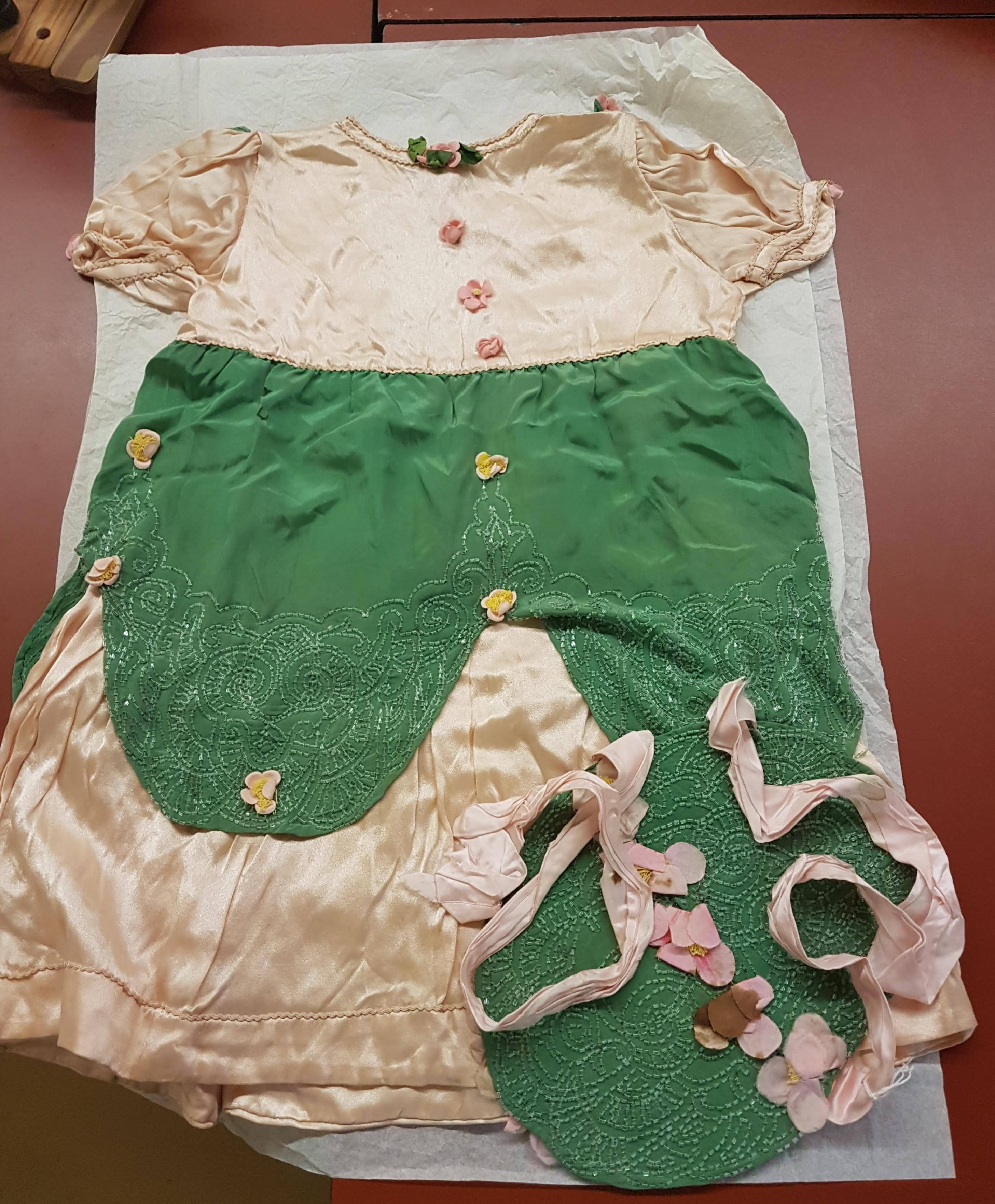
Handmade flower fairy dress 
Cross-stitched dress 
Baby coat 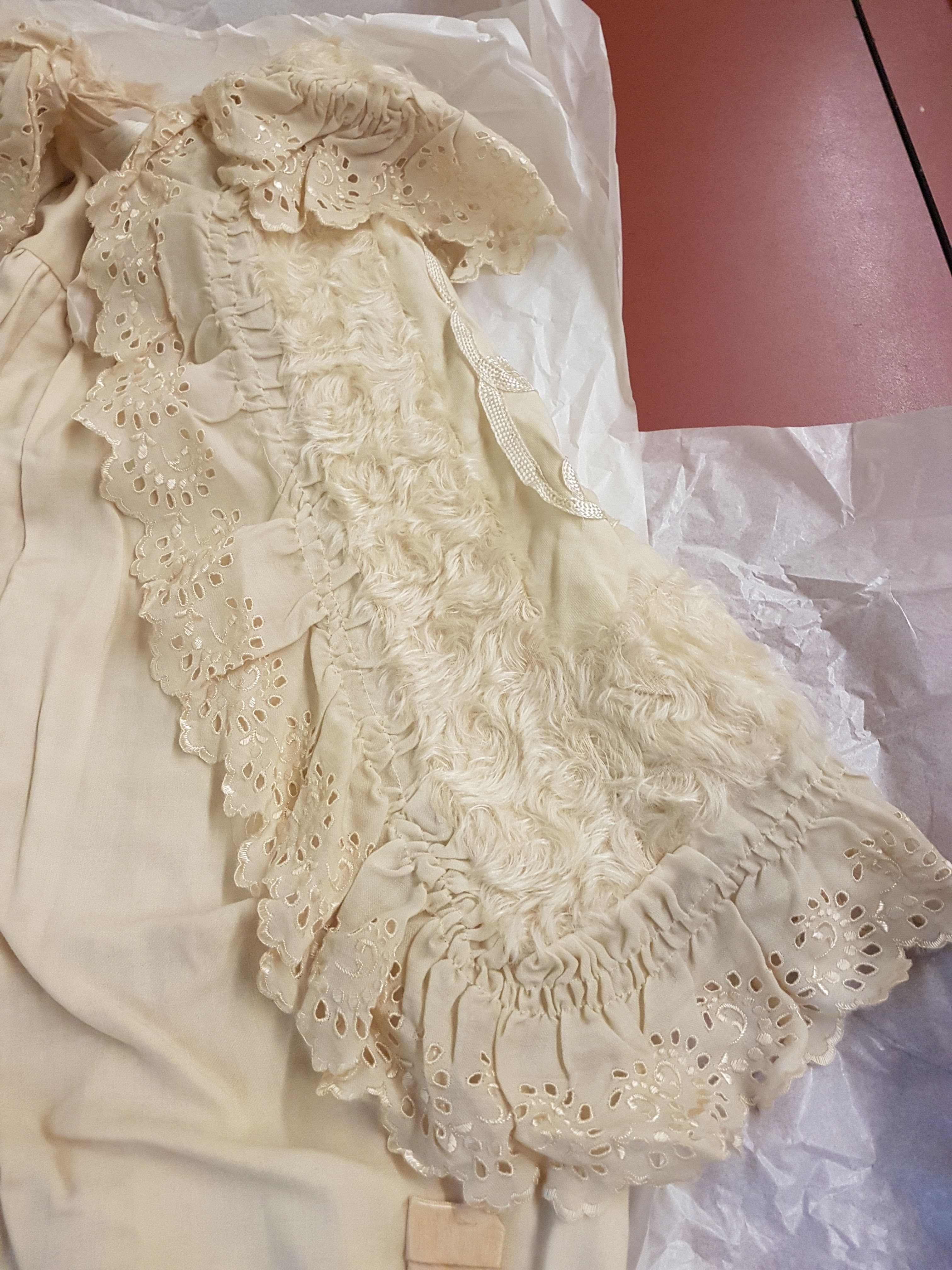
Part of a layette 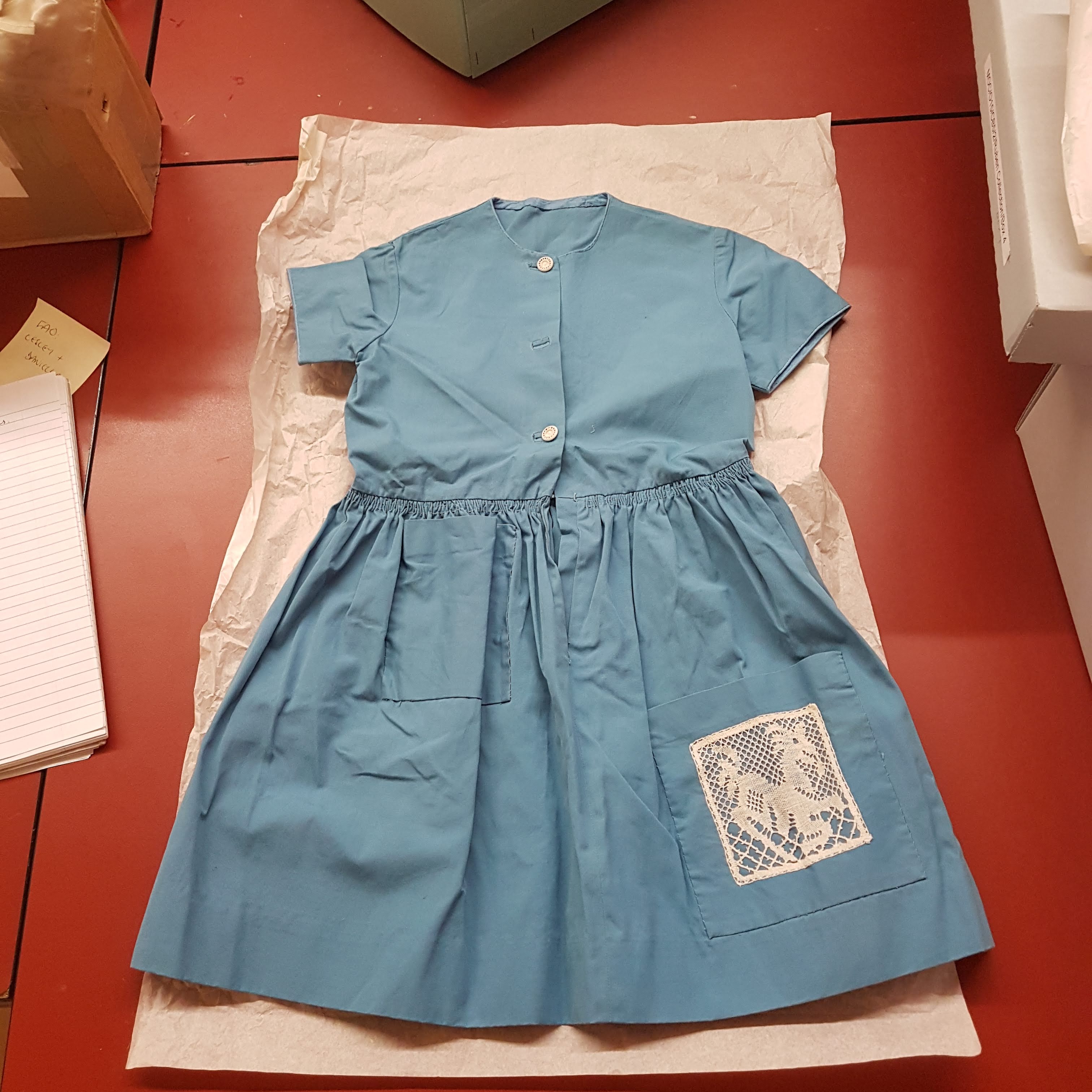
A child’s dress
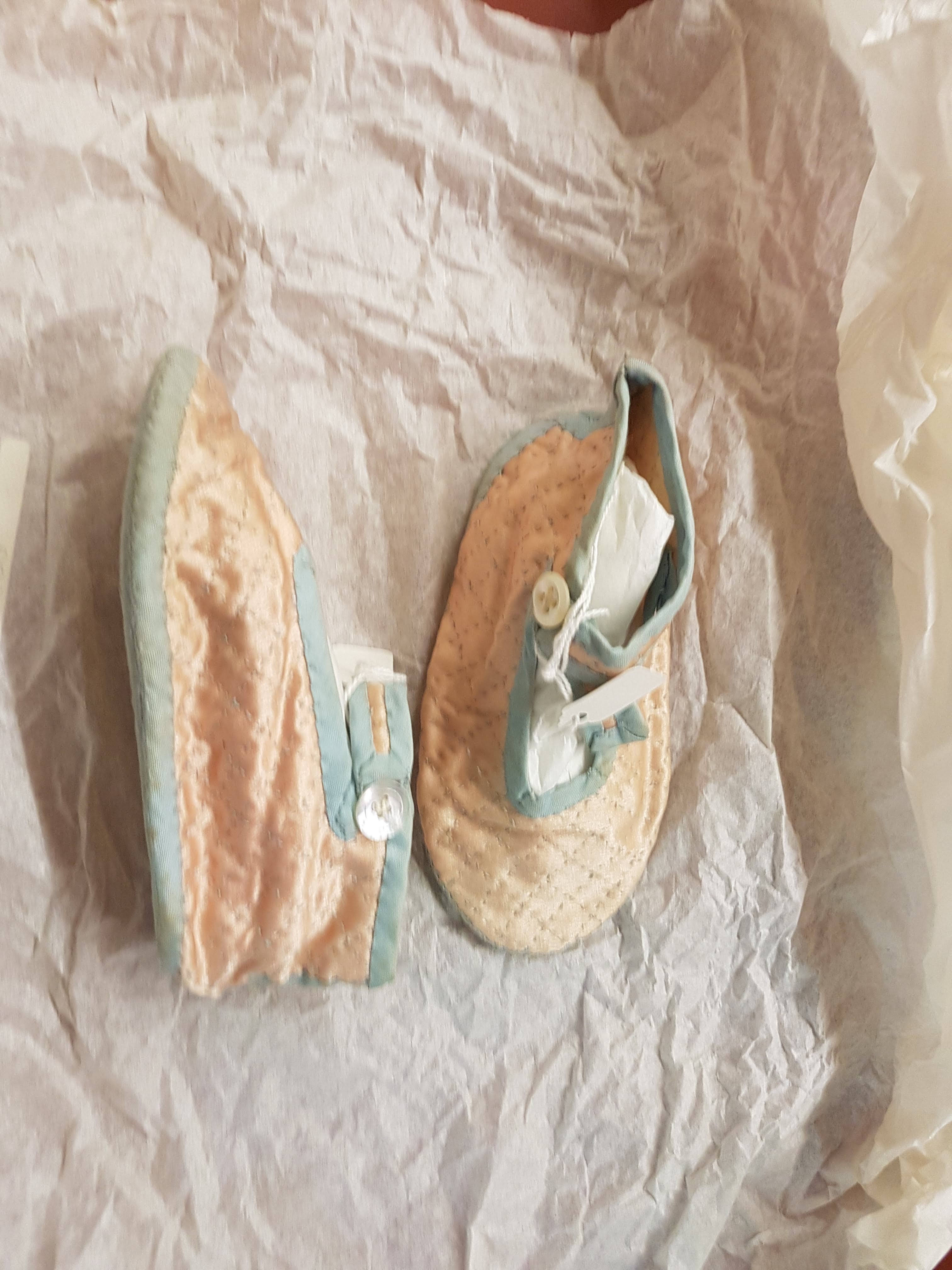
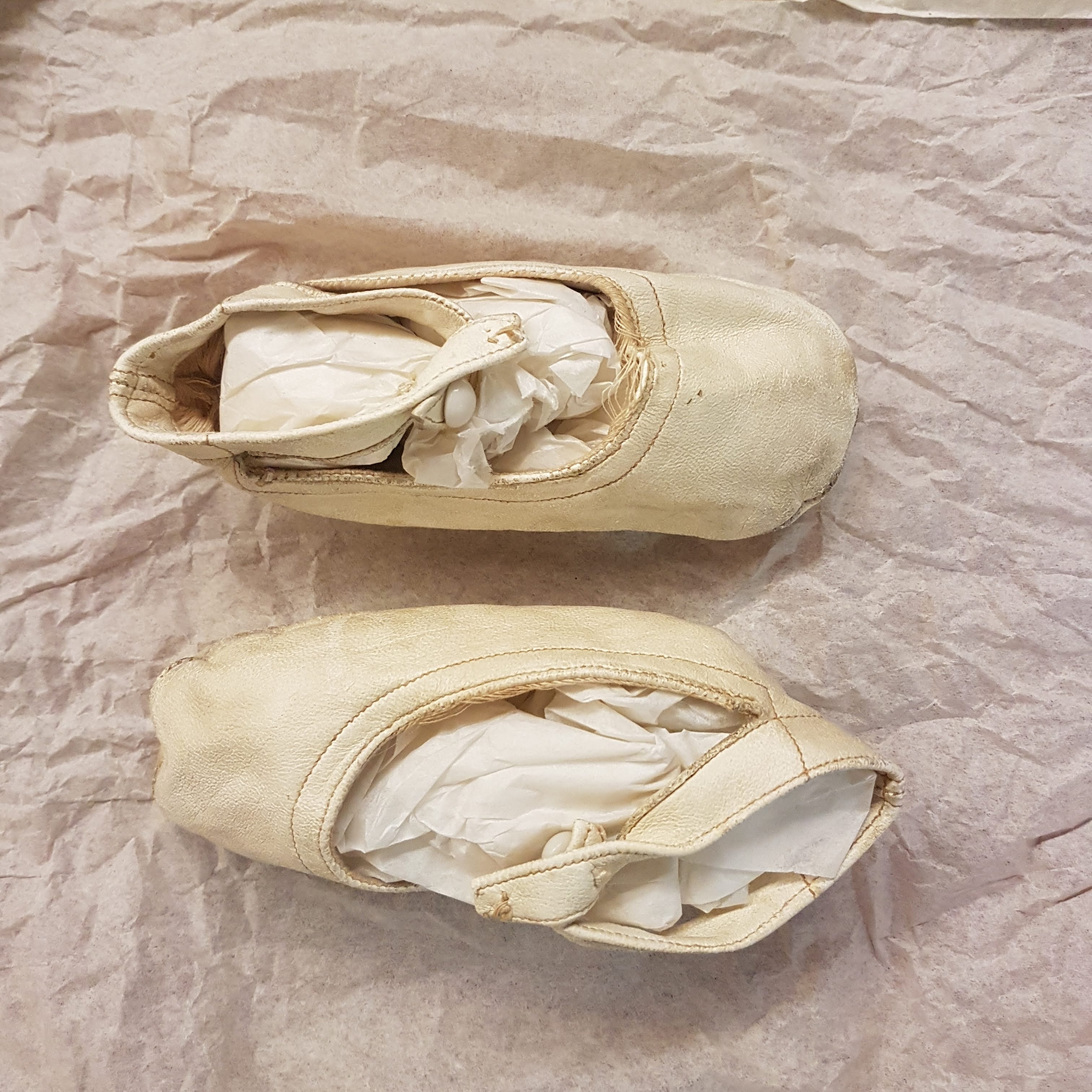
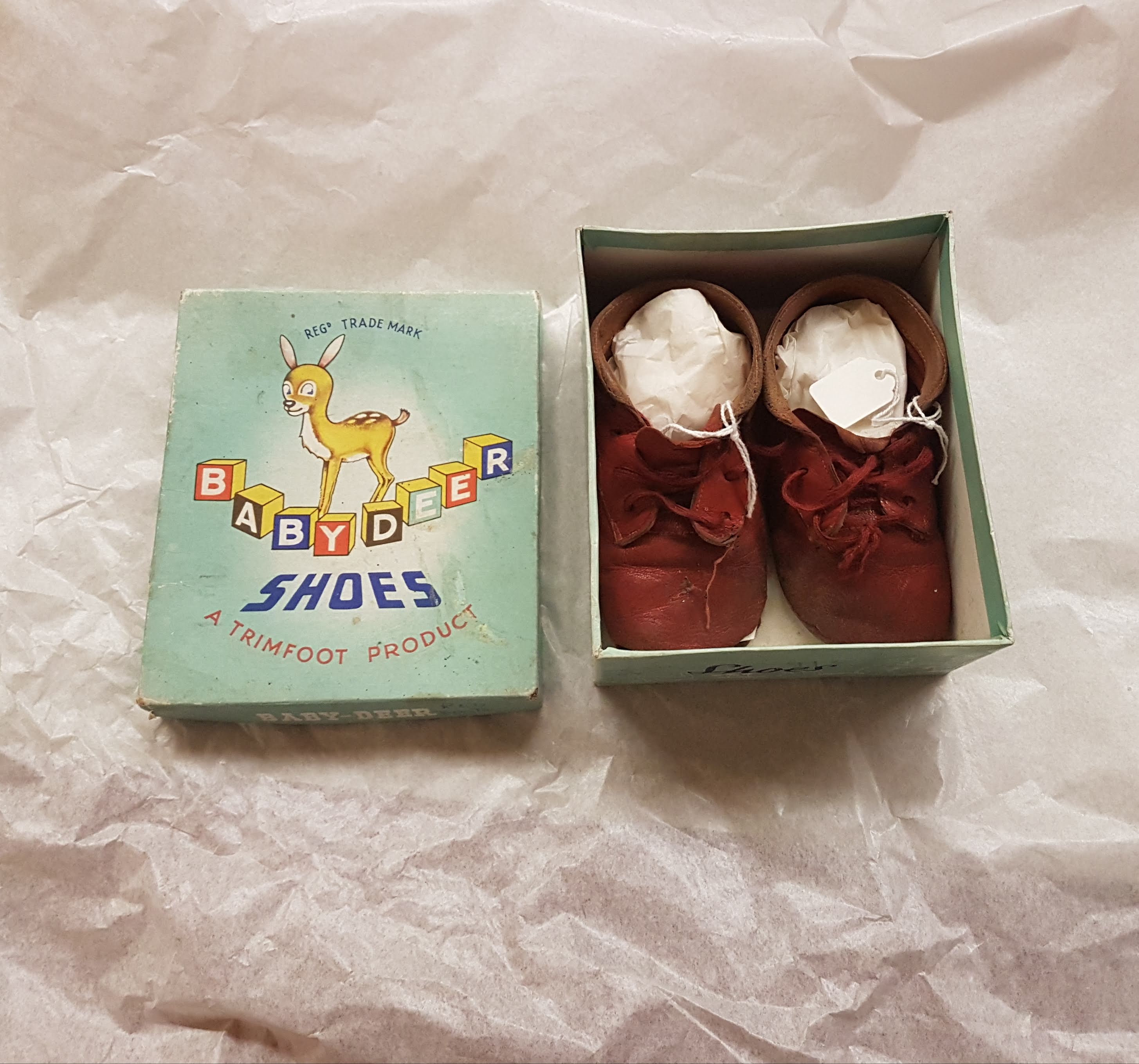
And the shoes – oh, the shoes! It’s a family joke that I have too many books and too many shoes (I don’t believe either of these concepts) so to find a box of tiny footwear in the cupboards was a treat for the eyes. Party shoes in pom-pommed satin, marabou-trimmed baby slippers, practical Start-rite sandals, a single, much repaired boot, kid ankle-straps, handmade quilted pram shoes and more.
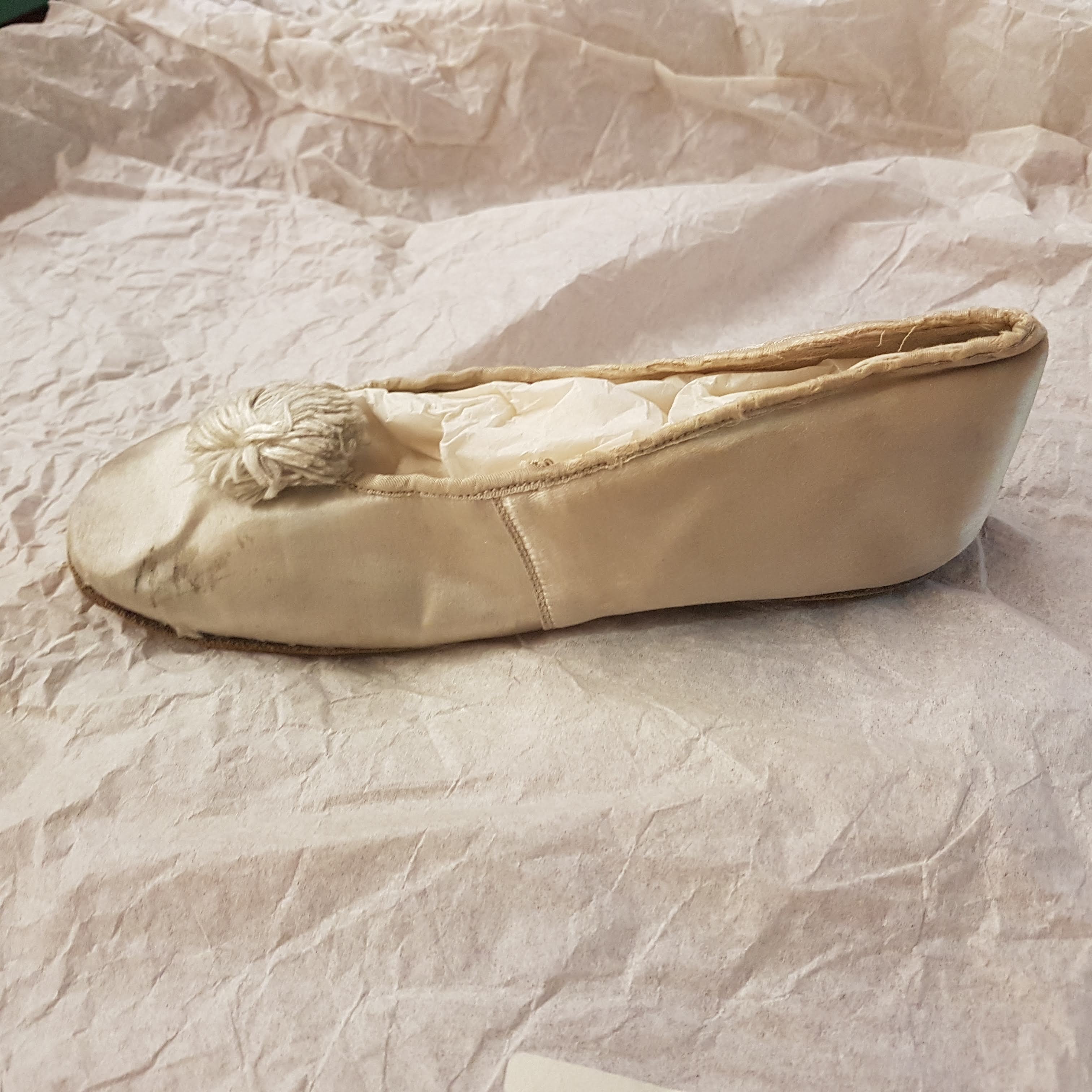

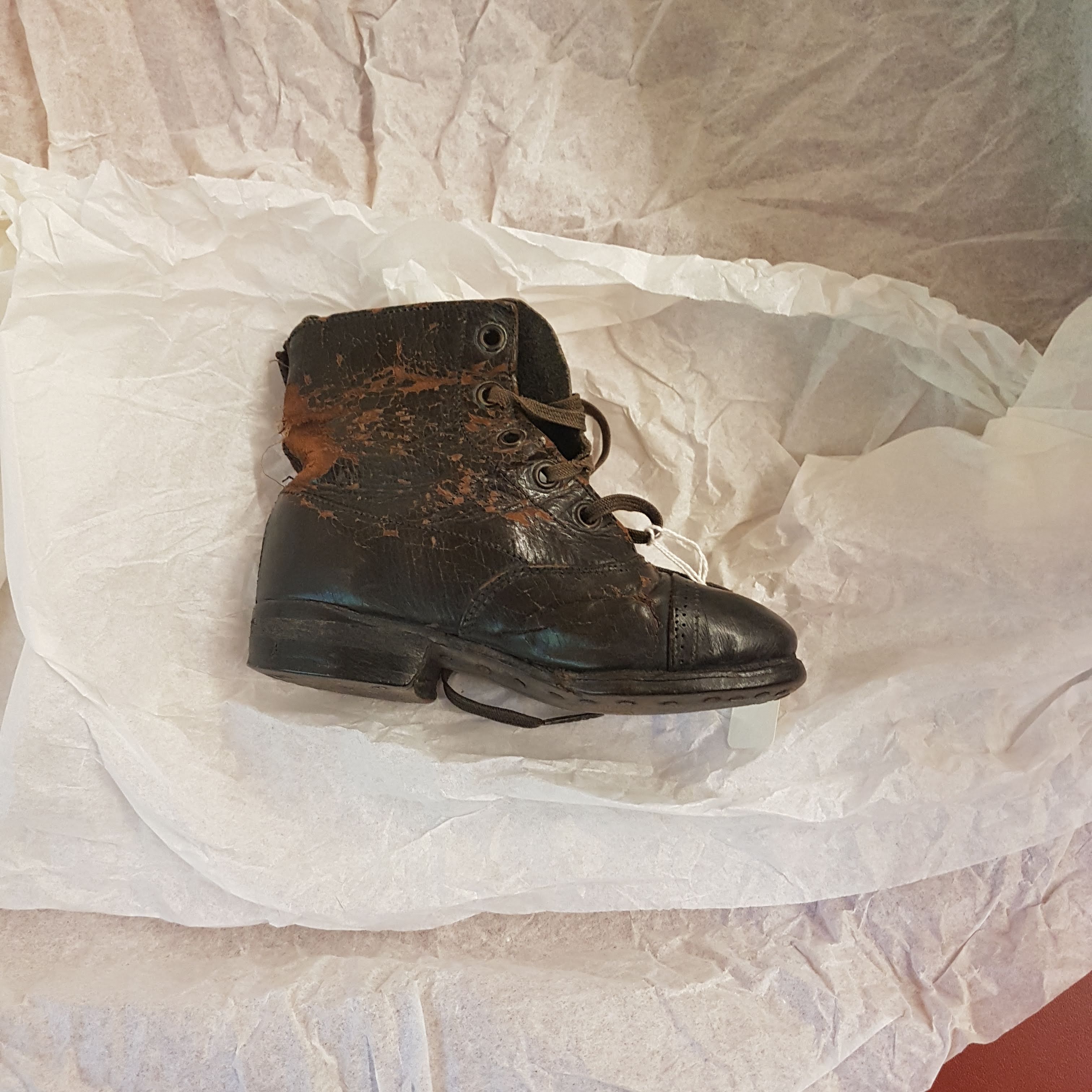
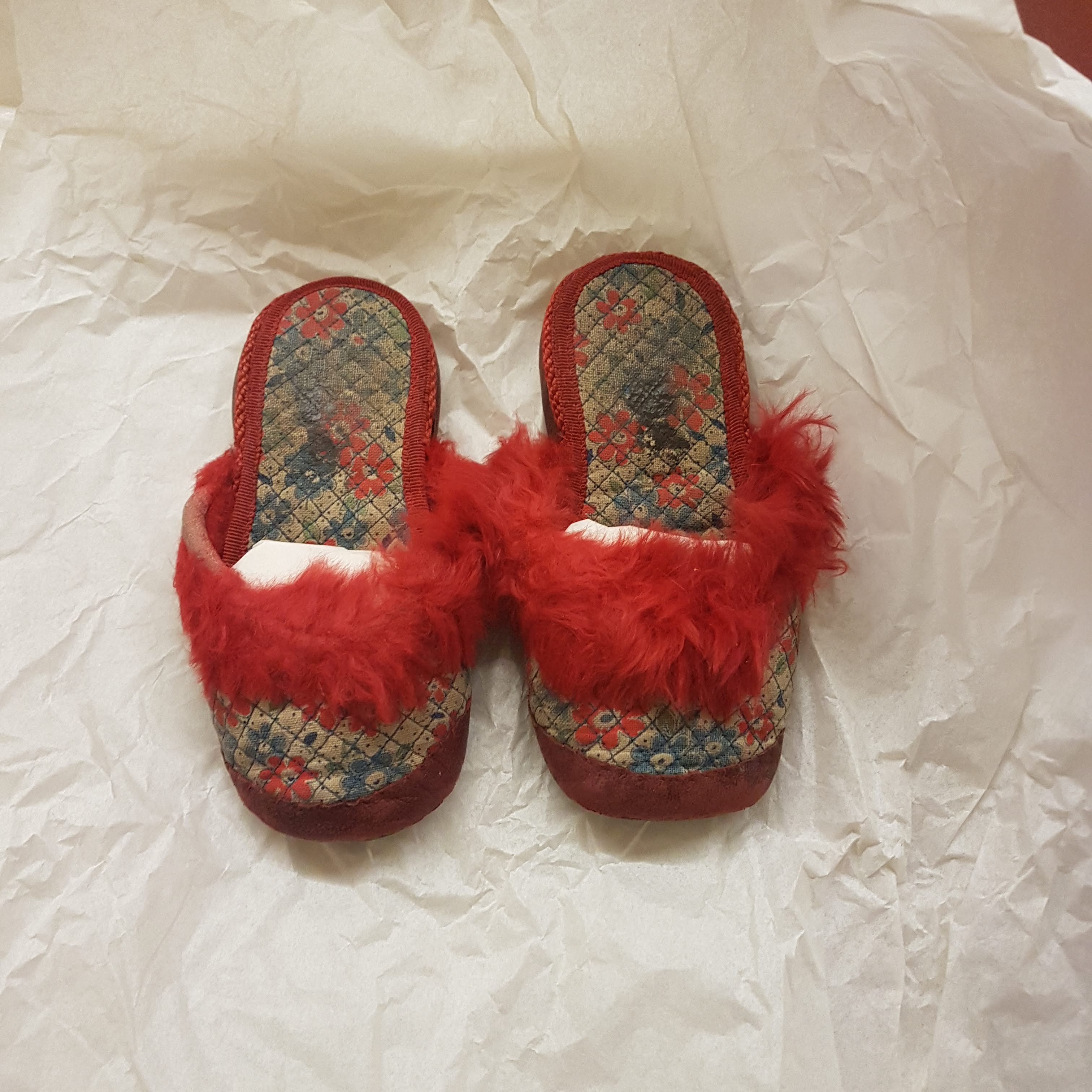
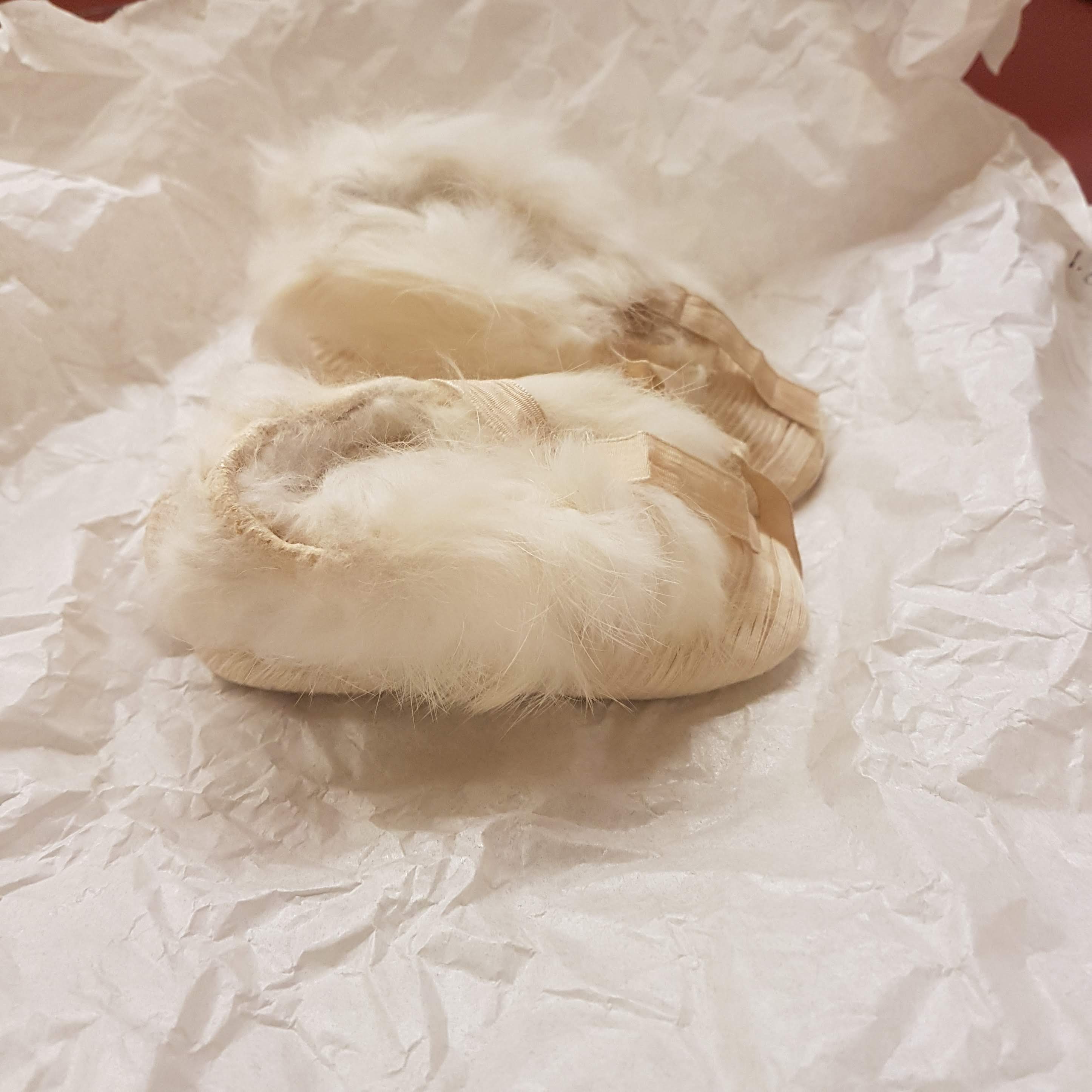
There are boxes and boxes of card games (some very non-PC) and board games, of Hornby train sets, terrifying dolls, teddies, model farms, toy cars, construction kits. Toys that children have coveted at Christmas and written hopefully on birthday lists: Weebles, Playmobil, Barbies. An excellent collection of learning toys by the designer Fredun Shapur – brightly coloured and eminently touchable. Toys that bring joy to the people that see them – but they are so rarely seen by anyone except the learning team and the odd student or researcher. These thousands of objects are stored – exquisitely wrapped and catalogued thanks to years of hard work by some very dedicated volunteers – in tissue paper, calico bags and archival quality boxes. In dark cupboards, in basement classrooms, and no one ever sees them or touches them. They don’t spark joy any more, they just get audited every so often. Occasionally I have taken a few objects out – some to sessions at the V&A, working with dementia sufferers as part of an ‘arts prescription’. Some have been to Great Ormond Street or other hospital schools, but these excursions are the exception rather than the norm.
One of my jobs at the moment – now that we have no schools in the museum – is to decant this collection, rationalising it to meet the vision and purpose for the new museum. I also want to rebrand the collection as a handling collection, not a learning collection: to make its practical purpose explicit and, most of all, to get it out of those cupboards. We’re a museum, so we have lots of cupboards full of objects that people can’t touch – both the glass ones on the visitor floors and the treasure troves below. We don’t need any more.
We need a learning collection that people can get their hands on and learn from: does that teddy feel as soft as it looks? What happens if I turn him upside down? How do I make that train set go? What does that button do? Children – and adults! – are curious by nature, and we learn best through play and experience. A learning collection that you can’t do either with isn’t living up to its name.
It’s a daunting job but an interesting one! It’s going to take a few weeks, and then I need to find homes for the objects we are not going to keep. I’d like to see them go to other museums, to schools library services, to schools and to historical interpreters. If you’re any of these things – or if you can add to this list – please do let me know!
Here’s some of my favourite odd objects from the cupboards to be going on with, taken when I was auditing the collection in 2018….

I had a pencil case like this! 
Rinso model village 
A cuddly duck-billed Platypus 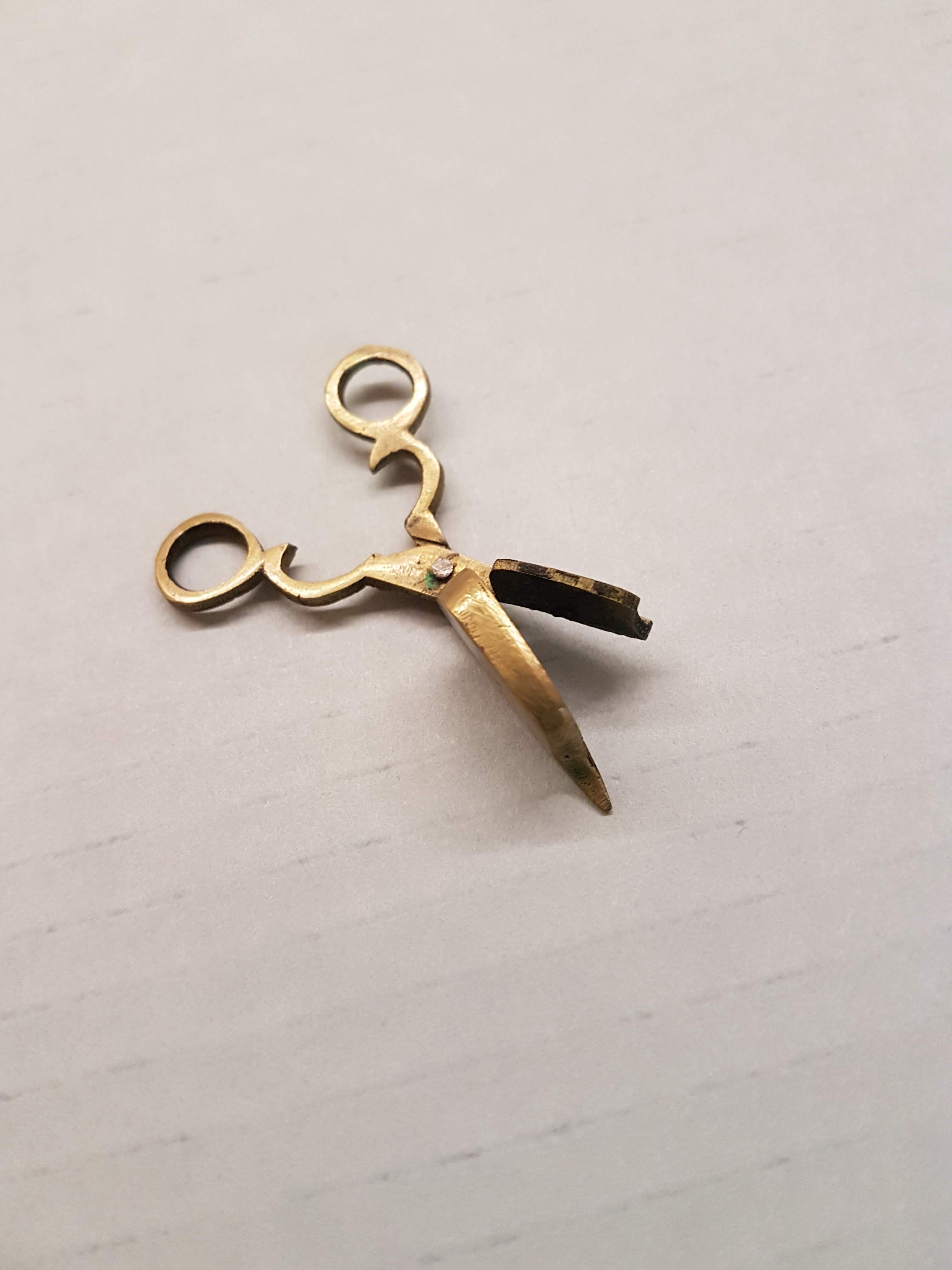
Dolls’ house candle snuffer 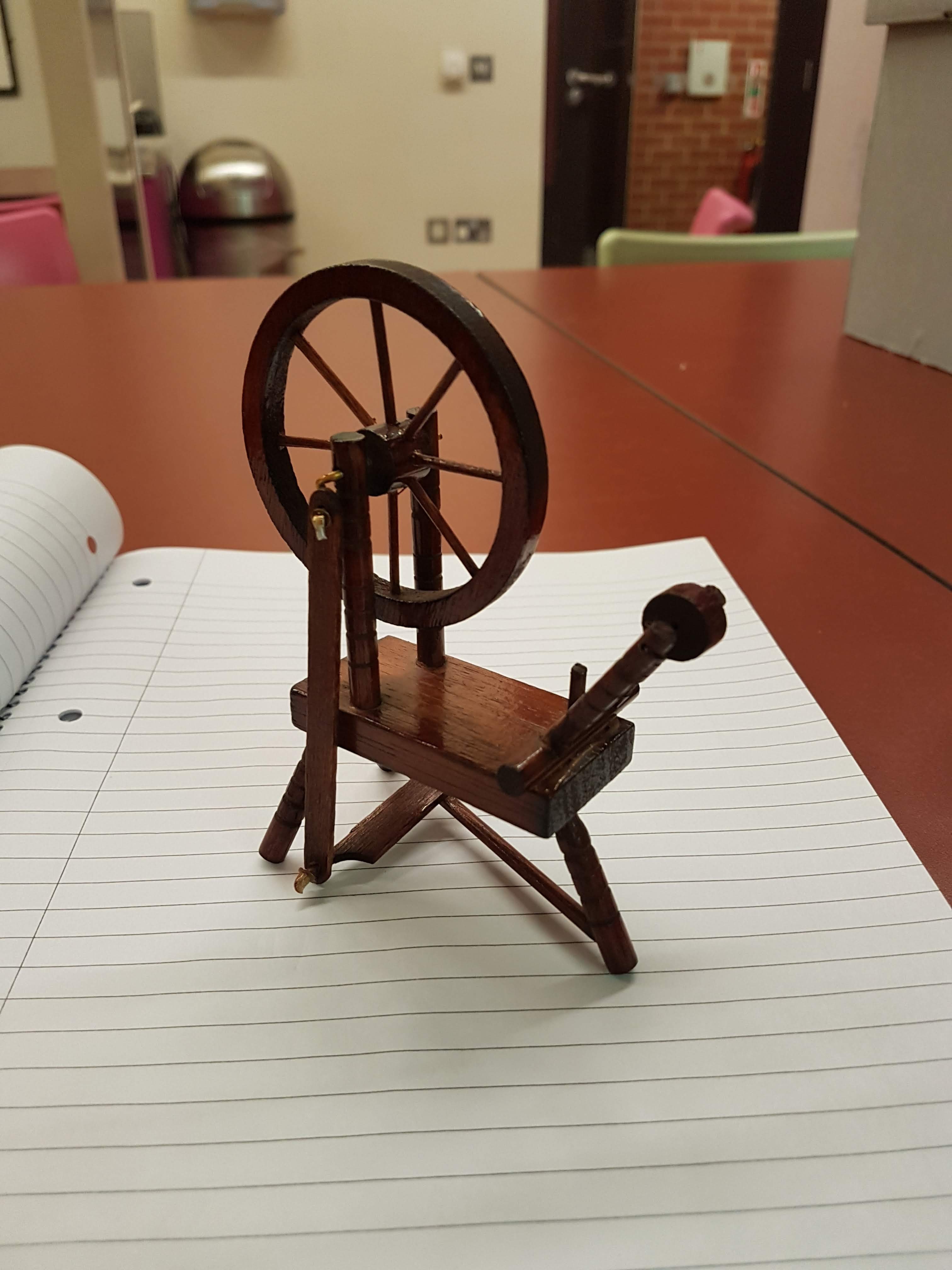
Doll-sized working spinning wheel 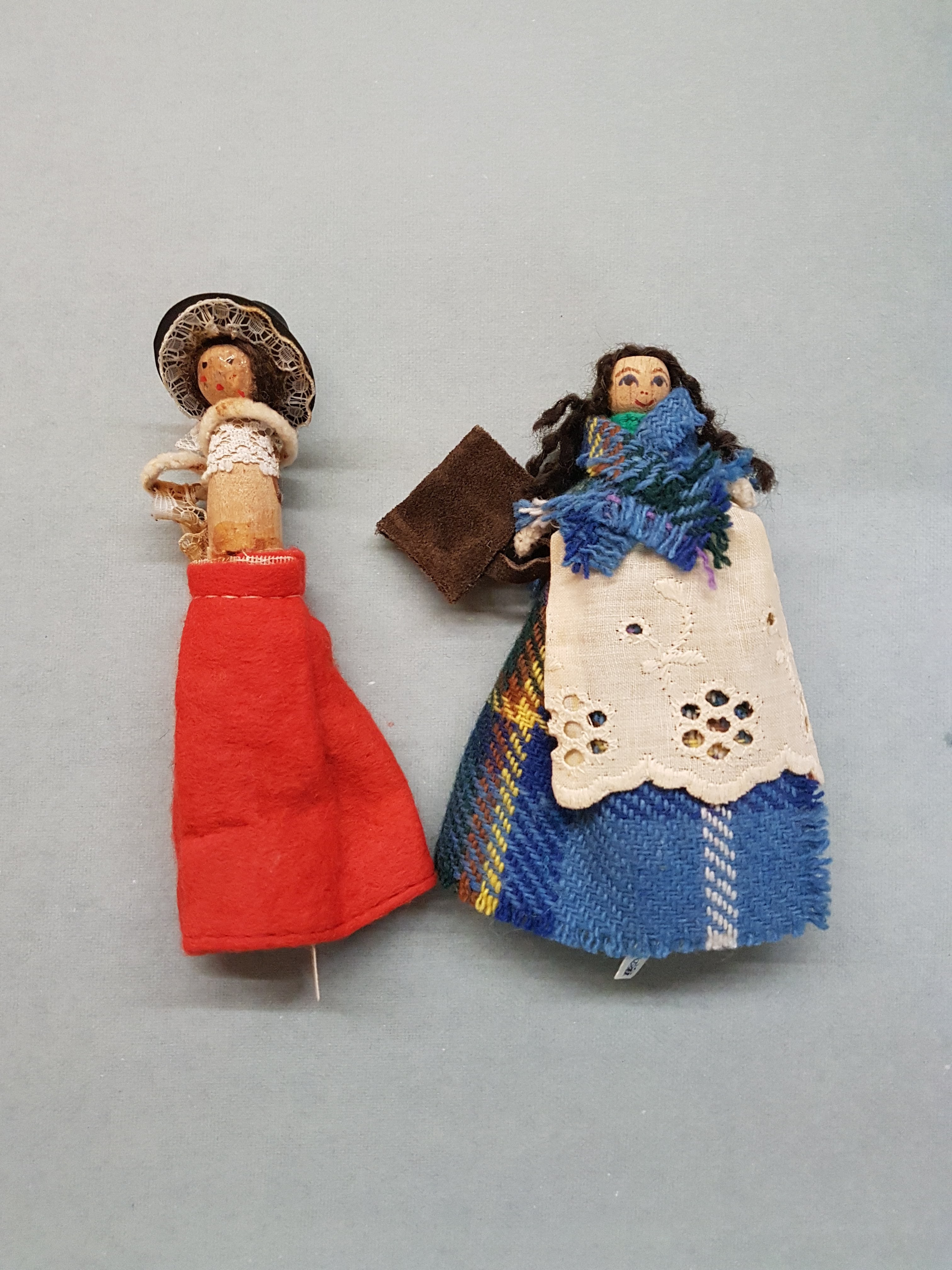
Welsh and Scottish peg dolls 
Chief Robot (clockwork) 
Sand toy 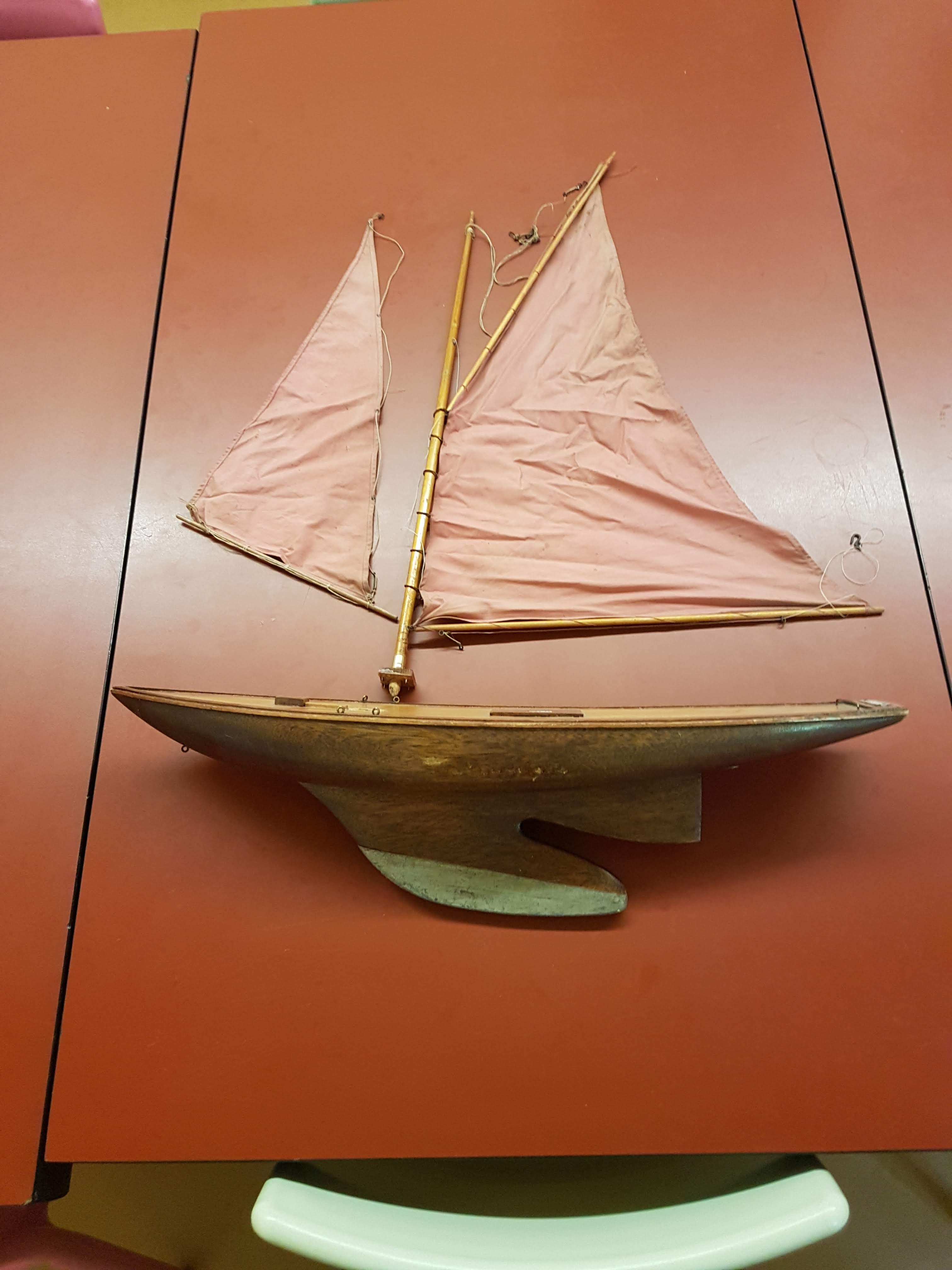
Thames barge
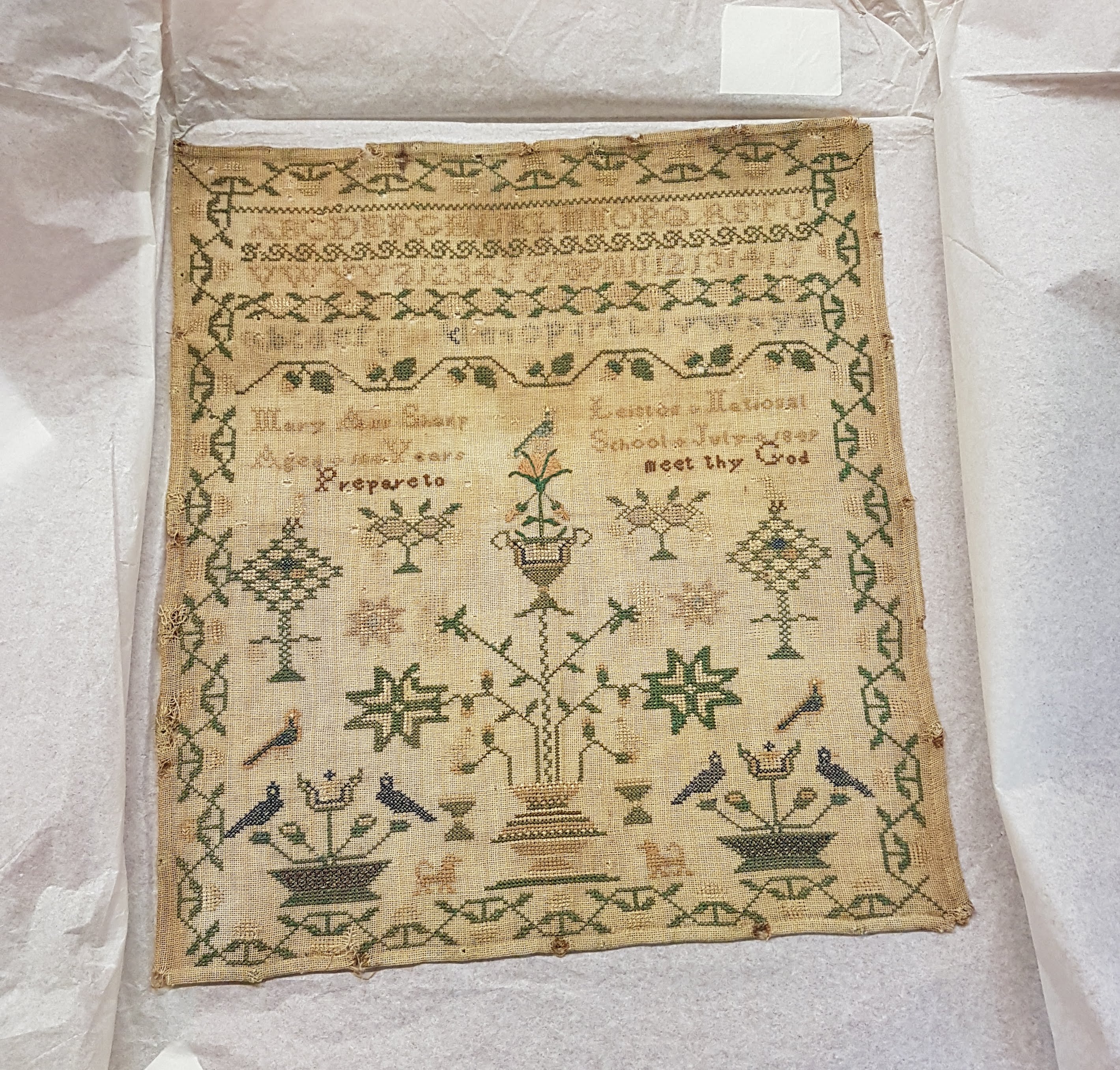
And – as a brilliant segue into this week’s crafty section – here’s a sampler…
Castles and cross stitch
A couple of weeks ago I shared a Princess Bride reference cross stitch I’d made and turned into cards for my family to make them laugh. That was someone else’s design, but it got me thinking about other quotes I’d like to see in stitches.
One of these is ‘Have fun storming the castle!’, which Valerie calls after Westley, Fezzik and Inigo leave to stop Buttercup’s wedding to Prince Humperdinck (yes, he of the to-do list). I had a look on Etsy, and there were some designs but none of the castles were quite right. Some had turrets. Some were positively Disney-esque. Some were pink. None of them looked worthy of storming, so I had a go at creating my own.
Being from South Wales gives you pretty firm ideas of what a castle should look like, and most of them have been stormed at least once in their histories and (mostly) survived to tell the tale. I grew up in Raglan, which has an excellent castle, so I knew the impression I wanted to give with my design.

(Image by Charles Taylor, http://www.ecastles.co.uk/raglan.html)
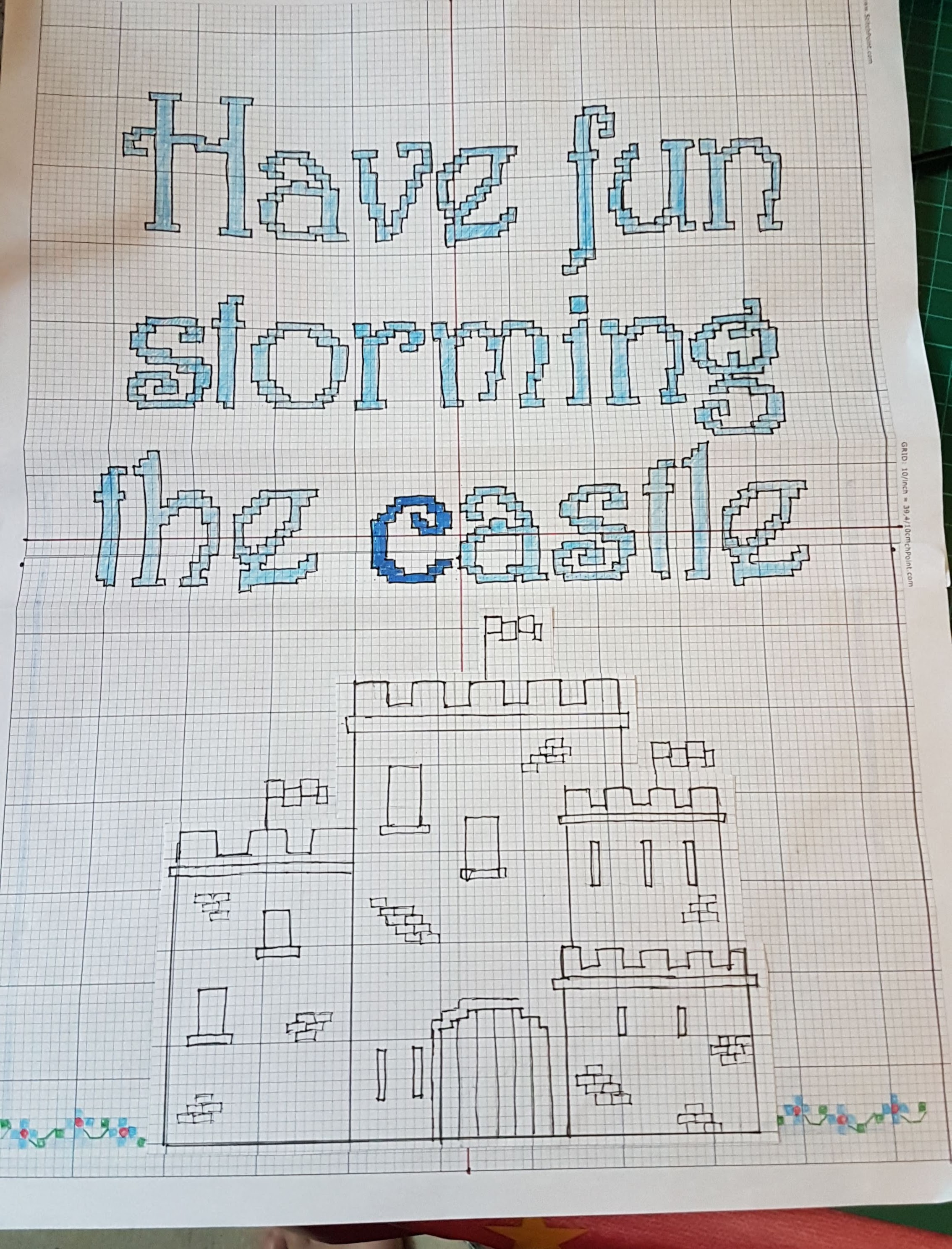
I’d mapped out the lettering a few weeks ago, using a shaded font from a book I have had for about 25 years. I remember buying it in the craft shop in Aberystwyth while I was a student there. It’s now out of print but does appear on Etsy or Ebay occasionally. I wasn’t happy with the spacing so with the aid of scissors and sticky tape I adjusted the spacing and started to transfer the pattern.
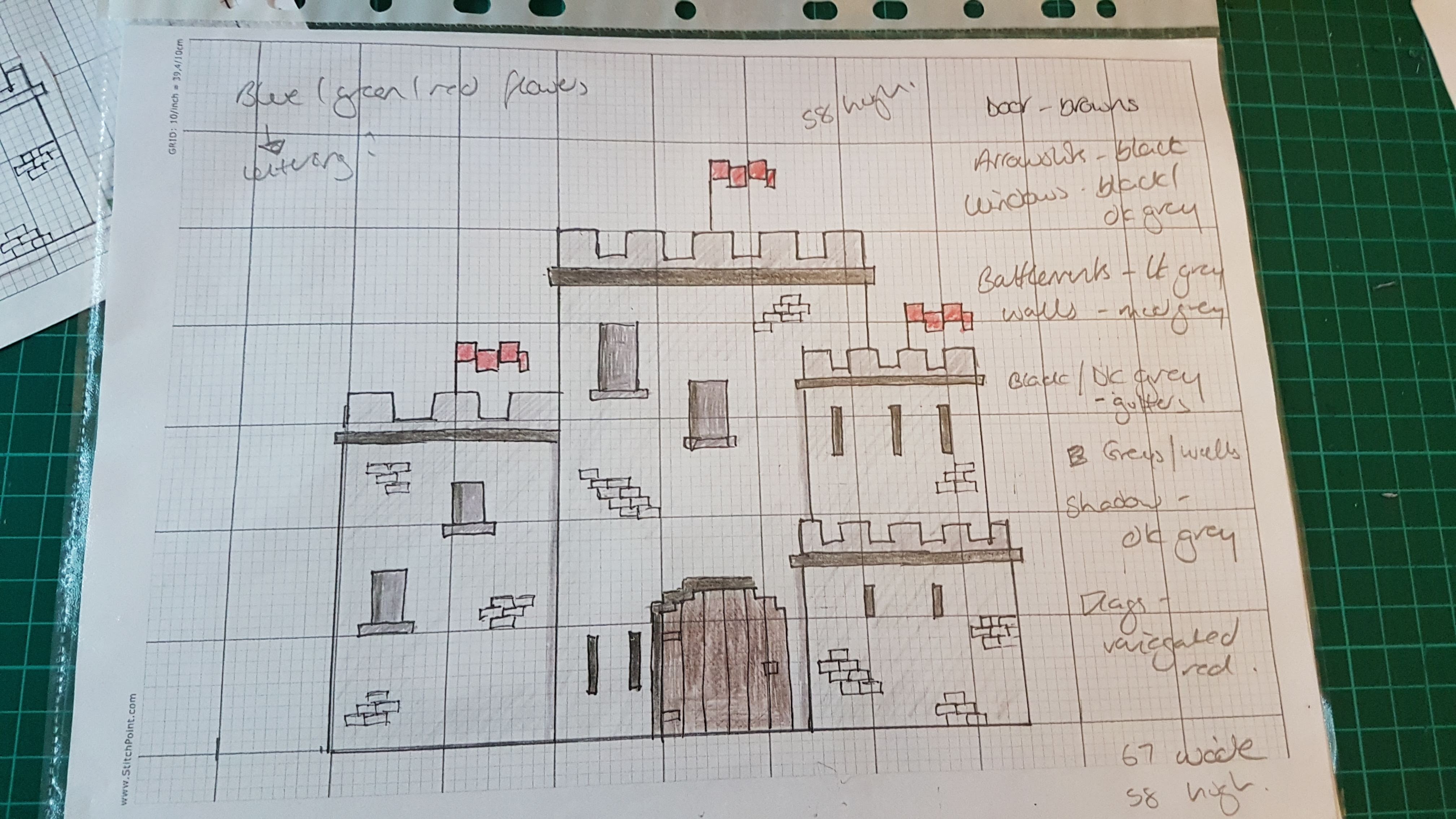
Once I’d placed the lettering on my graph paper I knew how wide the castle needed to be. I wanted towers, a big door, arrow slits, battlements. I wanted pennants. I wanted windows. (I also wanted a moat but decided that was one step too far).
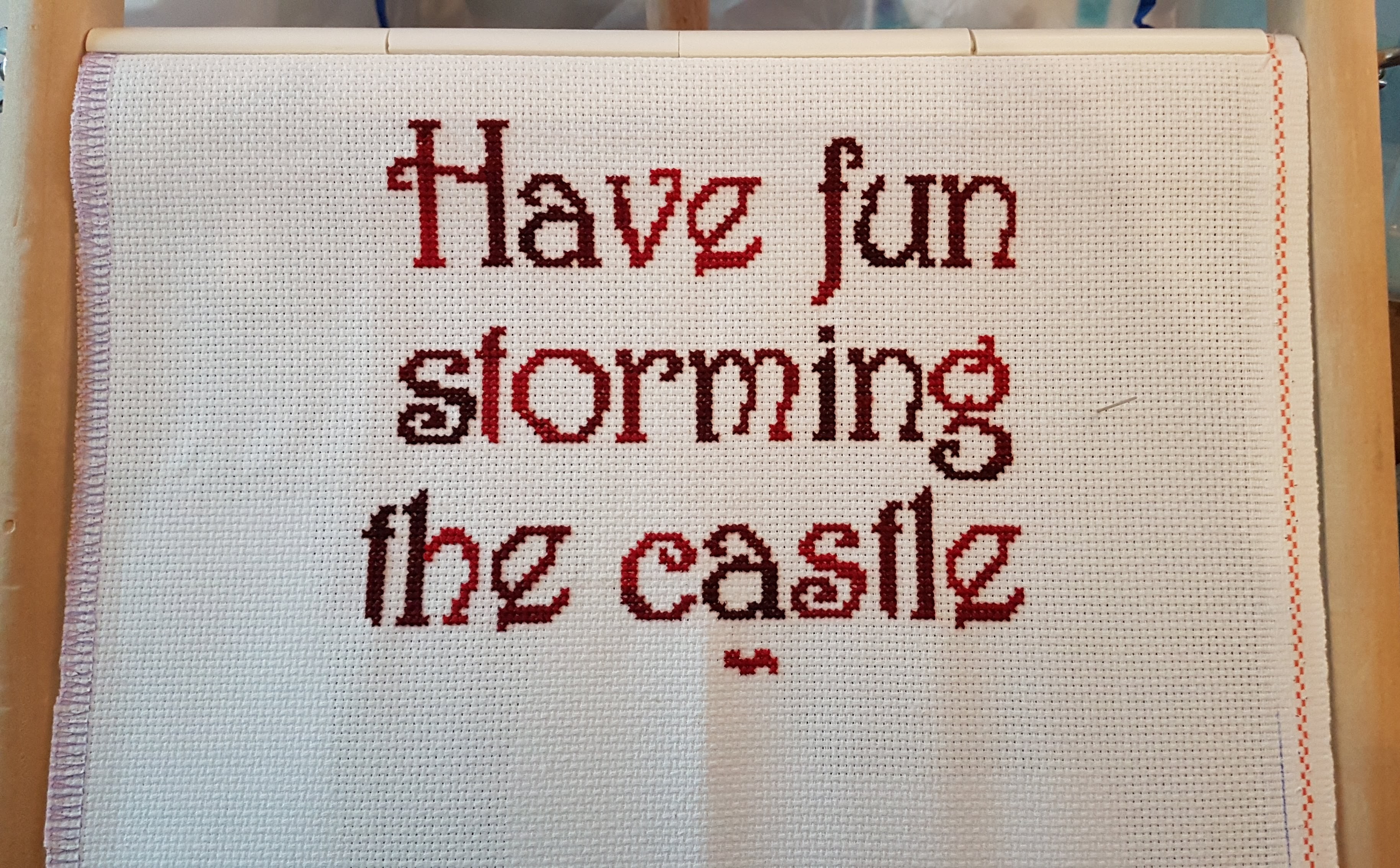
I started with a main tower with a slightly smaller one on each side, but I couldn’t get the crenellations even on the central one, so I played with the widths: there’s still three towers but its a lot less symmetrical. I’m using several shades of grey to create different areas (which would have been a LOT easier if I’d been able to lay hands on my DMC shade card) and will use backstitch to highlight areas of stone. I’m using 3 strands of cotton over 14-count white aida for good coverage, and it’s coming on well so far – lettering is complete apart from backstitching. The variegated thread is DMC 115, my favourite shade.
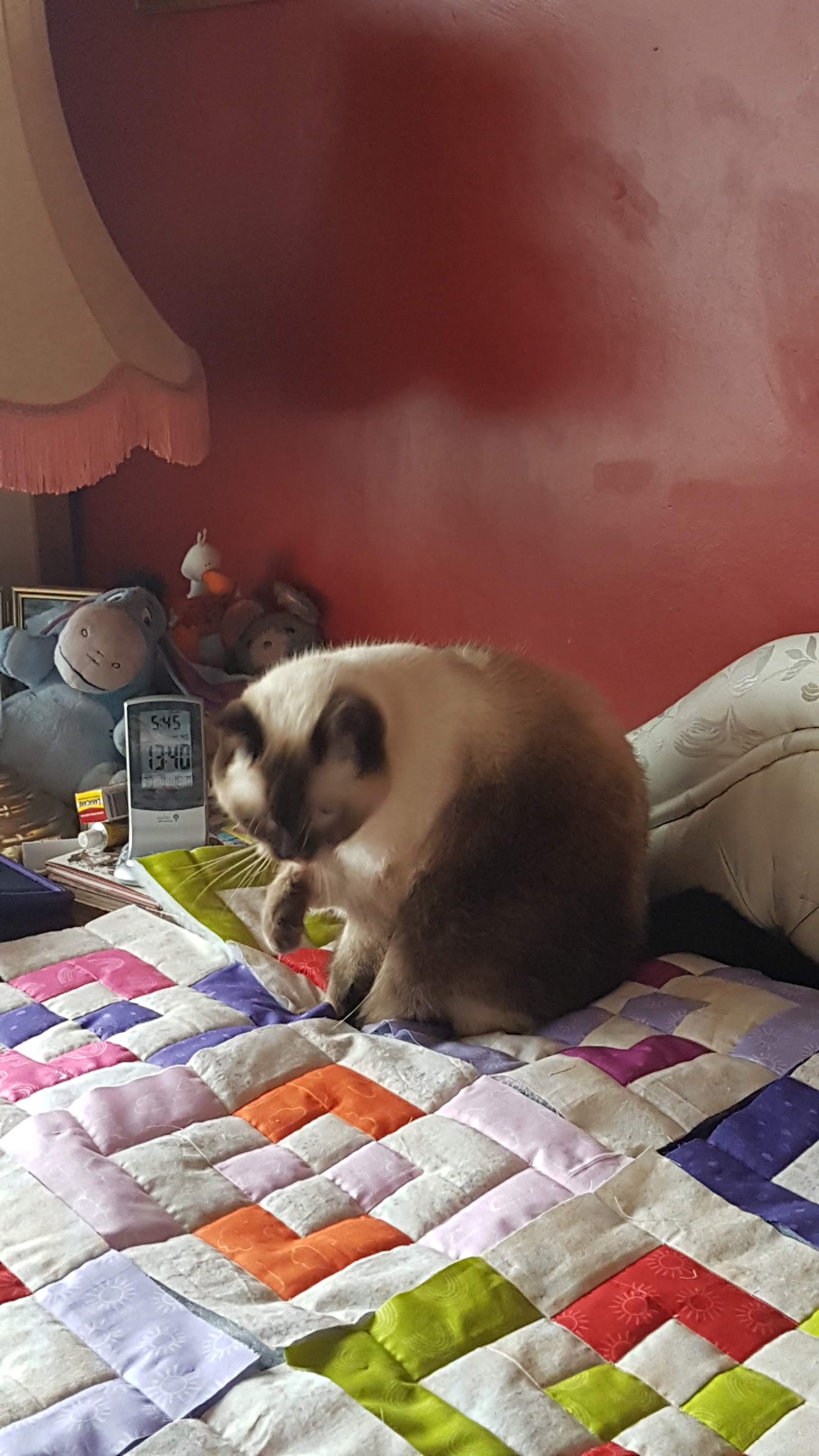
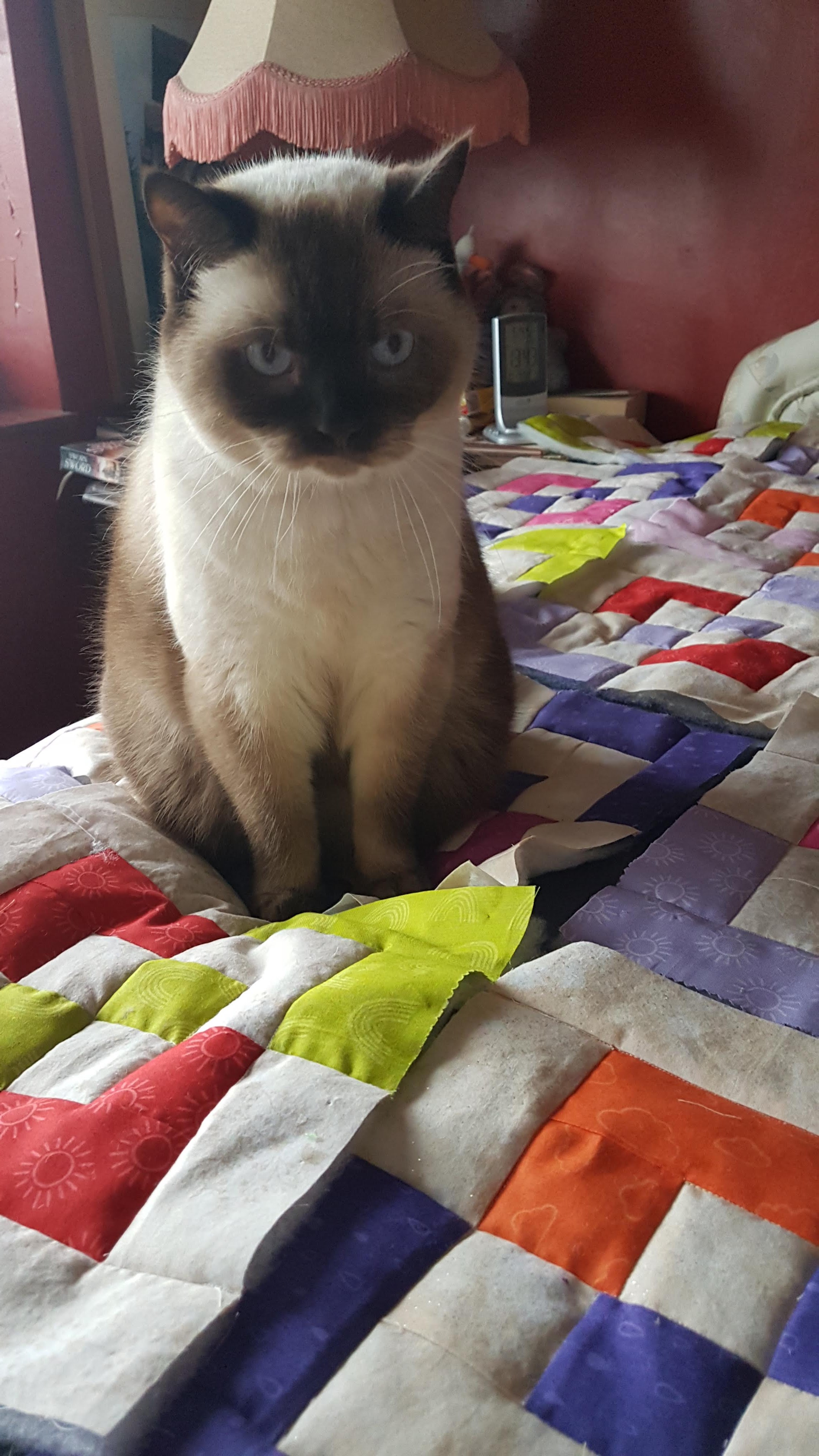
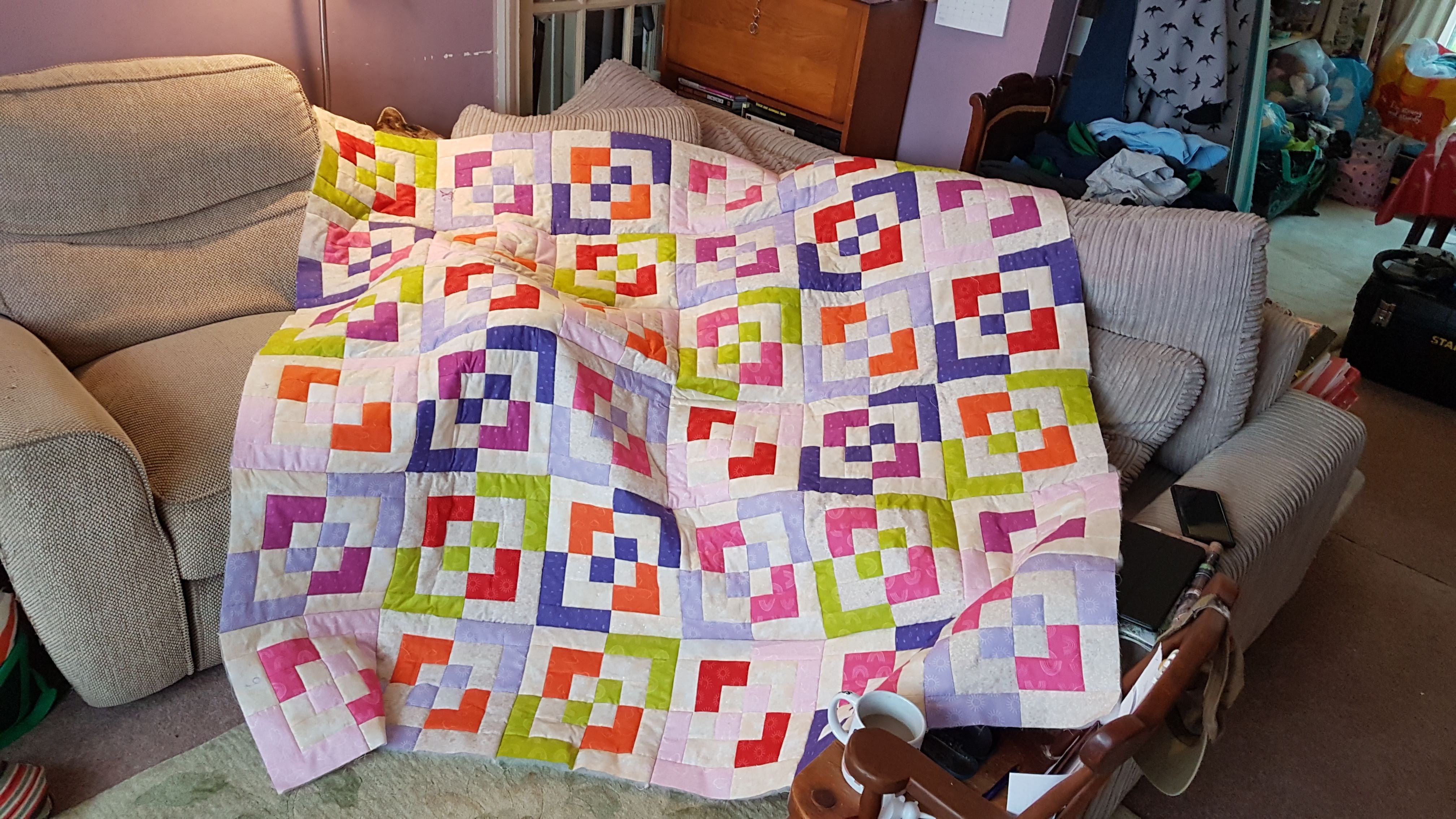
I have put the Bento Box quilt top together this week too. As you can see, Bailey was being incredibly helpful. Not shown is him digging under each block as I laid it out, which made the whole process a lot longer!

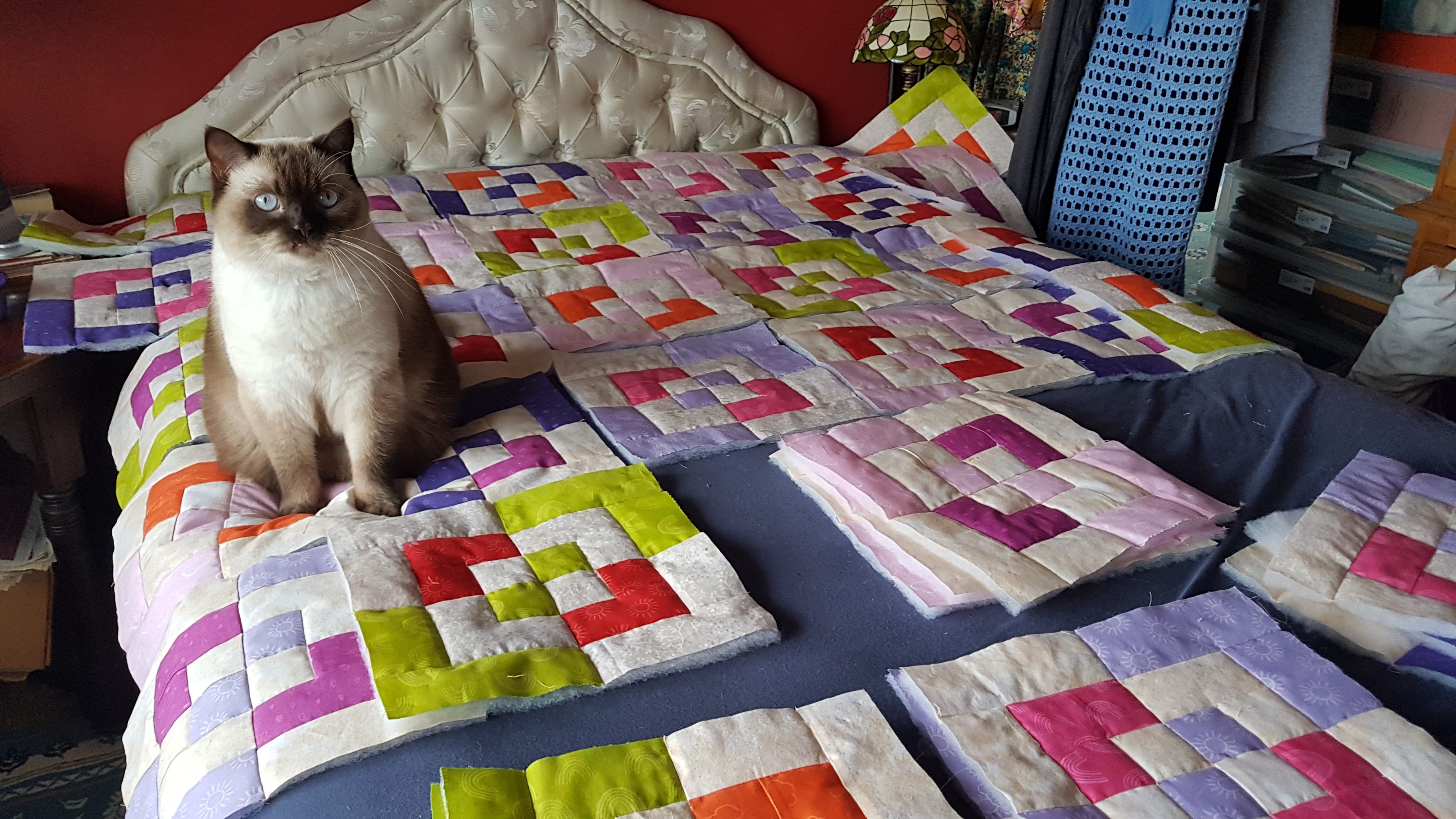
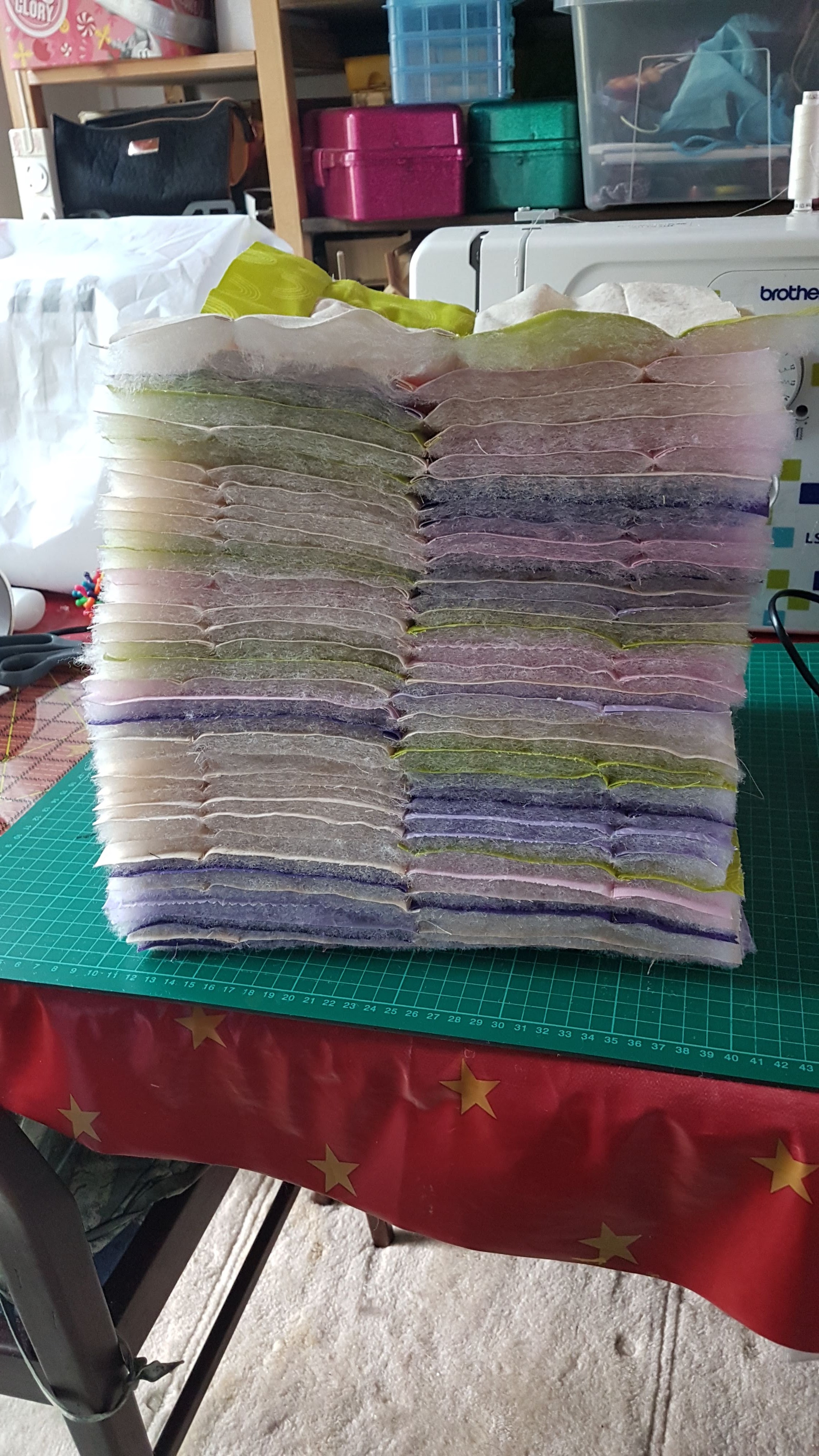

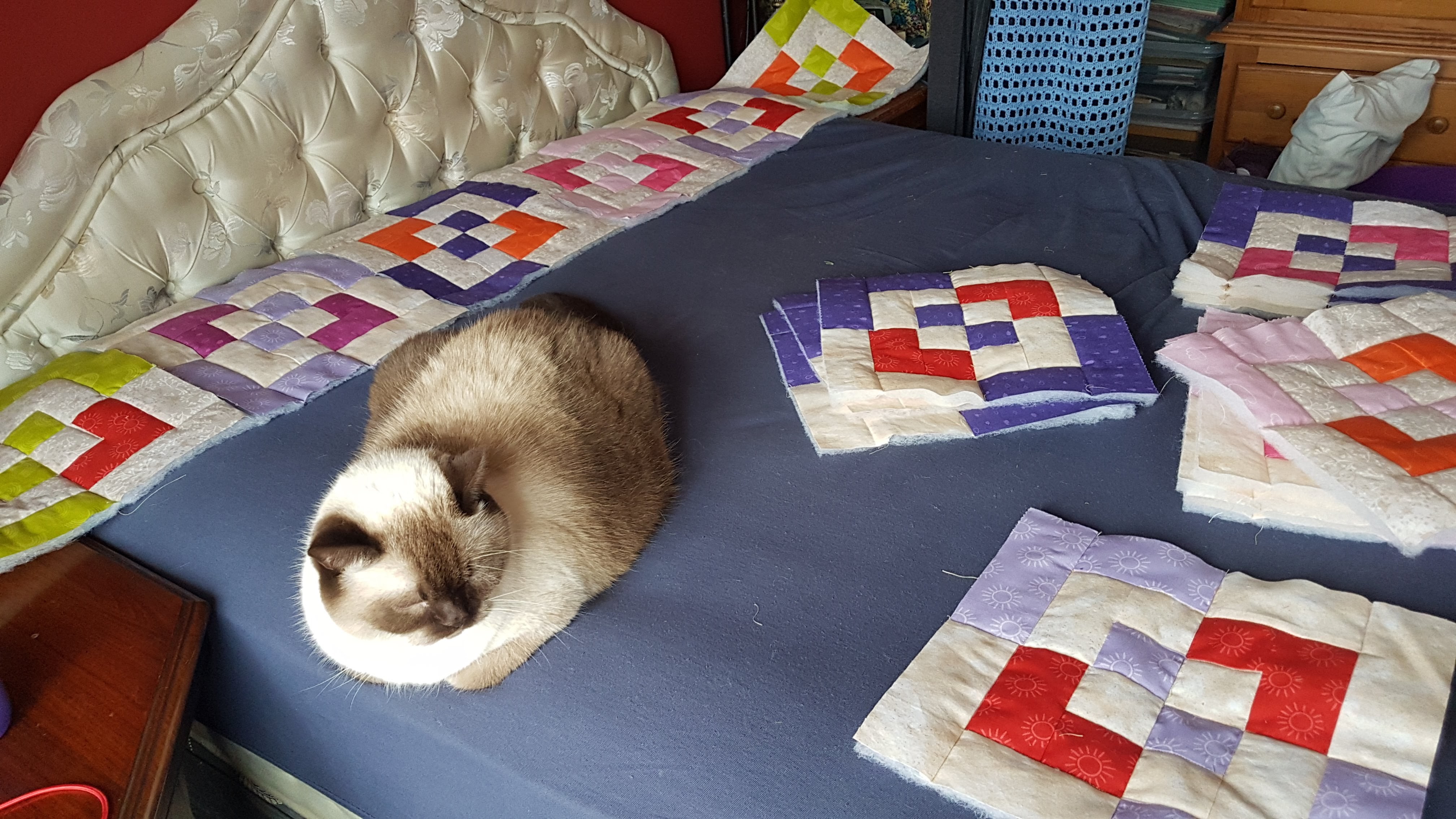
The top row is an inch shorter than the rest and I am not quite sure how that happened! I’ll have to do a block extension in the same colours and hope no one looks too closely! I’m going to back it with a cotton double sheet and I am considering whether I need a border. I have fabric left from all the colours, so I am tempted to do a striped one if it won’t detract from the Bento Box blocks.
I also got round to picking some of my Chinese lantern plants (physalis) for drying – they look so pretty in my shed, and when they are dried I think I’ll add them to the vase with the crochet daffodils.


To-do or not to-do…
And now it’s October, and I have to work four days a week – practically full time! Back in week one I made a to-do list of things I wanted to do during lockdown. This feels like a good time to check back on that and see what I managed.
Here it is:
Purple jacket (a 1950s design that the sleeves wouldn’t work on, so I gave up in a huff and its been hanging from the curtain rail for about four years)- Crochet diploma – I made it to lesson 7, so need to pick that up again
- Say Something In Welsh course – no progress made. Duolingo is coming on well though!
- Coast ripple blanket (Attic24 pattern) – several rows done, and the weather is cool enough to work on this again
- Long waistcoat – frogged the whole thing and reused the yarn in a cardigan that I only have one sleeve to go on
Attic window quilt (that I cut out when I only had one child)- M
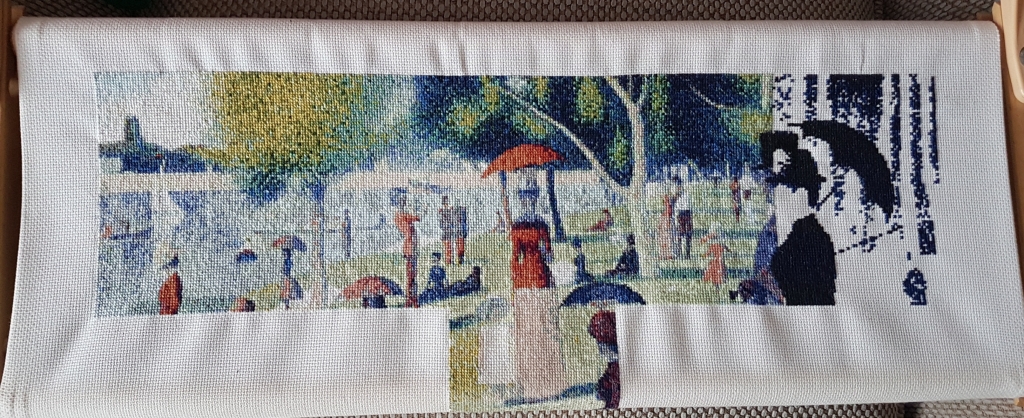
ini quilt (er, ditto) - Seurat cross stitch – at least I only started this last year! – ok, two years ago. I have nearly finished the whole top section, so some progress has been made.
- Couch to 5k (again) – made it to week 4, twice, and damaged my ankle both times. I did take up open water swimming though!
Spring clean the shed, evicting the winter spiders…and being realistic about what I will actually use in my stash, then donating the rest
OK, I didn’t achieve everything but I don’t feel lazy – there’s been a lot of things made that weren’t on this list, and I have made a sizable dent in the stash through quilting. And I’ve really enjoyed writing this blog! The discipline of posting every week has been good for me.
So, that was week 28. Let’s see where week 29 takes us…
Kirsty x
What I’ve been reading:
Heartbreak Hotel/Night Moves (Alex Delaware) – Jonathan Kellerman
The Jupiter Myth/The Accusers (Falco) – Lindsey Davis (Audible)






 What Kirsty did next