81: it’s showtime!

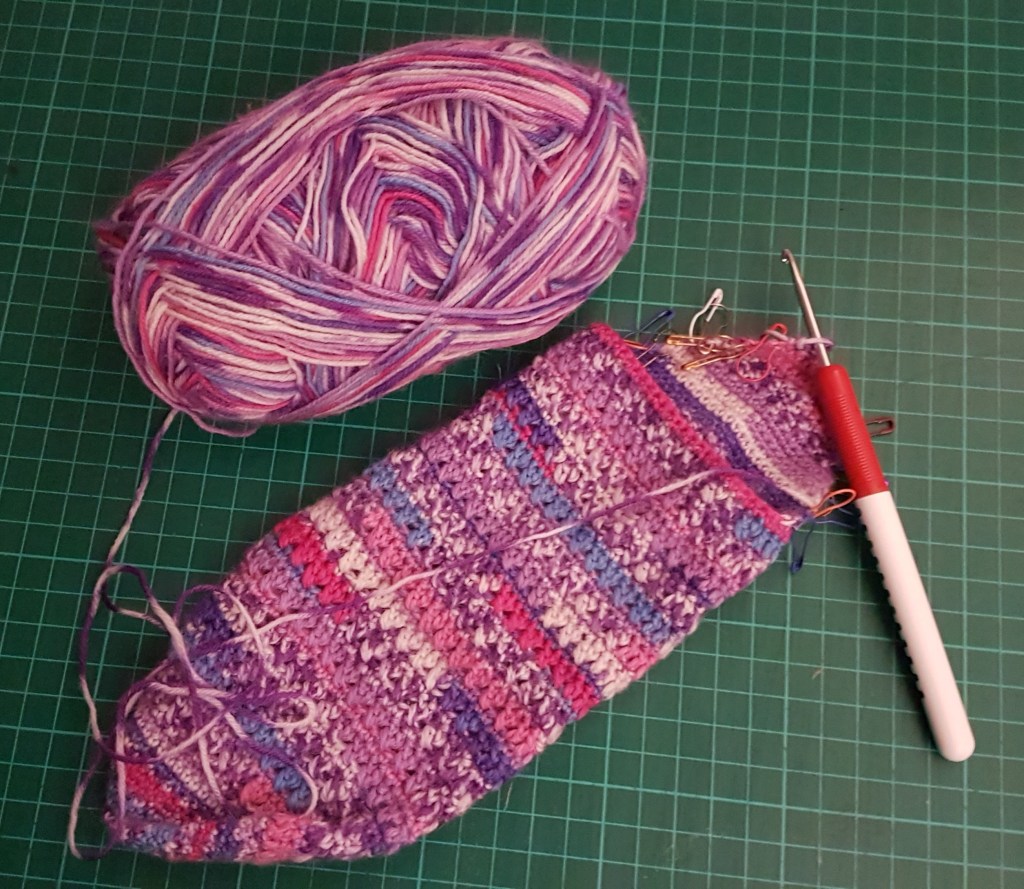
It’s been mentioned before that I’m a bit of a butterfly when it comes to making and crafting: I usually have several projects on the go that can be picked up and put down, taken on tubes, worked on as a way to help me focus in meetings or at D&D games, focused on while the TV happens in the background, that sort of things. These are alongside the ones that need more attention – things with sewing machines or full coverage cross stitches, for example.

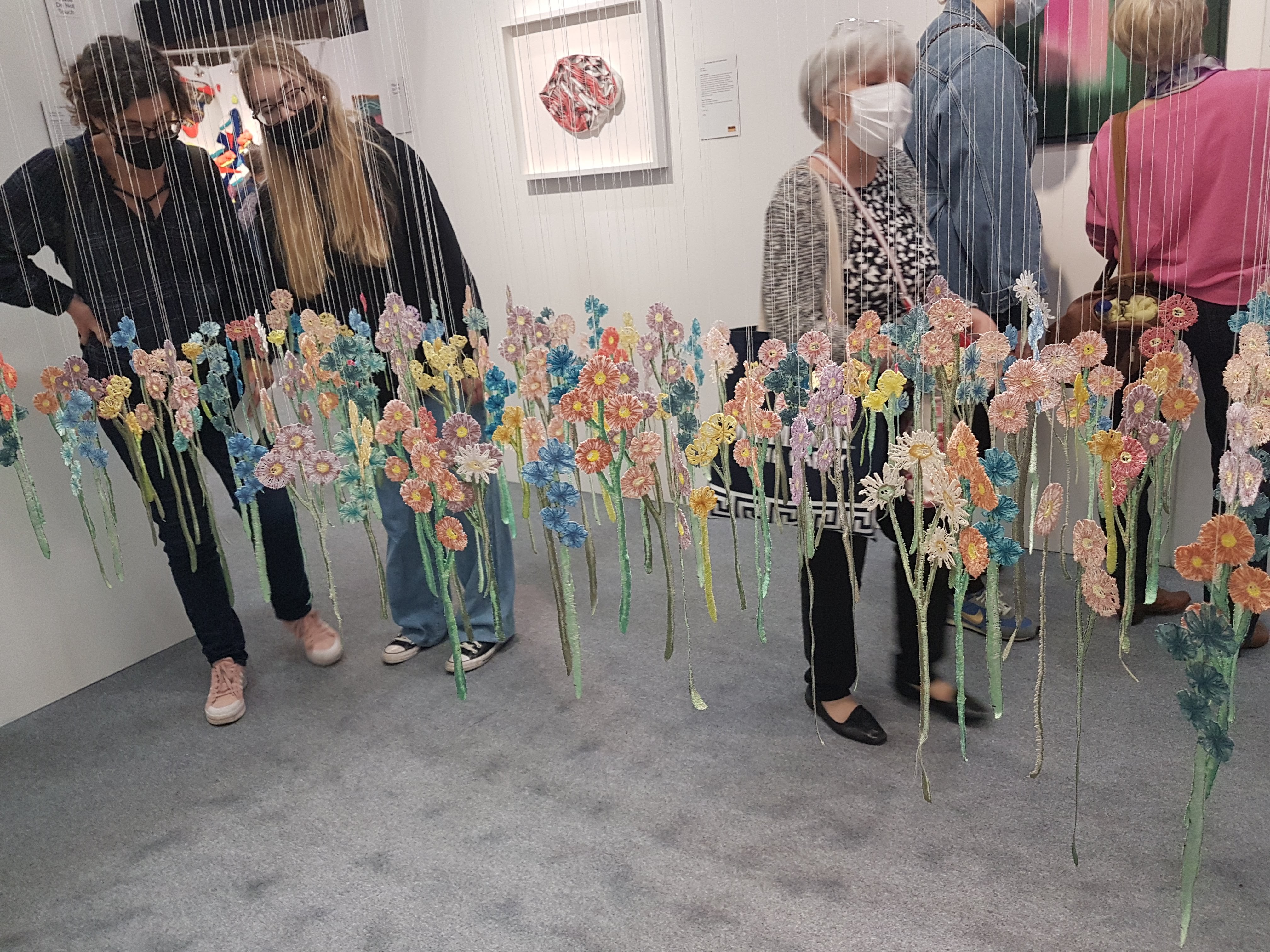
So, imagine my delight yesterday when my crafty buddy H and I visited the Autumn Knitting and Stitching Show at Alexandra Palace – the first live craft event we’ve been to since the Waltham Abbey Wool Show in January 2020, before all those lockdowns. I’ve always liked the autumn one better than the spring one (at Olympia) for the exhibitions of quilts and students’ work. The venue is also pretty amazing, with glorious views over London. ‘Ally Pally’, as it’s known, is one of those Victorian ‘people’s palaces’ which have so much history attached to them: the BBC broadcast from there, it was used as an internment camp during the First World War, there’s an ice rink and a beautiful park.

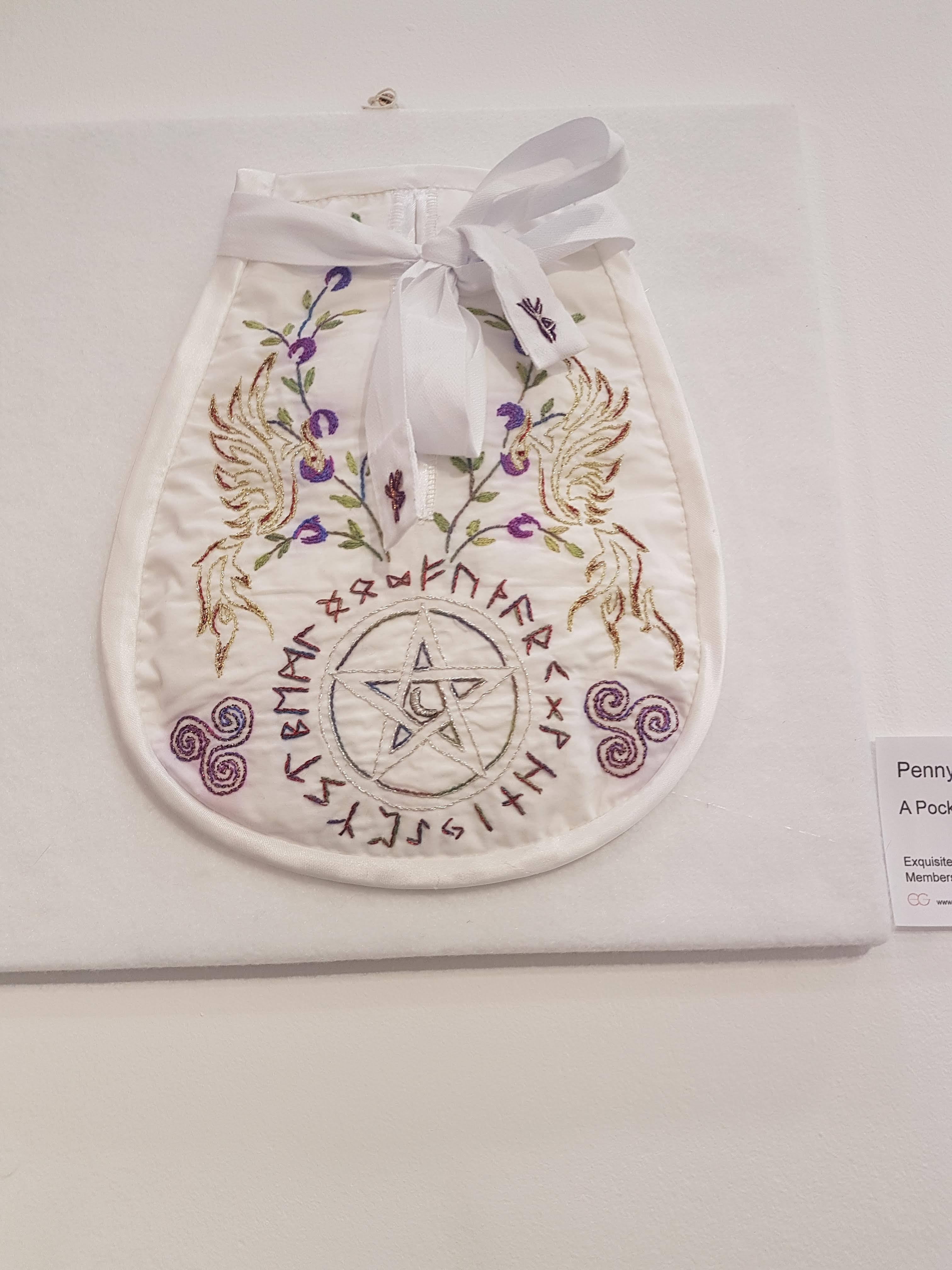
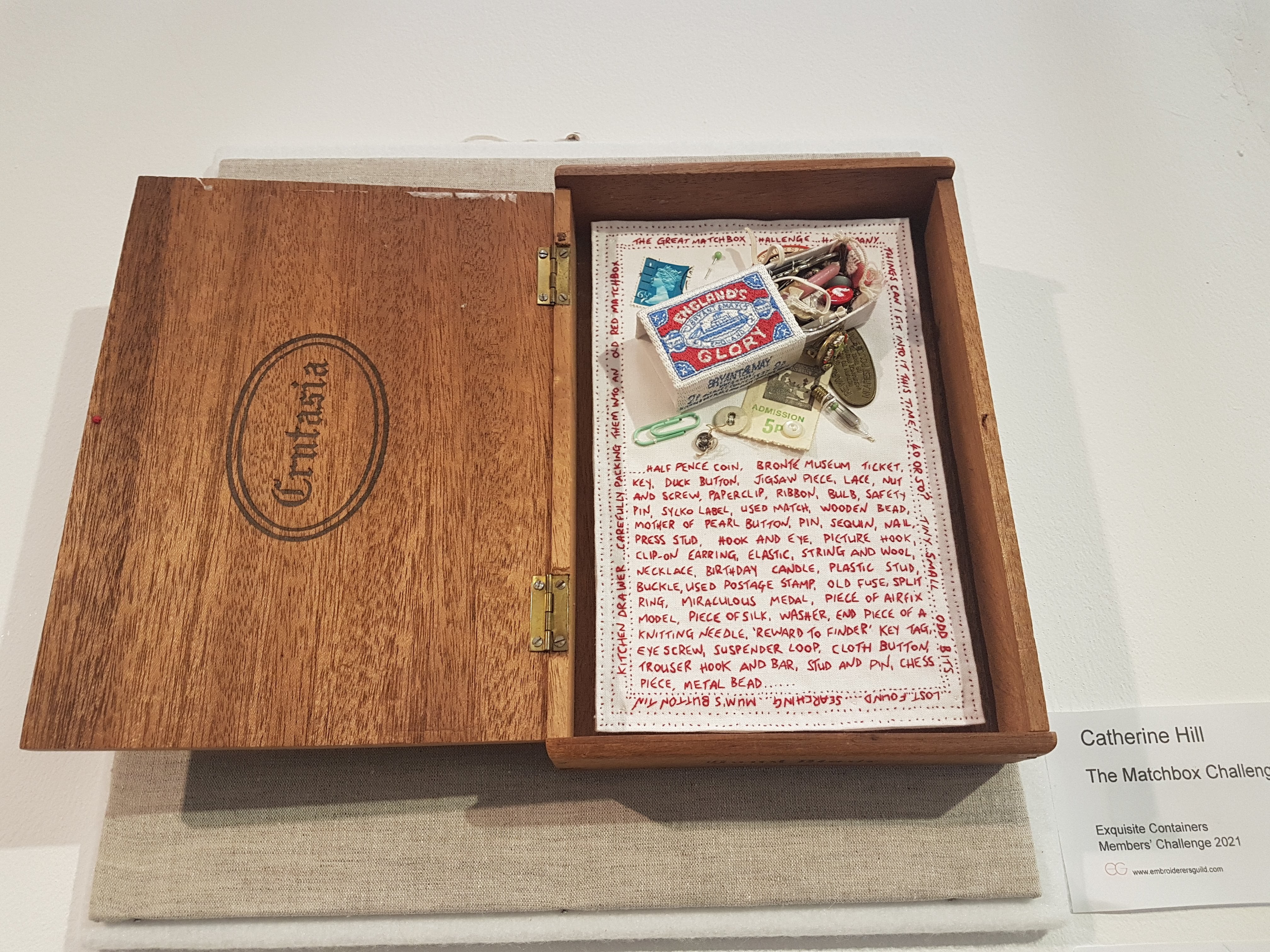
We started with a plan to work our way around the outside stalls, which took us through (among other things) the Embroiderers’ Guild Members’ Challenge exhibition ‘Exquisite Containers‘. We spent a long time talking to the Guild member watching over the exhibition, admiring her mother’s stunning or nue book covers: after working for many years and bringing up her family, she vowed after retirement that she’d dedicate her time to her craft and did just that for the next 25 years or so. We talked about the loss of creativity in the school curriculum – she had written a stern letter to Gavin Williamson lambasting him about the destruction of the creative subjects.

‘I do believe we are muted’ – Philippa Moggridge

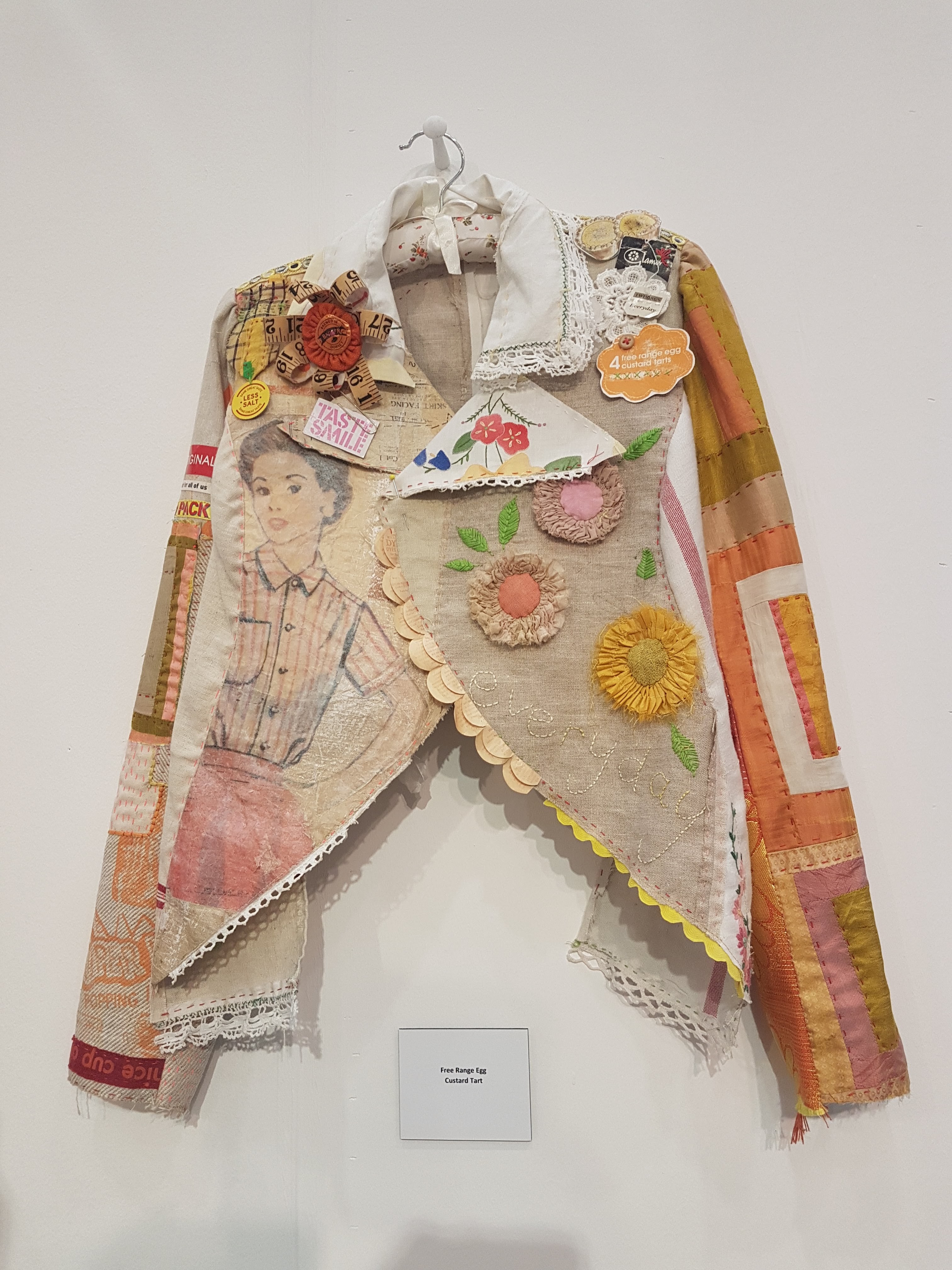
H is a DT teacher which gives us an excellent excuse to talk to people about techniques, and I was keeping my eyes open for makers who were working with up/recycled materials. Maria Thomas’s work ‘Relative’ explored her place in the world as a mother, daughter, aunt, niece etc through mixed media pieces like the Free Range Egg Custard Tart jacket pictured here. These pieces were inspired by the housecoats her mother put on after work to do housework and cooking, to protect her ‘good’ clothes. I loved the way books, vintage packaging and text were blended into the patchwork and quilting. I’d really like to work with her.

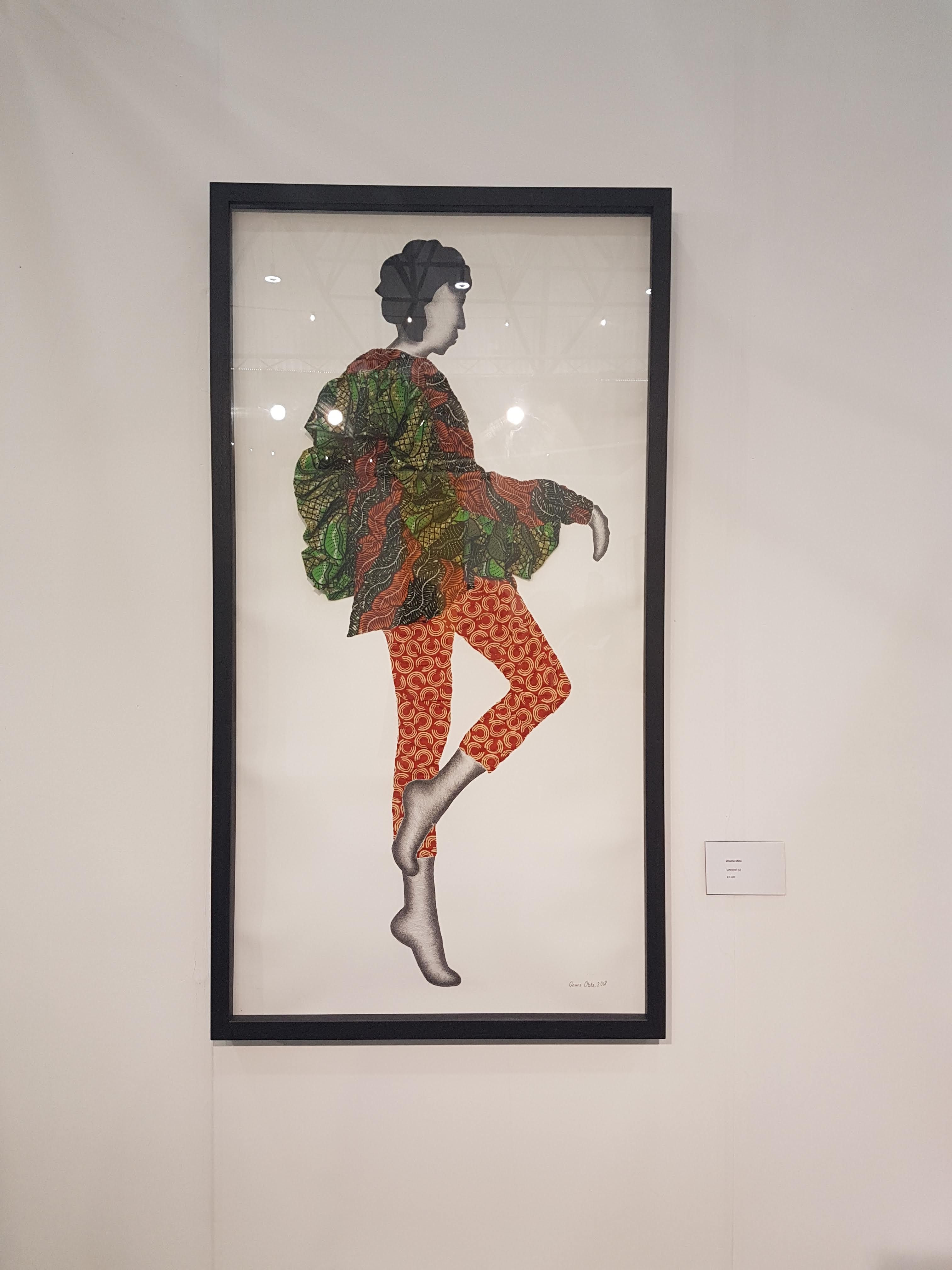
Onome Otite‘s textile collages filled us with joy – so much colour and movement in her pieces inspired by Cirque du Soleil, using bright ankara and batik fabrics. There were several stalls selling African wax print fabrics, and when I find the right pattern I have all their cards. Lovely bright reds and yellows called to me, but I resisted.

After the exhibitions we hit the stalls – usually H is a good influence on me, taking lots of pictures of projects we’d like to do rather than buying the kits. Yesterday we were terrible influences on each other, though at least her ‘this will be a Christmas present!’ buying was a good excuse. There are so many lovely kits and fabrics to buy, and you can squish and squash them all you like, and have chats with the stallholders. We got hopelessly overexcited when we saw Matt, Peter, Mark and Raf from the Sewing Bee, especially when Matt and Peter stopped for a photo op with us. I came home with an English Paper Piecing jewellery set, some Foundation Piecing patterns, space invaders jersey fabric (new pants coming up!), some sewing patterns from an indie maker, a lot of business cards, haberdashery bits and bobs and gadgets, a sari silk skirt in my favourite reds, and a Christmas decoration kit which I can only put down to end of day panic buying. We had a go at marbling fabric, admired woodblock printing and mini screen print kits, got carried away by puffins, hares and highland cows, lusted after high-tech sewing machines and storage furniture. I left with a lot of ideas for things I really want to make. Now to find the time….preferably before the next show!

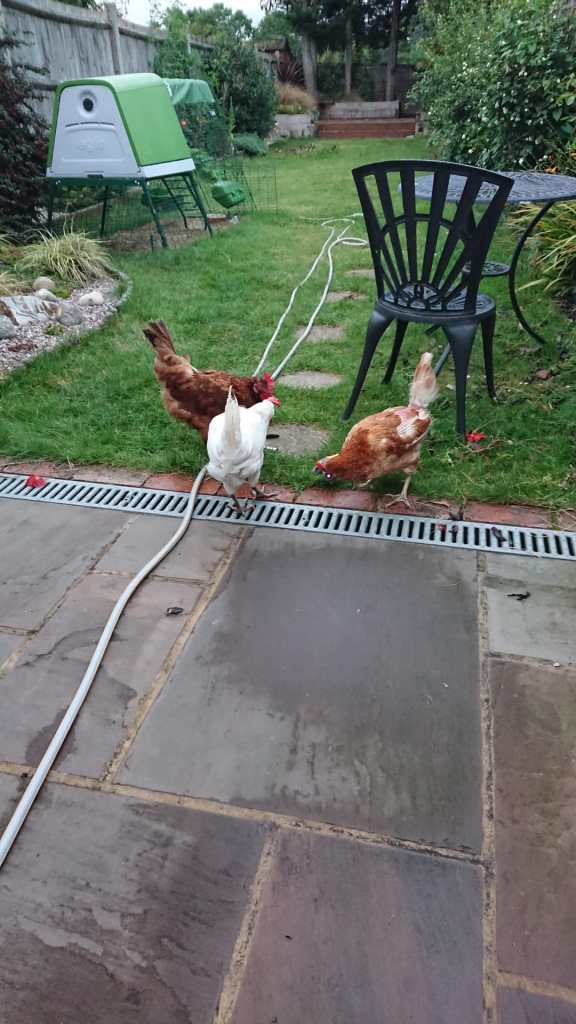
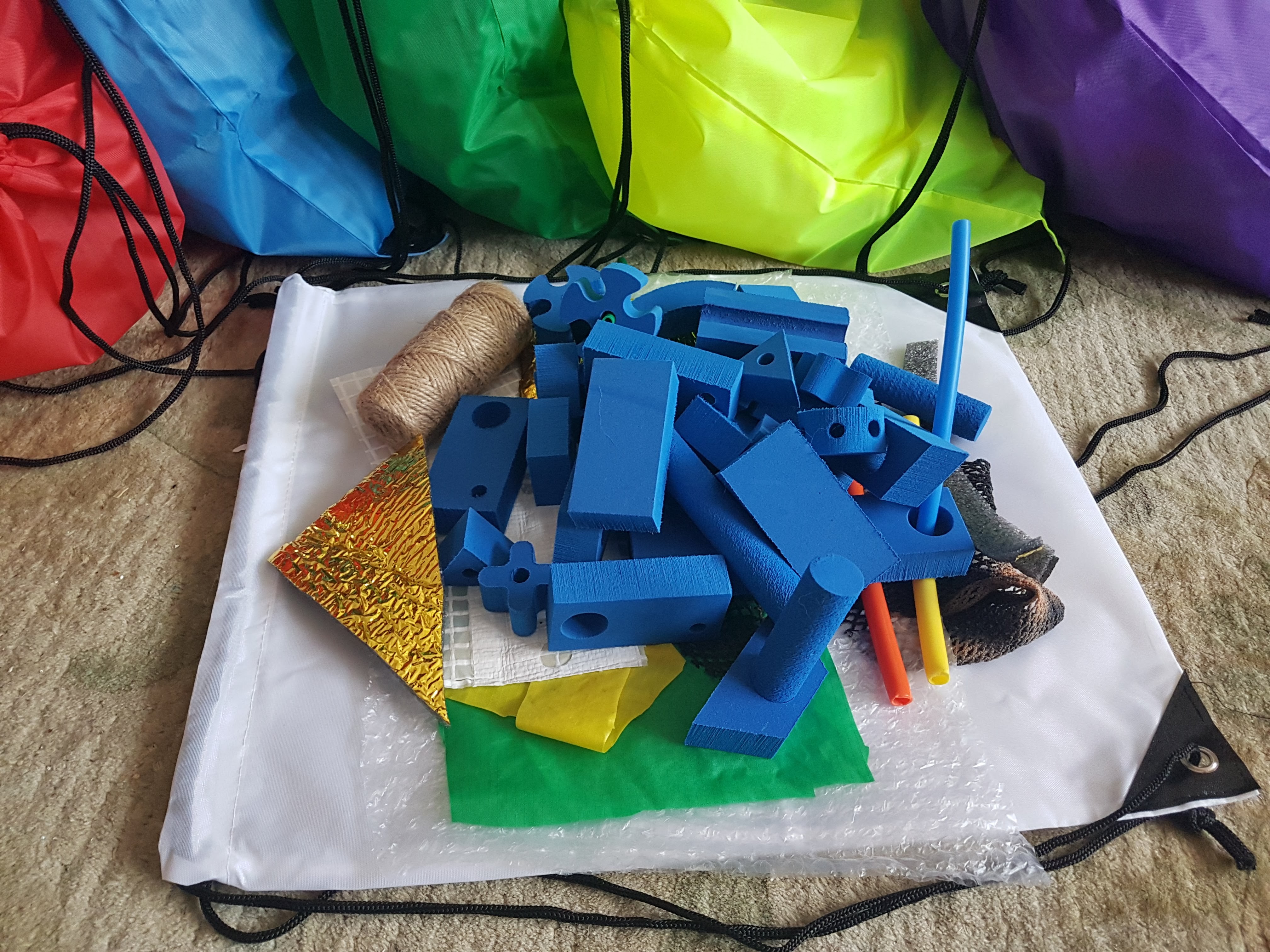
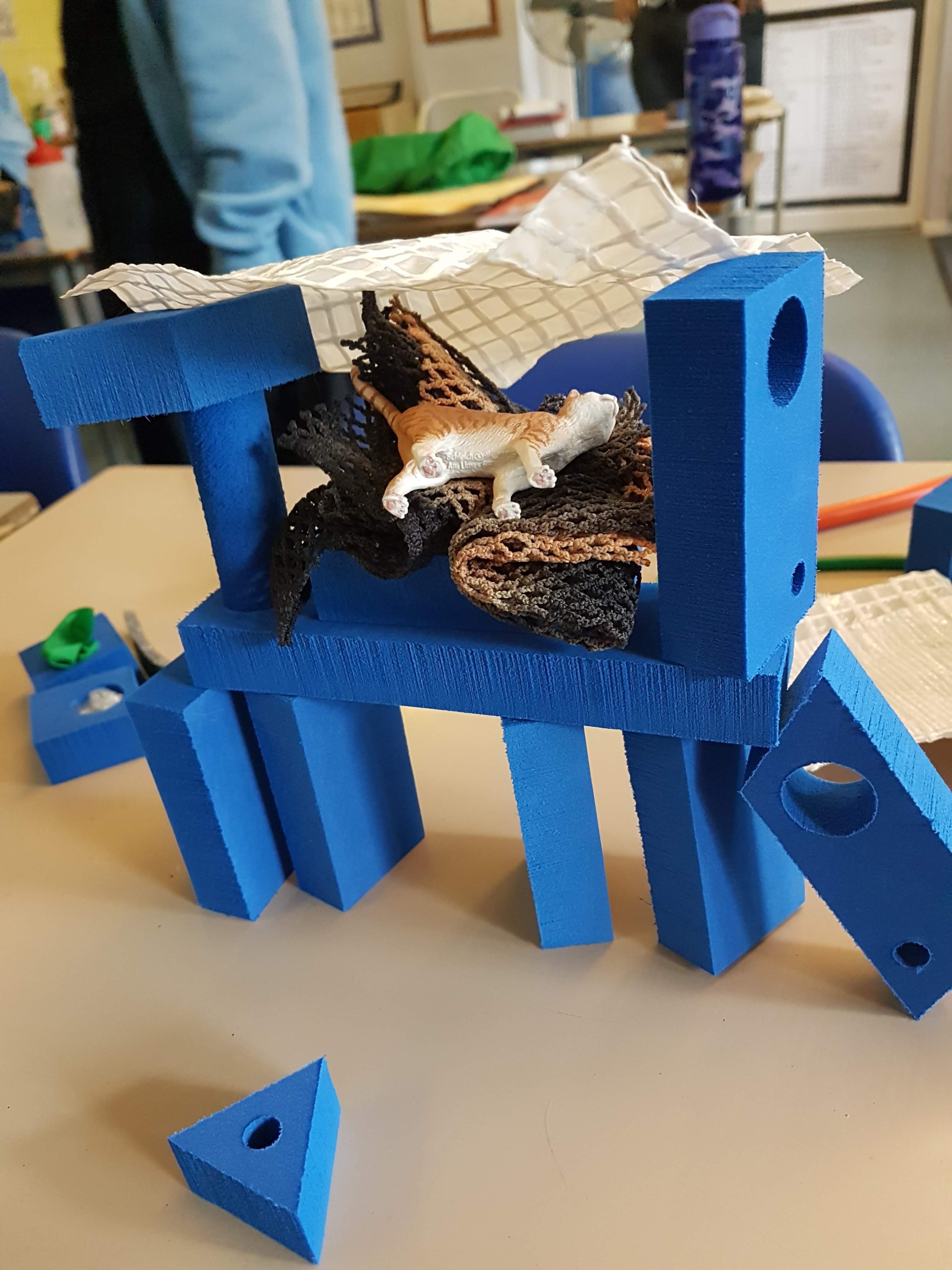
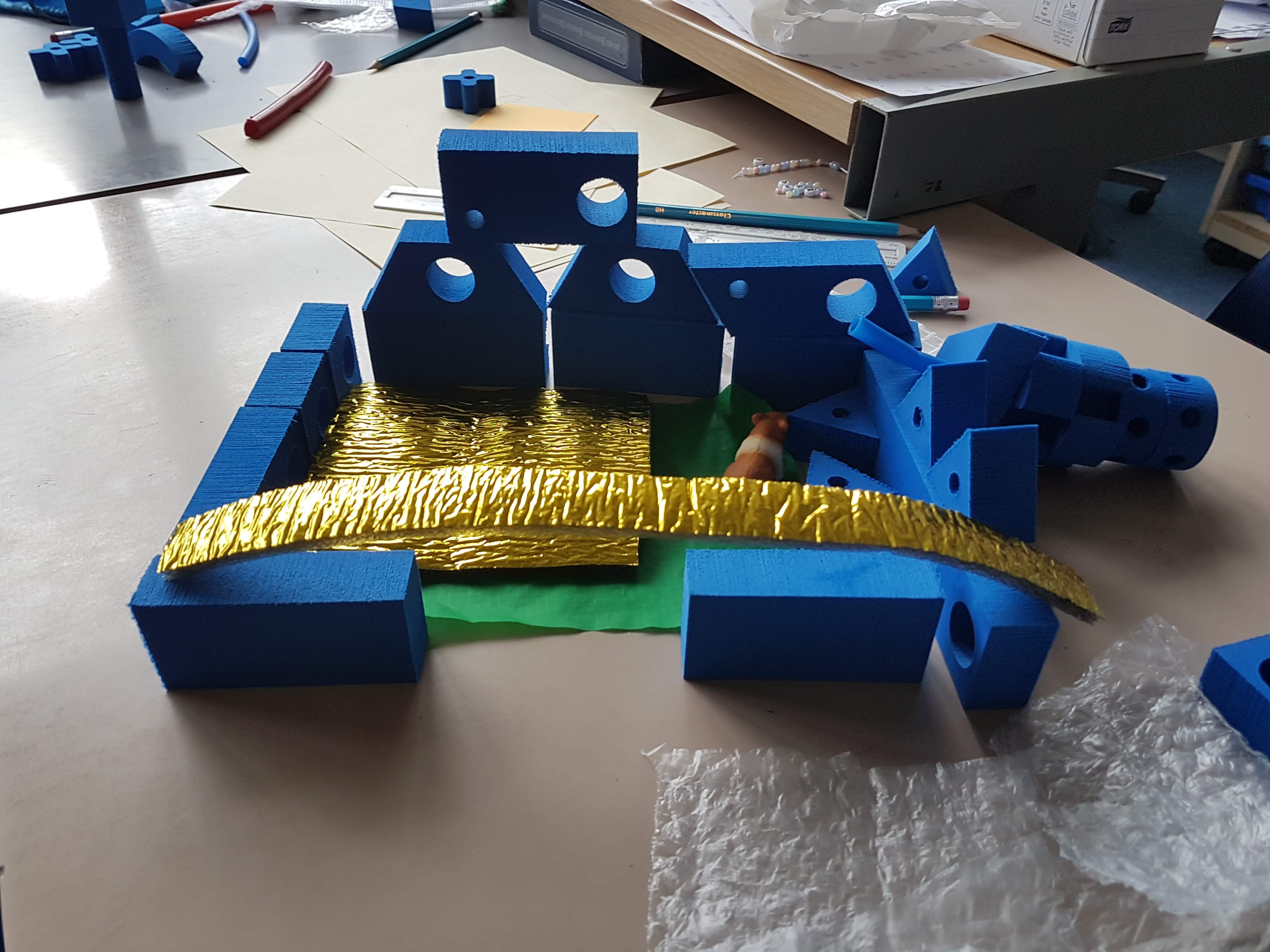
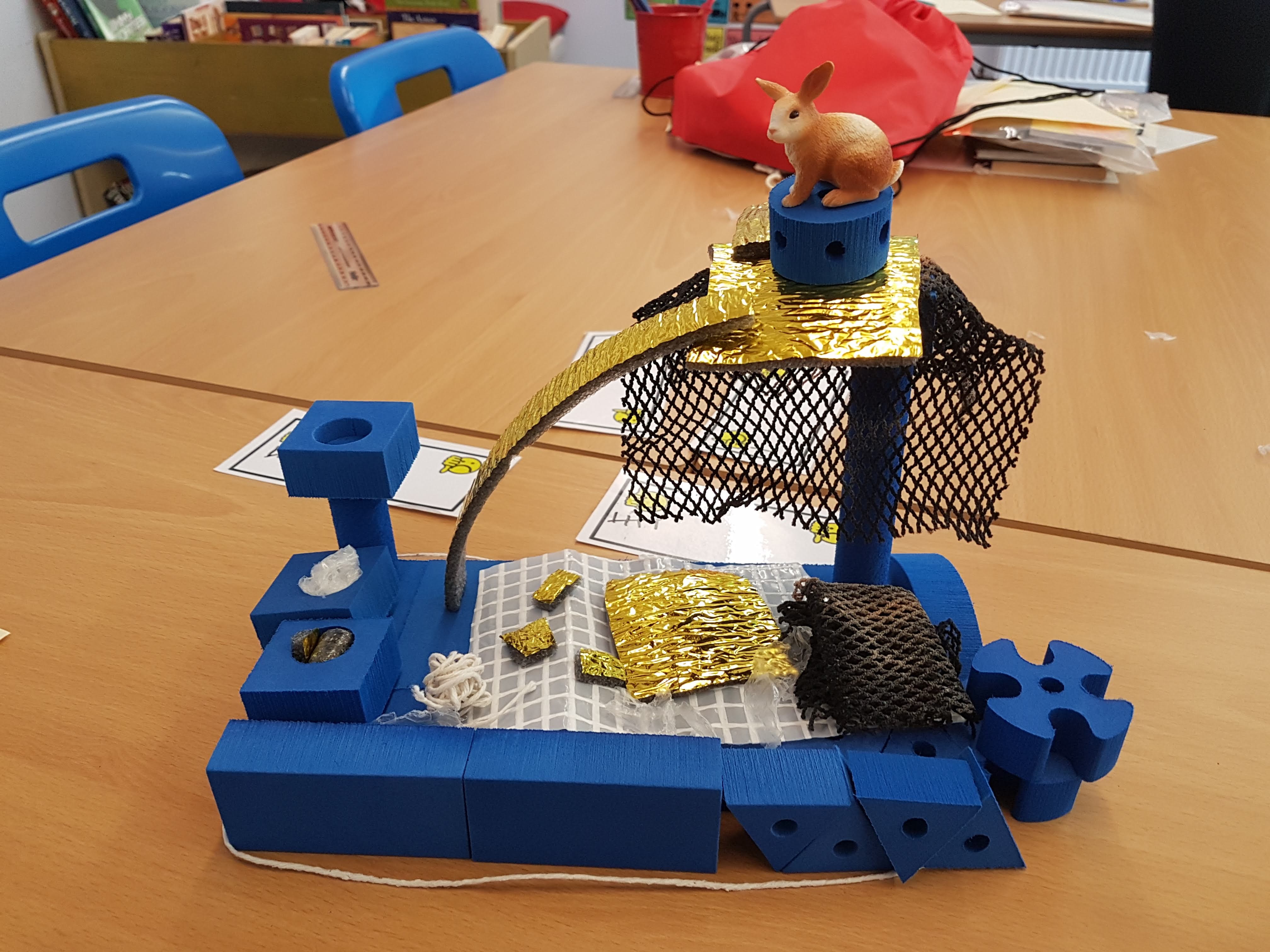
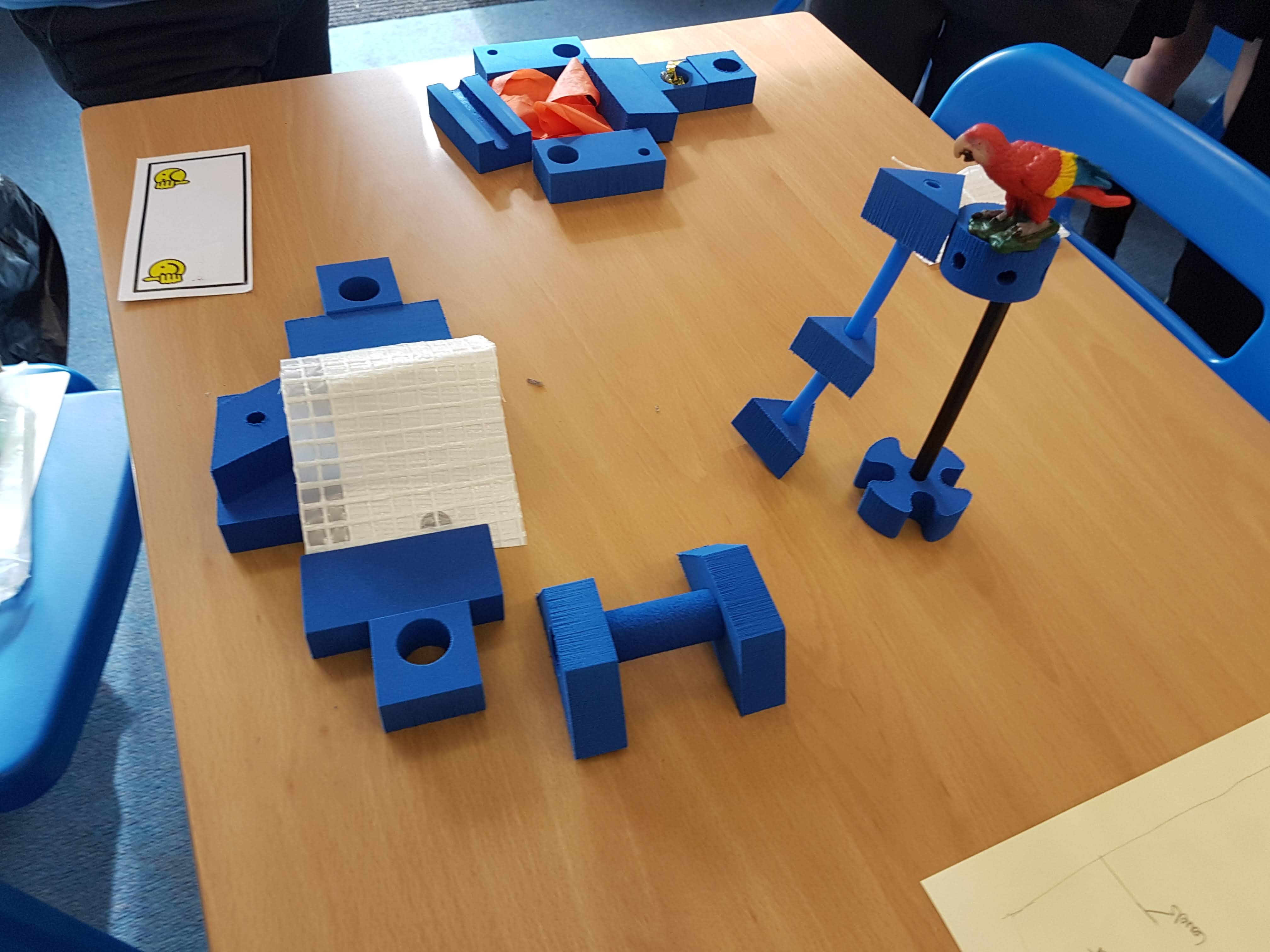
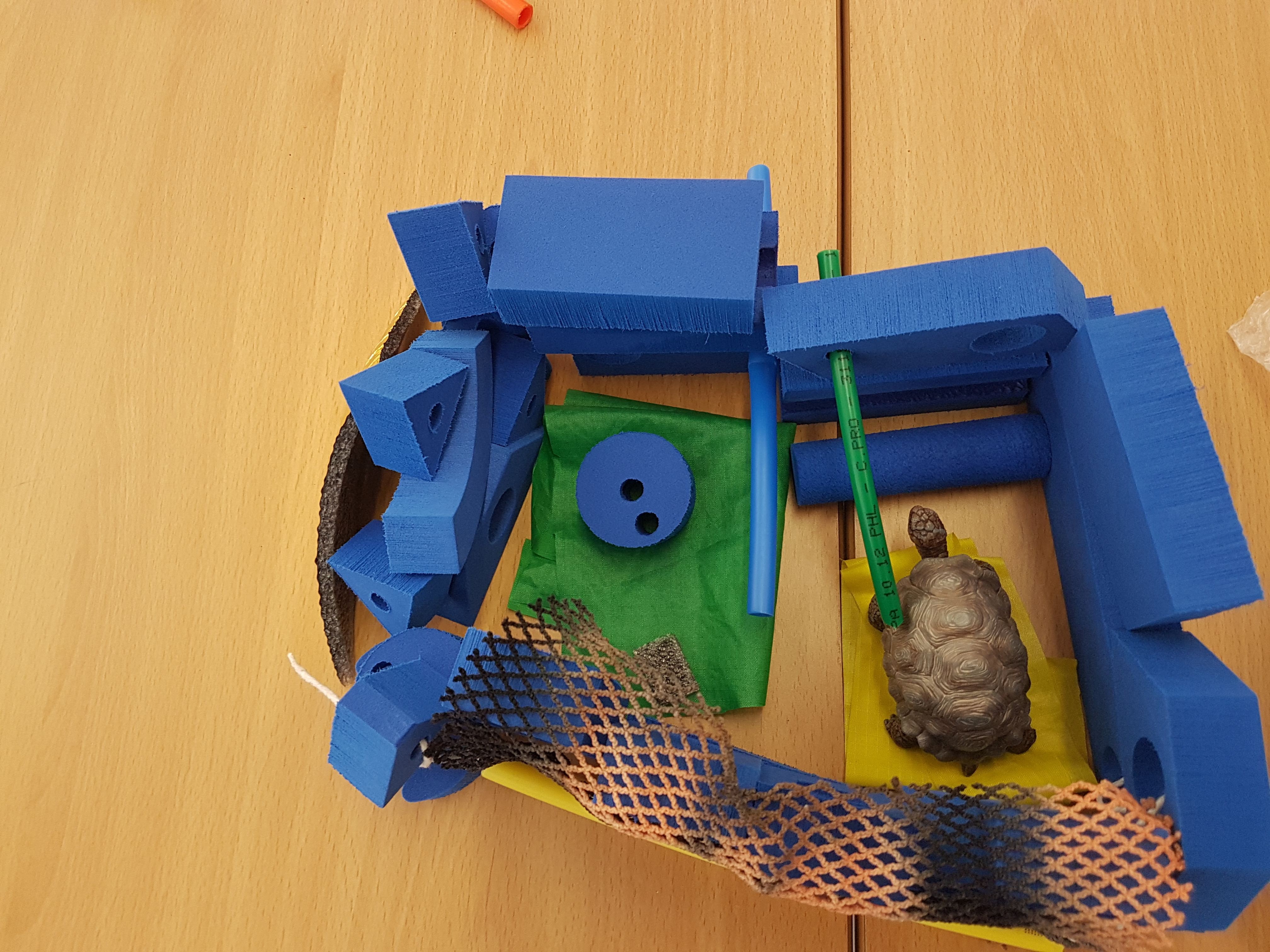
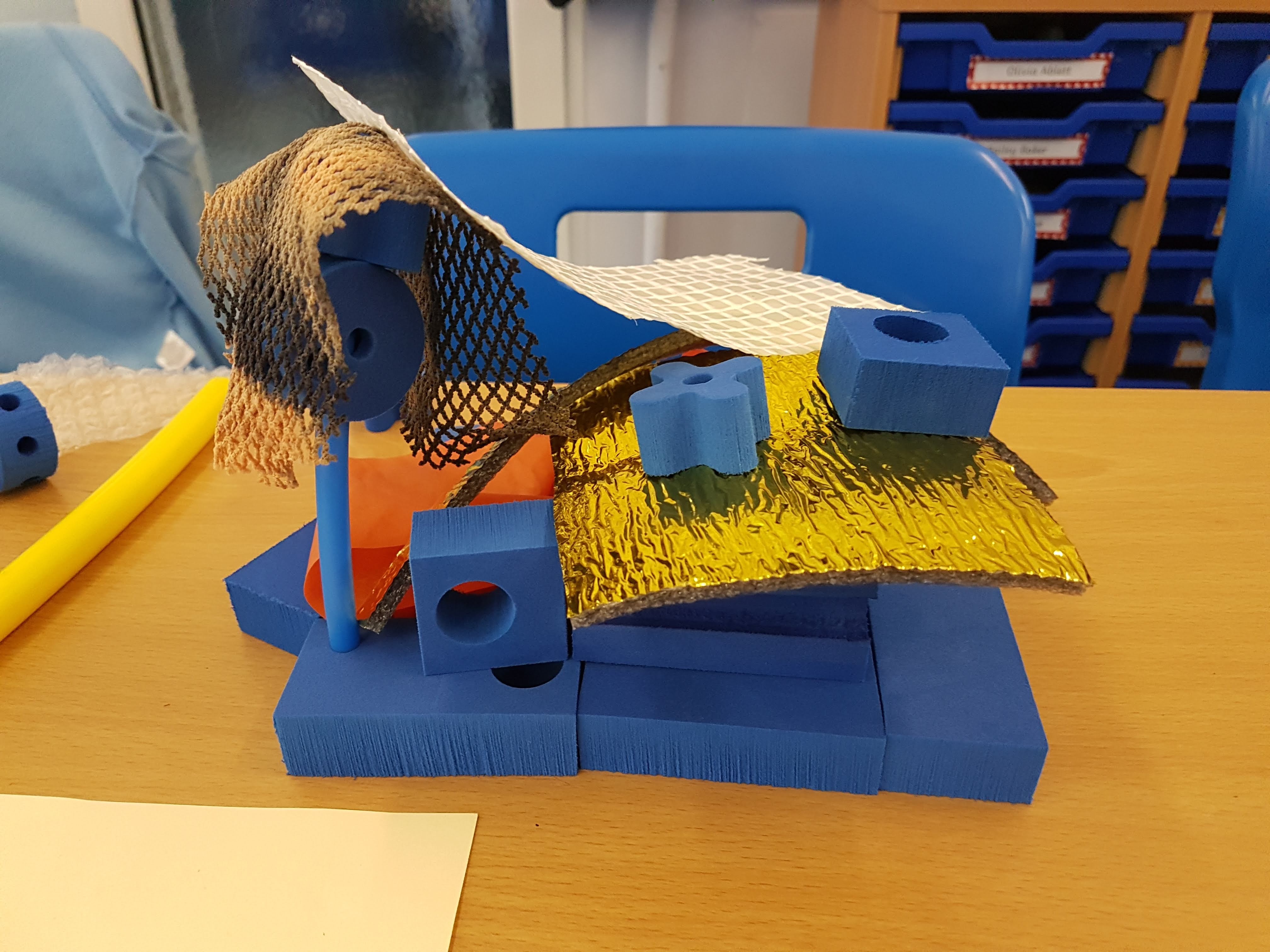
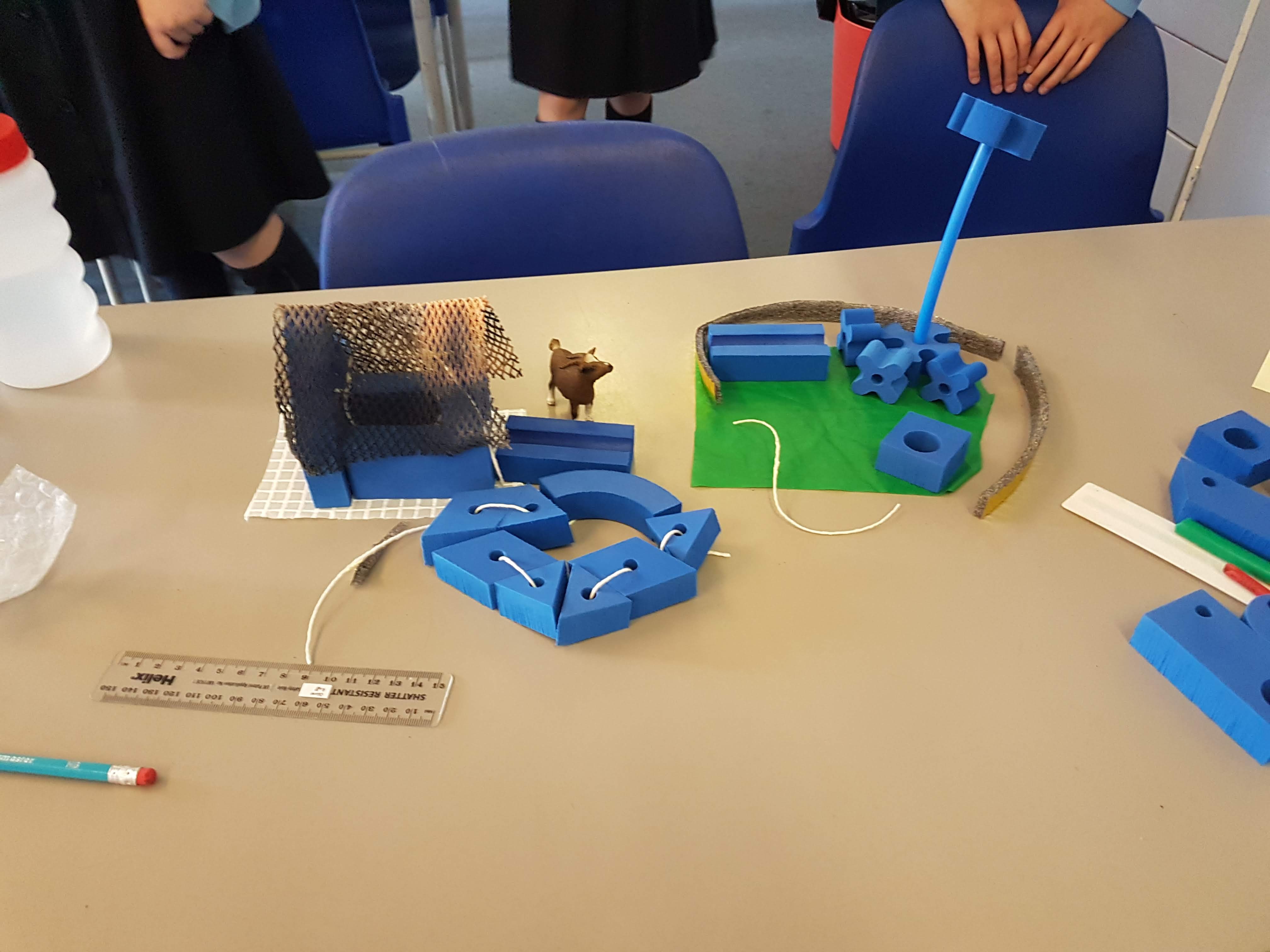
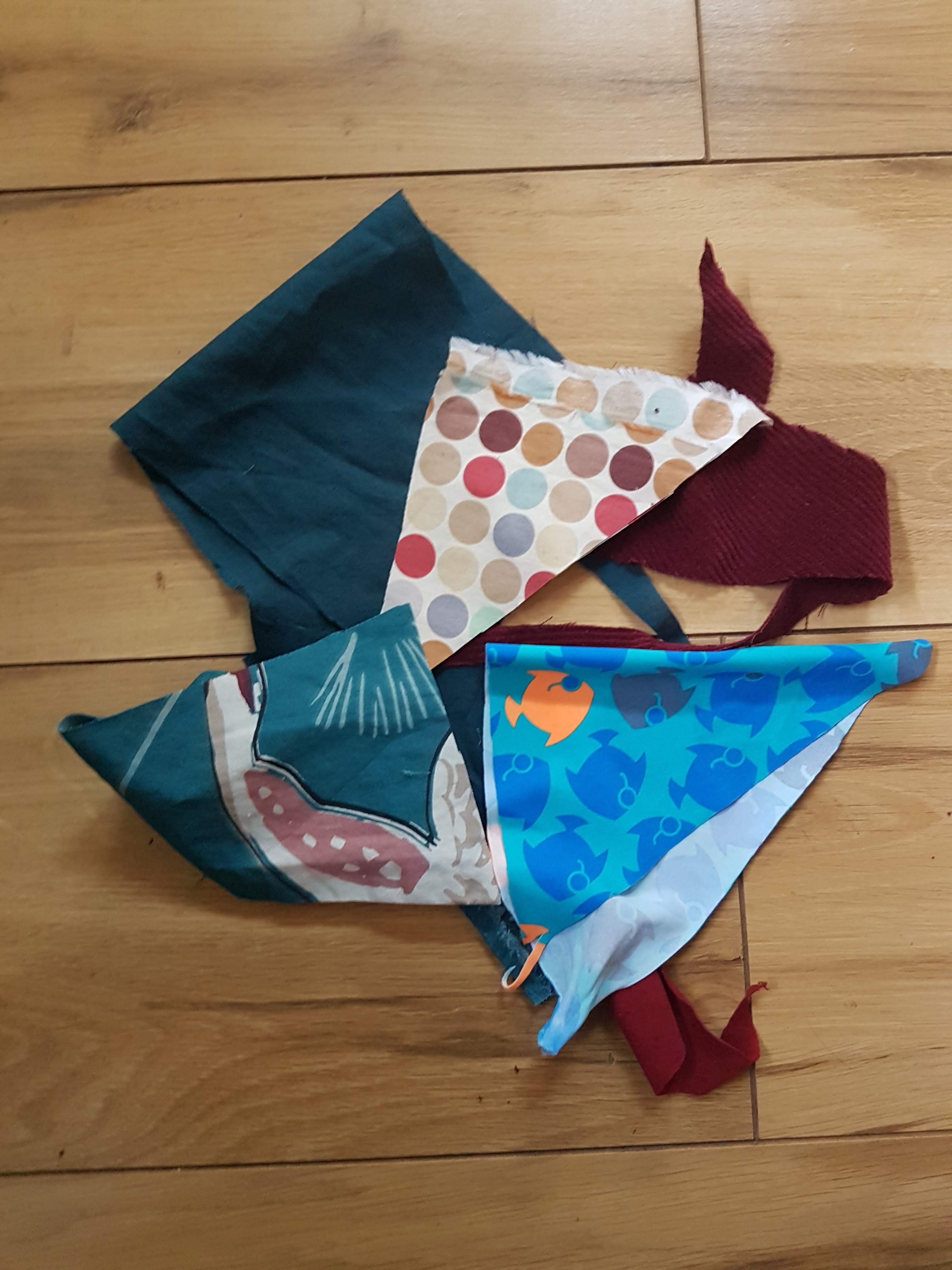
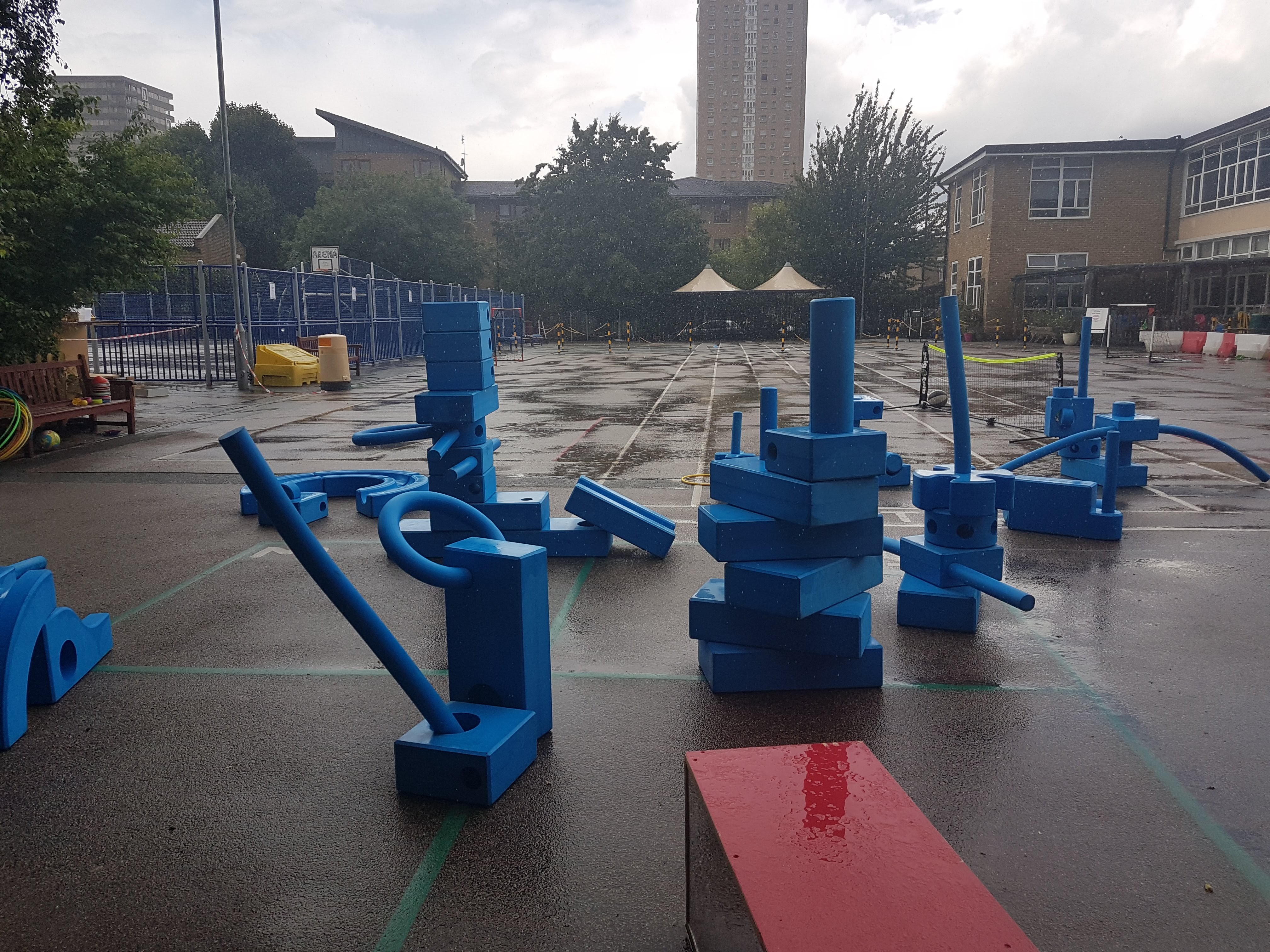
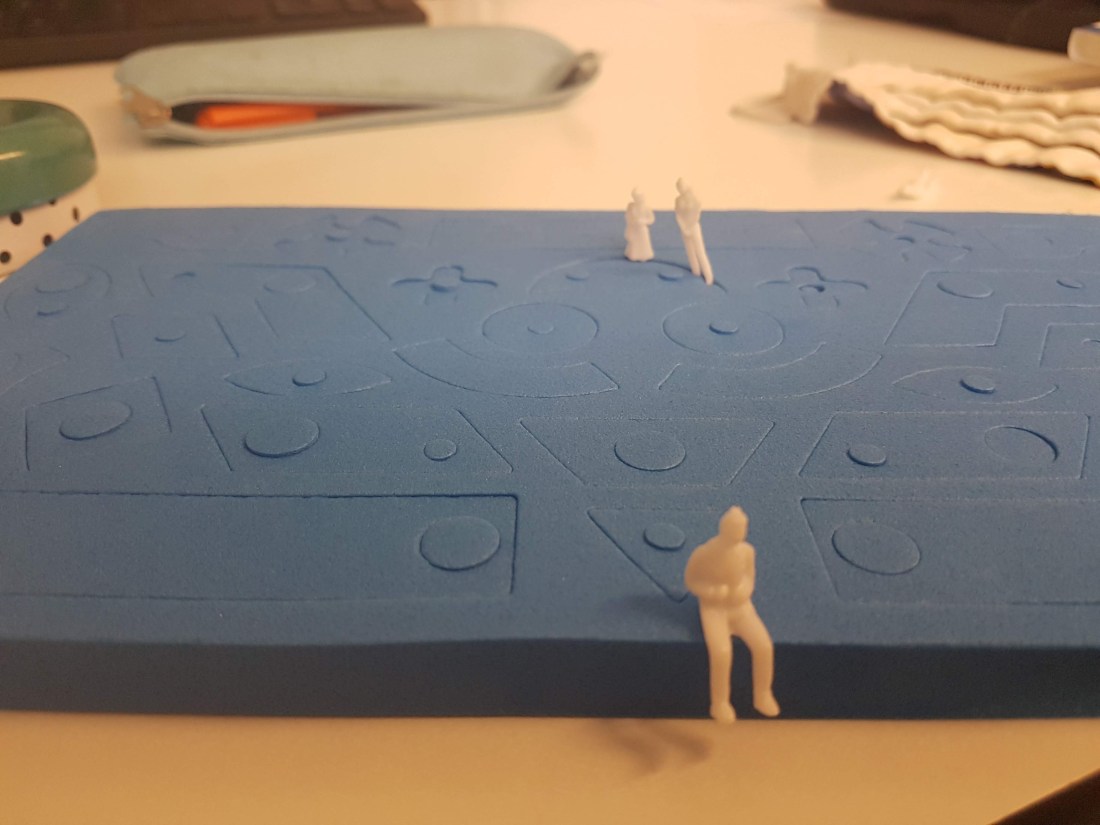
It won’t be this week, for sure: this week I am trialling my new school session in Thing 3’s primary school, and updating a talk about play for a local FE college. My hallway is full of boxes of strange resources like model chickens and miniature blue blocks (as seen in this week’s cover photo), scraps of fabric and laminate insulation. I’m also working on the next birthday present, and playing around with a small crochet bag design.

I’d better go off and do something useful….

Kirsty x

What I’ve been reading:

Tales from Moominvalley/Finn Family Moomintroll/Comet in Moominland – Tove Jansson (Audible)
Trader/Someplace to Be Flying/Dreams Underfoot – Charles de Lint

78: speaking as a ‘nice to have’…

Back in 1999, when I was still a Tower Hamlets primary school teacher, I taught a year 3 class. It was a typical class, with the full range of abilities from ridiculously bright to identified levels of SEND. It being Tower Hamlets, the intake was both socially and culturally very diverse, with the usual levels of kids on free school meals, in social housing, etc. This was in the glory days of ‘education, education, education’, as Tony Blair would have it: I didn’t agree with a lot of his policies but that one I could get right behind.

One child in my class was B, a very sweet boy who these days would probably have been identified as having ADD. I tell a lot of trainee teachers about B when I am talking about the importance of museum visits, and the need to offer children a range of learning activities to meet different styles of learning. His cartoon equivalent would be The Simpsons’ Ralph Wiggum: I was never sure how much of what happened in the classroom actually went in and he was a by-word for vague in the staffroom.

Like most year 3 classes, we covered Invaders and Settlers – Romans, Anglo-Saxons and Vikings, and during the Romans topic I organised a trip to the Museum of London for an object handling session. These school trips are so important: yes, they are ‘nice to haves’ but they are also the experiences which build cultural capital for children, and what I like to call London capital. London, especially diverse and poor areas, is not a city but a connected group of small villages. People tend to stay hyperlocal, and museums are often not on a family’s agenda: a day out costs money, even when museums are free, and there is often a feeling that a museum is ‘not for them’ (that’s another rant for another day). School visits help children experience the tube, the museum, social norms and more – it’s never just about the workshop. This is particularly important with families where the children have English as an additional language, and the parents may not have any English at all.

Anyway, back to B and the handling workshop. The facilitator held up an object – a wax tablet and stylus, in fact – and asked the children if they knew what it was. My class looked at him as if they’d never even heard of Romans…. except B, who put his hand up. I braced myself for a Wiggum-style non sequitur and out of his mouth came an explanation of what the object was, how it was used and re-used, and the name of the writing implement. My jaw dropped. 29 children’s jaws dropped. And he flew for the rest of the session. He knew what things were, he was confident in sharing his knowledge, and I went away with an entirely new view of one small child. I’m not saying that the effect lasted for ever – but we had seen hidden depths and I made sure that object-based learning made more frequent appearances in the classroom.

These visits and other experiences are ‘nice to haves’, yes, but they also provide key learning experiences for children who are not auditory or visual learners. It would be nice to think that teachers could just talk at children for 13 years and they would leave school knowing all the things they need to know, but for many children that isn’t the case. They need these ‘nice to haves’ to embed their learning and to help them connect understanding and knowledge. There have been so many occasions since I left the classroom and became a museum educator where I have seen the same thing happen to other teachers: a floodgate opens in a child’s mind when the connection is made, and both teacher and learner go away with a new understanding.

This week, for example, a child with autism focused for longer than he’s ever focused before on one thing: building with the blue blocks. Over three days this week we saw every class in a primary school, working on coding, creativity and collaboration and giving children a chance for some physical play, some kinaesthetic learning. The headteacher came to see us on our last day and said that so many parents had come to her and said their children hadn’t stopped talking about their session when usually they answer ‘dunno’ or ‘can’t remember’ to the ‘what did you do today?’ question. Teachers had also raved, and would we come to their other school as well please. These sessions were a ‘nice to have’ too, as are those days when companies like Time Steps or History off the Page come into school and your kids spend the day immersed in history and come home with peg dolls or Stone Age bread.

You may well wonder what’s brought this on. Read on…

This week, Google offered up this article for my reading pleasure. I’m quite sure that inciting me to fury probably wasn’t its intention, but that was the result. The article was about how schools would tackle the issue of ‘catch up’ following last year’s closures. It talked about schools focusing on the poorest pupils, ensuring they had food (gasp!) and ‘going out visiting’ (ditto!). Apparently this meant that they weren’t providing an education offer for all children. It was acknowledged that private schools had three times as much money than state, which was nice to know if not really much of a revelation.

Who knew that children might need to eat? Who knew that their families might need to eat? Who might have suspected that the poorest families, who rely on school dinners to ensure that their kids are guaranteed a hot meal every day, might need pastoral support – especially when dealing with a government who were prepared not to feed these kids in the holidays? When their parents, if they were working at all, were furloughed on 80% of a minimum wage that wasn’t enough to live on anyway? She didn’t mention digital poverty, which meant many of these children were trying to work on their parents’ phones, or the problems with getting laptops to these children, or unreliable/non-existent broadband. I have sung the praises of Marcus Rashford before – although I haven’t mentioned Maro Itoje who campaigned for children to have access to laptops and the internet during Covid. (Gavin Williamson, the mercifully-now-ex Education Secretary, managed to confuse the two earlier this month.)

Selfishly, though – speaking as a career ‘nice to have’ – that wasn’t even the paragraph that made me most angry. It made me pretty angry, because – working in Tower Hamlets – I believe that schools made the right decision and the wellbeing of their pupils absolutely should have been their priority, especially at the beginning of lockdown. None of us had a crystal ball and could not have known that we’d still be doing lockdown learning a year later.

No, this was the one that really got me: “‘Nice to have’ things could be cut out for worst-hit pupils” to ensure that pupils are ‘catching up’.

Apparently, most catch-up would take place in pupils’ “main classrooms with their normal teachers”. They referred to a “sort of everyday magic that teachers do of really motivating children to want to learn and introducing them to the whole curriculum, taking them through in a well structured way with the minimal wastage of time…There are experiences, ‘nice to have’ things that are often built into curricular, and I suspect a lot of those will get cut out for the children who have missed the most.”

The comments follow guidance which warned that “time is not infinite and so, alongside identifying what content from missed topics should be prioritised, careful consideration must also be given to choices of teaching activity”. “Do the pupils who spend a lesson on the Egyptians wrapping their friend in toilet roll remember the details of Egyptian religious beliefs, or do they just remember the fun activity,” the guidance said.

Well, speaking from experience, I am pretty sure they remember both….because the practical activity embeds the learning into their brains. Learning is supposed to be fun. The teachers you remember decades later (for good reasons) are the ones who made lessons memorable, and not the ones who treated you as vessels to be filled with knowledge. I think if we take away the ‘nice to haves’ we run the risk of not a lost generation of learners but a disengaged generation of non-learners. There is no one size fits all, which teachers have known for years.

Speaking as a kinaesthetic learner…

I like to keep my hands busy, as you know – and apparently so does the person who said all the things above. She knits through meetings as it helps her focus. I do wonder sometimes what goes on in people’s heads.

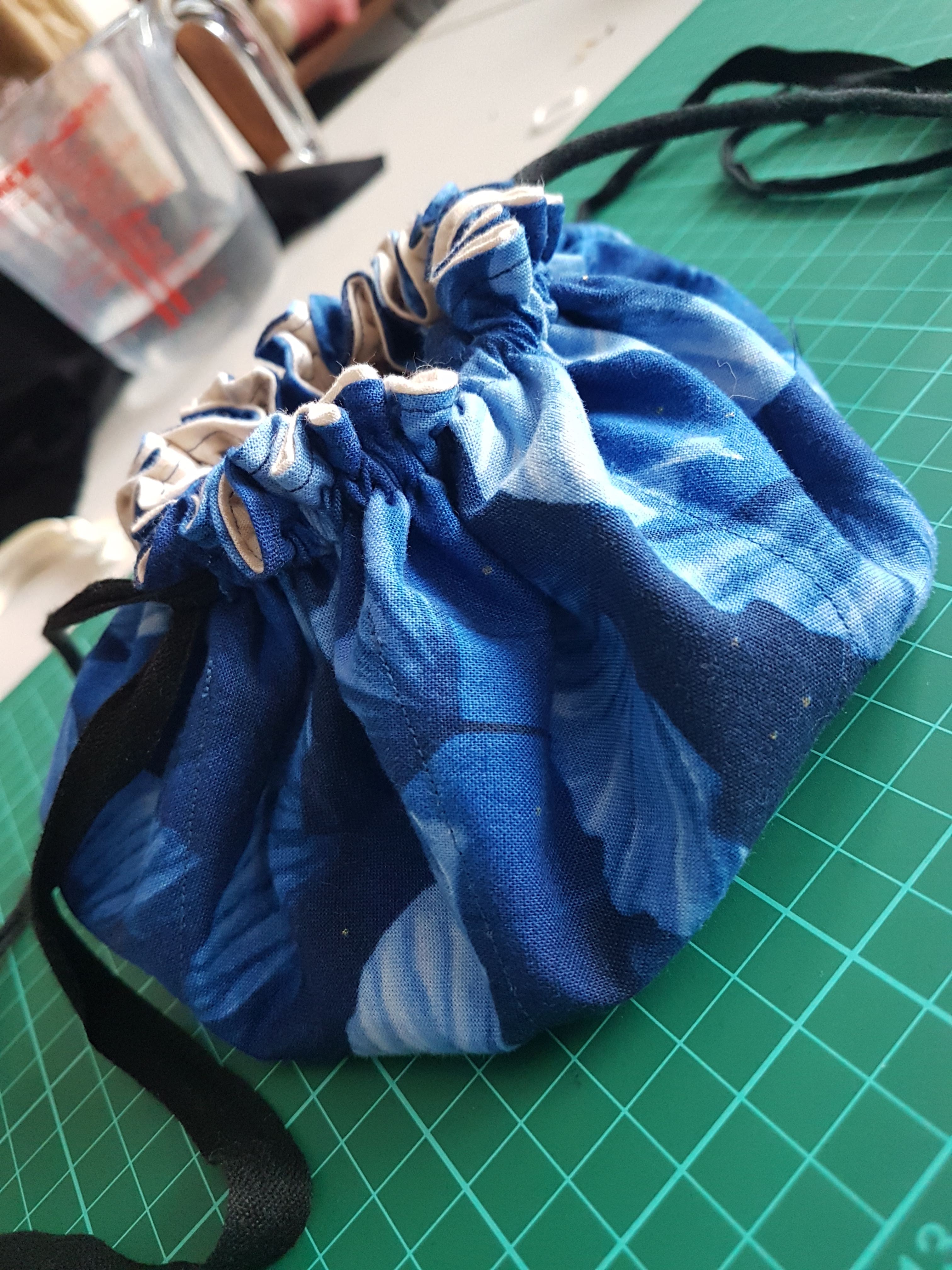
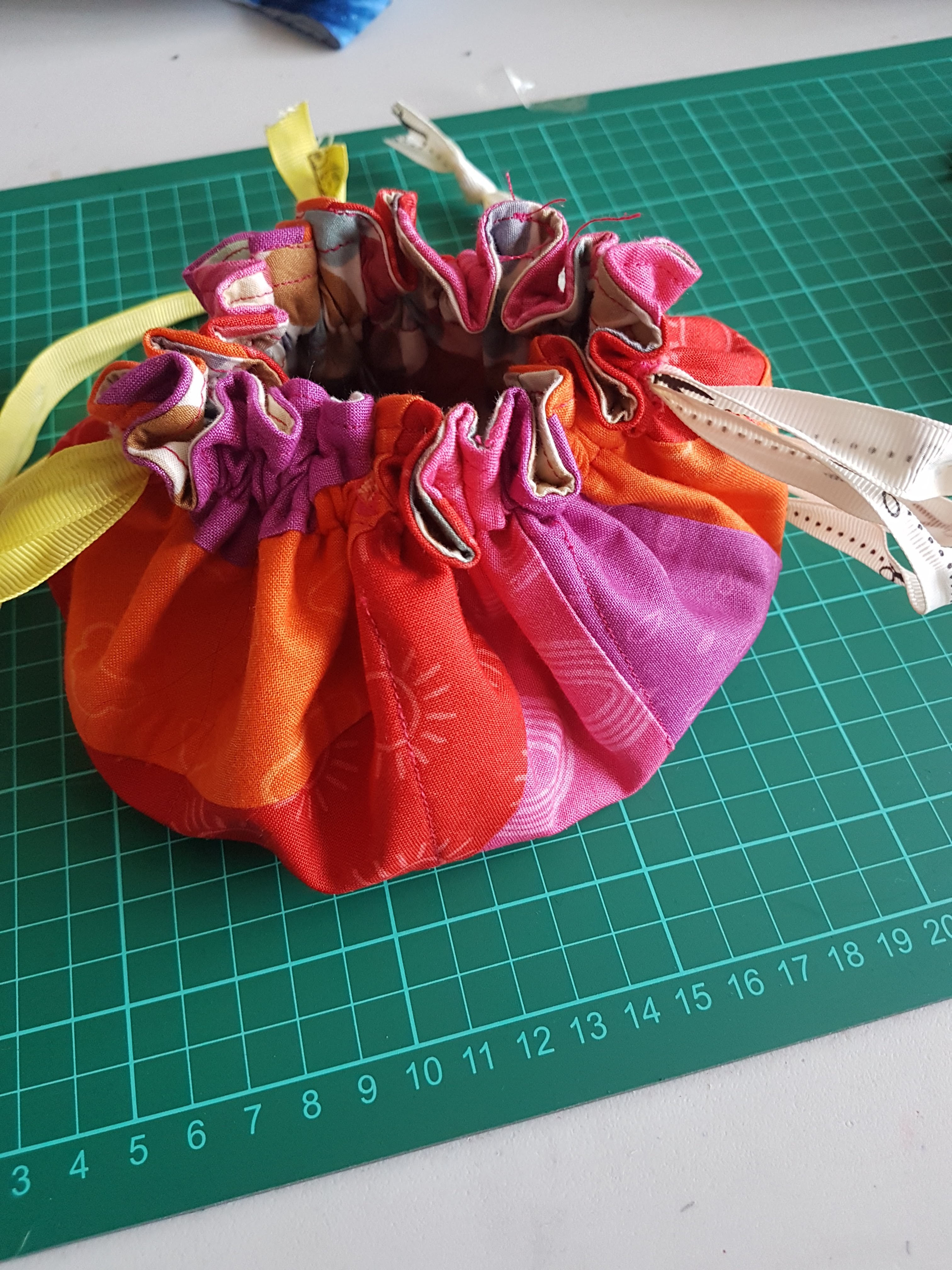
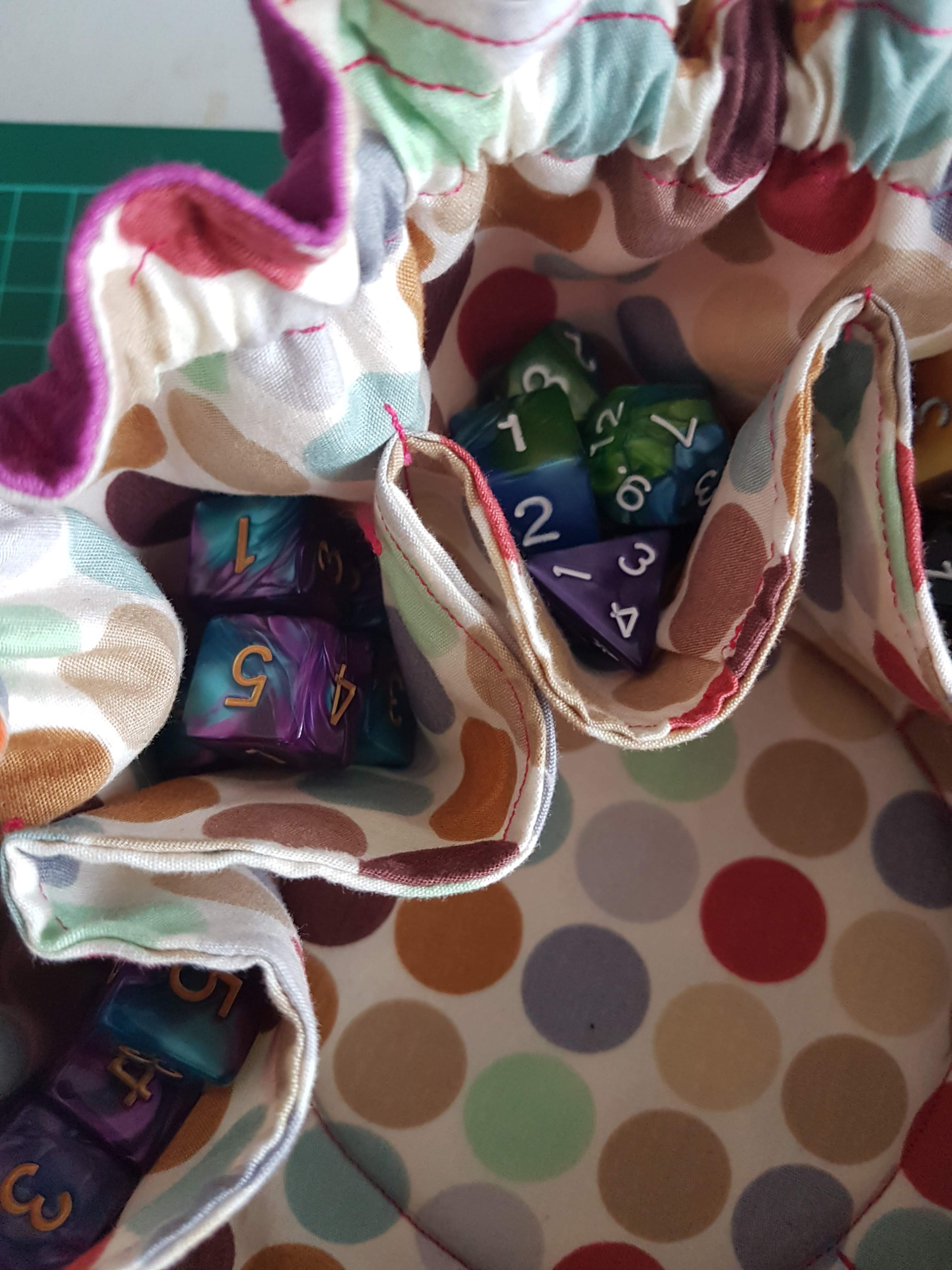
Anyway…as well as finishing the socks I have been working on for ages, I started a dragon scale dice bag (and then started it again when I realised I’d done it upside down) I also made these pouches which can be used for jewellery, shiny rocks, dice, sewing kits and more. They have little compartments and again were made of fabric leftovers.

The blue one is from a tutorial by Wandering Hare on Etsy and the patchwork one is from a free tutorial by Serendipity Studios, found here. Both very similar, but the second one has a padded bottom which will keep your preciouses safe from knocks!

That’s it from me then – see you next week! There’s a bacon sandwich with my name on it….

Kirsty x

What I’ve been reading

Unseen Academicals/Going Postal/Making Money – Terry Pratchett

Thief of Time/Wyrd Sisters – Terry Pratchett (Audible)

76: back to school

Normal service resumes after the last couple of weeks! It’s September after all, with the new school year kicking off: new shoes, new bits of uniform ordered if not actually delivered thanks to the shipping delays, driver strikes and shortages that definitely aren’t anything to do with Brexit, good heavens no, timetables downloaded, last minute coursework that Thing 1 assured me all summer she’d done, and so on.

Last weekend I braved Westfield (is it only me that feels the need to shout ‘Westfield! in a bad Radio 1 DJ sort of way?) with Thing 2 in order to buy school shoes. She has very very wide feet (an I fitting) so I knew Harlow at the end of August really wasn’t going to provide what we needed. Instead we had a mum and daughter day out shopping. We also needed school trousers, as we haven’t been able to find the particular style she wants online – the Next ones came up like thick leggings, the George ones were too high waisted, the suggestion of the Banner or Trutex ones either earned me a withering look or weren’t in stock (ditto New Look, Very, Tu, Morrisons, Matalan – everywhere!).

Tim Westfield! Westwood. WestWOOD. Not field.

Thing 2 has been, from a very early age, a child who knows her own mind. In many ways this makes me proud. In other ways it makes me want to slug gin in my coffee and leave her to it. Despite Westfield’s (Westfield!) many shops, we failed to find either shoes or trousers so I ended up buying shoes we could both live with online and she can either alter her thinking about the kind of trousers she wants or wear skirts for the year. I too can be stubborn. We did have a lovely lunch at Wagamama followed by bubble tea for her, and she chose some new clothes at Primark and New Look as well as some bits and bobs from Flying Tiger. I bought some more notebooks – I do love some stationery!* I took her over to the less shiny side of Stratford too, as she wanted some baskets for her bedroom: after Westfield (etc) I think the old Stratford Centre came as a bit of a shock to the system. I used to shop there when I first lived in London as it was the closest place to Forest Gate. It hasn’t changed much, really, in the last 25 years. The planners tried to make it look pretty by installing shiny leaf sculptures (or possibly fish) in front of it in 2012 in case tourists happened to glance in that direction on their way to the Olympics, but it didn’t really help. I suspect some actual investment might have been a better idea, except that just didn’t happen, and what they were left with was an island of Poundlands and Shoe Zones.**

The ‘Stratford Shoal’ by Studio Egret West in 2012. It’s not so shiny now.

*as it turned out I did not need to buy notebooks as I came home with many many new notebooks from the Digital Accountancy Show I worked at later in the week. Ah well. Still, you never know when you’ll need a notebook. Or ten.

**I could go on about the regeneration of Stratford for 2012 at length, but I won’t because it makes me quite annoyed.

Making and doing

I had a few days to recover from the ordeal of shopping with Thing 2, so obviously this involved fabric and leaving pins all over the floor, crochet and cross stitch. After the challenge of making Irish sister’s 1920s skirt I gave in and bought the Japanese Haori and Hapi pattern from Folkwear that I have been ogling for several years. They are not cheap patterns, but come with wonderful histories of the garments and traditional detailing information. They are also adding more and more of their paper patterns to their PDF catalogue, which makes me happy indeed.

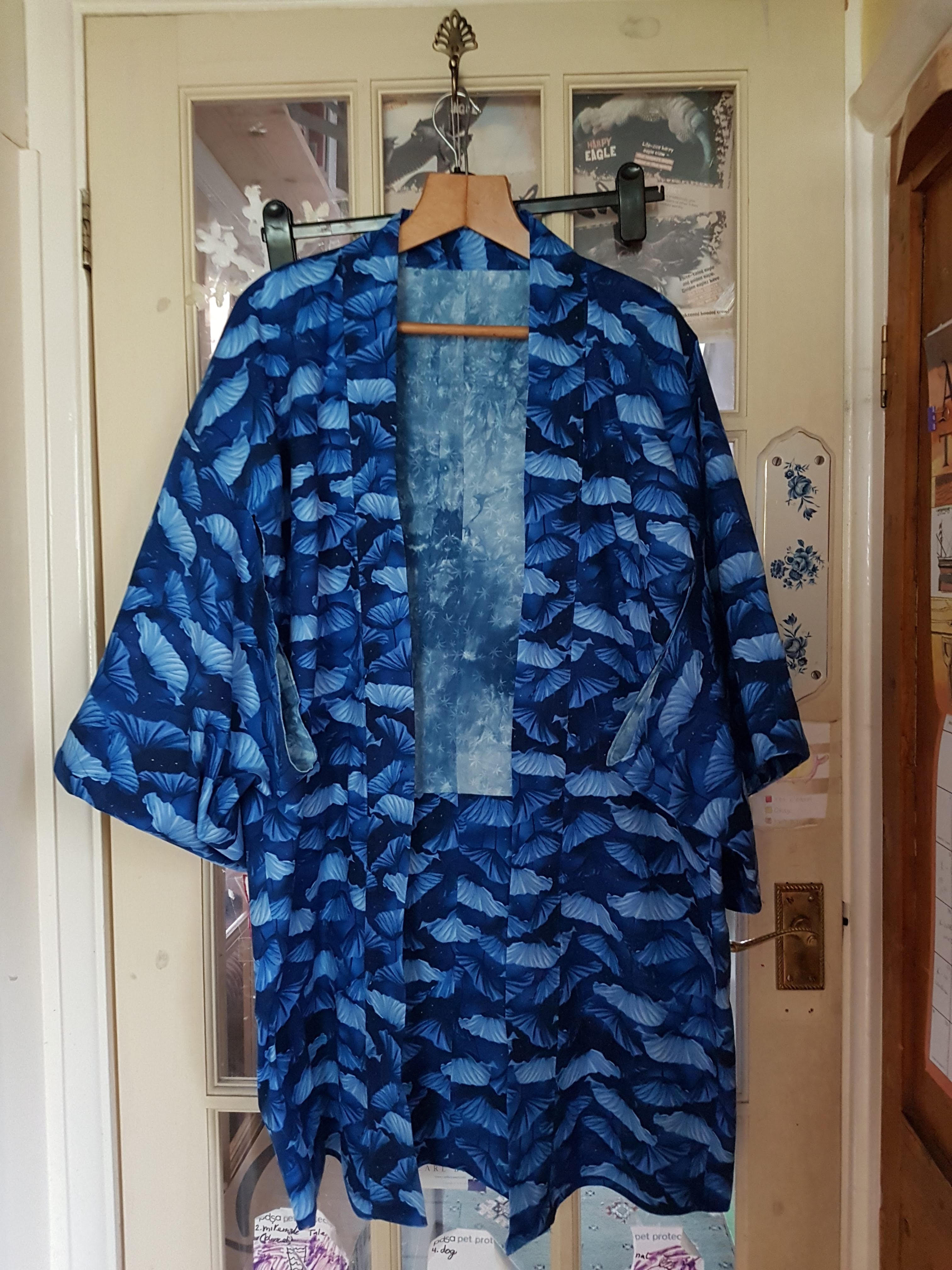
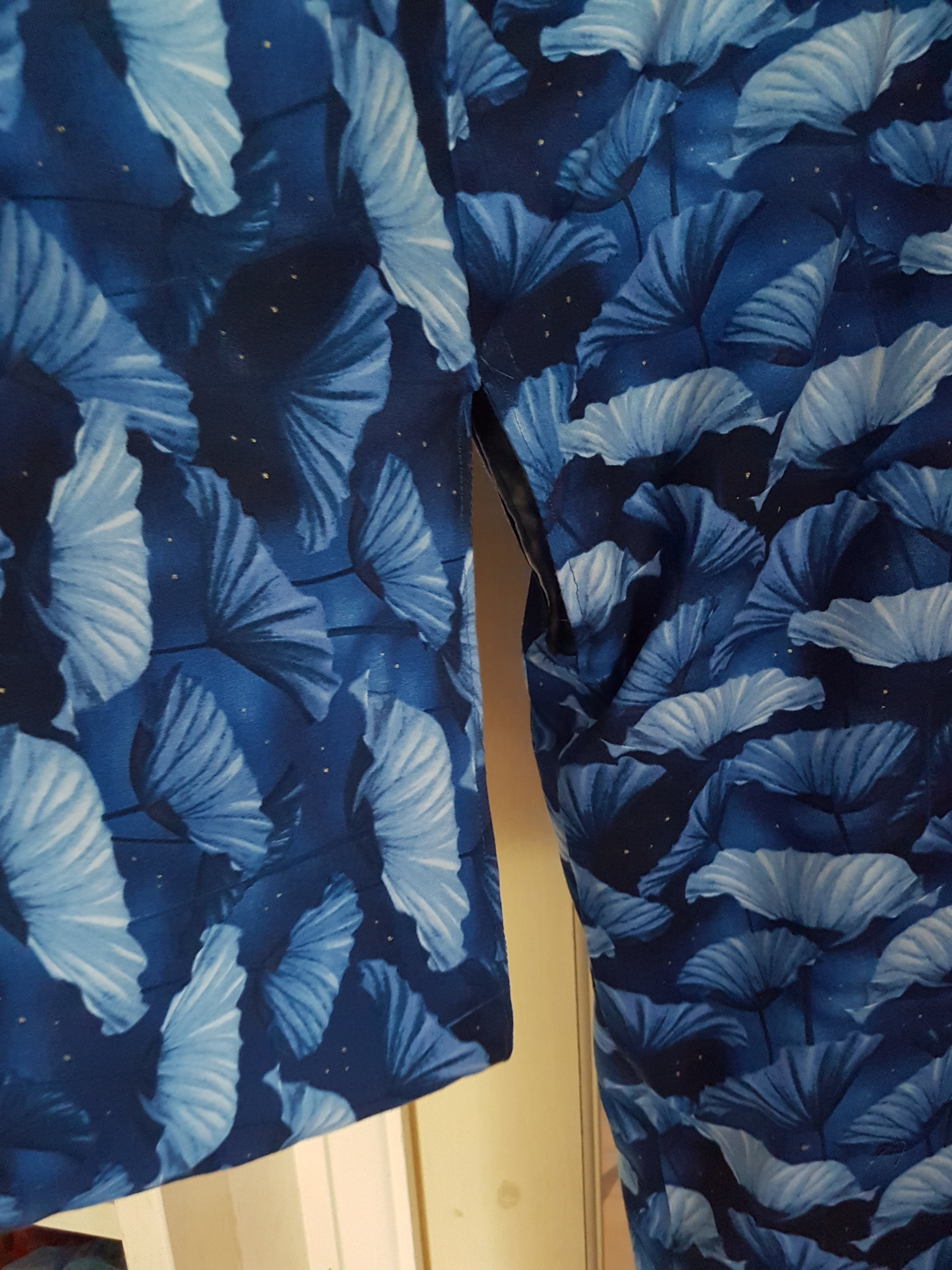
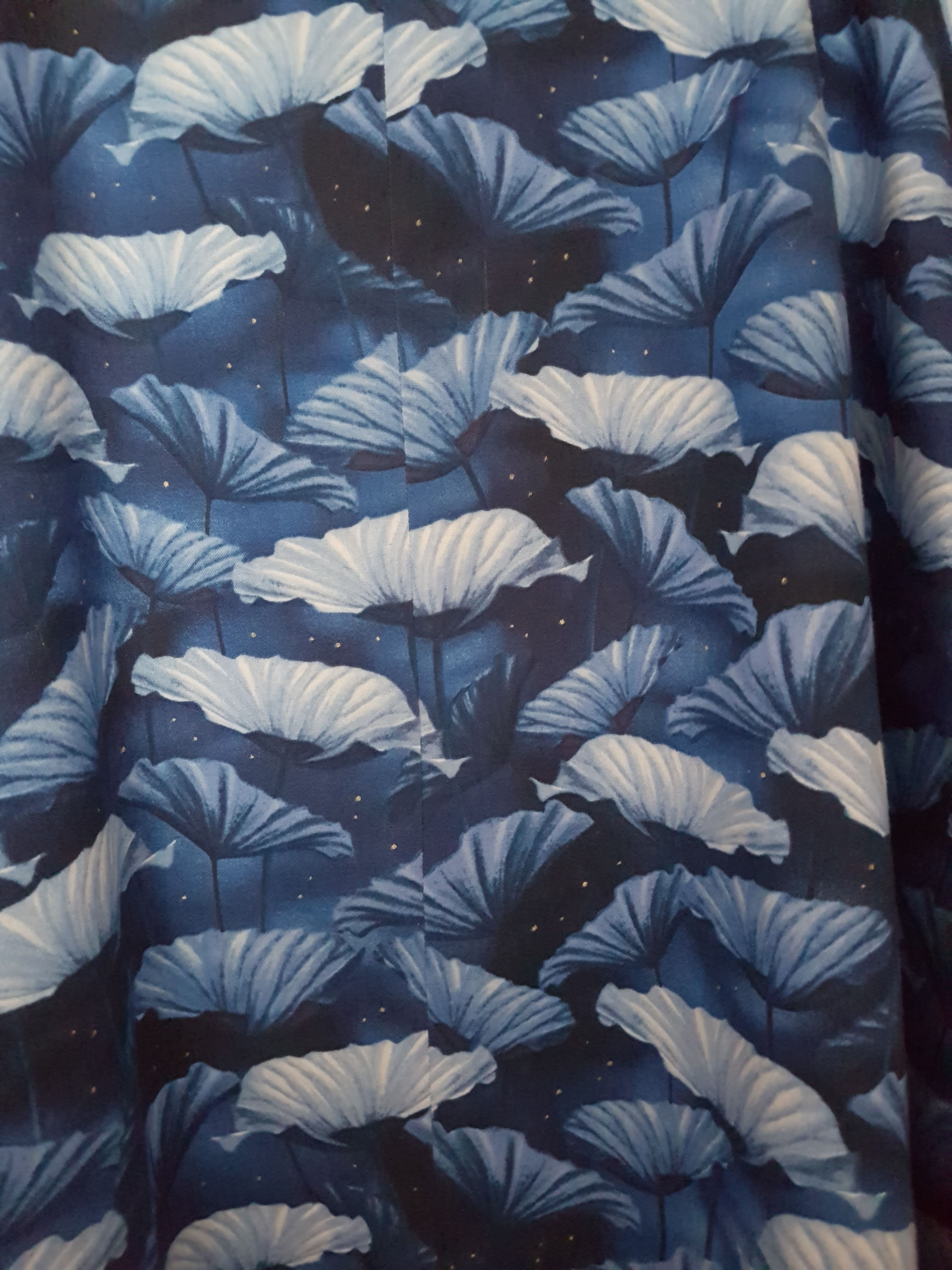
I used a gorgeous fabric from Kanvas Studio – Moonlit Lilypads from their Moonlight Serenade collection, and for the lining some tie-dyed cotton that was sold as a star print but when it arrived the print was distinctly…. herbal. The fabric is a one way print which the pattern isn’t suitable for but I rather like how its turned out despite that.

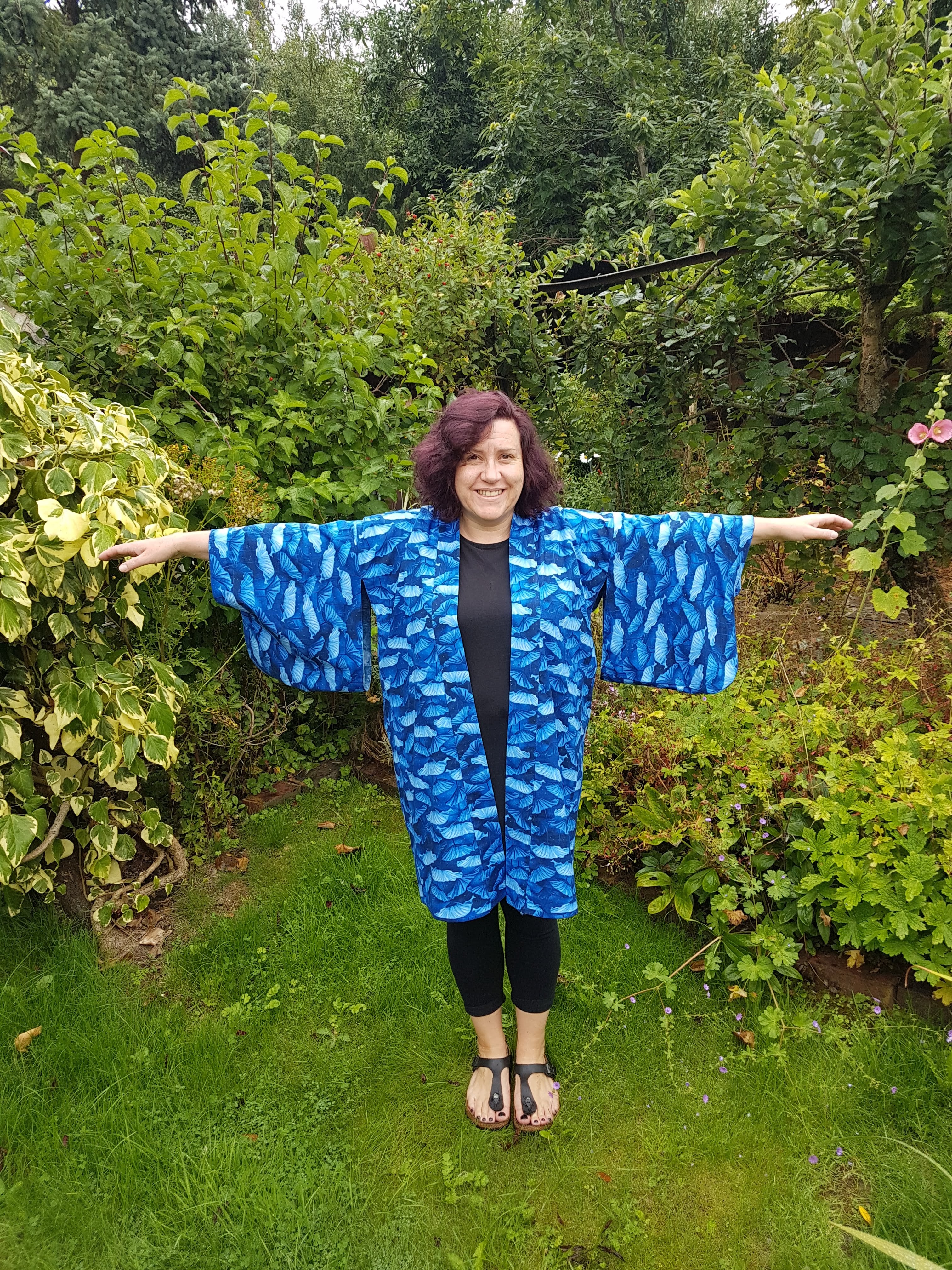
I made the Haori option – a lined, mid-thigh length jacket which comes up quite long on me. The pattern was occasionally a bit confusing to follow, with hand drawn illustrations, but as long as I took it slowly and did a lot of pinning and tacking it wasn’t too bad to construct. My hand sewing is shocking, so if I ever decide to enter the Sewing Bee I’ll have to work on that, and I cheated by machine stitching some of the bits I should have slip stitched but hey, I’m the one wearing it. I love the sleeves, and this is quite cosy to wear so I think it should get a lot of use.

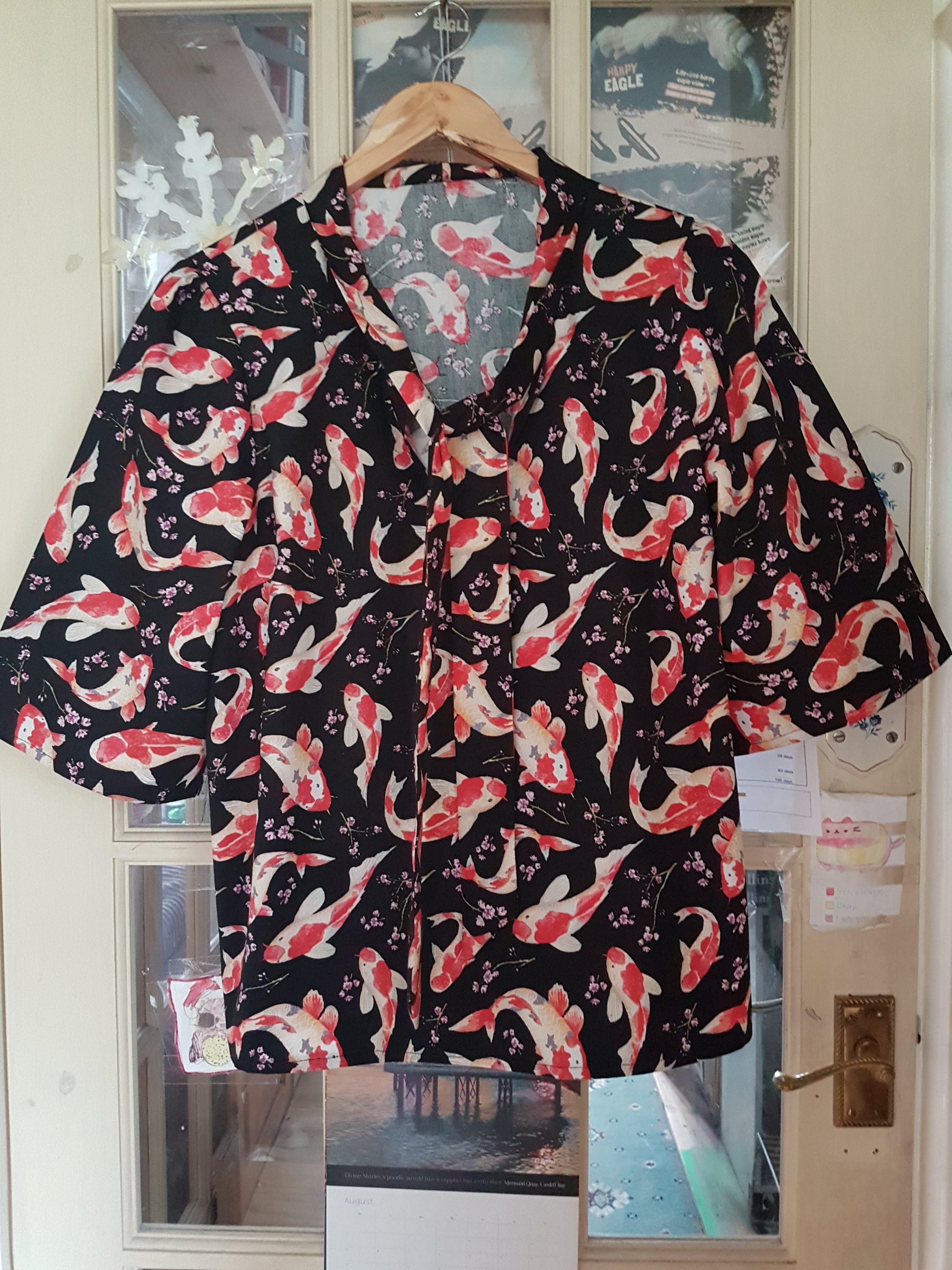
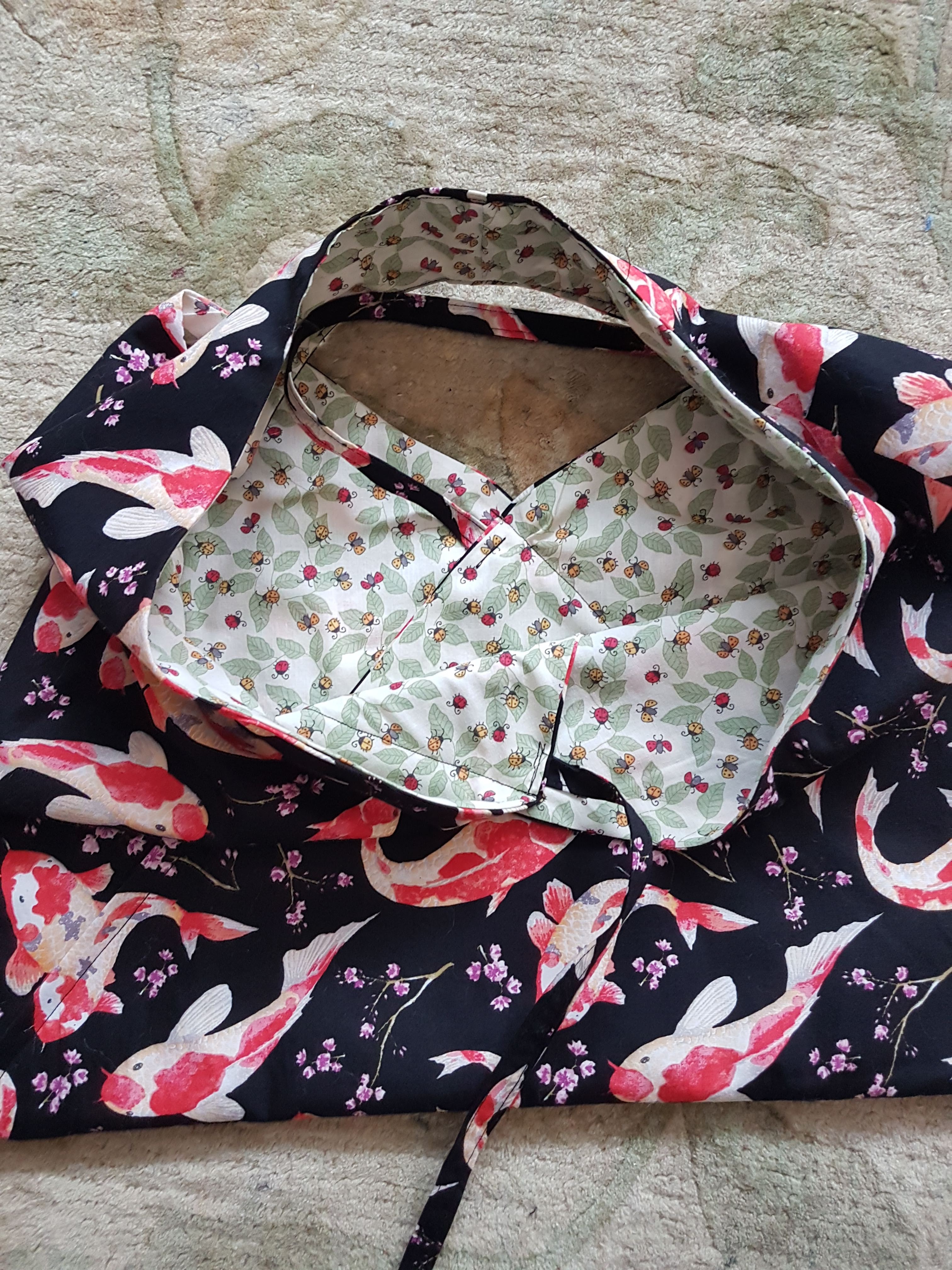
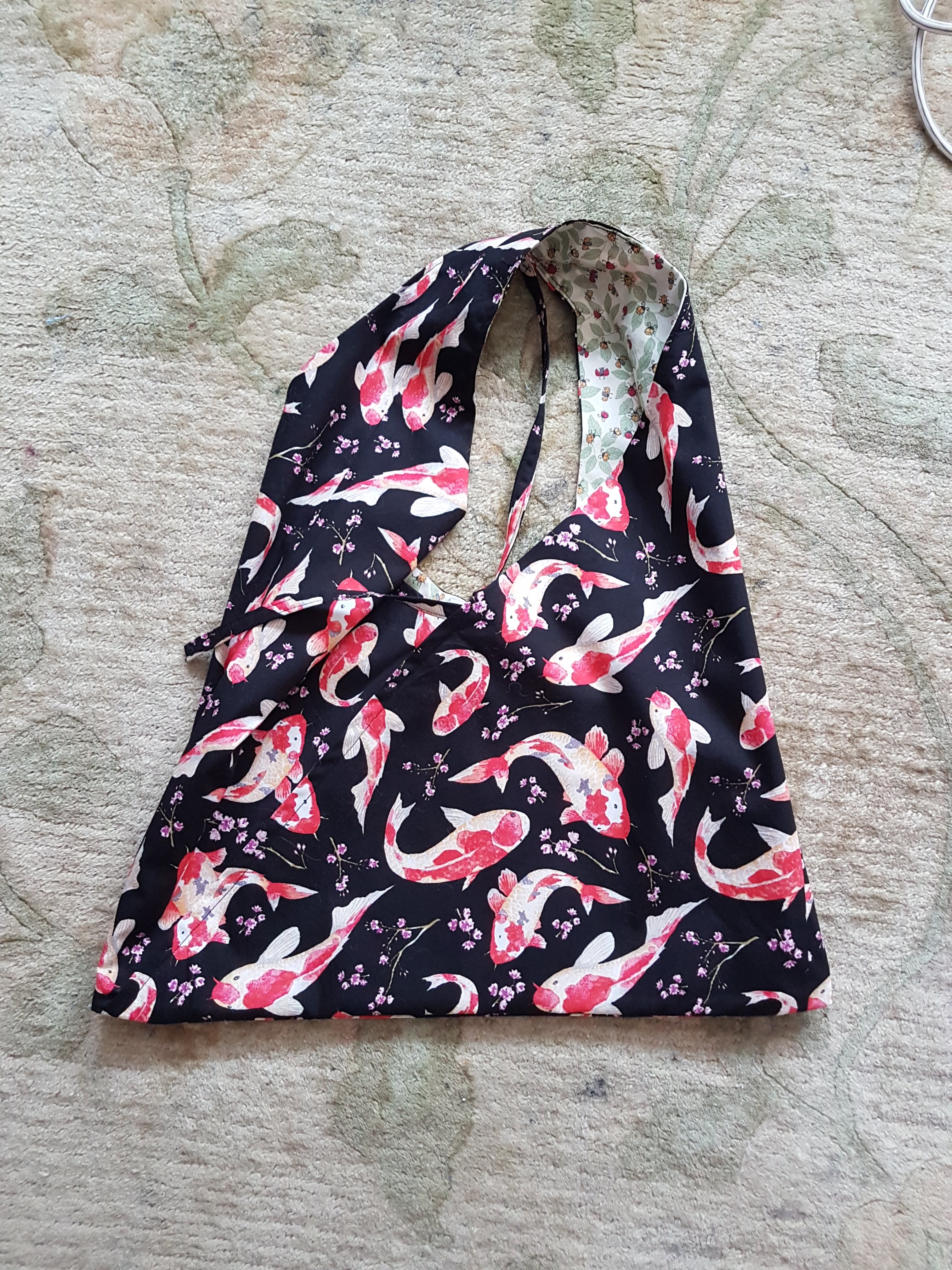
Continuing the Japanese theme, I used some of the leftover koi fabric from making a Simple Sew Lottie blouse to make this Nori Kimono bag. I lined it with some ladybird print polycotton fabric that was an ebay purchase, and it’s had a compliment or two already. I haven’t worn the blouse yet! I love this fabric, it’s so colourful.

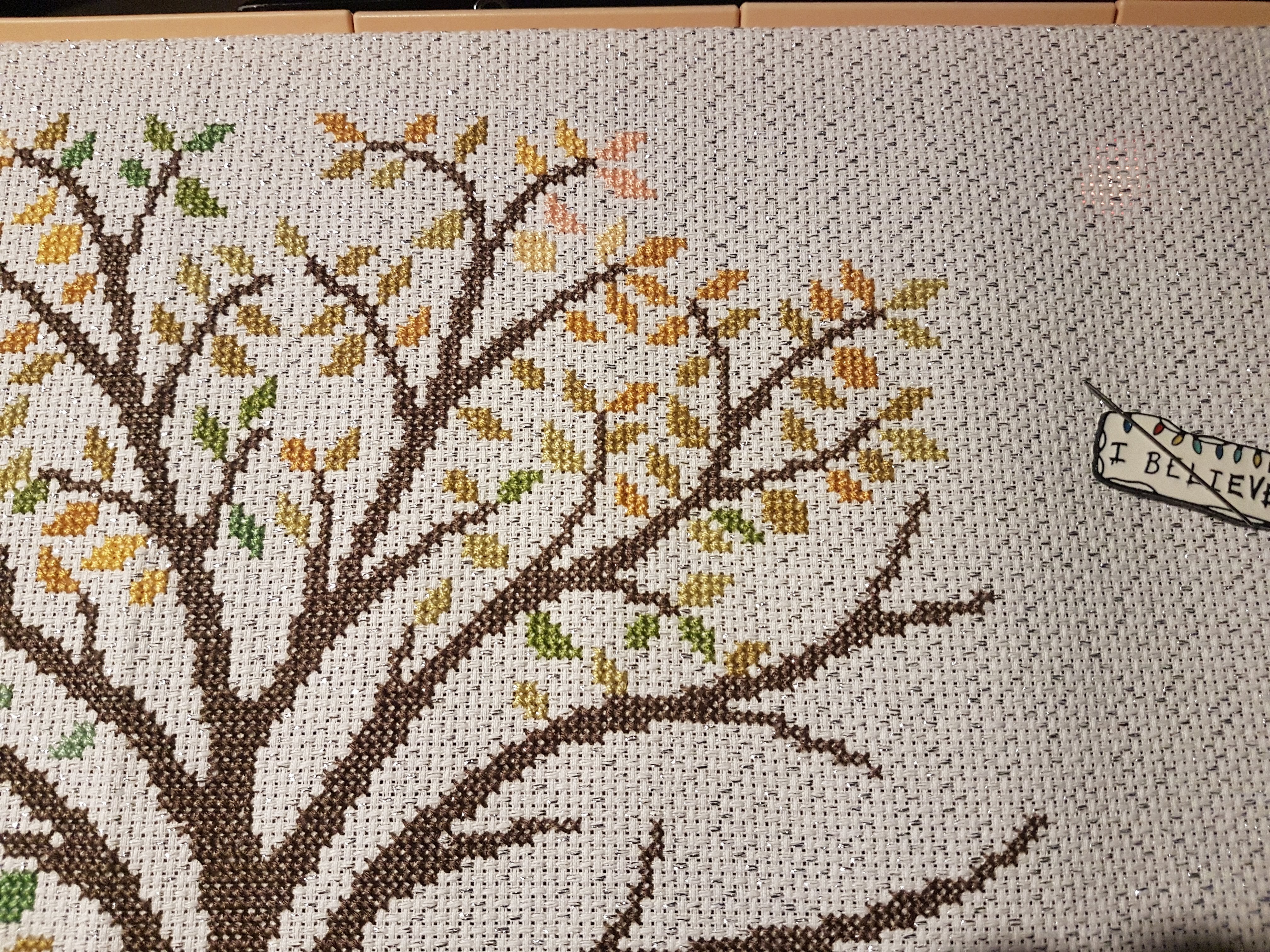
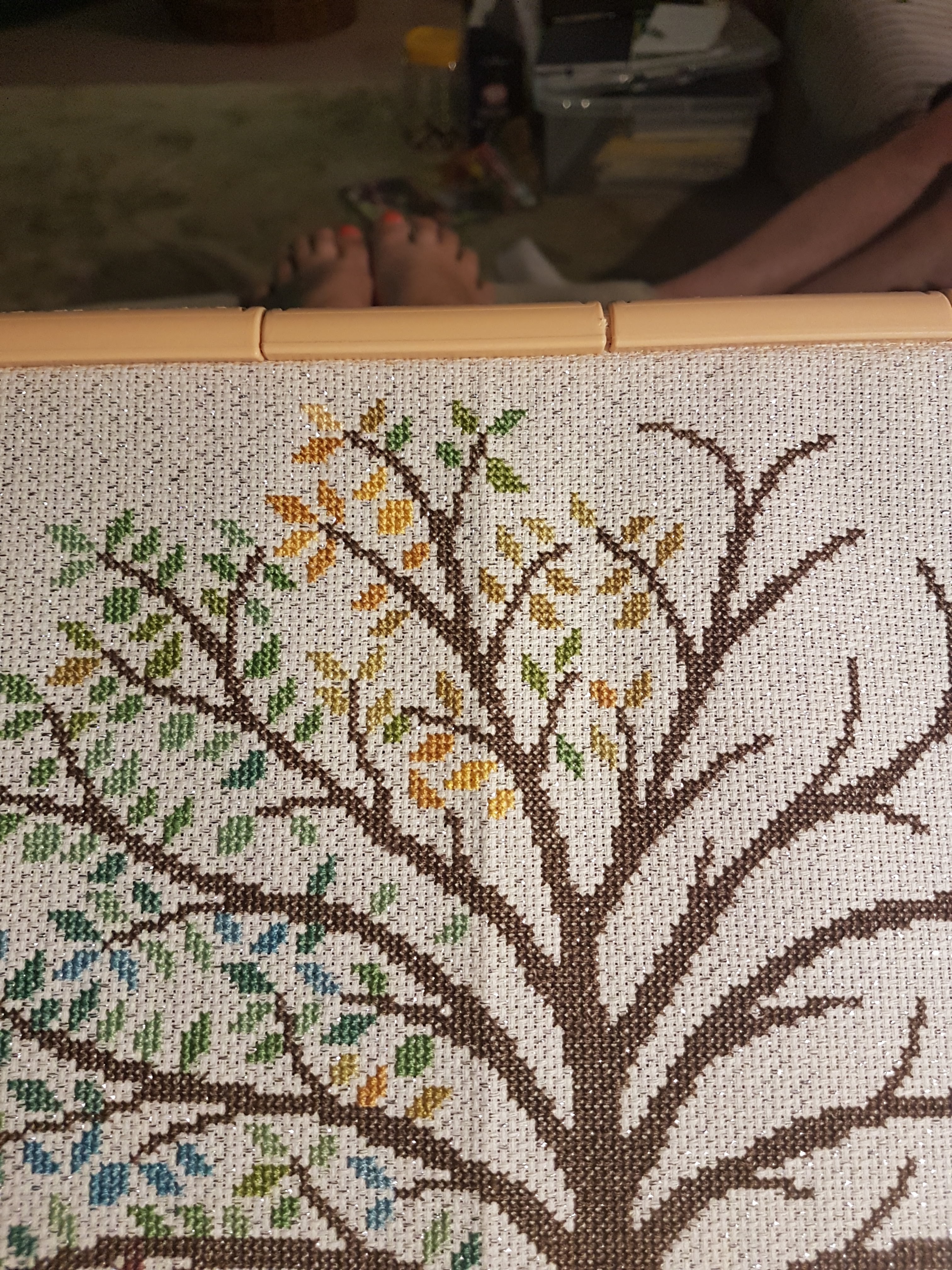
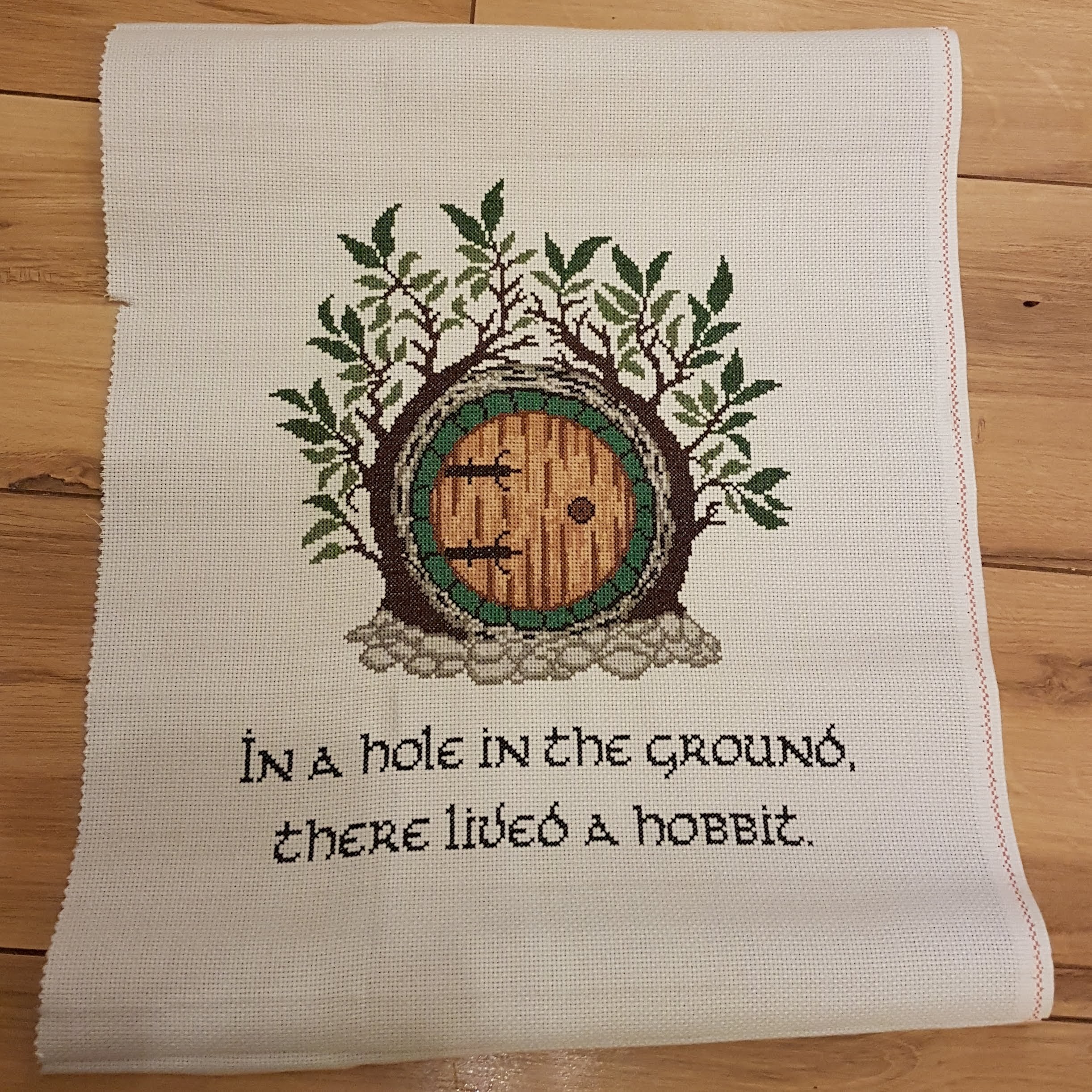
As ever I have been cross stitching and crocheting: the temperature tree is up to date, the Hobbit Hole is finished, the Build Your Own Beehive Shawl and the socks are ongoing, and I took a break to make a chicken sweater as one of my lovely colleagues adopted some commercial laying hens (not battery ones!). These are all the bits I haven’t shared with you in my last couple of sensible weeks.

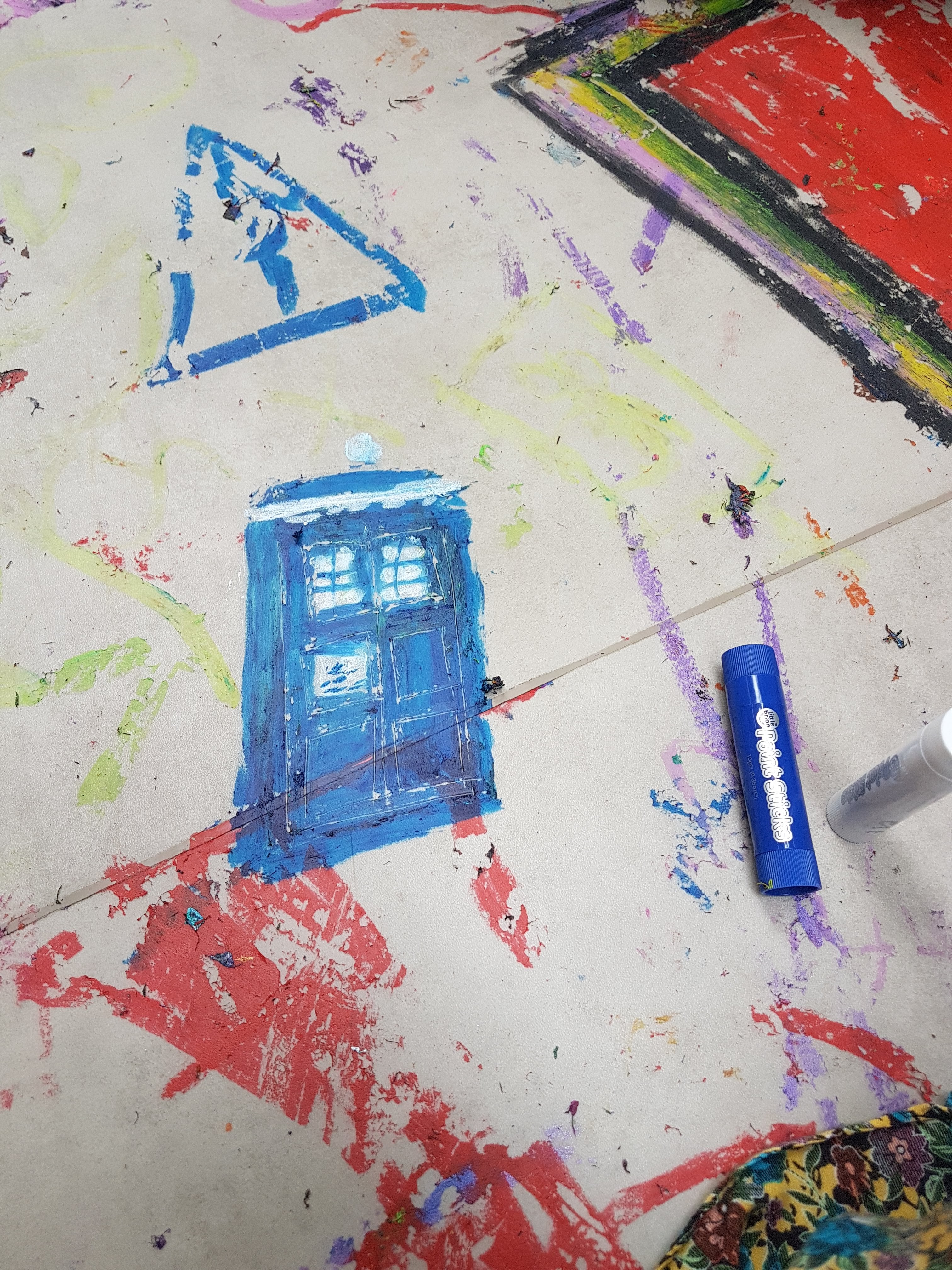
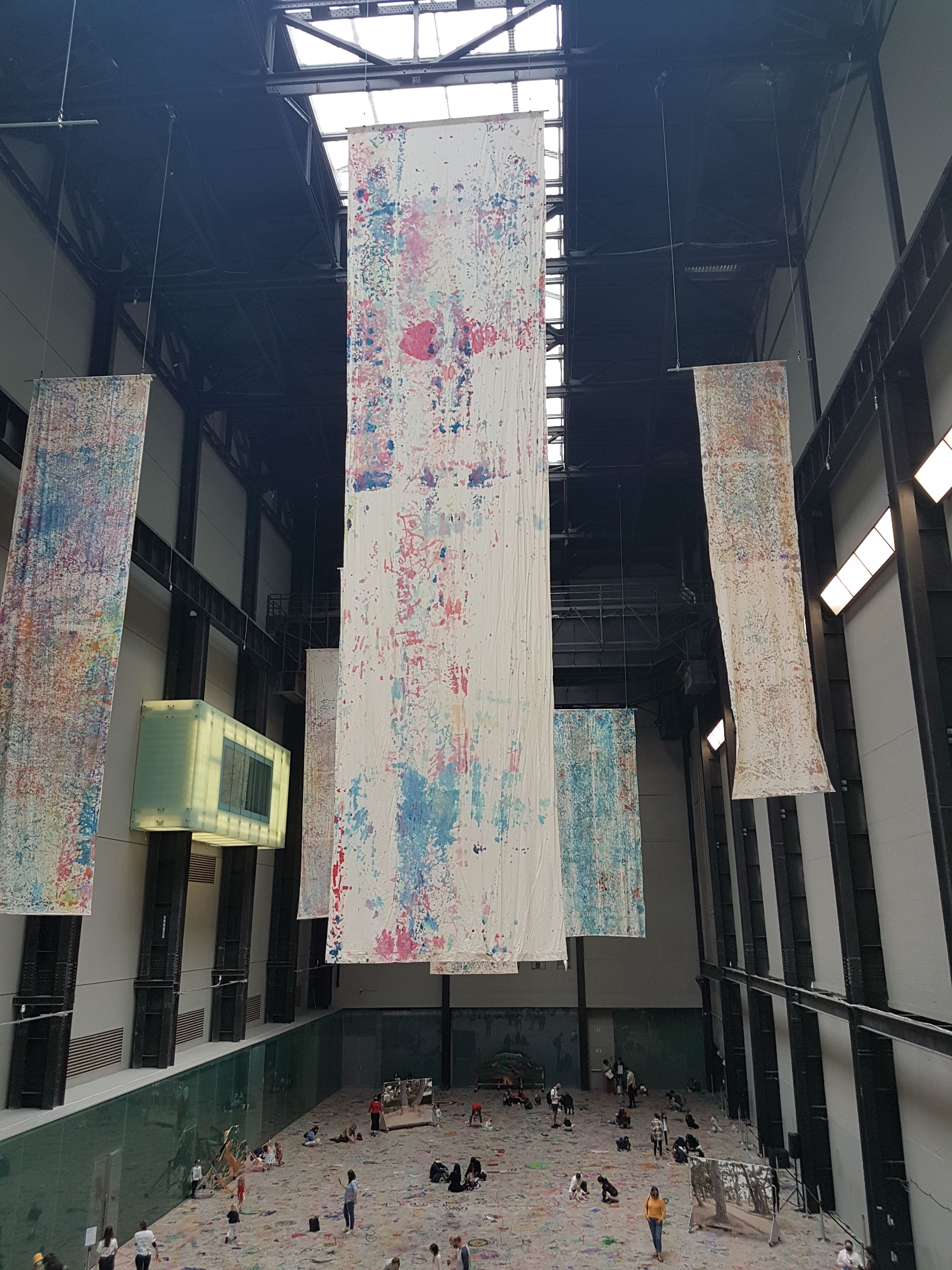
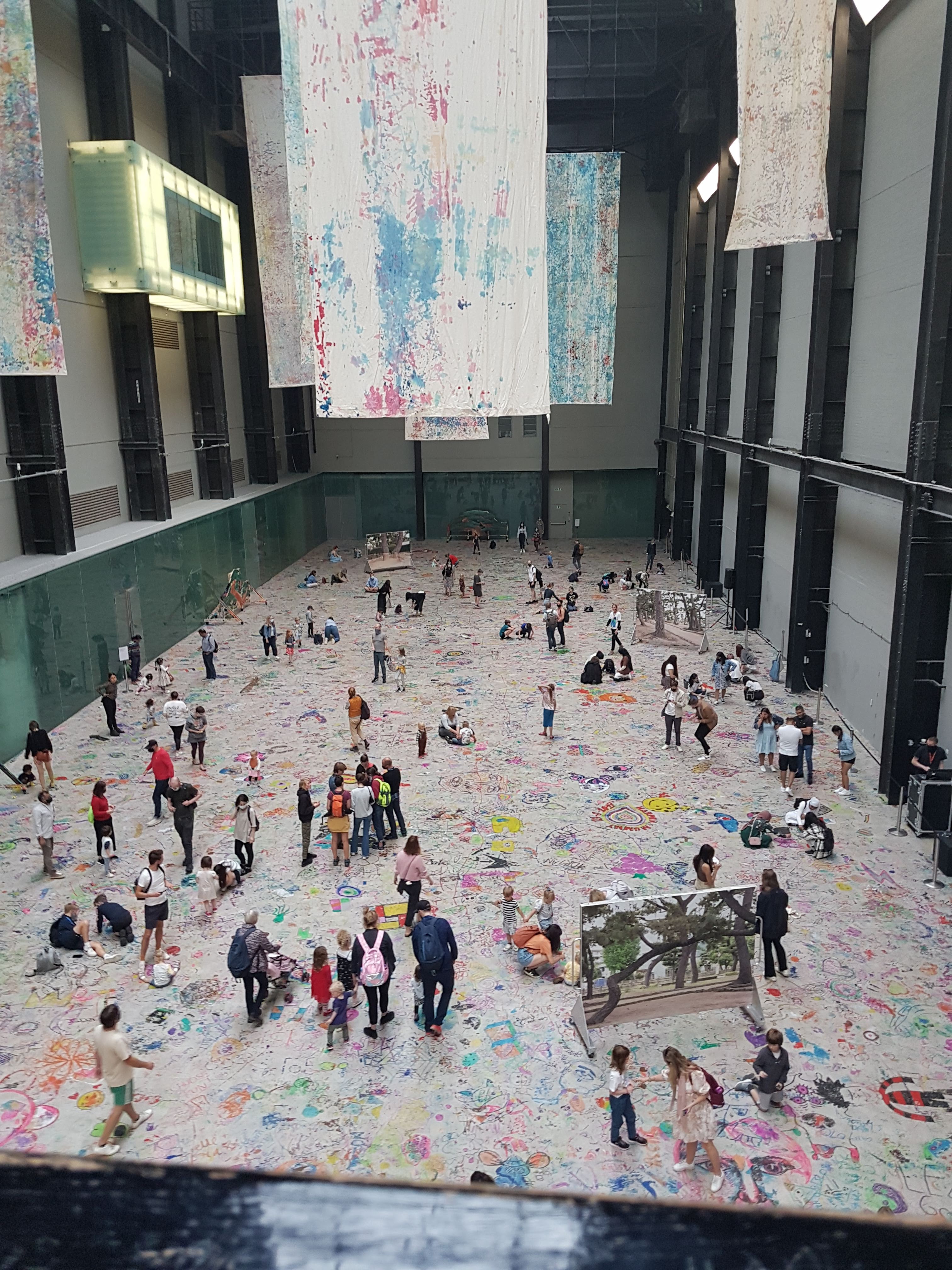
The chicken-adopting colleague, myself and two others also visited Tate Modern to see their summer activity – drawing freely in the Turbine Hall as part of the Uniqlo Tate Play programme. The artwork is amazing and it was great fun adding our little bits to it! I really want to make something out of one of those banners!

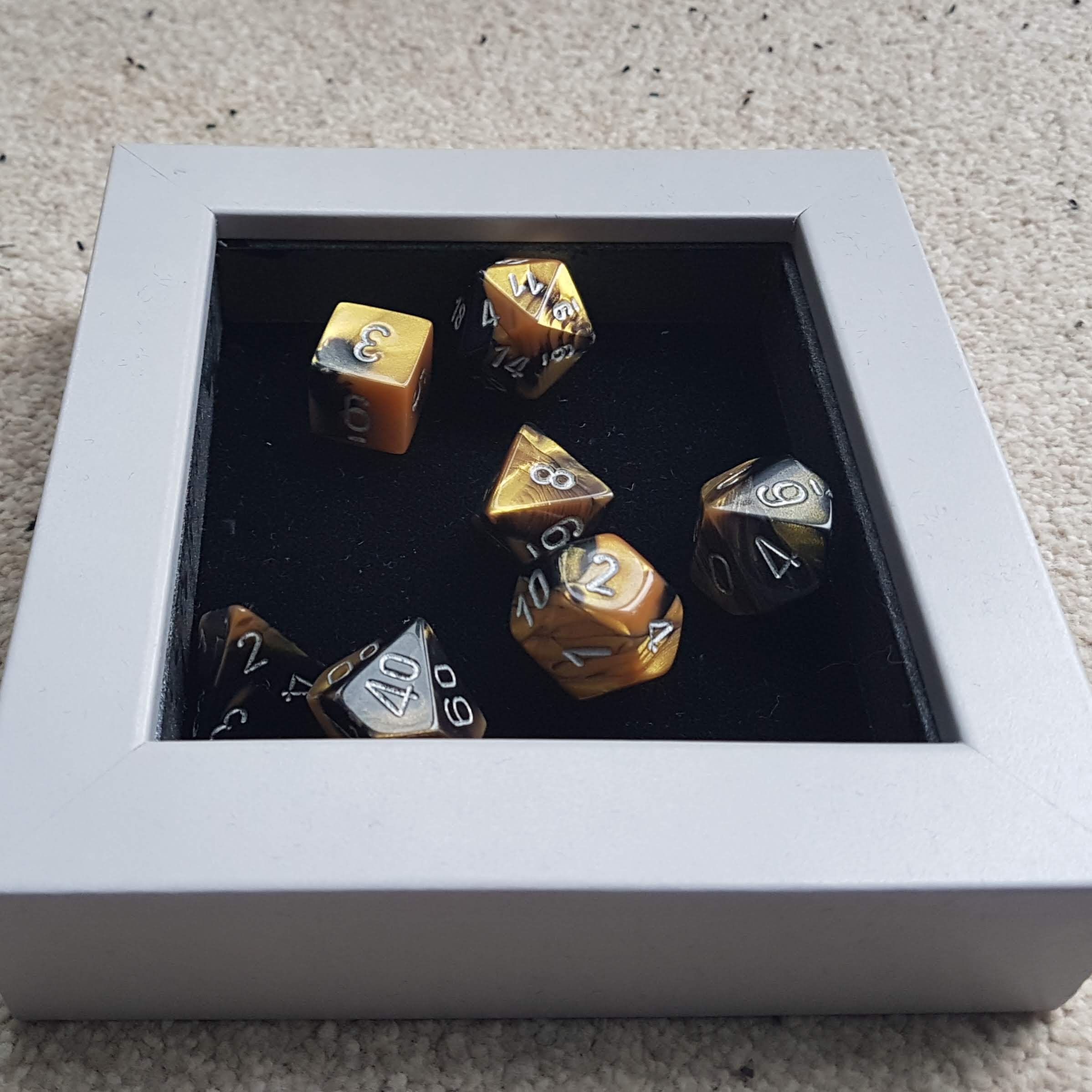
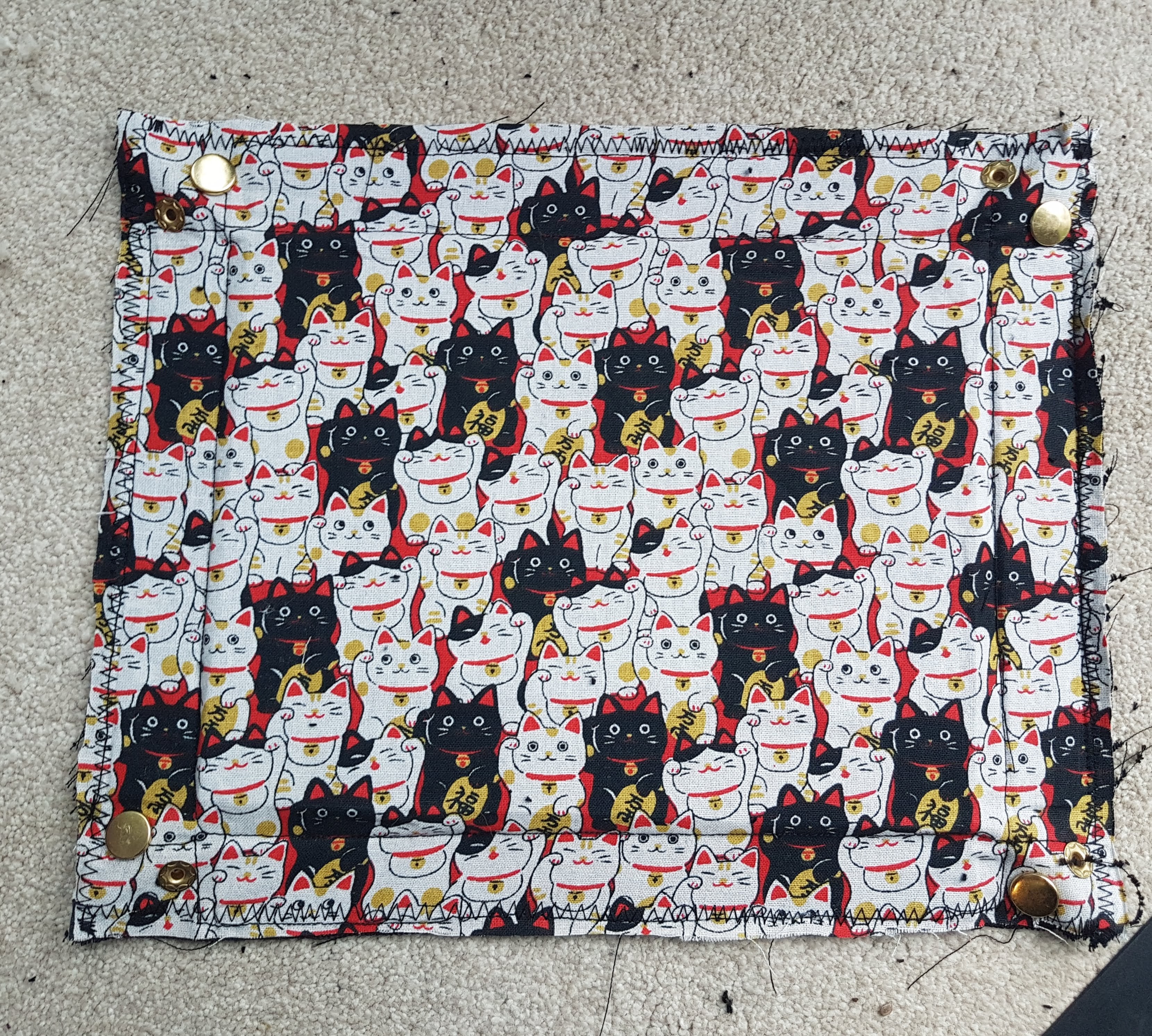
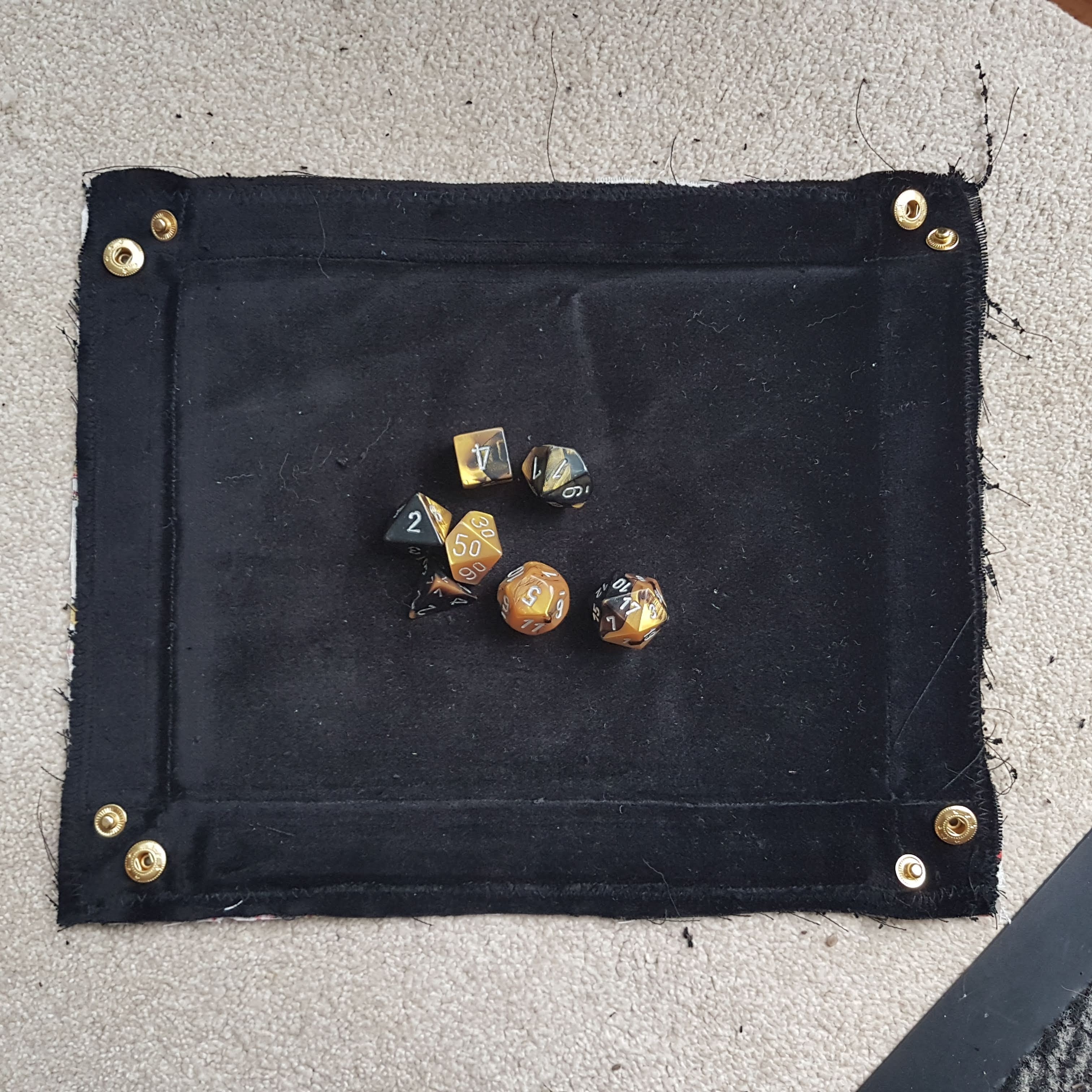
The latest thing I have been up to is dabbling in Dungeons and Dragons for the first time in about three decades – I filled in for someone who couldn’t attend a regular game on Friday and managed not to kill his character off so hopefully I’ll be allowed back! The host (Dungeon Master) and his wife have a beautiful gaming table so dice trays are very much the order of the day – I played around with an online tutorial yesterday, and using things from in the craft shed I made a collapsible fabric one and another using a shadow box frame. I’d forgotten how horribly velvet frays so I shall have to do something about the edges but it was quite quick and fun to make.

It’s been a very productive few weeks, as you can see! I’ll see you all again for week 77…now I must go and do the ironing I have been putting off for months.

Kirsty x

What I’ve been reading:

Soul Music/Sourcery – Terry Pratchett

Thief of Time – Terry Pratchett (Audible)

73: constructing a history mystery

Previously on What Kirsty Did Next…

The pattern Irish Sister (let’s call her Steph, as it’s her name) and I chose over a Zoom call was the Cordelia skirt from Wearing History. These Resto-Vival™ Patterns are original historic patterns that have been restored and revived, and have had pattern markings and sizings added that the modern sewer is used to seeing rather than the basic perforations that were common in early sewing patterns. While making this I was watching the Great British Sewing Bee’s early series, and I had a lot of sympathy for the sewers encountering their first 1930s pattern! We chose to make the skirt in street-length (with no train) and in a plain grey cotton sateen from Ray Stitch which I thought would have the drape and weight needed for the shape we were after. Ray Stitch offers a thread matching service, which we took advantage of, as I wasn’t sure if I’d have the right grey in my stash. We also needed ‘belting’ which turned out to be grosgrain ribbon.

Steph sent me the measurements we needed, and as she fell between sizes we chose to go slightly larger for breathing purposes, and so she could wear the correct historical layers underneath if needed. She – like me – is not blessed with great height and this is a skirt that runs long, so I had to redraft the length and then the back: the shortening had to be done at about thigh length, rather than from the bottom. As so much length was lost I was able to cut out the skirt on the cross-grain, which meant I didn’t have to piece the fabric. The original skirt was made from one piece of fabric, seamed up the back and given shape through waist darts where the side seams would sit and further darts in the belting.

How straightforward, I thought! What was I worried about?

And then I realised it called for dress weights, which I had never used before although Google tells me they are still popular with various royals who need to maintain their dignity while getting off aeroplanes in windy places. Hurray for Google, eh? Neither were there any instructions for fastening the skirt, or indeed many for making the skirt up, despite it being only one seam and some darts. Basically: sew darts, sew skirt together, add the belt.

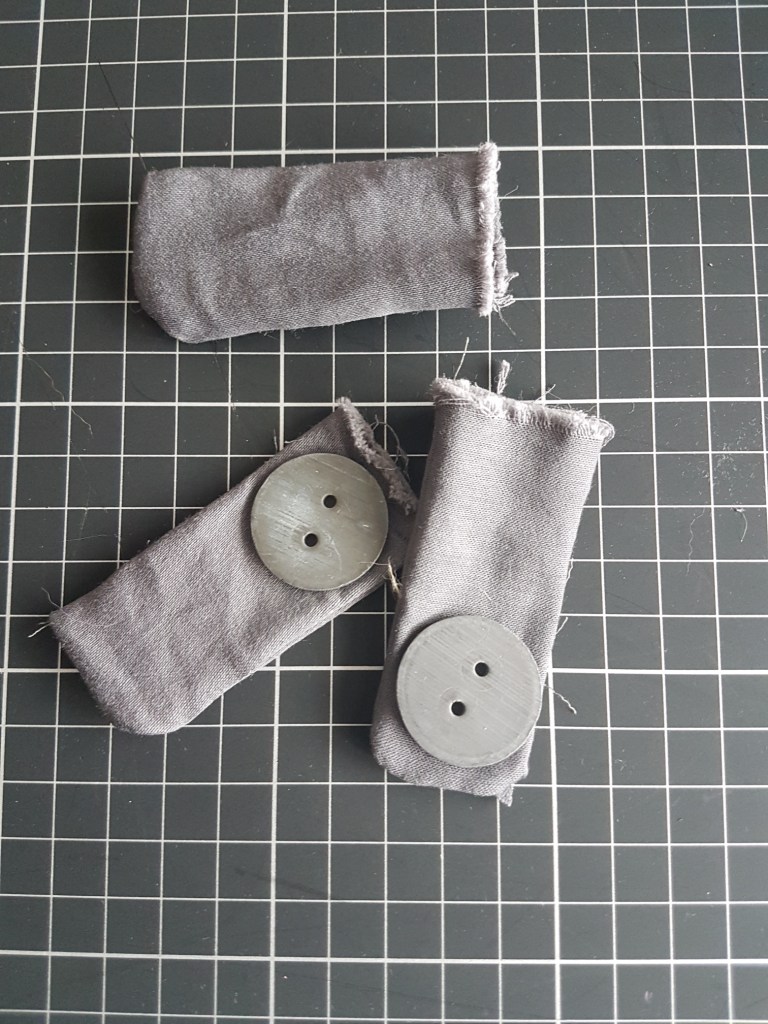
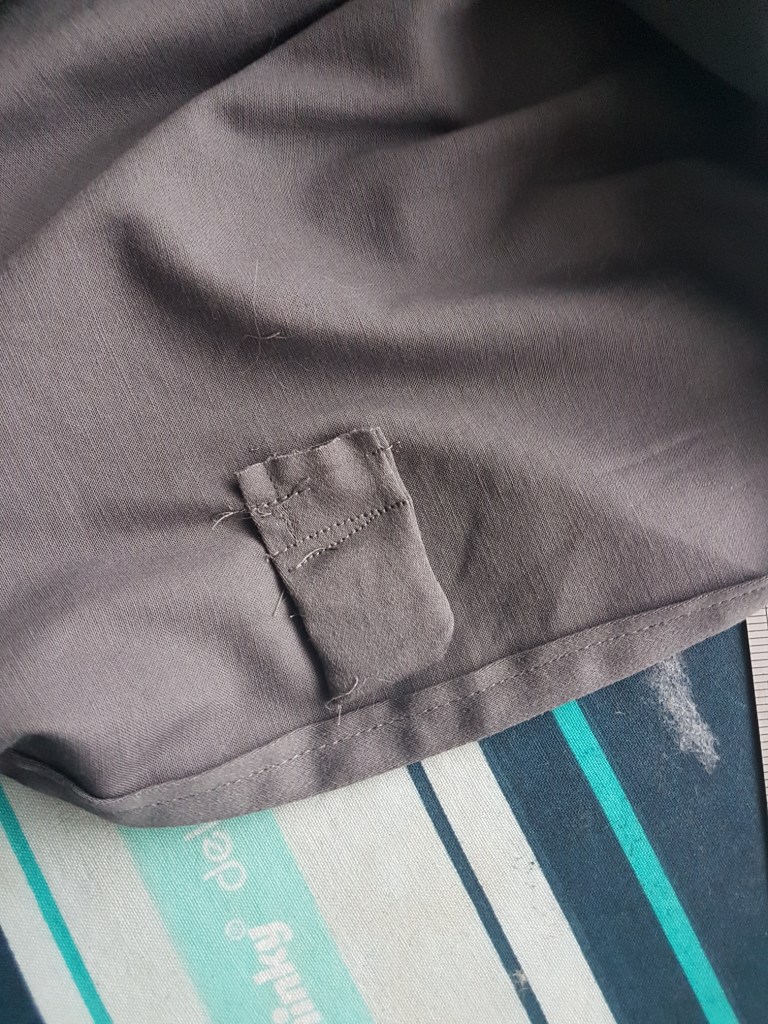
A quick message via Etsy to the very helpful Lauren, owner of Wearing History, solved the fastening question: she added a placket with snaps and a hook and eye. After consultation with Steph we decided we could get away with adding a zip as they were invented in 1913 and the character she will be playing on film is from 1921 (the centenary of the creation of Northern Ireland). I went for an invisible zip, as it should also be hidden by her middy blouse. Originally I put it in properly, but then I had to take it out as the skirt needed to be taken in after finishing it, so then went back to my much quicker method. The pattern weights were more of an issue as I tacked them in but they didn’t want to stay tacked. Every time I shook out the skirt they fell off. I didn’t want to fix them in permanently in case Steph didn’t feel they were necessary!

For once I was good and tacked the waistband in before stitching it down – I am not a tacker usually, as I am a lazy sewer and prefer pins. I’m glad I did, as I had to adjust some width out of the waist after I’d tacked it in. My dressmaking mannequin, known as Lucy, came in very handy this week for measuring as well as for keeping in progress pieces on!

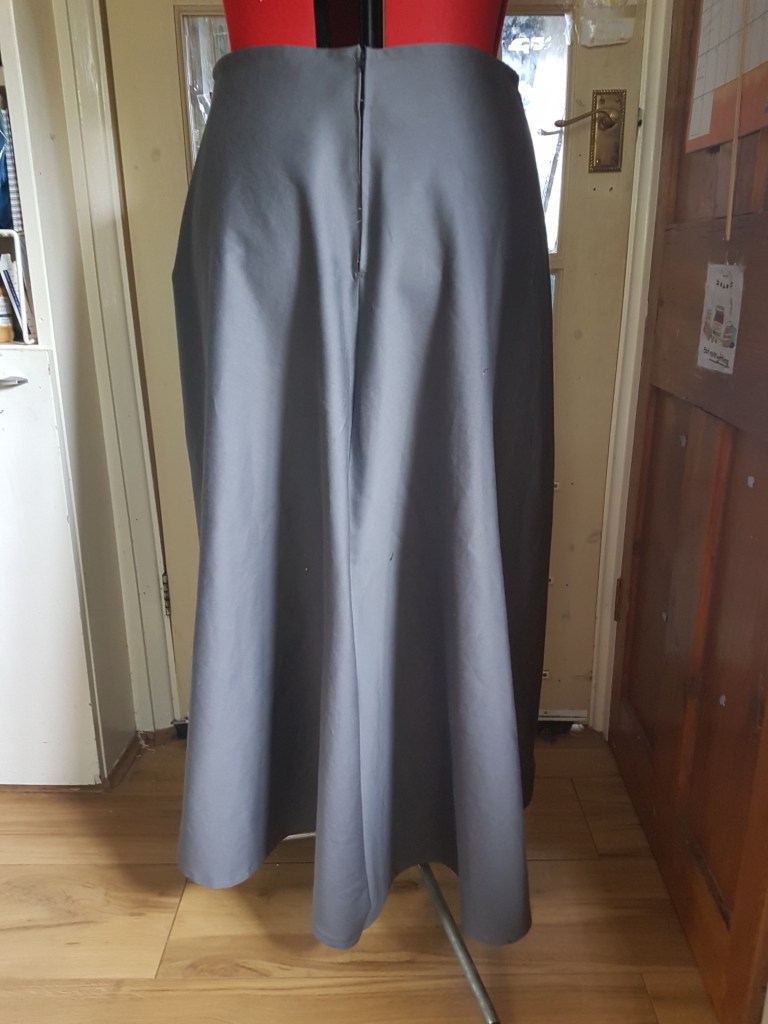
Here is the finished skirt – I think it turned out OK, and it’s in the post to NI already. I just hope it fits…

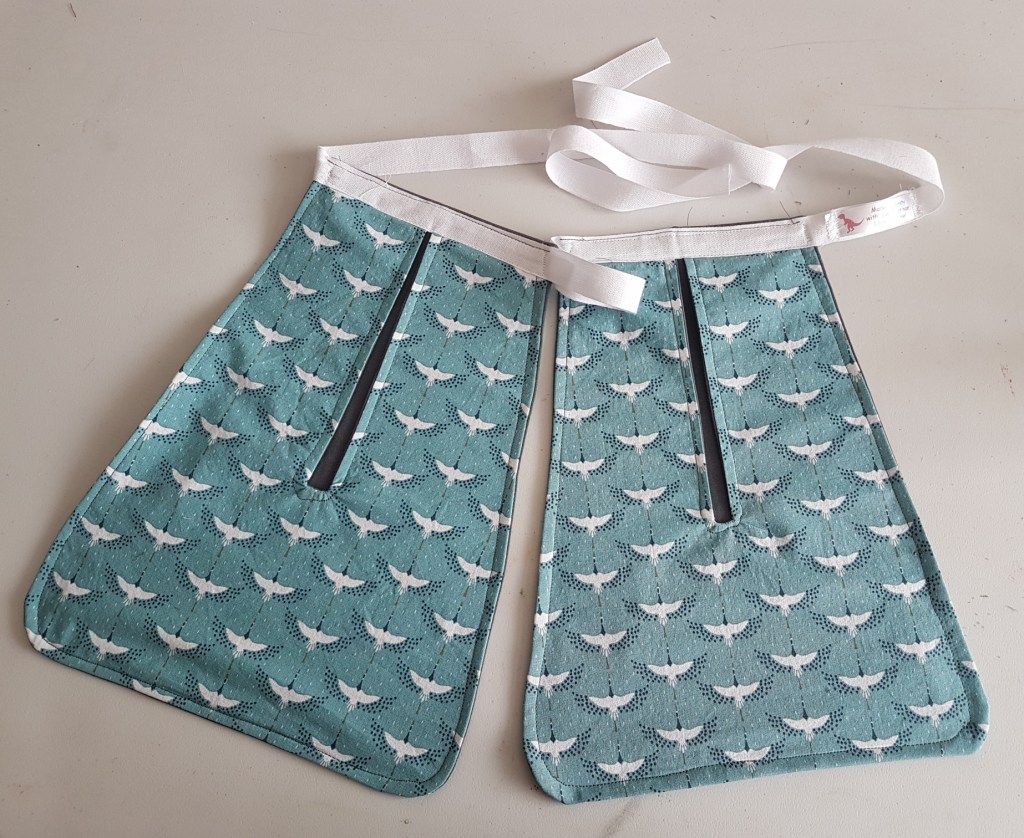
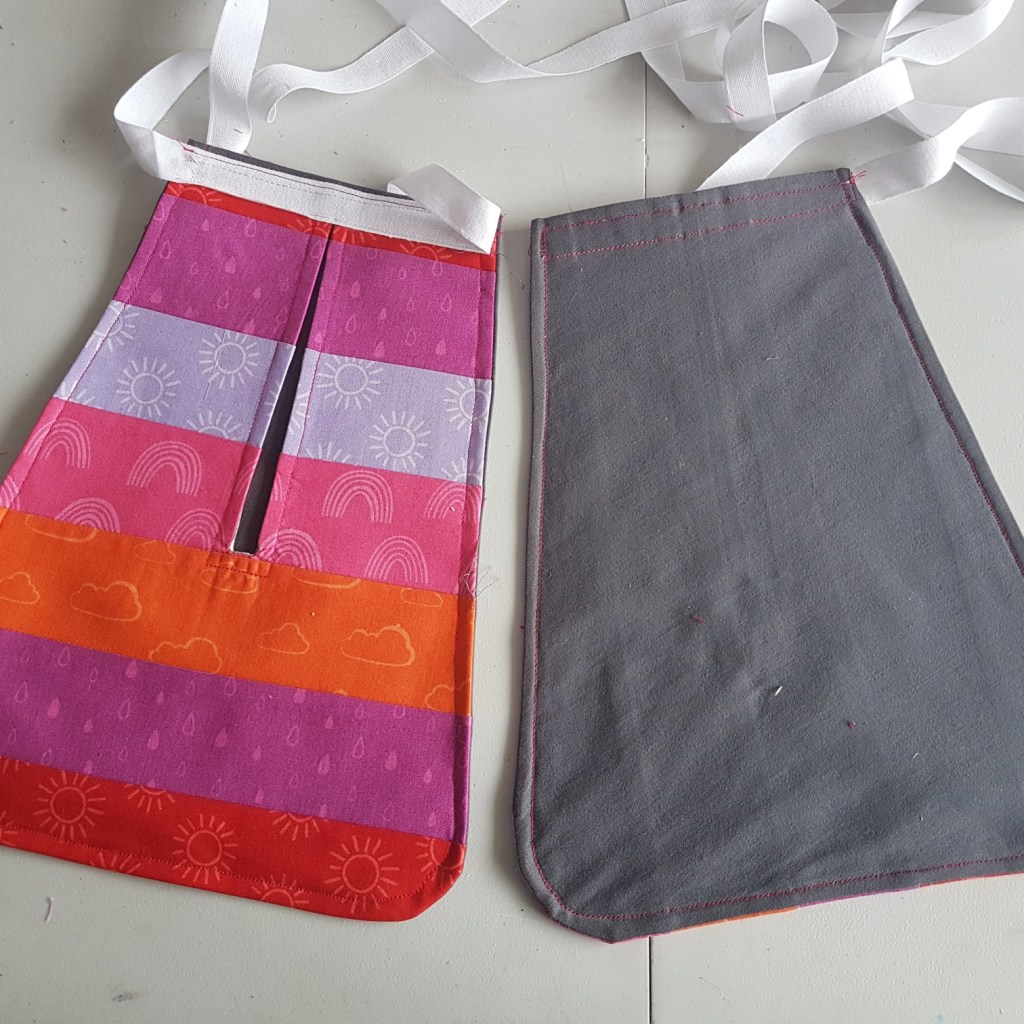
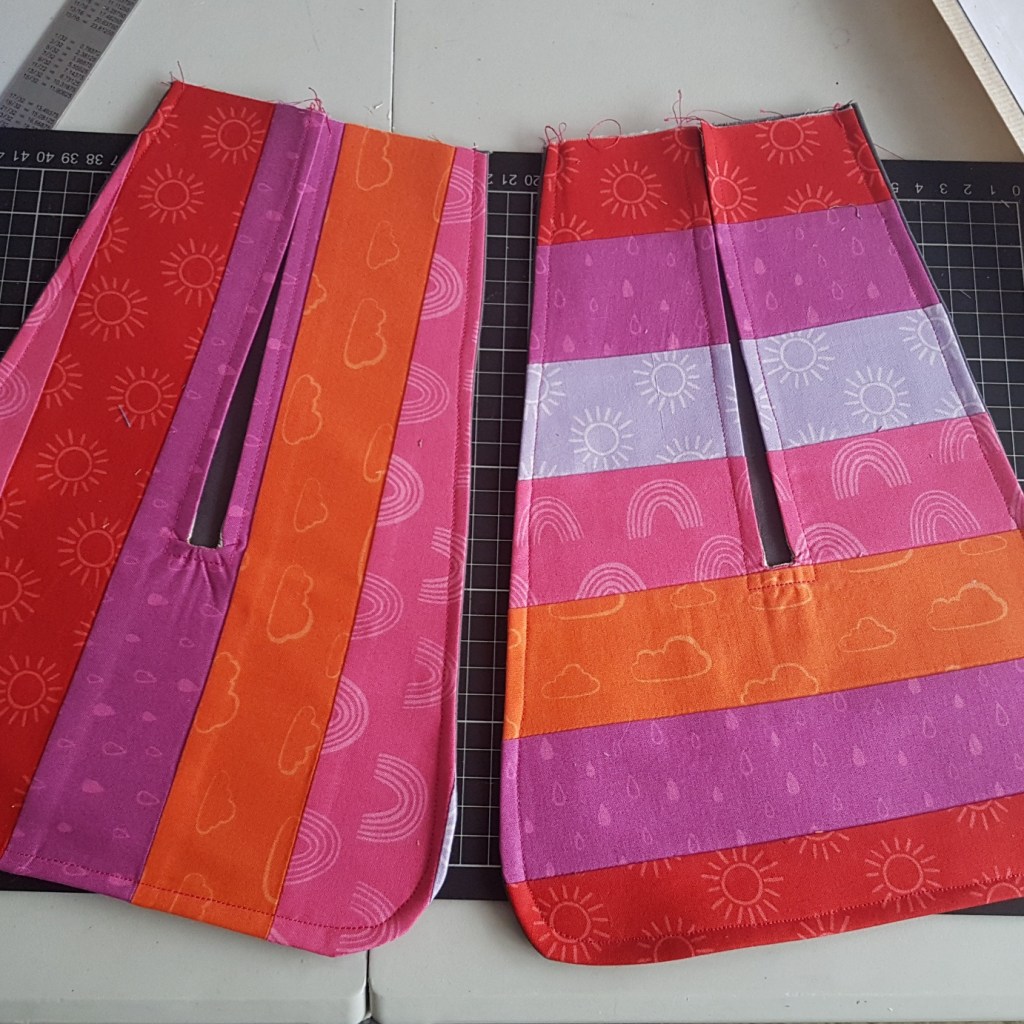
I also packed off a pair of historic pockets – I have been obsessed with making these this week. The pattern is by Hamblemouse, who is starting a pocket revolution inspired by the parlous state of pockets in women’s clothing. I love adding pockets to things, so the idea of pockets that you can just add to whatever you’re wearing is genius. Women used to wear these under their clothing, and then handbags came along – but what if you need your hands free? There’s an excellent history of pockets on the site if you’re interested – I love the idea of keeping gin and kittens in them, frankly.

I started with a couple of sets made from leftovers from other projects, and then I got overexcited and used some leftover jelly roll strips to make some single ones, which might be the most gorgeous things I have ever made. They look like sunsets and they are perfectly pressed (for a change). These are too lovely to hide, and I may make them for every conservator I know for keeping useful things (and gin and kittens) in.

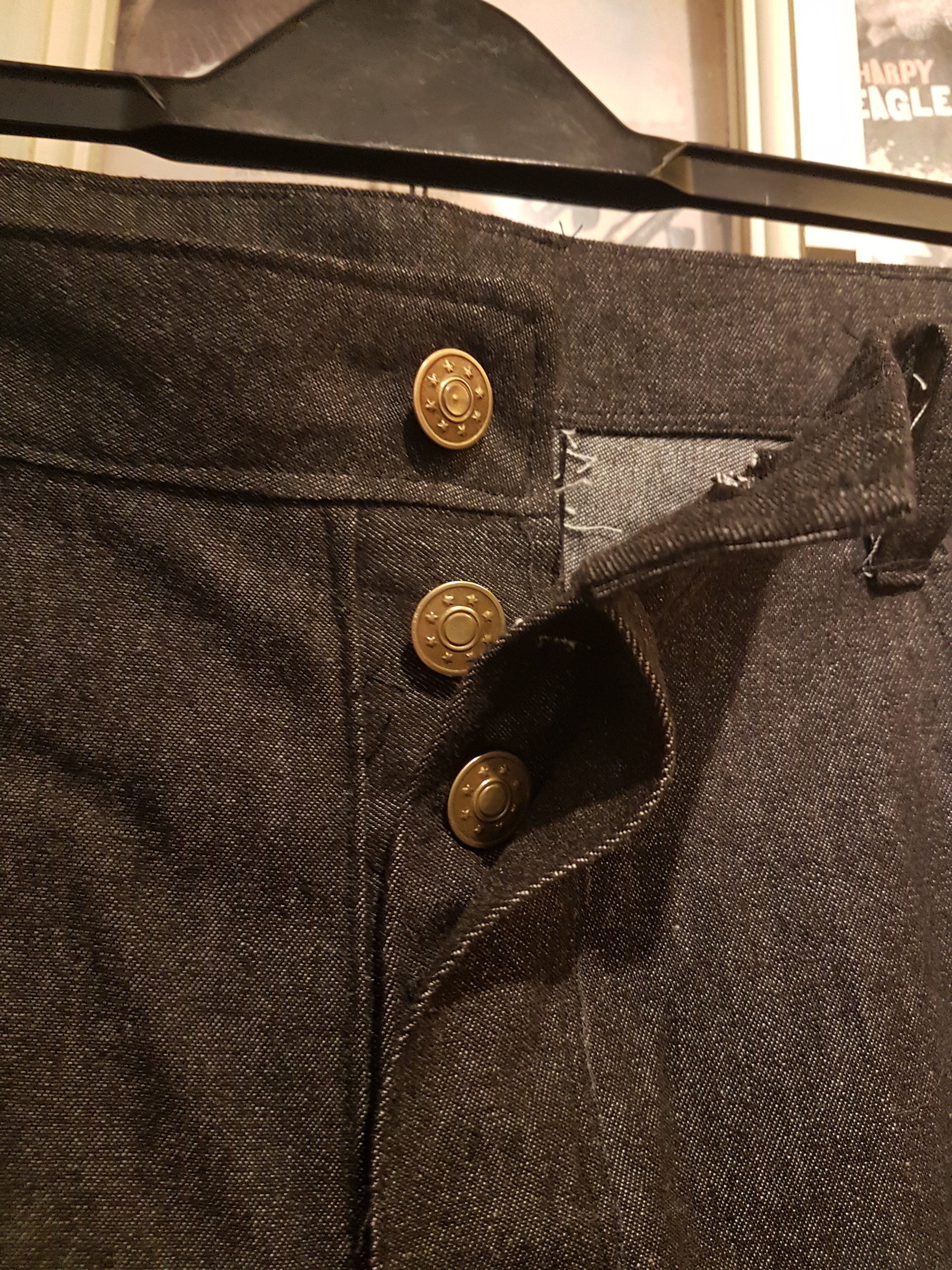
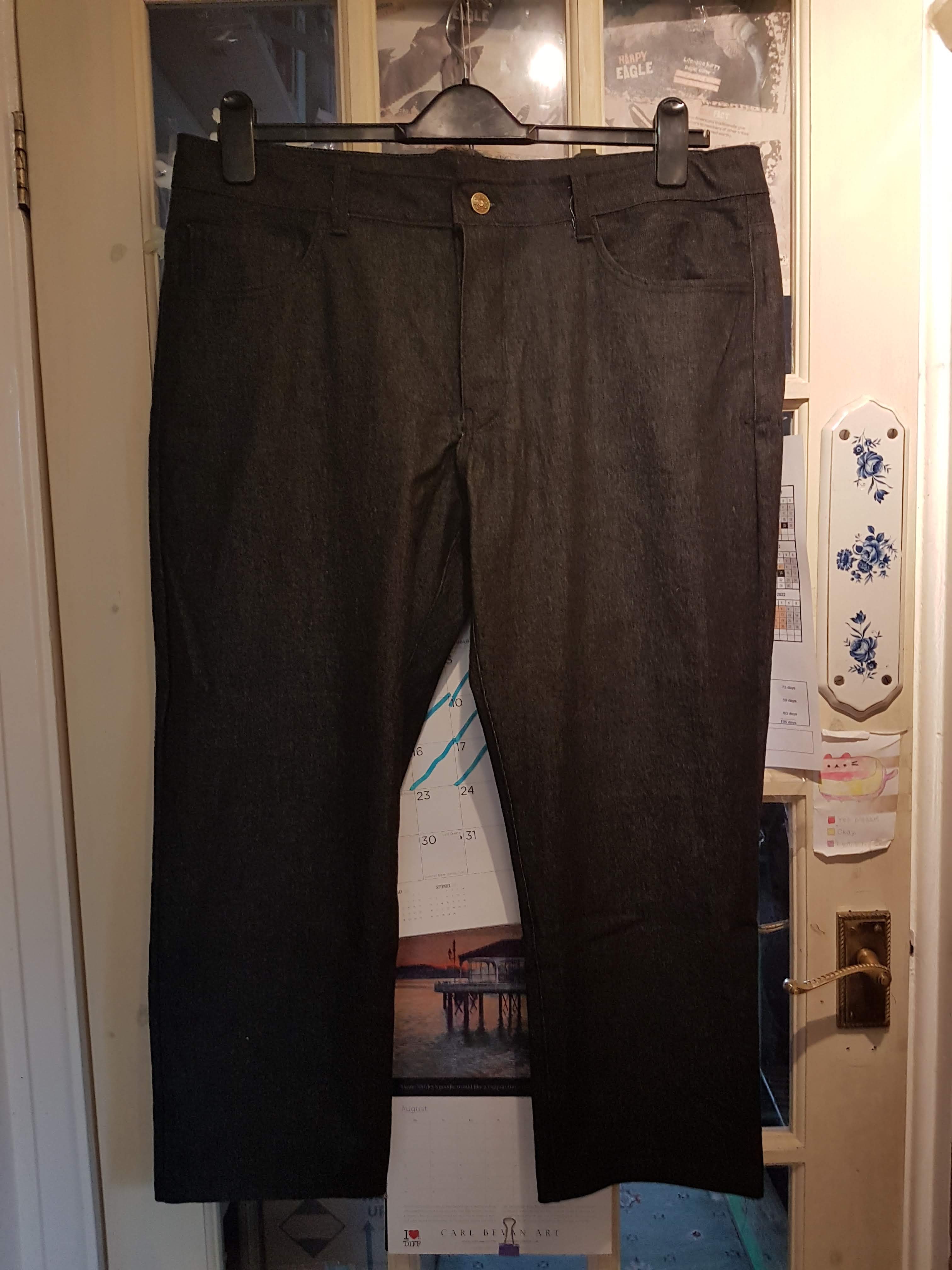
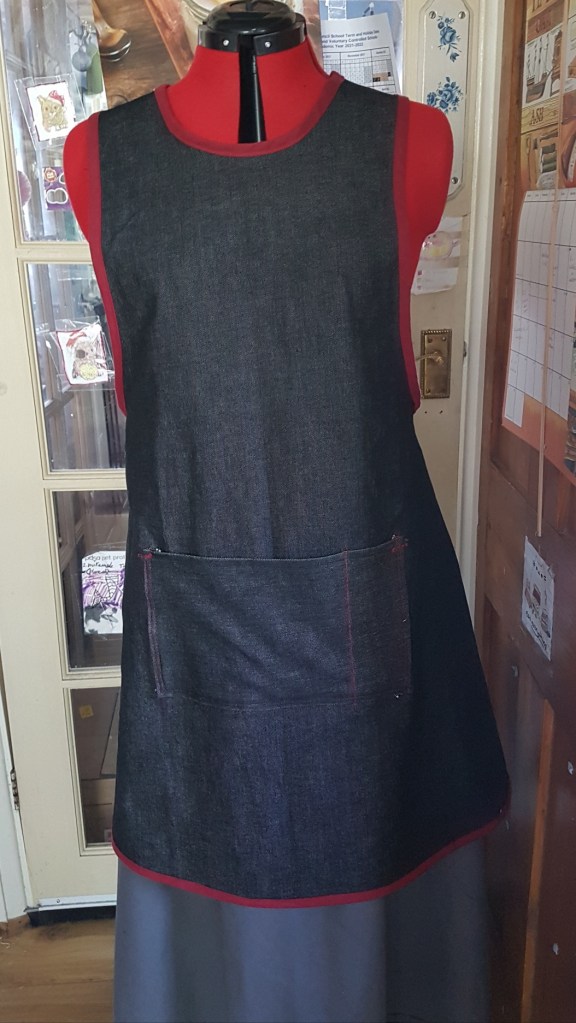
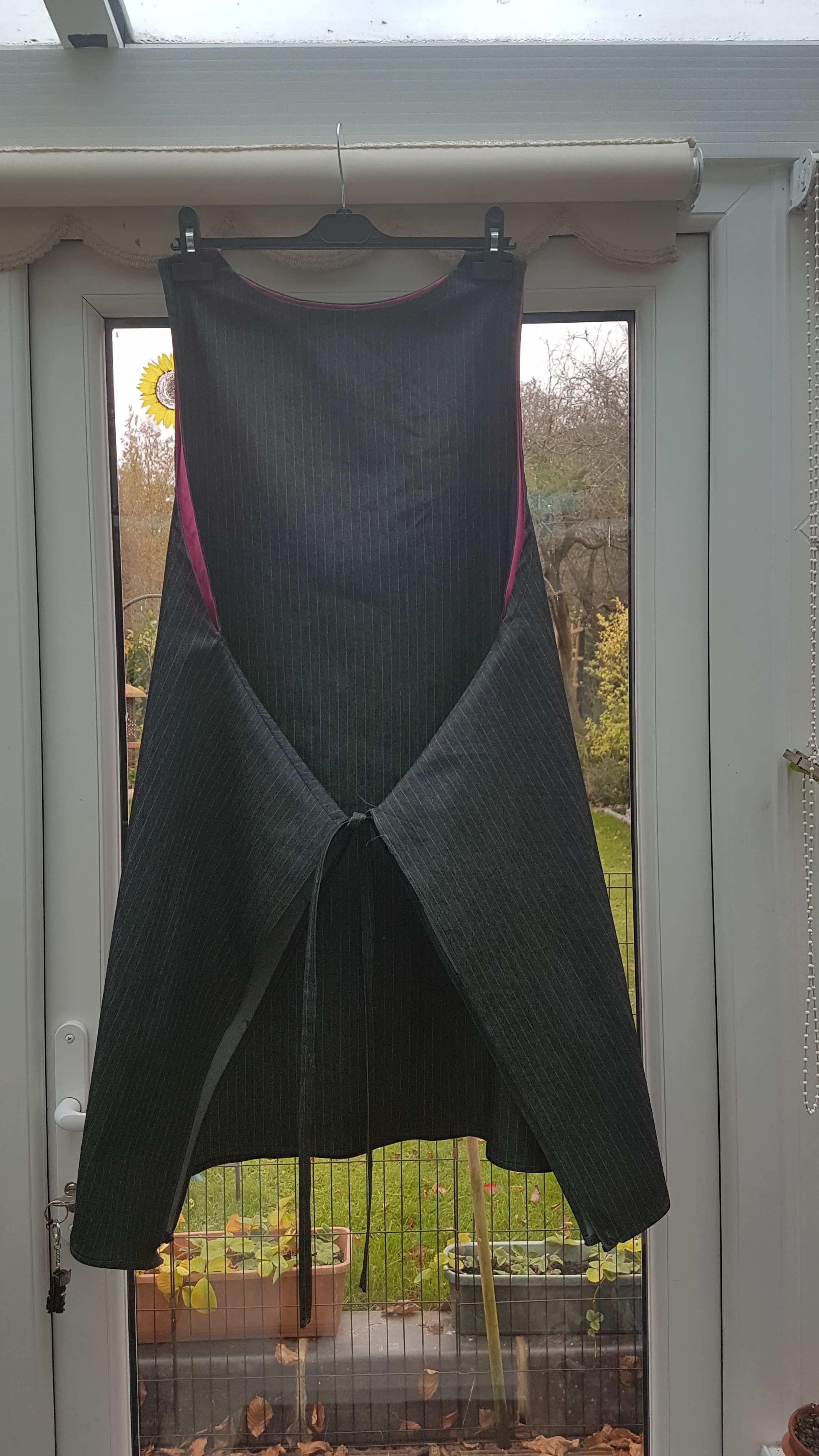
I’ve also made a cross-back apron, using this fabulous free pattern and tutorial from Hey June Handmade – a colleague was wearing a calico one for a workshop last weekend and it reminded me that I had wanted to make one. Toast have one for sale for £69 – mine was made from denim leftovers and bound with home-made bias binding left over from a quilt last year. The leftovers are from the Morgan jeans I cut out weeks ago and started making this week – all done apart from buttons and rivets, as I discovered I had run out of jeans buttons.

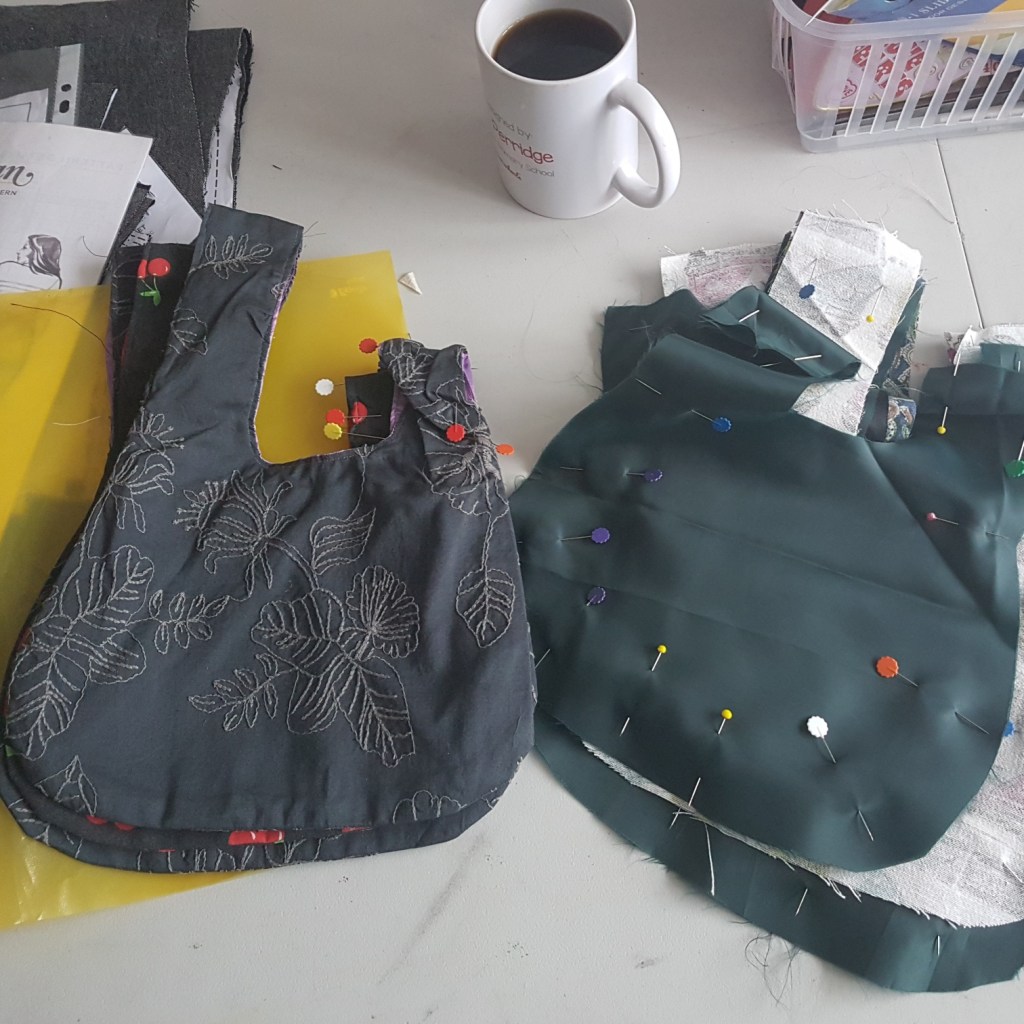
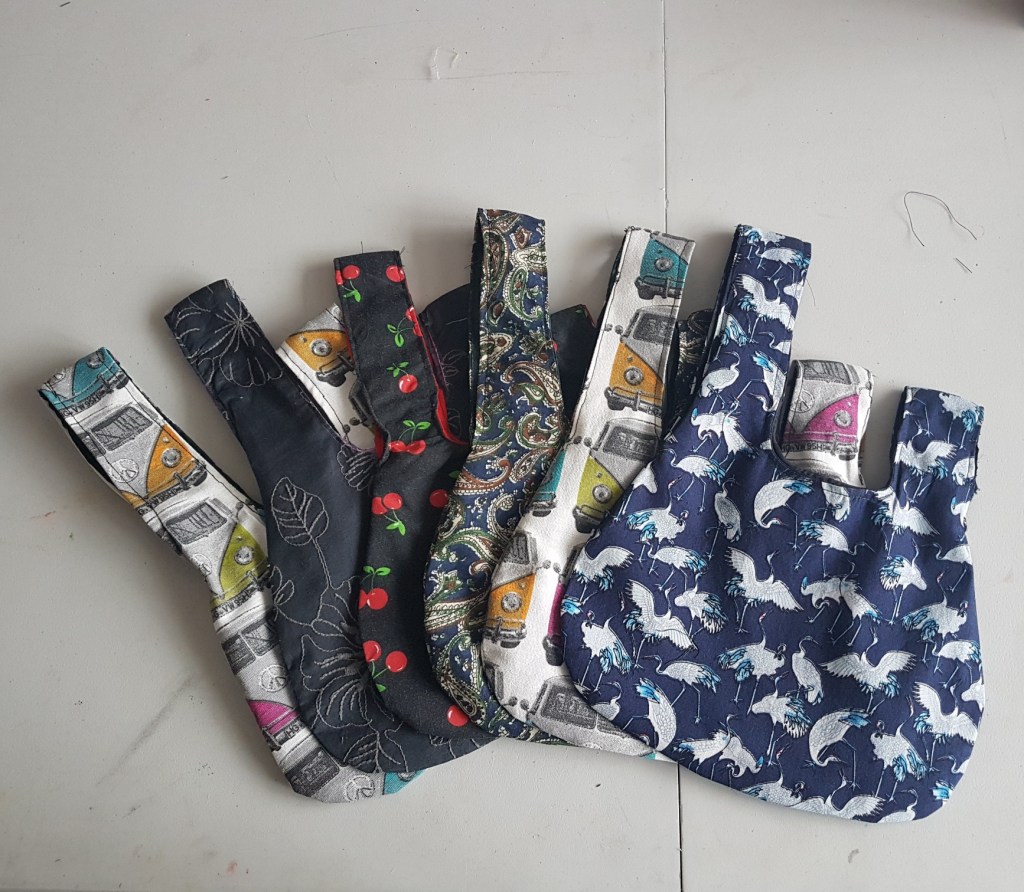
Seven years ago I cut out a pile of Japanese knot bags, made one for a teacher gift for Thing 2’s Year 1 teacher, half finished a couple of others and then left the rest. These are also handy small bags that slip on your wrist, so I have FINALLY finished them this week (every year I have got them out and added them to the to-do pile, and every year I have put them away again…).

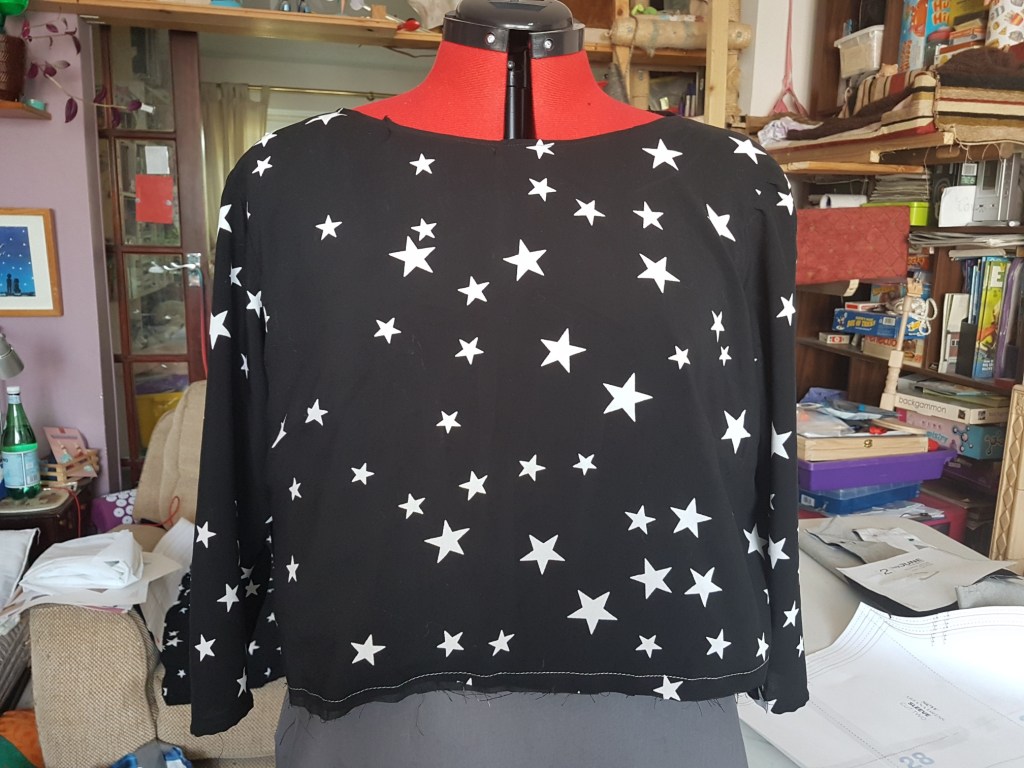
My final make of my week off was a dress, using the Ariana midi dress pattern from Sew Magazine – a free template download of a buffet-style dress. I used some lovely star print fabric (at least, it was lovely till I started trying to cut it) that I bought last year – I’d been going to make an Anna dress with it but it’s too fine. The bodice is lined with plain black polycotton sheeting, and for some reason the pattern calls for a lined bodice and a facing. I left out the lining fabric facing as it was totally unnecessary. Much cursing was done over the gathering of the tiered skirt – I think I should just be grateful it was only two tiers – as well as over the bodice instructions. It’s turned out OK but is definitely a maxi rather than a midi – I should have taken a few inches out of the first tier, I think. If I make it again…. oh, who am I kidding? I’m never doing that bodice again.

My last sewing job this week has been to go to a friend’s house and help get their daughter started with patchwork – she had a sewing machine for Christmas and what with Covid etc it’s taken a while to get round to the promised lesson! I started with straight line sewing on paper and then we made a simple nine-patch block, which hopefully will get her going!

Tomorrow I am back to work so the sewing machine will be getting a rest! I have two blouses cut out, from a favourite Simple Sew pattern, but they can wait….

See you next week! I have to start thinking about school uniform soon, and the annual trauma of the school shoes….

Kirsty x

What I’ve been reading:

Bill Bailey’s Remarkable Guide to Happiness – Bill Bailey

Lost for Words – Stephanie Butland

From the Shelf of Shame:

Addlands – Tom Bullough

Meadowland – John Lewis-Stempel

71: rain did not stop play

This week has felt almost normal: two days of delivery and a day in the office, drinks with colleagues on Wednesday and a noisy evening in a pub on Friday night. Never mind that one of those days of delivery was outdoors, with sessions bracketed (but not cancelled) by torrential downpours – we were doing our job, the reason we went into learning in the first place. I did have to wring out the bottom half of my dress while I was wearing it, as we cleaned 100 or so pieces of play equipment under a shelter made pointless by the rising waters and the horizontal rain, but there we are. We had a great day! It was noisy, joyful and inspiring.

British summertime…

I have mentioned the Imagination Playground Big Blue Blocks we are using before: it’s quite well-known and is used all over the world. We also have a kit designed by CO-DB which can be used to create pop-up spaces for craft workshops and more, and we had some of those pieces with us as well. As soon as we started to put out wooden structures we were surrounded by children who had some very firm ideas about how they thought it should be set out: they wanted to build a house, and when there weren’t enough pieces they collected other objects from around the playground to make their creation. They carried across tables and chairs, a giant Connect-4 game, and PE equipment. The house was initiated by a couple of small boys and others soon joined in, bringing their own ideas to the game.

My role that day was supporting our Informal Learning producer. Later in the day we were joined by an artist, Matt Shaw, who has been commissioned to create a ‘plus’ set to add to the Blue Blocks – he brought some rolls of corrugated card with him, some cut up plastic pipes and connectors and large pieces of fabric, to see how they added to the play. The Theory of Loose Parts is behind this. We introduced those about halfway through each session, when the children were evaluating their creations to see how they could add or improve them – something they did independently, rather than directed by us.

It was an interesting day: we had children ranging from Early Years to young teens, and we were presenting them all with exactly the same base equipment. We wondered whether the older ones would engage with the blue blocks or if they’d think they were too babyish for them, but we were surprised by how much they enjoyed it. All the sessions started with free play so they could see how the blocks worked together and could be connected, and then we threw in a challenge to finish off. Often this was to make the tallest structure they could, which they then enjoyed knocking down. Matt’s fabric was used to create dens and sails, and some ripstop fabric lengths became roofs for a shelter built by a team of girls called ‘the prime house’ because it was all primary colours. We asked one group to design and build a way to cross a river, so we saw some great bridges: we’d tested this with schools in early July.

The free play was interesting, as every age group made some kind of fitness equipment, often from a starting point of a dumbbell made from a noodle shape and two round pieces. The oldest group made theirs very elaborate, with a bench press and a leg machine, while the younger ones were more basic. Most groups made a marble run: if two sets of children started making one and discovered there weren’t enough pieces, we encouraged them to team up and create one large one. It was brilliant to watch them testing angles to make sure the ball would move smoothly, tweaking things to ensure it didn’t fly off, and solving problems together. The activity brought children together: this was a council play scheme which had only been open a couple of days, with children from all over the borough. Many had never met before that week, and the blue block activity got them talking to each other for the first time, according to the adults.

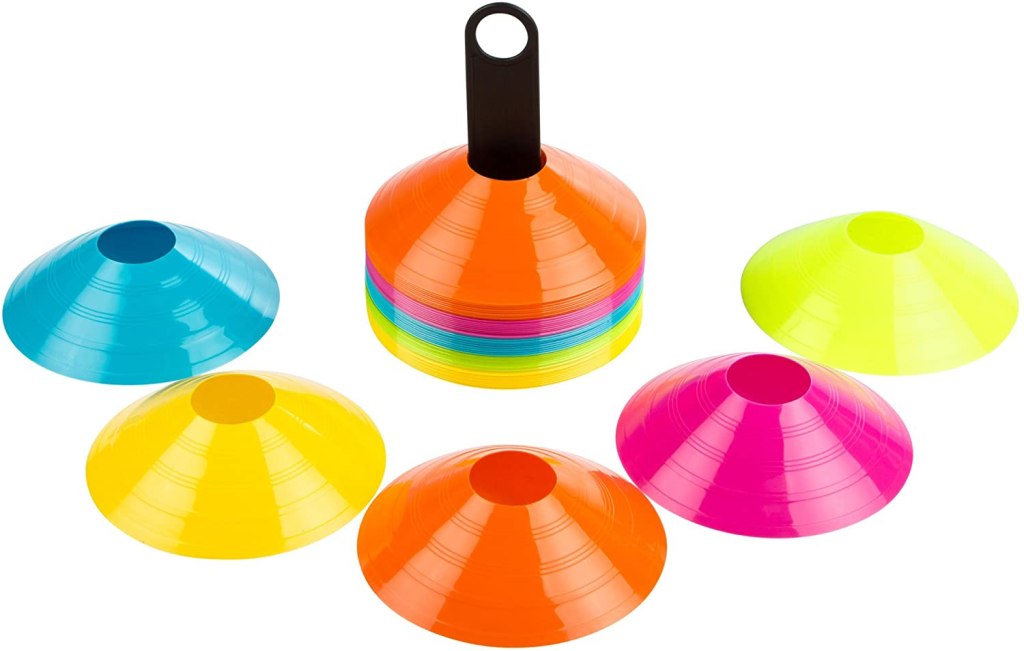
Of all the loose parts the children chose to add to their creations, the most popular were a set of marker cones which had been left in the playground – so much so that we will be adding them to our own kit for other events. They became decoration for houses, stoppers on the marble run, wheels, eyes and more. So simple that we wouldn’t have thought of them ourselves, but every group added them in to their creations. They also enlivened the Blue Blocks, which are otherwise just – well – blue.

The idea behind our participation in this playscheme, the school sessions I have mentioned in previous episodes, play streets and festivals is to support creativity and the skills that creativity builds: confidence, communication, collaboration and more (yes, they all begin with C) and I think we saw that in spades this week.

My other delivery day was at Spotlight, an amazing youth space in Tower Hamlets where I was supporting our Creative Producer. This was part of a local transition Summer School for Year 6s going into Year 7, and were working with School of Noise who run workshops encouraging the exploration of music and the science of sound. I learned loads – about how sound travels, chladni plates, about making sound effects and more. The students were really engaged too, and were amazed at how the sounds they could make with their bodies could create music. We tried some Foley in the afternoon, making the sound of fire with bubble wrap, tin foil and a plastic shopping bag, and we saw this video which left us in awe of Foley artists. I have had some strange requests from my Foley artist neighbour over the years but this video really put them into context.

Just having these days with the team in real life, and Friday in the office at South Kensington, reminded me why I love my job and the people I work with. We went out on Friday night to the Zetland Arms in South Ken to say a goodbye to our wonderful director. I saw people I had previously only met on Teams calls, and others I hadn’t seen since before lockdown – it made the ludicrously expensive G&Ts worthwhile. (Lovely director has just messaged me to say thank you for the letter and crocheted angel I handed her on Friday night – when she arrived two years ago we had just been through a horrible restructure and we found guardian angels on our desks waiting for us, so it seemed right to send her off with one too!)

And now it’s August. How did that happen?

Biscuit, anyone?

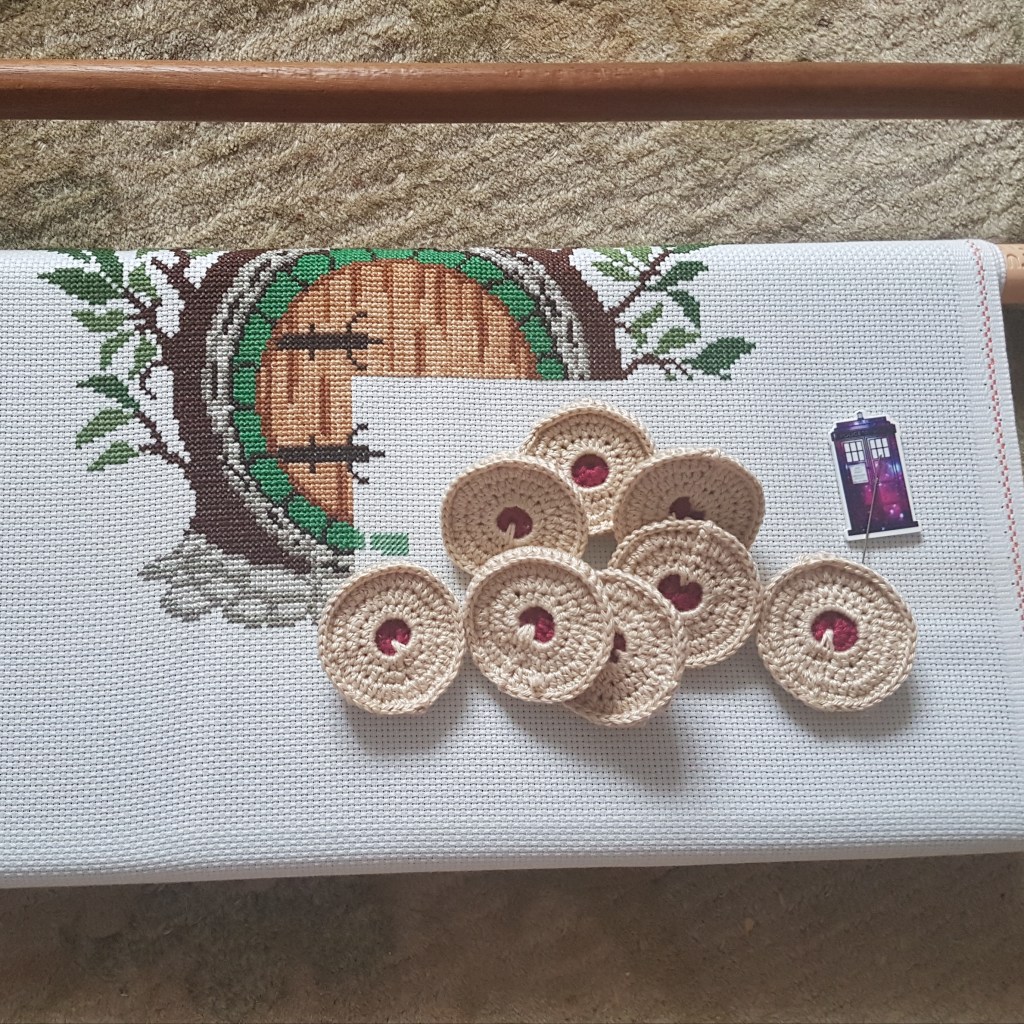
All this travelling on tubes has meant that I could spend some serious time crocheting daft things – more jammy dodgers, in fact. Here’s eight I made on the tube – there would have been nine, except a small girl was entranced by what I was doing so I gave her a finished one. I think it made her day. These are very satisfying to make, as other than weaving in the ends there is no construction: you join as you go. They will either end up as brooches or tree decorations – these are made with the 2mm hook, rather than the larger one, so the stitches are tighter.

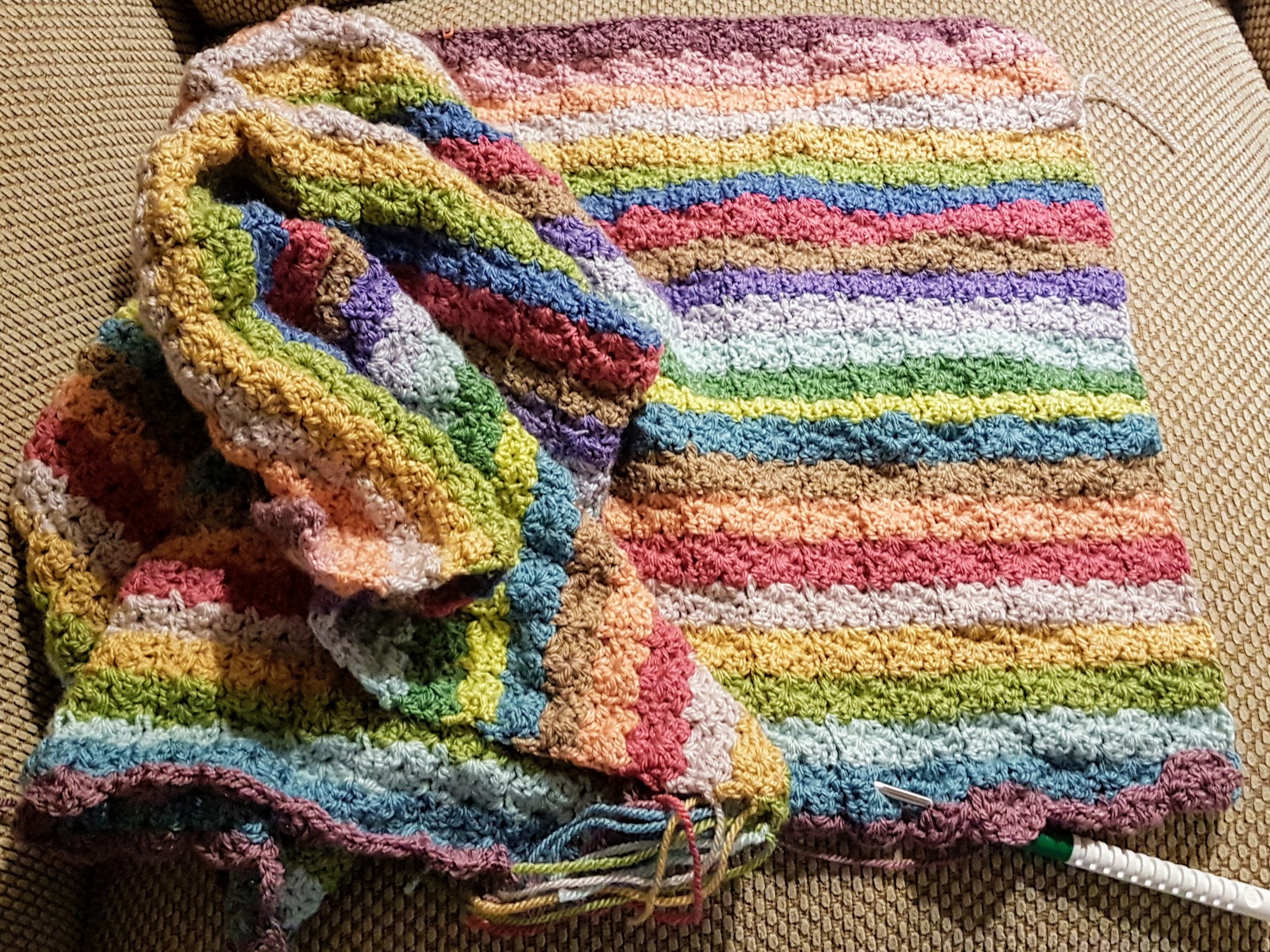
The background is, of course, the Hobbit Hole – I am now onto the bottom half and will be starting a new page this evening. And now I am off to do some other sewing. I should be constructing jeans but I have a PDF that needs sticking together for a dress, so let’s see how far I get!

Kirsty x

What I’ve been reading

The Shadow Wing (Crow Investigations) – Sarah Painter

Good Omens – Terry Pratchett and Neil Gaiman (Audible)
From the shelf of shame:

Bring me the head of Sergio Garcia – Tom Cox

Jigs and Reels – Joanne Harris

69: yes, but can you play on it?

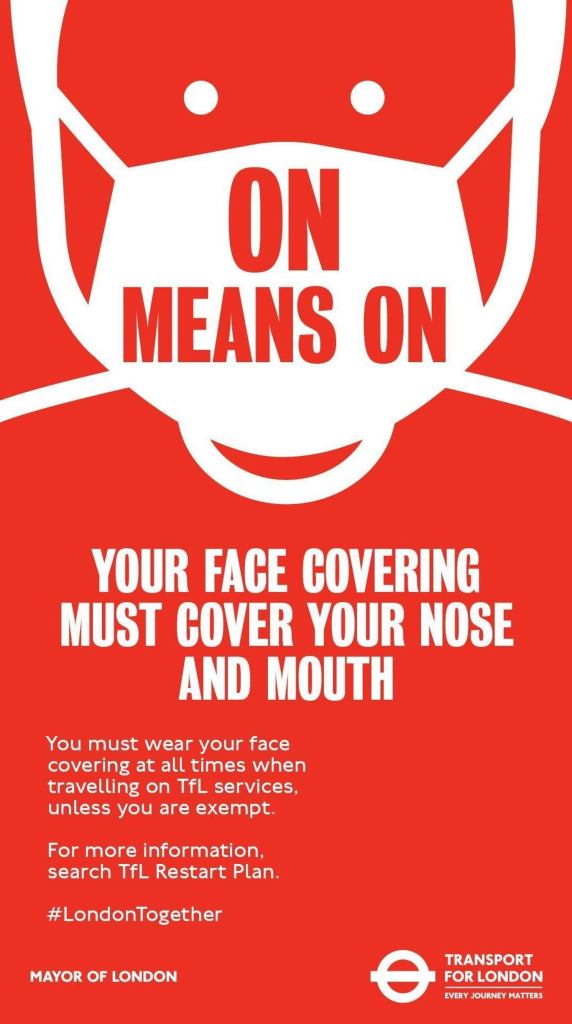
This week I have mostly been in my house, having been ‘pinged’ by a (double vaccinated) friend I saw last weekend: I did leave the house on Friday as Thing 3 had to go back to school but by that point I’d done four lateral flow tests and a PCR and all of them came back negative. I find it quite unbelievable that so-called ‘Freedom Day’ is going ahead tomorrow, when cases are shooting up again and school bubbles are bursting on a daily basis. Herd immunity by vaccination isn’t working as you can clearly still catch the virus. Herd immunity like some kind of national chicken pox party seems to me a rather irresponsible idea. Passing responsibility from the government to the people to keep themselves safe seems pretty idiotic also, especially when some of these people being given that responsibility require bloody great posters on public transport explaining how to wear a mask properly.

 © TfL

One of the pluses of being at home has been the opportunity to attend – if only virtually – courses, conferences and seminars that would otherwise be out of reach: those in Australia and America, for example, but also those closer to home but at a tricky time e.g ones that happen while the Things are claiming they are about to actually die of starvation, Mum, die! Like this weeks Crafts magazine event on “Space for play: how can makers bring joy back to our cities?” (Disclaimer: I was given a free ticket for this, as a bonus of attending the CPD I wrote about last week). Thank you to Thing Two, who with assistance from Thing One made delicious gnocchi for the family dinner that night.

Featuring architects, artists and playworkers, this was a really interesting discussion around public art as play space and why it’s a good idea to commission these rather than anchoring a lot of off-the-shelf play equipment in a fenced-off square. Penny Smith of Assemble Play pointed out that playgrounds like these were invaluable when we needed to build a workforce of people with physical strength and co-ordination – but are less useful now, in the 21st century, when employers value creativity, collaboration and problem-solving skills over more traditional needs. Risa Puno, an American interactive installation/sculpture artist, spoke about the need to build spaces that connect people to each other. Hadrian Garrard of Create London, an organisation that commissions public art and architecture, explained why they brought in artists to build these spaces. Artists research a space, work with the local community to find out what they think a space needs, and explore materiality. Higham Hill Theatre, by vPPR, is great for this: a community amphitheatre which joins up the cafe and the play area. This was commissioned as part of Waltham Forest’s ‘Making Places’ scheme.

vPPR selected the site because it was a forgotten parcel of the park, used for anti-social behaviour. By re-activating the site, and creating links to the park amenities, the place is transformed into a site of creativity and play.

vPPR

As Risa Puno says, you never know how people will interact with a space or an installation, so you need to make something that people can explore on their own terms. The Diana Memorial Fountain, never envisaged as a play space, is a prime example of this: once it became clear that people were going to use it as a paddling play area, it had to be made safe to do so. Why not build in play from the start?

In the panel discussion at the end, the speakers were asked where they most enjoyed playing as children: outdoors was usually the answer. Several of the speakers had grown up in rural areas, and talked about fields and woods, which reminded me of my own play spaces.

When we moved to Raglan, I was just seven and only a few houses in our road had been finished: there was a building site opposite the house with no fencing (imagine!) and a meadow next door but one, and for a child whose outdoor boundaries had previously been a couple of lamp posts, this was magical. Piles of brick dust and sand (brick dust does not come out of socks), bulldozers, foundations and scaffolding: this was an adventure playground when the builders had left for the weekend. In the meadow, there was a cave of trees and a stream with very shallow banks and we played for hours in this space. There were tiny fish in the stream and water snails to be caught, archaeological discoveries to be made, wildlife like slow worms and grass snakes in the long grass, and all within metres of the front door. That’s not to mention the castle at the top of the hill and the fields around it, all of which were within ten minutes of home. There was a play park at the other end of the village, which was fun, but once you’ve been on the swings and that mad Wicksteed rocking horse, what else was there to do? So we exercised our imaginations and explored the world, and made discoveries and generally entertained ourselves.

I’m glad we are bringing up the Horde in a space where there are trees to climb and woods to explore, though they don’t have the freedom that I did as a child which is sad but a sign of the times. Walks – when we can convince them to leave the house! – can take hours, and that’s fine by me.

The sun has got his hat on

Summer is putting in one of its brief appearances at the moment, so I have had a couple of happy post-work hours in the garden during isolation. As well as the gnocchi, Thing Two is turning out an excellent G&T with fresh raspberries and strawberries, which was a perfect Friday afternoon treat.

A perfect post-work moment

I had a day off on Friday and spent it cutting out a pair of Morgan jeans, an Anna dress and a blouse hack from this month’s Love Sewing magazine free pattern. Yesterday morning I put the Anna dress together: it was supposed to be the maxi length but where I’d extended the arms on the bodice I didn’t have quite enough fabric so ended up with the midi. The fabric is from last summer – Pound a Metre, I think – and is a light polycotton. I made my first Anna dress last year and it’s become my go-to throw on this summer, so a new version was definitely in order. I managed to jam my overlocker in the process, so I think it’s going to need a trip to to the sewing machine doctor if I can’t work out what the problem is myself!

The Morgan jeans are also a remake of one from last summer, as they have become a wardrobe staple – boyfriend cut and cropped, they are so comfortable. I bought some black lightweight denim from Amazon with my birthday vouchers, so will hopefully get to those tomorrow at some point.

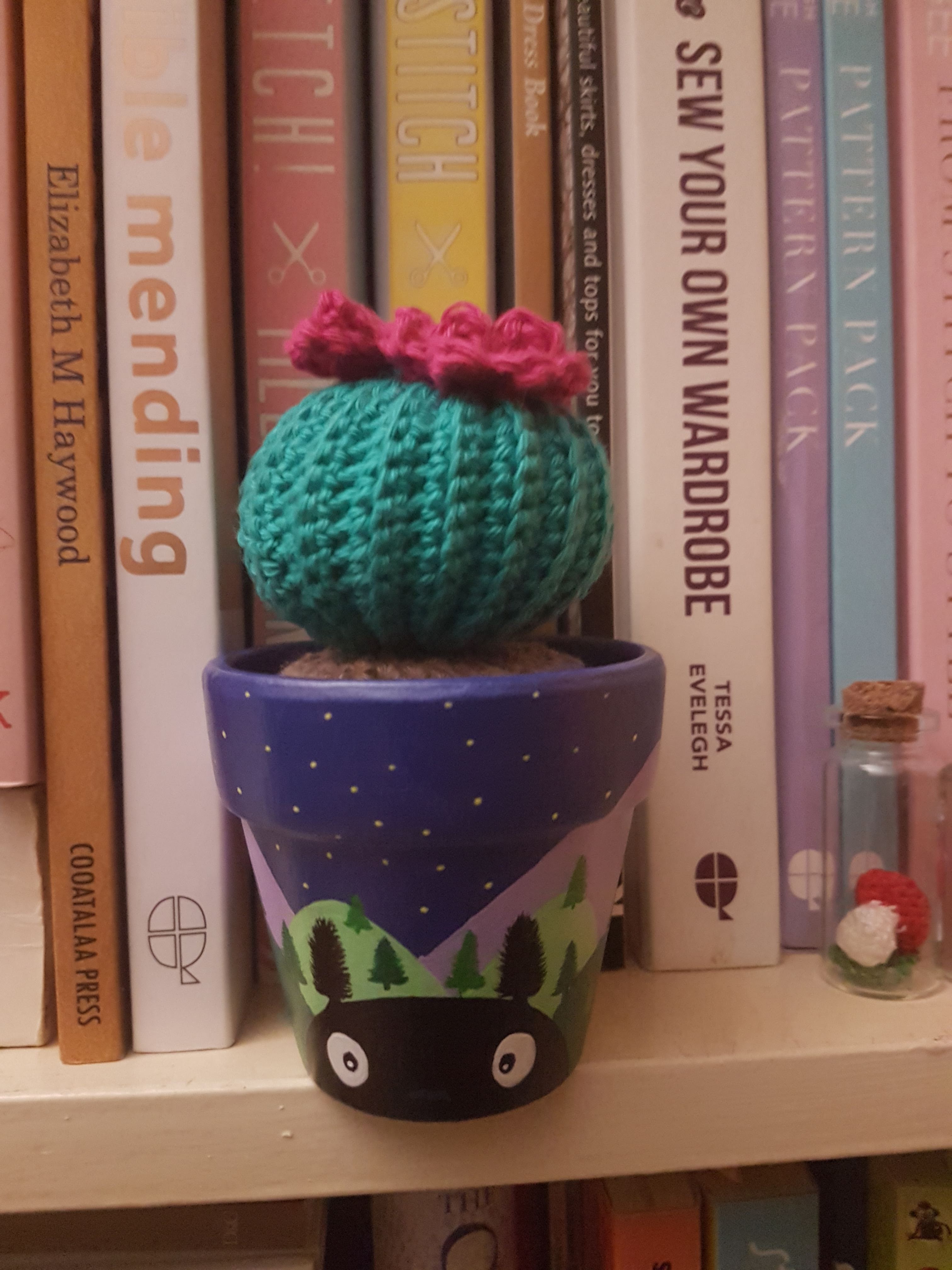
I’ve been crocheting with cotton this week – it’s too hot for anything else! One of my lovely birthday gifts from my colleagues was a gorgeous hand painted flower pot from DOMIcafe on Etsy – not having the greenest of fingers, as my hydrangeas would testify if I hadn’t killed them all, I decided I’d make a crochet cactus to go in it instead. I used Scheepjes Catona from the stash, and this pattern for a round barrel cactus by Zoe Bartley on Ravelry. It only took a couple of hours, and I love it.

I also whipped up a crochet jammie dodger, because why not? The top one is with a 3mm hook, the bottom is with 2.5mm and I think I prefer that one.

So that’s been my week: I’ll be released back into the wild on Wednesday, just in time for the summer holidays!

See you next week for week 70!

Kirsty x

What I’ve been reading

Night Watch, Thud!, Snuff, Raising Steam – Terry Pratchett

Listening: The Socially Distant Sports Bar. (Not to be listened to on public transport as you will become that person sniggering in a corner, in front of children, or in earshot of the easily shocked)

68: Rage against….pretty much everything

Hot flushes, night sweats, the need to carry tweezers with you at all times, difficulty sleeping, problems with memory and concentration….just some of the symptoms of perimenopause that people tell you about. Apparently there are 34, but I’m trying not to treat this as some kind of hormonal bingo – I mean, what the hell do you shout when you’ve ticked them all off? And do you even get a prize?

One of the symptoms they don’t tell you about is the rage. The all-consuming, completely random rage. We are not talking a ladylike ‘tsk tsk’ here, this is fury incandescent enough to power whole countries.This week, for example, some of the things I have been furious at include:

  • people who stop in the middle of the pavement
  • old ladies walking up steps
  • sellotape
  • cat litter bags that don’t open properly
  • Oyster card readers
  • bra underwires
  • people who wake me up in the middle of the night
  • cinnamon jelly beans.

And that’s the little things. That doesn’t even cover the big stuff, like 40,000 screaming people at Wembley not wearing masks (had they all been double vaccinated? Were they all tested before entering the ground? Did they have to show their vaccine passports?) Or pretty much everything the bloviating buffoons in charge of the country say, particularly on the subjects of education or post-Covid recovery. Aggressive England fans shouting that football is coming home as if some silverware is going to solve England’s problems. (I will be supporting Gareth Southgate tonight, for those of you in any doubt: I think he’s a really nice bloke, who is down to earth, honest, well-dressed, intelligent, and if the team win people might just shut up about a penalty he missed 25 years ago, the poor sod. I couldn’t care less about England winning, but I would like Southgate to win.)

They call it ‘the change’, which sounds quite gentle, but this isn’t like WonderWoman spinning around and reappearing in sparkly pants. This is more like American Werewolf in London at full moon, complete with snarling and a really bad hair day. There are definitely moments when I’d be happy to bite people, and there are definitely moments when people need to realise that these bared teeth are not a smile and that backing away slowly is their best hope.

Back in the saddle

This week my colleagues and I have been back in a school, launching our Summer of Play programme in a Bethnal Green primary school. We saw nine classes over three days, and had enormous fun – I was only there for two days, as on day three I got as far as Whitechapel and then had to turn round and come back as Thing 3’s class had to go into self-isolation.

We had two activities running simultaneously: Fran, our creative facilitator, was working on barefoot coding and I was working on design challenges using the Imagination Playground kit above. With Key Stage One we were doing timed challenges and with Key Stage Two we were designing ways to cross a river: you can see me above in a boat built by a Year Six class. What we needed that day was probably an ark, as we were delivering sessions in between rain storms!

There were some surprises across the days: Year One worked brilliantly as a team, building together and sharing really well. Years Five and Six worked well when the teams were split boys against girls, but not so well when they were mixed. Some children worked really democratically, others not so much. Some teachers pitched in and got involved, others found it hard to let go and had to be gently persuaded to let us get on with it…but it was so good to be back doing what we do best, which is engaging with learners and talking to people.

The next lot of schools isn’t till September, but over the summer we’ll be out and about at festivals and play schemes with the kit, and I can’t wait.

Crafty!

On Friday I attended the launch event for Craft School – Yinka’s Challenge which is a nationwide challenge from the Crafts Council to get children and teachers engaged with craft thinking and making along three themes: play, storytelling and empowerment. I love these Crafts Council CPD sessions, as they are often designed as make-alongs. I had a free ticket, but people who paid £10 got sent a ‘material play pack’ including clay, so they could join in. The brilliant Rebecca Goozee, education manager, is very keen on embodied learning and plans sessions with great makers so you can learn along with them. I always find it easier to focus if my hands are busy, as regular readers will know, so these sessions are great for me. I fixed my pile of escaping bra wires and did some cross stitch as the sessions went on.

The final session, with a ceramicist, took the form of an informal conversation between the maker and Rebecca while they made pinch pots, rather than a tutorial (as the first two sessions had been) and it was wonderful – just listening to them talk about how working with the clay made them feel, and about their own experiences in the world of making, was incredibly soothing. If I was the Crafts Council I’d be thinking seriously about a podcast series in this format!

There was also a conversation between Yinka Ilori and his secondary school art teacher and mentor, who was clearly one of those teachers who stay with you for a lifetime. A lot of conversations that day – as the majority of the attendees were craft, art and design teachers – hinged on those teachers who supported us to become what we wanted to be and who gave us the space and the confidence to discover our passions and talents. And on those teachers who didn’t….

The three themes of the challenge sit well alongside my own museum’s new mission, so I hope we’ll be able to work with the Crafts Council in a more formal way moving forwards!

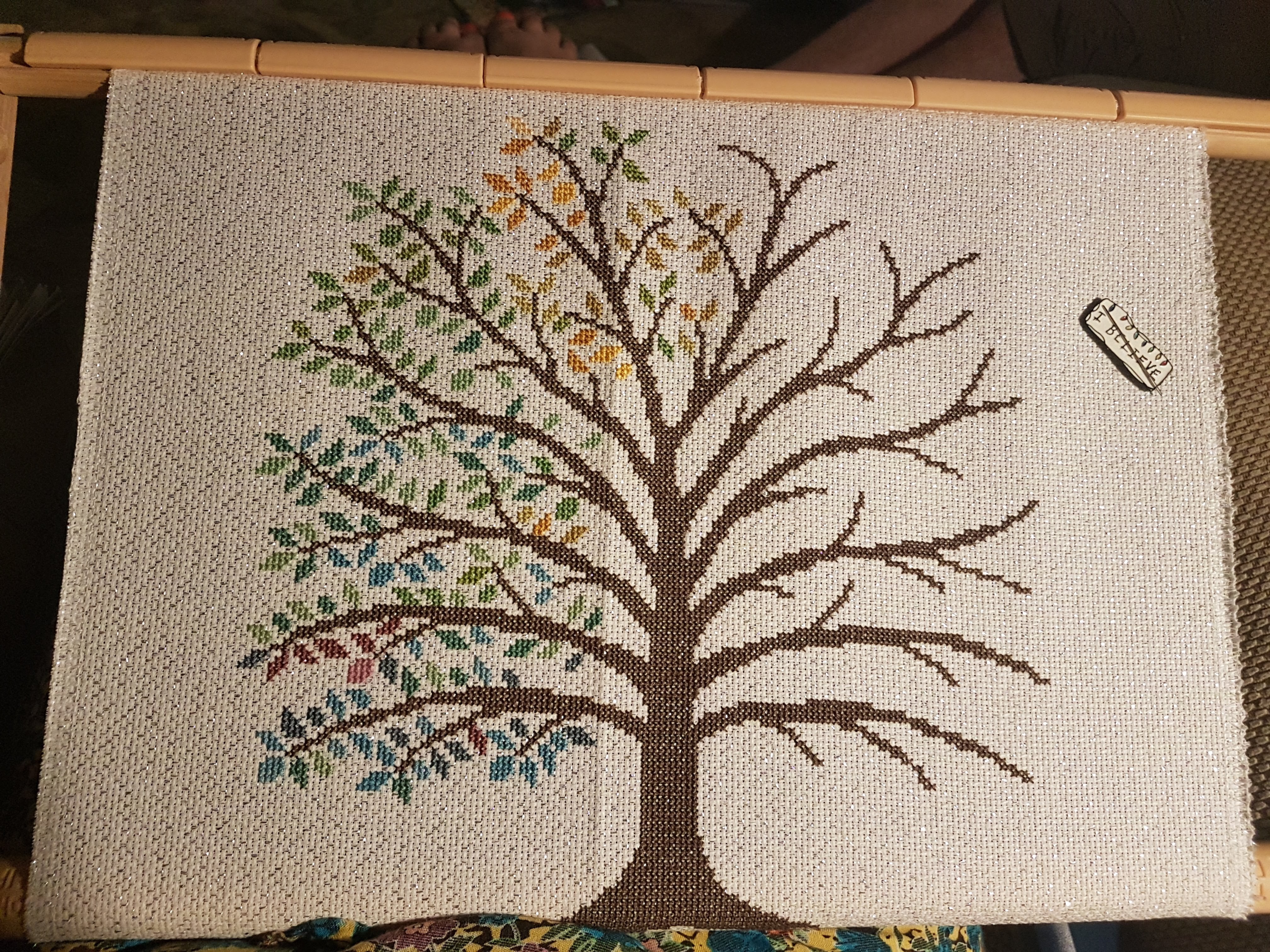
I can’t share the cross stitch I was working on, as it’s a gift, but here’s the Temperature Tree update for June and early July. As you can see, June wasn’t terribly warm either – a low of 13 and one day when we hit 27 ( a pale yellow at the very top). July’s not shaping up too well either.

So that was week 68 – we’re more than halfway through 2021 according to the tree, and coasting towards the end of term in ten days or so. Same time next week!

Kirsty x

What I’ve been reading:

Guards Guards, Men At Arms, Feet of Clay, Jingo, The Fifth Elephant – Terry Pratchett (these are the first five of the City Watch series: you can see a reading order here)

Week forty six: can you lick the end of your nose?

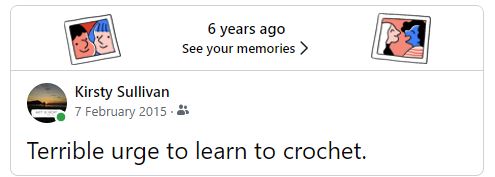
While scrolling through my Facebook memories this morning a post popped up from 2015 which just said ‘Terrible urge to learn to crochet’. I remember waking up that day and my fingers were actually twitching with the need to learn something new, to create something tangible and practical. It wasn’t as if I wasn’t making other things – I was dressmaking by then, and cross stitch was always in the background, but I am the very definition of a life-long learner. Combine this with creativity and curiosity and what you get is – well – me.

Luckily, I had yarn from my knitting phase and crochet hooks from the last time I’d tried to learn from my beloved’s mother, so with the help of YouTube and my crafty library I was able to get on with it. Over the next few days Facebook will show me my early progress: wonky granny squares, double crochet which gains and loses stitches at the end of every row, and – finally – a recognisable square. Friends were free with helpful advice – the craft community usually is, probably as we love to see other people getting joy from the same things we do – and I quickly became hooked (if you’ll pardon the pun). Generally I have crochet with me at all times: emergency yarn under my desk at work, a sock or an amigurumi in progress on the commute, and a large home project like a blanket. It’s very calming to be able to sit, to make repetitive actions, and the tactile nature of yarn makes it a sensory process too. If you’re happy using basic yarns it can be a relatively cheap hobby, too, but it never stops there.

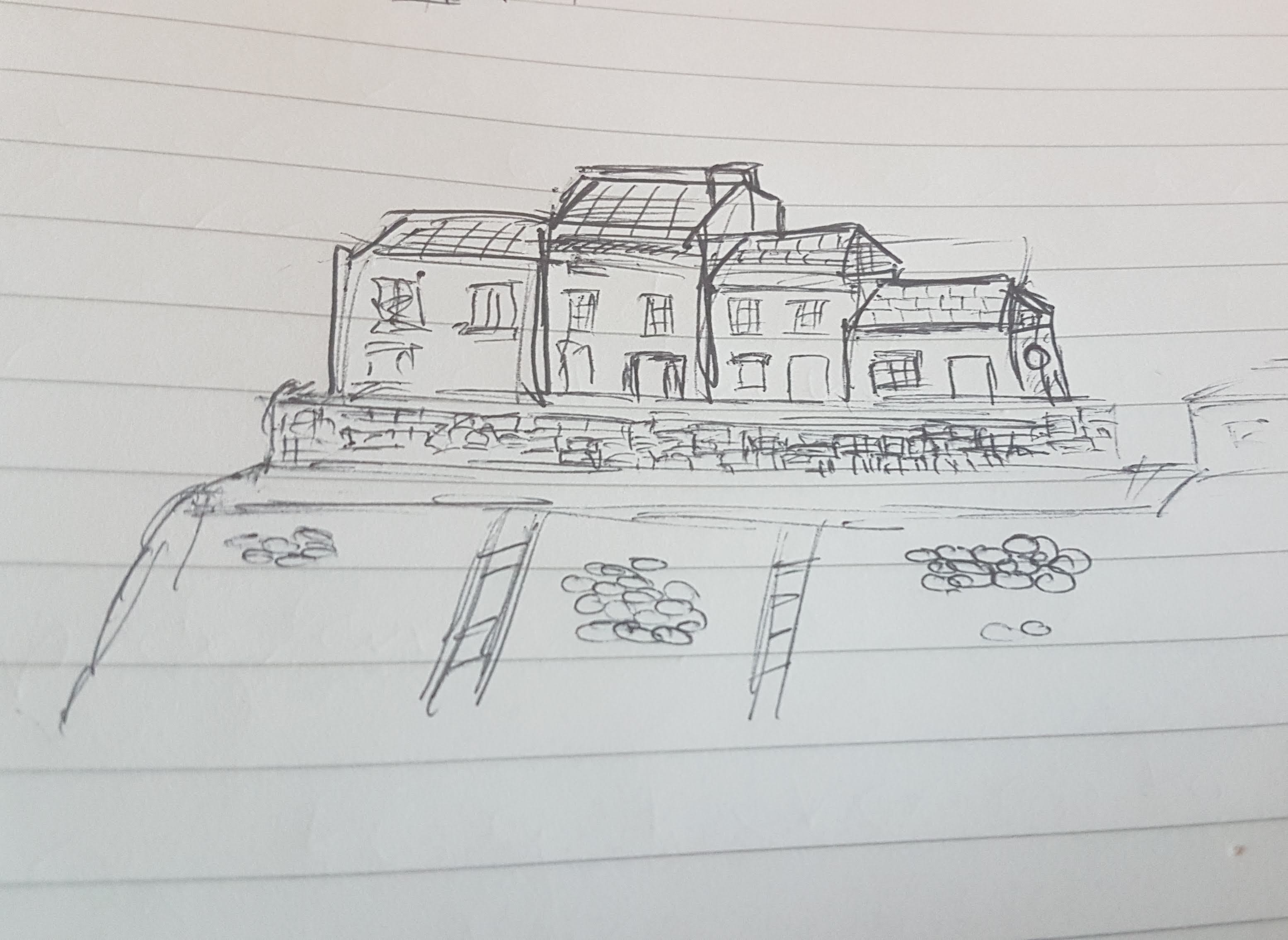
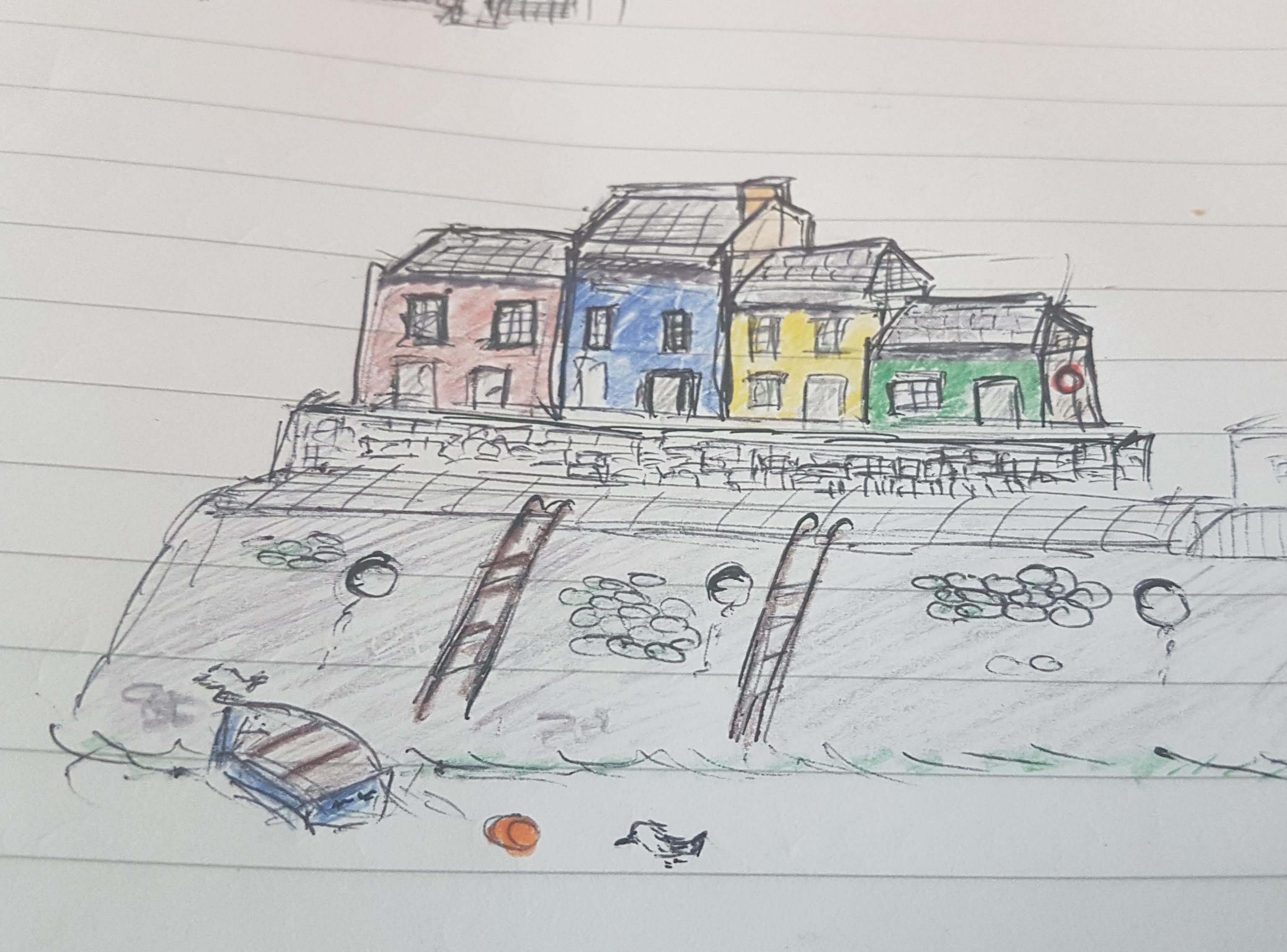
I have an urge now to learn something new. I want to learn to draw. Once (in 1985) I got a B- from Mrs Allan the art teacher for my observational pencil drawing of my mum’s avocado plant, but that has always remained the pinnacle of my artistic achievement.

I don’t want to draw portraits, though I wouldn’t mind being able to draw a recognisable cat. I want to draw flowers and trees, houses and streets, and to be able to feel confident enough to do this whenever and wherever I want. I love seeing urban sketching on Instagram by people like the Shoreditch Sketcher and MaltzCreative, and two of my cousins are producing gorgeous work (Colour Confusions and ElliesPad – check them out!). I love Michael Powell‘s quirky paintings. I want to be able to see an interesting doorway or a window, and to be able to whip out a sketchbook and render it on the page.

So that’s my next mission: learn to draw. I have books (so many books!) and I signed up to Craftsy a while ago when they had an offer. There’s a number of ‘learn to’ videos on there, and it’s ridiculous to say I don’t have the patience – what I need to develop is the discipline to practise.

Play for mental health

Making and creating are play activities for me. I have attended a couple of really interesting webinars over Zoom this week about the importance of play for children’s mental health, particularly during the current pandemic, and the challenges of ensuring that children have access to play opportunities at a time when government focus is on ‘lost’ learning.

There is a lack of understanding in the current ‘knowledge-based’ curriculum that play is learning: it helps people (not just children!) to build relationships, to solve problems, to take risks, to have autonomy over their actions, to self-regulate their emotions, to make decisions, to make sense of the world around them. It doesn’t have to be structured play or play with a specific, adult-generated learning outcome. Playing with children enables us as adults to recall our playful selves, to find moments of joy in watching children make discoveries, to remember our own childhood. Sometimes its really hard to do this when you’re an adult.

One of the presenters, Sheba Gittens (an activist/artivist in Pittsburgh) talked about the need to forget that anyone might be watching you and give in to moments of joy – face pulling, laughing for the sheer joy of it, moving your body. She suggested that perhaps children’s ability to do all these things without self-consciousness is actually our default state of being, and we become so weighted down with other people’s expectations of ‘proper’ behaviour that we lose those abilities. I’ve certainly never been encouraged to try and lick the end of my own nose in a meeting before, or to pull a lot of funny faces. I’m usually trying to stop myself rolling my eyes…

When I teach a session called ‘The Importance of Play’ to GCSE/A-level and undergrads I ask them to define play, to tell me when children stop ‘playing’ and what activities they do themselves that they think are playful. It’s quite disheartening (for me and their teachers!) to hear the narrow definitions they have for play, and that they think children stop playing when they start school and ‘start learning’. Once I can get them to think of play as an activity that they do because they enjoy it, they open their thinking a bit more: I have found, also, that by starting the session with a play activity they are far more inclined to come out of the shadow of their hoodies and share their ideas. The best sessions are the ones where people talk to you, and ask questions, and think – the number of teachers who have apologised for their students interacting with me amazes me. I’d much rather they talked to me than looked at me in silence.

Reach for the stars

The lovely people at CPRE invited me to create a craft activity to support their annual star count, which this year takes place between 6 and 14 February (that’s now!). The focus of the count is the number of stars that can be seen within the constellation of Orion, which reminded me of the chapter in one of my favourite children’s books where a baby barn owl meets an astronomer. Here‘s what I came up with – why not have a go at the Star Count and making your own Orion? For those of you doing home learning, it supports fine motor skills (threading and sewing), science (light pollution), art, and English.

That’s it from me this week – I have a giant blanket hoodie to make and some mending to do, so I probably ought to get on with it. See you at the end of week 47.

Kirsty x

What I’ve been reading:

Ring the Hill – Tom Cox

Close Encounters of the Purred Kind – Tom Cox

The Night Hawks (Ruth Galloway) – Elly Griffiths

Spoils of the Dead (Liam Campbell) – Dana Stabenow

Tate: Sketch Club Urban Drawing – Phil Dean

Week thirty five: this week’s post is brought to you by the letter C

Stir Up Sunday is when families get together to prepare the Christmas pudding, and it’s the last Sunday before Advent*. I first heard about it from my original boss at the Museum of London Docklands – I don’t remember this being something we did when I was a child. I have a vague recollection that my grandma used to make the Christmas puddings and when she got too old we either had shop-bought ones (that were usually still in the cupboard in May – who has room for Christmas pud if dinner is done properly?) or no pudding at all. I confess to not liking Christmas pudding anyway.

There was always a Christmas cake though, mum-made and usually with a disaster story attached – my dad is partial to a fruit cake so she made them throughout the year, but the Christmas one always went a bit wrong. This year London sister has made one for the parents and sent it in the post to France, and all they have to do is feed and decorate it.

I didn’t like Christmas cake, either – I still don’t like shop-bought ones. I’m not a lover of candied peel, glace cherries in anything, or unexpected bits of nut. When I became a proper grown up, however, I decided that along with being able to stuff a turkey without wincing (I usually remember to take the neck and giblets out…) I ought to make Christmas cake too. I’d won a Mary Berry recipe book in a Christmas party raffle a few years earlier and found the Classic Victorian Christmas Cake, so thought I’d give that a go – OK, it was the only Christmas cake recipe in any of my books, so it was an easy choice! I think it’s also the only thing I have ever made from the book.

Mary Berry’s cake. Not mine.

I left out the glace cherries and almonds, replaced the cherries with more dried fruit, and rather than soaking the fruit in sherry I used rum. Then I fed the cake with more rum. Mary wasn’t clear on how often you should feed the cake, or on how much you should be feeding it, so I erred on the side of caution and that first cake was a) very moist and b) capable of putting you over the driving limit. So that’s been my go-to recipe since then – I didn’t make one last year, as I usually end up eating far too much of it myself, but this year my budding Heston Blumenthal (aka Thing 2) has been putting pressure on me to make one.

So yesterday Thing 2 and I set the fruit to soak (in the last of the cherry gin, due to a lack of rum in the house) and on Tuesday afternoon we will stir up and bake our 2020 cake. Just before Christmas we’ll decorate it – madam has very strong opinions on cake decorating so I may leave her in charge of that.

*Yes, I know Stir-Up Sunday is technically next weekend, but never mind. I’m sure there will come a time when Thing 2 doesn’t want to cook with me, so until then I’ll make the most of it.

Work is the curse of the crafting classes

This week I have been working from home – an online symposium on Monday about Creativity in Education Now, run by Creative Schools and Creative Colleges. Interesting stuff: the keynote speaker was Bill Lucas, author of Teaching Creative Thinking and my new hero. There was a poor OFSTED rep there, who was trying really hard to say that there were lots of opportunities for teaching creativity in schools as part of the new(ish) inspection framework, but she kept hammering home that everything had to start with knowledge acquisition. She wasn’t open to ‘split screen’ teaching, where creative skills are developed at the same time: as she was an ex-art teacher that surprised me.

The rest of the week was spent on meetings, and on developing a set of learning outcomes for one of the new galleries in the museum. It’s going to be an amazing space – as with the rest of the museum, focused on building creativity in children, young people and their families – and the deep dive back into our thinking over the past year or so has made me excited about the transformation project all over again. It’s been hard at times this year to remember what a brilliant thing we’re doing – losing six months to furlough meant it’s taken a while to get back to this point – but this task has reminded me.

On the subject of creativity – I love what the Natural History Museum have been doing to support audiences. This lovely free Dodo cross stitch pattern is available to download, and you can also make a giant squid or a whole set of nudibranches. The patterns come with really simple instructions, too, and are part of a suite of equally brilliant craft activities. Nice job, NHM.

You can find the V&A’s own offer here – less for kids but some gorgeous Mary Quant patterns remade by Alice and Co Patterns, as well as other projects inspired by exhibitions. You could also check out the #LetsMakeWednesdays posts on the V&A Blog.

Where was I? Oh yes, working at home – that means no progress at all has been made on the portable sock project, which has the heel flap done on sock 1 and is ready to turn when I get back on the tube tomorrow.

Sock bristling with stitch markers

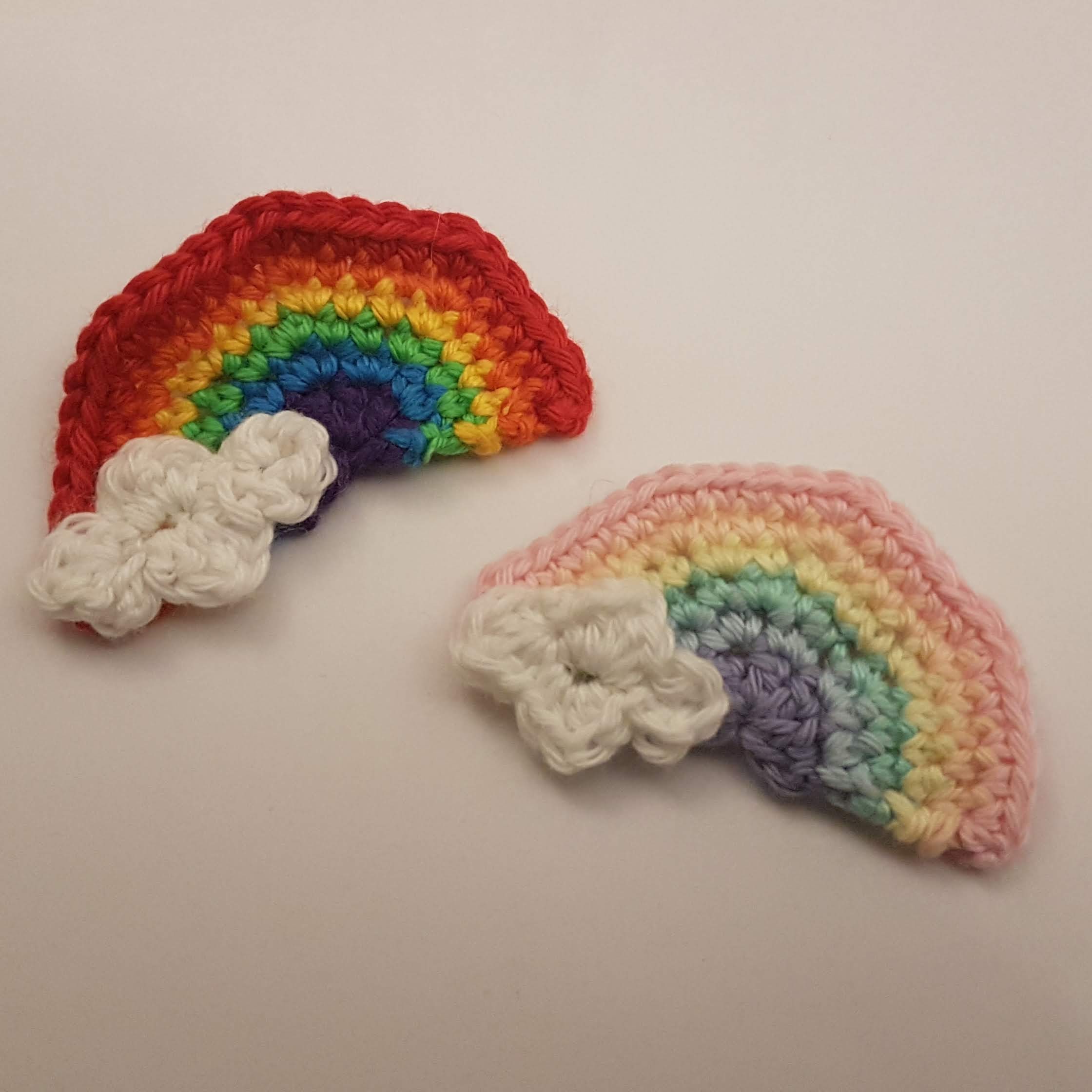
The Hydrangea blanket has a few more stripes, and I have also been working on rainbow jewellery which will hopefully find their way into an experience hamper at some point. The rainbow pattern is by Ever Laughter and you can find it here. She used aran yarn to make her applique, I have used Perle no 8 for the necklace and Scheepjes Cotton 8 for the brooches. I like the pastel one just for a change up! The pile of squares is the Zoom blanket underway in Stylecraft Special DK.

I’ve managed to sew up both the dresses I cut out last weekend, too. Both were pretty quick makes and came together in just a couple of hours each, and both have proper pockets to put things in. You can’t underestimate the value of pockets!

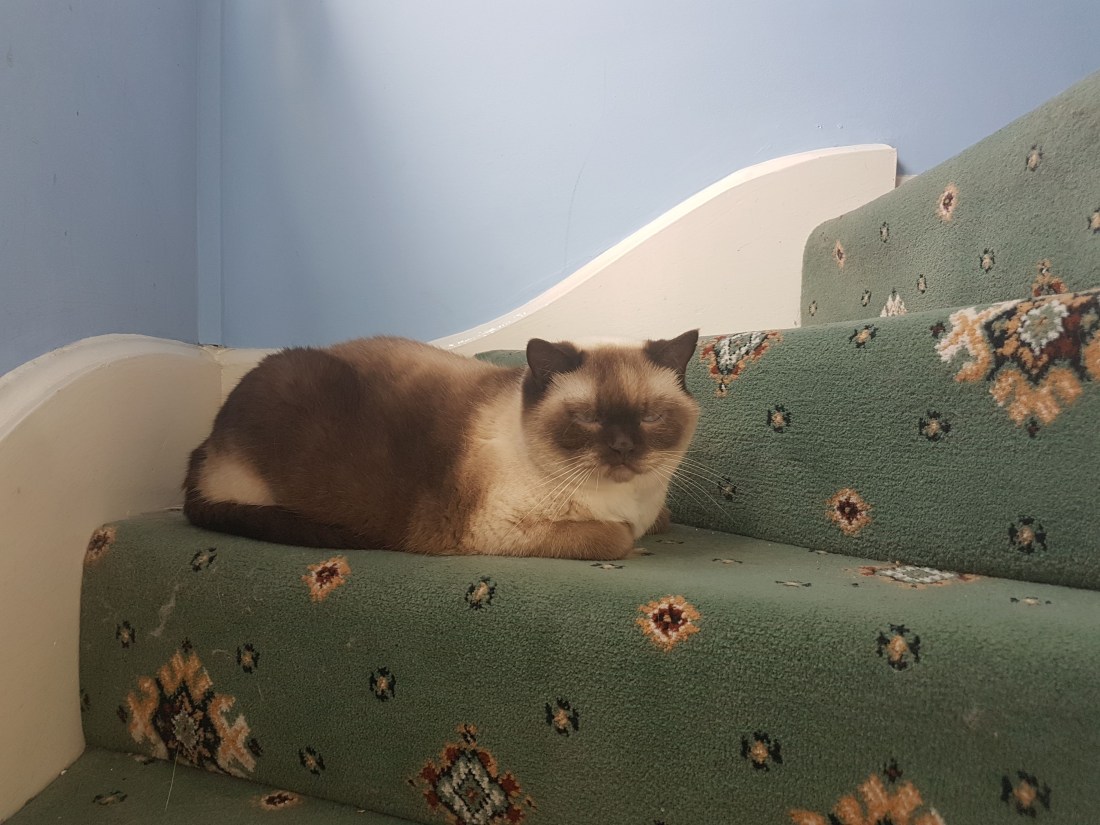
Being at home all week – with Lulu on downstairs cat duty – has reminded me how much that cat loves my beloved. The first picture is when she heard him come through the back door – Thing 3 is currently complaining that she jumped off him as soon as her human came downstairs. She’s not a lap cat like the other two, but will lean on you or cuddle up if you’re sitting down and if my beloved is not in the room. If he is, you haven’t got a look-in….

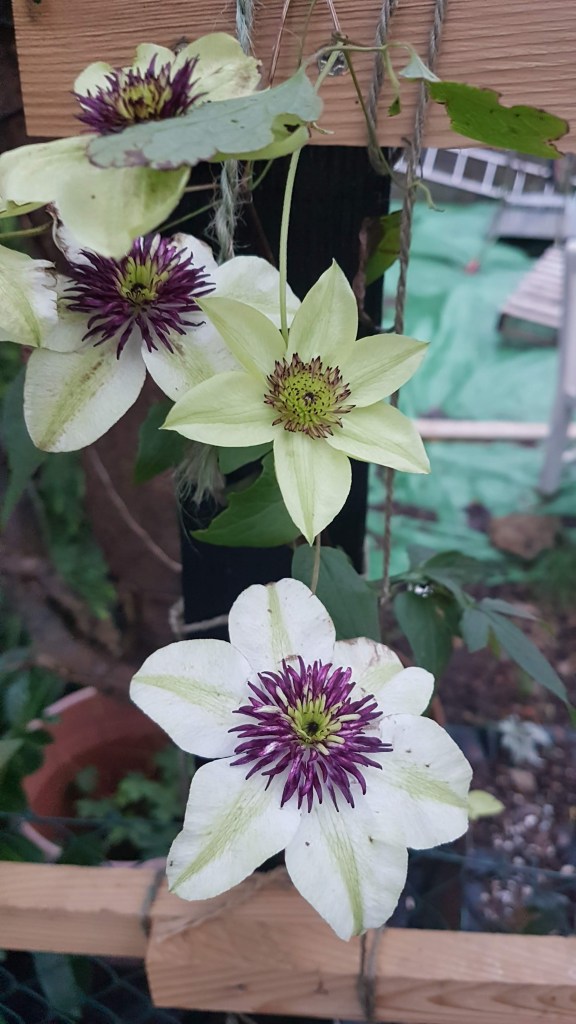
I’ll leave you this week with a picture of a clematis in the garden still bravely struggling on. I love the colours of this one.

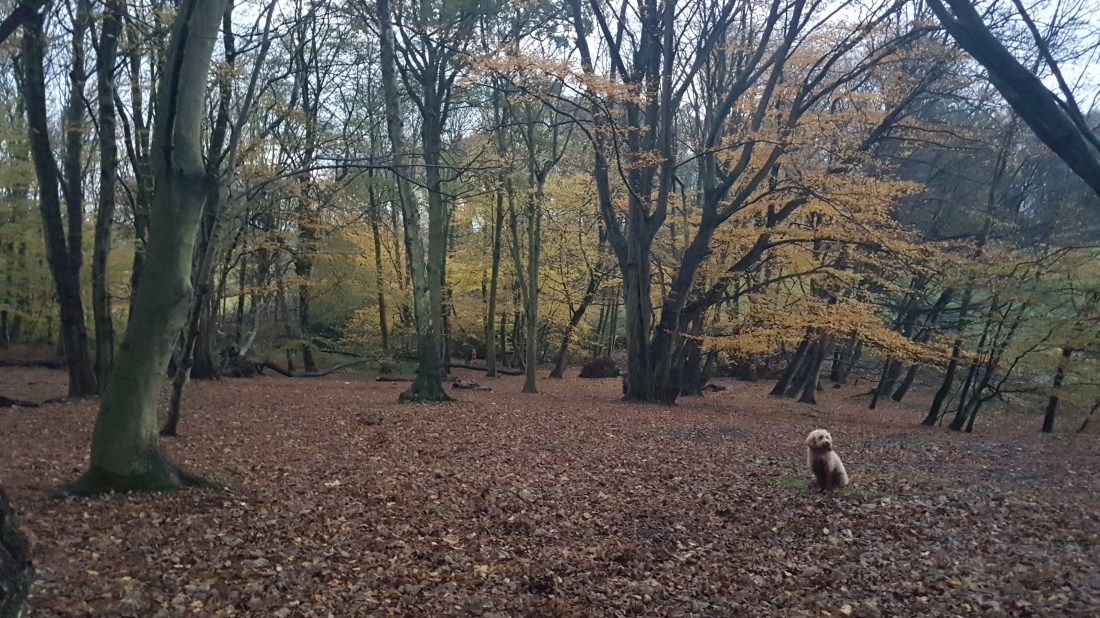
See you at the end of week 36, when we can see how the cake turns out! This week’s cover photo is the woods on Stonards Hill in Epping looking very autumnal.

Kirsty x

What I’ve been reading

The Penguin Killer – Ste Sharp

Enemies at Home/Deadly Election (Flavia Albia) – Lindsey Davis (Audible)
The Law of Innocence (Mickey Haller) – Michael Connelly

Gobbelino London and a Scourge of Pleasantries – Kim M. Watt

Week thirty: in which I am smacked in the head by the inspiration fairy

On Friday I woke up with a fully formed and irresistible urge to turn the iconic Marble Floor at the museum into a cross stitch pattern. It’s an idea I have been playing about with for the three years I have worked there, but neither my design skills nor my patience were really up to it.

So what’s changed? Well, for one thing, working on a project which is all about creative confidence, the iterative design process, and building resilience is clearly rubbing off on me! I felt much more prepared to give it a go than I have done previously.

Secondly, the response to the ‘Storming the Castle’ design I blogged about in week 28 has been so positive that I felt as if something more complicated was doable.

Finally, in the ‘Snarky and Nerdy Cross Stitch’ group files I’d seen a lot of references to an open source design programme called Stitch Fiddle, and when I looked into it it seemed easy to use even for a non-designer like me. For a free-to-use application it has great functionality, and even more if you subscribe. You can use it to create knitting and crochet patterns too, and presumably anything else that requires small squares.

So at 8am on Friday I asked any on-site colleagues to take a few photos of the floor for me – a close-up and a wider angle, and a few people sent me some great images. We work in museums, so slightly odd requests come with the territory.

I started with my trusty grid paper from StitchPoint, trying to turn the uneven blocks you can see in the image into a uniform pattern. The blocks were all made individually by women prisoners from Woking Gaol, and some are more even than others, so this was quite tricky to do. I wanted to create a repeating pattern, rather than an exact replica of the floor itself, and I found it hard to translate the tiles onto my graph paper.

I tried processing the image on the left through another free software application, this time Pic2Pat, so I could see what the blocks would look like on an even grid pattern. This came out like this:

Still not perfect, but much easier to work from! I was able to create a basic circle from this which I then turned into a repeating pattern using StitchFiddle. I haven’t found copy and paste functionality as yet, but for things like this it would be really handy. There is a mirror horizontally or vertically function, but you lose the original and are left with the reflected one only. I did use it later, when I was having problems repeating the fishscale pattern to the left – I flipped it and then carried on working to the right.

Then it got a bit tricky – I could not see where to start the overlay to create the fish scale pattern on the screen, so I went back to basics: I printed the pattern twice, stuck one together as the base layer and then cut circles out of that so I could layer them up with the handy glue stick and the coloured pencil so I could mark where I was up to.

Finally, armed with this, I went back to Stitch Fiddle and created a final digital version which can be found here. I’m going to add lettering to the version I’m going to make, so have been playing around with alphabets on the printed version – I’m not sharing that yet though! I also made a quick version of the Greek Key border. I can see myself using Stitch Fiddle more in the future, as I’d quite like to make more designs with quotes on.

I finished the ‘Storming the Castle’ piece as well, which I am pleased with. I need to iron it, and then decide on finishing – wall hanging or frame? Note the overlocked edges on the fabric too – I’ve never thought of doing that to prevent fraying before but will definitely be doing it every time now!

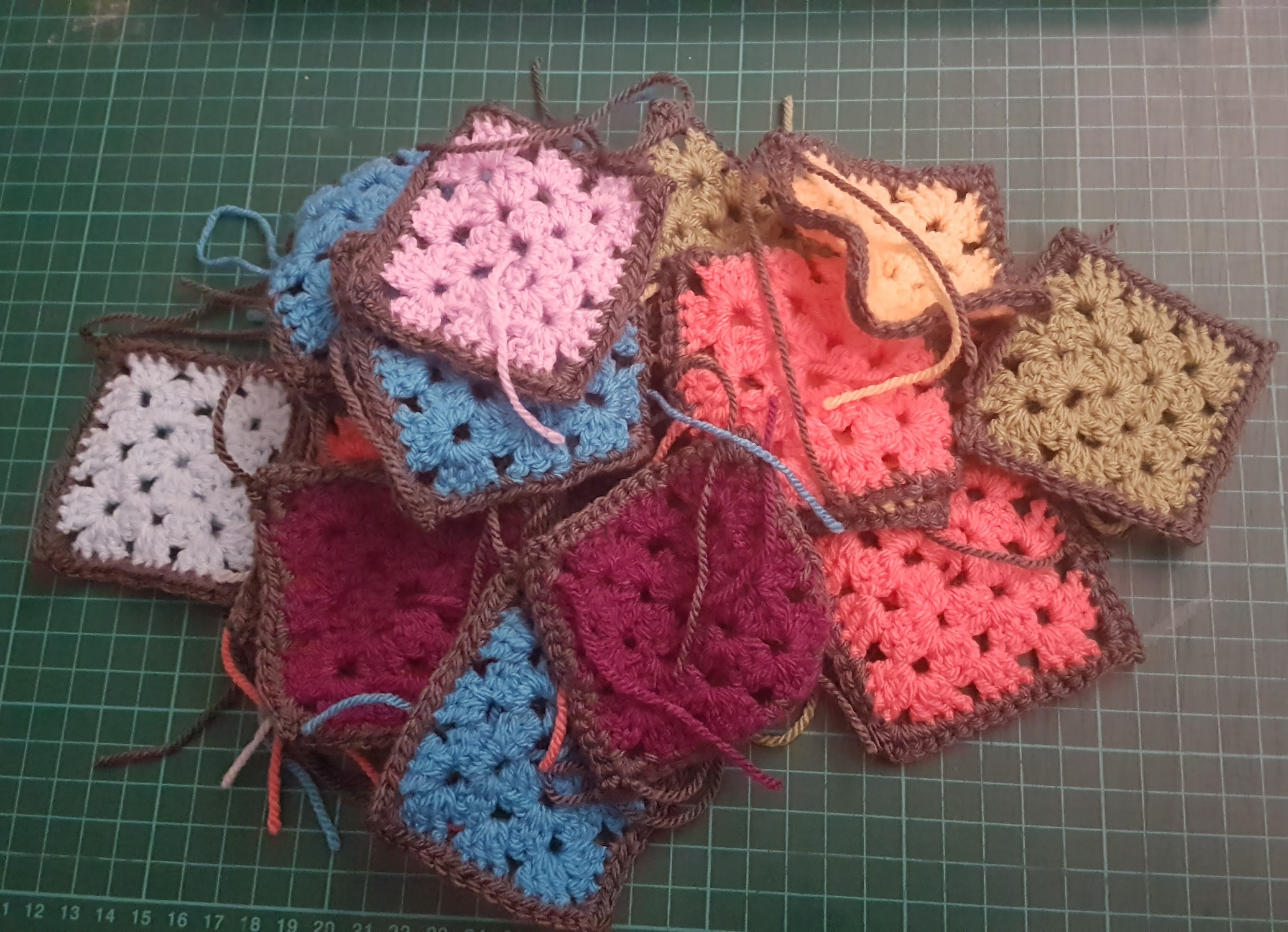
I’ve also been adding to my portable crochet project – the one I do on tubes, in queues and during zoom conferences when I need to focus. If my hands aren’t busy I find things to fidget with and get very distracted, but a granny square in hand keeps my eyes on the screen. I am making small squares this time, using leftover DK yarn from the stash – when it comes to sewing the ends in I will undoubtedly regret it. This will be a blanket, I think: I am going for a patchwork effect.

Won over by a onesie…

This morning was the third week of winter swimming at Redricks – the weather was cloudy but it wasn’t raining, which after this week of school run downpours was pretty impressive! I really look forward now to getting in the lake, despite knowing that it’ll be even colder than it was last week, and I know the ladies I go with feel the same.

I’m still swimming in a wetsuit, though only 3mm, and I have added neoprene socks and gloves to the kit which make a difference. You wouldn’t think they would, since the cold water is inside them, but there we are. The last thing I do before racing for the towels and hot chocolate is strip the wetsuit off and jump back in the water in ‘skins’ for a splash about which is quite exhilarating. You really do earn the hot chocolate. Here we are this morning – I’m a great believer in the icy plunge, but the other three don’t usually do it and claim that I’m mad.

Ladies of the Lake (photo by Isla Falconer)

The swimming kit bag seems to get bigger every week: mine now contains goggles (which I only wear in the sun), swimming hat, towfloat, a towel, the giant robe I made, a fleecy hat, thermal socks, neoprene gloves and socks…and a onesie. I have resisted onesies for years – possibly as every time I went places like Romford or Harlow shopping there would be fully grown adults wearing them in public. I was totally behind various Tesco and Asda stores when they said people in pyjamas would not be allowed in (I was going to add ‘especially if you’ve made the effort to put full make up on’ to this). But then I tried getting leggings and a top on after a cold swim, when none of your fingers work properly, and decided I’d try one. And – OMG – I was converted. I bought a plain navy zip-up one with a fleece-lined hood and a kangaroo pocket, and it was like wearing a hug. It’s become my go-to for post-swimming wear now: robe on over towel, strip off, pants on and onesie and I’m good to go.

There’s no excuse for this though. Sorry.

Full English: Photo by Isla, socks by Primark, sandals by Birkenstock

So that’s been my week. I’m still sorting the learning collection, discovering treasures that have been hidden in cupboards for years. This includes the little-known ‘Strictly Come Dancing’ edition Action Man, whose elastic joints have seized since 1964 into a very balletic pose, and a whole box of mint condition Star Wars figurines by Kenner. This week I’m onto toys (magnetic and mechanical), and hopefully the clothing collection.

And now I’m off to tuck up under a blanket and catch up with Bake Off… See you at the end of week 31!

Kirsty

What I’ve been reading:

Battle Ground (The Dresden Files) – Jim Butcher

Hard Time (Time Police) – Jodi Taylor

See Delphi and Die/Saturnalia (Falco) – Lindsey Davis (Audible)
Podcast: You’re dead to me (BBC Sounds app)