84: don’t go down to the woods today (or the park, the fields or the street)

Back in week 51 (It’s not all men, but it is all women) I wrote one of my more serious posts about the kidnap and murder of Sarah Everard by serving police officer Wayne Couzens, who used his warrant card and handcuffs to make a false arrest under Covid lockdown rules. He was given a whole life tariff as the abuse of his position made this an exceptional case – the first time this sentence has been handed down for a single murder not committed in the course of a terror attack. He was already being investigated for two allegations of indecent exposure in February and some of his colleagues even referred to him as ‘the rapist’.

Sarah’s murder sparked vigils at which women were arrested, waves of light across the country, gatherings and a movement called ‘Reclaim these Streets‘ was founded. Their aim is to use ‘legislation, education and community action to ensure no woman has to be asked to ‘text me when you get home’ ever again’. ‘Educate your sons!’ became a meme and the subject of MumsNet debates, op-ed pieces in the newspapers and so on. In safeguarding training aimed at people working with teenagers incels are being included alongside both Islamic and far-right white radicalisation as things to watch out for.

In just the seven months since Sarah Everard’s murder, Reclaim these Streets have also held vigils for sisters Bibaa Henry and Nicole Smallman who were murdered in Fryent Country Park after celebrating a birthday in June 2020. For Sabina Nessa who left her home in Kidbrooke in September 2021 to go on an evening out and who was found dead in Cator Park the following day. Men have been arrested, charged and imprisoned for these murders. PCSO Julia James was murdered in Kent as she walked her dog, minutes from her home. And these are just the headlines: how many of these women don’t garner the kind of national attention that these four did?

All four were murdered by strangers to them, despite the police telling us that being murdered by a stranger is statistically unlikely. It’s far from unlikely, it turns out: in the year to March 2020, it was strangers that murdered about 43% of women killed, according to this article. Keep reading that article for the sexual harassment figures. One woman is killed every three days in the UK (source).

This week it was half term, and the first thing I had to do was to ban Things 1 and 2 from going over to the park or the Common either alone or with their friends, and told them to stay out of the fields: a man has been hiding in bushes and frightening women, including a serving police woman who didn’t have her warrant card on her. She was not confident about being able to overpower him to make an arrest so she got her mobile out and pretended loudly to be making a call to someone coming to meet her. Another woman spotted the same man while she was out and joined forces with a third to make sure they both got home safely. He was a stranger to all the women. He could have been local, but equally with the inland border facility now on the airfield he could have been from anywhere in the UK or Europe – lorries are arriving 24 hours a day. Thing 1 spotted another man hiding in bushes in the next village along while she was in the park with a friend. That’s an even smaller village than ours.

I think nothing (usually) of walking through the fields on my own in the early mornings. I train for walking marathons along the public footpaths of Essex and often don’t see another soul, but I make sure I’m aware of any people that do appear and where they are in relation to me, ‘just in case’. I have made the decision this week not to walk alone, which makes me angry. Why should I – or any woman – have to adjust her behaviour and life because someone else has a problem? After Sabina Nessa was killed, a community group handed out ‘advice’ from the Met website (since removed) which again puts the onus on women to avoid getting attacked rather than on the attackers.

How dare someone take away my freedom and that of other women in the village, and prevent our kids from exercising what little freedom they have to play? What right does that – or any – man have to stalk and lurk and strike fear into women wanting only to walk through their local countryside? Educating our sons – and our daughters – will affect the present and the future but what do we do about the people out there already? And how many times do we have to have this conversation?

Feel free to share, to add to the conversation, to get angry. If enough of us rage then something might actually be done. The daughter of my D&D friends was wearing a t-shirt on Thursday night that reminded me how we ought to be, a Ruth Bader Ginsburg quote that describes perfectly how I want my girls (and all girls) to be, and how they should be treated.

What I’ve been reading:

Widdershins/Dreams Underfoot/Moonlight and Vines – Charles de Lint

Moominsummer Madness– Tove Jansson (Audible)

Week fifty one: not all men, but it is all women

The title this week was suggested by London sister. We – like women I know across the world – have been saddened, angered, outraged by the murder of Sarah Everard, a 33 year old marketing executive who was kidnapped from the streets of South London last week. Her body was found this week in woodlands in Kent, and a serving Met officer has been arrested and charged with kidnap and murder.

Sarah Everard was walking home from a friend’s house at 9pm, a journey of 2.5 miles which should have taken her 50 minutes. She talked on the phone to her boyfriend for 15 minutes of those. She was not dressed provocatively – anything but, in fact. She walked well lit streets and was kidnapped from one of those streets by a man who worked for the people whose job it is to keep those streets safe. He may have had a female accomplice.

Twitter has had its usual share of ‘but why didn’t her boyfriend walk her home?’ ‘Why was she visiting a friend anyway, because of Covid?’ ‘Why didn’t she get a cab?’ ‘Why was she walking at night?’. Someone went on the news to reassure women that you’re very unlikely to get murdered by a stranger, while at the same time telling women to stay off the streets in that area. There’s been the usual ‘but it’s not all men’ backlash from – well – men.

No, men, you are absolutely right – it’s not all men. But – as many articles, tweets, etc have said this week – how do we tell which ones aren’t the threats? Because the scariest monsters are the ones that look just like us. Because we can’t tell which ones we need to be scared of, we carry our keys in our hands. We don’t wear headphones when we walk. We wear flat shoes in case we need to run. We walk well-lit streets even though its the longer way home and we’re tired. We check behind us in shop windows. We make sure we know where everybody else is in relation to us. And that’s the way we live. To be told we don’t need to be worried about being killed by strangers is – oddly – not terribly reassuring.

I have a friend who used to use the 26 bus, who was approached by a stranger on the 100 yard walk between the bus stop and her front door. He hailed her as a friend, loudly, because he had seen someone else get off that bus when she did and start to follow her, which he explained as he got close to her. He walked her home and left her at the doorstep: one of the good ones, unlike the one who was following her from the bus through deserted Hackney streets.

London sister runs, and she has been accosted while running, and followed by men in vans. That same sister and her friends were assaulted by one of their history teachers at school, who told them that if they told anyone their big brothers and sisters would fail their GCSEs as he was marking their coursework. The female deputy head, when I convinced my sister to tell, who suggested that perhaps these 12 and 13 year olds had ‘done something to encourage him’. This was a loathsome little man who stank of cigarette smoke and felt it was OK to pin small girls in the corner of a classroom: they had done nothing to encourage him. We chose wrong that day: we thought a female would be a sympathetic ear but we were wrong. That’s when we brought the parents in.

Irish sister drives, and she has been followed home through country lanes in Northern Ireland, by men in cars who were trying to get her to pull over. She used to use a train station one stop further from home when she was in college because it meant walking back through populated streets rather than quiet ones.

My first experience of violence towards women by men was from a classmate, who had attempted to prevent me walking off when I didn’t want to be groped. He left scars on my wrists from where he dug his nails in. I was 14, plain and not terribly confident but I was damn sure that that wasn’t what I wanted. He thought it was OK to hurt me for rejecting him.

At 17 I was walking down the main street in Monmouth in broad daylight when I sidestepped to avoid a man who sidestepped with me and grabbed my breasts. I was so shaken I didn’t do anything till I got home and told my mother, who phoned the police who came and took a statement.

At 20 I was doing temp catering jobs for Adecco, and they sent us to waitress at a formal dinner at a boys’ school, for masons and their sons. We were told to wear black skirts above the knee, white blouses and heels. One ‘respectable’ gentleman casually put his hand up my skirt as I served the soup. The male catering manager – the only man on the staff that night other than the cooks – was not sympathetic.

At 25 I was followed home in broad daylight from Brick Lane tube station to Hackney Road. A loitering man whom I had clocked watching me as I left the station doubled back and started to follow me. I phoned my boyfriend of the time and he met me at a flat out run, at which point the man following me turned and legged it. That same year my flatmate and I were coming out of Bethnal Green tube after a U2 concert and a drunk ran up to her, grabbed her breasts and shouted ‘wahey!’. She tripped him up on reflex, and his head hit the ground: she was worried that she would get into trouble if he was hurt.

At 30 I was rubbed against by a man on a tube – I turned around on that occasion and loudly asked the man to introduce himself as he clearly wished to get to know me better. He got off at the next stop. At 30 I had had enough, frankly. When one of the security team at work made inappropriate remarks I complained to HR.

And none of the above includes the daily microaggressions: the ‘smile, love, it might never happen’ from random men in the streets. Shopkeepers whose hands linger too long when they are giving you change. I’ve been called a whore, a bitch, a cow, and worse, for refusing men’s attentions. I worked behind bars for years, which apparently in some men’s minds means you are as available to the punters as a pint of Fosters. The wolf whistles from building sites which turn quickly to abuse if you don’t respond. The patting of a bottom on the way past. The opening of conversations on public transport and the abuse if you make it clear that you don’t want to talk to them.

I remember Marie Wilkes, who left her two children in the car on the M50, not far from where I lived in south Wales, while she went to get help for her broken down car. I remember Stephanie Slater, who went to show someone a house and was never seen again. There are so many more whose names appear on Crimewatch as unsolved cases: women killed by these ‘unlikely’ strangers. So forgive us if we aren’t reassured.

There is a live petition at the moment to make public sexual harassment illegal. There is an open consultation and call for evidence on violence against women and girls from the government which was reopened on 6 March. Please sign, please contribute. It’s 2021 and we should not be having the same conversations about reclaiming the night and reclaiming the streets. 80% of rapes and sexual assaults go unreported: because victims don’t want to relive the experience, because they believe police won’t believe them, because they have left it too long, because, because, because. That means 80% of sexual predators are being allowed to carry on with it, and women continue to live in constant awareness.

(This is not to say that men aren’t also victims of rape, of domestic abuse and violence, because I know they are. Statistically, however, they are less likely to be the victims of constant microaggressions and to have to actively change they way they live and behave on a daily basis as a result of this).

So be an ally, if you really want to help. Call out your friends when they make comments about women, and don’t dismiss the fears of women around you. Go out of your way to make women feel safer – hang back, cross the road, whatever it takes. Watch this. Teach your sons what to do and what not to do. Teach them that the word ‘banter’ is often bullying in disguise. Teach them the what the word ‘no’ means and to respect it.

Teach your daughters the word NO and to shout it whenever they feel uncomfortable, that their bodies are their own and that no one – no one – has the right to touch them, even if they are ‘just playing’. Teach them that they don’t have to submit to being kissed by relatives if they don’t want to be. Teach them that they have power over their own bodies and that no one has the right to take that away from them.

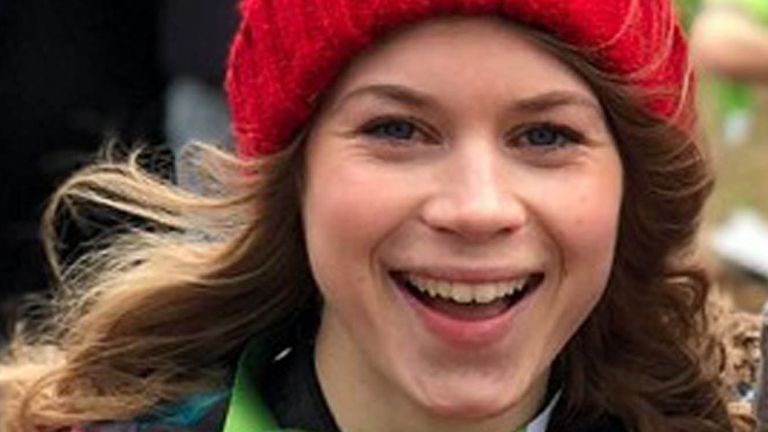
Sarah Everard. Photo from Sky news.

Cover image by Tanith Galer. Candle in the window as part of the vigil of light for Sarah Everard, 13/3/21