155: back! Back!! BACK!!!!

This week we were finally able to share the opening date for Young V&A – it’s been a long time coming, and there’s still lots to do before we open the doors, but as of 1 July we will be back! Back!! BACK!!! as Smash Hits magazine used to say (a long time ago, obviously). All the things I’ve rambled on about on here – blue blocks, shoes, creativity etc – will all start to make sense.

Unveiling the news this week

It’s all very exciting but also quite daunting: I know that the sessions we have planned for the new school programme are interesting, and I know that the galleries are dynamic and interesting and aimed carefully at the different age groups (but still with content for everybody), but WHAT IF NO ONE COMES? We all know that schools are suffering at the moment from teacher strikes (which I fully support), from delivering a pay rise and associated pension/NI contributions unfunded by a spiteful government, from lack of supply teachers, LSAs and other post-pandemic staffing issues. School trips – however much they benefit the students and support the curriculum – are staff-heavy, planning-heavy, resource-heavy. Gone are the days of primary schools with ‘enrichment co-ordinators’ who would take the trip planning load off the teachers.

This is without even considering the ethics of asking parents to fork out cash – for travel, for a facilitated session, for theatre tickets, for entry to charging sites, for exhibition tickets even at a discounted rate – during a cost-of-living crisis. We are free to enter but have to charge for sessions: during closure we’ve been able to offer our sessions free, and this has helped us engage thousands of children across Tower Hamlets, but once we reopen that has to change. My children haven’t gone on theatre trips at secondary school as the cost of that trip is equal to a month’s bus fare for them or two weeks’ school dinners. I hate saying no, but the reality is that for many people culture comes second to food. I had a conversation with a North London secondary school teacher last term who was going back to her headteacher to tell them that she couldn’t justify running food technology (Home Economics, for those of us that remember Smash Hits) this year if it meant asking families to provide the ingredients.

Historically, too, the majority of school trips have been linked to history, geography or English – museums and theatres, heritage sites etc. Design Technology, unless at GCSE isn’t high on the priority list and this is particularly the case for Key Stage 3. I think of this as the Cinderella Key Stage: past SATs and before GCSEs, and no one knows quite what to do with them, when really this should be the point where schools are working hard to spark their interest in creative subjects before they have to make their GCSE options. I do feel that unless their school (not just individual DT teachers, who are without exception wonderful, passionate people) recognises the benefits of DT and other creative subjects in developing the skills children need to make it in the world today (problem-solving, collaboration, communication and so on) they are being short-changed. However, unless there’s a sea change in the government, causing them to create a culture of learning where students are helped to learn skills they need in 21st century life rather than to pass exams, I can’t see this happening. I’m very lucky to have been piloting my KS3 sessions in just such a school but research into the way DT, art and so on are delivered across my key boroughs means they are in a minority.

In previous roles my way around this was to develop cross-curricular sessions: history and maths, history and science, history and pretty much anything we could cram in, especially for primary schools where cross-curricularity is a selling point. This doesn’t work for secondary schools except in ‘enrichment weeks’ and I haven’t seen one of those for a while. School budgets seem to be focused on buying in enrichment or PSHE activities, like the ‘drugs bus‘ which Thing 2 will be visiting this week and which caused much bemusement/hilarity in the office this week. ‘Maddie’s Crack Shack’, after all, sounds more like a CBeebies series than a hard-hitting educational opportunity.

TL;DR: Please, schools, give KS3 a chance. And come and visit me.

Things not keeping me awake at night:

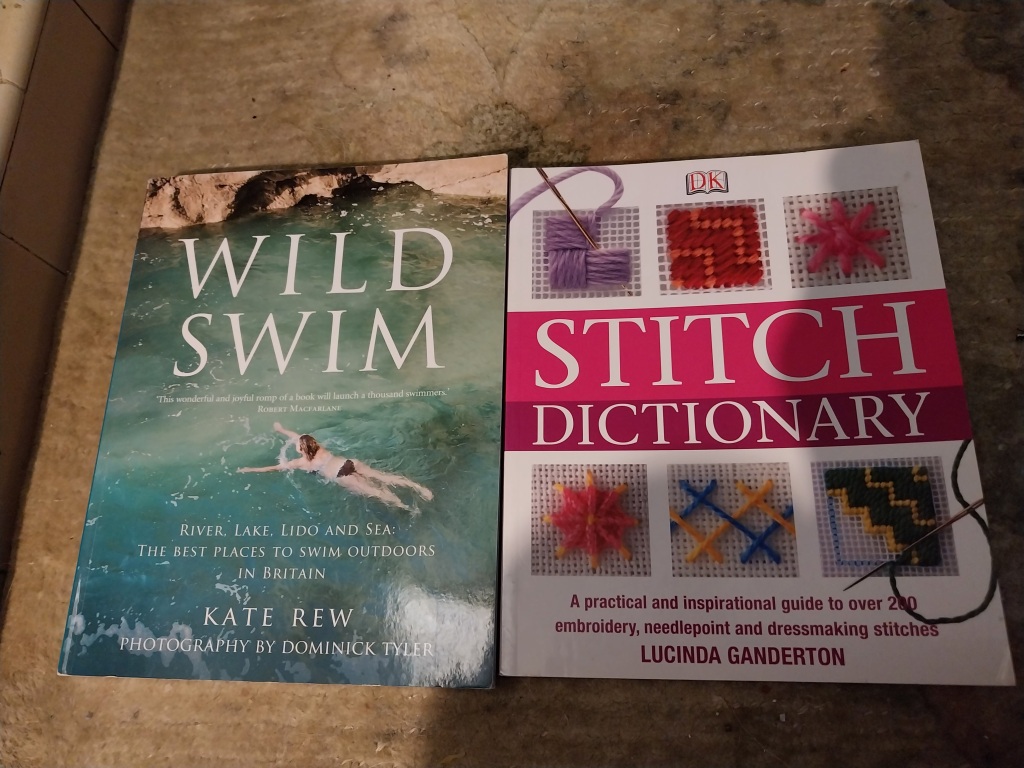
  • charity shop book finds
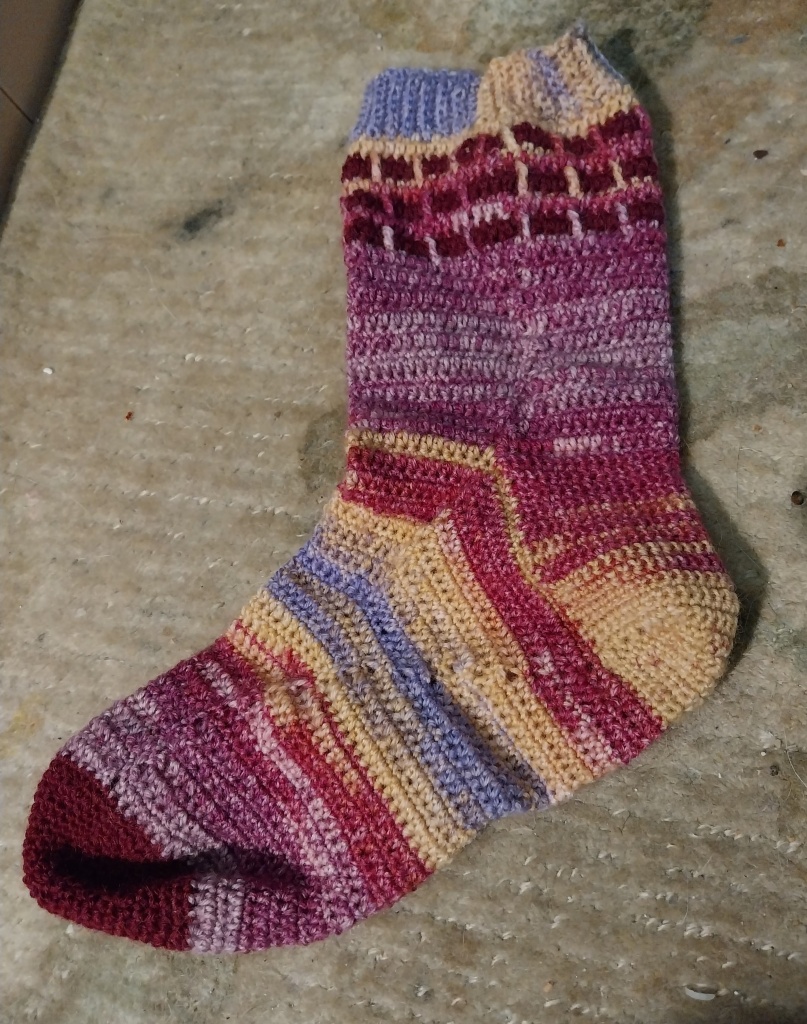
  • finishing one of my Calecentine Socks on the tube
  • swim with Rachel for her birthday yesterday morning
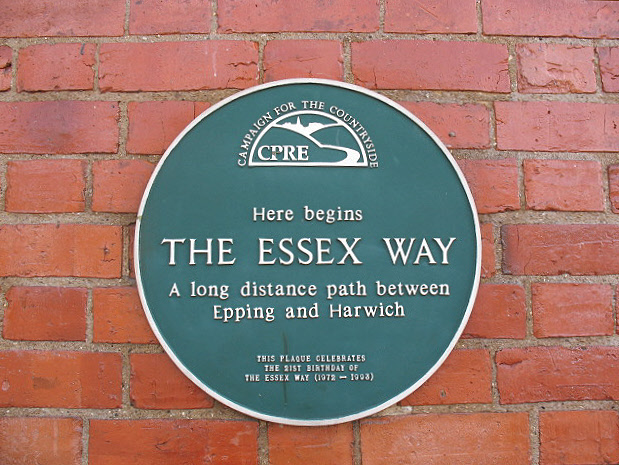
  • 20k training walk this morning – a 10k that got out of hand along the Essex Way from North Weald to Ongar and a bit…
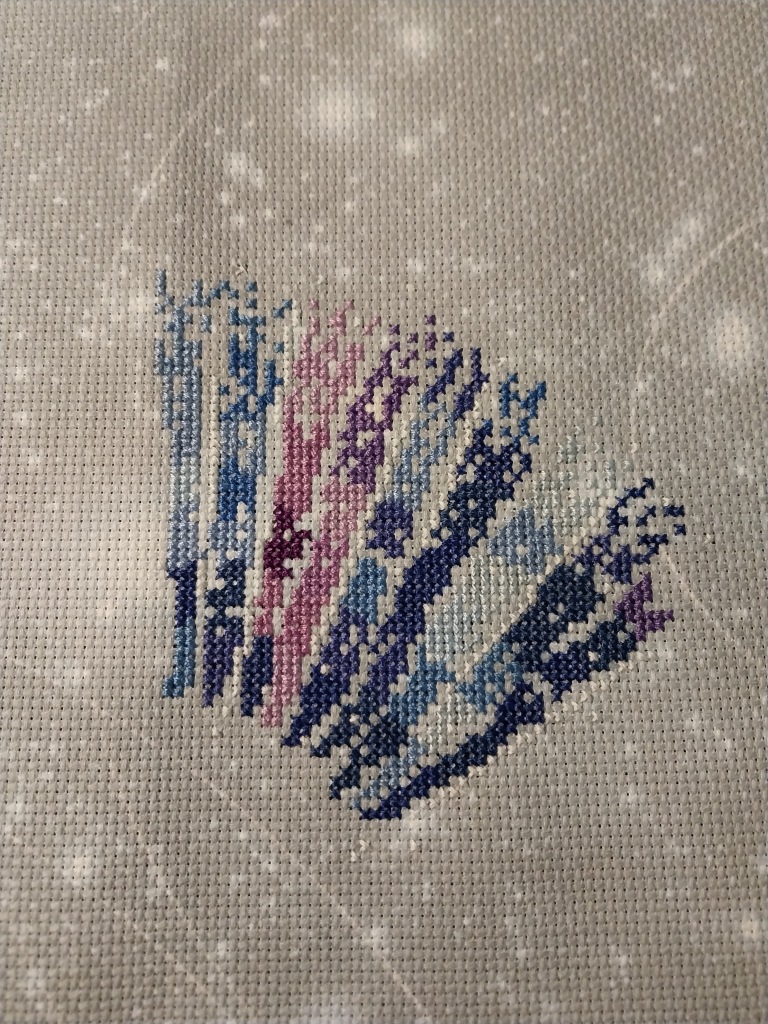
  • Up to date on the Temperature Supernova
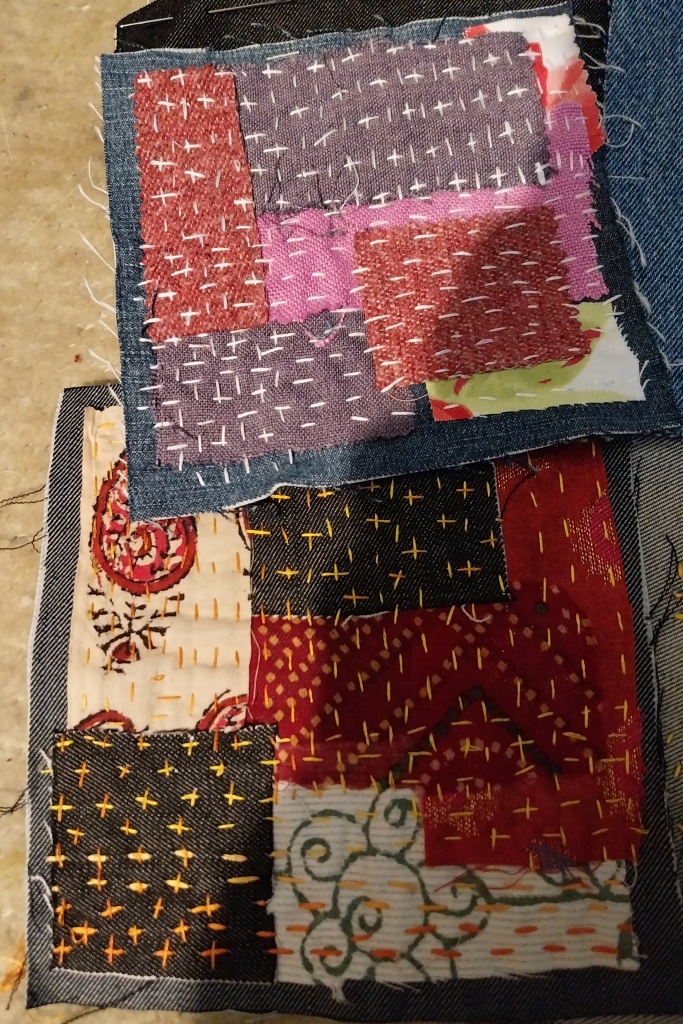
  • Finishing my boro patches from the Restoration London workshops
  • This afternoon’s nap, as soon as I have hit publish on this….
See you next week!

Kirsty x

What I’ve been reading:

Snuff/Raising Steam/Making Money – Terry Pratchett (Audible)

Turn Coat/Changes – Jim Butcher

78: speaking as a ‘nice to have’…

Back in 1999, when I was still a Tower Hamlets primary school teacher, I taught a year 3 class. It was a typical class, with the full range of abilities from ridiculously bright to identified levels of SEND. It being Tower Hamlets, the intake was both socially and culturally very diverse, with the usual levels of kids on free school meals, in social housing, etc. This was in the glory days of ‘education, education, education’, as Tony Blair would have it: I didn’t agree with a lot of his policies but that one I could get right behind.

One child in my class was B, a very sweet boy who these days would probably have been identified as having ADD. I tell a lot of trainee teachers about B when I am talking about the importance of museum visits, and the need to offer children a range of learning activities to meet different styles of learning. His cartoon equivalent would be The Simpsons’ Ralph Wiggum: I was never sure how much of what happened in the classroom actually went in and he was a by-word for vague in the staffroom.

Like most year 3 classes, we covered Invaders and Settlers – Romans, Anglo-Saxons and Vikings, and during the Romans topic I organised a trip to the Museum of London for an object handling session. These school trips are so important: yes, they are ‘nice to haves’ but they are also the experiences which build cultural capital for children, and what I like to call London capital. London, especially diverse and poor areas, is not a city but a connected group of small villages. People tend to stay hyperlocal, and museums are often not on a family’s agenda: a day out costs money, even when museums are free, and there is often a feeling that a museum is ‘not for them’ (that’s another rant for another day). School visits help children experience the tube, the museum, social norms and more – it’s never just about the workshop. This is particularly important with families where the children have English as an additional language, and the parents may not have any English at all.

Anyway, back to B and the handling workshop. The facilitator held up an object – a wax tablet and stylus, in fact – and asked the children if they knew what it was. My class looked at him as if they’d never even heard of Romans…. except B, who put his hand up. I braced myself for a Wiggum-style non sequitur and out of his mouth came an explanation of what the object was, how it was used and re-used, and the name of the writing implement. My jaw dropped. 29 children’s jaws dropped. And he flew for the rest of the session. He knew what things were, he was confident in sharing his knowledge, and I went away with an entirely new view of one small child. I’m not saying that the effect lasted for ever – but we had seen hidden depths and I made sure that object-based learning made more frequent appearances in the classroom.

These visits and other experiences are ‘nice to haves’, yes, but they also provide key learning experiences for children who are not auditory or visual learners. It would be nice to think that teachers could just talk at children for 13 years and they would leave school knowing all the things they need to know, but for many children that isn’t the case. They need these ‘nice to haves’ to embed their learning and to help them connect understanding and knowledge. There have been so many occasions since I left the classroom and became a museum educator where I have seen the same thing happen to other teachers: a floodgate opens in a child’s mind when the connection is made, and both teacher and learner go away with a new understanding.

This week, for example, a child with autism focused for longer than he’s ever focused before on one thing: building with the blue blocks. Over three days this week we saw every class in a primary school, working on coding, creativity and collaboration and giving children a chance for some physical play, some kinaesthetic learning. The headteacher came to see us on our last day and said that so many parents had come to her and said their children hadn’t stopped talking about their session when usually they answer ‘dunno’ or ‘can’t remember’ to the ‘what did you do today?’ question. Teachers had also raved, and would we come to their other school as well please. These sessions were a ‘nice to have’ too, as are those days when companies like Time Steps or History off the Page come into school and your kids spend the day immersed in history and come home with peg dolls or Stone Age bread.

You may well wonder what’s brought this on. Read on…

This week, Google offered up this article for my reading pleasure. I’m quite sure that inciting me to fury probably wasn’t its intention, but that was the result. The article was about how schools would tackle the issue of ‘catch up’ following last year’s closures. It talked about schools focusing on the poorest pupils, ensuring they had food (gasp!) and ‘going out visiting’ (ditto!). Apparently this meant that they weren’t providing an education offer for all children. It was acknowledged that private schools had three times as much money than state, which was nice to know if not really much of a revelation.

Who knew that children might need to eat? Who knew that their families might need to eat? Who might have suspected that the poorest families, who rely on school dinners to ensure that their kids are guaranteed a hot meal every day, might need pastoral support – especially when dealing with a government who were prepared not to feed these kids in the holidays? When their parents, if they were working at all, were furloughed on 80% of a minimum wage that wasn’t enough to live on anyway? She didn’t mention digital poverty, which meant many of these children were trying to work on their parents’ phones, or the problems with getting laptops to these children, or unreliable/non-existent broadband. I have sung the praises of Marcus Rashford before – although I haven’t mentioned Maro Itoje who campaigned for children to have access to laptops and the internet during Covid. (Gavin Williamson, the mercifully-now-ex Education Secretary, managed to confuse the two earlier this month.)

Selfishly, though – speaking as a career ‘nice to have’ – that wasn’t even the paragraph that made me most angry. It made me pretty angry, because – working in Tower Hamlets – I believe that schools made the right decision and the wellbeing of their pupils absolutely should have been their priority, especially at the beginning of lockdown. None of us had a crystal ball and could not have known that we’d still be doing lockdown learning a year later.

No, this was the one that really got me: “‘Nice to have’ things could be cut out for worst-hit pupils” to ensure that pupils are ‘catching up’.

Apparently, most catch-up would take place in pupils’ “main classrooms with their normal teachers”. They referred to a “sort of everyday magic that teachers do of really motivating children to want to learn and introducing them to the whole curriculum, taking them through in a well structured way with the minimal wastage of time…There are experiences, ‘nice to have’ things that are often built into curricular, and I suspect a lot of those will get cut out for the children who have missed the most.”

The comments follow guidance which warned that “time is not infinite and so, alongside identifying what content from missed topics should be prioritised, careful consideration must also be given to choices of teaching activity”. “Do the pupils who spend a lesson on the Egyptians wrapping their friend in toilet roll remember the details of Egyptian religious beliefs, or do they just remember the fun activity,” the guidance said.

Well, speaking from experience, I am pretty sure they remember both….because the practical activity embeds the learning into their brains. Learning is supposed to be fun. The teachers you remember decades later (for good reasons) are the ones who made lessons memorable, and not the ones who treated you as vessels to be filled with knowledge. I think if we take away the ‘nice to haves’ we run the risk of not a lost generation of learners but a disengaged generation of non-learners. There is no one size fits all, which teachers have known for years.

Speaking as a kinaesthetic learner…

I like to keep my hands busy, as you know – and apparently so does the person who said all the things above. She knits through meetings as it helps her focus. I do wonder sometimes what goes on in people’s heads.

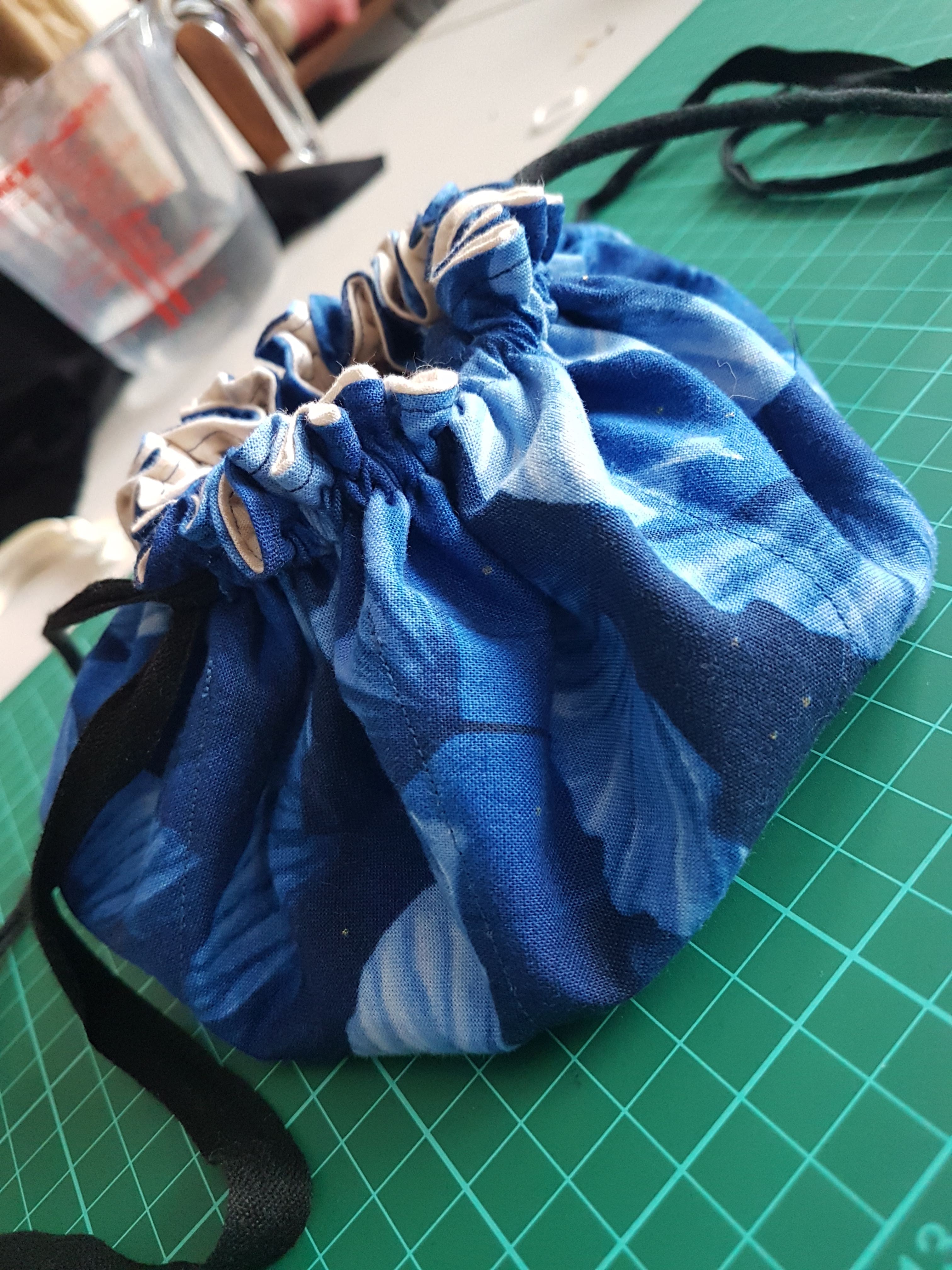
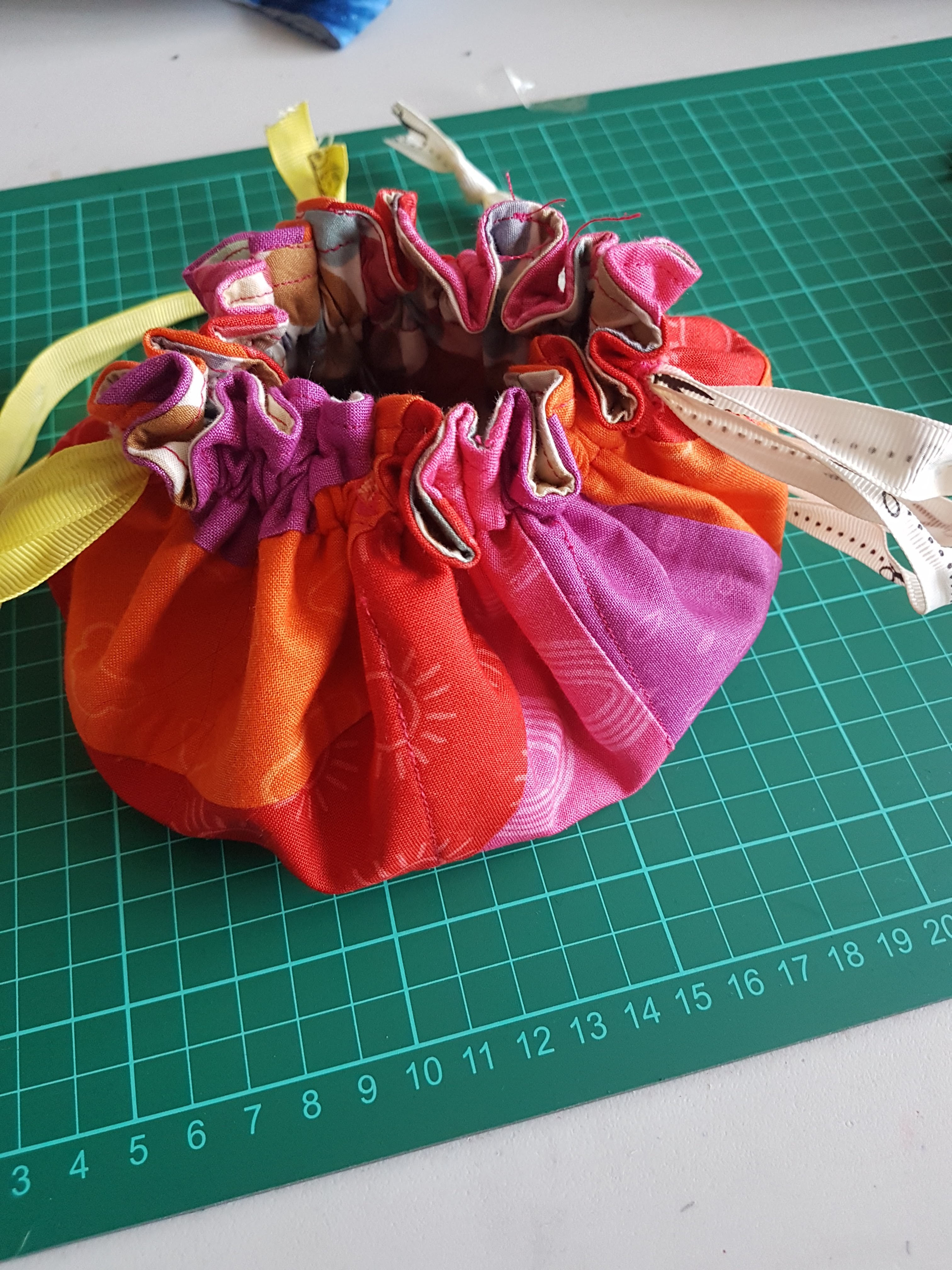
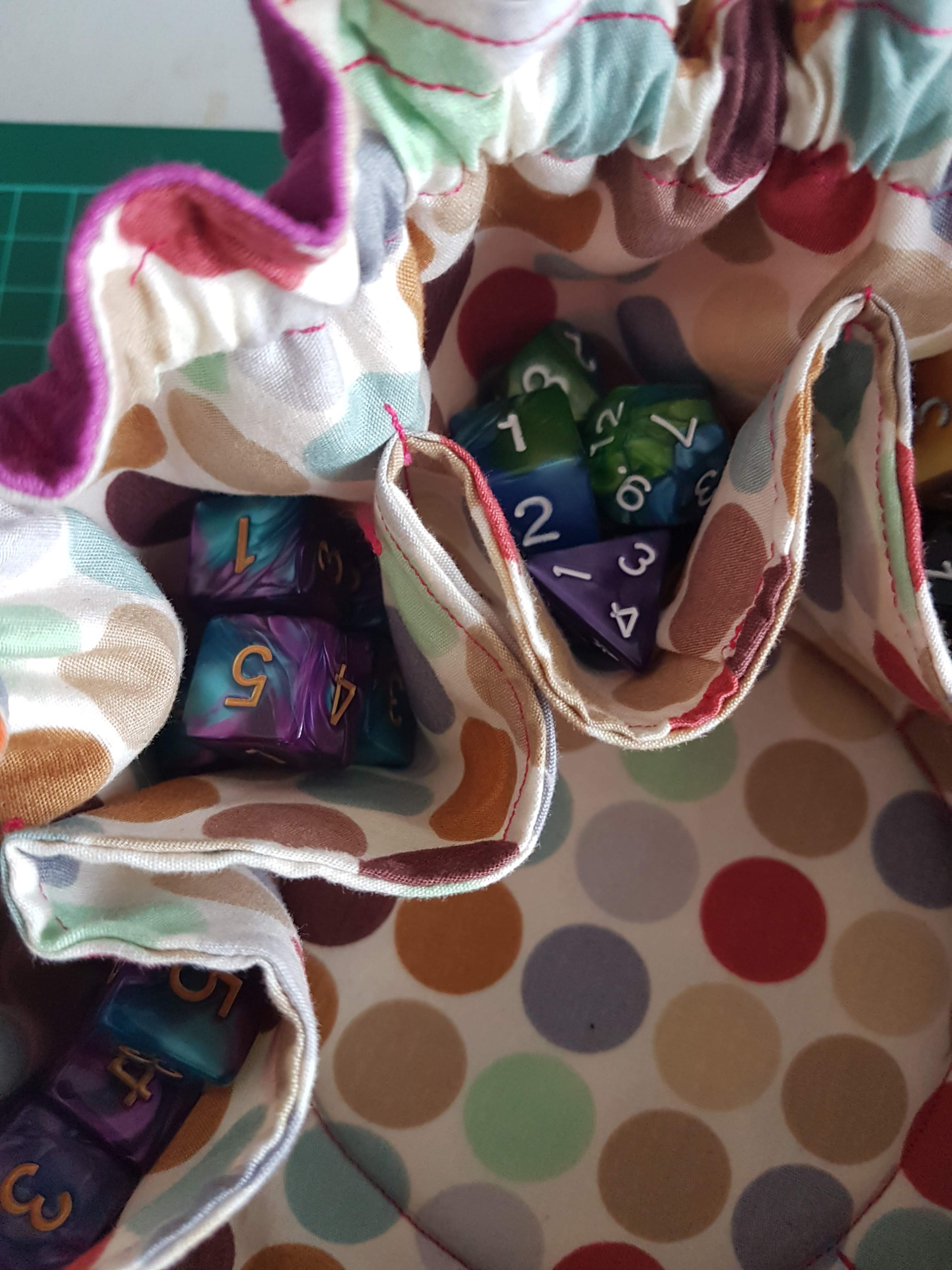
Anyway…as well as finishing the socks I have been working on for ages, I started a dragon scale dice bag (and then started it again when I realised I’d done it upside down) I also made these pouches which can be used for jewellery, shiny rocks, dice, sewing kits and more. They have little compartments and again were made of fabric leftovers.

The blue one is from a tutorial by Wandering Hare on Etsy and the patchwork one is from a free tutorial by Serendipity Studios, found here. Both very similar, but the second one has a padded bottom which will keep your preciouses safe from knocks!

That’s it from me then – see you next week! There’s a bacon sandwich with my name on it….

Kirsty x

What I’ve been reading

Unseen Academicals/Going Postal/Making Money – Terry Pratchett

Thief of Time/Wyrd Sisters – Terry Pratchett (Audible)