By day, I'm the Head of Learning and Participation at a small illustration charity, and the happiest commuter on the Central Line with crochet hook and Audible subscription.
After hours, mother of three kids, staff to three cats, slave to the smoke alarm. Hoarder of yarn and fabric, maker of stuff, obsessive reader. Walker with ambitions.
Usually this weekend, along with one of my crafty buddies, I would be heading to the Marriott Hotel in Waltham Abbey to visit the Waltham Abbey Wool Show. This is one of my favourite events of the year: it’s small but not too small, and there’s an excellent range of indie dyers on hand (like Gamercrafting, TravelKnitter and Rosie’s Moments and lots of others). The huge shows are great, but always too crowded and as they’re in places like Excel, Ally Pally and Olympia the catering concessions are overpriced and unimaginative. There’s always a good range of indies there, but they are often overwhelmed by the big stands. I am more likely to buy fabric at the big shows, but WAWS is all about the yarn. This year the show has gone on-line, but you don’t get the sensory experience so I will probably give it a miss.
We have a routine, my friend and I: we have a first wander round, to see what’s there and mentally pinpoint what we want to go back to, then on our second pass (when it’s often a bit quieter) we go back to stroke and squish the yarns, admire the beautiful things that other people have made, and treat ourselves to the things we really want. Heather loves the Dorset button stall and I – as I have mentioned before – am an absolute sucker for a sock yarn. I always come away with either a gradient set or a hand dyed skein with a bit of sparkle.
These are never destined for socks, however: I live in boots in the winter, who would see them? I’m more likely to make a scarf or a shawl. Another friend bought me a lovely book of shawl patterns a couple of years ago – coincidentally by Diana, who is one of the organisers of WAWS – and that’s been a source of several pretty scarves showing off these lovely yarns. This windowpane scarf from Ravelry has also been a favourite.
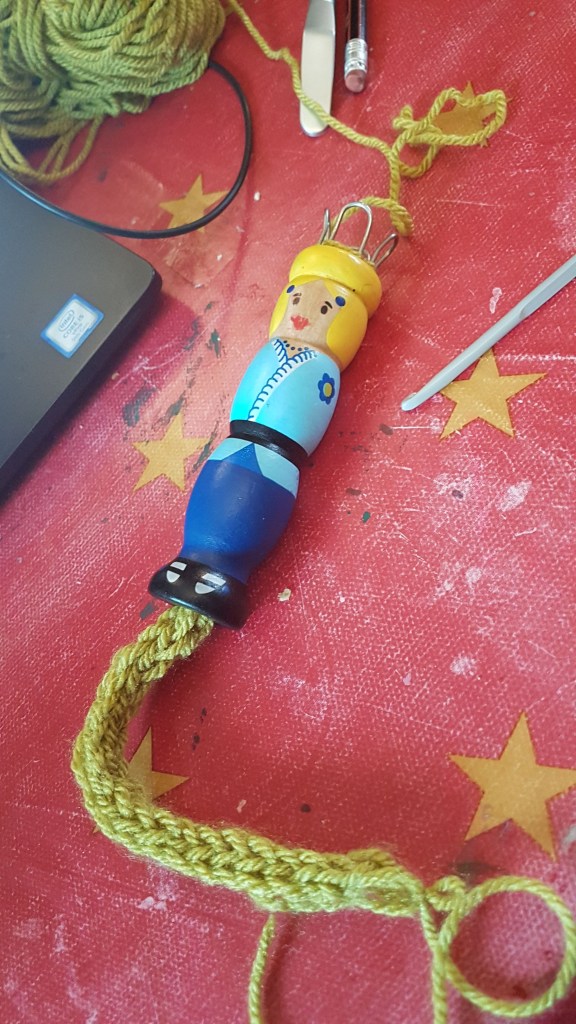
This week I have a new plan. I spent much of Monday writing and photographing a blog post for the V&A’s ‘Let’s Make Wednesdays’ series, which is a set of creative activities for children and families. My topic was ‘How it’s made’ as this will be a feature of the new Design gallery in the transformed Museum of Childhood. The idea is that we provide an activity that can be done with materials you can find at home. I tossed around the idea of making plarn (yarn from plastic bags) or upcycling t-shirts to make yarn and then to do some weaving, but then remembered that one of the objects I’d found while sorting the learning collection was a Knitting Nancy (french knitting doll, knitting noddy, spool knitting – so many names!) and this ended up being my starting point.
Knitting Nancy doll
I knew we had a doll somewhere that I’d bought for the kids one Christmas, so I dug that out and then worked out how to make one using a toilet roll and lolly sticks. The Things very kindly helped me out by eating lots of ice lollies, bless them. I’m not going to go too far into into the detail, and I’ll link to the blog when it’s published, but the upshot was that I had a happy afternoon re-learning how to do French knitting. I don’t think I’d tried it since I was in primary school! I really enjoyed it, and the rhythm of the process was easy to do while I was in ‘receive mode’ during a very long online presentation.
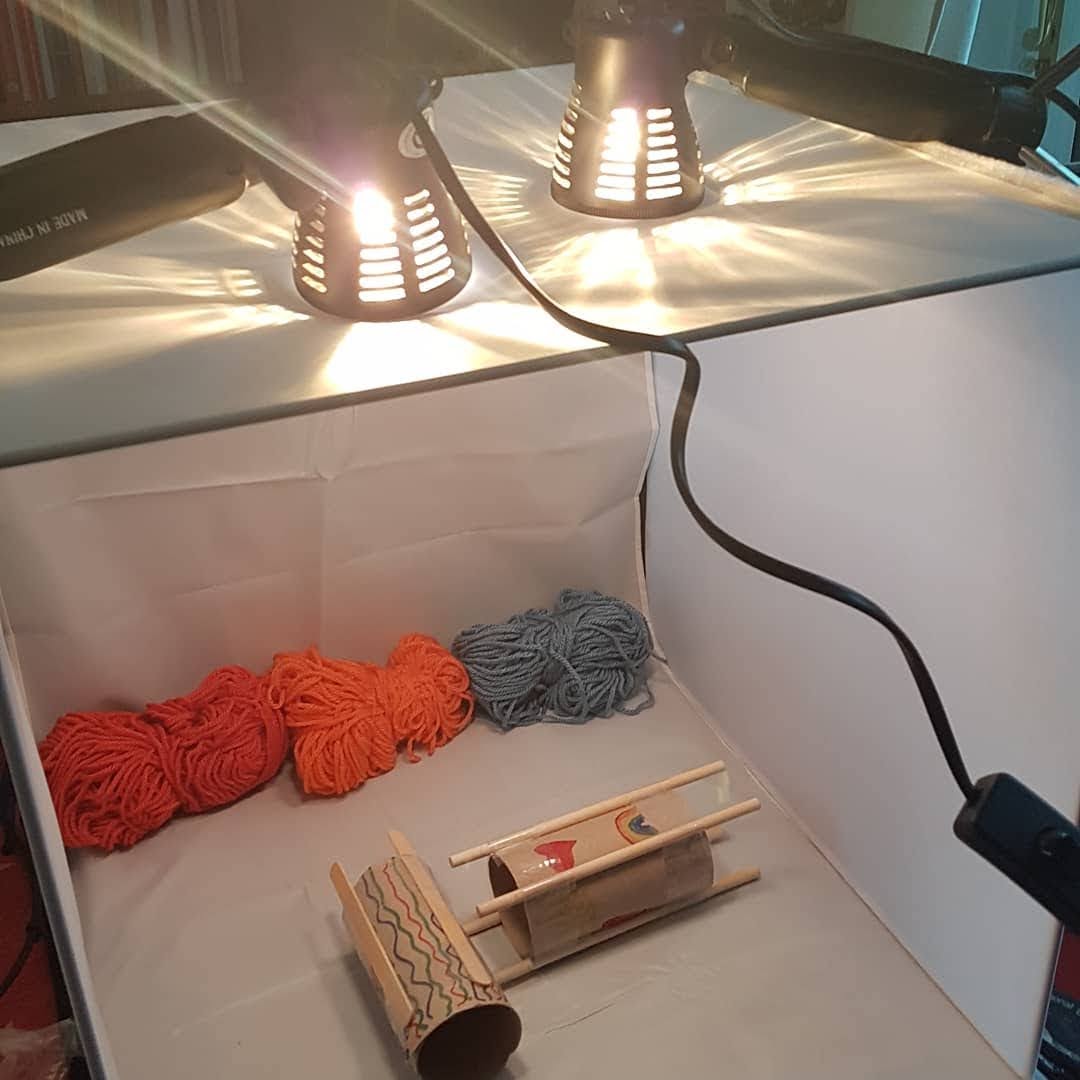
Taking proper photos for a change!
Super bulky yarn braid made on the home made doll, and a DK braid using a proper knitting nancy
I headed over to Pinterest to find some suggestions about what to do with French knitting braids, and one of the suggestions was simple braided jewellery. While in the shower this morning I remembered that at a previous WAWS I bought a gradient set in silvers and greys, with a bit of sparkle, and that this might be a good time to use it. They are a blend of merino, nylon and stellina, and are beautifully soft. So, I have dug these out from the shed, found my trusty yarn swift and winder, and will have a go at making a French knitting necklace.
Gradient yarns by Rosie’s Moments
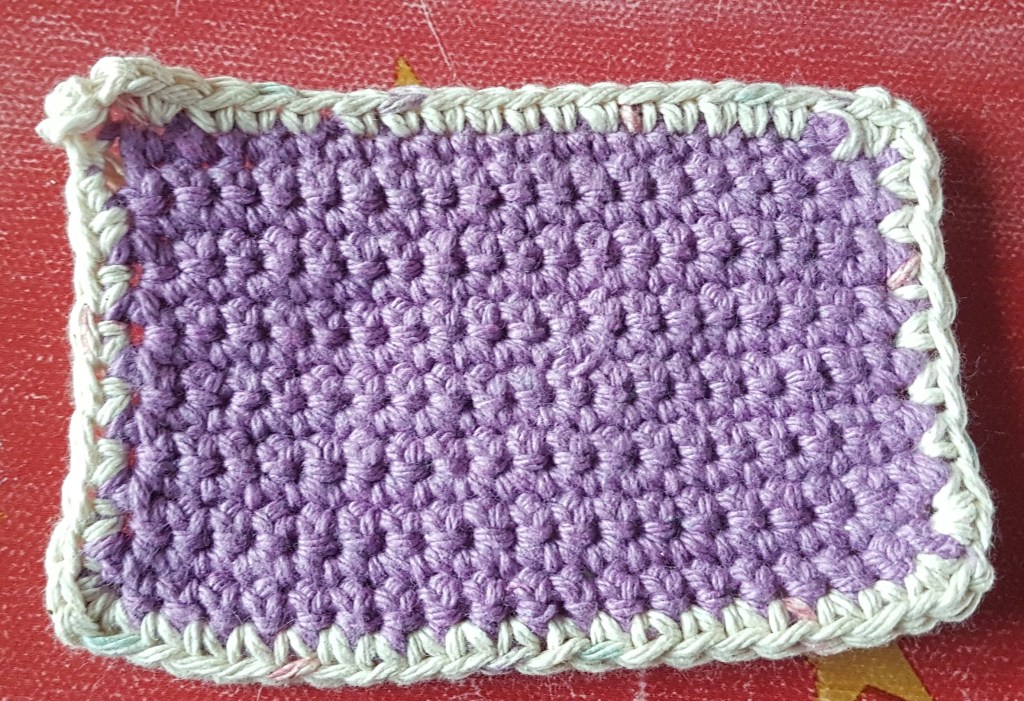
I’ve also spent some time this week making some reusable face scrubbies. We stopped buying cotton wool pads some time ago and when I first got my overlocker I made a stack from baby muslins and fleece, but this was before Thing One became a goth and discovered the joys of black eyeliner. So. MUCH. Eyeliner. The little pads I made have reached the end of their useful lives after a couple of years so, using some recycled cotton yarn, I started crocheting some more this week. Incredibly simple: chain 22, dc (double crochet) in the second chain from the hook and then dc back along the chain; chain 1 and turn. Repeat till you have a rectangle as big as you’d like, fasten off and weave in ends. Ta-dah! I have added a contrast dc border just because I felt like it.
Simple scrubby
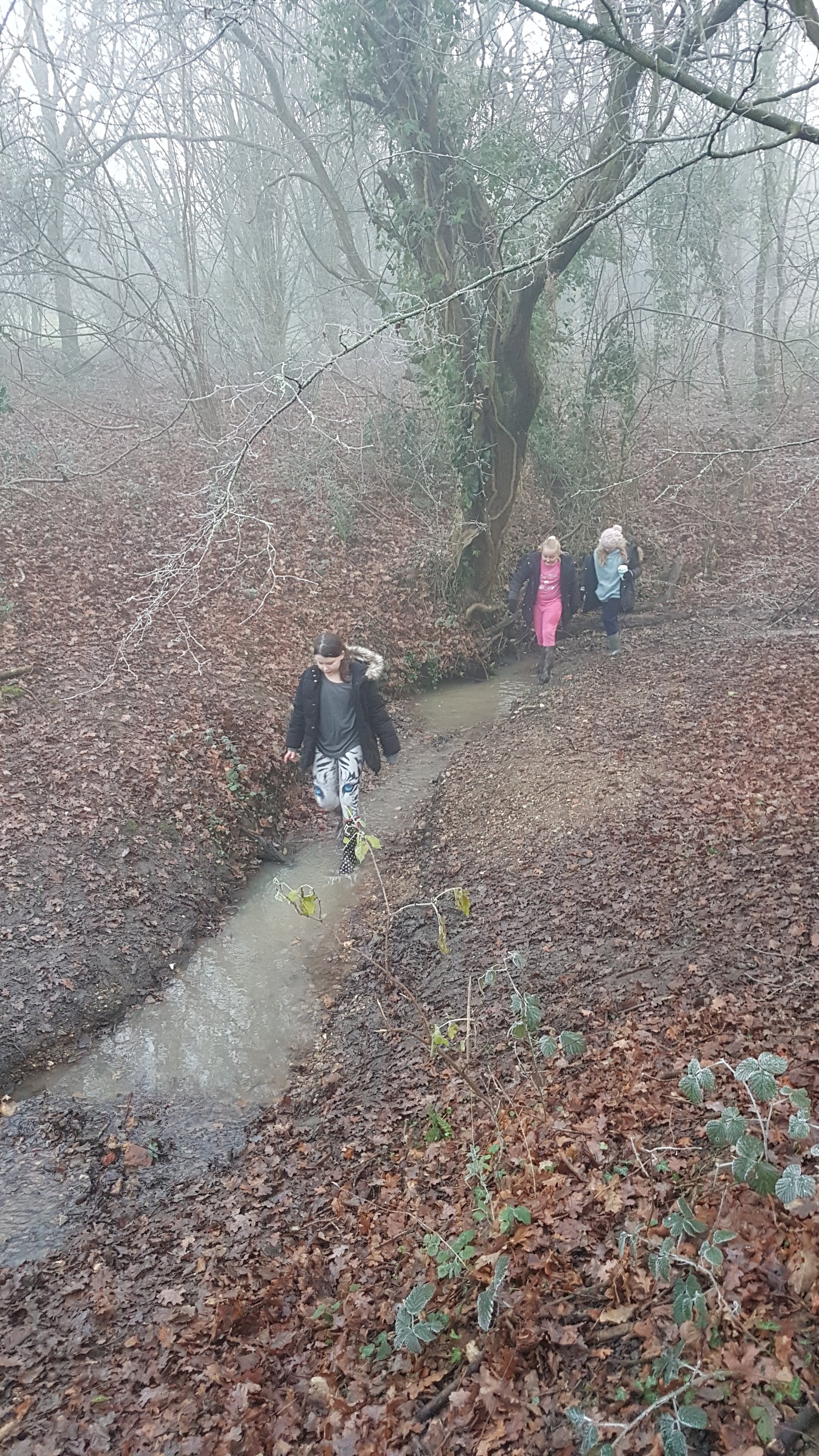
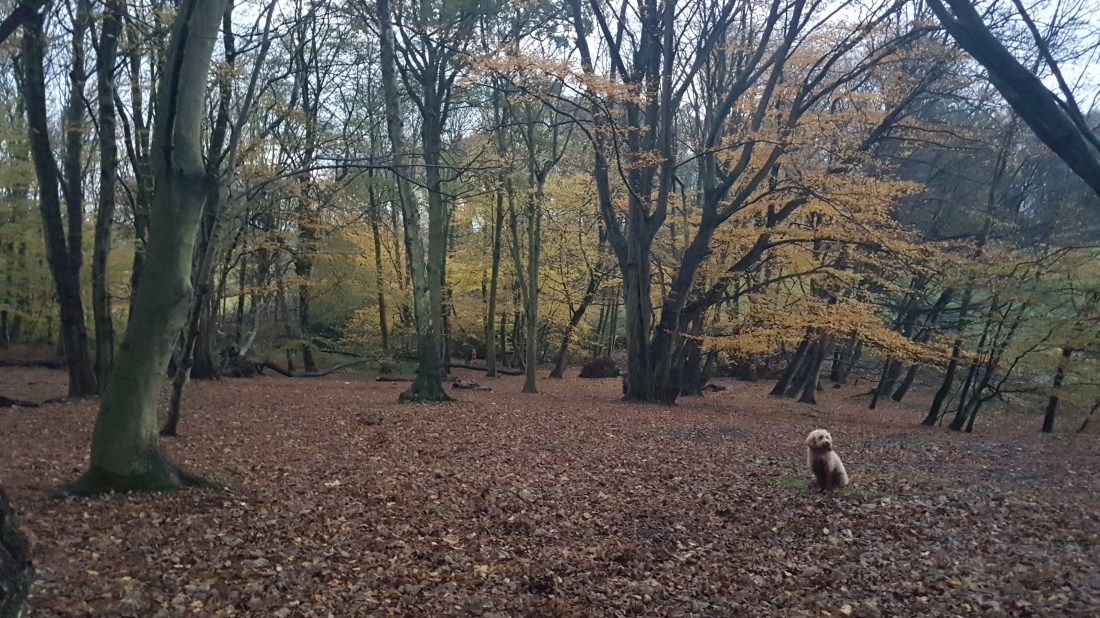
The temperature tree now has two weeks’ worth of leaves on it. You can see this week has been warmer – the day of the green leaf was 9 degrees! We’ve also had a lot of rain – the brooks are full, and this morning’s puddle walk was quite splashy. This week’s cover image was taken as the sun rose this morning, looking back towards Tawney Common as we were on the return leg. Yesterday we had a little bit of snow, which Thing 2 made the most of by building a tiny snowman in the back garden. I think it came up to her ankle….
Temperature Tree, week 2
That’s been my very woolly week! My facebook count tells me that yesterday was Day 300 since I started the lockdown counter – and this is week 43 of this blog. I am going to stop counting (but carry on writing) at the end of year one, I think.
Same time, same place next week then!
Kirsty x
What I’ve been reading:
Educating Peter – Tom Cox
The Copper Heart (Crow Investigations) – Sarah Painter
Gobbelino London and a Complication of Unicorns (Gobbelino London, PI) – Kim M. Watt
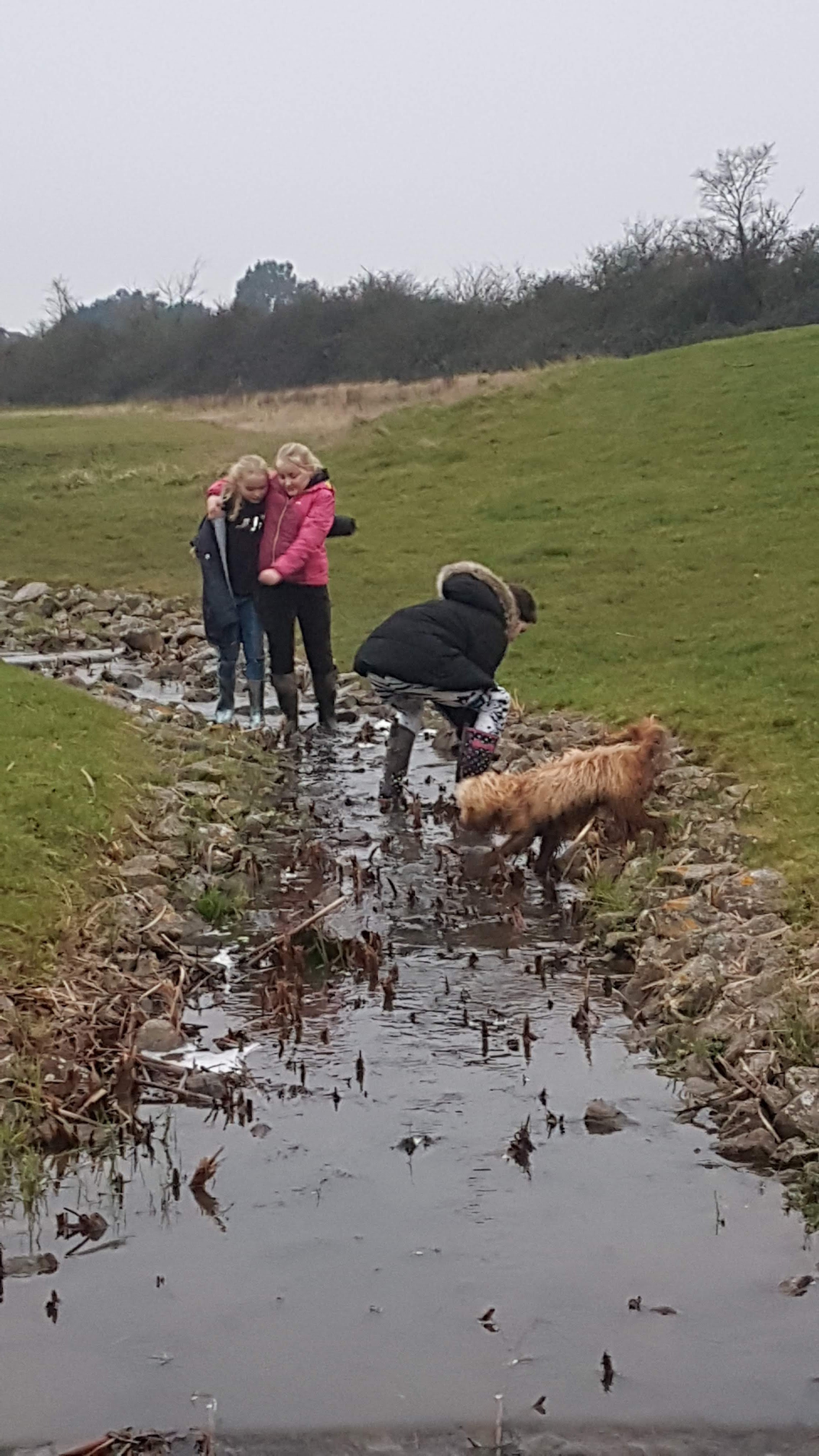
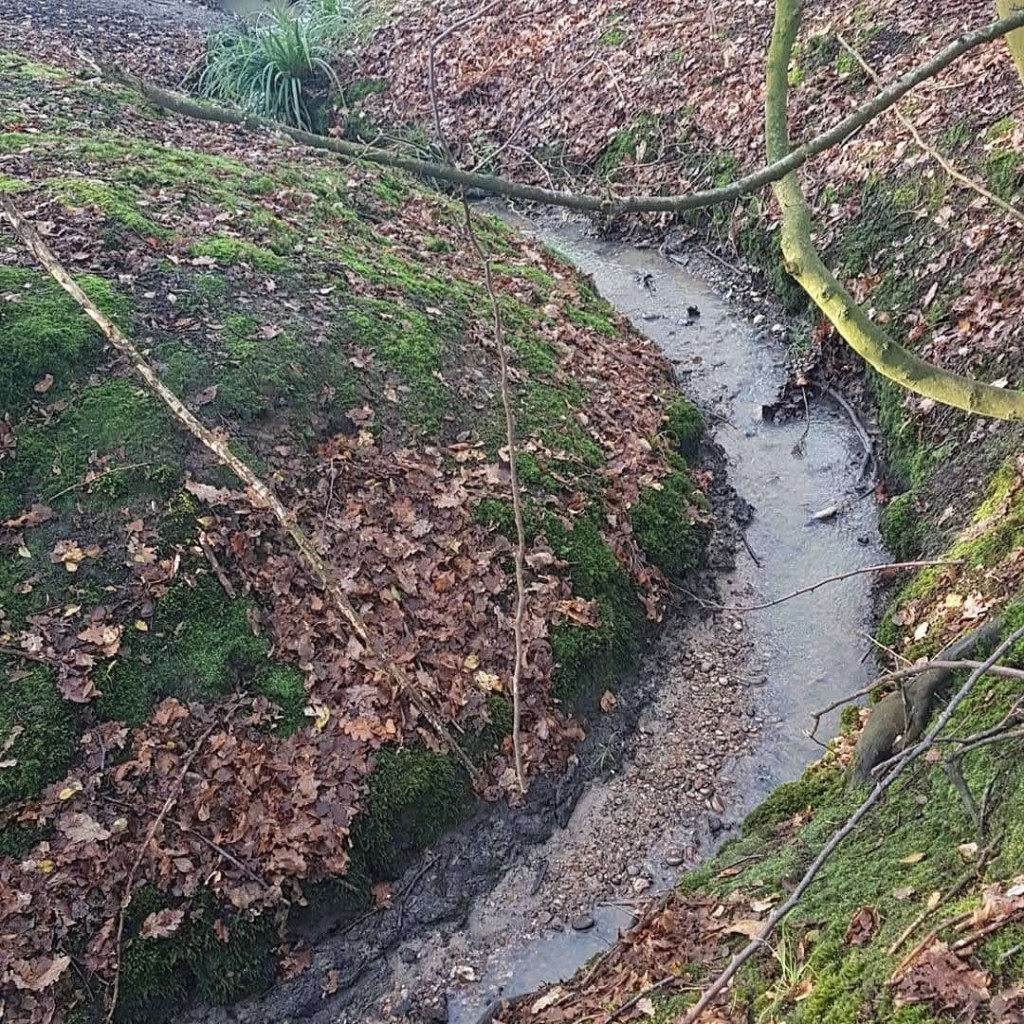
About this time last year. my walking buddy Jill and I decided that the fields were so muddy and we spent so much time shrieking as our trainers got soaked by puddles that we’d just start wearing wellies instead. With the wellies came much more freedom: not just because we could stop picking our way across the swampy, horse-churned paths, of course, but we also found ourselves actively seeking out muddy puddles and splashing through them. We mutter ‘squelch squerch, squelch squerch’ as we squish through the mud – can’t go over it, can’t go under it, got to go through it! We stomp on icy puddles to hear the crack, and this morning we chose to come back through the fields behind the station as we knew it would sound really crunchy as the footprints – both people, dogs and deer – are filled with ice. Who would have thought that such practical footwear could spark such joy?
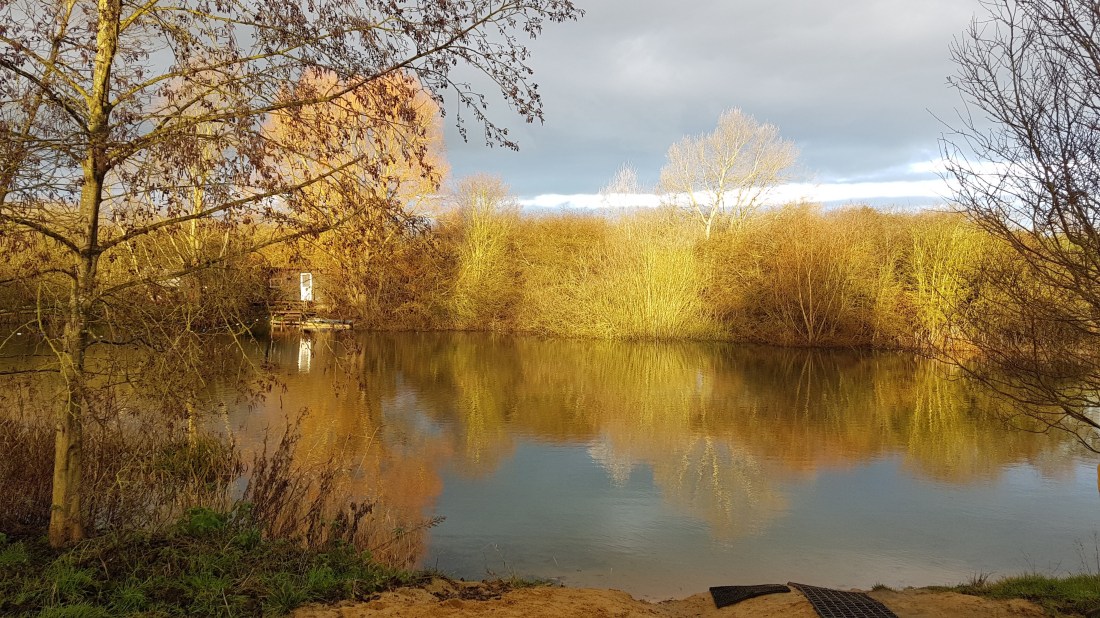
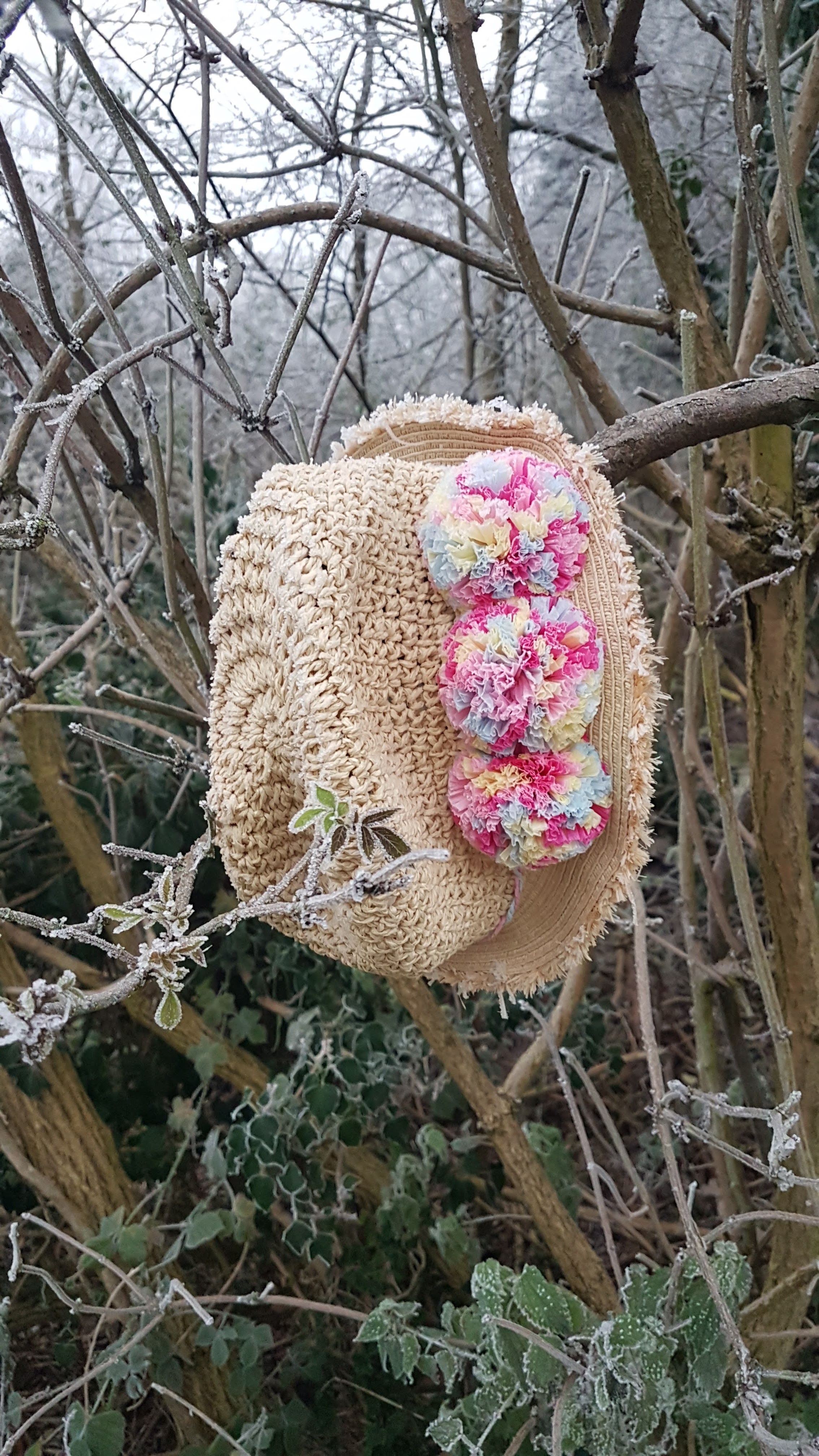
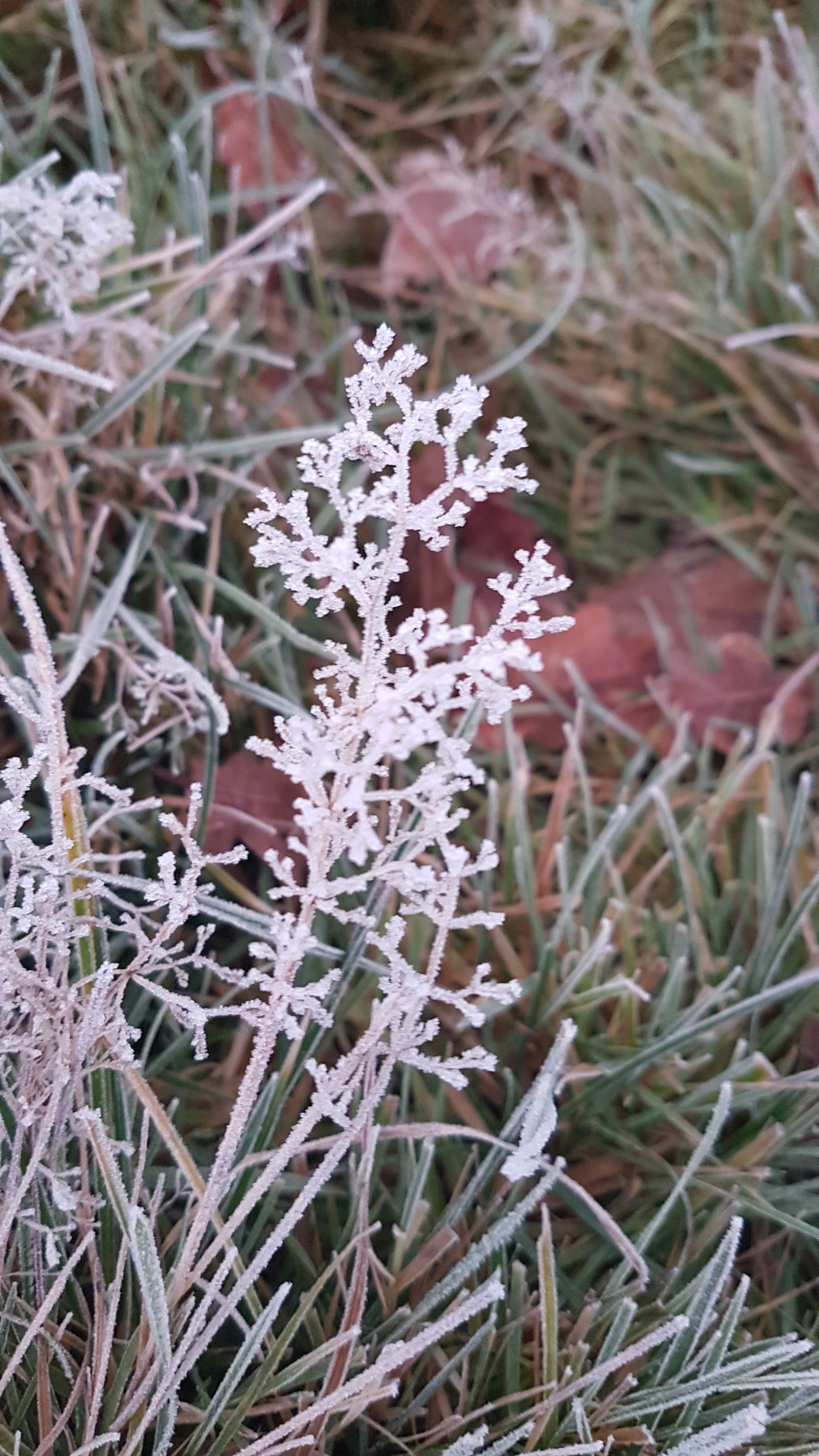
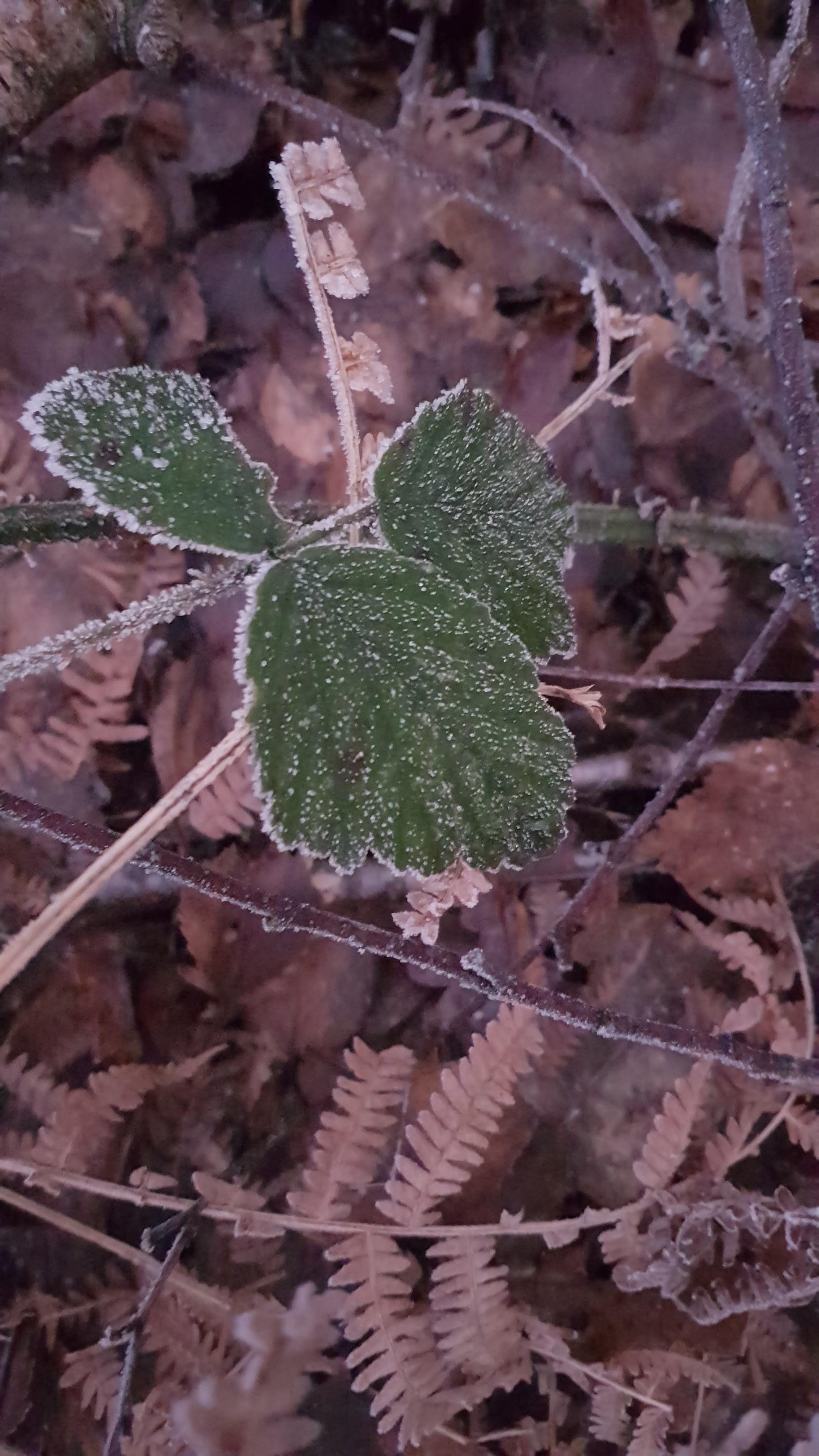
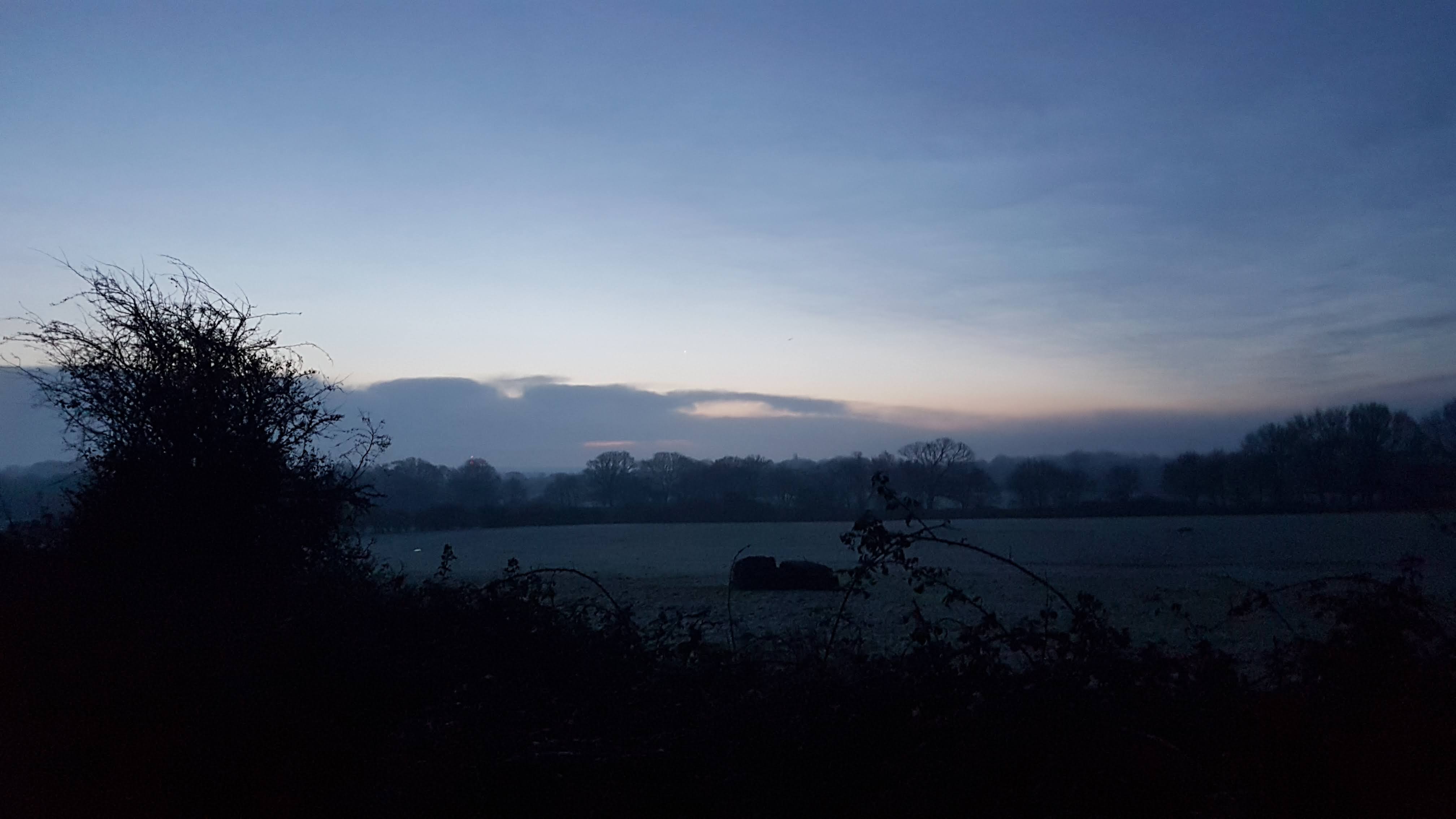
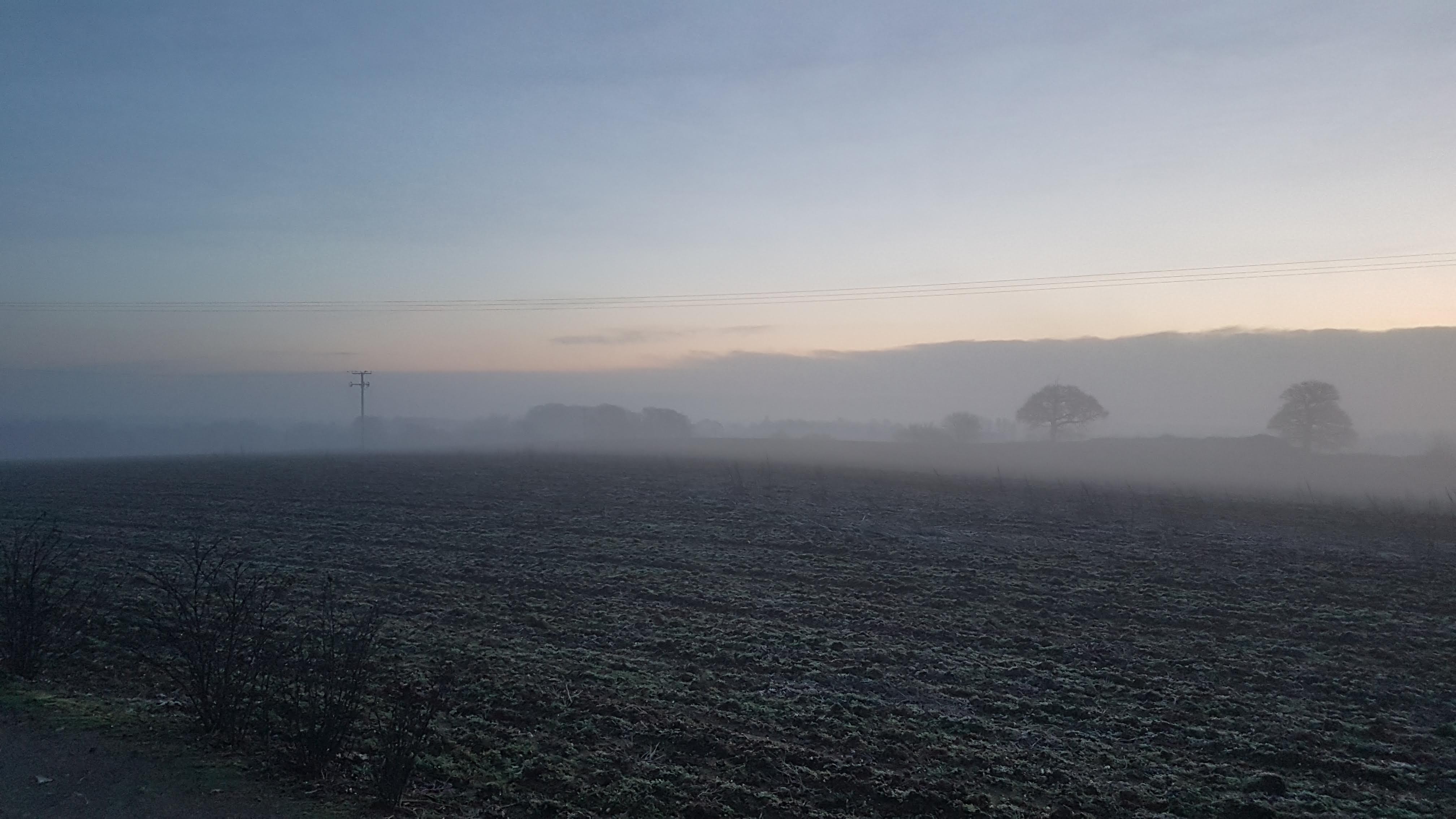
The fields are breathtaking this morning: it’s still below zero out there, and the trees are rimed with ice. It was still dark when we went out, the freezing fog was still hanging around, and the white trees loomed in front of us like bloody great ghosty things. A phone camera doesn’t do it justice, as you can’t capture the atmosphere, but these are from our walk this morning:
Walking through the ancient woodland on our way back was a more close-up experience: the frost was outlining leaves and turning the grasses and seedheads into architectural sculpture. It plays havoc with your walking pace but the wearing of wellies turns a walk into a less purposeful, more mindful experience – the word ramble comes to mind. With walking boots or trainers I always feel I should be pushing onwards.
A moment of summer
Grass
Icy twigs
Heavy frost on the holly
Bracken
Brambles looking sparkly
Queen Anne’s Lace
Walking this week, both with Jill this morning and with Sue and the Bella-dog in the afternoons, has been a lifesaver. I had forgotten the home school/work juggling act, trying to focus on a meeting when there are two out of the three children either arguing with each other, with me or asking questions about their set work. Thing One – hurray – just gets on with it. Thing Three – mostly – just gets on with it but is susceptible to being wound up by Thing Two, who occasionally gets on with it but generally accompanies herself with a stream-of-consciousness blow-by-blow of whatever she’s up to. The Spanish lesson – accompanied in Spanglish – was particularly tricky (for me, at least).
However, I am so grateful to all their teachers for providing high quality work for them, as well as making daily contact via Zoom for Thing Three. Gavin Williamson, the Education Secretary, has put both his feet firmly in it this week by telling parents to email Ofsted and complain if the remote learning wasn’t high quality enough: I believe Ofsted were quite annoyed as well. Parents took to their email and to Twitter to praise schools instead, especially given that on Monday schools were ‘safe to open’ but by Tuesday they were all closed until half term. Twelve – twelve – hours to move entirely online, as the address by the man (described beautifully by my friend Chris as the ‘bloviating haystack’) wasn’t made till 7.30pm.
This was an excellent tree
Socially distanced paddling
This bunch can’t resist a paddle
The other thing saving my sanity this week is – as ever – crafty stuff.
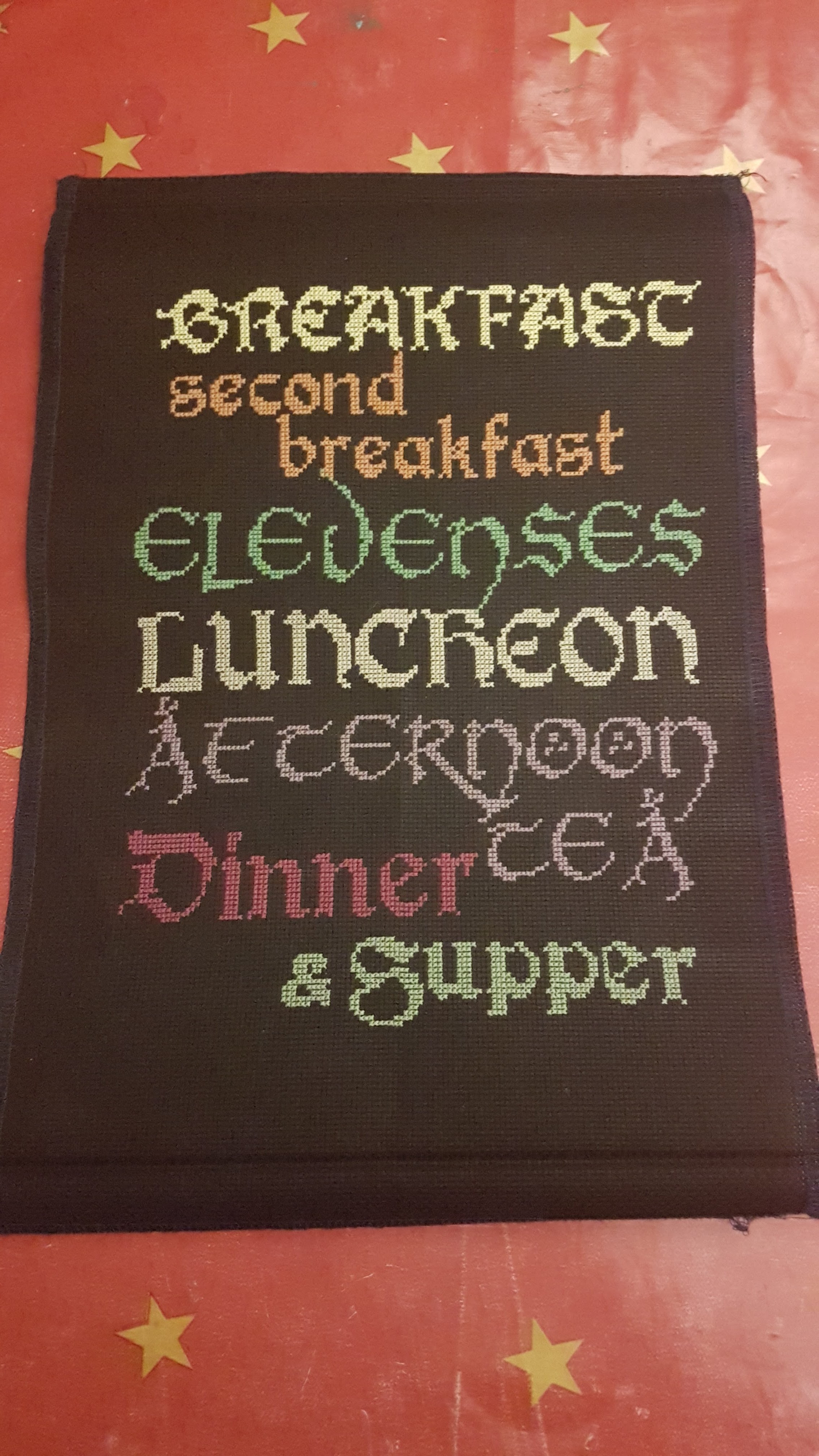
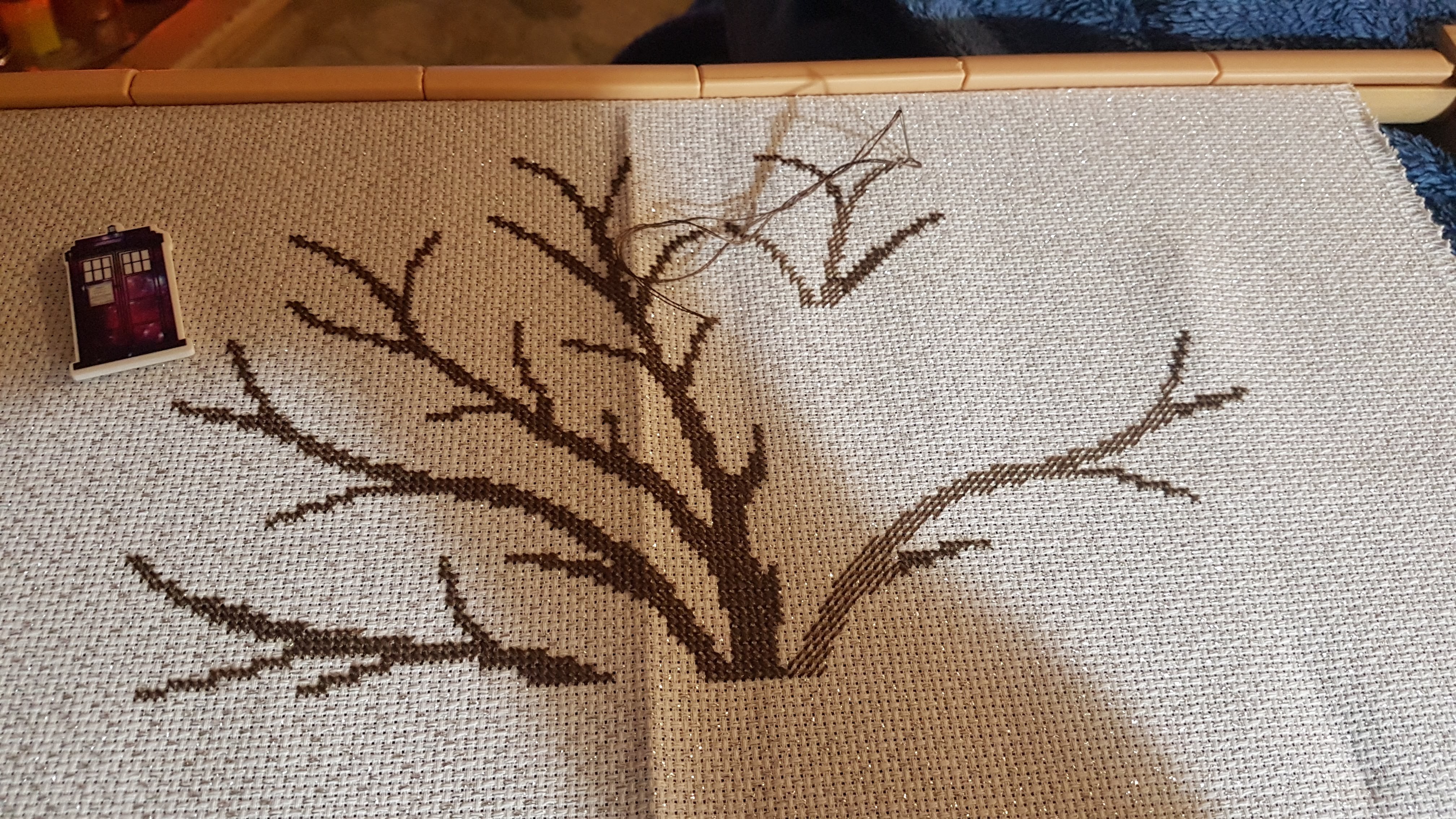
I finished the ‘Second Breakfast’ cross stitch, and have started the temperature tree that I mentioned last week. So far it’s all tree and no temperature, and I have used almost a whole skein of DMC 839. I chose to use sparkly white aida fabric for it for no particular reason other than that I had some and I like it!
All tree, no temperature
And that was my week: it’s been a quiet one, and for that I am grateful. Today my plan is to sort out my craft book shelves and see if I can organise them a bit, and to make oat and raisin cookies as they are a family favourite.
The wish ‘happy new year’ has quite possibly never been said by so many people with so much fervency (is that a word?) as it has been this year. Don’t get me wrong, there have been some bad years before: 1994 was pretty horrendous, as was 2003, but those weren’t universally bad. I was glad to see the back of them but felt pretty hopeful about the future. And, to be honest, announcements of vaccines this week are giving me hope for 2021.
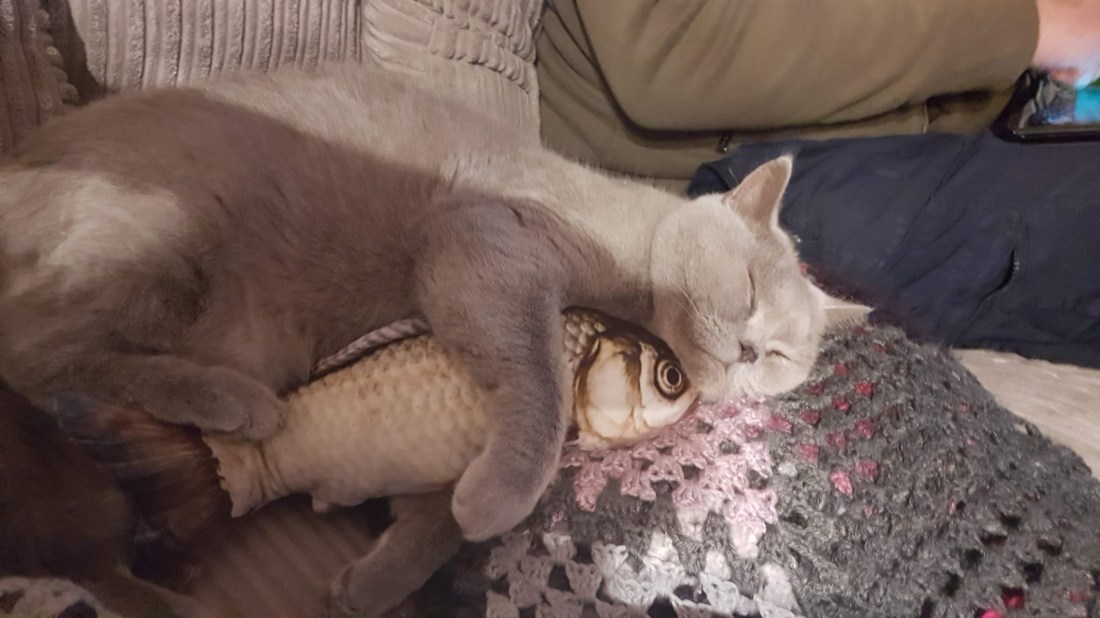
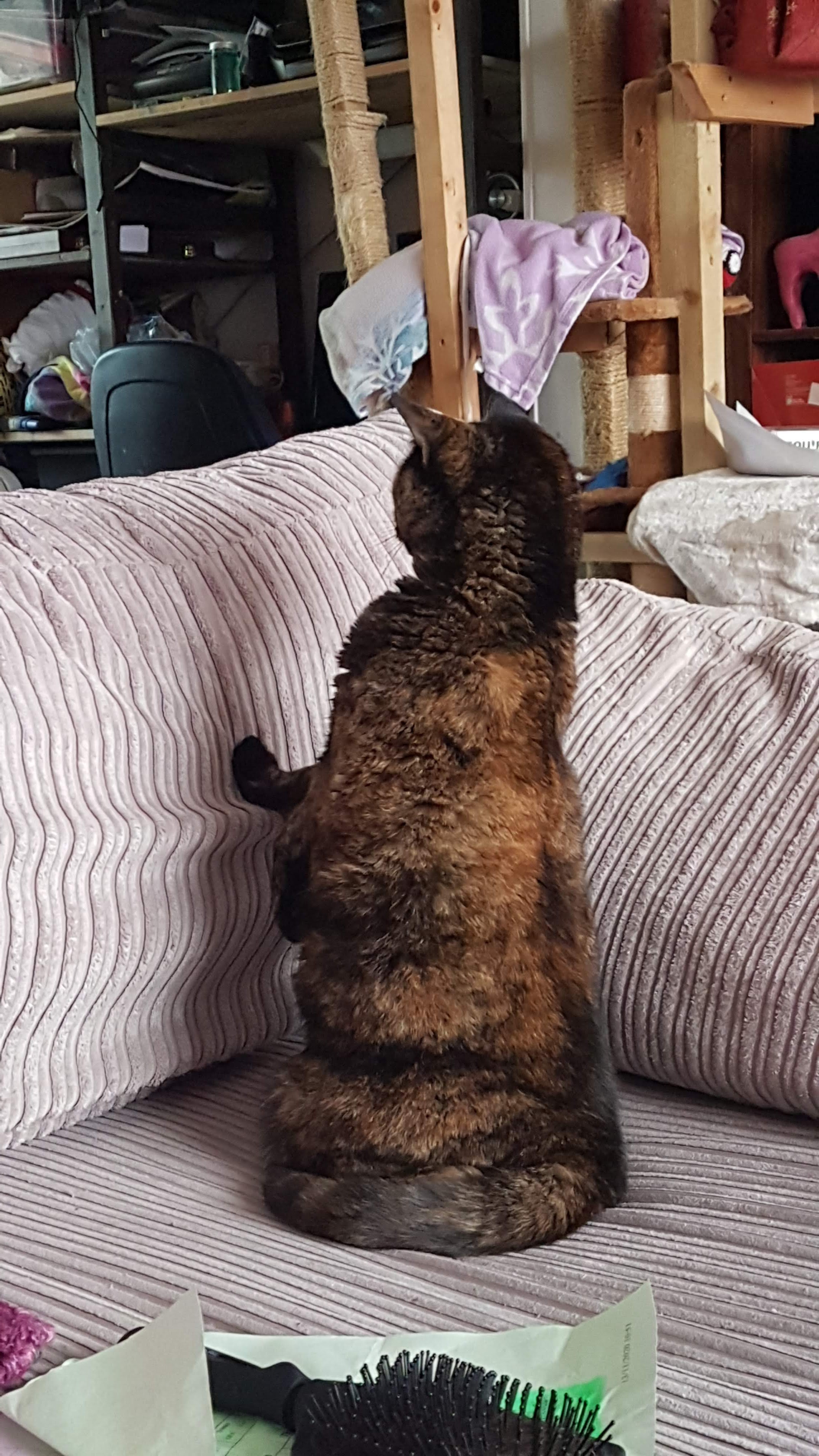
Have a cat, because there’s about to be a lot of text.
And 2020, despite all the challenges, hasn’t been all bad. Yes, there were the cancelled holidays, the various levels of lockdown, Covid-19 as a thread across the year, worry about my nurse friends and my vulnerable family members, Christmas without family and so on, but to end the year I’m going to share the things that gave me joy. In no particular order, I give you…my top ten of 2020:
I’ve had six unexpected months with the Things, which is the longest time I’ve been able to spend with them since maternity leave. Maternity leave is wonderful, but you have a tiny baby, no sleep, you’re juggling any other children you have, and trying to remain an actual person at the same time. In my case, too, I had post-natal depression with both Things 1 and 2 which made the whole experience somewhat frightening, especially with Thing 1, when I didn’t know what was happening to me. So, six months with my children, spending time with them now they’re independent, finding out what they love to do, going on walks, learning new skills with them: thank you 2020, for giving me that.
The glorious summer! Can you imagine being in lockdown without that wonderful weather, in a typical rainy British summer season?
The garden. My beloved and I were both furloughed, and had we not had the garden we’d have been under each other’s feet constantly. We are lucky to live where we do, and the garden at the end of this year – thanks entirely to my beloved – looks amazing. It’s filled with birds at the moment: as I look out of the window I can see an enormous rook, wood pigeons, collared doves, a robin, blue tits and great tits. We have goldcrests, dunnocks, sparrows, nesting blackbirds, occasional woodpeckers and jays. This year I have learned to love the noisy, scrappy, playful brood of magpies that hatched in a tree behind the garden – and to have great sympathy for their put-upon mother.
Open water swimming. We came late to this, starting in July, but it’s been a sanity saver for all of us. Swimming in the summer was wonderful, surrounded by the coot chicks and the grebes, but if anyone had said to me then that I’d be looking forward to getting in a sub-5 degree lake on New Year’s Day I’d have laughed. I never thought I’d take up an extreme sport but apparently this is ice swimming – and I love it. I’m a head-up breast stroker, not a front crawler, but at Redricks this is fine: everyone is made to feel welcome. The mental health and physical benefits have been heavily documented by other people in much more learned spaces, but I have to agree with them!
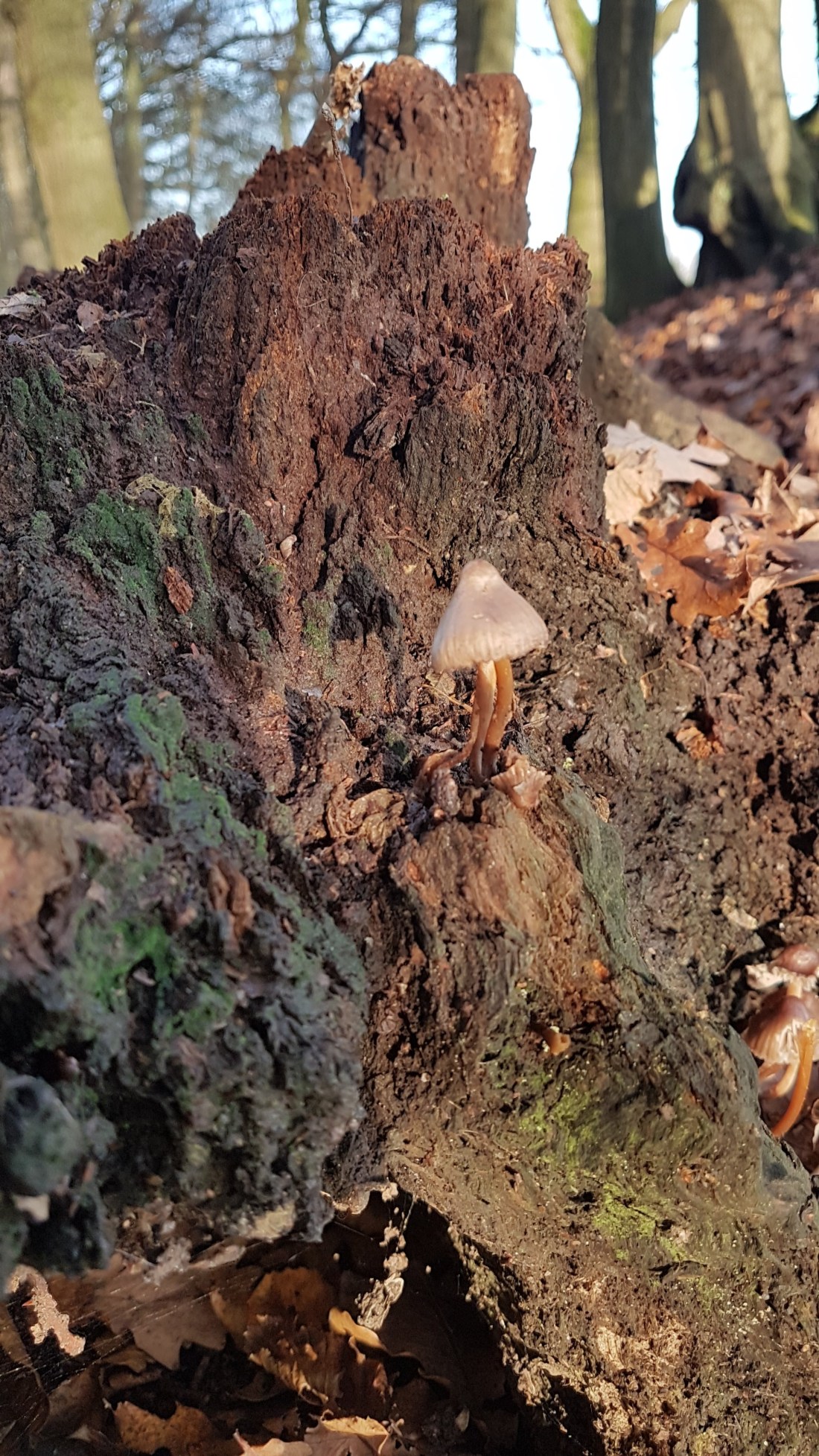
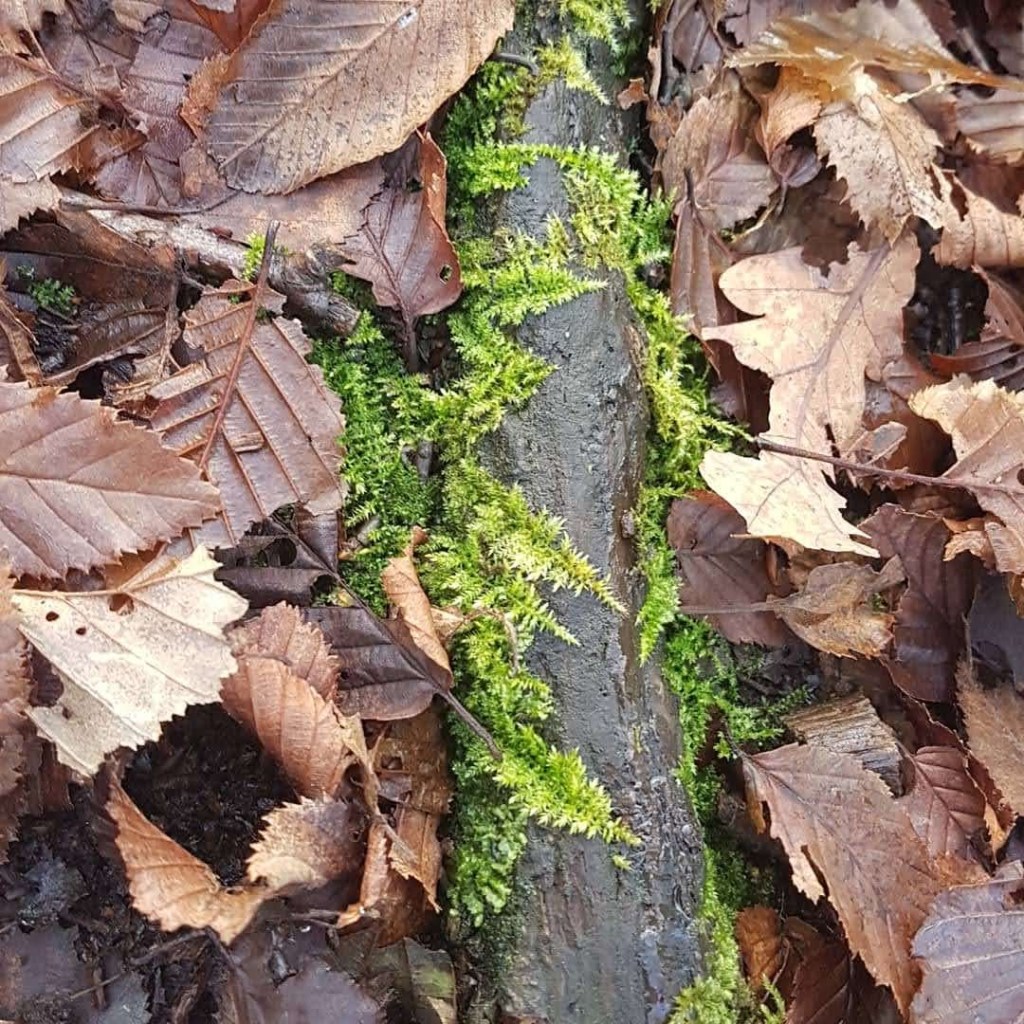
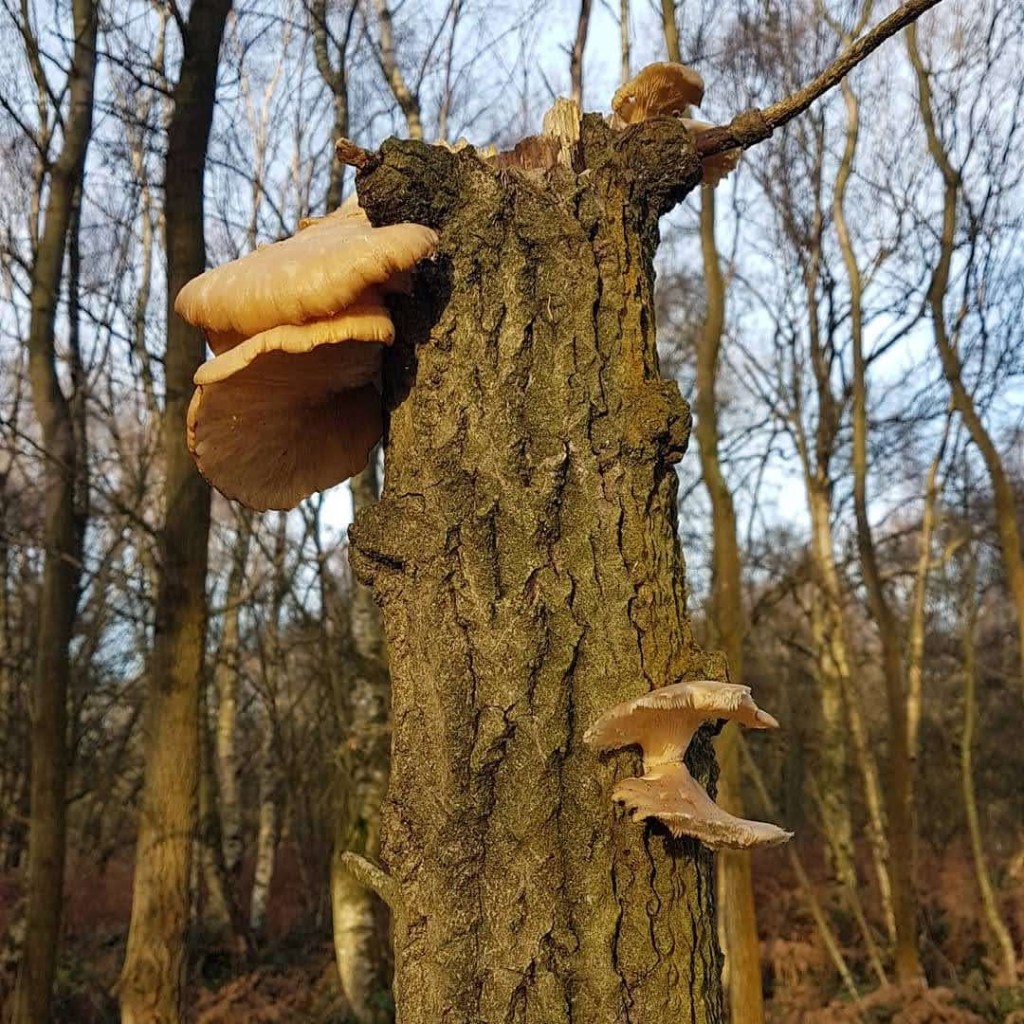
Our local countryside – I live in North Weald in Essex, and I do a lot of walking anyway, having trained for and completed a couple of walking marathons. This year there are no events, so I have been walking for the sheer joy of it. Being at home for most of the year and being able to just ramble, watching the hedgerows and wildlife, not having to be anywhere: it’s been so mindful, just slowing down and watching the world and the seasons change. On any walk I may see rabbits, red kites, muntjac and fallow deer, and hares as well as fields of horses and cows, friendly cats and lots of dogs. It’s cheaper than therapy, too: my friends and I put the world to rights, and when Thing 2 joins me we spend time looking for tiny fungi and mosses.
Zoom and WhatsApp: I may not have been in Wales with my family but we can still see each other and chat. This year we have had a wider clan WhatsApp chat which gets very silly at times, I have conversations with my sisters and with the whole family. We can still share the things that make us laugh, and then we realise that the whole clan shares the warped sense of humour.
This blog! It’s been such a cathartic experience: sharing when I am down or angry or frustrated, talking about the things I love to do, taking you all on a journey through my creation processes. It’s not a curated lifestyle blog, or a foodie blog, or a crafty blog: it’s just me. I try and be honest, whether that’s about my mental health or my reaction to government policy. I try and be wry and look sideways at disasters. Hopefully I succeed! I use Facebook as a daily microblog, too – keeping a count of the days, with three highlights, positives or disasters of the day. In work writing these days tends to be figures, and proposals, and reports – I have loved the chance this year to write because I want to – and to write what I want to.
The people I work with: Microsoft Teams has kept us all in contact, as has Zoom for those social moments. I am so lucky to work with a core team of brilliant people – we are tightknit, we care about each other, and we have felt supported by each other throughout. The museum we are creating is going to be amazing, and I can’t wait for the days when Monday meetings are round a table and not on screen again. I genuinely love my job.
Making, of course. Crochet, dressmaking, cross stitch, quilting: 2020 has given me time to hone old and learn new skills. Obviously there’s still more to learn, but the act of creating and sharing my creations has given me such pleasure this year. Designing my own cross stitches and sharing those has boosted my confidence, too. I just need to get back to work now to wear all those clothes….
My friends: socially distanced coffees in front gardens, people to walk with, to see over Zoom and Houseparty, to make plans with for ‘when things are normal’. I have never been that mum at the school gate as I have always been working, but this year I have really appreciated the chance to walk up daily with my neighbour and their puppy, to see other parents, and to feel part of village life.
Staged, with Michael Sheen and David Tennant. A comedy that perfectly captured the 2020 zeitgeist: Zoom, spending so much time at home, turning our focus locally, working so differently. And Season Two starts this week! OK, so that’s 11 – but this programme is definitely a bonus!
So, 2020 – thank you for all the above. Thanks also to the key workers – not just the frontline NHS crews who’ve really, really, really earned a pay rise rather than claps, but to the retail staff, the cleaners, public transport people, and – the unsung heroes – the teachers who’ve been juggling conflicting and frankly bonkers government advice, online and in-person teaching, pastoral care on unprecedented levels, given up their holidays to care for key worker and vulnerable children, who are now spending this holiday trying to plan mass testing, remote learning and more while being abused by the red-tops for ‘laziness’ and ‘cowardice’. The two schools my Horde attend have been brilliant throughout and their care and dedication is being echoed across the country.
I am not given to New Year’s resolutions, but if I were, mine would be to take the positives from 2020 forward into this year: to slow down and watch the seasons change, to appreciate the time I have with my children, to keep being creative and learning new skills, to keep writing and swimming and finding the positives.
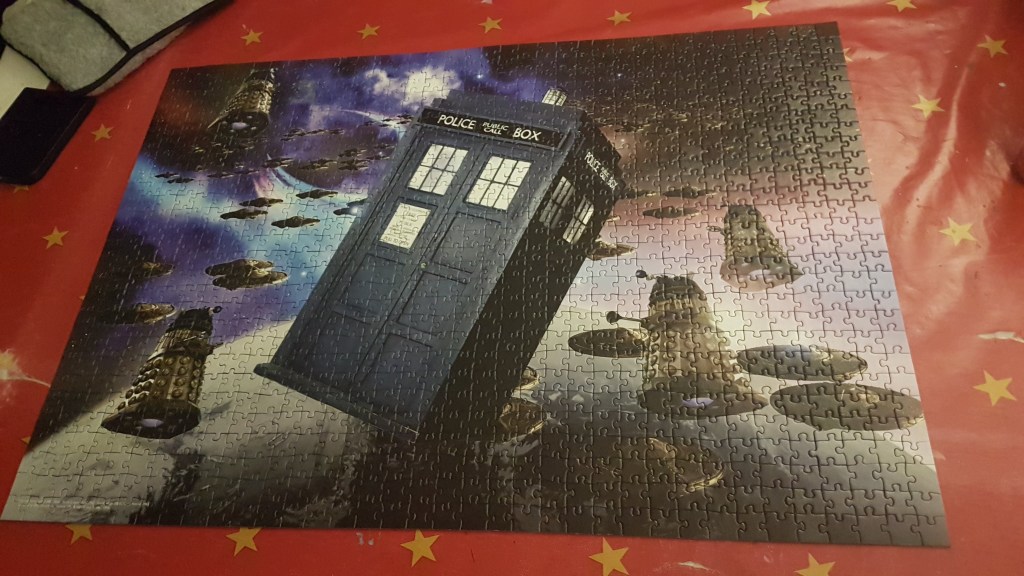
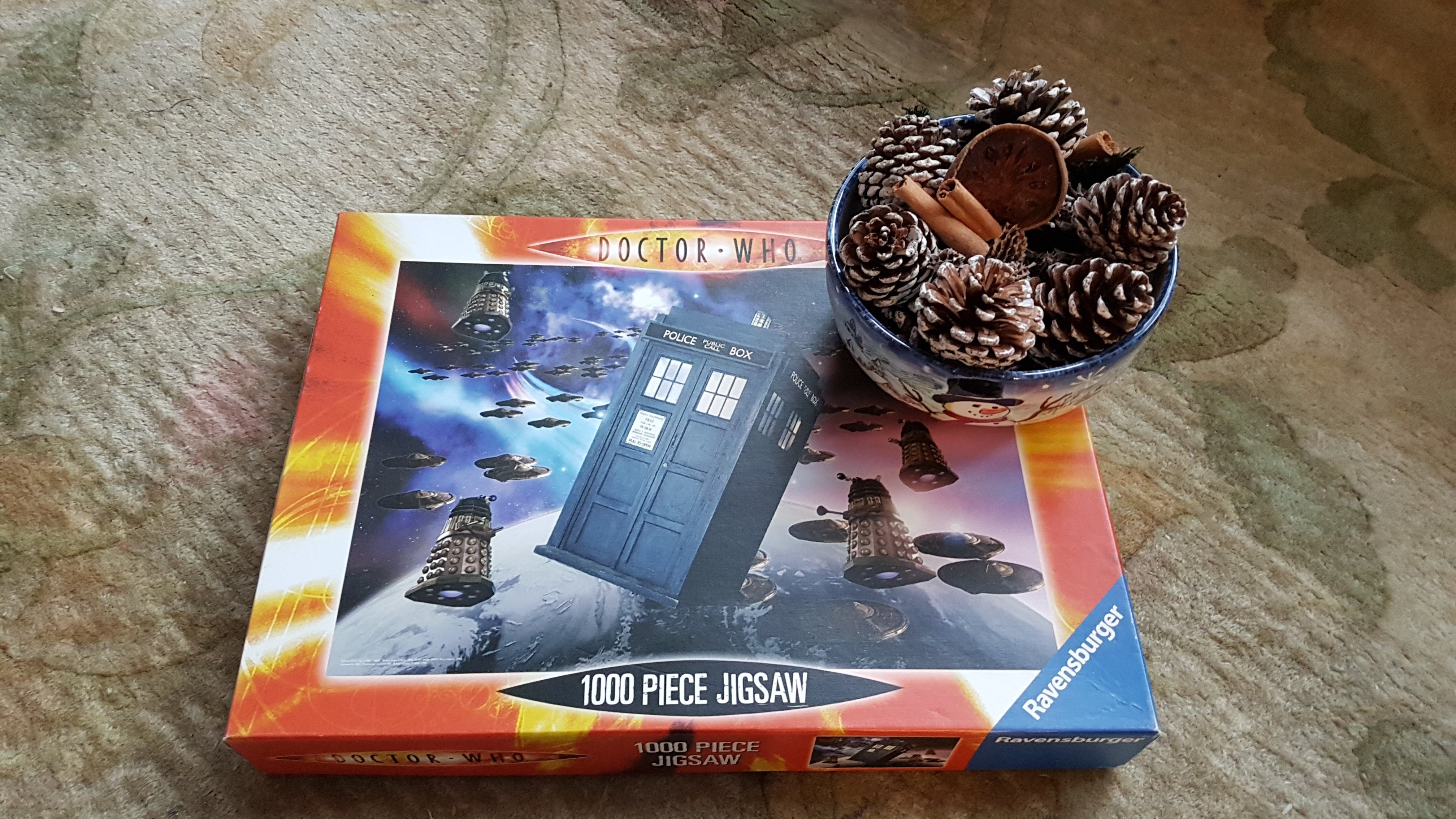
It’s not Christmas without a Dalek
One of the things I like to do between Christmas and New Year is a big jigsaw – you may remember this one from my charity shop trawl before Christmas. It took three days, and those Daleks were trickier than they looked. Things 2 and 3 dropped in to help occasionally, and I took up most of the table, and thankfully it didn’t have any pieces missing – not bad for £1.75! And all finished in time for this year’s Doctor Who special on New Year’s Day which was fantastic, to quote Nine – sad to see Bradley Walsh and Tosin Cole go, but bringing John Bishop on board is going to be interesting. Catherine Tate was surprisingly good once I put enough distance between her and her sketch show characters, as was Matt Lucas, so why not John Bishop?
In crafty news, I’m still working on the Hobbit cross stitch… and have so many more geeky patterns on the to-do list! Not much crochet has happened, but it’s not going anywhere.
Do you think he knows about second breakfast?
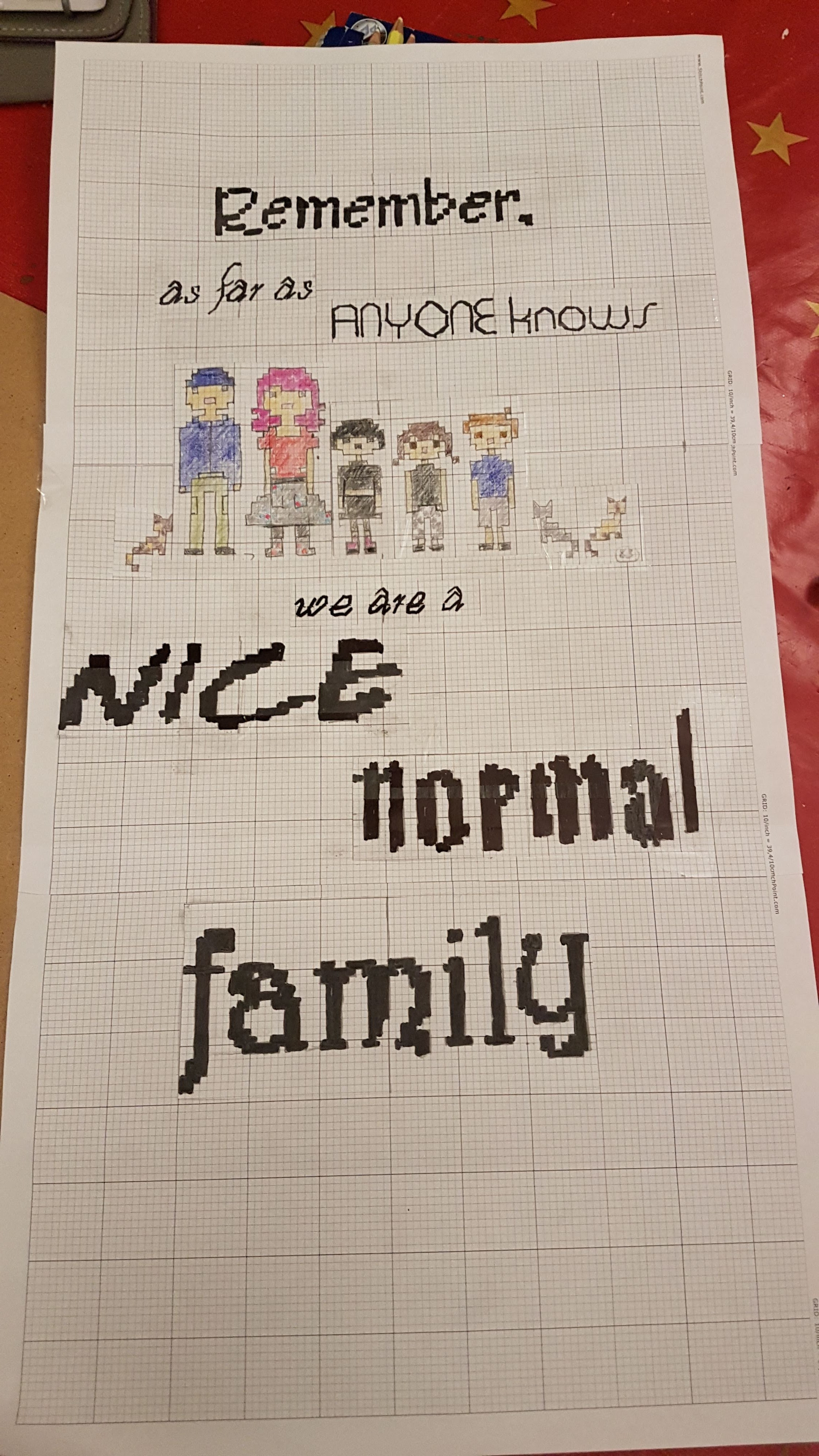
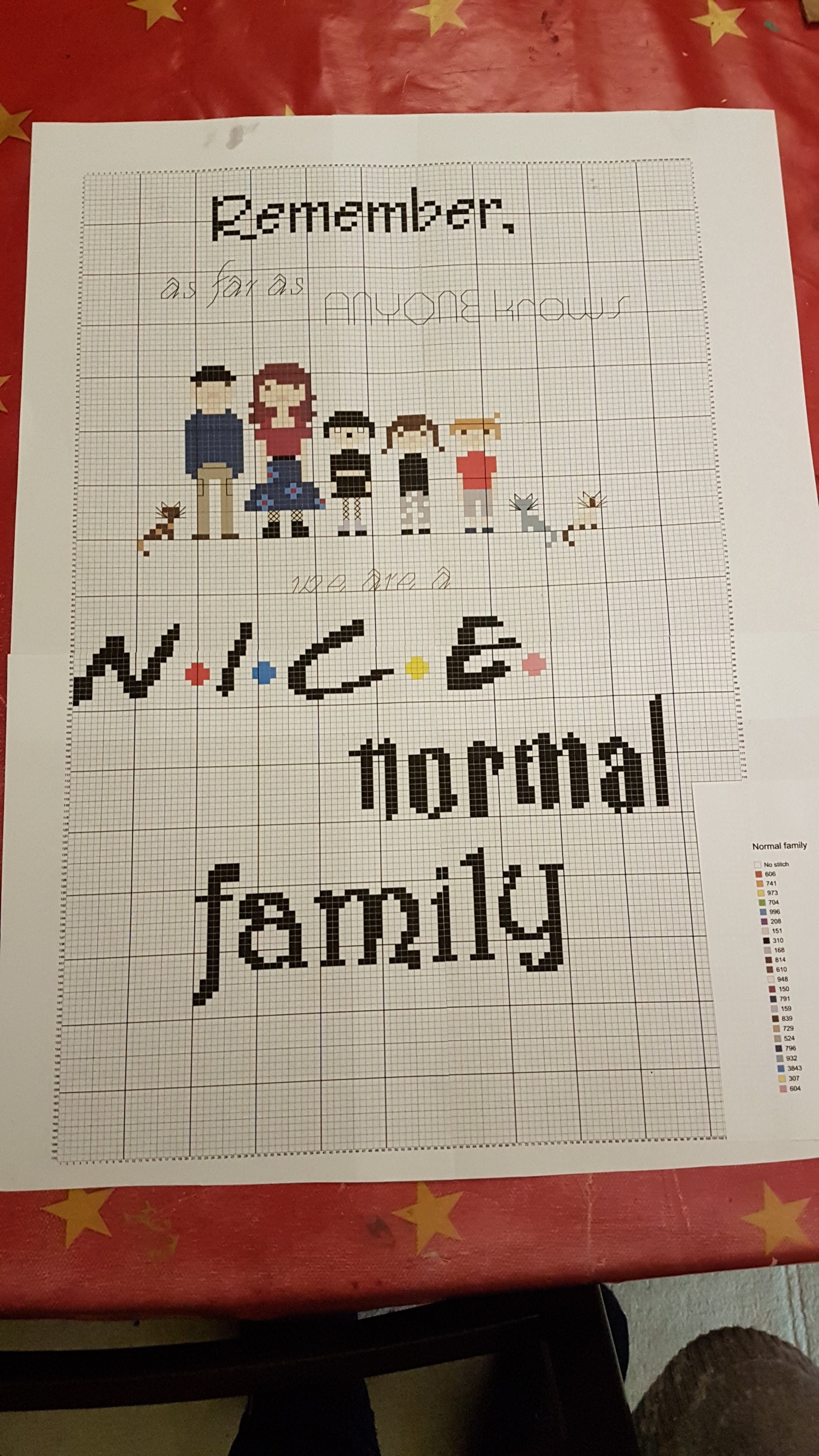
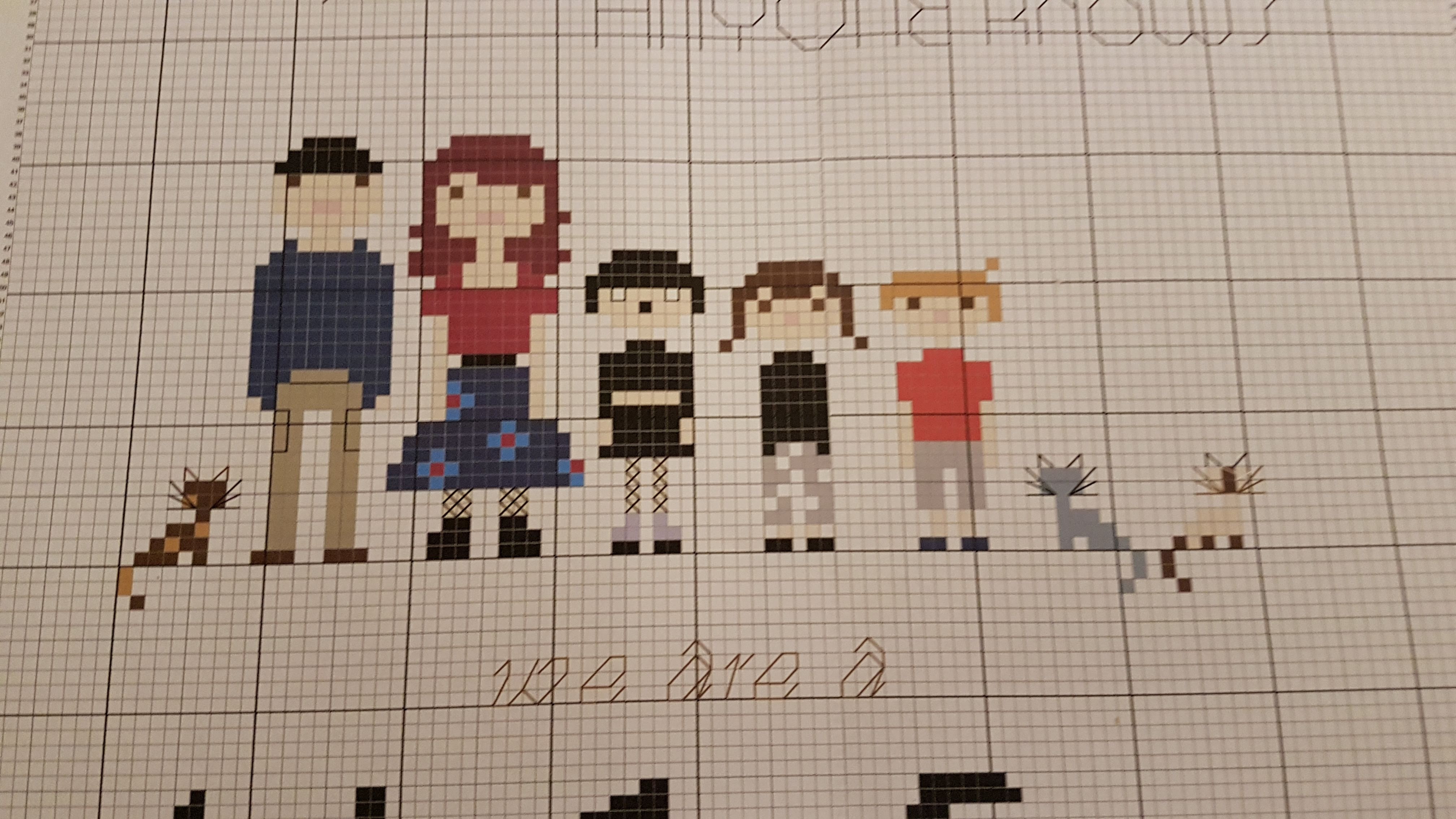
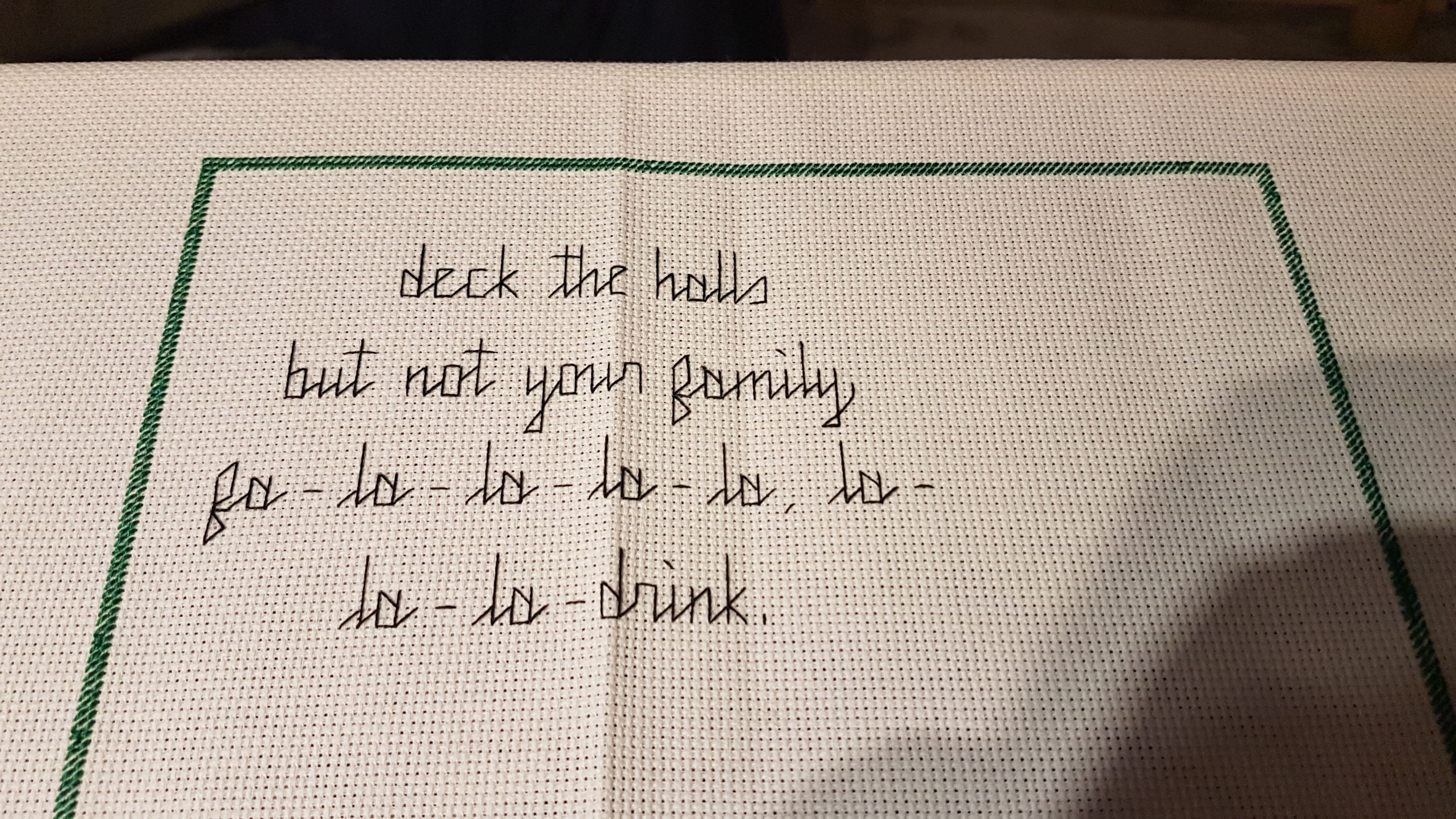
Facebook memories threw up a quote I’d shared a couple of years ago the other day, and it inspired me to create pixel people of the family and to design a new pattern – I started with squared paper and pencils, as I’m not confident enough to work directly into StitchFiddle yet, and then transferred into the software afterwards. I made a lot more use of the floss chart, too, but need to test it against the swatch book as soon as I remember where I put it this time.
Pencil on the left, digital on the right
The pixel people templates came from here, and the fonts were from a book I bought a few months ago and this set on Etsy as I wanted to use a range of lettering. I am not sure about using the coloured dots in the ‘Friends’ font (the word ‘nice’), and I might go back to the original one from my pencil drawing. The idea was to incorporate some of the things the kids have enjoyed – Thing 1 binged Friends earlier this year, and Harry Potter is always a favourite.
The final pixel family – the kids love their minis, but my beloved thinks he should have a swagbag over his shoulder. Note that Lulu is next to him, as he’s her favourite human!
I’ve also done a lot of walking – very muddy, very icy, very beautiful.
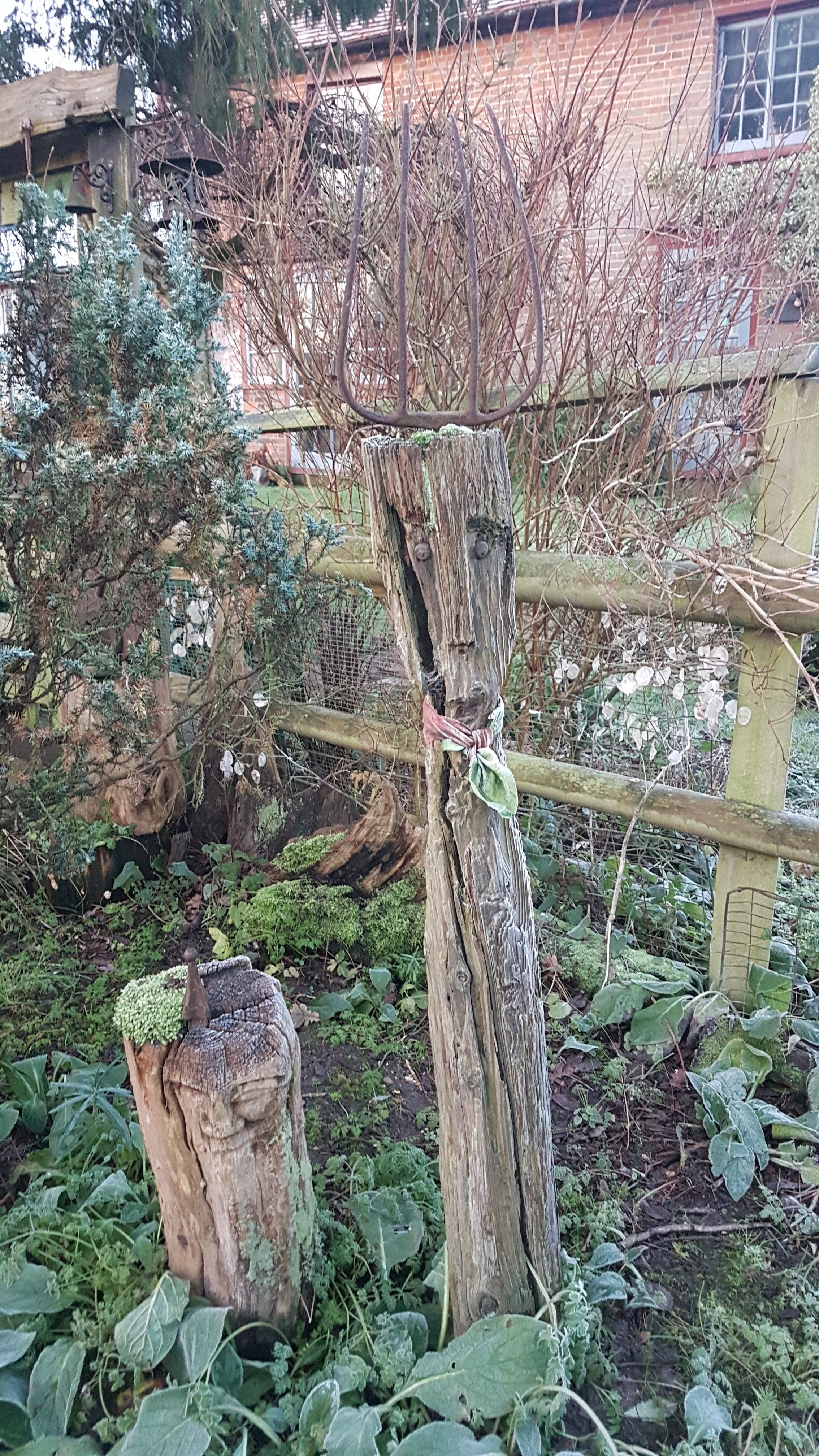
The last four are from Dial House, home of various members of the punk band Crass
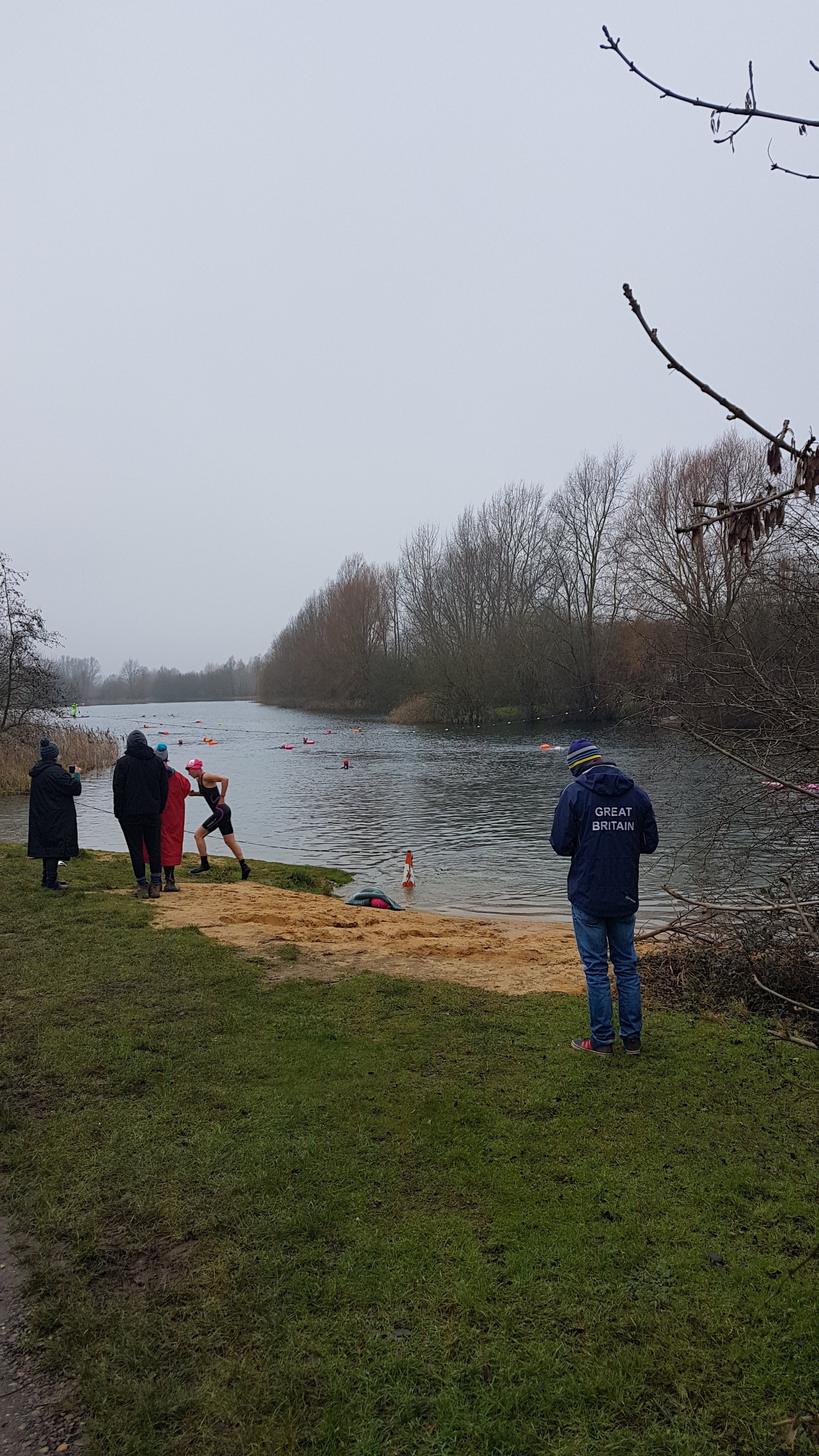
I’m looking forward to my third dip of the week later this morning – we swam on the 29th and on New Year’s Day. We didn’t have to break the ice in the end, despite being a bit concerned as the temperature didn’t get above one degree on New Year’s Eve! It was so cold, but we felt amazing afterwards. The outside temperature right now is two degrees, but it is only 7am.
New Year’s Day at Redricks
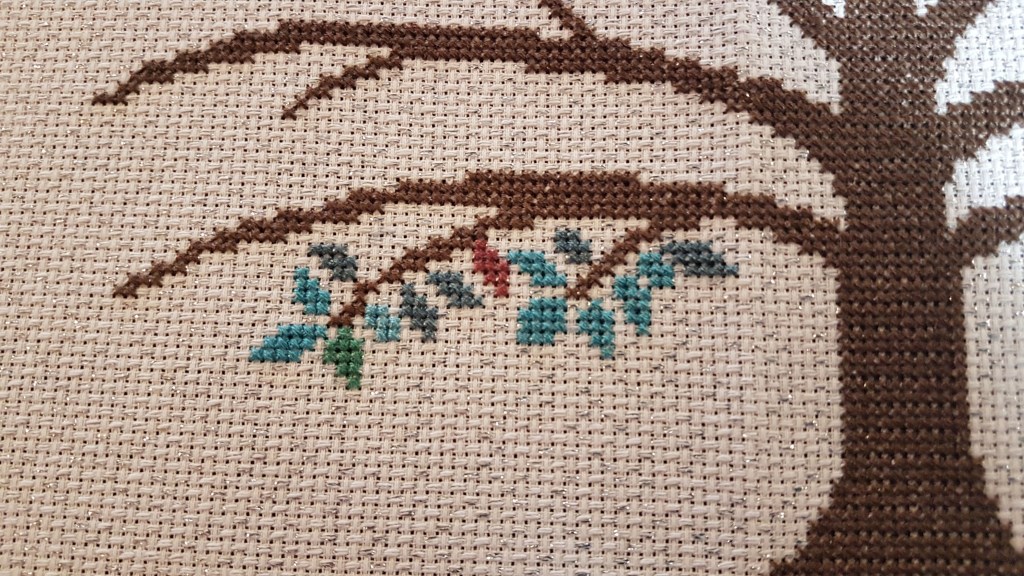
On the subject of temperature, another new project I’ve decided on is a temperature cross stitch using this tree design, where you stitch the high temperature for each day. I’ve just seen that someone is doing two trees, one for highs and one for lows…. must. Resist!
So Happy New Year, everyone! Catch you at the end of week 42.
And a slightly belated Merry Christmas to you all! Our lockdown Christmas was good, despite not being able to see family. As a child this was how our Christmas always was: we would do a round of the Cardiff family on the 23rd (my late grandma’s birthday) and then we’d know Christmas could start properly. On Christmas Eve, as we got older, we’d usually go out for a meal in the evening and to midnight mass at the local church. In the morning my Grandad Bill would arrive at a ridiculously early hour – before he went back to Cardiff for Mass – then we’d have stocking presents. Later, when everyone was dressed, we’d have family presents followed by Christmas dinner in the early afternoon, and turkey sandwiches in the evening.
Since meeting my beloved my Christmas has been a bit different – we would have his older girls for a few days every other year (alternating New Year in the other years), and we’d spend Christmas Day with his mother until she passed away in late 2012. One of the older girls now has her own son, and we had planned – until Tier 4 – to spend Boxing Day with them. We’d hoped to see the other one on Christmas Day, but she was isolating as her boyfriend’s mum had tested positive for Covid a few days earlier.
Usually we’d see my London sister and her husband between Christmas and New Year as well, but we had a family Zoom on Christmas Day instead – our parents, the Irish contingent, London sister and her husband, and us. It was lovely to see them, but it’s not the same as being together.
Back to Christmas Day! Thing 2 has always been a child who likes to know what’s happening: she finds it hard to jump into new things, and prefers to sit back and watch for a while before joining in. She likes to plan how things will work on Christmas Day, as she knows there’s elements of chaos, so we were woken up on schedule at 6am to watch them open their stockings. Wisely, they also brought coffee up with them!
I love watching the children open their presents. This year we bought Thing 3 a Nintendo Switch, which he hoped for and didn’t expect. Shortly after he opened it we had a brief snow flurry, and he was so completely overwhelmed he didn’t know what to do with himself. Thing 1 had shoes that she’d wanted to spend any Christmas money on, so she wasn’t expecting to have them on Christmas Day. I like to go off-list where I can, to surprise them a bit. Life’s no fun if you know what’s in all your parcels!
Christmas cake
You can definitely taste the rum
So we whiled away the day quietly: everyone ate Christmas dinner and far too many Quality Street, and in the evening I broke into the Christmas cake. I have been feeding it with rum and it’s quite delicious.
On Boxing Day I went for a very chilly socially distanced swim – 5.6 degrees. If someone had said to me last year that I’d be looking forward to jumping into a freezing lake I’d have laughed at them, but my swimming gang and I have had so much joy from this newfound passion this year. Some of my Christmas Amazon voucher has been spent on a wetsuit changing bag and a new tow float, in fact.
I have also had a few good muddy walks with various friends and their dogs this week, and some outdoor coffees on the way home which have provided some much needed adult conversations!. I was supposed to meet my permitted friend this morning for a wander, but there appears to be a typhoon – or Storm Bella – in progress outside so we have decided to regroup tomorrow instead.
Geek crafting
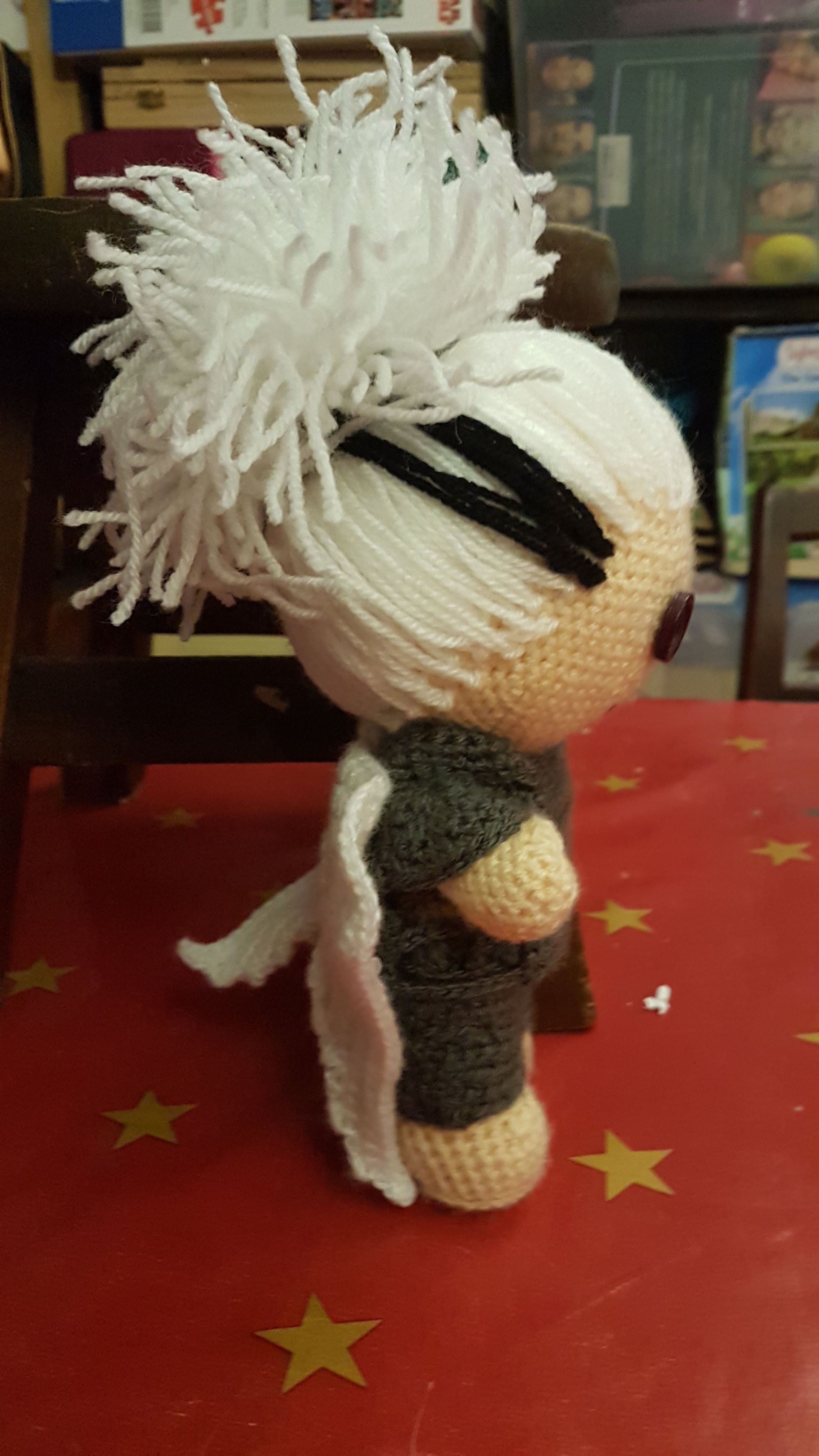
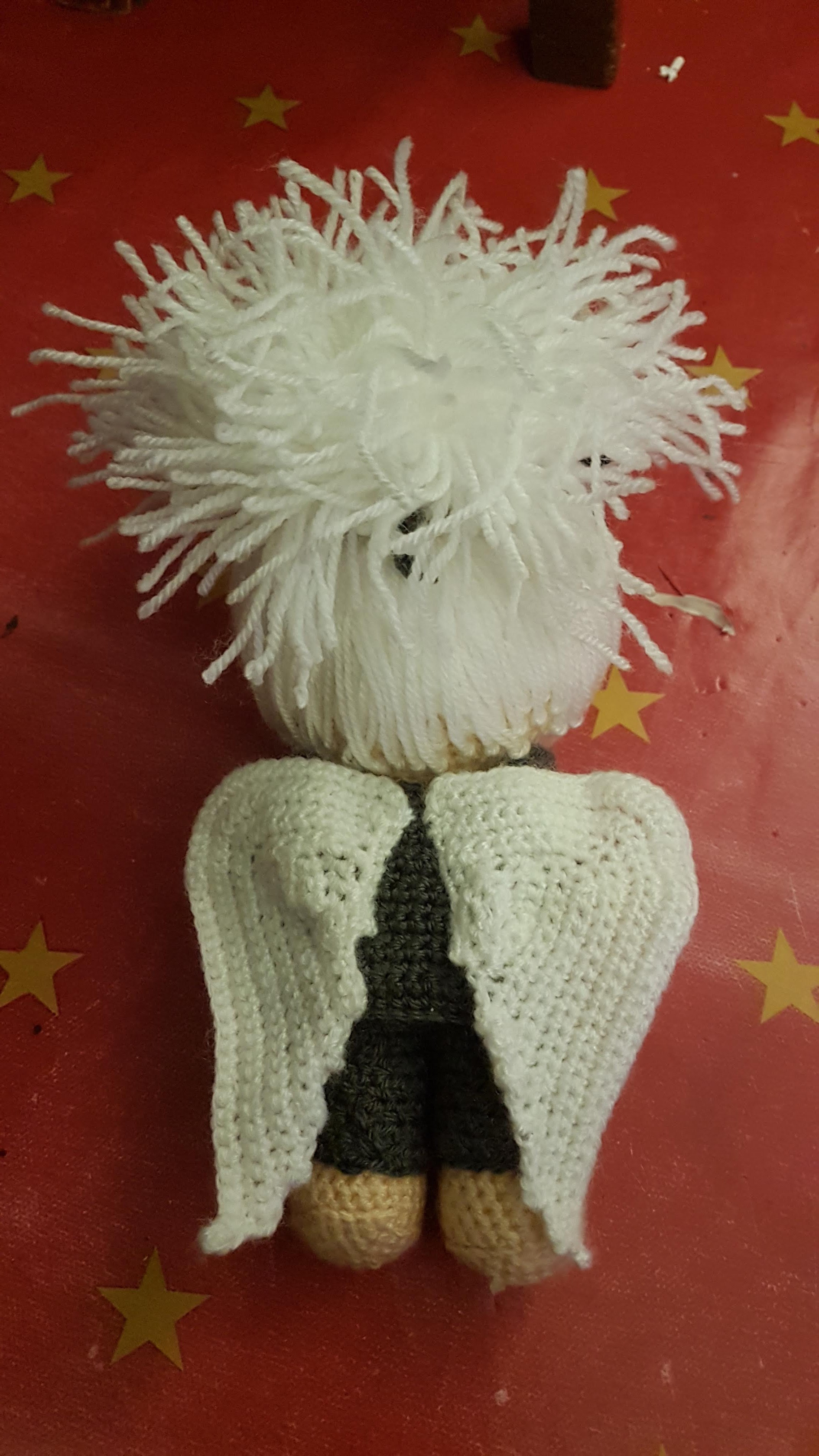
Over the past year I have made a series of dolls for a DM friend, one for each of his campaign characters. The last one was finished this week, as his wife’s Christmas gift, so I haven’t been able to share progress on it. This one had to have armour and wings: while I could find lots of wing patterns on Ravelry I had to go off-piste with the armour and make it up as I went along.
I have also started work on this sampler from FiddlesticksAU on Etsy: Tolkien fans will recognise the list of Hobbit mealtimes! I love the colours against the black aida fabric.
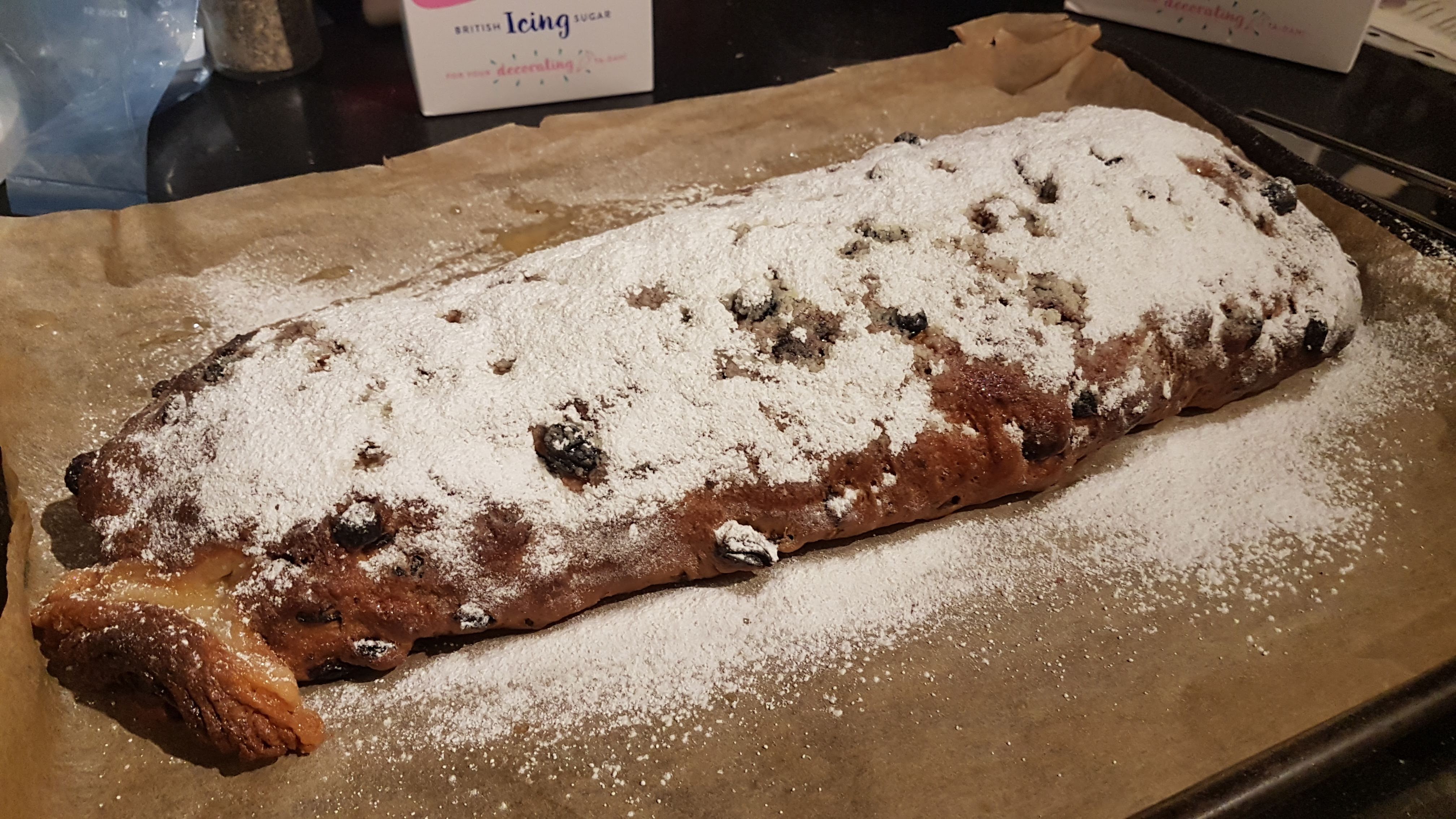
Less geeky but quite delicious was the stollen I mentioned last week – I have made two loaves so far as they disappear quite quickly!
And that’s been my week. It’s been a quiet one but I am happy to be safe and well with my little family.
Kirsty x
What I’ve been reading:
Without the Moon – Cathi Unsworth
That Old Black Magic – Cathi Unsworth
Zero Waste Sewing – Elizabeth Haywood
The New Anchor Book of Blackwork Embroidery Stitches
Serendipity is a wonderful thing, isn’t it? About eighteen months ago, during a quick scan of my Twitter feed I saw an ex-colleague from the National Army Museum, who is now in New Zealand, tweeting about a game called Library Island.
This interactive training activity helps participants to explore strategy, innovation, and the messy business of working with communities. We’ve spent the last two years perfecting Library Island with university staff, health workers, museum professionals, students, and, yes, librarians.
matt finch/mechanical dolphin
This piqued my interest, as a) I really like libraries, b) I’m a museum professional and c) I’m really nosy curious about what other people are up to in the culture sector. At the time I was also doing a lot of thinking about how we could make our school sessions more playful/gamified, so I jumped on the conversation. That tweet opened up a whole new world of conversations around scenario planning and how that approach might be adapted to work with secondary school students, starting with a cup of coffee and a wide ranging chat on a hot day at the museum with Matt Finch of the Said Business School and developer of Library Island.
Fast forward eighteen months and one global pandemic…
At 7.30am on Wednesday (8.30am in Copenhagen, Denmark and 6.30pm in Sydney, Australia) I logged into a Zoom call with Matt, Teresa Swist of the Young and Resilient Research Centre at Western Sydney Uni, and Kirsten Van Dam of Out of Office. This was the third zoom meeting of what’s becoming a knowledge sharing group set up originally by Matt, as the nexus, but which is creating synergies between different projects all over the world. Co-design, co-production and co-creation with communities were all part of this week’s conversation, which link back into the development of the new museum.
I can’t imagine that, without COVID-19, I would ever have had these conversations with people all over the world. Pre-corona, arranging a meeting just with someone in London would have meant building in travel time, trying to find a day when we didn’t already have umpteen things in the diary months ahead of time, and certainly wouldn’t have happened on a Wednesday morning when – in ‘normal’ times – I take the kids to school and then trek into London.
My next meeting on Wednesday – also via Zoom – was a filmed interview about teddy bears and mental health, and then a conversation about how we can make the museum into a virtual environment so we can use the building while its closed. Even my works Christmas socials were online! A party where I don’t have to get on the Central Line home afterwards, perfect.
Zoom and Teams aren’t perfect, but this year they have made the world smaller and my thinking bigger.
Christmas can start now!
I think I am finally ready for the festive season, despite announcements of mutated viruses and the invention of Tier 4 in the last 24 hours. I am sad, as we can’t go and see the older girls (formerly known as the Timeshare Teenagers) and our grandson, but I am also glad we are safe at home.
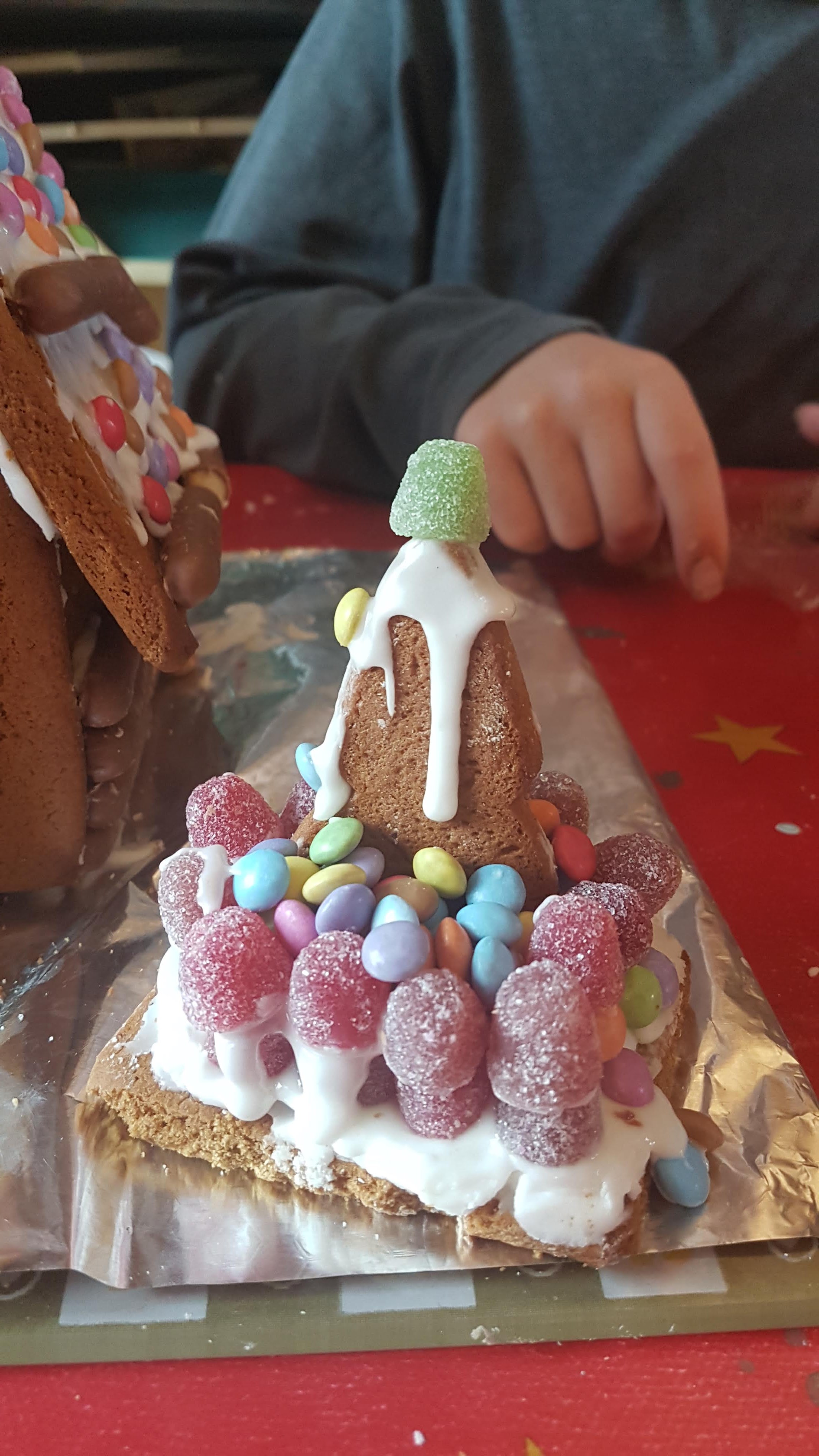
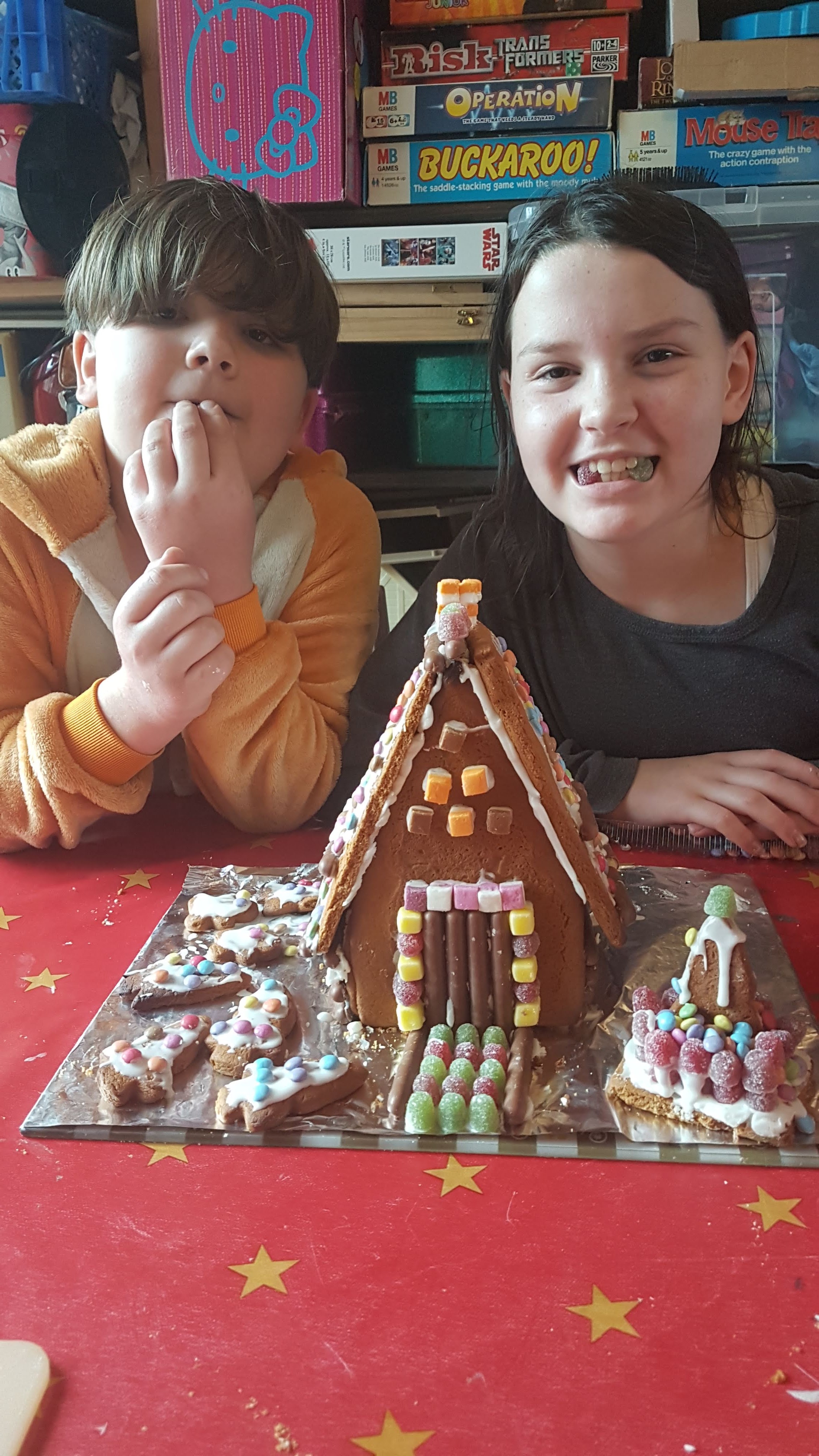
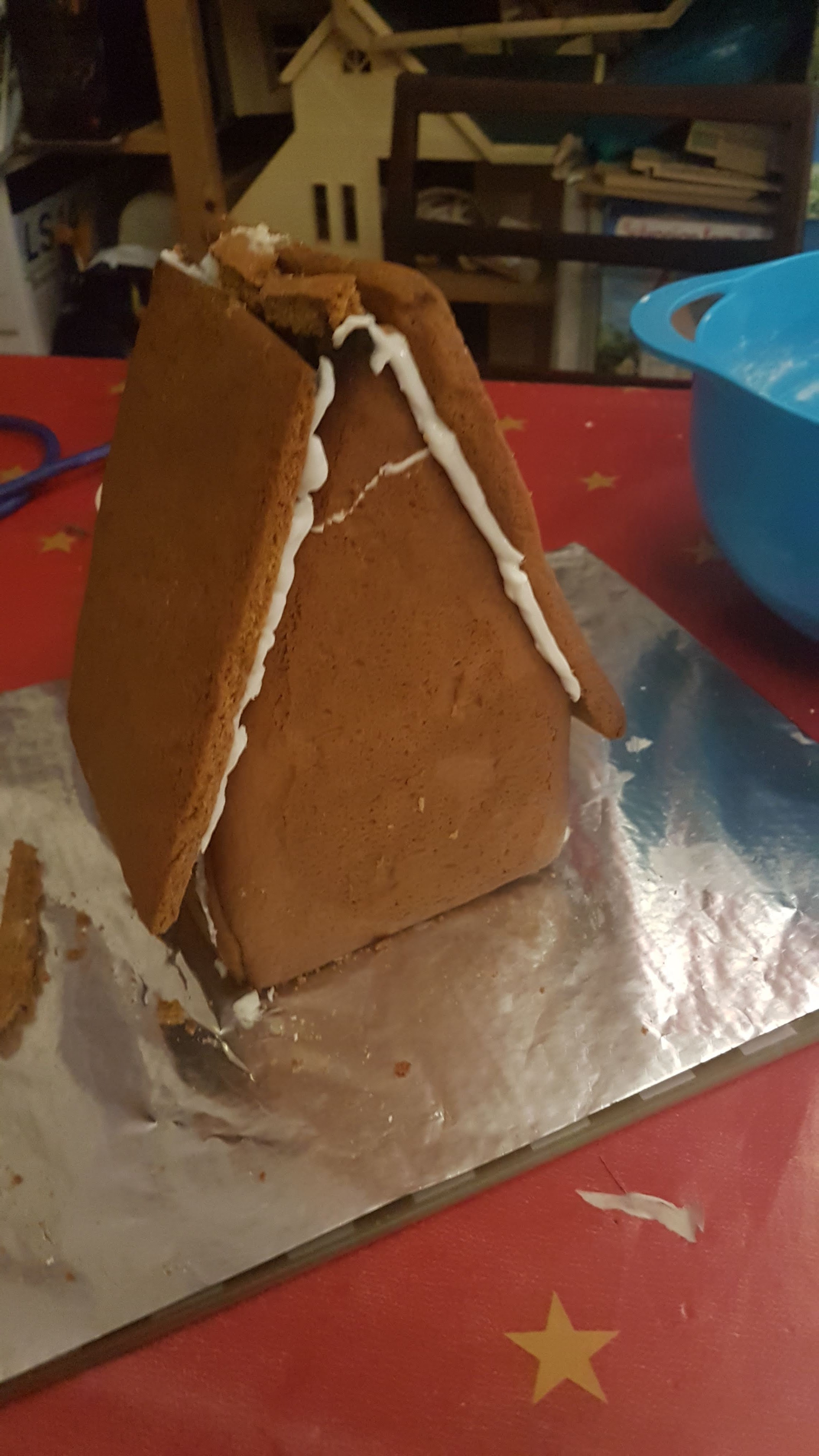
I finished work for the holidays at lunchtime on Friday after a cheery, chatty Christmas cuppa with the rest of our little learning team. In the afternoon I gave in to the demands of Thing 2 to make a gingerbread house from scratch: we’d never done that before, but when we have had kits previously the biscuit has been quite fragile and the houses have been a bit of a disaster. So, it was back to BBC Good Food, which is usually my go-to for new recipes, where we found instructions – including templates – for a simple gingerbread house. We made the gingerbread and constructed the house on Friday, then left it to set overnight before decorating with Dolly Mixtures, mini Smarties and chocolate fingers on Saturday morning. I think at least as many sweets ended up in Things 2 and 3 as on the house, but it looks really festive. Thing 2 made a mini Christmas tree as well, with a wall of jelly sweets to hold in the Smarties.
Right now I am waiting for the Stollen dough to prove – again, it’s a BBC recipe, this time by Simon Rimmer. It’s funny – there’s nothing to say I can’t make stollen at any time of year, as I really like it, but it has become part of the Christmas routine. The cake was marzipanned yesterday, and I’ll ice and decorate it in the week. I’ve been haunting Pinterest again for ideas, which is always risky.
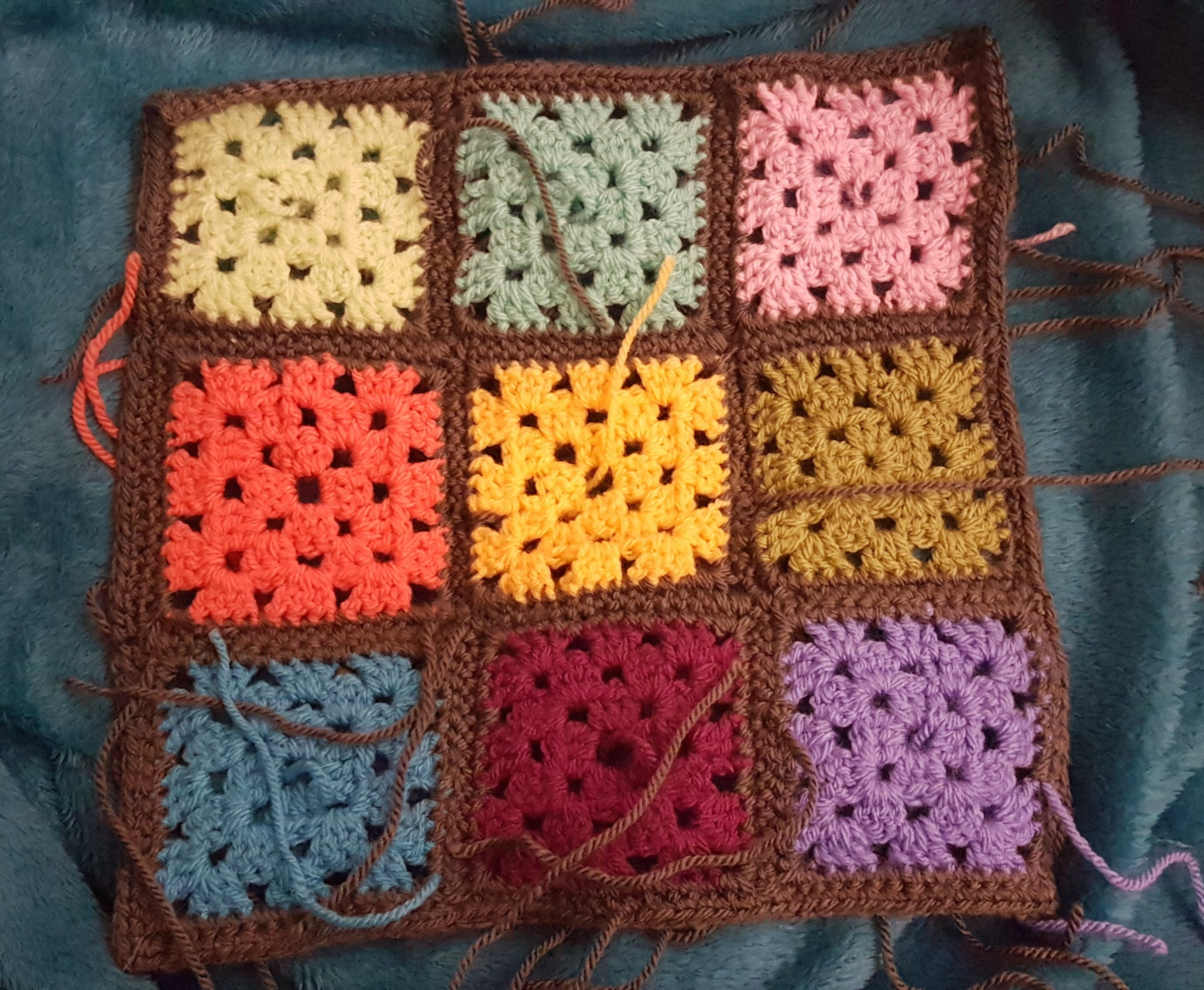
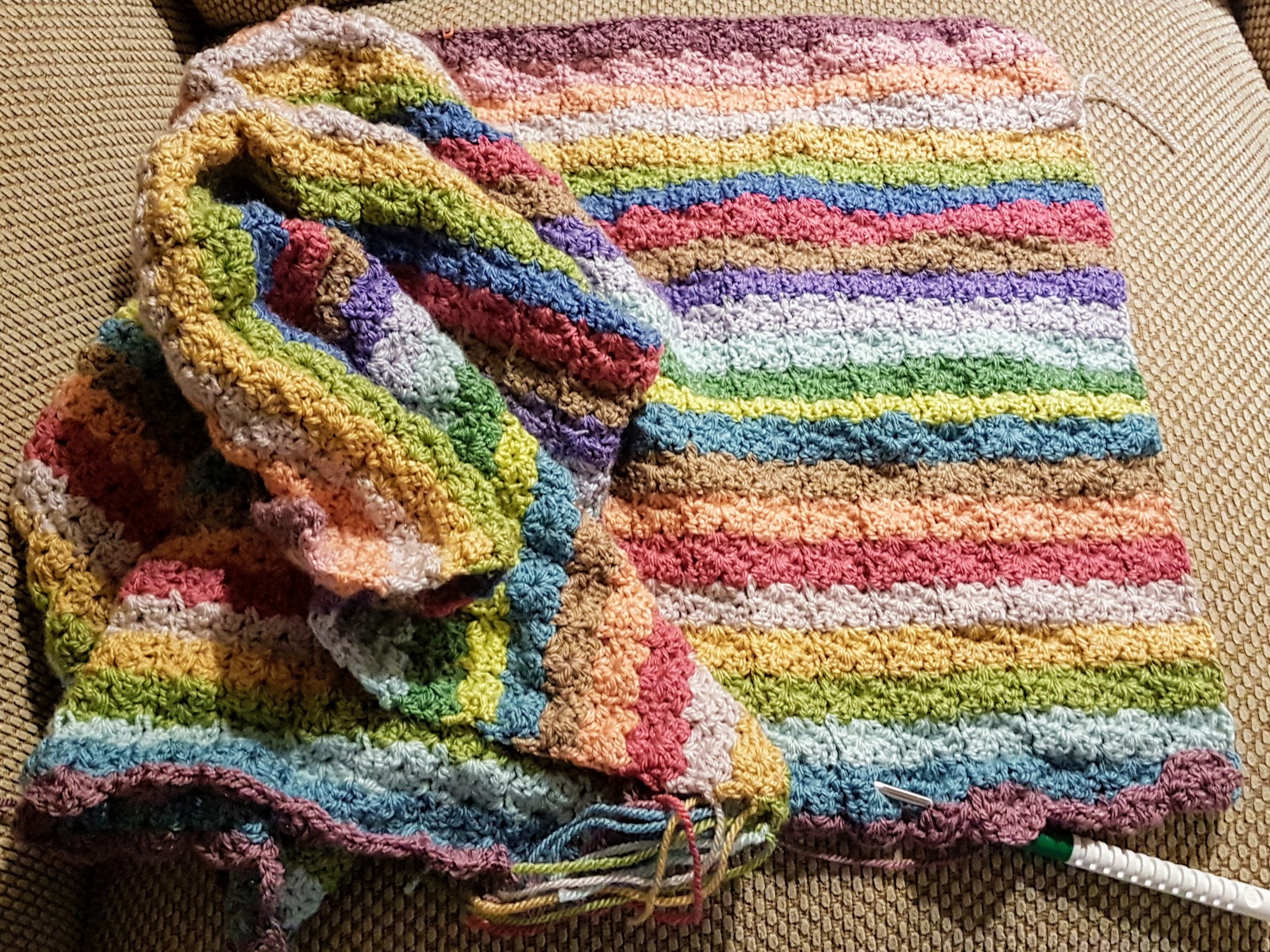
The Zoom blanket is finally finished and was sent off on Thursday, so that’s out of the way and I can focus on a crochet commission for a friend. I enjoyed making this, apart from weaving in the ends, and the matching hat is very cute. Hopefully the expectant mum will also like it!
On the cross stitch frame I have a Lord of the Rings themed pattern, on black aida so the daylight lamp is coming in very handy. A top tip someone told me ages ago was to have a white cloth on your lap when stitching on dark fabrics, or even a light box. No one mentioned cats, which is usually what’s on my lap!
My next post will be after Christmas, so I’ll leave you all with warm wishes for a peaceful, safe festive week. See you at the end of week 40!
Merry Christmas!
Kirsty x
What I’ve been reading:
Hogfather – Terry Pratchett
Bad Penny Blues – Cathi Unsworth
Without the Moon – Cathi Unsworth
Christmas films ticked off:
Miracle on 34th Street (1947)
Serendipity (2001)
Doctor Who: The Christmas Invasion/The Runaway Bride/Voyage of the Damned
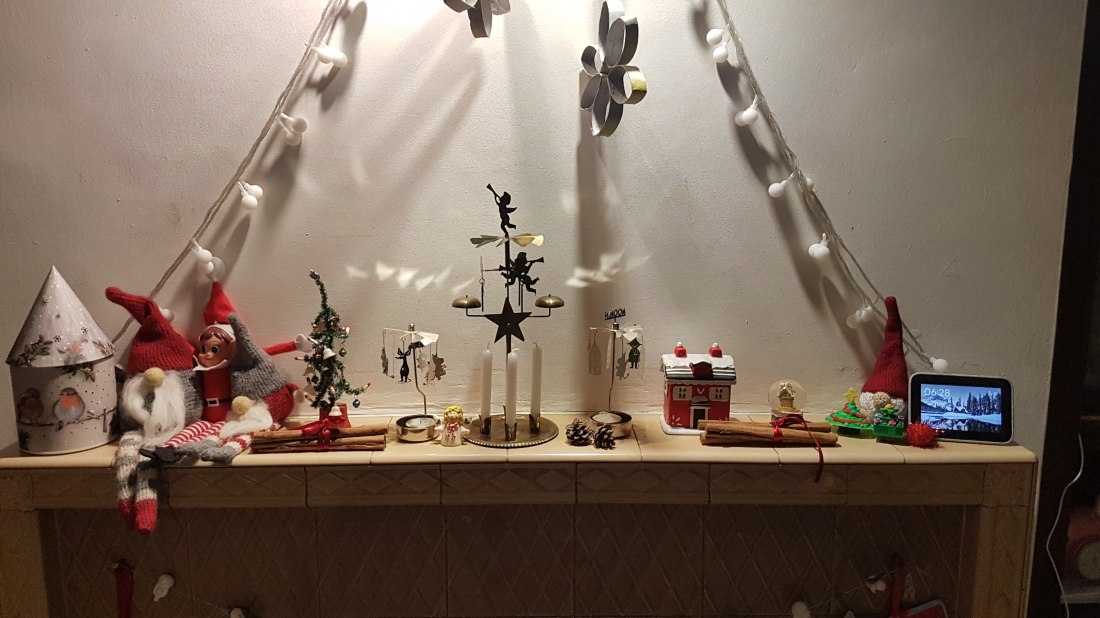
After last week’s grinching, dear readers, the tree is up and the festive fireplace is decorated. If you look closely at the cover image you can probably spot that bloody elf lurking among the tomtes (Nordic gnomes – the pair on the left are from this patternand the new addition on the right is here).
I love my fireplace at Christmas: pretty lights and candles, and this year I have chosen to use my late mother-in-law’s angel chimes as a centrepiece. The Google clock is there to play Christmas music, of course. This year I have built a Spotify playlist, which means I am in no danger of being forced to listen to Mariah Carey, Paul McCartney or John Lennon’s Christmas offerings but I can include Kate Rusby, The Black Crowes, Bruce Springsteen, The Killers and The Dropkick Murphys alongside Slade, Wizzard and co.
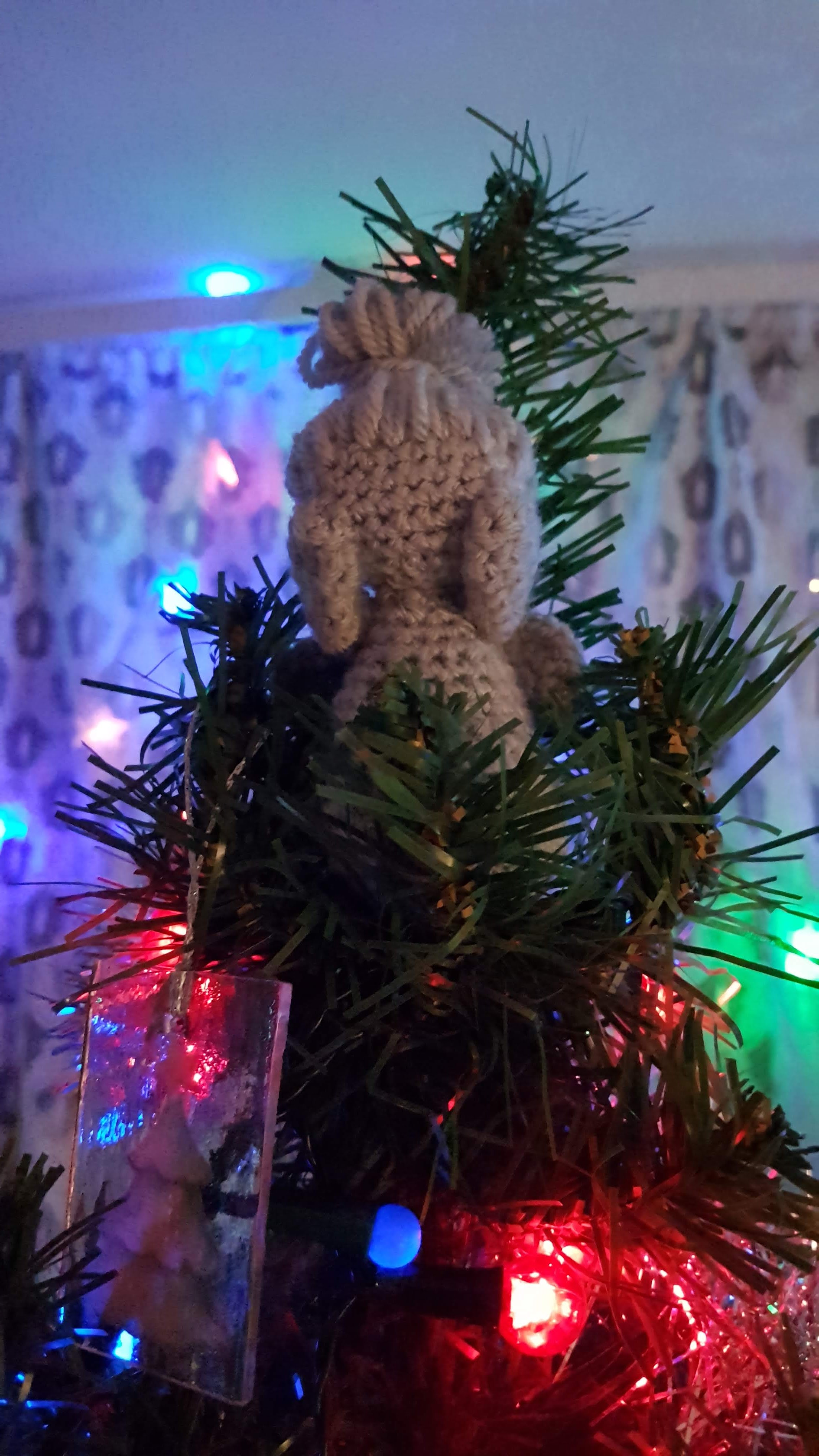
Fireplace and tree, complete with weeping angel.
We have an artificial tree rather than a real one as its a few years old now. We’ll keep using it until it’s too tatty rather than send it to landfill – it’s so covered in decorations as Thing 2 doesn’t like leaving anything out that you can’t see much tree anyway. It sheds a bit, but so do the cats and the three long-haired people in the house!
Remake, refashion, reuse
I love charity shops, I really do. There’s nothing I like more on a Saturday morning than a mooch round the local town, preferably solo, exploring book shelves, bric a brac and the clothes rails. There are such treasures to be found: a new craft book, picture frames, a pair of curtains that can be turned into skirts and quilt backs, a vintage dress or sewing pattern, or a pretty bowl for the frivolous shelves in my shed. Yesterday I spotted dresses from Coast and Cos (sadly not in my size) and gorgeous ’60s glassware (sadly no room in my cupboard).
We are very lucky in Epping, as we have an excellent selection ranging from the well-known Cancer Research and the British Heart Foundation to more local ones like Haven House, St Clare’s Hospice and Eco. The last two have giant versions in Harlow as well, which yielded two giant beanbags and an Ikea cupboard for the conservatory. We also have a branch of Oxfam Books and Music, which I can spend ages in, usually emerging clutching a new art book in the hope that one day I will be able to draw, a craft book, or a classic from my childhood.
Yesterday’s charity shop treasures – a jigsaw for the Christmas break from Haven House, a snowman bowl and some pine cones that smell nice from Cancer Research.
Back when I was at university in Preston there was a wonderful shop called Jet Trading, packed with vintage dresses and accessories, and some of my favourite student dresses came from there – 1970s florals, worn with para boots and a biker jacket. My first LBD came from a charity shop in Monmouth – a 1960s grosgrain cocktail dress.
One of the wonderful things about learning to sew is the ability to hack and alter these charity shop treasures: like the fabric but not the length? Chop it and redo the hem. Looking for something with a bit of weight for a structured skirt? Polished cotton, double wide, full length lined curtains – done! The world is your mollusc, to paraphrase the legendary Terry Pratchett.
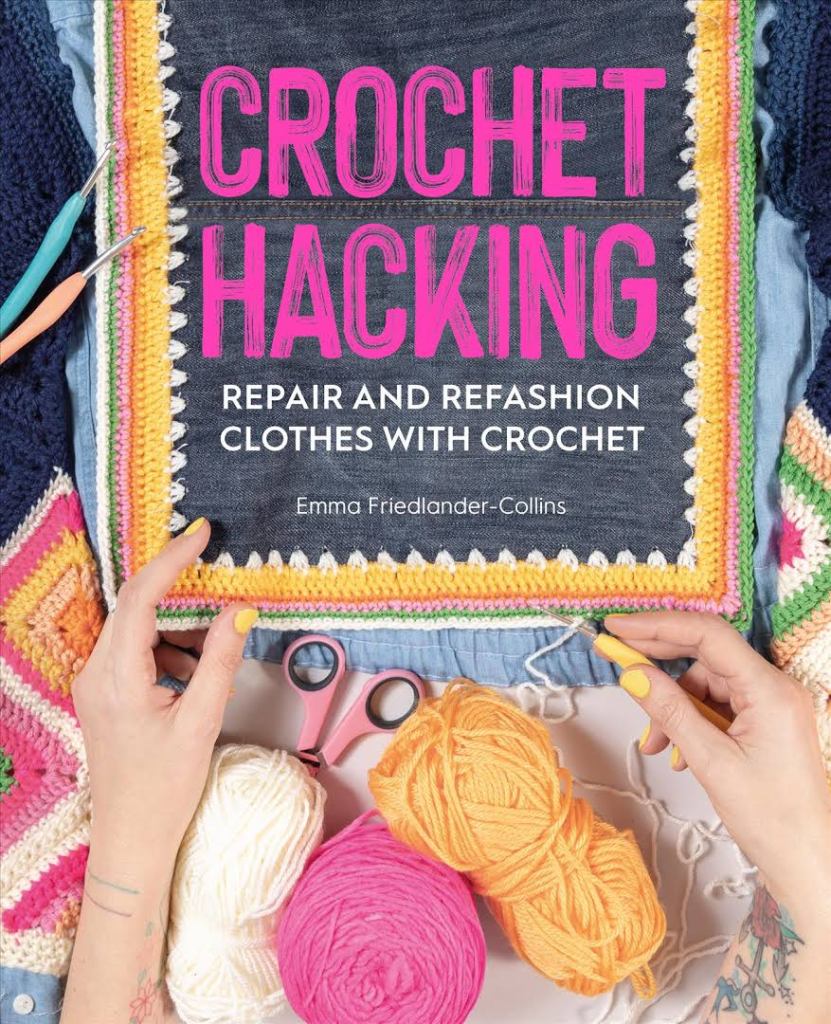
And then last week I got my hands on a book called Crochet Hackingby Emma Friedlander-Collins. I have been following her on Instagram for a while now, and thoroughly enjoying her hacking of clothes with a crochet hook and whatever yarn comes to hand. Anyone who has seen my shed knows just how desperately I need stashbusting ideas to get rid of all the ends of yarn from various projects, so this is a much needed addition to my craft library.
It’s a book designed to inspire confidence. It’s colourful and friendly and does not require you to buy anything new – not clothes, or specialist yarn, and for those of you going ‘ah, but what if I haven’t got a crochet hook!’, go and ask in your local charity shop as they are an excellent source of crafting materials as well as everything else. And yes, that usually includes odds and ends of yarn too. It starts by explaining why it’s better to remake than to buy new, and gives a few startling facts about how many clothes end up in landfill every year. It’s a LOT.
The book is divided into sections, showing you how to crochet into denim, jersey, wool and other fabrics – basic instructions and a few projects for each. I really love the custom sleeve stripes and the Fairisle-style cuffs, which both make the sleeves of a top longer in different ways, and the gorgeous kimono style wrap. Some projects require a bit more skill than others, but all of them are achievable.
Thing 2 has been a fan of refashioning for a while, as it happens: earlier in the summer she persuaded me to chop a skater dress that she’s been wearing for years into a crop top and skirt, as it was just too short for her. When she loves an item of clothing she tries to make it last as long as possible: this particular dress had been her older sister’s and I think was aged 5-6. It’s lasted really well, and now has a new lease of life. Last week she chopped a pair of pale grey leggings (really, what was I thinking?) into a pair of shorts, and rather grandly handed me the legs with a ‘here you go mum, I saved you the fabric’.
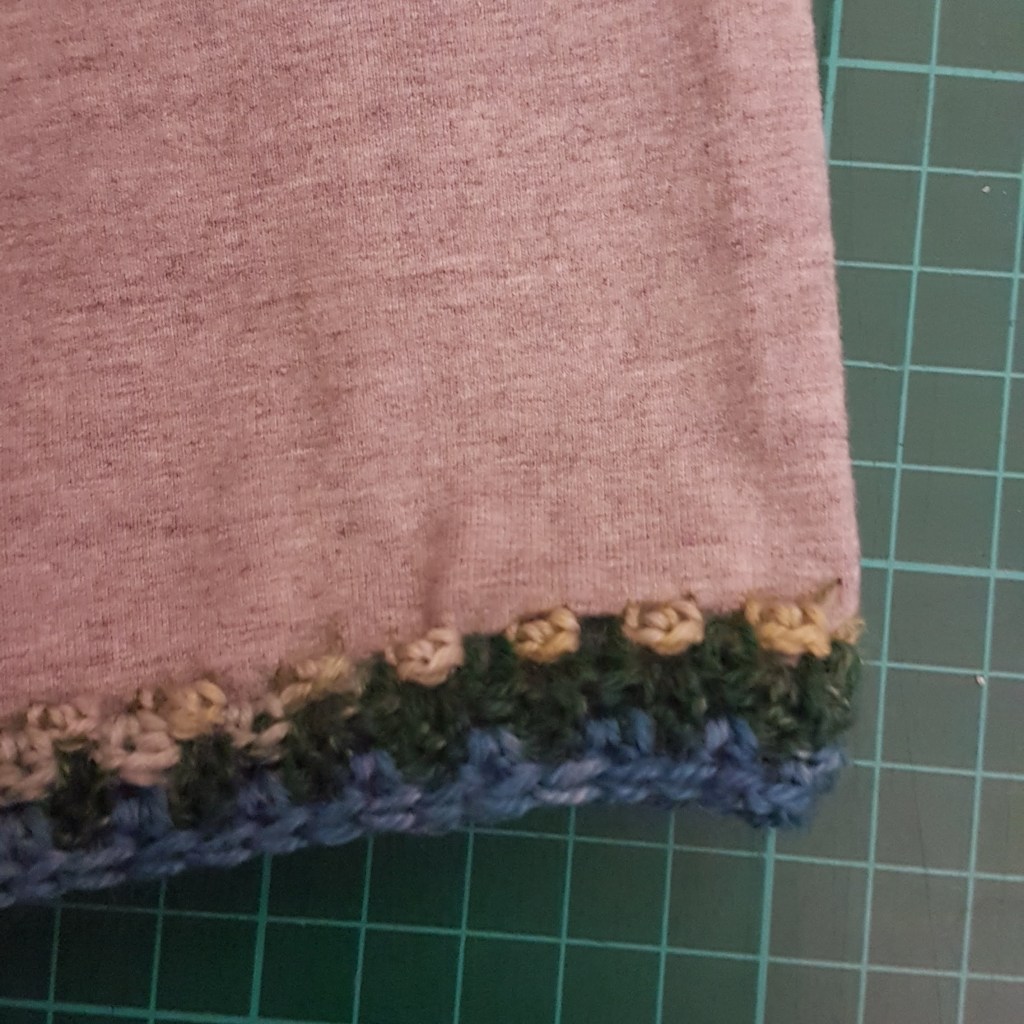
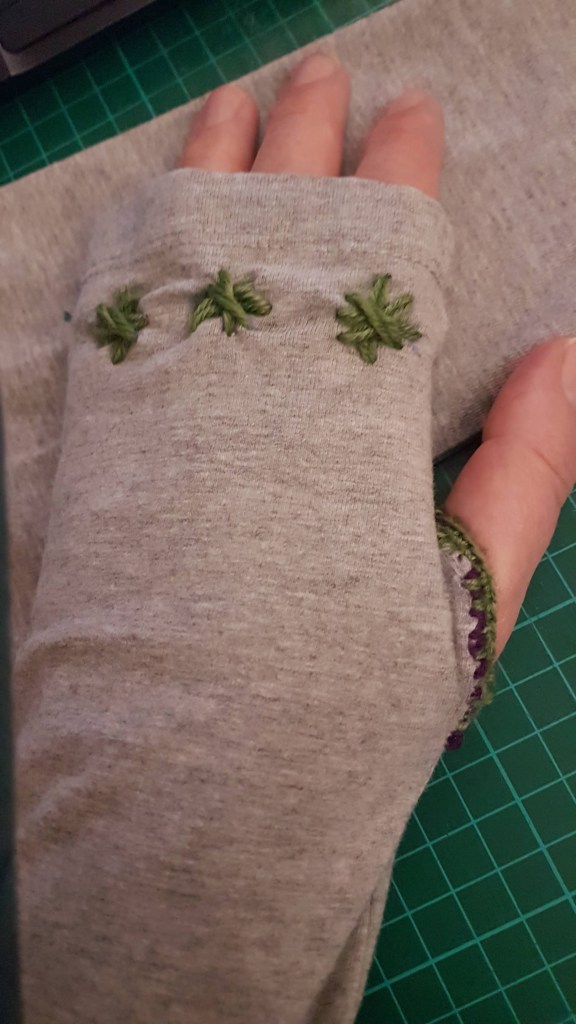
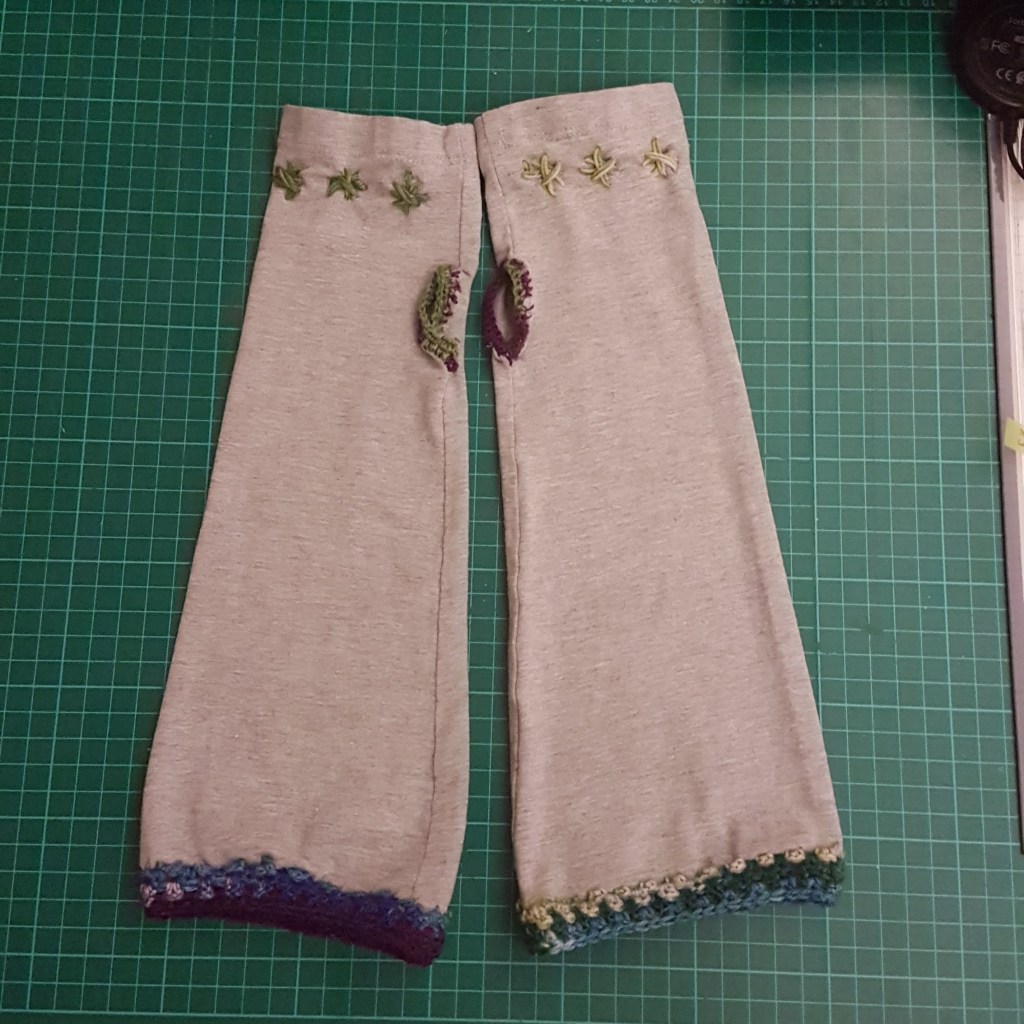
So I have had these legs sitting on my sewing table (oh, OK, the dining room table) and during a meeting I tried them on my arms. I have mentioned how easily distracted I am, haven’t I? They were the perfect length for arm warmers – working in what’s essentially a Victorian cast iron and brick greenhouse, as I do, means you develop a fondness for a handy layer. Armed with the Crochet Hacking book, some variegated sock yarn, a wool needle and a crochet hook I spent a few hours while in ‘receiving mode’ at some meetings jazzing up my new accessories with a few rows of crochet, some truly awful blanket stitching and some simple embroidery. The instructions in the book were really easy to follow, and now I’ll have warm hands in work!
The rest of the crafty week has been spent weaving in the ends of the nine-patches for the Zoom baby blanket, ready to put them together, and I started a pixie hat to go with the blanket as the baby in question is due in January.
A tidy pile of nine-patches and 2/3 of a pixie hat.
The cross stitch is coming on – I am working on fabric with 18 squares per inch, and my eyes are not what they used to be so yesterday I gave in and bought some of those magnifying specs from the chemist. I really must organise my eye test….
So that’s been my week. We are counting down to the end of term now – I failed as a parent on Friday and forgot it was Christmas Jumper Day, only realising as I was leaving school after drop-off that no one else was in uniform. Thing 3 seems to have forgiven me – I had it in my head that it was next week, when they have their Christmas dinner! Things 1 and 2 will be remaining at home after their isolation period ends on Tuesday: Welsh secondary schools are all moving to online teaching this week in a bid to stop the spread, but once again the English government is failing to act and is forcing them to remain open despite advice from the scientists to close.
Today Things 2 and 3 have asked if we can make stained glass biscuits – I have said yes, on the understanding that they don’t take a bite out of each one on the tree as they did a few years ago.
Let’s see what week 39 has in store!
Kirsty x
What I’ve been reading
Gobbelino London and a Contagion of Zombies – Kim M Watt
I am not good at Christmas – well, I’m not good at the build up to Christmas. I am tense. I am stressed. The mere sight of a Christmas tree before December 1st turns me into the Grinch. My family – bless them – have been asking me for weeks what the children would like for Christmas. I don’t know. Ask them! Ask their father! He is good at Christmas. He has ordered presents. I have not ordered presents. I have not booked my Christmas delivery slot at Tesco (other supermarkets are available).
I have not done Christmas cards for anyone but family for the last several years – work colleagues in a normal year get a tree decoration, and I donate the cost of cards and postage to charity. This year it will be a food bank charity. Until last Sunday I was in deep denial and we ended up dashing to Tesco to buy advent calendars (which we eventually got in M&S, as everywhere else was sold out)
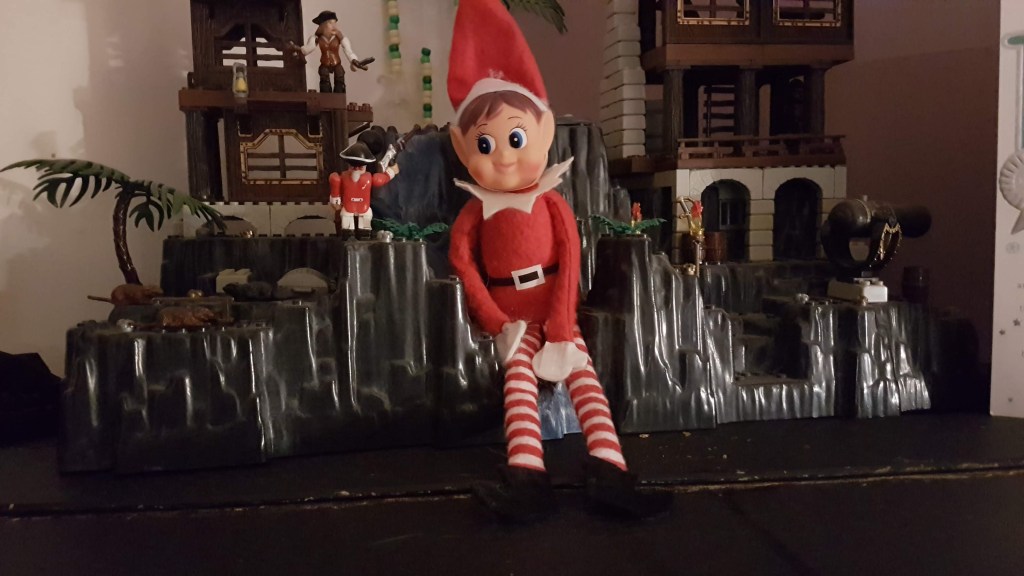
And don’t even get me started on that bloody elf. He could stay on the shelf for all I care, but Things Two and Three come downstairs and look for the stripy little sod every morning. The first year we had an elf, the kids went into hysterics and I had to promise to send it away. I rehomed it, but that didn’t last and their dad bought a new one in Poundland a couple of years later. I salute my neighbour who has two big elves and three baby elves, which is a whole lot of work. Luckily our elf – dubbed ‘Candycane’ by the children – just does what it says on the tin and sits on various shelves rather than getting up to twee mischief.
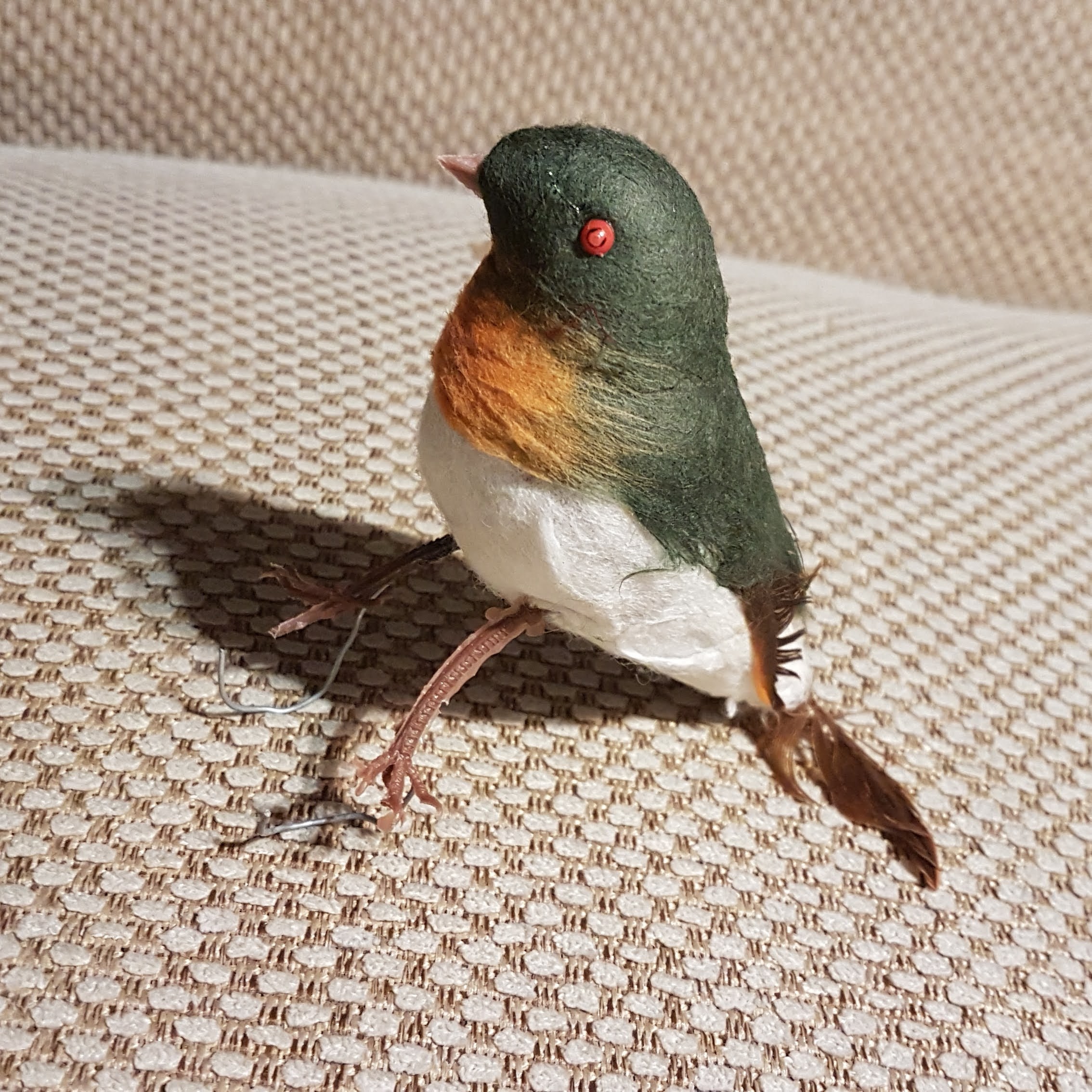
I am mellowing slightly, however, and Christmas lights are allowed to be put up this weekend. The tree goes up two weekends before Christmas and I am not budging on that. I have noticed that Thing Two has persuaded her dad to get their ‘bedroom tree’ down already, but I’m ignoring it. Teddy the cat was thrilled to catch his first bird as a result of this, however, and proudly dragged the fake robin downstairs to show us… he was practically strutting for the rest of the evening.
Teddy’s first bird…
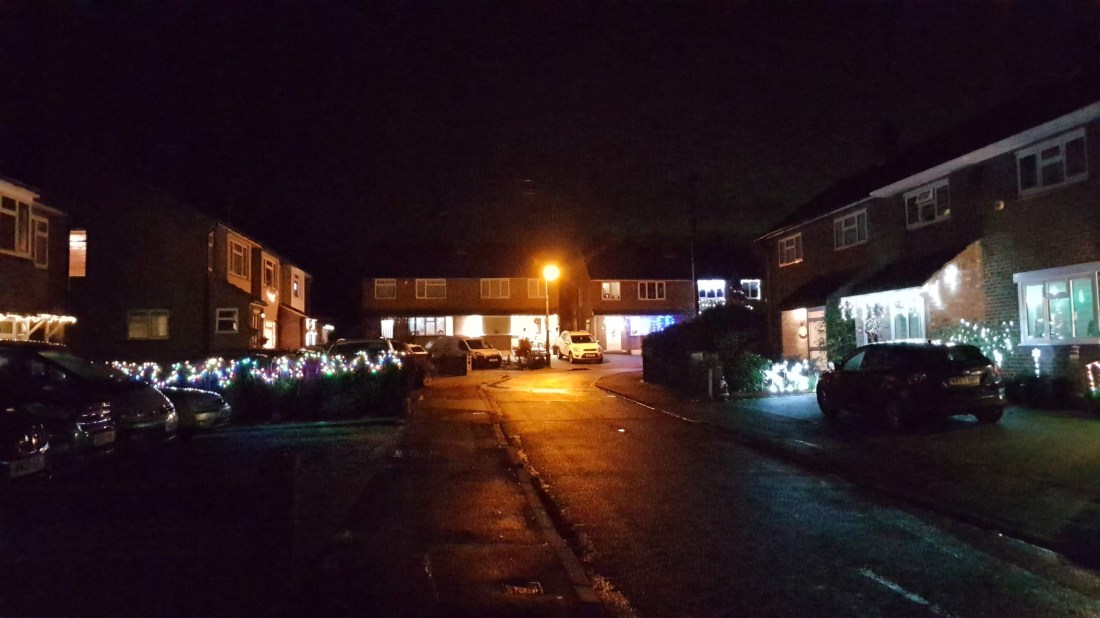
This year – of all years – I am enjoying the Christmas lights on the way to school, and one of my neighbours always goes all out to decorate their house.
There is one thing that’s guaranteed to make me feel a bit more Christmassy, luckily, and that’s a Christmas movie (Christmas music, too, but we’ll do that another day). Thing Two refused to allow us to watch any before December 1st, but now it’s open season and I can indulge. So here, in no particular order, are my favourite festive films.
1.The Muppets’ Christmas Carol. Michael Caine in possibly his greatest role ever. Excellent ghosts. Muppets. It truly has everything.
2. Scrooged. You can’t go wrong with Bill Murray in anything, and this also has one of the best Christmas theme songs ever in the shape of Al Green and Annie Lennox’s ‘Put a little love in your heart‘. It’s not Christmas till Carol Kane has thwacked Bill Murray with a toaster, frankly.
Scrooged
3. Miracle on 34th Street – the 1934 version is my favourite, but I am quite fond of the Richard Attenborough one too.
4. Elf – The best way to spread Christmas cheer is to sing out loud for all to hear.
5. It’s a Wonderful Life – my dad’s favourite. James Stewart is wonderful as the frustrated savings and loan owner whose life never goes quite to plan. He’s so human, and if anyone deserves an angel its him.
It’s a Wonderful Life
6. The Christmas Chronicles – a late entry by this Netflix original, with Kurt Russell as a great Santa. Goldie Hawn needs to lay off the Botox though. Plus, a guest appearance by Miami Steve (Steven Van Zandt). The sequel is brought down by the really naff ending.
7. The Hogfather – I reread the book every year, and although this isn’t strictly a film its still part of my Christmas watch list.
HO. HO. HO.
8. Arthur Christmas. Another new one, but a great voice cast.
9. National Lampoon’s Christmas Vacation. If only for the cat.
There are others, of course, but for me its not Christmas until I have watched this lot. (For the record, yes, Die Hard is a Christmas movie.)
I feel more festive already.
Lost: one (crafty) mojo
This week – quite apart from it being December – has been a bit challenging, to say the least. Thing One was already isolating after contact with a Covid case in the last week of November, and then on Monday we received an email telling us that the whole of years seven and ten now had to isolate as the number of cases had risen among both students and staff. Back to the home learning then, and I made the decision to work from home with them. While I could leave Thing One alone for a few hours in between my beloved leaving for work and me coming back, it wasn’t fair to expect her to supervise the (very determined) Thing Two. And yes, mum, I know where she gets it from!
Thing One had a great virtual parent/teacher conference this week which told me what I already knew – my daughter is brilliant – and she has worked really hard this week. One of her English tasks was to write a speech, and she spent far longer on it than the allotted lesson time as she was so passionate about her subject. She was writing about mental health; as someone who has been diagnosed with generalised anxiety, this is really important to her (and to me, as someone who lives with depression) and I am really proud that she is engaging with this in her work.
Thing Two is a different matter. She is still getting used to secondary school after six months at home, and unlike her big sister she is not a self-motivator. My work week has been punctuated by demands for assistance with geography, history, English and science (though she did at least get on with the maths by herself). The only plus was that she did the art homework she’d been resisting while avoiding her geography. I have found meetings having meetings with a bad-tempered little presence in the room quite tricky, especially as she’s a curious little bird and likes to come and see who I am talking to. Really I should invite her to the design meetings as she’s the right age and we could pick her brains!
I am tempted not to send them back for the last few days of term, to be honest: the infection rates are highest in the 11-16 age group, as secondary schools didn’t close during lockdown, and keeping them safe has to be my priority. I don’t want whatever Christmas looks like to be spent watching them for symptoms of the virus – Thing One is already fed up of me pouncing on her and feeling her head for signs of a temperature. Poor Thing Three is having to go to school still, as the girls aren’t showing any symptoms, but I suspect he likes the escape.
Having to wear the mum head and the work head at the same time is tiring, as you need to have separate brain spaces, so by the time we finish for the day and I have fed the horde crafting is the last thing on my mind. Dinner is nominally 6pm, but I am flexible as to time zone: it’s six o’clock somewhere, to paraphrase the song.
The very quick stitch I started last week is mostly a frame and some wording, very little has happened with either blanket and the sock is positively languishing in my work bag.
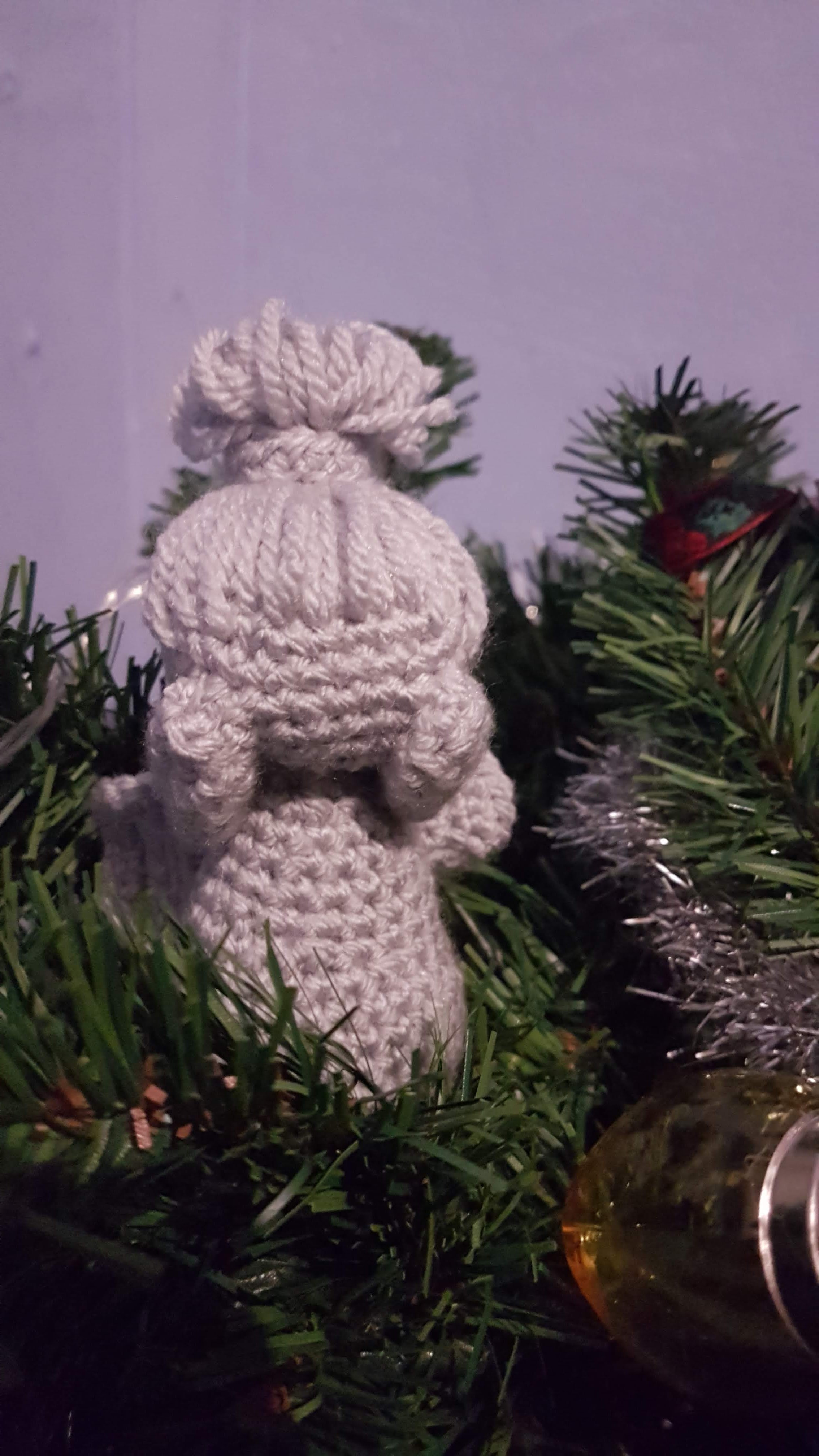
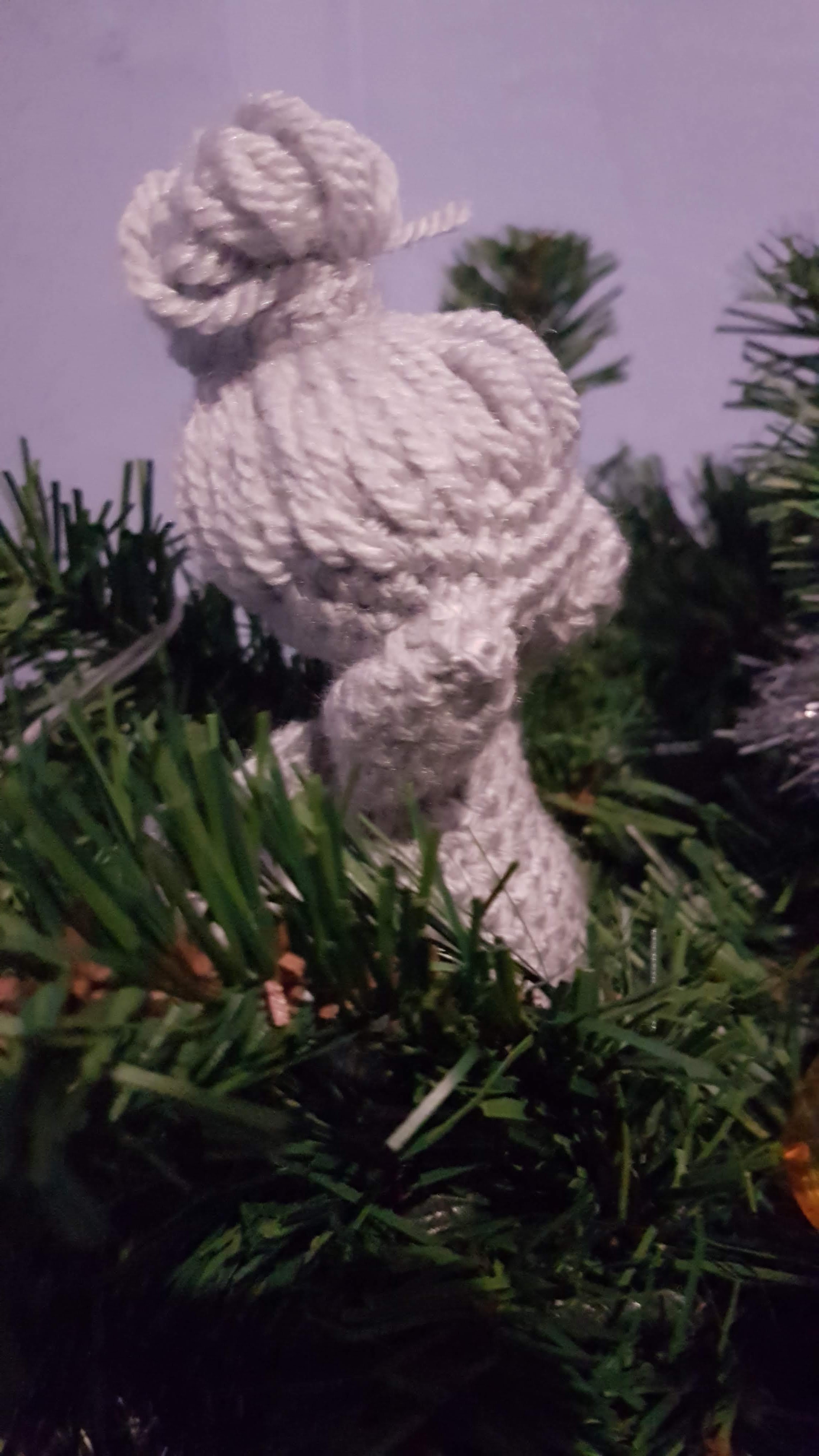
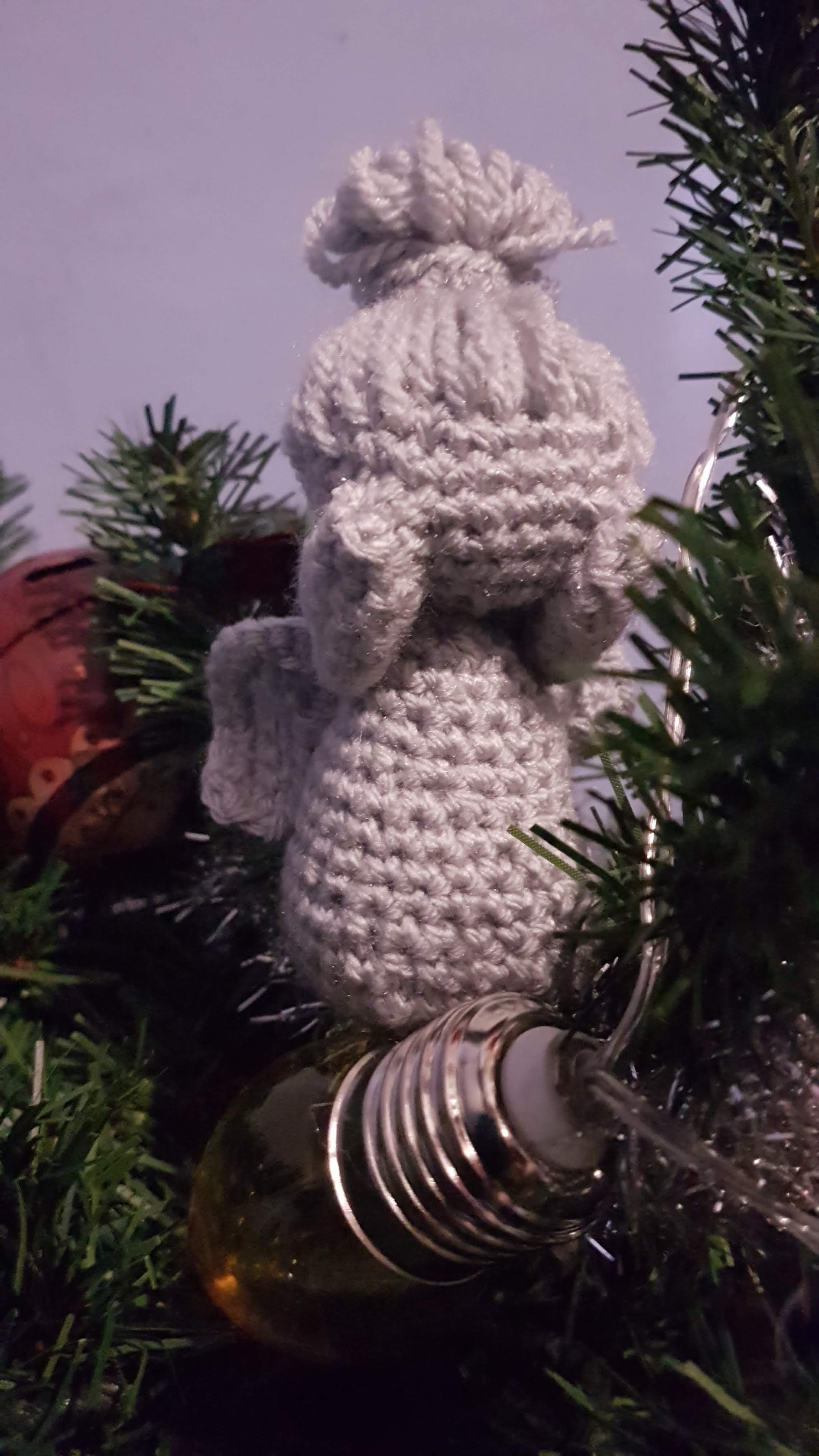
Sometimes when the crafty mojo vanishes it’s good to pick up something different just to get the hands moving, so I delved into my Ravelry library yesterday evening and whipped up a weeping angel amigurumi which will end up on the tree next weekend. The photos were taken on the kids’ mini tree which is lurking upstairs (yes, the one where Teddy ‘caught’ his robin).
Don’t blink….
I dragged Thing Two out for a muddy walk yesterday, through the woods to the rope swing. We tested out our new wellies, and looked for fungi and mosses. The winter sun was golden and lovely in the trees, and we followed deer tracks through the mud. There has been a lot of rain this week, so it was good to get out into the sunshine.
So that was week 37. Winter has set in with a vengeance, with sub zero temps – the lake was 5 degrees yesterday, so hopefully it won’t be too much colder this morning. We didn’t get to swim last week as the police shut it down as a ‘gathering’ despite the social distancing measures that Redricks had put in place. Is it weird to be looking forward to getting into freezing water?
See you at the end of week 38, when the tree will be up and I’ll be well into my list of festive films. Which ones have I missed out?
Kirsty x
What I’ve been reading:
Crochet Hacking – Emma Friedlander-collins
The Dark Archive (Invisible Library) – Genevieve Cogman
Forged (Alex Verus) – Benedict Jacka
The Third Nero (Flavia Albia) – Lindsey Davis (Audible)
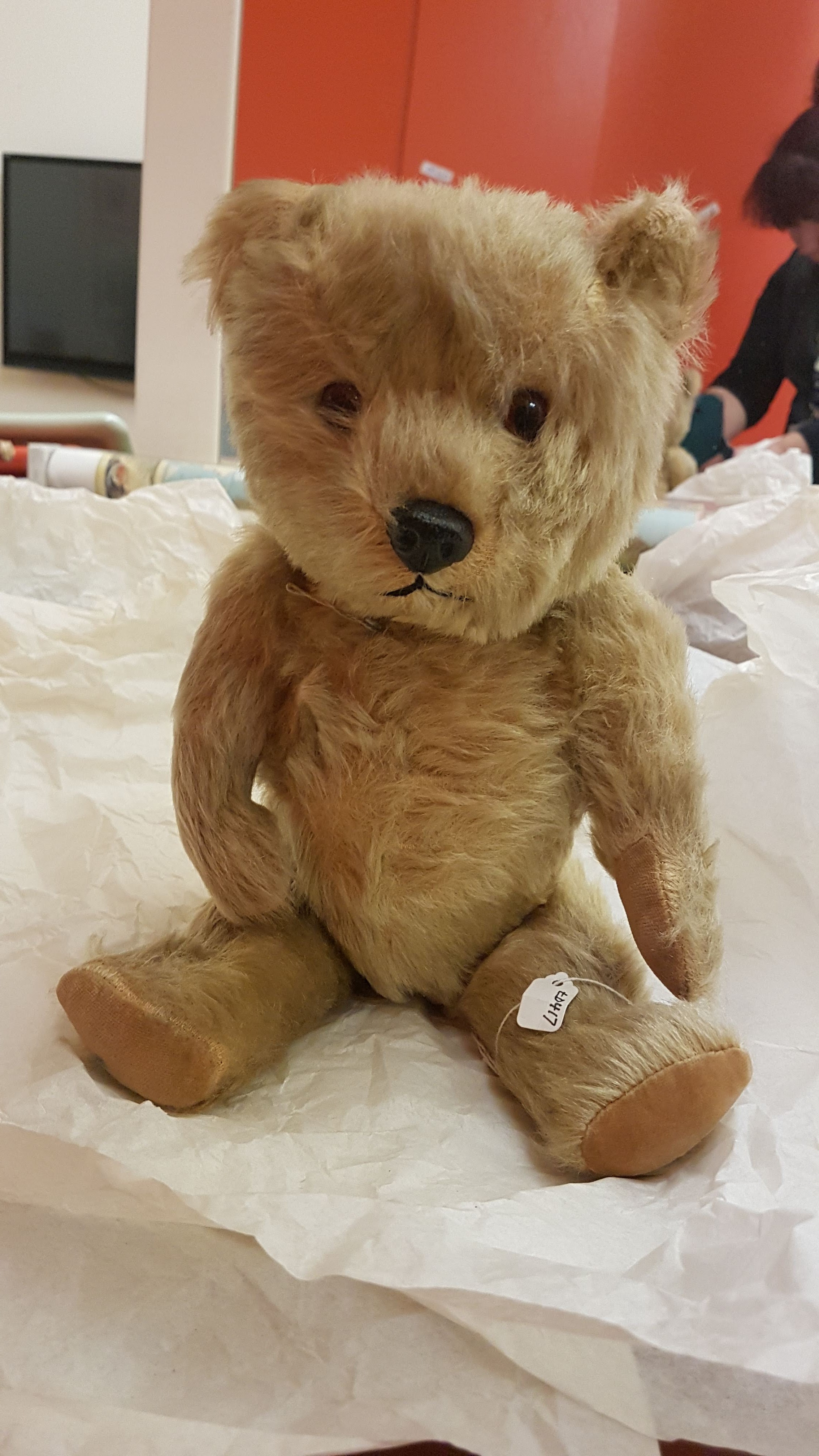
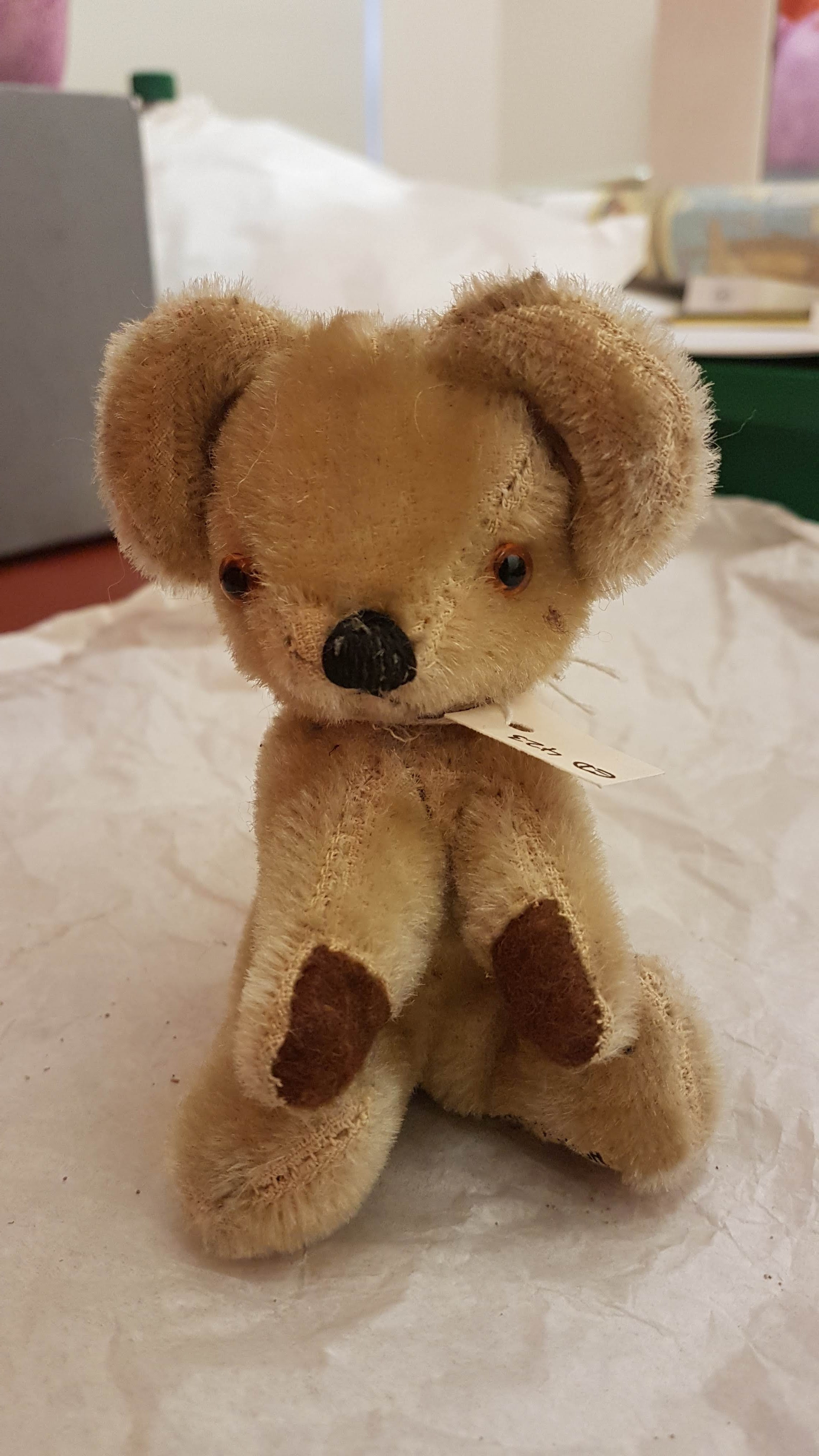
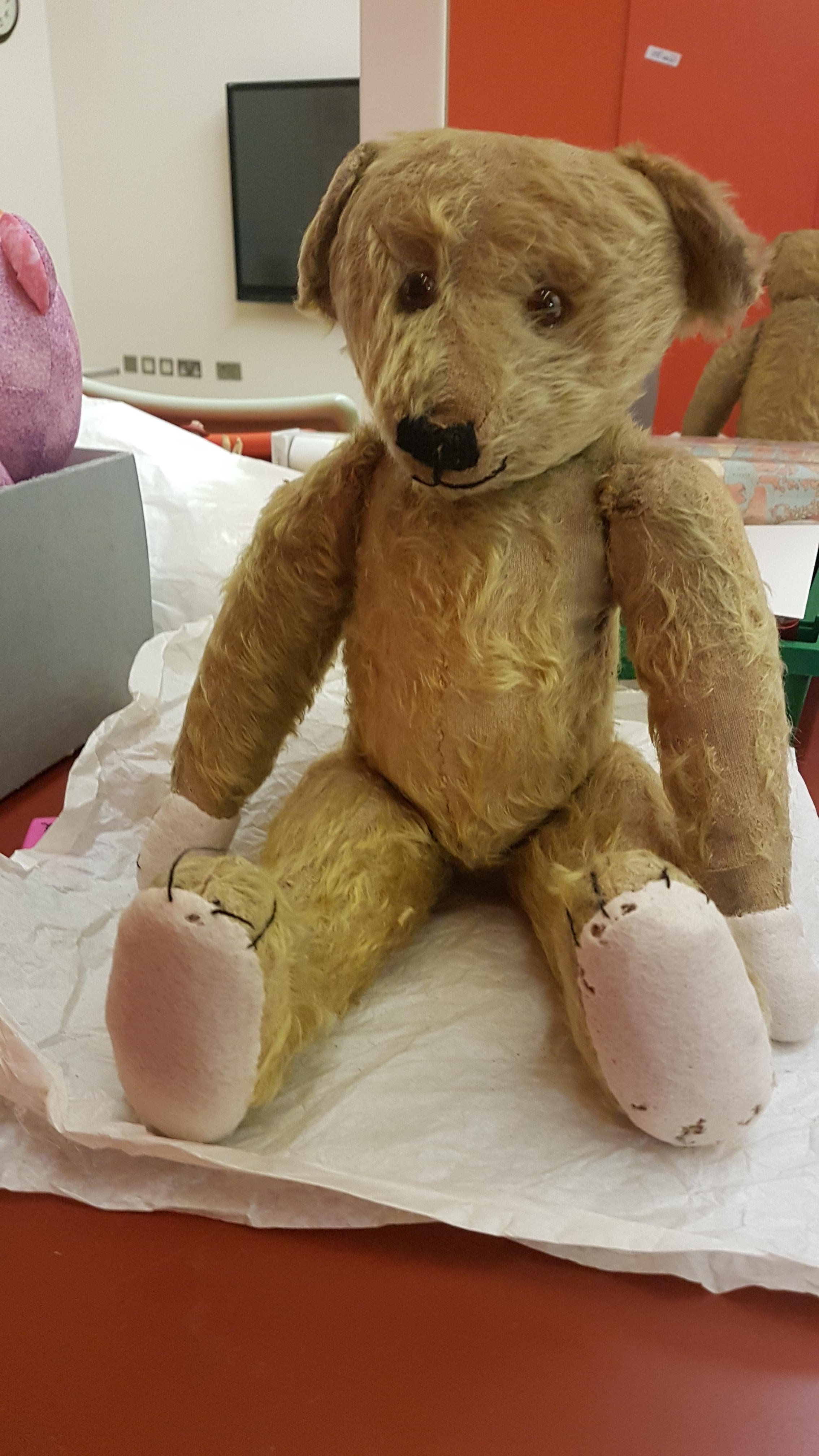
Over the last few months I have railed at the randomness of the learning collection at the museum: plastic tat you can buy at any English Heritage gift shop, for example, or objects too fragile to handle. I have been adding things to the ‘someone else might like it’ pile with abandon, and sure enough Fran, our brilliant Creative Practitioner, has been finding new homes for all sorts of strange things; including the House on the Hill Toy Museum and the New Vic Theatre. I have never understood the point of a handling collection that can’t be handled.
And then this week I got to the teddies. Oh dear.
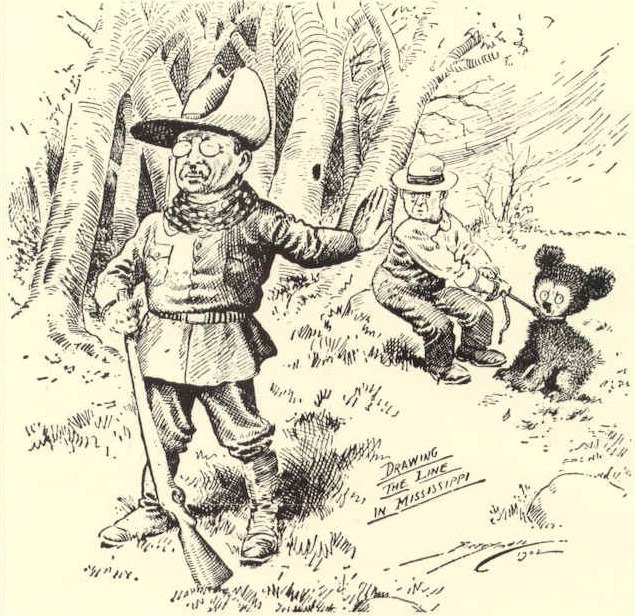
Teddy bears have been around since the early 20th century, when two toy makers – Richard Steiff in Germany and and Morris Michtom in the USA – were inspired to create toy bears after a political cartoon was printed in the Washington Post. It told the story of a bear hunt, where Theodore (‘Teddy’) Roosevelt refused to shoot a bear that had been caught and tied up by a handler as it was unsportsmanlike. I won’t comment on the fact that they were out shooting bears in the first place, as that’s not the point here!
Cartoon by Clifford Berryman, published in Washington Post, 1902
Michtom saw the cartoon and was inspired to create a toy bear cub which he displayed in the window of his shop, with a sign saying ‘Teddy’s bear’. He’d sent a bear to Roosevelt and been given permission to use his name, although apparently Roosevelt himself hated being called Teddy.
Simultaneously, over in Germany Steiff designed a similar toy bear and exhibited it at the Leipzig Toy Fair. Both toys were an instant hit, and the world has been buying teddy bears – and other stuffed animals – ever since. Our most popular ‘Spotlight Talk’ (on-gallery short teaching sessions delivered by the brilliant Activity Assistants) was Teddy Bears. One bear in the museum – Little Tommy Tittlemouse – is a celebrity and gets birthday cards sent to him every year by members of the public. His previous owner started the tradition when he donated the bear in 1965 and it continued until his death in 1986. He even has a museum blog post dedicated to him. (In case you’re interested, his birthday is the 24th of November, so this week our Tommy turned 112)
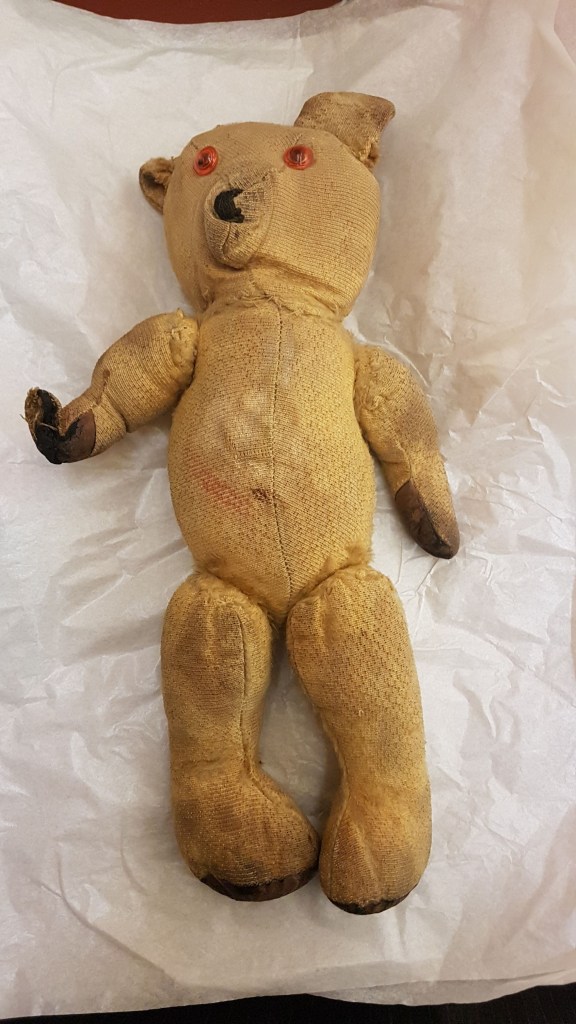
The mohair has rubbed off, the wood wool is coming out of his paws, his nose is squashed but someone really loved this bear….
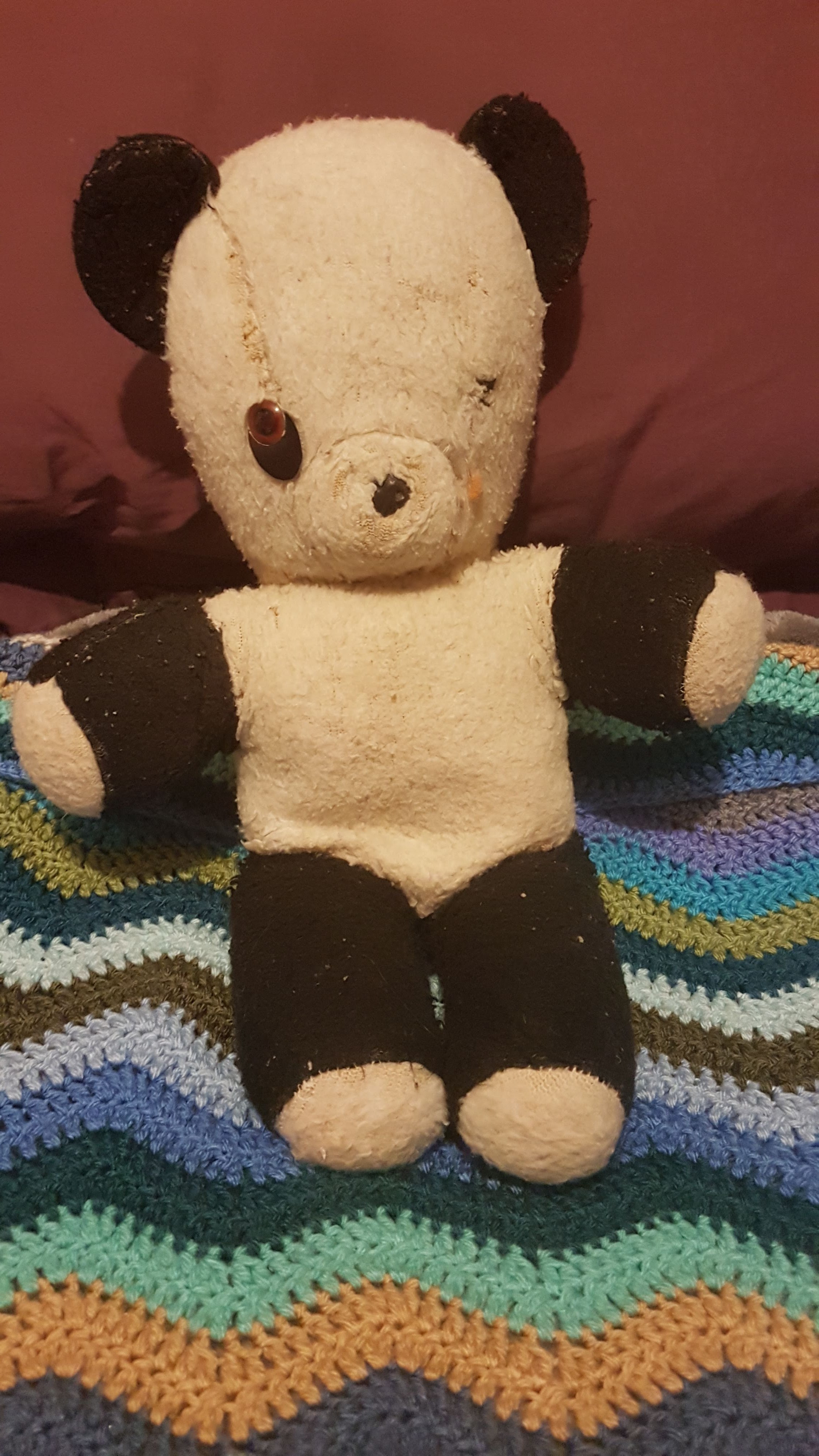
Early teddies looked more like real bears, with long noses, beady eyes and a hump on their backs. They were also a lot less cuddly than the bears we have today – stuffed with sawdust or wood wool, they were heavy and hard, but still lovable. Their ‘fur’ was mohair, which rubs off and so a lot of our older bears are bald and a bit battered. And really, really hard to give away. Own up – how many of you still have your beloved childhood bear? I know I do. He’s balding in places, a bit flat, is missing an eye and has some very amateur repairs but he’s mine and I love him. My mum never quite forgave her own mother for getting rid of her teddy while my parents were on their honeymoon.
My panda, given to me when I was born.
I knew there was going to be a problem when I unwrapped a particularly old bear…and started talking to him. Only an ‘ohhh, hello you!’ but still, it was a slippery slope.
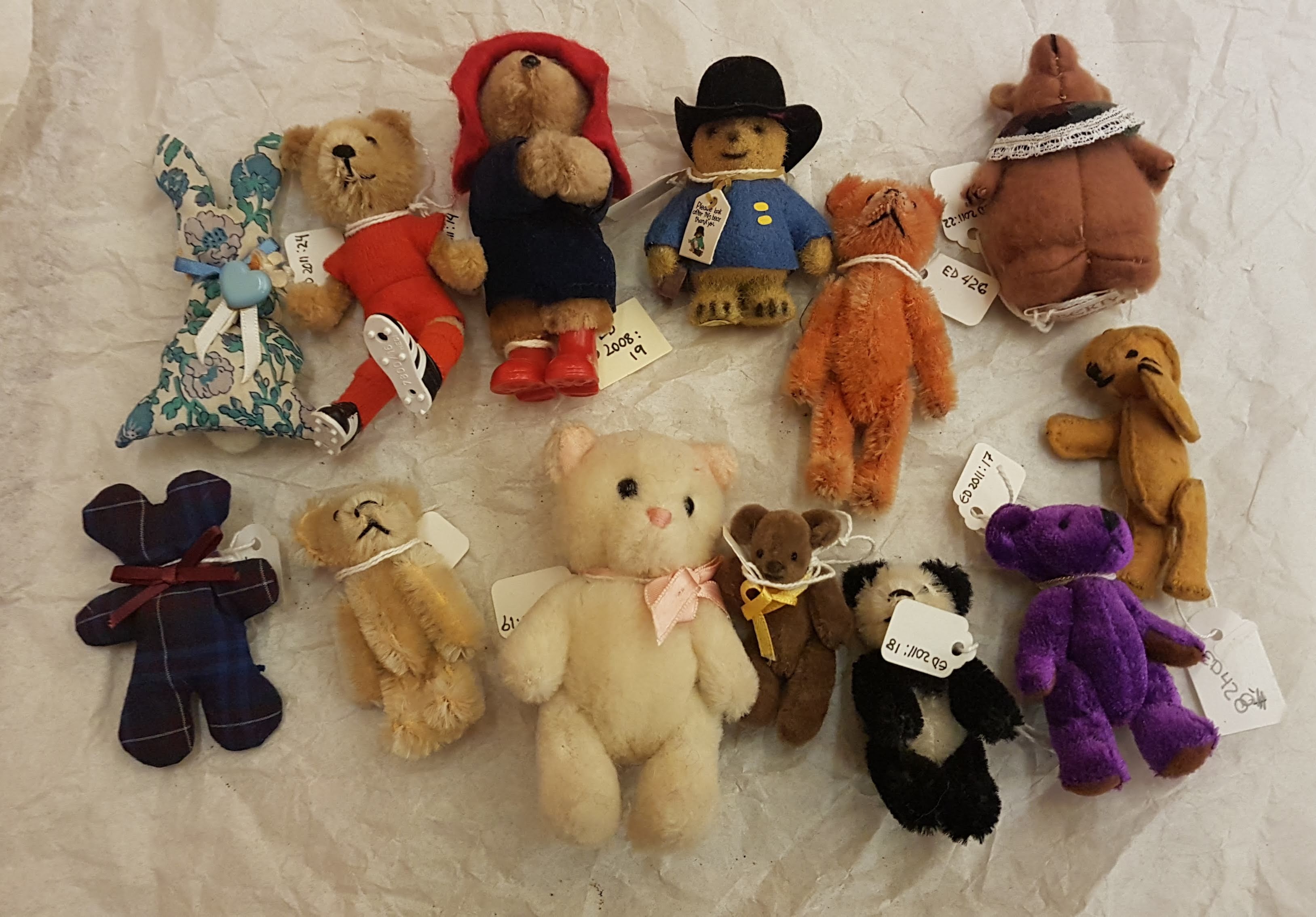
The modern, mass-produced bears were easy to say goodbye to – they have no personality and most of them are brand new. I admit to hanging onto all the Paddingtons, of course, but the McDonalds Happy Meal toys, Beanie Babies and film tie-ins will be going to new homes. The very odd poodle toy (with detached ear and jewelled collar) was also pretty easy to say goodbye to.
Please look after this bear
But…the old bears have character. They have been loved, and their faces are a bit wonky and sometimes their fur is a bit patchy. I don’t know who they belonged to in most cases, but they have had a second home – even if its been in a box – at the museum. I mentioned this on Facebook the other day and a friend said that when she was buying a soft toy as a gift she deliberately looked for the one that wasn’t perfect. Sometimes a toy just calls out to you and you fall in love with it – my mum fell for a Hamley’s polar bear on a shopping trip to Bath, for example, and my dad went back to buy it for her Christmas present.
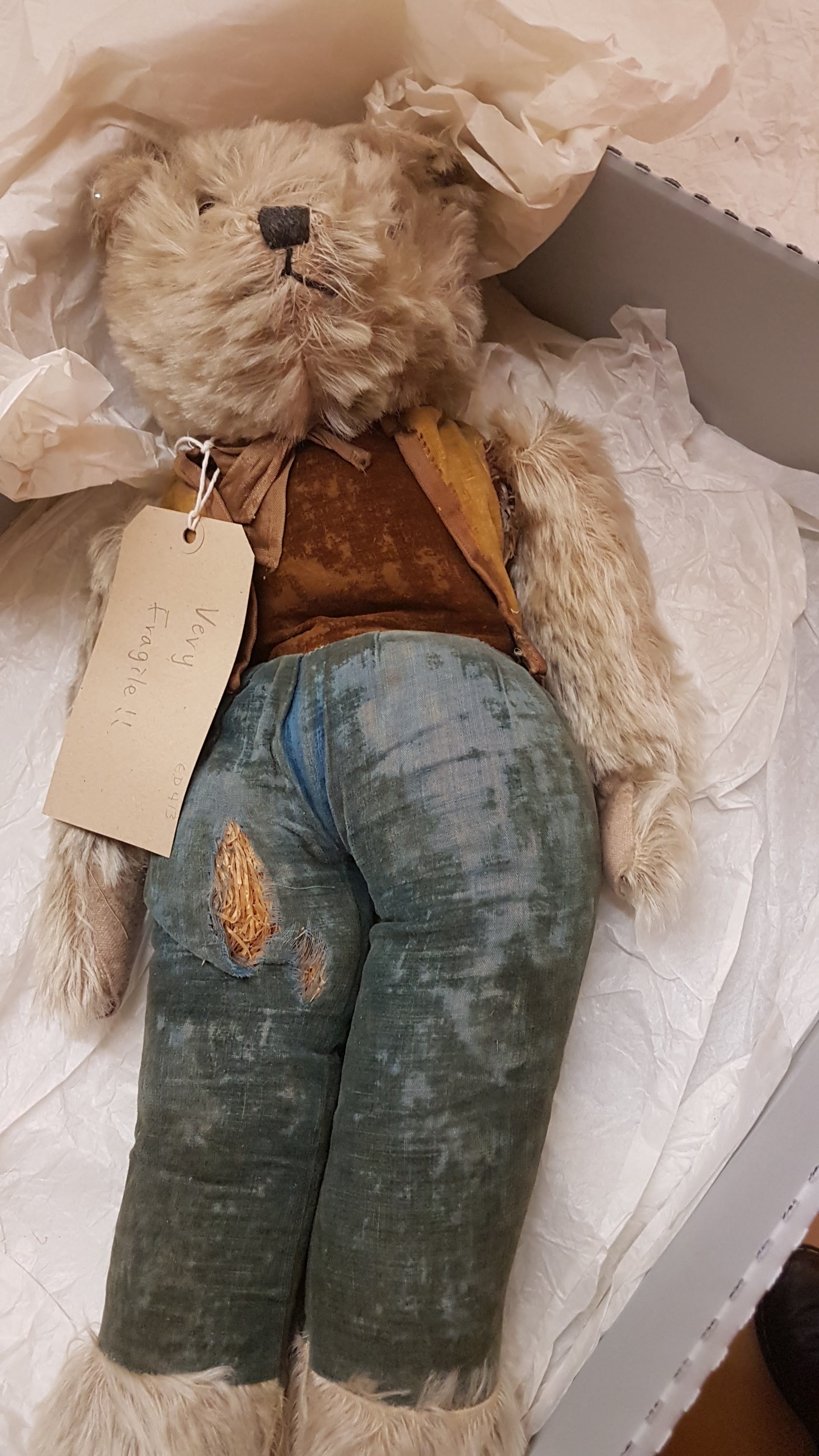
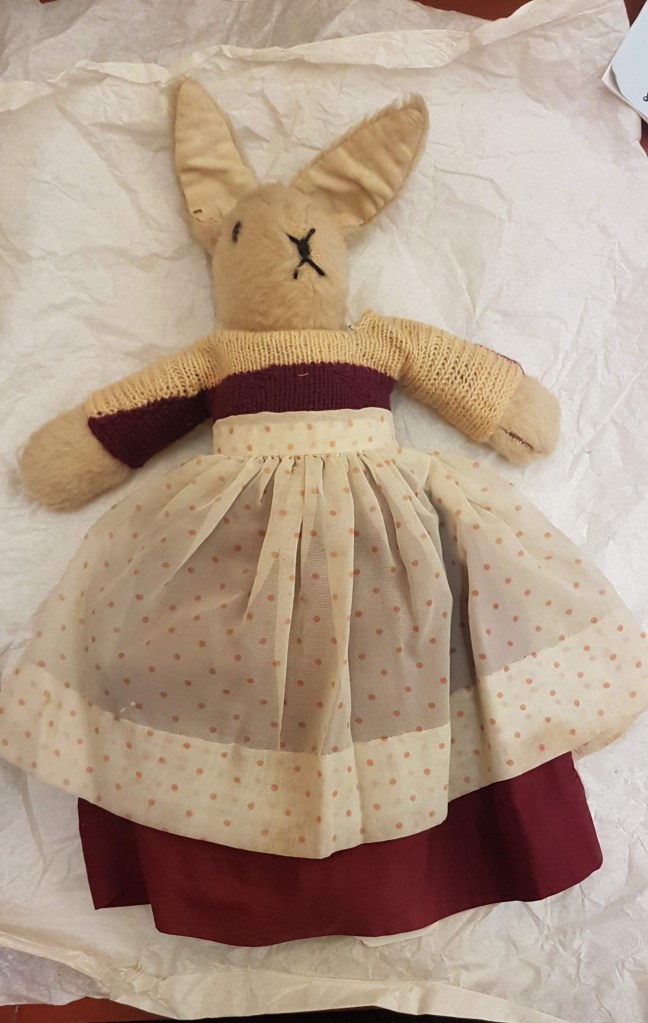
Our teddy collection ranged from the tiny, pocket-sized bears to much larger Steiff growly bears, nearly half the size of the six year olds who ‘demonstrate’ them in school sessions. Some were handmade, some were beautifully dressed in handmade clothes. There were also rabbits, cats, dogs and the box of more than 100 mice I have mentioned in a previous post.
A dandy bear in his velvet trousers
One of the decant team fell in love with this one
Pocket-sized bears
Every bear that ever there was….
Can you see why it’s so hard to get rid of them? I confess that a number of these are staying, if they can be handled. Teddies come on life’s adventures with us, after all, and some of them deserve to come with us to the museum’s next life too.
Welsh lady mouse
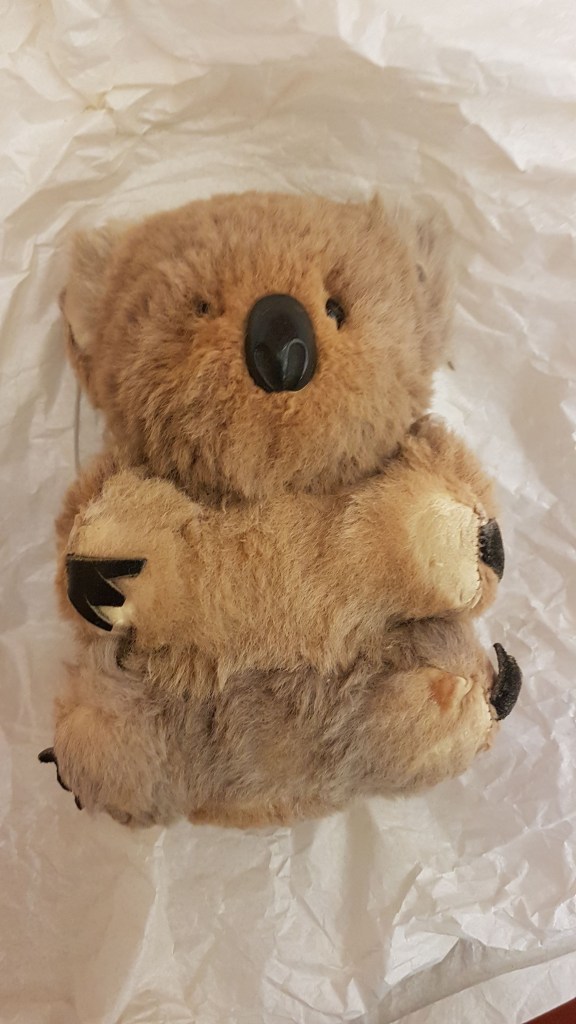
A koala made of kangaroo skin
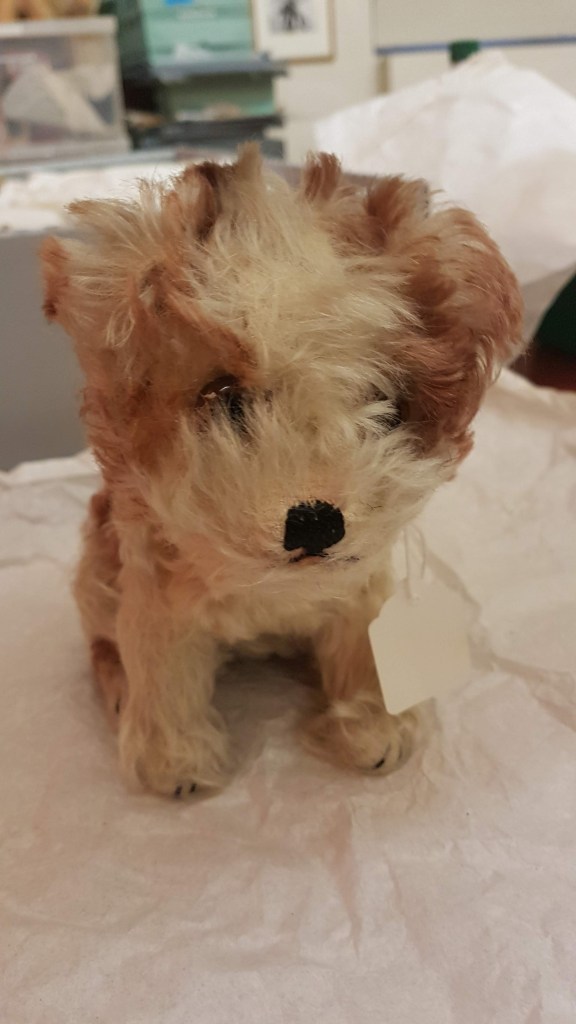
A Steiff dog
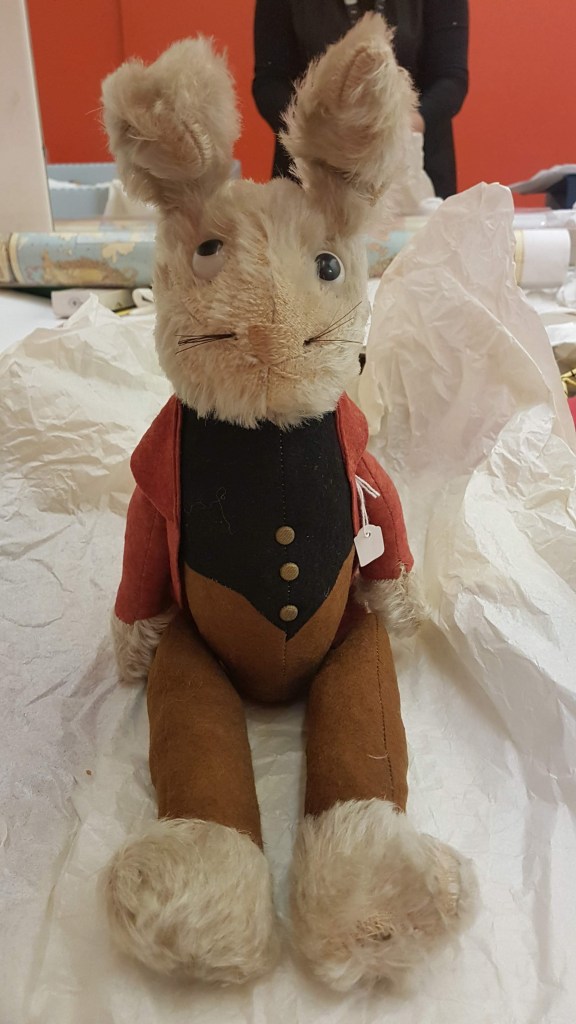
Wonky wabbit
Hand-made clothes and bunny
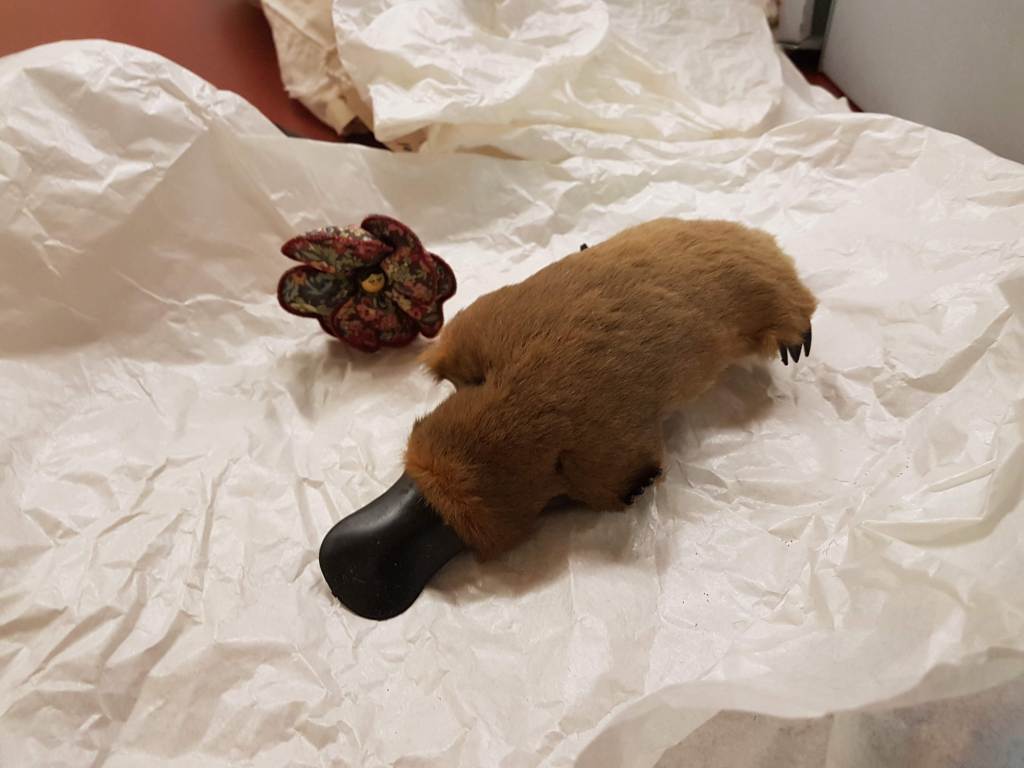
A duck-billed platypus – organic fur but we don’t know what
Not teddies, still lovable. Even the koala.
Meanwhile, back at the ranch…
What happens to rolls of double-sided sticky tape? Where do they go? I started a new one a couple of weeks ago when I was making my colleague’s birthday card and today I couldn’t find it anywhere. I managed to find a squashed roll in the shed, luckily, so my plan to frame various cross stitches wasn’t thwarted. I also found a stash of coloured aida fabric which was in the wrong box – that’s going to come in useful.
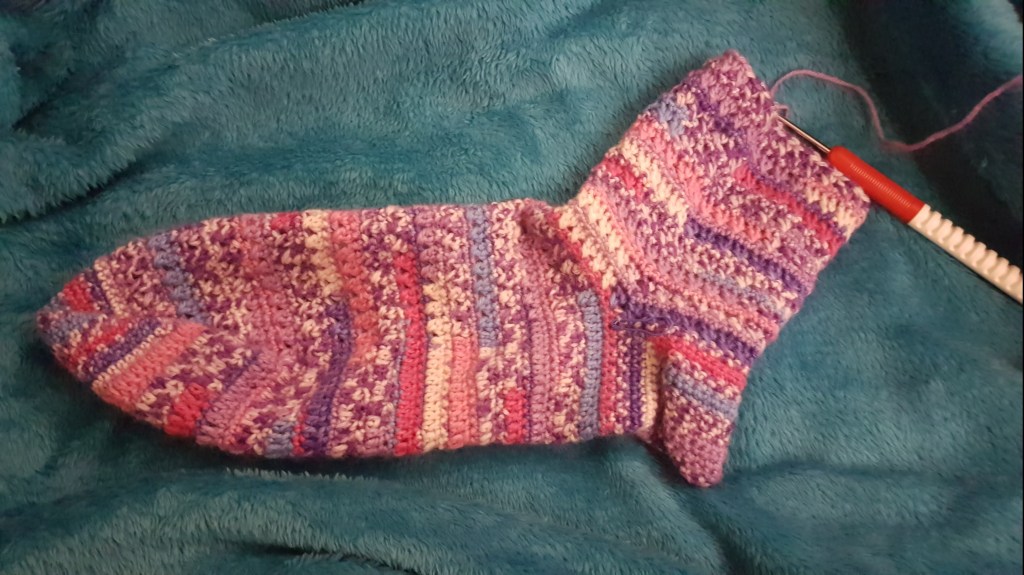
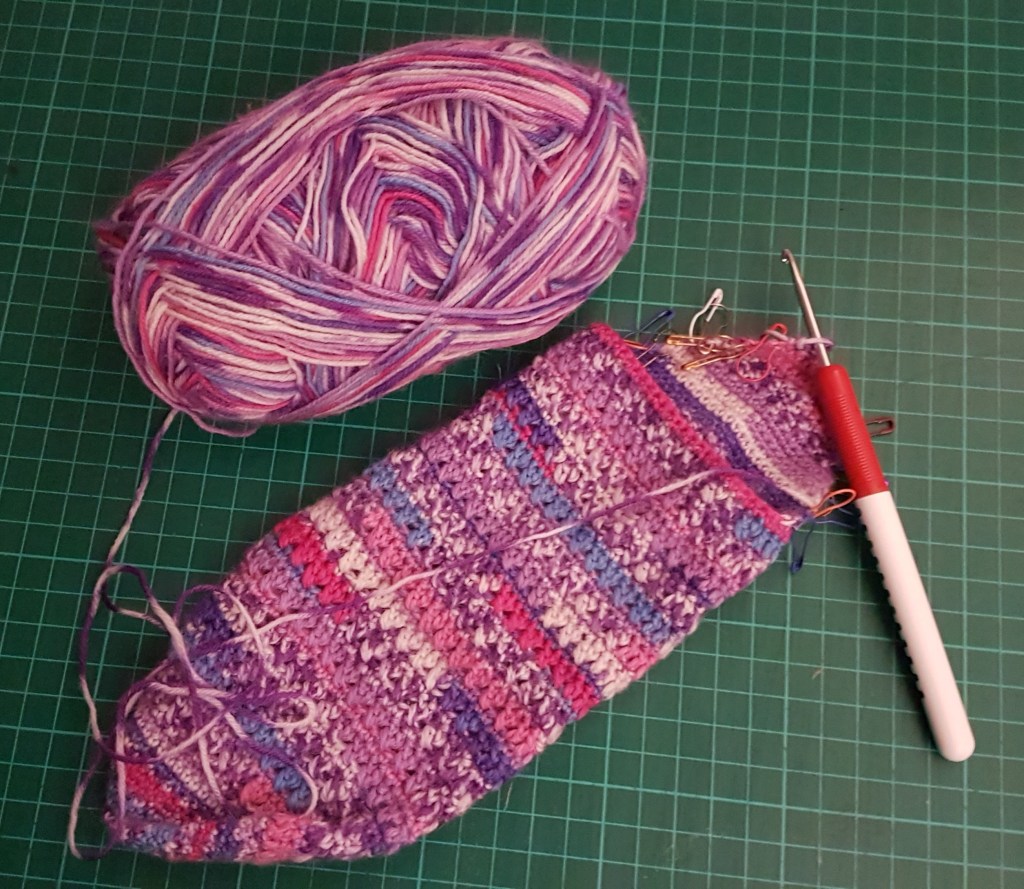
Nearly a whole sock!
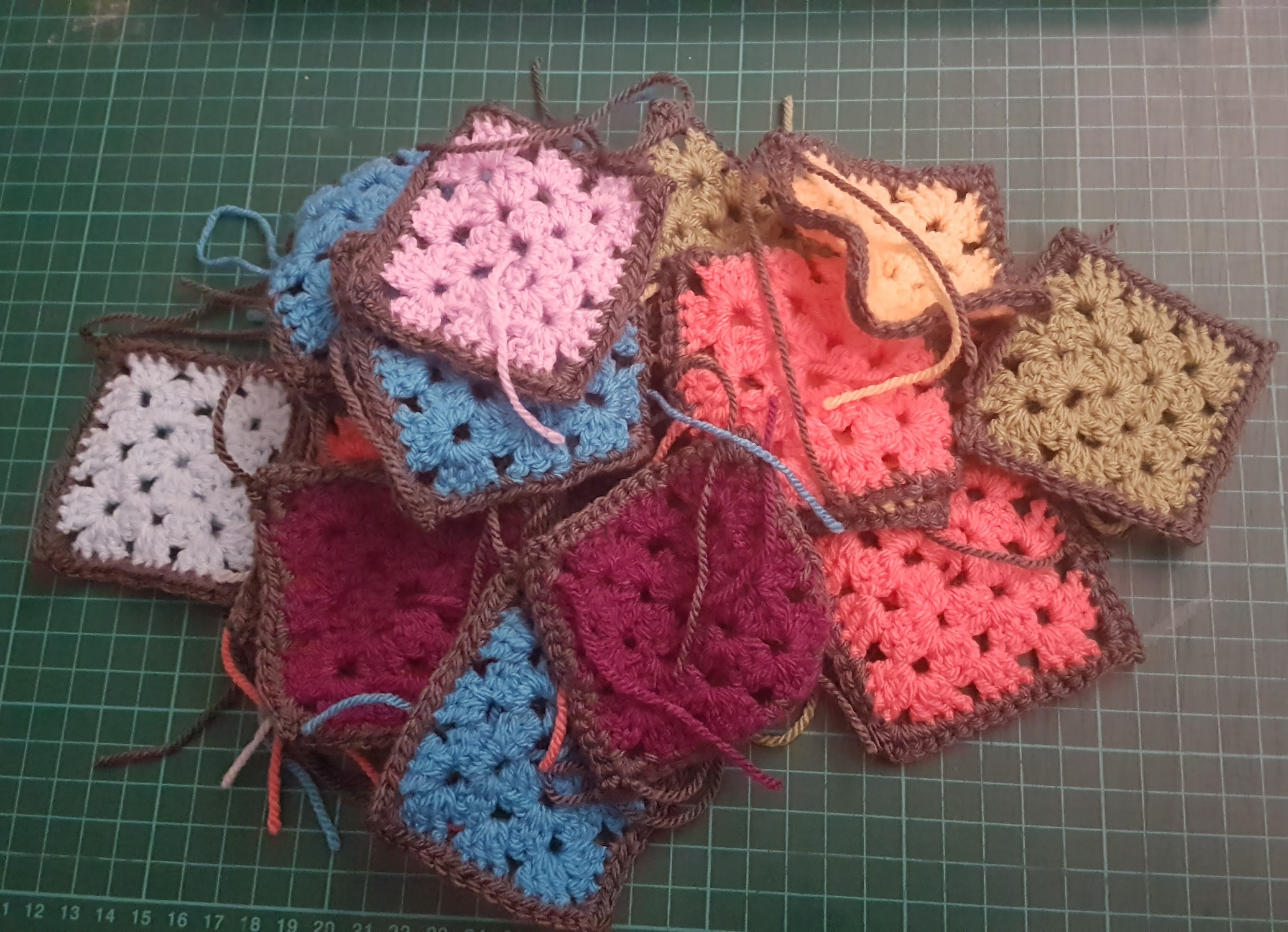
Progress on the sock has slowed again as I was only on the tube two days this week, but I have started putting together squares for a blanket. I wanted a nine-patch effect, and am edging the squares and each block with charcoal grey. I like the stained glass type effect.
Zoom blanket
So that was week 36. Things 1 and 2 have both had days at home this week as there have been confirmed cases of Covid-19 in their year groups, and Thing 1 has to isolate for a fortnight as she’s been identified as being in contact with a case. I really can’t fault the school, whose communication with us has been effective, clear and timely; yes, they have a duty of care towards the school community but right now they are going above and beyond, working long into the night to make sure things carry on as close to normal as possible. Who would have guessed that a lockdown that didn’t include the schools might see cases spreading, eh?
Later this morning I’ll be heading to Redricks Lakes for my weekly dip – the water was 7 degrees C yesterday after a few frosty mornings this week. That’s a big drop from last week’s 9.5 but I’m still looking forward to it!
Let’s see what week 37 brings.
Kirsty x
What I’ve been reading
Last Stand in Wychford (Witches of Lychford) – Paul Cornell
Gobbelino London and a Scourge of Pleasantries – Kim M. Watt
Sampleri Cymraeg – Joyce F. Jones
The Dark Archive (Invisible Library) – Genevieve Cogman
The Graveyard of the Hesperides/The Third Nero (Flavia Albia) – Lindsey Davis (Audible)
Stir Up Sunday is when families get together to prepare the Christmas pudding, and it’s the last Sunday before Advent*. I first heard about it from my original boss at the Museum of London Docklands – I don’t remember this being something we did when I was a child. I have a vague recollection that my grandma used to make the Christmas puddings and when she got too old we either had shop-bought ones (that were usually still in the cupboard in May – who has room for Christmas pud if dinner is done properly?) or no pudding at all. I confess to not liking Christmas pudding anyway.
There was always a Christmas cake though, mum-made and usually with a disaster story attached – my dad is partial to a fruit cake so she made them throughout the year, but the Christmas one always went a bit wrong. This year London sister has made one for the parents and sent it in the post to France, and all they have to do is feed and decorate it.
I didn’t like Christmas cake, either – I still don’t like shop-bought ones. I’m not a lover of candied peel, glace cherries in anything, or unexpected bits of nut. When I became a proper grown up, however, I decided that along with being able to stuff a turkey without wincing (I usually remember to take the neck and giblets out…) I ought to make Christmas cake too. I’d won a Mary Berry recipe book in a Christmas party raffle a few years earlier and found the Classic Victorian Christmas Cake, so thought I’d give that a go – OK, it was the only Christmas cake recipe in any of my books, so it was an easy choice! I think it’s also the only thing I have ever made from the book.
Mary Berry’s cake. Not mine.
I left out the glace cherries and almonds, replaced the cherries with more dried fruit, and rather than soaking the fruit in sherry I used rum. Then I fed the cake with more rum. Mary wasn’t clear on how often you should feed the cake, or on how much you should be feeding it, so I erred on the side of caution and that first cake was a) very moist and b) capable of putting you over the driving limit. So that’s been my go-to recipe since then – I didn’t make one last year, as I usually end up eating far too much of it myself, but this year my budding Heston Blumenthal (aka Thing 2) has been putting pressure on me to make one.
So yesterday Thing 2 and I set the fruit to soak (in the last of the cherry gin, due to a lack of rum in the house) and on Tuesday afternoon we will stir up and bake our 2020 cake. Just before Christmas we’ll decorate it – madam has very strong opinions on cake decorating so I may leave her in charge of that.
*Yes, I know Stir-Up Sunday is technically next weekend, but never mind. I’m sure there will come a time when Thing 2 doesn’t want to cook with me, so until then I’ll make the most of it.
Work is the curse of the crafting classes
This week I have been working from home – an online symposium on Monday about Creativity in Education Now, run by Creative Schools and Creative Colleges. Interesting stuff: the keynote speaker was Bill Lucas, author of Teaching Creative Thinking and my new hero. There was a poor OFSTED rep there, who was trying really hard to say that there were lots of opportunities for teaching creativity in schools as part of the new(ish) inspection framework, but she kept hammering home that everything had to start with knowledge acquisition. She wasn’t open to ‘split screen’ teaching, where creative skills are developed at the same time: as she was an ex-art teacher that surprised me.
The rest of the week was spent on meetings, and on developing a set of learning outcomes for one of the new galleries in the museum. It’s going to be an amazing space – as with the rest of the museum, focused on building creativity in children, young people and their families – and the deep dive back into our thinking over the past year or so has made me excited about the transformation project all over again. It’s been hard at times this year to remember what a brilliant thing we’re doing – losing six months to furlough meant it’s taken a while to get back to this point – but this task has reminded me.
On the subject of creativity – I love what the Natural History Museum have been doing to support audiences. This lovely free Dodo cross stitch pattern is available to download, and you can also make a giant squid or a whole set of nudibranches. The patterns come with really simple instructions, too, and are part of a suite of equally brilliant craft activities. Nice job, NHM.
You can find the V&A’s own offer here – less for kids but some gorgeous Mary Quant patterns remade by Alice and Co Patterns, as well as other projects inspired by exhibitions. You could also check out the #LetsMakeWednesdays posts on the V&A Blog.
Where was I? Oh yes, working at home – that means no progress at all has been made on the portable sock project, which has the heel flap done on sock 1 and is ready to turn when I get back on the tube tomorrow.
Sock bristling with stitch markers
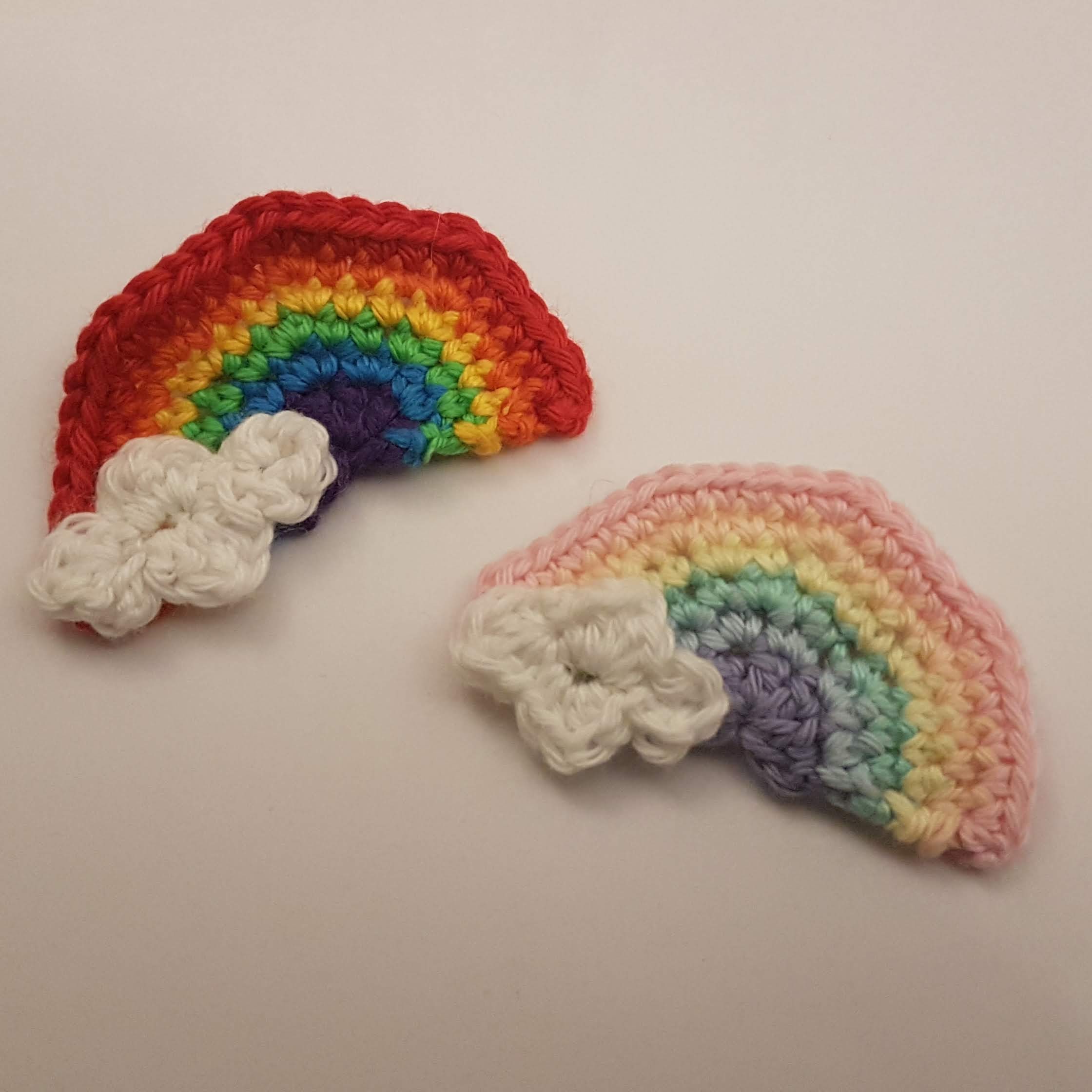
The Hydrangea blanket has a few more stripes, and I have also been working on rainbow jewellery which will hopefully find their way into an experience hamper at some point. The rainbow pattern is by Ever Laughter and you can find it here. She used aran yarn to make her applique, I have used Perle no 8 for the necklace and Scheepjes Cotton 8 for the brooches. I like the pastel one just for a change up! The pile of squares is the Zoom blanket underway in Stylecraft Special DK.
Hydrangea blanket
Brooches
Fiddly.
Zoom
Crochet!
I’ve managed to sew up both the dresses I cut out last weekend, too. Both were pretty quick makes and came together in just a couple of hours each, and both have proper pockets to put things in. You can’t underestimate the value of pockets!
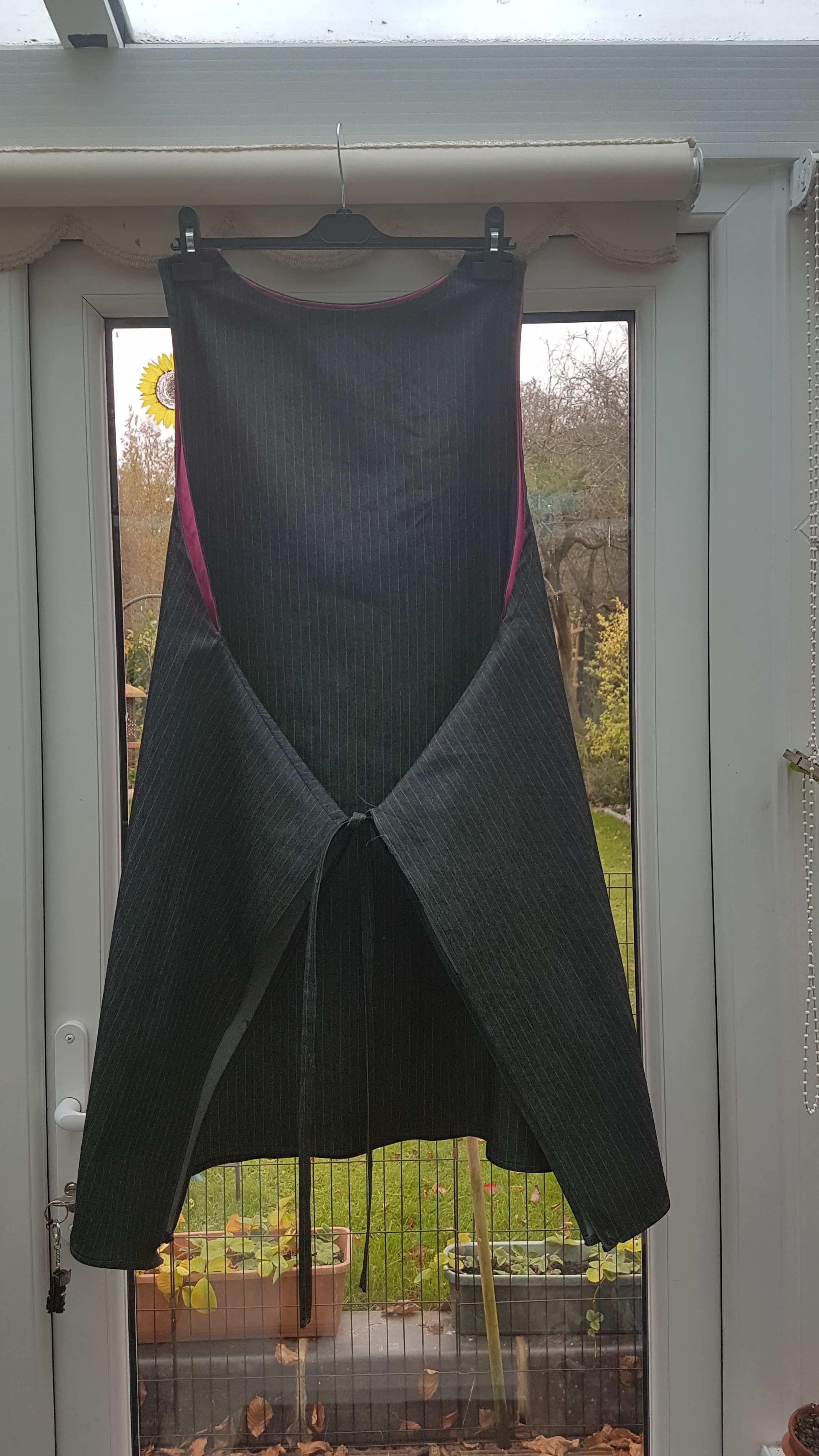
Dottie Angel apron dress in pinstripe denim
Simplicity K9101 in a duvet cover
Being at home all week – with Lulu on downstairs cat duty – has reminded me how much that cat loves my beloved. The first picture is when she heard him come through the back door – Thing 3 is currently complaining that she jumped off him as soon as her human came downstairs. She’s not a lap cat like the other two, but will lean on you or cuddle up if you’re sitting down and if my beloved is not in the room. If he is, you haven’t got a look-in….
Lulu in meerkat mode
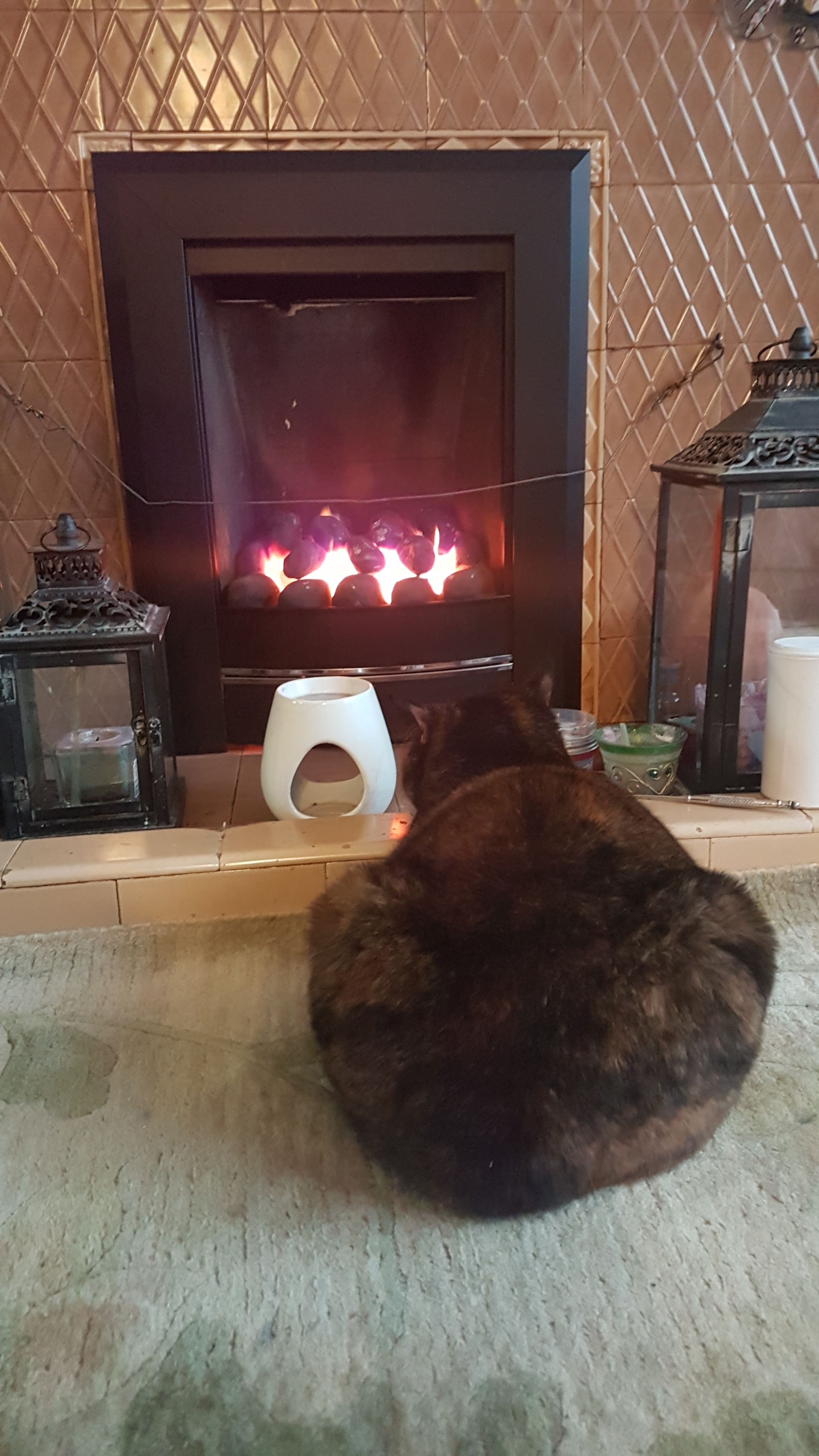
Seeing pictures in the flames
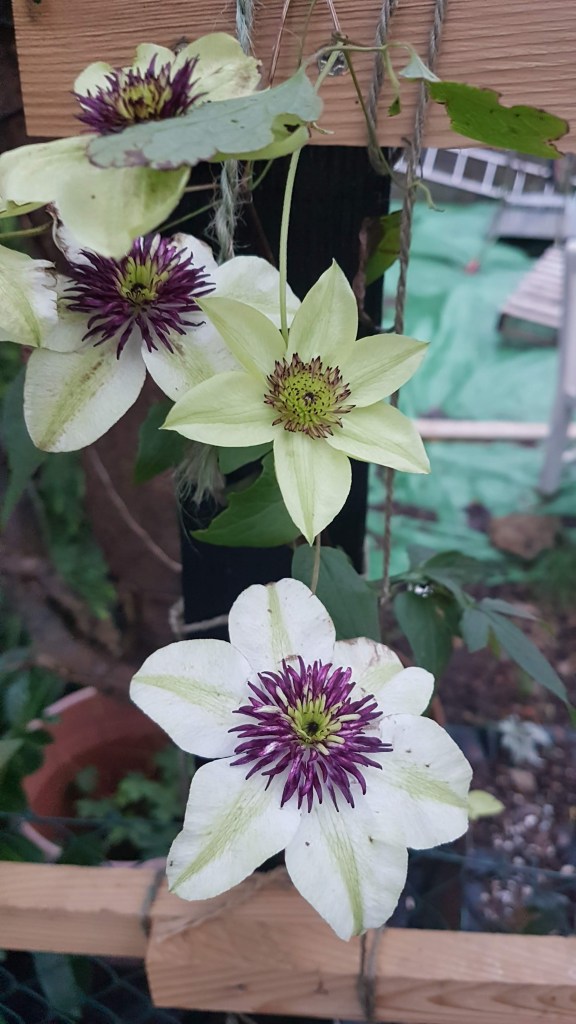
I’ll leave you this week with a picture of a clematis in the garden still bravely struggling on. I love the colours of this one.
See you at the end of week 36, when we can see how the cake turns out! This week’s cover photo is the woods on Stonards Hill in Epping looking very autumnal.
Kirsty x
What I’ve been reading
The Penguin Killer – Ste Sharp
Enemies at Home/Deadly Election (Flavia Albia) – Lindsey Davis (Audible)
The Law of Innocence (Mickey Haller) – Michael Connelly
Gobbelino London and a Scourge of Pleasantries – Kim M. Watt
Once upon a time, way back in the educational dark ages (well, pre-National Curriculum, anyway) Welsh was not compulsory in South Wales schools. I was at infant school in Cardiff, and Welsh wasn’t taught till juniors. When I was just seven, we moved to Monmouthshire where it wasn’t taught at all. My (English) secondary school headteacher, when the NC was introduced in 1988, campaigned to have the school classified as being in England as many of the pupils were bussed in over the border from Gloucestershire: he claimed that more people spoke Chinese in Monmouth than Welsh. He may well have been right at the time, but that wasn’t the point.
He was unsuccessful, fortunately, but as I was too late to feel the impact of the NC while I was still in school I didn’t get the chance to learn Welsh until I was doing teacher training in Aberystwyth. Conversational Welsh was offered as a weekly elective in the lunch breaks, so I was able to count to ten, talk about the weather and say hello. I could also understand drinks orders in the pub I worked in. This was helpful when the gang from Yr Hen LLew Du made their occasional forays into the English-speaking pubs to try and annoy the barmaids, who were invariably students. Not speaking Welsh at the time was a severe handicap when applying for jobs in Wales, as it was necessary to be able to teach the language as well, which I assume is why for many years Wales’ greatest export was teachers who had fallen into the National Curriculum gap.
My parents weren’t Welsh speakers either: they had been at school in Cardiff in the 1940s and 50s. At that time, Wales was still suffering the hangover of the Industrial Revolution. English landowners – who owned the mines and the steelworks – saw Welsh as the language of revolution, especially with the rise of the unions, and it was banned from being spoken in schools. Children who spoke Welsh in school were made to wear the ‘Welsh Not’ – a sign hung around their necks to humiliate them, much as a dunce cap might be worn. The influx of Irish and Northern English into the Valleys to work in the mines, the steelworks and the associated infrastructure industries further diluted the language.
In 1847 a set of Parliamentary Blue Books were published on the state of education in Wales:
“It concluded that schools in Wales were extremely inadequate, often with teachers speaking only English and using only English textbooks in areas where the children spoke only Welsh, and that Welsh-speakers had to rely on the Nonconformist Sunday Schools to acquire literacy. But it also concluded that the Welsh were ignorant, lazy and immoral, and that among the causes of this were the use of the Welsh language and nonconformity.” (Wikipedia)
Evidence for this came mainly from Anglican clergy (who didn’t speak Welsh) at a time of burgeoning non-conformism in Wales, from landowners (er, ditto) and none of the commissioners were Welsh speakers. The argument that the Blue Books put forward was that embracing the English language would allow the Welsh to achieve their potential and take full part in British civic society – the authors were apparently concerned with the wellbeing of the Welsh (how delightfully colonial!). Non-conformists were often Welsh speakers, and a lot of them headed over the sea to the Americas where they set up Welsh communities and the language survived* – and handily provided me with a dissertation subject for my degree in American Studies. (Welsh migration to the USA from Prince Madoc onwards, in case you’re interested!).
The suppression of Welsh actually started a lot earlier than the Industrial Revolution, with the Act of Union in 1536 when it was decreed that English should be the only language of the courts in Wales, and that Welsh speakers could not hold public office in the territories of the king of England. This didn’t work terribly well at first, as the majority of the population were Welsh speakers, so a lot of interpreters were used in the courts. The upshot of this was the growth of a Welsh ruling class who were fluent in English, and Welsh became confined to the lower and middle classes. From 1549 all acts of public worship had to be conducted in English, though Elizabeth I wanted churches to have Welsh versions of the Book of Common Prayer and the Bible from 1567. The first complete Welsh translation of the Bible came in 1588.
A radio broadcast called ‘Tynged yr Iaith’ (The Fate of the Language) by Saunders Lewis in 1962 marked a national change in attitudes to the language, and you can read much more about this here. Welsh was on the up again…
Back to me (it’s my blog, after all) and my adventures in Welsh. Road signs were in Welsh, and our family holidays were in west Wales where much more Welsh was spoken. My Aunty and cousins spoke Welsh, so I’d always heard and seen snatches of the language. I’d wanted to learn but ended up working in east London as a teacher, and Welsh language courses were thin on the ground.
My London sister started learning Welsh with Duolingo and Say Something in Welsh a couple of years ago, and she encouraged me to learn too. I say encouraged – she signed me up to SSIW’s six minutes a day programme as a birthday present. The end of Duolingo is in sight for me now, though I can’t say the same for SSIW which I find really hard and have had on pause for ages.
I am a lifelong learner, as I’ve mentioned in an earlier post about my adventures in crafting, and it’s been suggested that language learning ‘boosts’ brain power by exercising the parts of the brain that process information. Learning a new language also contributes to a growth mindset, and understanding something you didn’t expect to is a great motivator. My fellow museum bod, gig buddy and Welsh learner Jen and I went to see Elis James and Esyllt Sears doing stand-up comedy in Welsh at the London Welsh Centre last year: I was really excited to be able to understand – or at least get the gist of – about two thirds of the show. (As an aside, we chatted to Elis James afterwards and he was really lovely).
Duolingo is excellent for vocabulary building and for sentence construction, but I have real problems with SSIW. I’m a visual/kinaesthetic learner – when I did the VAK assessment for a management course a couple of years ago I scored equally highly on the Visual and Kinaesthetic scales and extremely low on the Auditory. It wasn’t anything I didn’t know already but at least it explained why I was having terrible trouble with SSIW!
I learn by doing, or by seeing – if my hands aren’t doing something then I tune out very quickly. This means I take a LOT of notes in meetings. It’s not diligence, it’s self-preservation – if I’m not taking notes I tune out. My previous line manager used to be able to tell when I switched off if a meeting went on too long!. I crochet my way through conferences or use a fidget toy, as if my hands are occupied I’m able to focus on what’s being said. SSIW, as it’s entirely auditory, really doesn’t suit my learning style at all – writing down the week’s sentences in advance was useful, but ideally I would be writing them down as I went along. But not knowing how to spell most of the words made that quite tricky, as did the fact that I generally did the SSIW sessions while I was ironing and refereeing the Things. Perhaps I need to sit down, on my own, with a pen and paper and try my usual learning method of copious note taking. I have a Welsh dictionary, and a grammar book, so there’s really no excuse.
*As an aside to this, there have been a lot of jokes on social media in the last couple of days that a Welsh-speaking nation have finally beaten the All-Blacks at rugby….sadly, it was Argentina, so Max Boyce probably won’t be memorialising this in song.
Creative industry
Despite being back at work full time it’s been a productive week! Normally at this time of year I’d be making jewellery to sell at the Christmas markets but this year I don’t have any booked for obvious reasons.
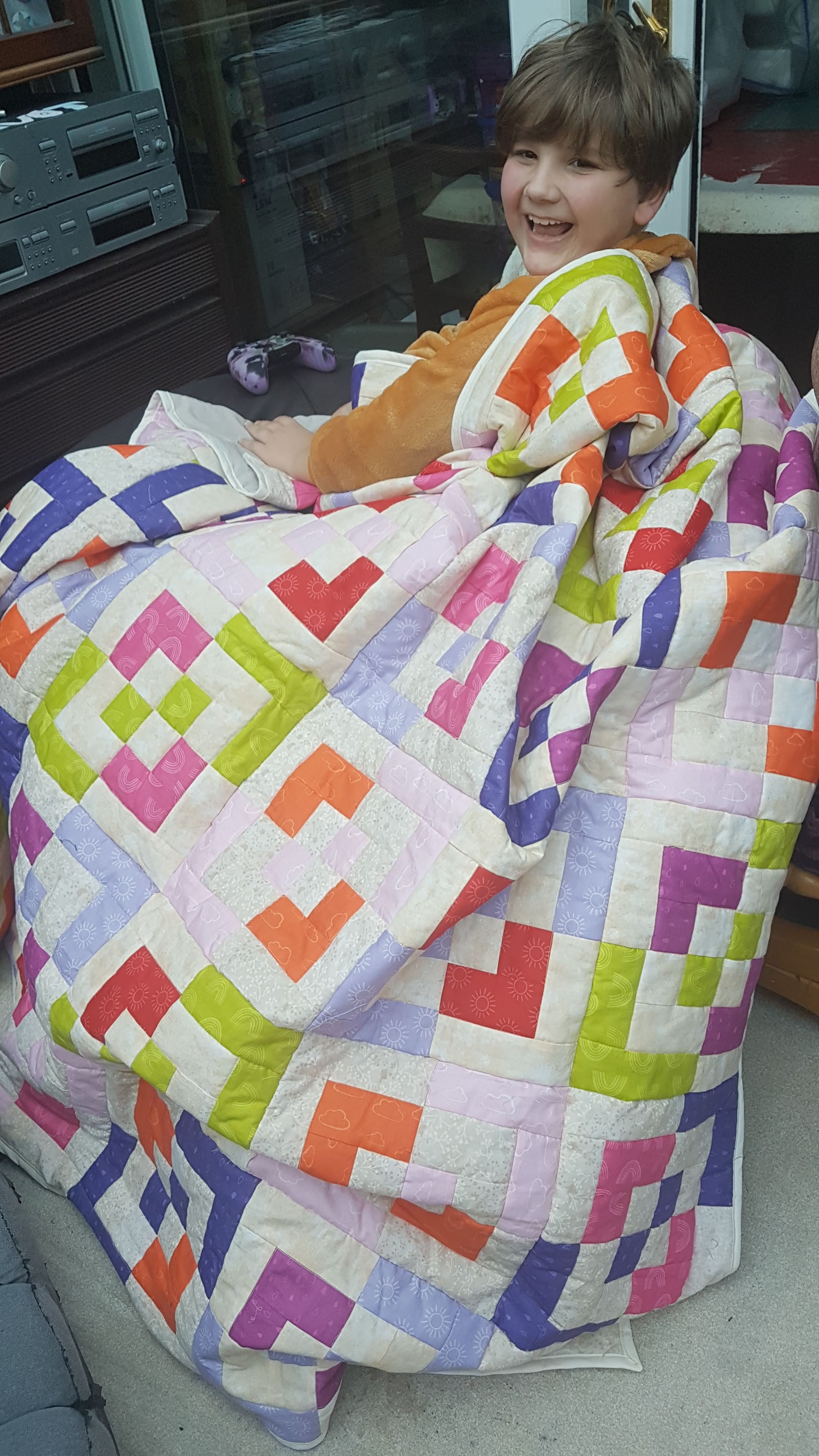
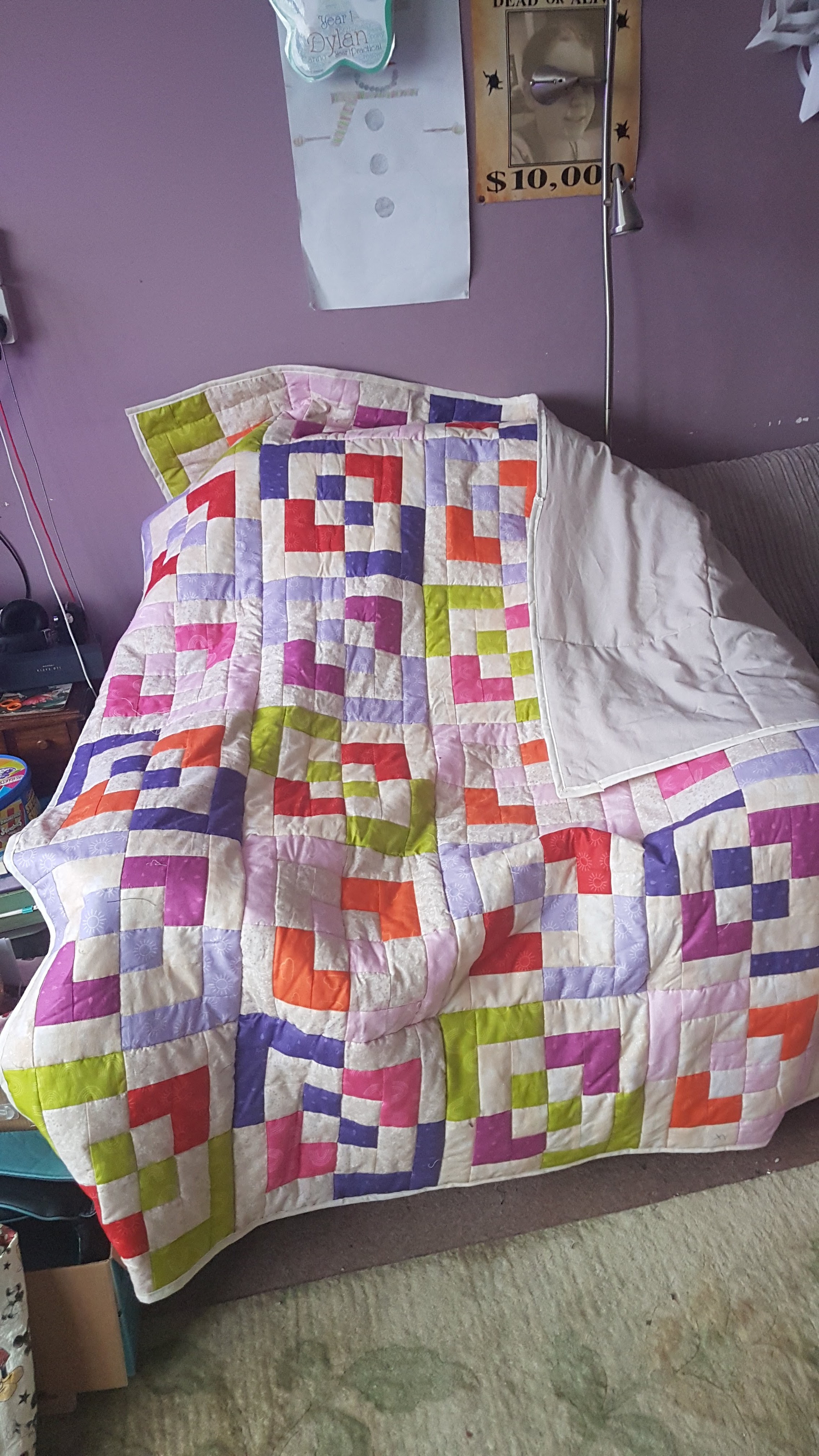
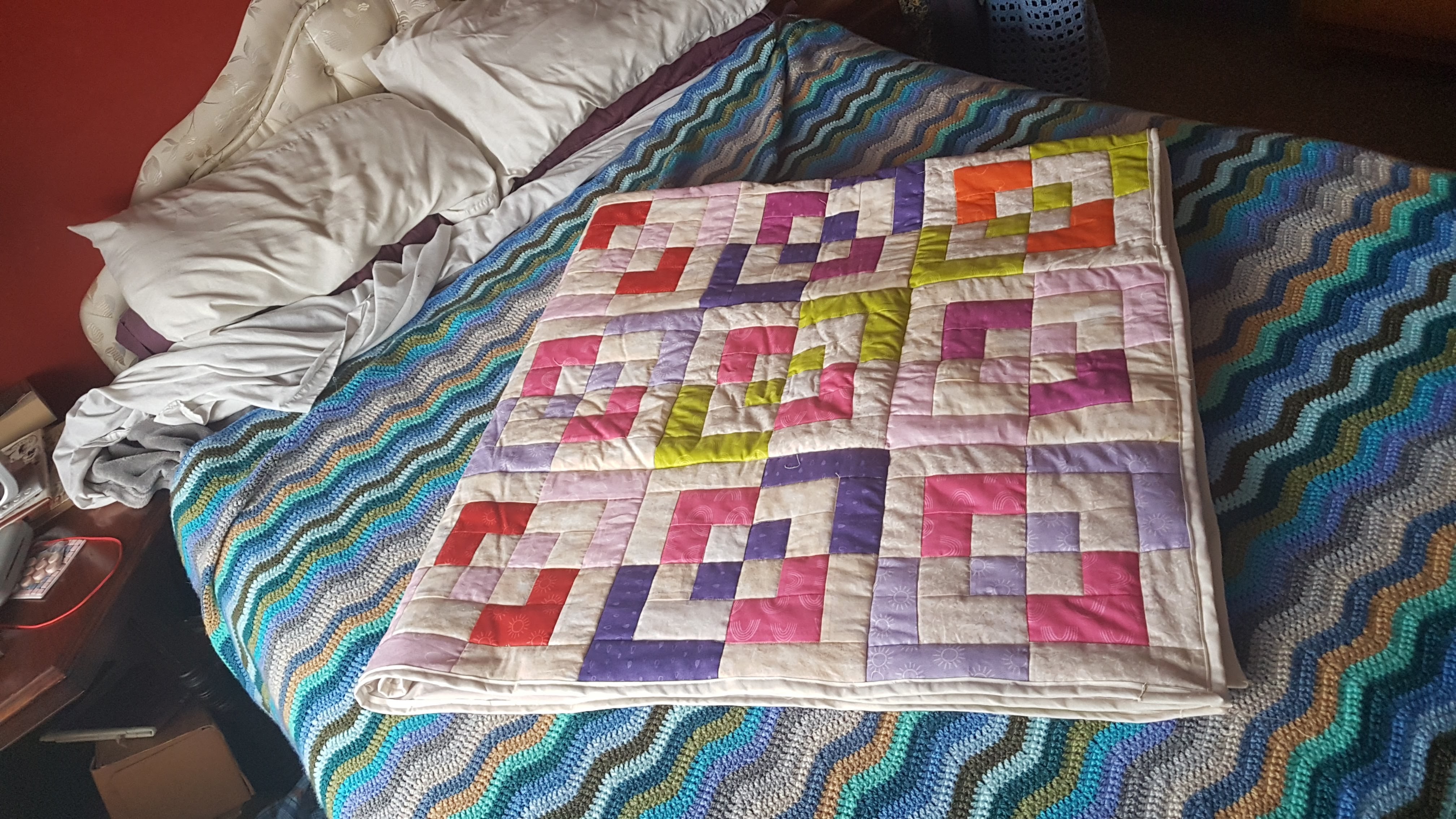
I mentioned in last week’s post that my plan for the rest of the day was to finish the Bento Box quilt. That’s the one I quilted as I went along, so after I’d backed it I was able to add another few lines of quilting in the ditch just to hold it together, and then bound it. I backed it with a 100% cotton sheet I’d bought in a sale, and bound it with a ready-made cream bias binding from Bertie’s Bows. Just to recap, the coloured fabrics are Stuart Hillard’s Rainbow Etchings designs for Craft Cotton Co, and I used nearly two jelly rolls to make it. The blenders, wadding and multicoloured quilting thread are from Empress Mills, and I used this tutorial.
Thing 3 tucked up nicely
There’s nowhere big enough in my house to lay this out fully!
On the bed
‘scuse the rumpled sheet! This is folded in four. The largest quilt I have made!
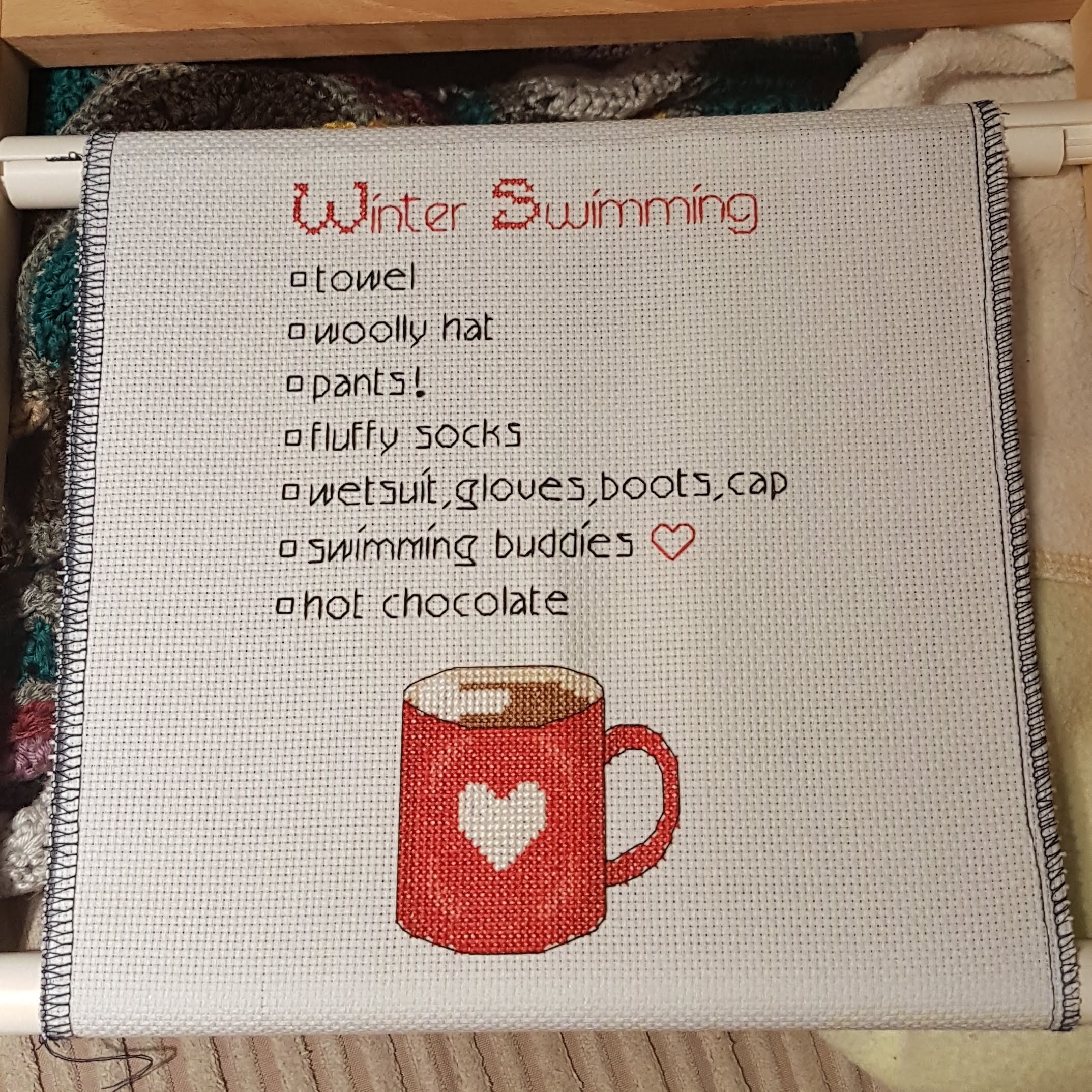
I also promised I’d show you the Winter Swimming cross stitch when I’d finished it…the wording is my own work, using DMC stranded cotton, alphabets from this book, and the mug design can be found here. Despite the fact that I can hear the rain hammering on the conservatory roof right now and it’s still pitch dark at 7am, I’m really looking forward to getting back in the socially distanced lake this morning!
Onesie and wellies optional.
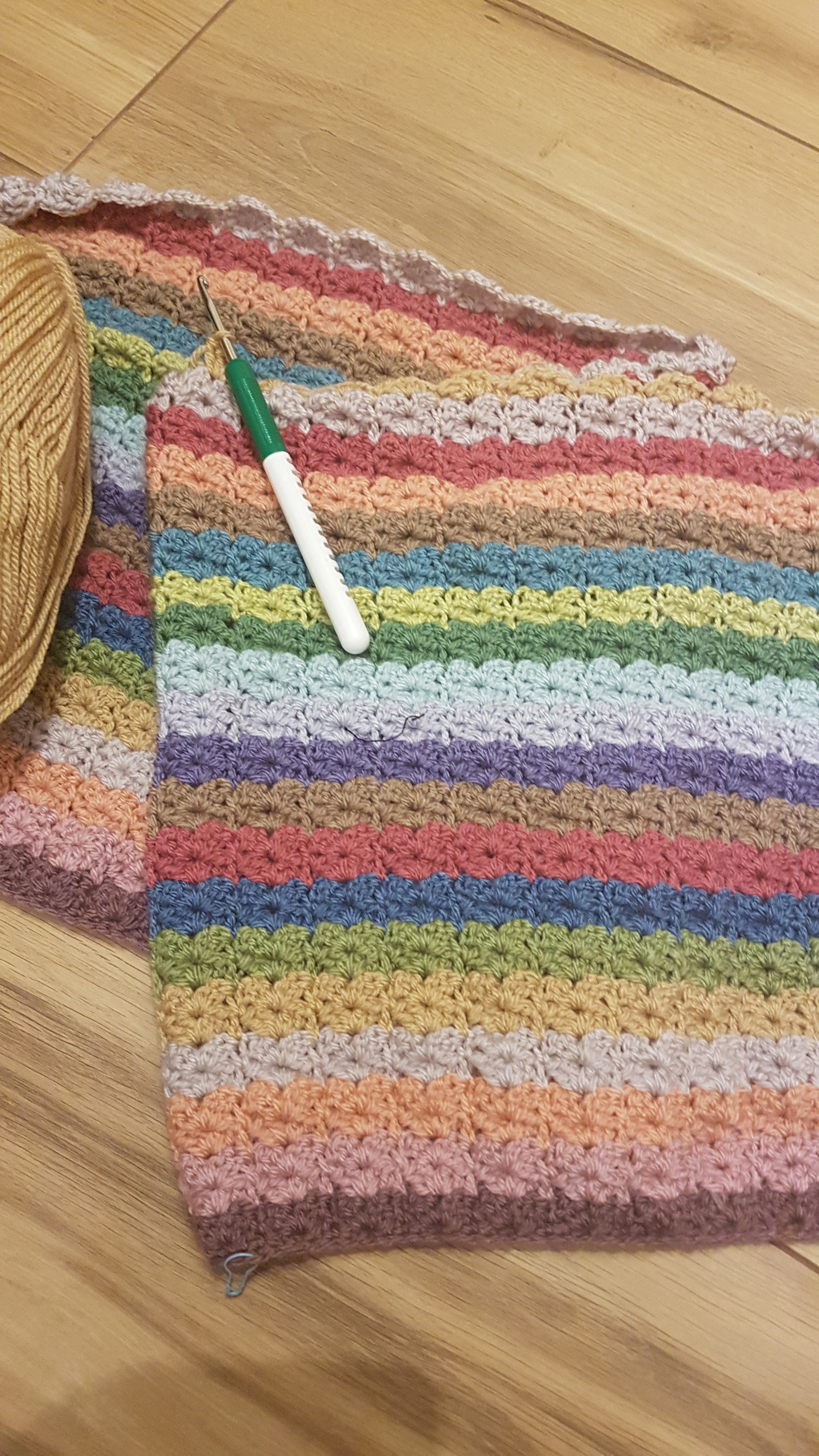
The Hydrangea blanket is coming on nicely – I am just about a quarter of the way through it now. It’s such a relaxing pattern to do, and I am following Attic24’s colour order as well. The yarn is Stylecraft Special DK from Wool Warehouse, where the official Attic24 shop can be found. I really love the faded colours.
25% of a Hydrangea Blanket
Yesterday’s job was to cut out a couple of dresses as I haven’t done any dressmaking for a while and at some point I’m sure I’ll get out of jeans and leggings for work again – at the moment I am mainly surrounded by dusty boxes and ladders, so looking tidy is not a priority. Both patterns are by Simplicity – K9101 was free with Sew magazine and the Dottie Angel (8230) is one I have made before. It’s great for throwing on as a top layer. I’m making version A with the double pocket from B, in a pinstriped denim. You can see the back of the fabric I’m using for K9101 behind – it’s a cotton duvet cover I picked up at The Range. I’m using the navy side for this, and there’s a purple side as well which may well end up as an Avid Stitcher drop-sleeve top. I do love a layer.
The weather this weekend has been truly atrocious, so yesterday Thing 3 and I spent some time doing jigsaws together. He has loved puzzles from a very early age (I do too), and when I declared a screen-free afternoon yesterday we had a few games of Dobble and then made a 3D puzzle of a baseball boot and a couple of Star Wars puzzles.
Thing 2 played a couple of games of chess with her Dad and Dobble with me – Dobble is like extreme snap and trickier than it sounds! I foresee a massive boom in the sale of chess sets, by the way, as a result of the Netflix series The Queen’s Gambit. We’ve just binged it and the finale had us on the edge of our seats.
Now excuse me, Duolingo has just told me it’s time for Welsh….see you at the end of week 35! I’ll leave you with a photo of a Little Egret who was hanging round the brook on the High Road all day on Friday.
Kirsty x
What I’ve been reading:
The Forest is Crying – Charles de Lint
The Spook who Spoke Again – Lindsey Davis
The Ides of April/Enemies at Home (Flavia Albia) – Lindsey Davis (audible)
The Law of Innocence (Lincoln Lawyer) – Michael Connelly




















































 What Kirsty did next