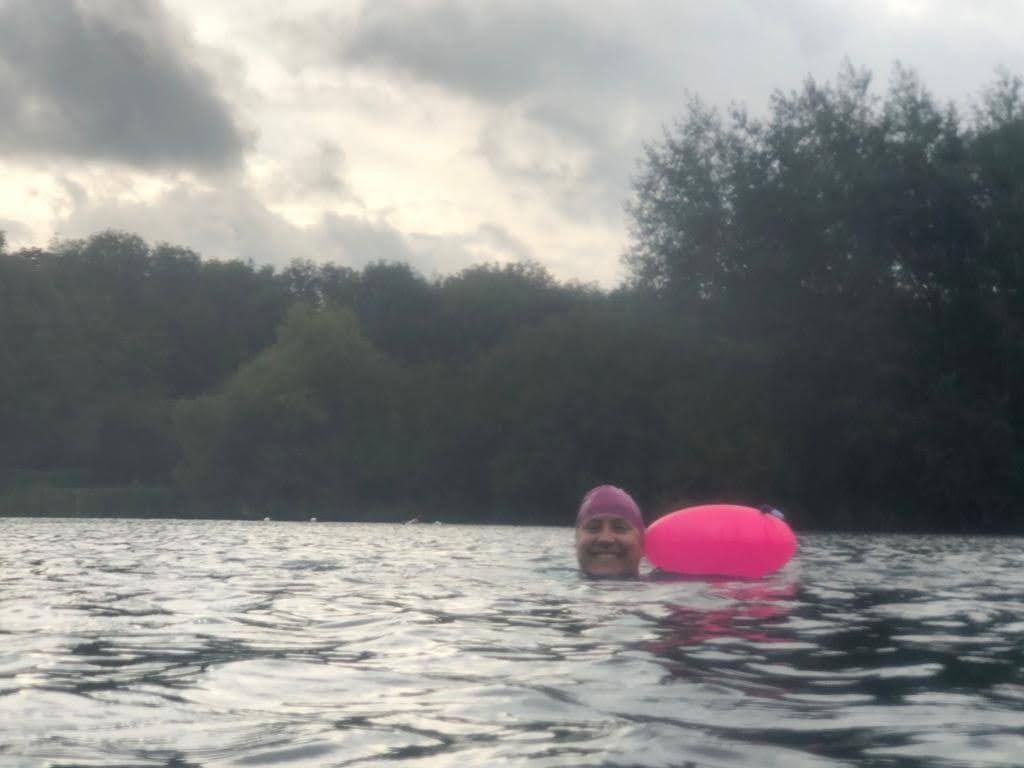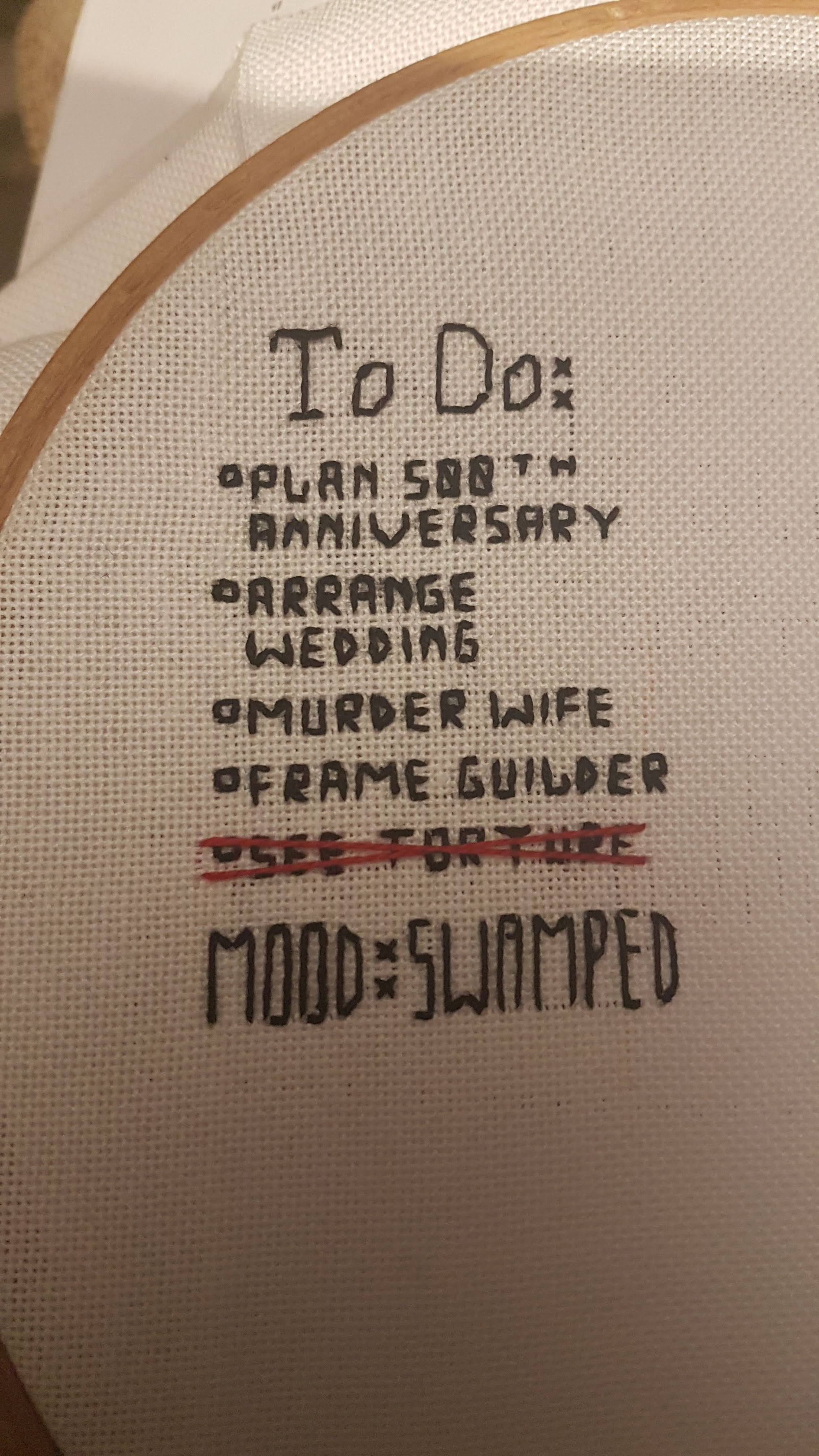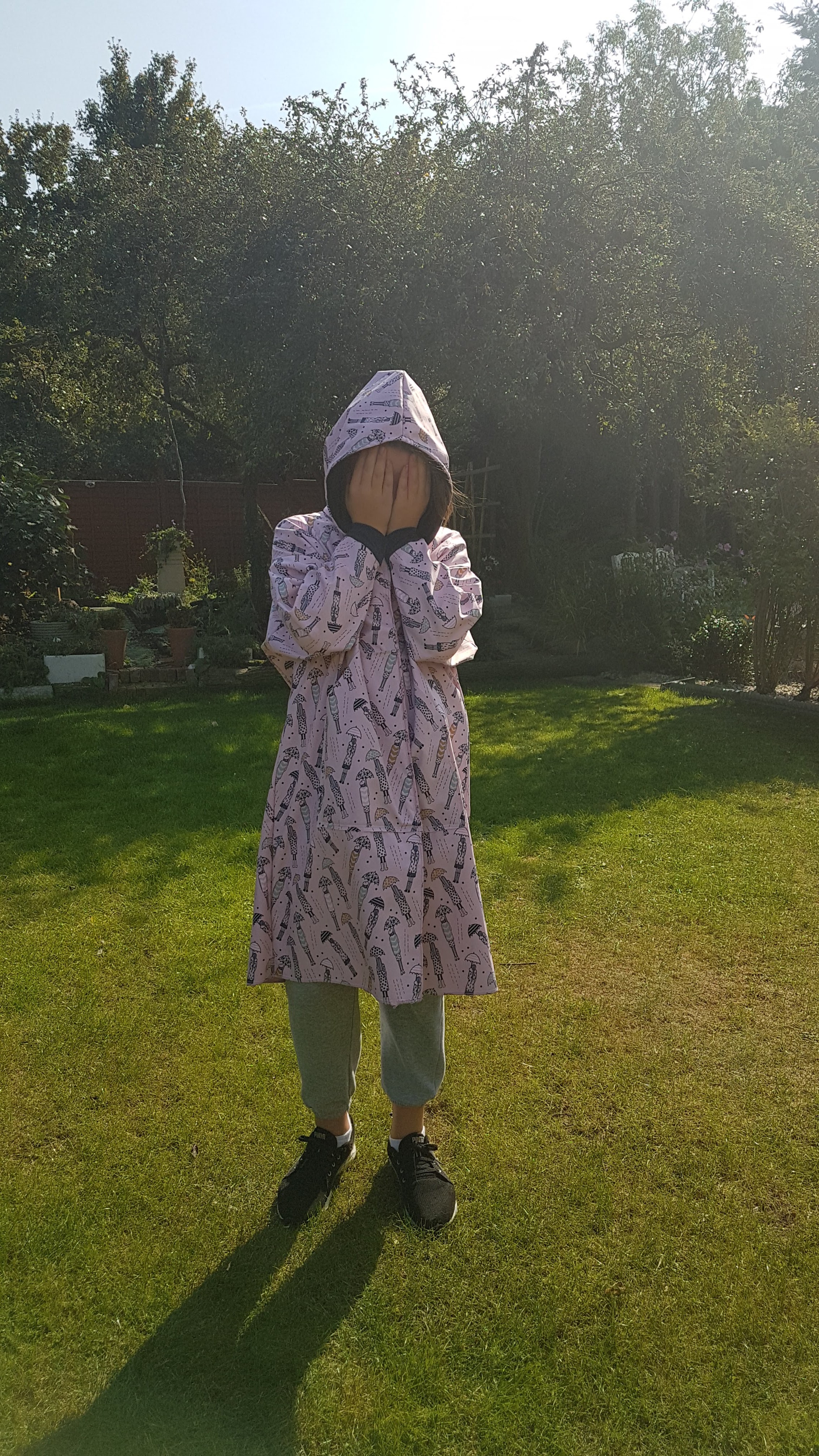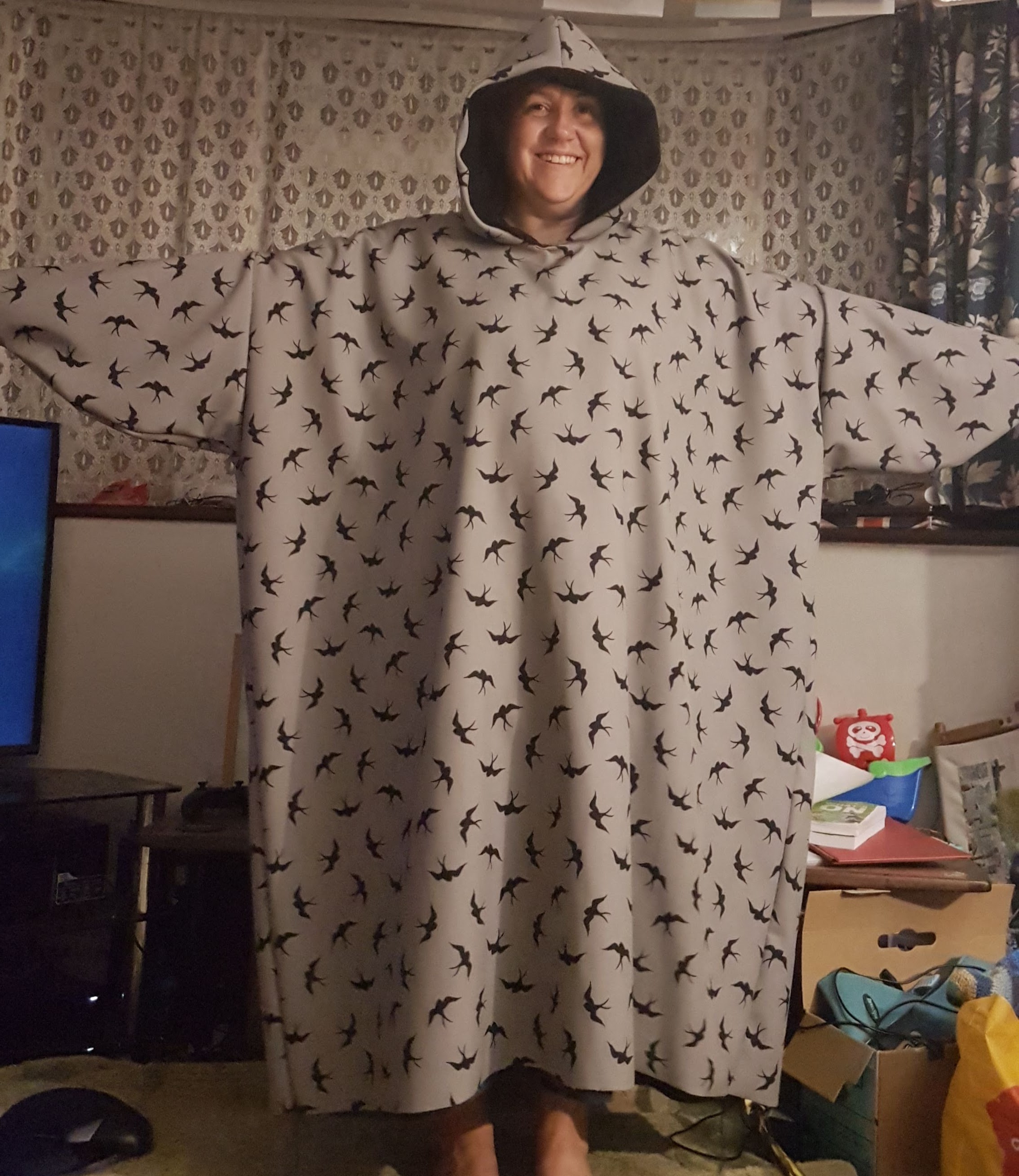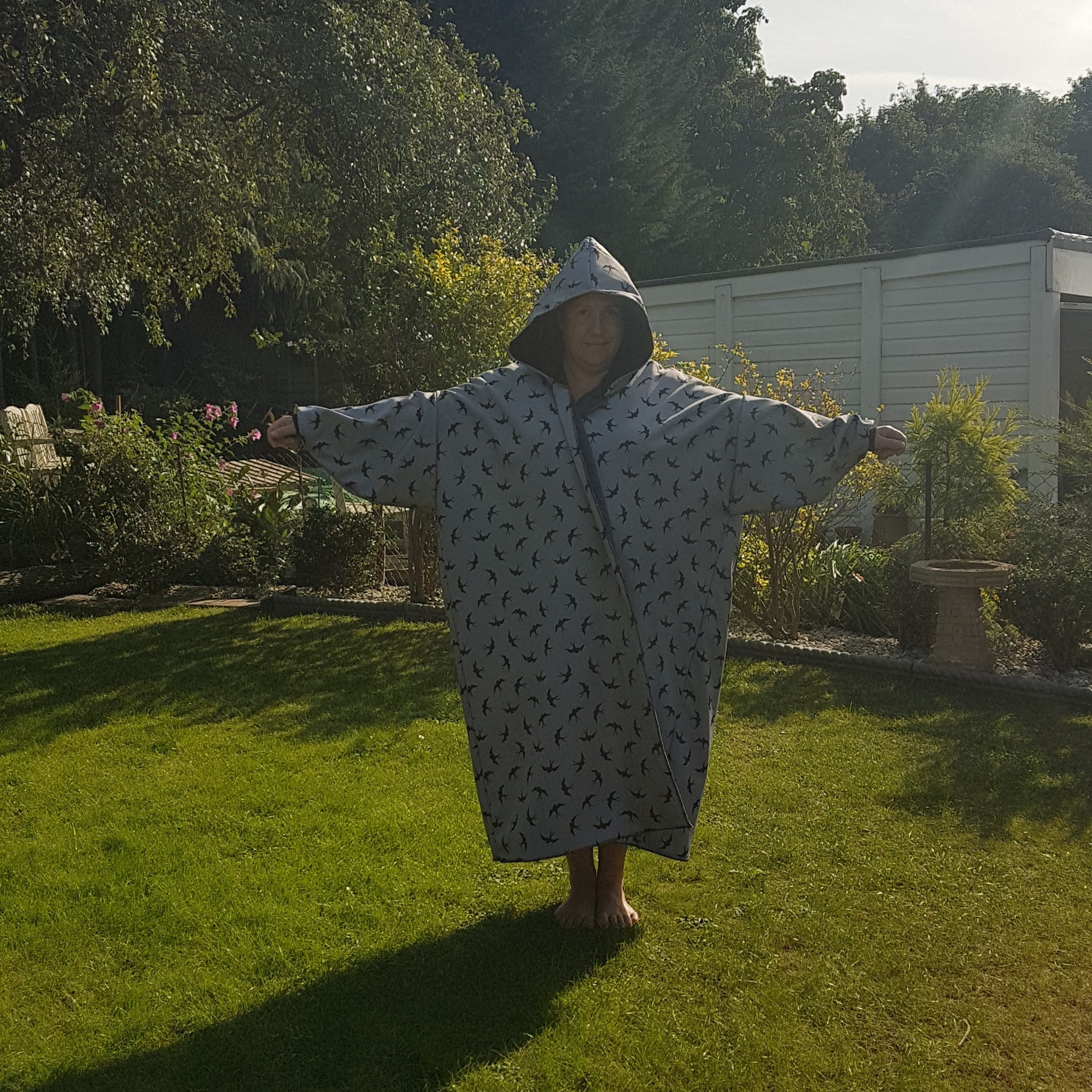
Week thirty five: this week’s post is brought to you by the letter C

Stir Up Sunday is when families get together to prepare the Christmas pudding, and it’s the last Sunday before Advent*. I first heard about it from my original boss at the Museum of London Docklands – I don’t remember this being something we did when I was a child. I have a vague recollection that my grandma used to make the Christmas puddings and when she got too old we either had shop-bought ones (that were usually still in the cupboard in May – who has room for Christmas pud if dinner is done properly?) or no pudding at all. I confess to not liking Christmas pudding anyway.
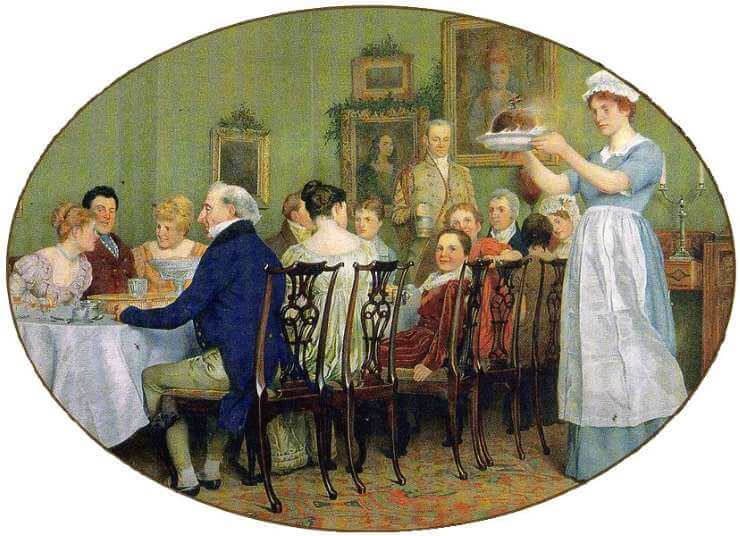
There was always a Christmas cake though, mum-made and usually with a disaster story attached – my dad is partial to a fruit cake so she made them throughout the year, but the Christmas one always went a bit wrong. This year London sister has made one for the parents and sent it in the post to France, and all they have to do is feed and decorate it.

I didn’t like Christmas cake, either – I still don’t like shop-bought ones. I’m not a lover of candied peel, glace cherries in anything, or unexpected bits of nut. When I became a proper grown up, however, I decided that along with being able to stuff a turkey without wincing (I usually remember to take the neck and giblets out…) I ought to make Christmas cake too. I’d won a Mary Berry recipe book in a Christmas party raffle a few years earlier and found the Classic Victorian Christmas Cake, so thought I’d give that a go – OK, it was the only Christmas cake recipe in any of my books, so it was an easy choice! I think it’s also the only thing I have ever made from the book.

Mary Berry’s cake. Not mine.

I left out the glace cherries and almonds, replaced the cherries with more dried fruit, and rather than soaking the fruit in sherry I used rum. Then I fed the cake with more rum. Mary wasn’t clear on how often you should feed the cake, or on how much you should be feeding it, so I erred on the side of caution and that first cake was a) very moist and b) capable of putting you over the driving limit. So that’s been my go-to recipe since then – I didn’t make one last year, as I usually end up eating far too much of it myself, but this year my budding Heston Blumenthal (aka Thing 2) has been putting pressure on me to make one.

So yesterday Thing 2 and I set the fruit to soak (in the last of the cherry gin, due to a lack of rum in the house) and on Tuesday afternoon we will stir up and bake our 2020 cake. Just before Christmas we’ll decorate it – madam has very strong opinions on cake decorating so I may leave her in charge of that.

*Yes, I know Stir-Up Sunday is technically next weekend, but never mind. I’m sure there will come a time when Thing 2 doesn’t want to cook with me, so until then I’ll make the most of it.

Work is the curse of the crafting classes

This week I have been working from home – an online symposium on Monday about Creativity in Education Now, run by Creative Schools and Creative Colleges. Interesting stuff: the keynote speaker was Bill Lucas, author of Teaching Creative Thinking and my new hero. There was a poor OFSTED rep there, who was trying really hard to say that there were lots of opportunities for teaching creativity in schools as part of the new(ish) inspection framework, but she kept hammering home that everything had to start with knowledge acquisition. She wasn’t open to ‘split screen’ teaching, where creative skills are developed at the same time: as she was an ex-art teacher that surprised me.

The rest of the week was spent on meetings, and on developing a set of learning outcomes for one of the new galleries in the museum. It’s going to be an amazing space – as with the rest of the museum, focused on building creativity in children, young people and their families – and the deep dive back into our thinking over the past year or so has made me excited about the transformation project all over again. It’s been hard at times this year to remember what a brilliant thing we’re doing – losing six months to furlough meant it’s taken a while to get back to this point – but this task has reminded me.

On the subject of creativity – I love what the Natural History Museum have been doing to support audiences. This lovely free Dodo cross stitch pattern is available to download, and you can also make a giant squid or a whole set of nudibranches. The patterns come with really simple instructions, too, and are part of a suite of equally brilliant craft activities. Nice job, NHM.

You can find the V&A’s own offer here – less for kids but some gorgeous Mary Quant patterns remade by Alice and Co Patterns, as well as other projects inspired by exhibitions. You could also check out the #LetsMakeWednesdays posts on the V&A Blog.

Where was I? Oh yes, working at home – that means no progress at all has been made on the portable sock project, which has the heel flap done on sock 1 and is ready to turn when I get back on the tube tomorrow.
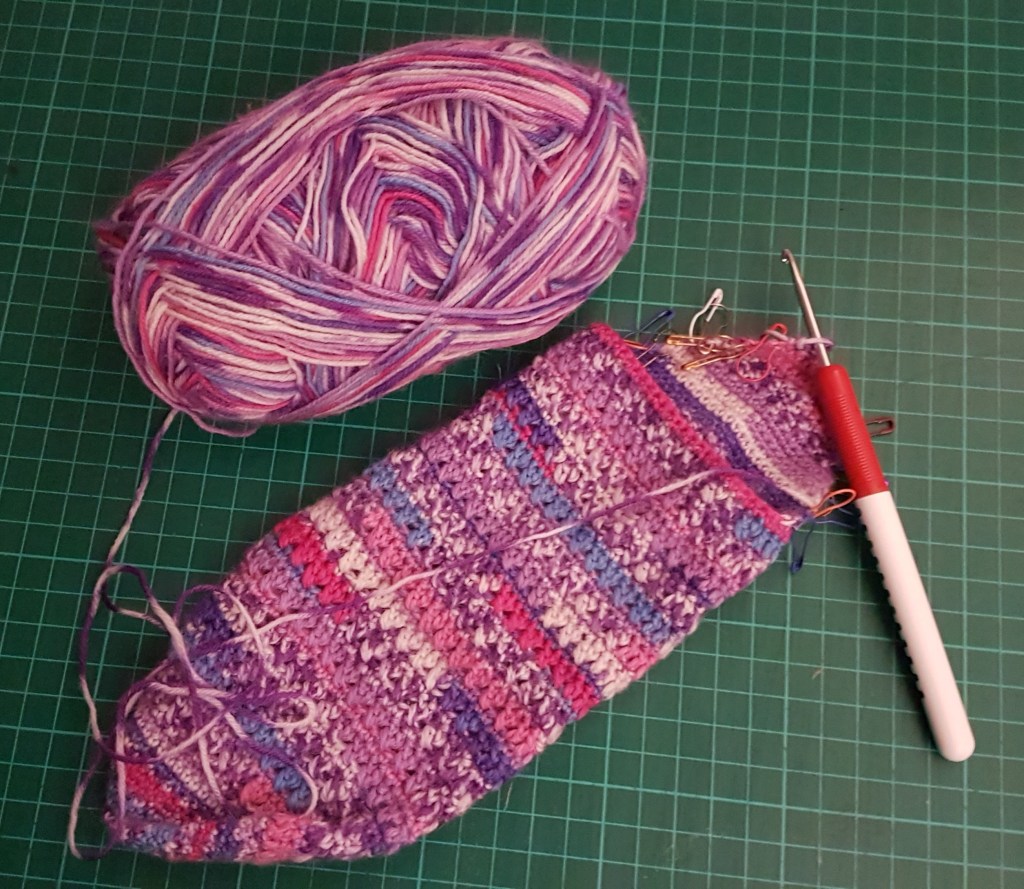
Sock bristling with stitch markers

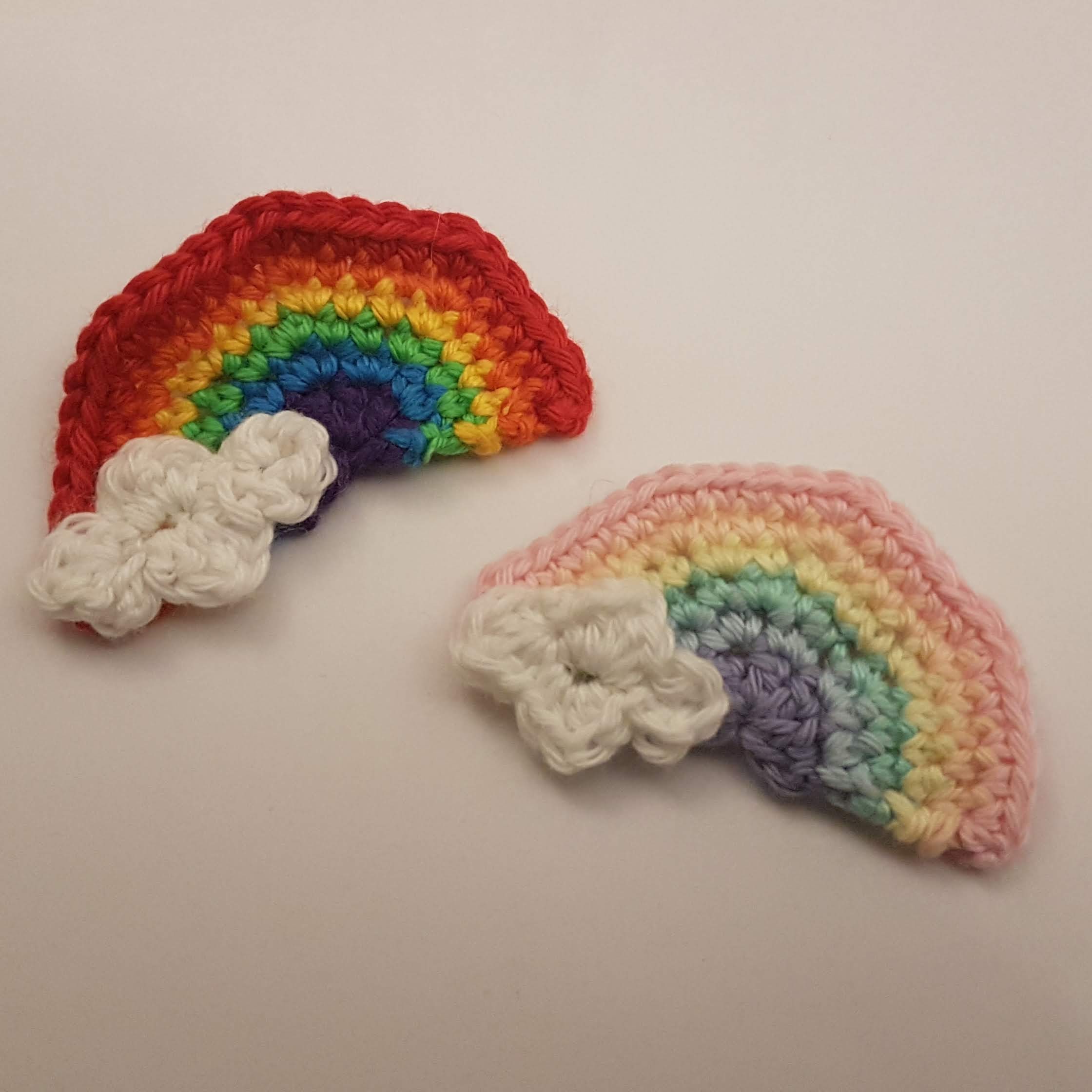
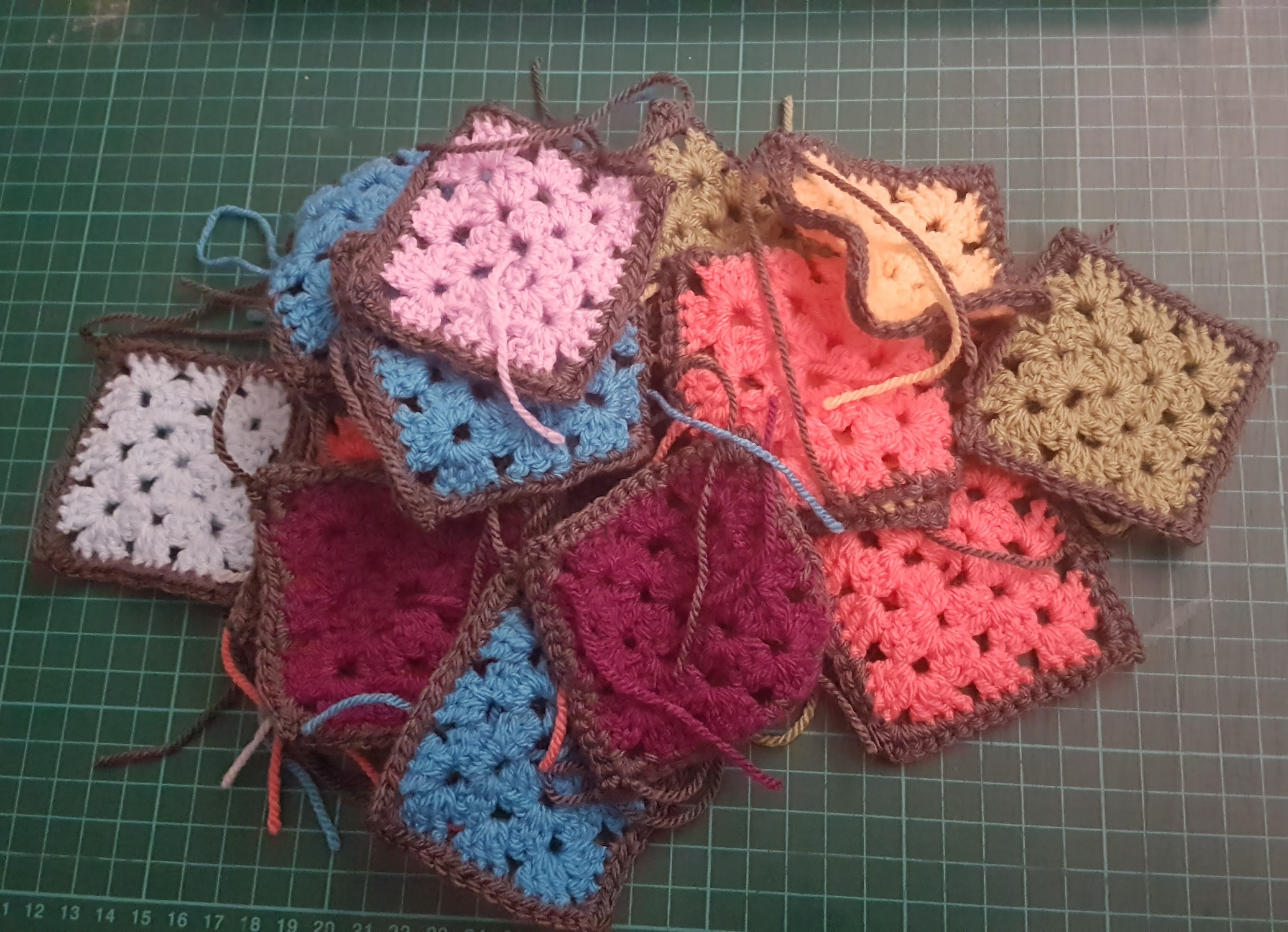
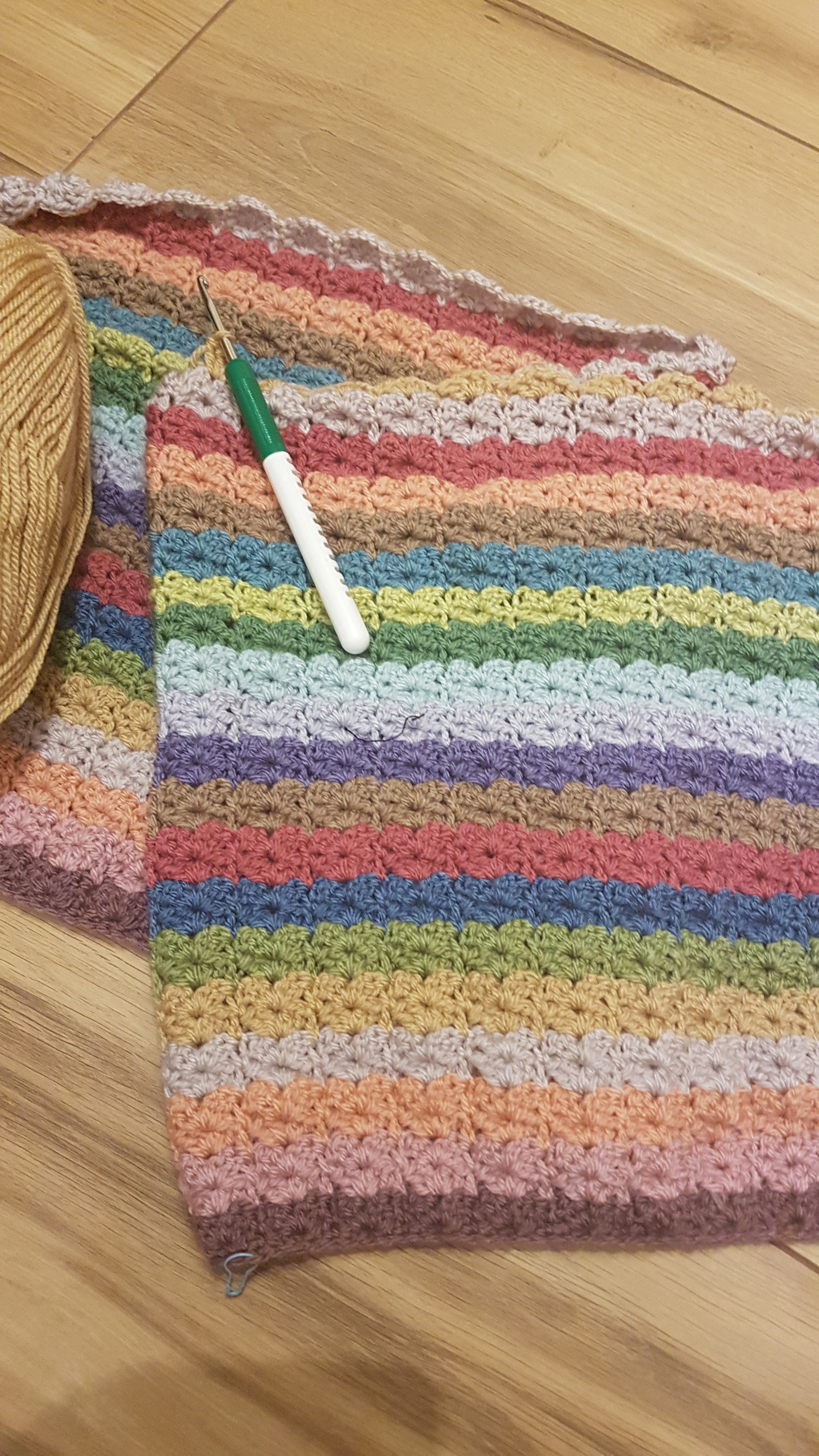
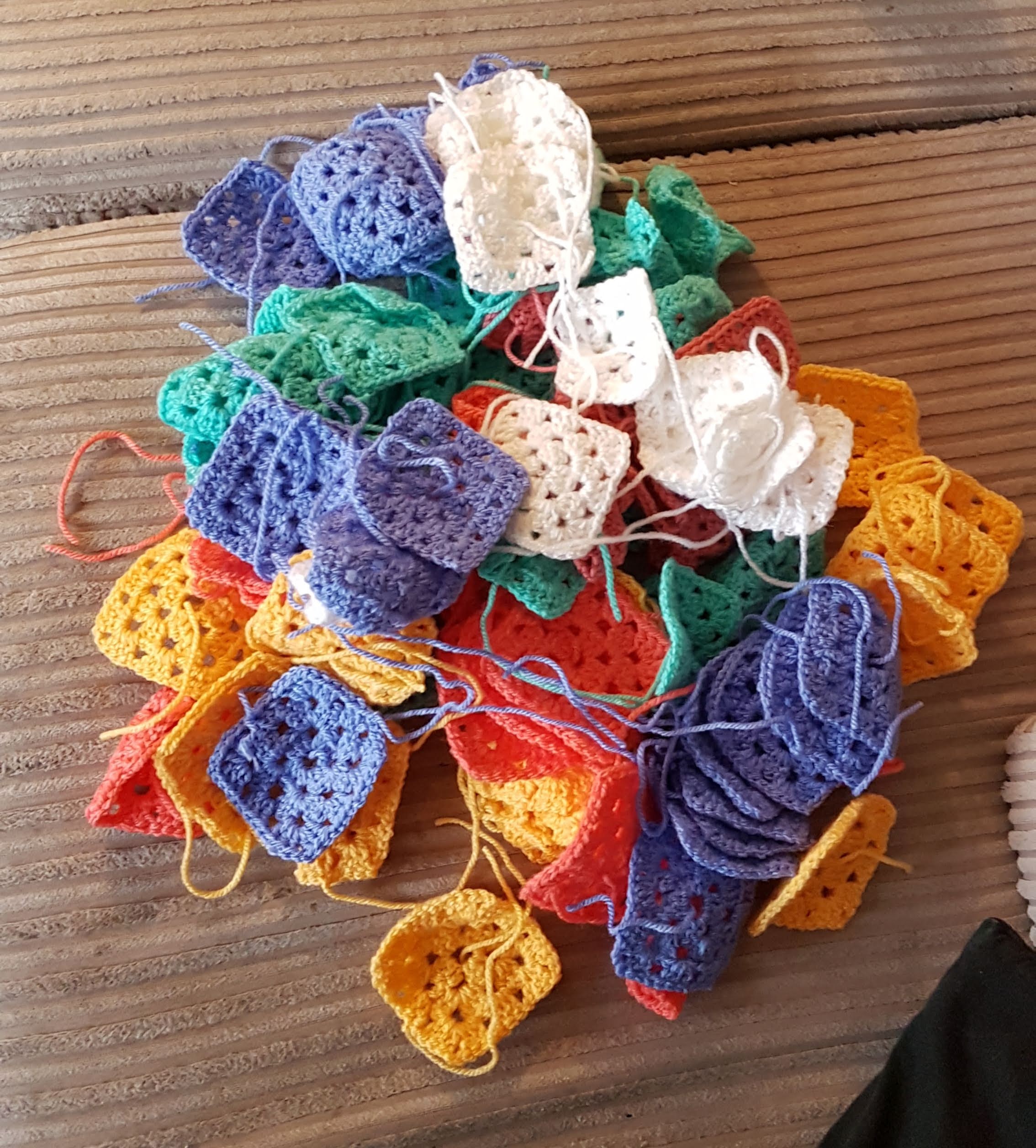
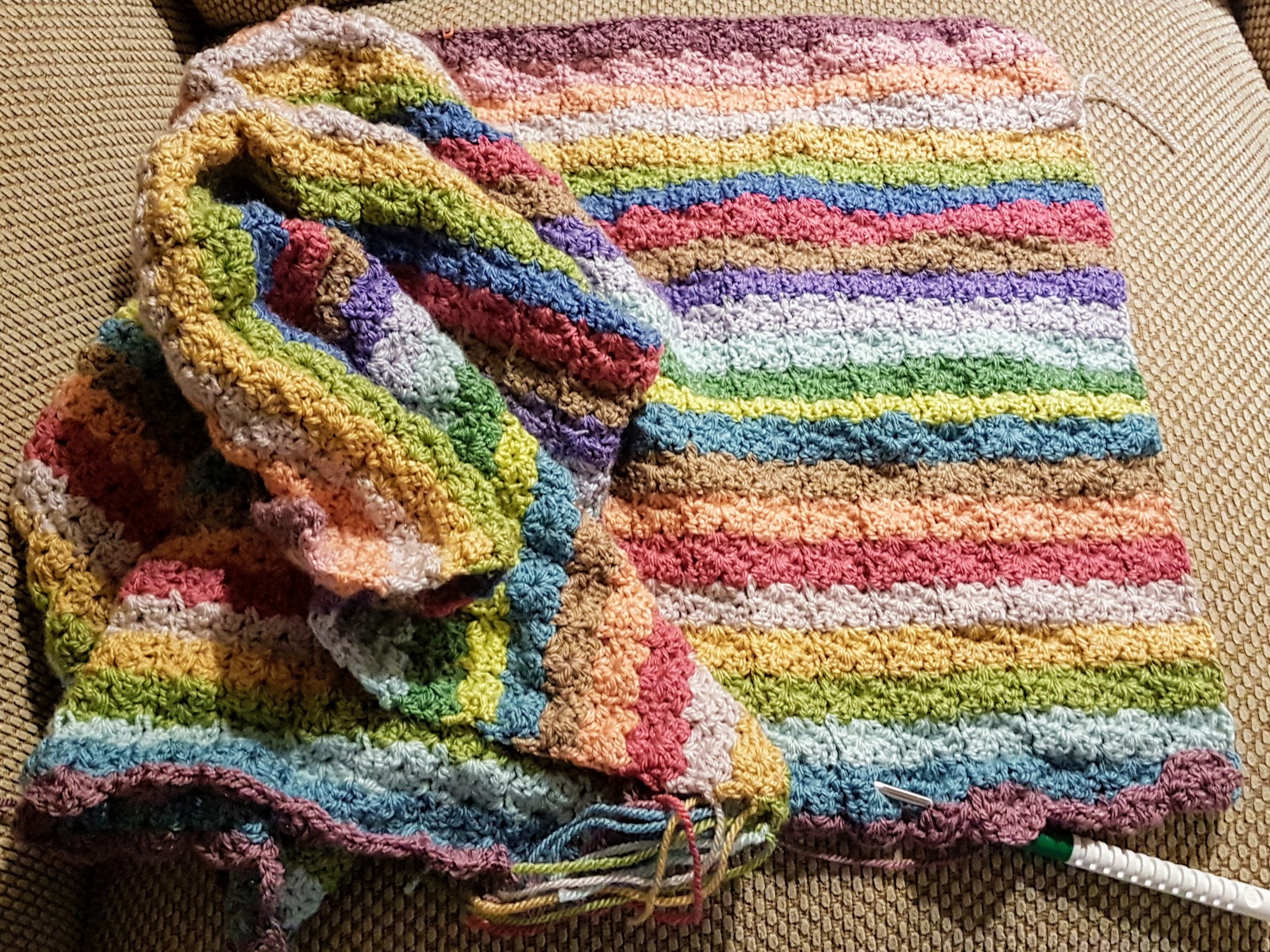
The Hydrangea blanket has a few more stripes, and I have also been working on rainbow jewellery which will hopefully find their way into an experience hamper at some point. The rainbow pattern is by Ever Laughter and you can find it here. She used aran yarn to make her applique, I have used Perle no 8 for the necklace and Scheepjes Cotton 8 for the brooches. I like the pastel one just for a change up! The pile of squares is the Zoom blanket underway in Stylecraft Special DK.
I’ve managed to sew up both the dresses I cut out last weekend, too. Both were pretty quick makes and came together in just a couple of hours each, and both have proper pockets to put things in. You can’t underestimate the value of pockets!
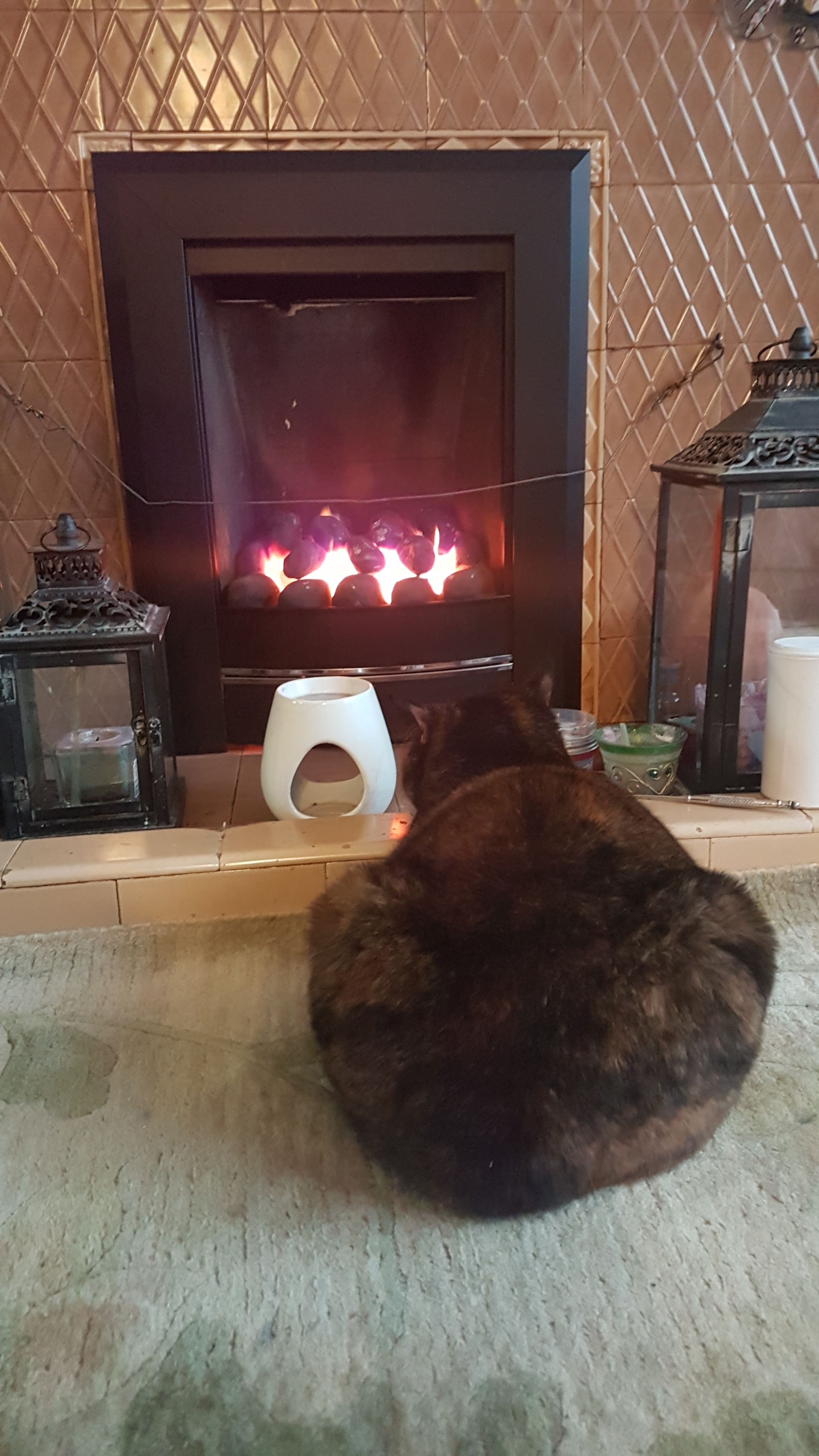
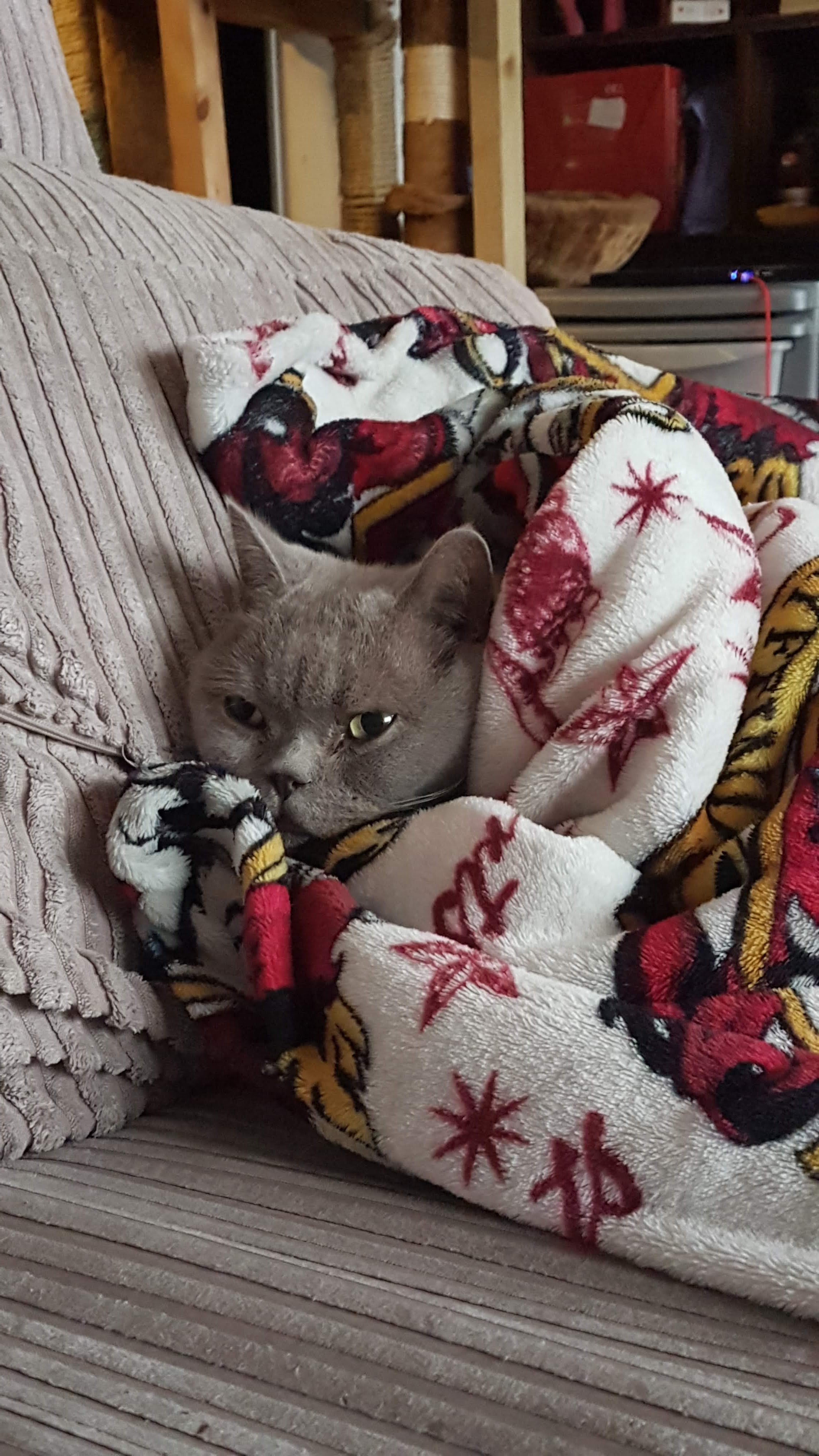
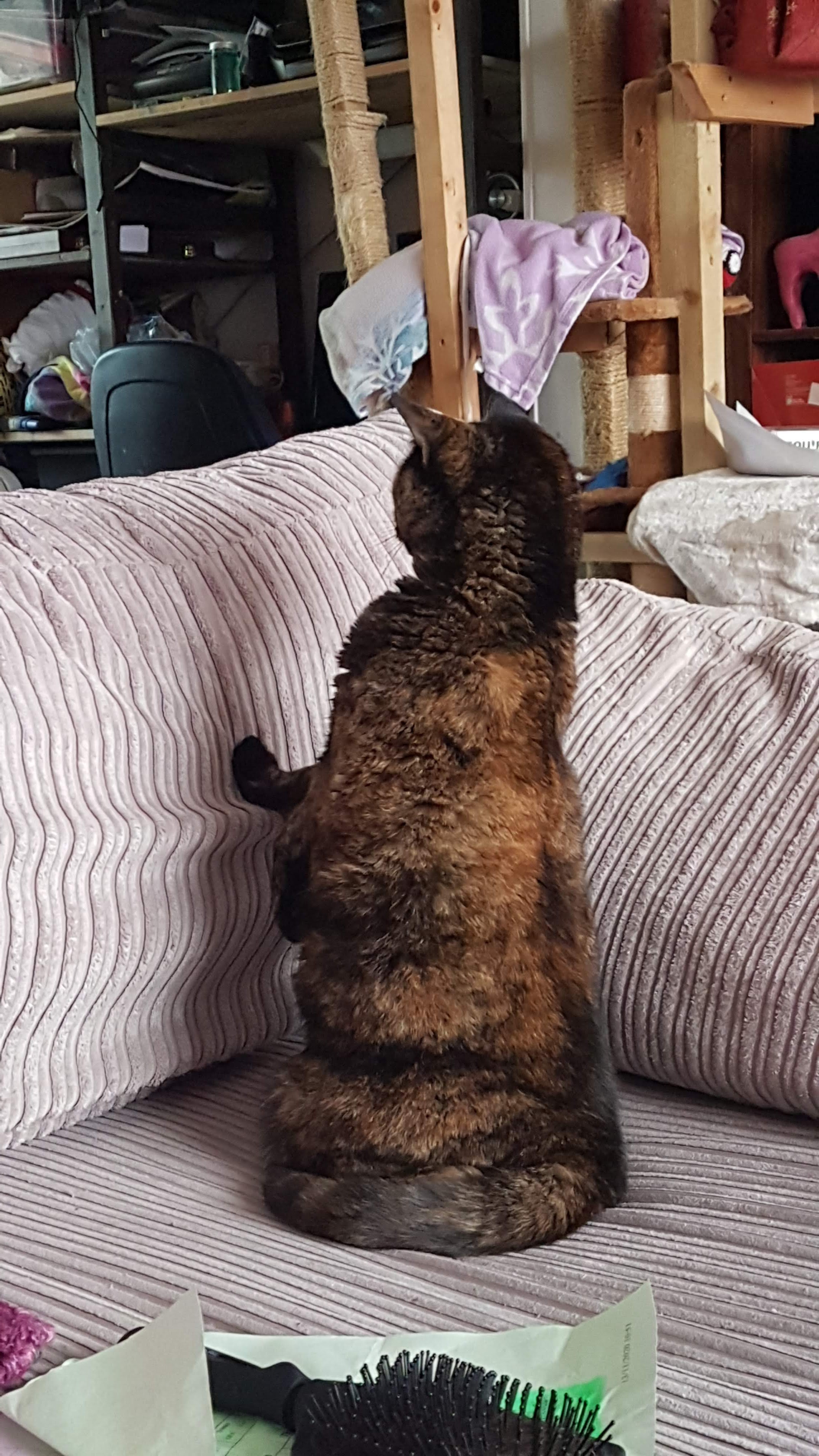
Being at home all week – with Lulu on downstairs cat duty – has reminded me how much that cat loves my beloved. The first picture is when she heard him come through the back door – Thing 3 is currently complaining that she jumped off him as soon as her human came downstairs. She’s not a lap cat like the other two, but will lean on you or cuddle up if you’re sitting down and if my beloved is not in the room. If he is, you haven’t got a look-in….
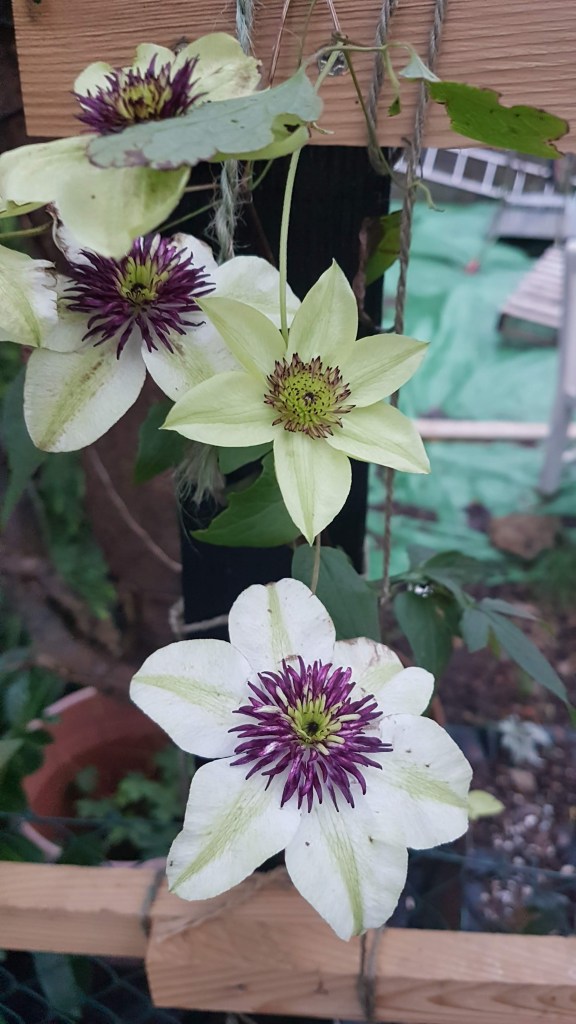
I’ll leave you this week with a picture of a clematis in the garden still bravely struggling on. I love the colours of this one.
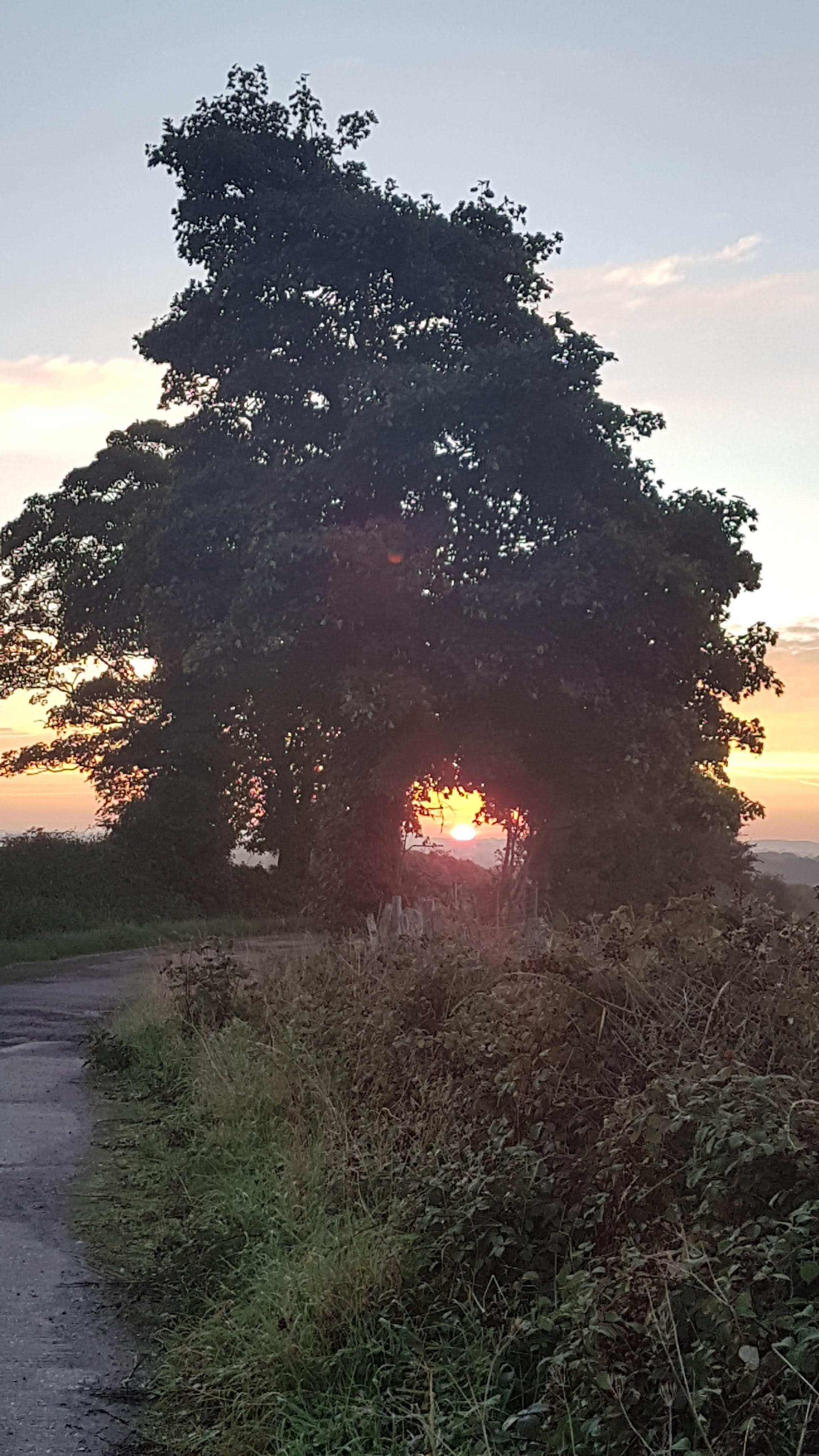
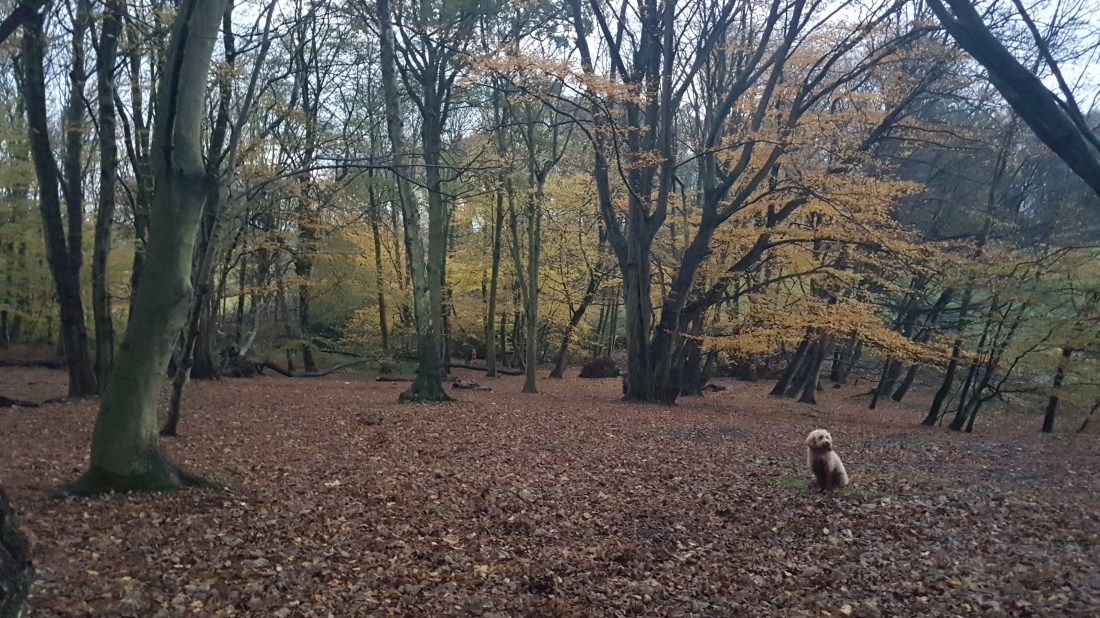
See you at the end of week 36, when we can see how the cake turns out! This week’s cover photo is the woods on Stonards Hill in Epping looking very autumnal.

Kirsty x

What I’ve been reading

The Penguin Killer – Ste Sharp

Enemies at Home/Deadly Election (Flavia Albia) – Lindsey Davis (Audible)

The Law of Innocence (Mickey Haller) – Michael Connelly

Gobbelino London and a Scourge of Pleasantries – Kim M. Watt
Week thirty four: dw i’n dysgu Cymraeg

Once upon a time, way back in the educational dark ages (well, pre-National Curriculum, anyway) Welsh was not compulsory in South Wales schools. I was at infant school in Cardiff, and Welsh wasn’t taught till juniors. When I was just seven, we moved to Monmouthshire where it wasn’t taught at all. My (English) secondary school headteacher, when the NC was introduced in 1988, campaigned to have the school classified as being in England as many of the pupils were bussed in over the border from Gloucestershire: he claimed that more people spoke Chinese in Monmouth than Welsh. He may well have been right at the time, but that wasn’t the point.
He was unsuccessful, fortunately, but as I was too late to feel the impact of the NC while I was still in school I didn’t get the chance to learn Welsh until I was doing teacher training in Aberystwyth. Conversational Welsh was offered as a weekly elective in the lunch breaks, so I was able to count to ten, talk about the weather and say hello. I could also understand drinks orders in the pub I worked in. This was helpful when the gang from Yr Hen LLew Du made their occasional forays into the English-speaking pubs to try and annoy the barmaids, who were invariably students. Not speaking Welsh at the time was a severe handicap when applying for jobs in Wales, as it was necessary to be able to teach the language as well, which I assume is why for many years Wales’ greatest export was teachers who had fallen into the National Curriculum gap.

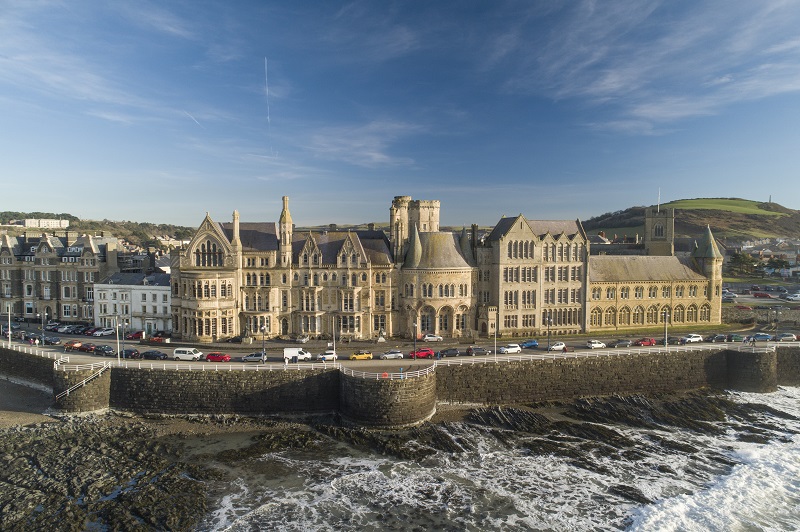
Old College exterior – Aerial drone photoraphy Aberystwyth University Feb 14 2019 ©keith morris (CAA approved commercial drone operator) http://www.artswebwales.com keith@artx.co.uk 07710 285968 01970 611106

My parents weren’t Welsh speakers either: they had been at school in Cardiff in the 1940s and 50s. At that time, Wales was still suffering the hangover of the Industrial Revolution. English landowners – who owned the mines and the steelworks – saw Welsh as the language of revolution, especially with the rise of the unions, and it was banned from being spoken in schools. Children who spoke Welsh in school were made to wear the ‘Welsh Not’ – a sign hung around their necks to humiliate them, much as a dunce cap might be worn. The influx of Irish and Northern English into the Valleys to work in the mines, the steelworks and the associated infrastructure industries further diluted the language.

In 1847 a set of Parliamentary Blue Books were published on the state of education in Wales:  

“It concluded that schools in Wales were extremely inadequate, often with teachers speaking only English and using only English textbooks in areas where the children spoke only Welsh, and that Welsh-speakers had to rely on the Nonconformist Sunday Schools to acquire literacy. But it also concluded that the Welsh were ignorant, lazy and immoral, and that among the causes of this were the use of the Welsh language and nonconformity.” (Wikipedia)

Evidence for this came mainly from Anglican clergy (who didn’t speak Welsh) at a time of burgeoning non-conformism in Wales, from landowners (er, ditto) and none of the commissioners were Welsh speakers. The argument that the Blue Books put forward was that embracing the English language would allow the Welsh to achieve their potential and take full part in British civic society – the authors were apparently concerned with the wellbeing of the Welsh (how delightfully colonial!). Non-conformists were often Welsh speakers, and a lot of them headed over the sea to the Americas where they set up Welsh communities and the language survived* – and handily provided me with a dissertation subject for my degree in American Studies. (Welsh migration to the USA from Prince Madoc onwards, in case you’re interested!).

The suppression of Welsh actually started a lot earlier than the Industrial Revolution, with the Act of Union in 1536 when it was decreed that English should be the only language of the courts in Wales, and that Welsh speakers could not hold public office in the territories of the king of England. This didn’t work terribly well at first, as the majority of the population were Welsh speakers, so a lot of interpreters were used in the courts. The upshot of this was the growth of a Welsh ruling class who were fluent in English, and Welsh became confined to the lower and middle classes. From 1549 all acts of public worship had to be conducted in English, though Elizabeth I wanted churches to have Welsh versions of the Book of Common Prayer and the Bible from 1567. The first complete Welsh translation of the Bible came in 1588.

A radio broadcast called ‘Tynged yr Iaith’ (The Fate of the Language) by Saunders Lewis in 1962 marked a national change in attitudes to the language, and you can read much more about this here. Welsh was on the up again…

Back to me (it’s my blog, after all) and my adventures in Welsh. Road signs were in Welsh, and our family holidays were in west Wales where much more Welsh was spoken. My Aunty and cousins spoke Welsh, so I’d always heard and seen snatches of the language. I’d wanted to learn but ended up working in east London as a teacher, and Welsh language courses were thin on the ground.

My London sister started learning Welsh with Duolingo and Say Something in Welsh a couple of years ago, and she encouraged me to learn too. I say encouraged – she signed me up to SSIW’s six minutes a day programme as a birthday present. The end of Duolingo is in sight for me now, though I can’t say the same for SSIW which I find really hard and have had on pause for ages.

I am a lifelong learner, as I’ve mentioned in an earlier post about my adventures in crafting, and it’s been suggested that language learning ‘boosts’ brain power by exercising the parts of the brain that process information. Learning a new language also contributes to a growth mindset, and understanding something you didn’t expect to is a great motivator. My fellow museum bod, gig buddy and Welsh learner Jen and I went to see Elis James and Esyllt Sears doing stand-up comedy in Welsh at the London Welsh Centre last year: I was really excited to be able to understand – or at least get the gist of – about two thirds of the show. (As an aside, we chatted to Elis James afterwards and he was really lovely).

Duolingo is excellent for vocabulary building and for sentence construction, but I have real problems with SSIW. I’m a visual/kinaesthetic learner – when I did the VAK assessment for a management course a couple of years ago I scored equally highly on the Visual and Kinaesthetic scales and extremely low on the Auditory. It wasn’t anything I didn’t know already but at least it explained why I was having terrible trouble with SSIW!

I learn by doing, or by seeing – if my hands aren’t doing something then I tune out very quickly. This means I take a LOT of notes in meetings. It’s not diligence, it’s self-preservation – if I’m not taking notes I tune out. My previous line manager used to be able to tell when I switched off if a meeting went on too long!. I crochet my way through conferences or use a fidget toy, as if my hands are occupied I’m able to focus on what’s being said. SSIW, as it’s entirely auditory, really doesn’t suit my learning style at all – writing down the week’s sentences in advance was useful, but ideally I would be writing them down as I went along. But not knowing how to spell most of the words made that quite tricky, as did the fact that I generally did the SSIW sessions while I was ironing and refereeing the Things. Perhaps I need to sit down, on my own, with a pen and paper and try my usual learning method of copious note taking. I have a Welsh dictionary, and a grammar book, so there’s really no excuse.

*As an aside to this, there have been a lot of jokes on social media in the last couple of days that a Welsh-speaking nation have finally beaten the All-Blacks at rugby….sadly, it was Argentina, so Max Boyce probably won’t be memorialising this in song.

Creative industry

Despite being back at work full time it’s been a productive week! Normally at this time of year I’d be making jewellery to sell at the Christmas markets but this year I don’t have any booked for obvious reasons.

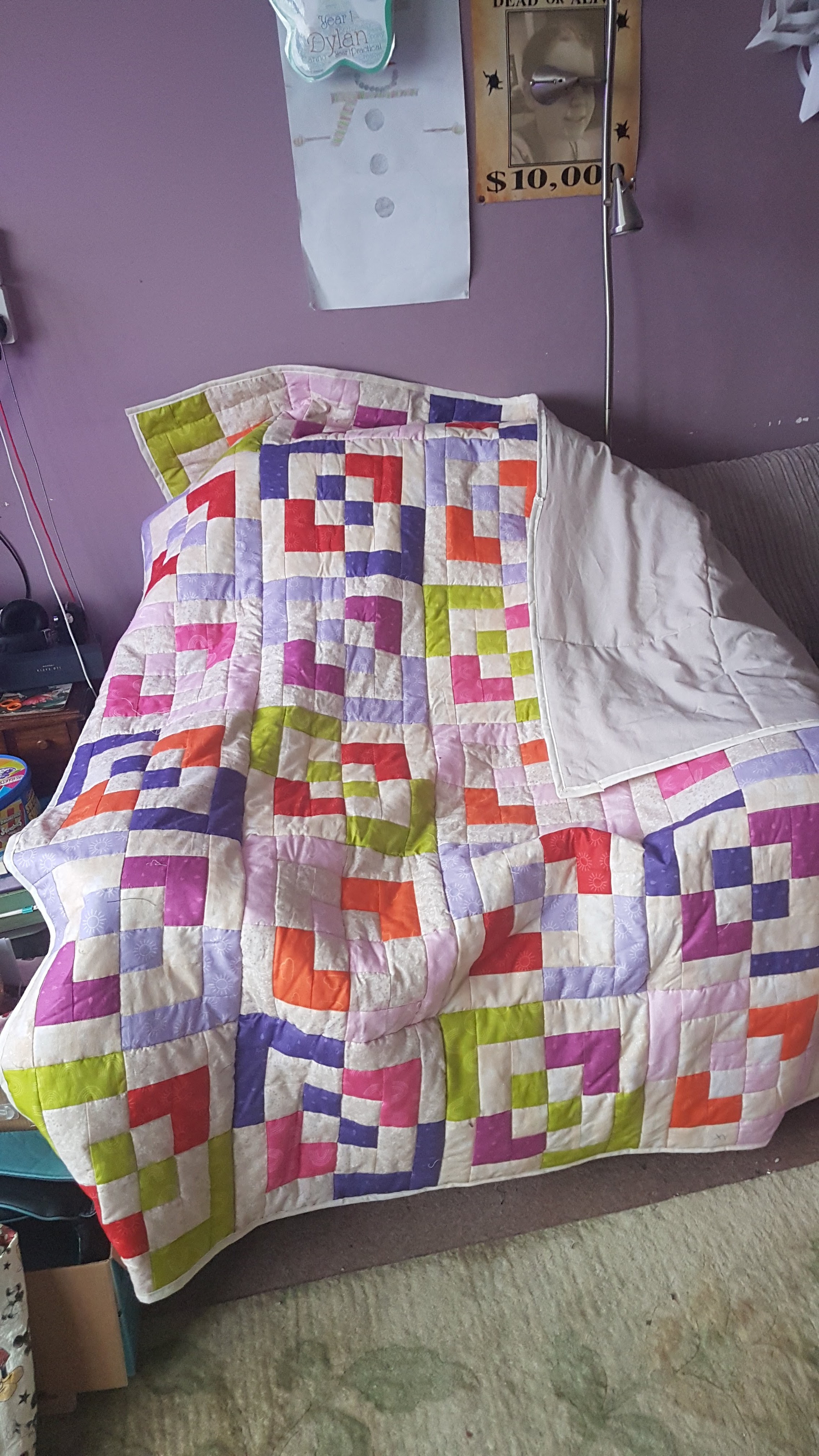
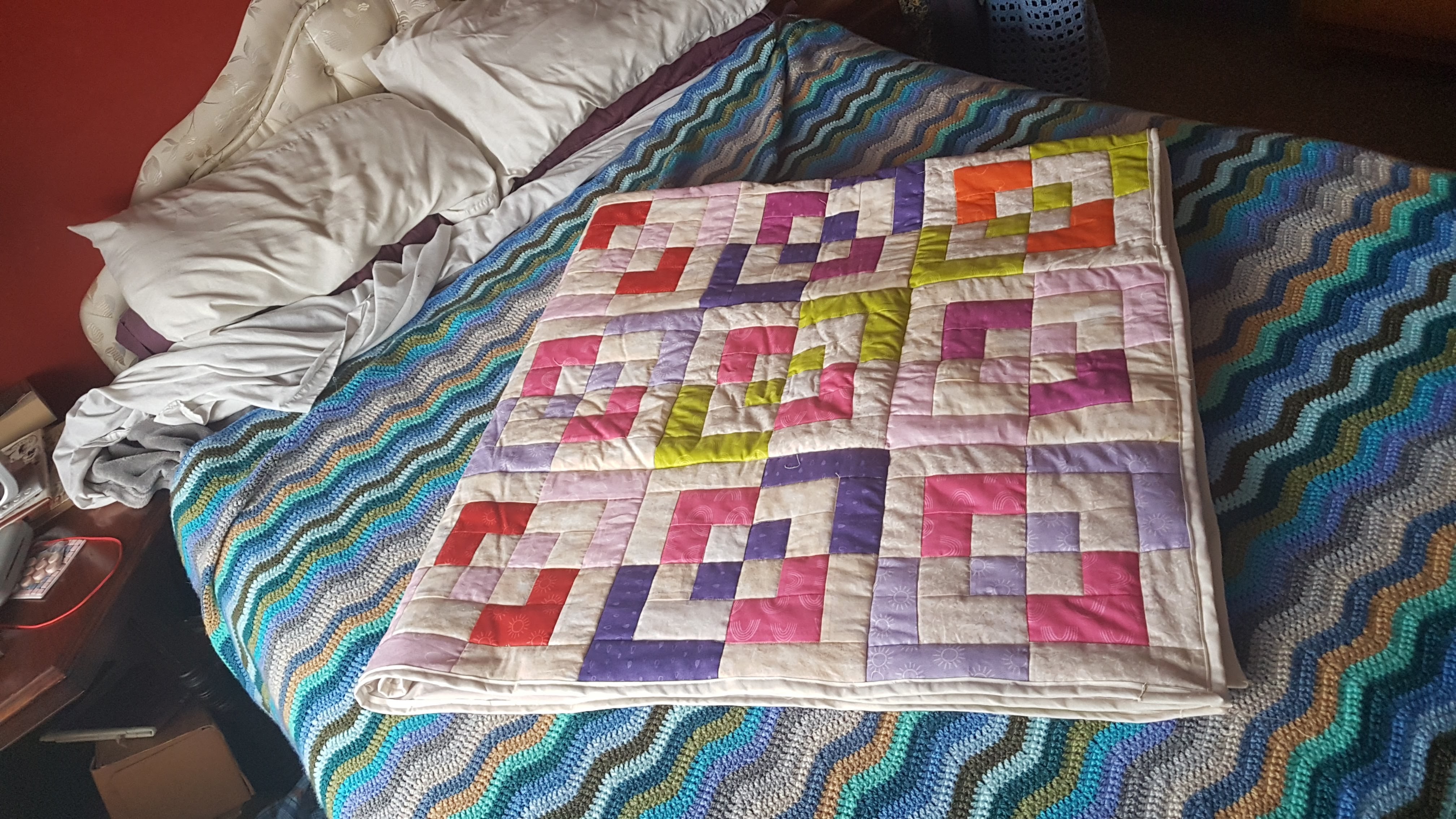
I mentioned in last week’s post that my plan for the rest of the day was to finish the Bento Box quilt. That’s the one I quilted as I went along, so after I’d backed it I was able to add another few lines of quilting in the ditch just to hold it together, and then bound it. I backed it with a 100% cotton sheet I’d bought in a sale, and bound it with a ready-made cream bias binding from Bertie’s Bows. Just to recap, the coloured fabrics are Stuart Hillard’s Rainbow Etchings designs for Craft Cotton Co, and I used nearly two jelly rolls to make it. The blenders, wadding and multicoloured quilting thread are from Empress Mills, and I used this tutorial.

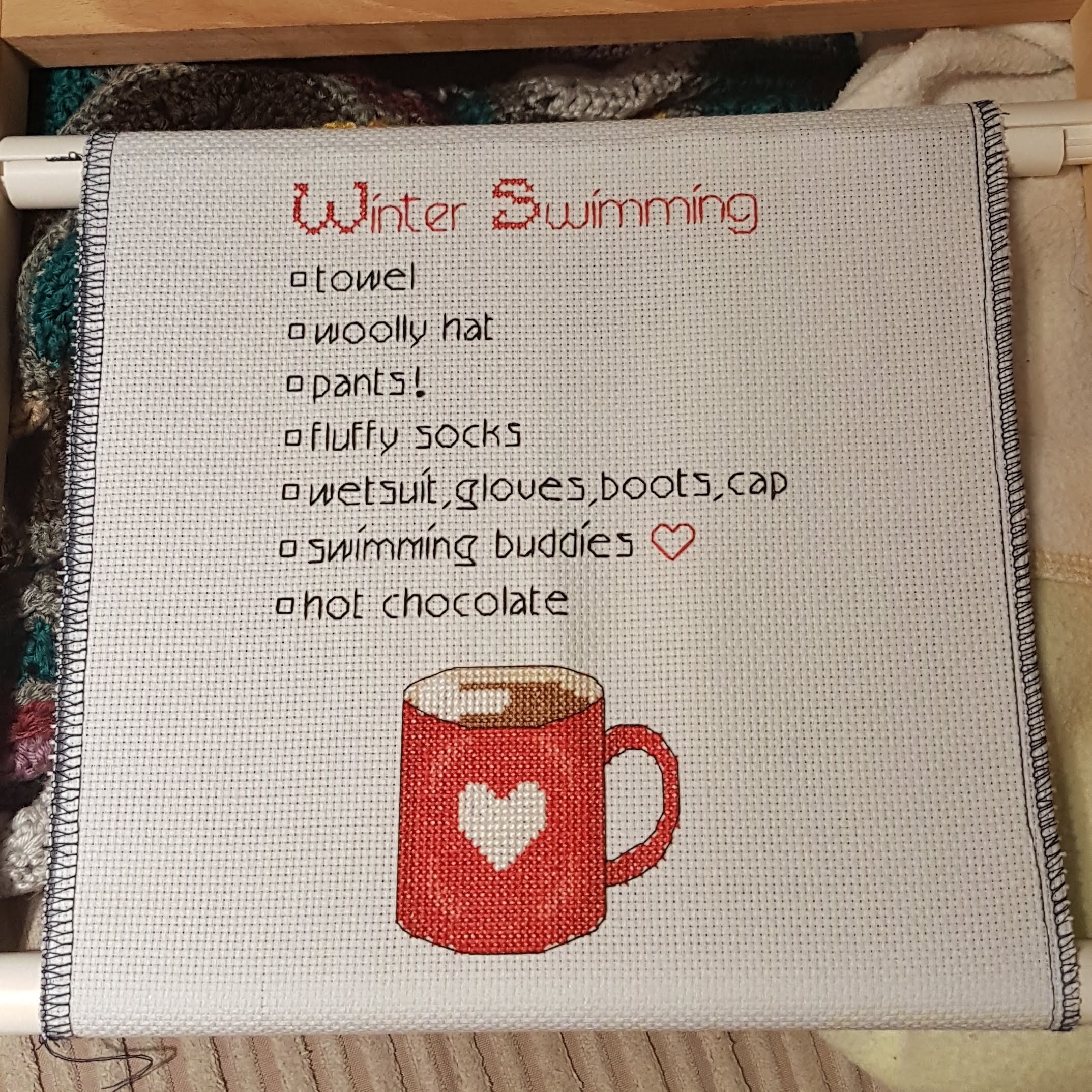
I also promised I’d show you the Winter Swimming cross stitch when I’d finished it…the wording is my own work, using DMC stranded cotton, alphabets from this book, and the mug design can be found here. Despite the fact that I can hear the rain hammering on the conservatory roof right now and it’s still pitch dark at 7am, I’m really looking forward to getting back in the socially distanced lake this morning!

Onesie and wellies optional.

The Hydrangea blanket is coming on nicely – I am just about a quarter of the way through it now. It’s such a relaxing pattern to do, and I am following Attic24’s colour order as well. The yarn is Stylecraft Special DK from Wool Warehouse, where the official Attic24 shop can be found. I really love the faded colours.

25% of a Hydrangea Blanket

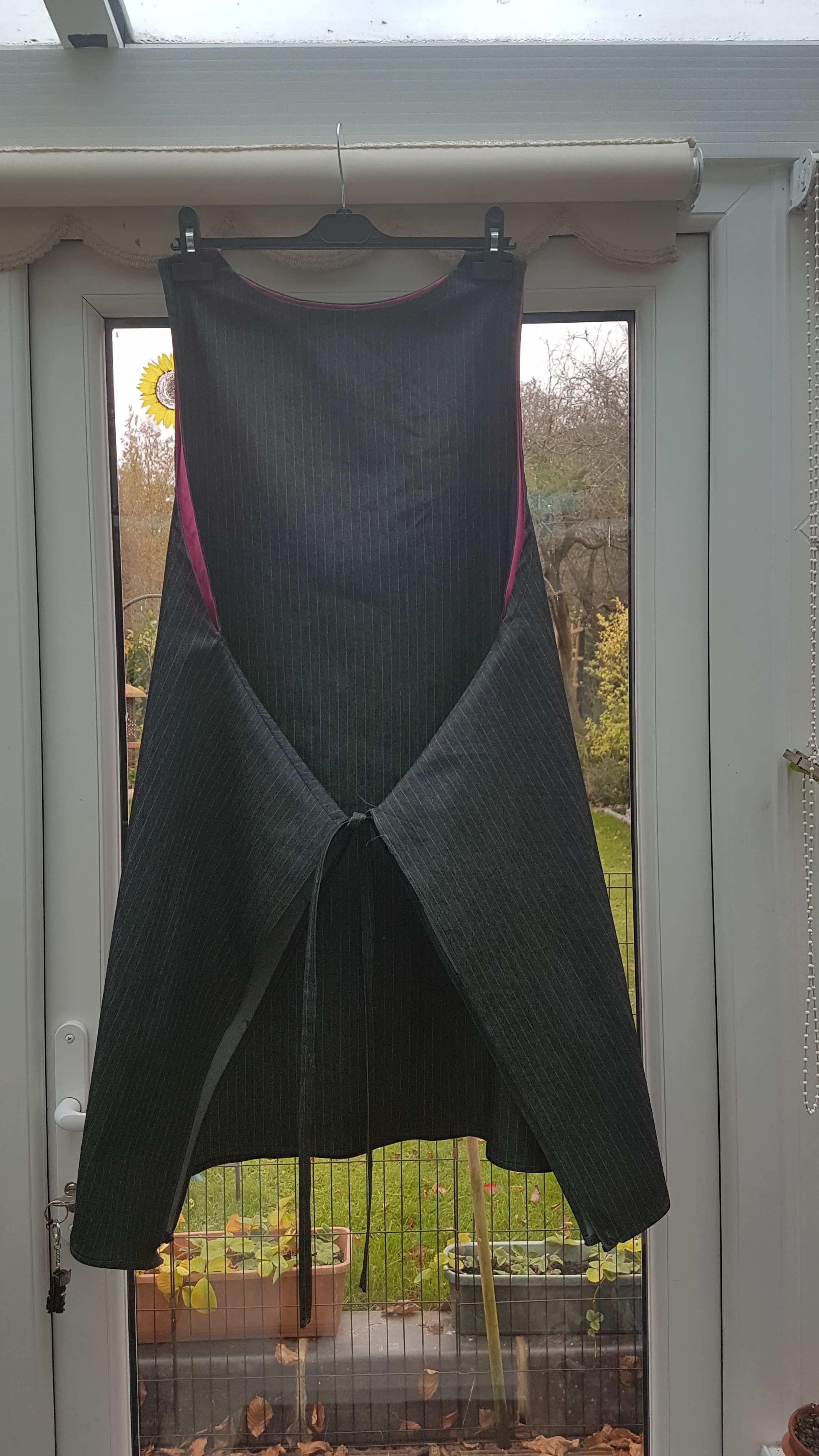
Yesterday’s job was to cut out a couple of dresses as I haven’t done any dressmaking for a while and at some point I’m sure I’ll get out of jeans and leggings for work again – at the moment I am mainly surrounded by dusty boxes and ladders, so looking tidy is not a priority. Both patterns are by Simplicity – K9101 was free with Sew magazine and the Dottie Angel (8230) is one I have made before. It’s great for throwing on as a top layer. I’m making version A with the double pocket from B, in a pinstriped denim. You can see the back of the fabric I’m using for K9101 behind – it’s a cotton duvet cover I picked up at The Range. I’m using the navy side for this, and there’s a purple side as well which may well end up as an Avid Stitcher drop-sleeve top. I do love a layer.

The weather this weekend has been truly atrocious, so yesterday Thing 3 and I spent some time doing jigsaws together. He has loved puzzles from a very early age (I do too), and when I declared a screen-free afternoon yesterday we had a few games of Dobble and then made a 3D puzzle of a baseball boot and a couple of Star Wars puzzles.

Thing 2 played a couple of games of chess with her Dad and Dobble with me – Dobble is like extreme snap and trickier than it sounds! I foresee a massive boom in the sale of chess sets, by the way, as a result of the Netflix series The Queen’s Gambit. We’ve just binged it and the finale had us on the edge of our seats.

Now excuse me, Duolingo has just told me it’s time for Welsh….see you at the end of week 35! I’ll leave you with a photo of a Little Egret who was hanging round the brook on the High Road all day on Friday.

Kirsty x

What I’ve been reading:

The Forest is Crying – Charles de Lint

The Spook who Spoke Again – Lindsey Davis

The Ides of April/Enemies at Home (Flavia Albia) – Lindsey Davis (audible)

The Law of Innocence (Lincoln Lawyer) – Michael Connelly

The Good, the Bad and the Furry – Tom Cox

Week thirty three: here we go again

You know, I’m tired. I’m really, really tired. And fed up. And angry (though regular readers will have spotted that this is becoming a far more frequent state of mind for me). And resigned. And sad. And all sorts of other emotions that are probably common to a lot of us right now.

On Thursday, we entered Lockdown: The Sequel here in England. Wales and NI very sensibly started their ‘firebreaks’ a couple of weeks ago, before half term so the kids were off school anyway. The trouble is, like many sequels, this one just doesn’t seem to be quite as good as the first – I mean, it’s not as bad as High School Musical 3, but it’s still a bit rubbish.

The kids are still in school, for a start, which means that they’re mixing with their friends: admittedly within their bubbles but, logistically, this means that in a multi-form entry school those bubbles can have just under 100 children in. Those children may have siblings in other bubbles, so no bubbles are sealed. They also have parents and carers, who may still be working – some in schools, with other bubbles – and using public transport and things. But apparently it’s fine because those children aren’t allowed to see each other outside school, and we have all got the message that Covid-19 is only contagious in your house or garden, or where no money is changing hands or being made.

I get to go to work three days a week in this lockdown, because there is work that’s impossible for me to do from home: assessing and decanting thousands of handling collection objects, for example, and packing up the office ready for the move. I didn’t go in on Thursday but from what I hear from those who did, there was little difference in transport and travel. When I do go in, I’ll follow the guidelines: social distancing as far as possible on the tube and in the museum, wearing a face covering properly, washing my hands frequently and so on. I’ll carry on travelling outside peak times – I’m in the office at 6.30am and leave at lunchtime, logging back in at home to finish my day and picking up Thing 3 from school so he’s not going to childcare.

I will follow the guidelines, not because I trust our government or because I like to do what everyone else does, but because in 2020 so far I have missed my niece’s first confirmation, my sister’s 40th birthday, my family holiday, going to live music events and author talks, and being able to see my London sister with the kids. I’ve missed my culture and cocktail afternoons with my best friend. I’ve missed pink-wine-fuelled Chinese meals with the Pink Ladies gang. I’ve missed my own birthday barbecue. Things One and Two couldn’t have proper birthday celebrations. I’ve missed impromptu Friday afternoons in the pub garden. I’ve missed sneaky weekday lunches with colleagues and walks round Victoria Park to see the dogs and ducks. I’ve missed my stepdaughters and grandson being around the house whenever they want. I haven’t seen my parents or the Irish contingent in more than two years, and I miss them. My dad is going to be 80 in February and I’d really, really like to be there.

In the grand scheme of Covid-19, I’ve been very lucky: no one in my family has been hospitalised. None of my friends have either, though many of my friends are nurses and they have lost friends and colleagues. I’ve been able to swim outdoors regularly (though that was cancelled this weekend). I live in the countryside with a lovely garden, so I have outdoor space. I’ve had an unexpected six months with my children, which has been wonderful. Christmas will happen, whatever the red-tops are saying about ‘saving’ it: it’s never been about the parties for me. It might look a bit different this year, but it’ll still happen.

But I’d like to believe there’s an end to this, and until an effective vaccine is in place that’s not going to happen. So until then I will wear the face covering to protect other people, and I will wash my hands, and I won’t hug my friends even though this year we have needed hugs more than ever. And I expect I’ll carry on being angry, and tired, and sad. But it won’t be forever.

Onto more cheerful things…

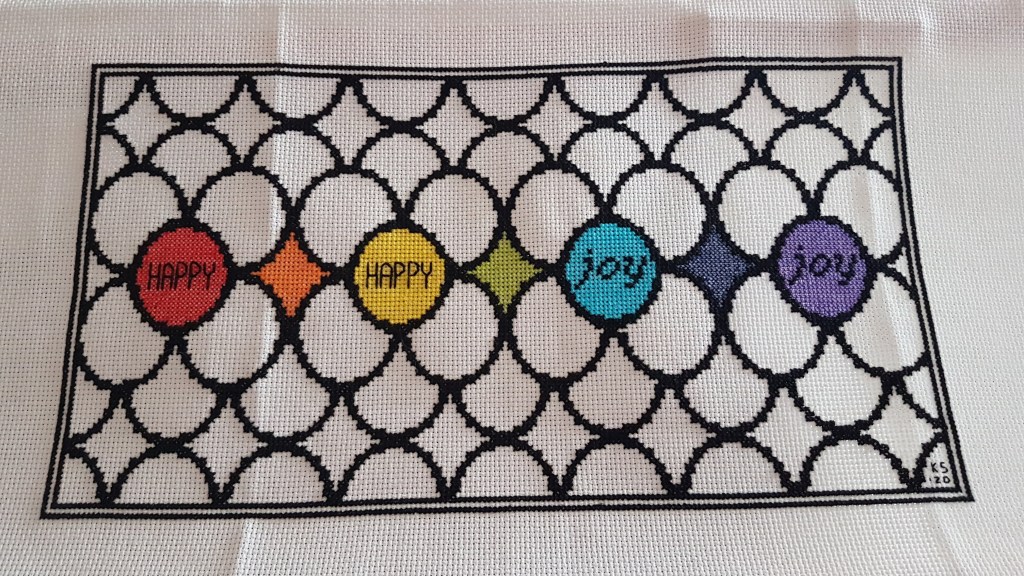
This week hasn’t been all bad, really. I’ve fitted in a fair bit of making, including finishing the Marble Floor cross stitch design that I wrote about a couple of weeks ago. I decided to include rainbow colours, as they have become a bit of a symbol for 2020 and the museum has also collected a lot of Lockdown Rainbows for a display that was due to open at the V&A this month. I’ve also included a phrase which comes from Ren & Stimpy but has become a bit of a catchphrase at work. It needs a bit of an iron, but I think its turned out OK – the geometry feels quite elegant, and I really like the effect of the colours across the middle. I used 18 count ivory aida fabric and DMC threads – two strands for the black (310) and one for the colours (from left to right: 666, 740, 973, 907, 3845, 336, 333). You can find the basic chart here if you’d like to make your own.

I have also been making progress on the Hydrangea blanket: the colours are muted and lovely, and the pattern is simple and repetitive but effective.

I really must sew in the ends.

On the tube I am making socks from one of this month’s crochet magazines. I frogged the first attempt as they were too big, but the second attempt is coming up better! I’m using a Cygnet Yarns wool-rich patterned sock yarn in shades of pink and purple.

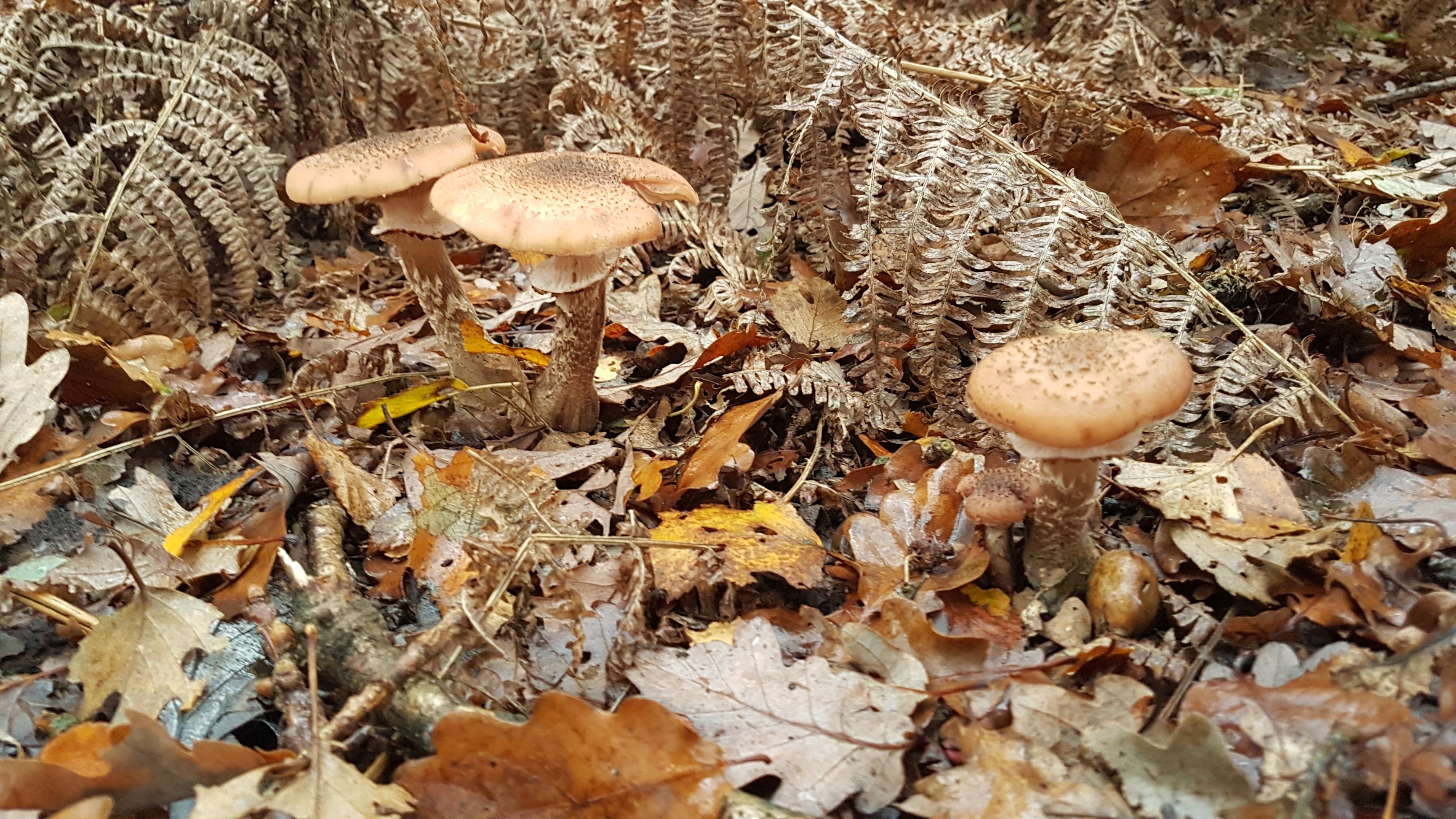
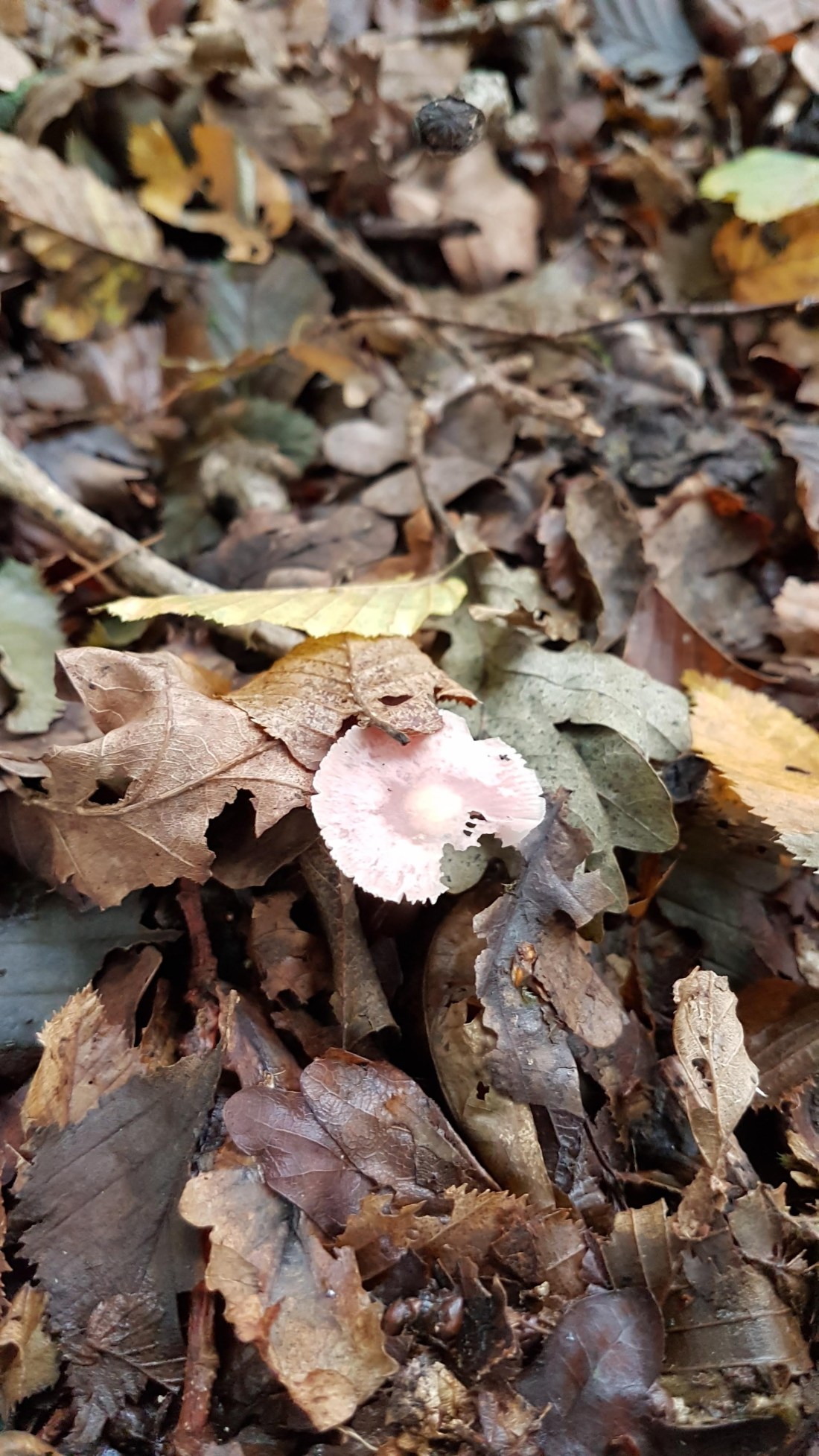
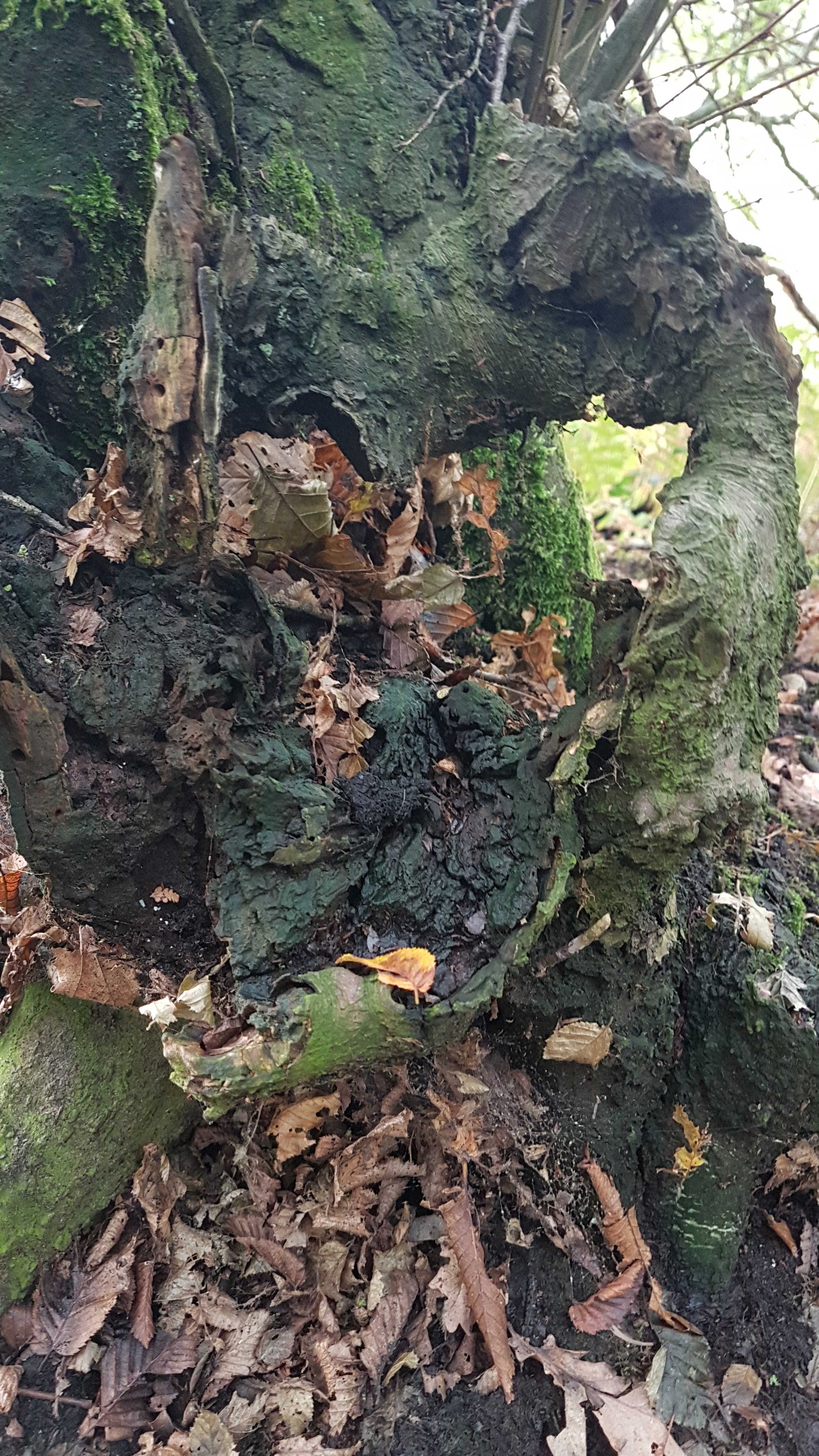
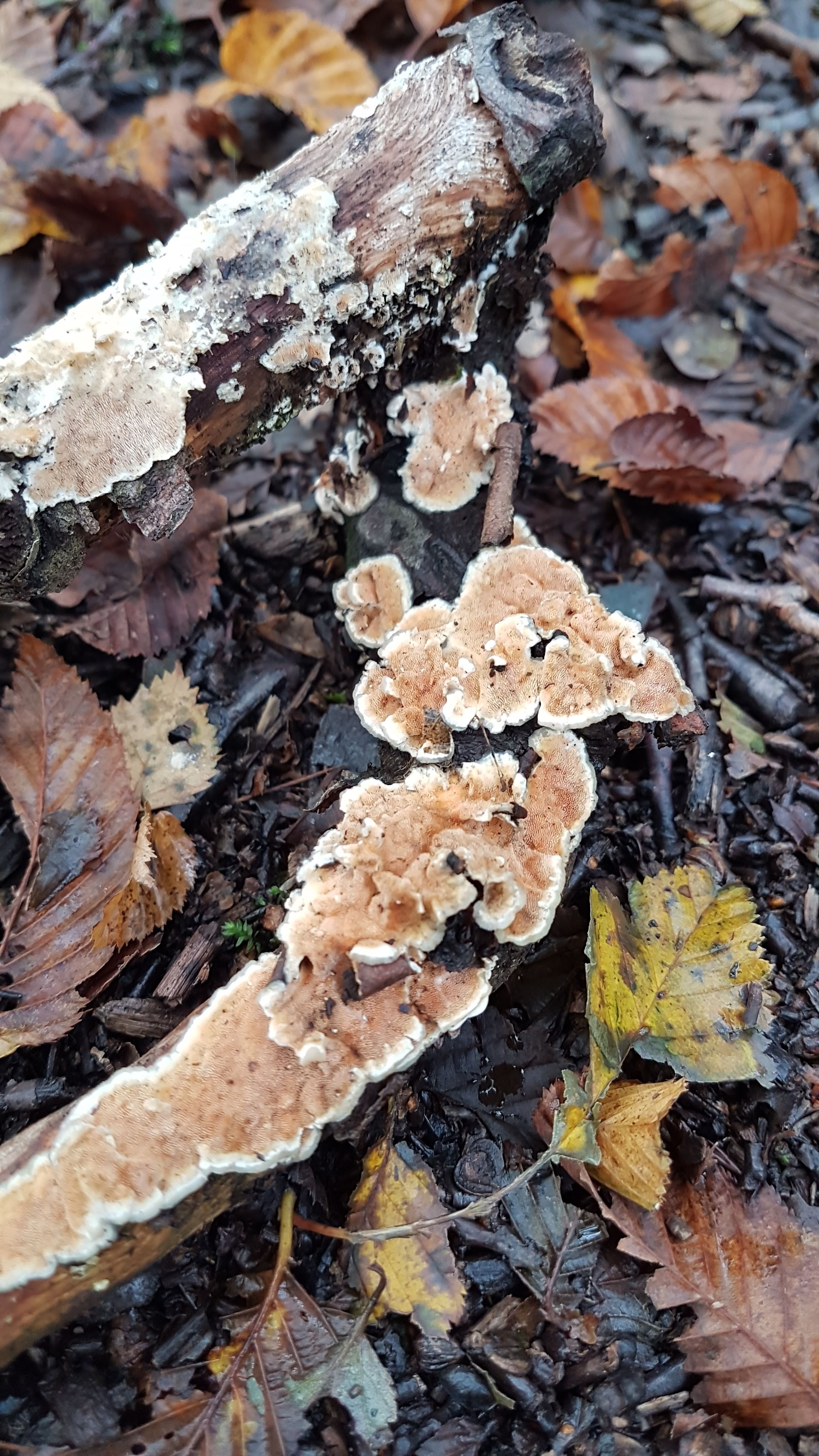
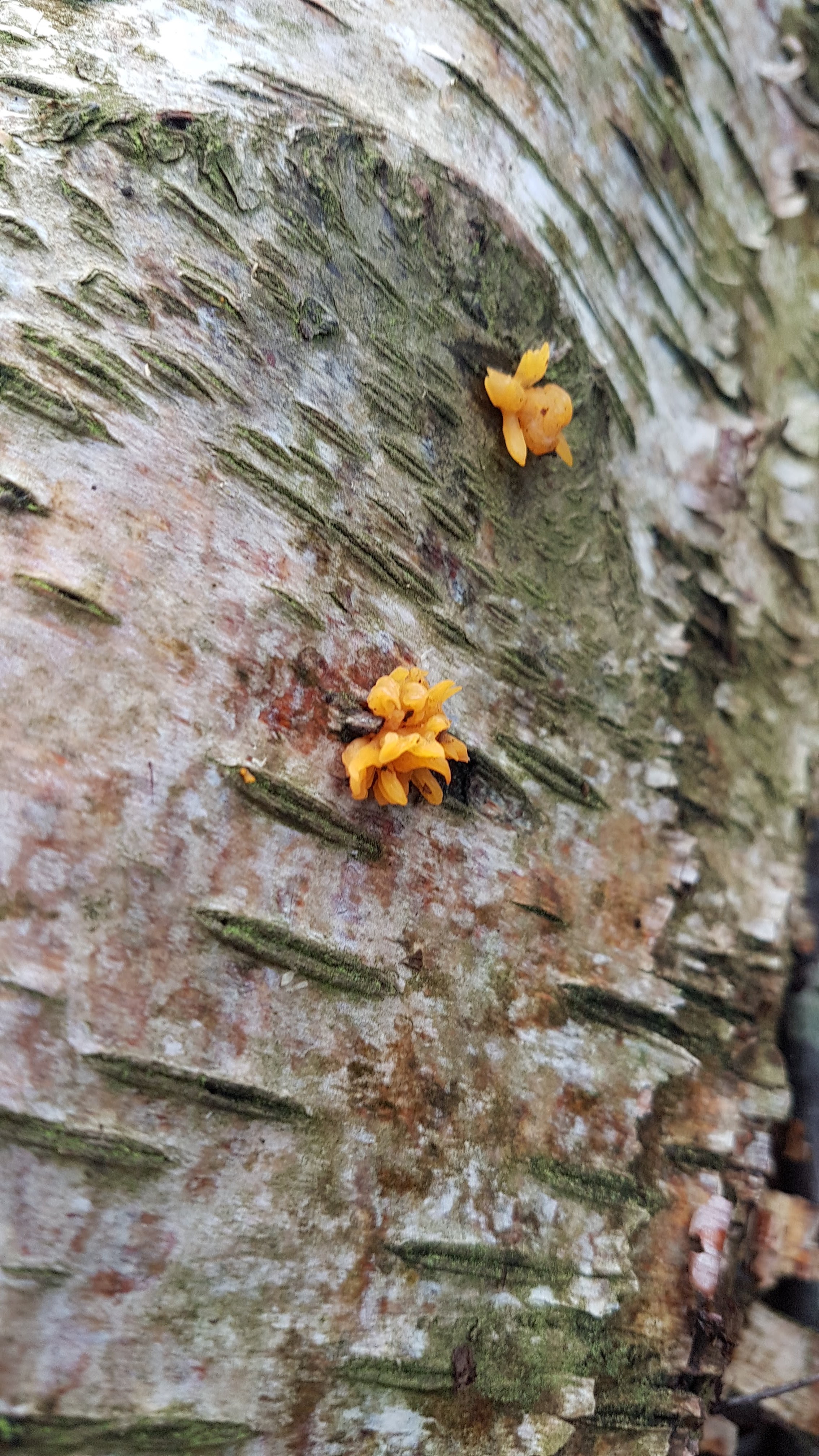
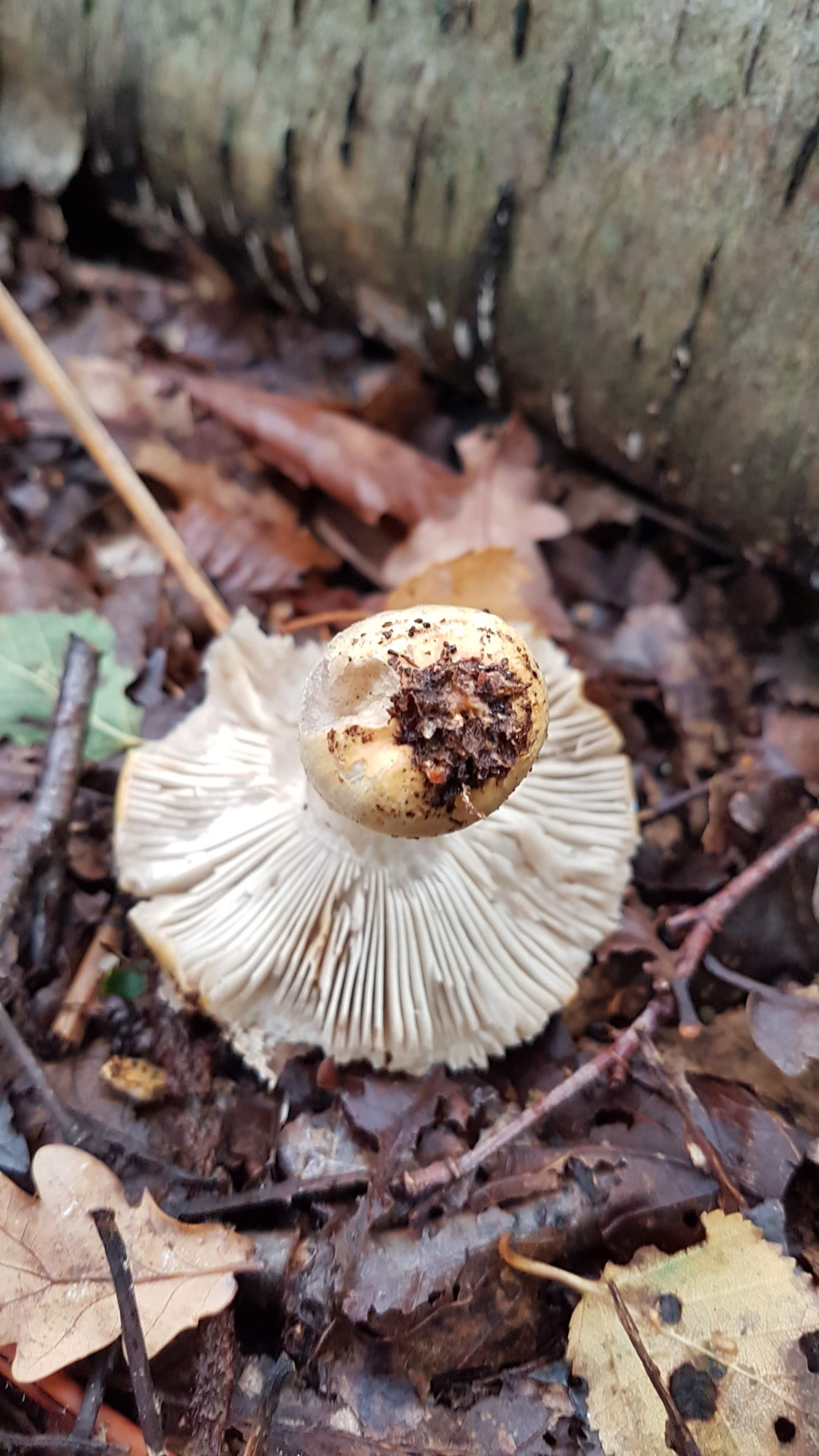
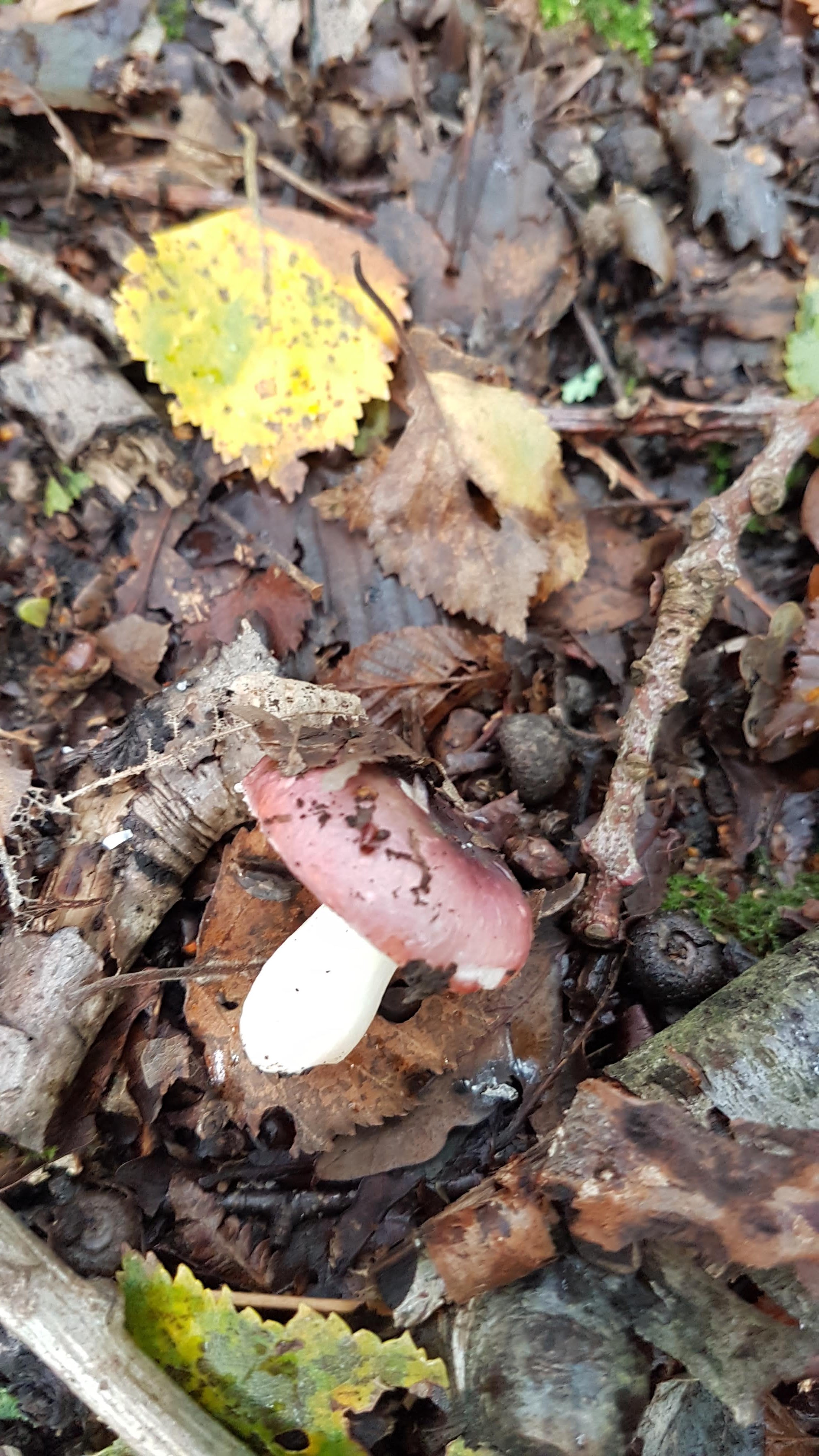
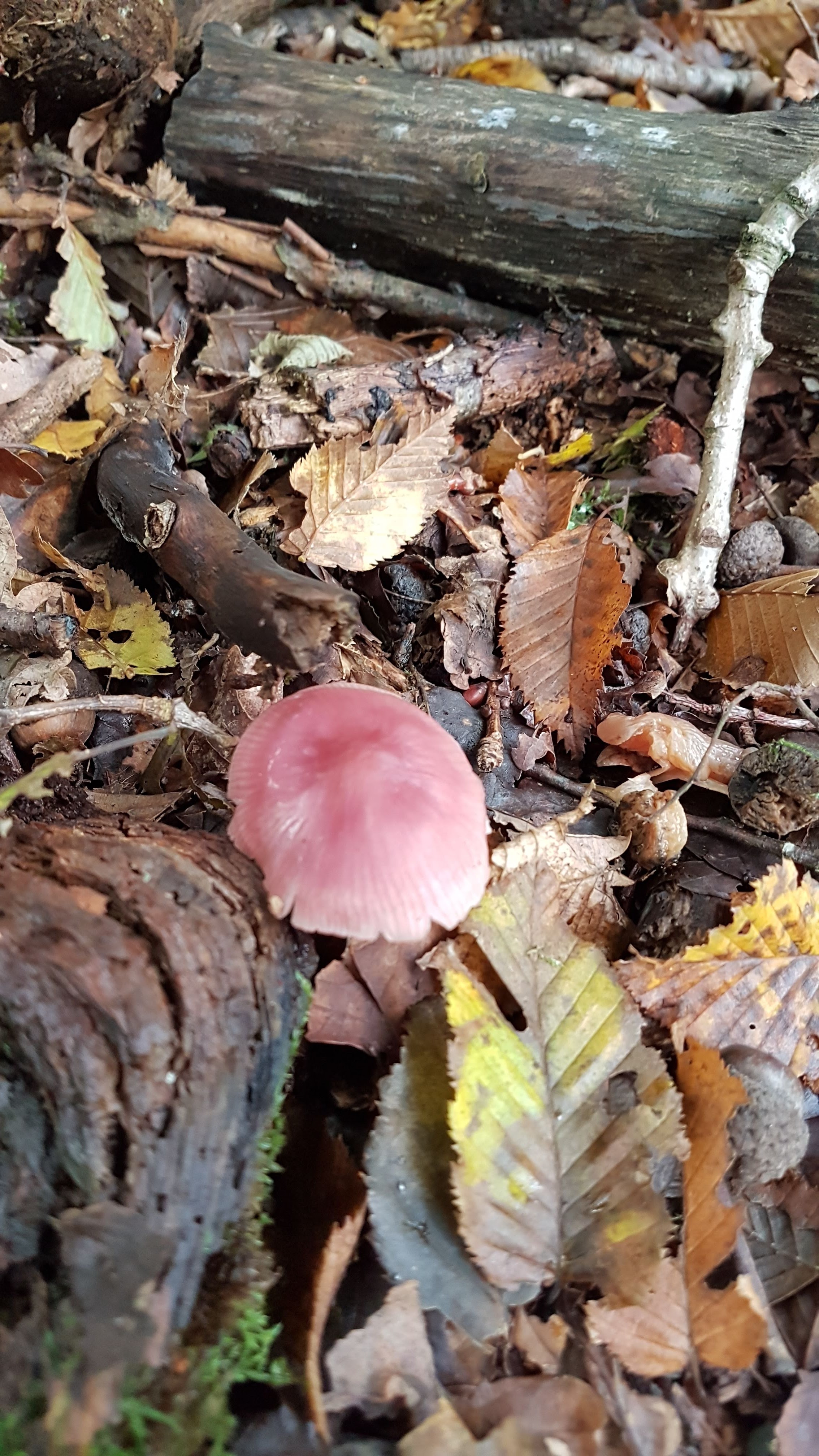
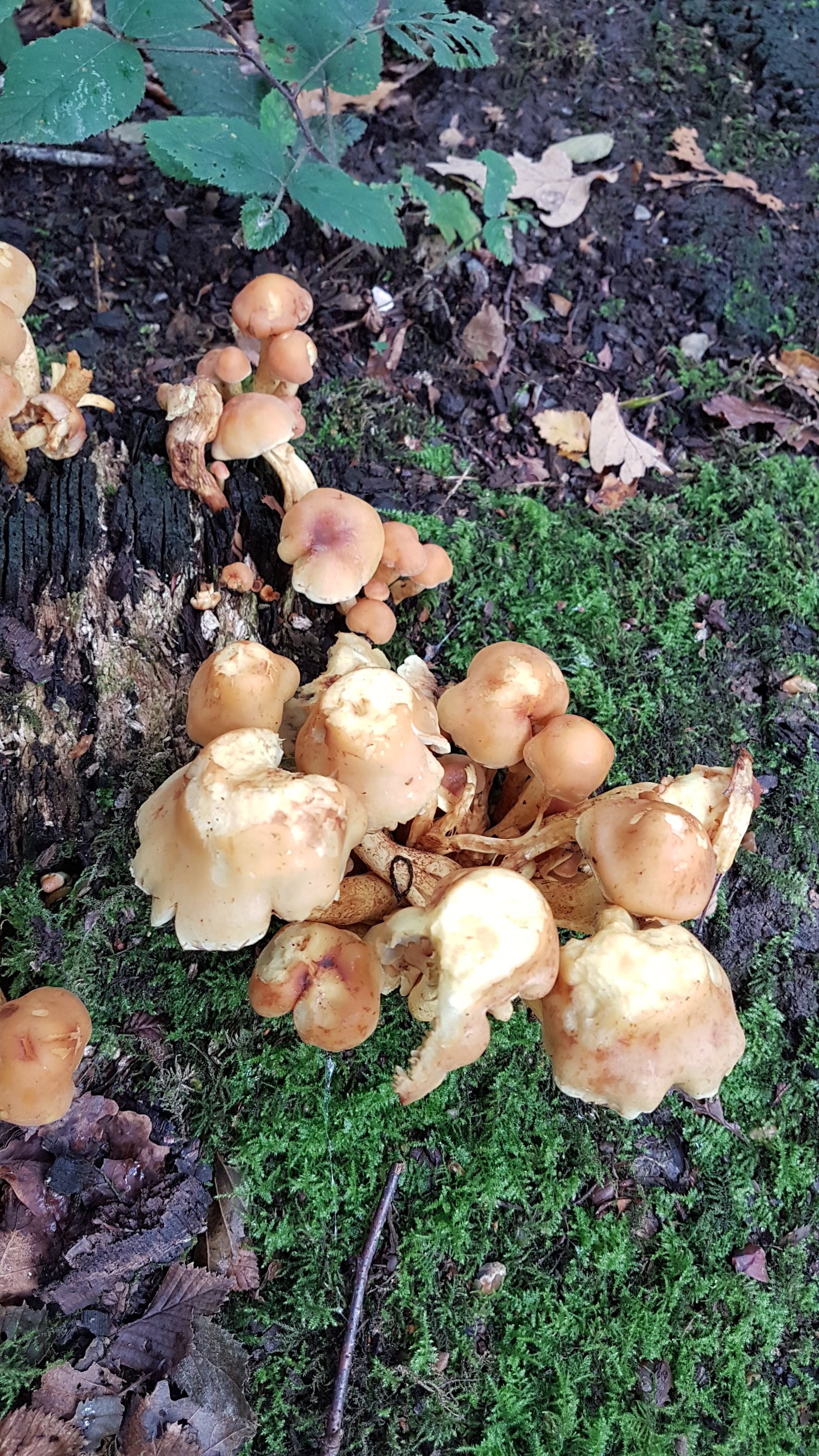
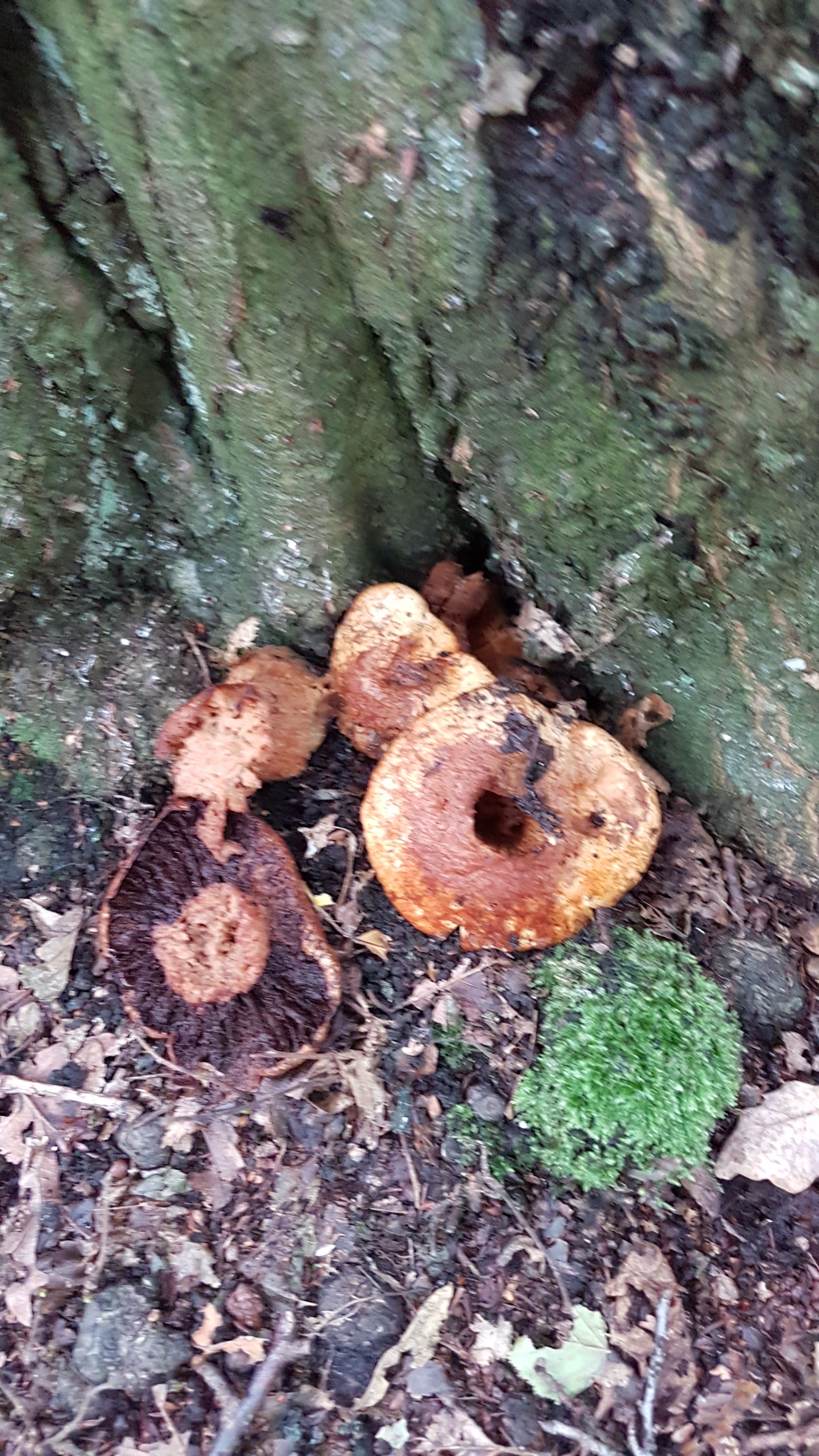
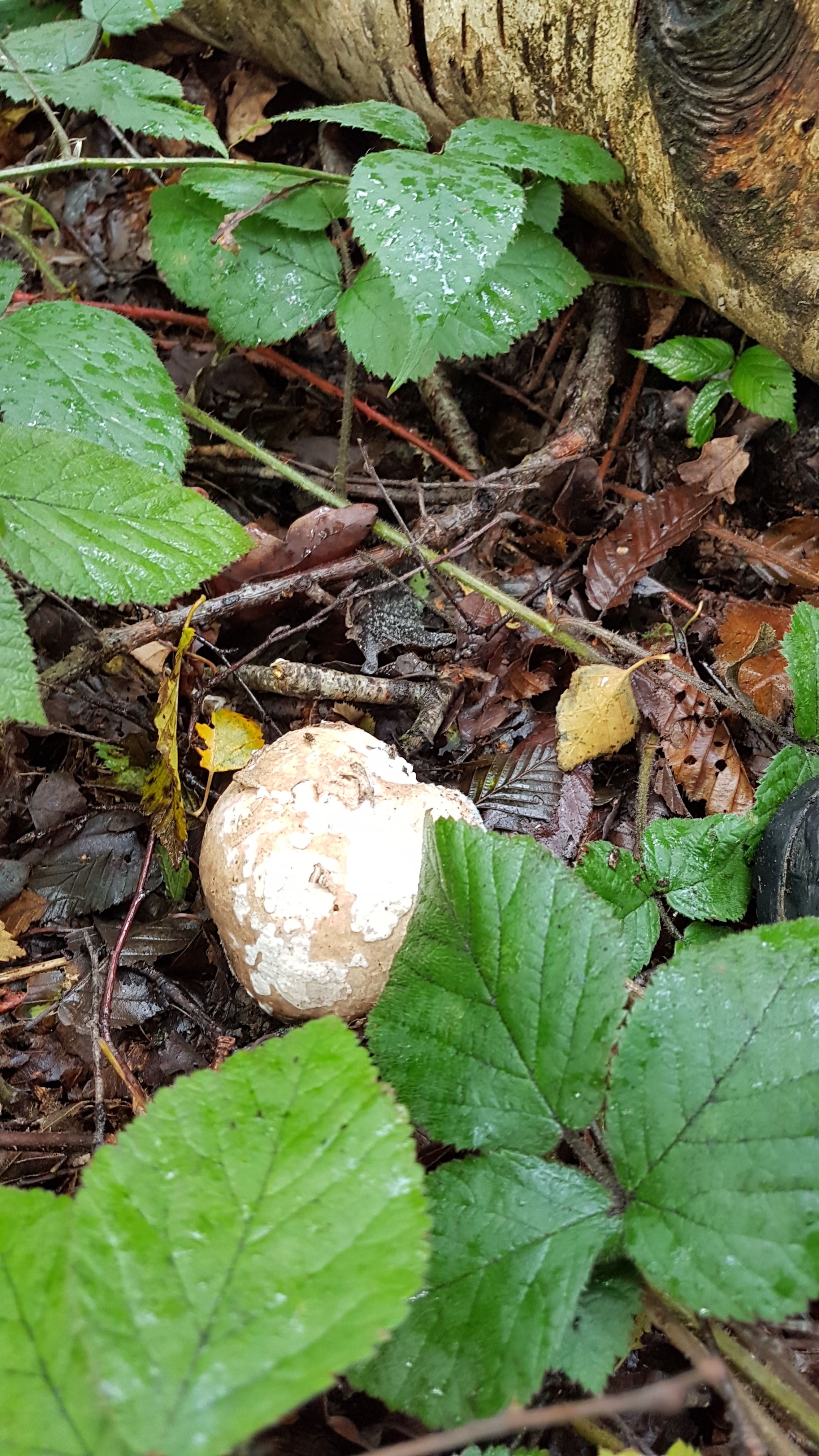
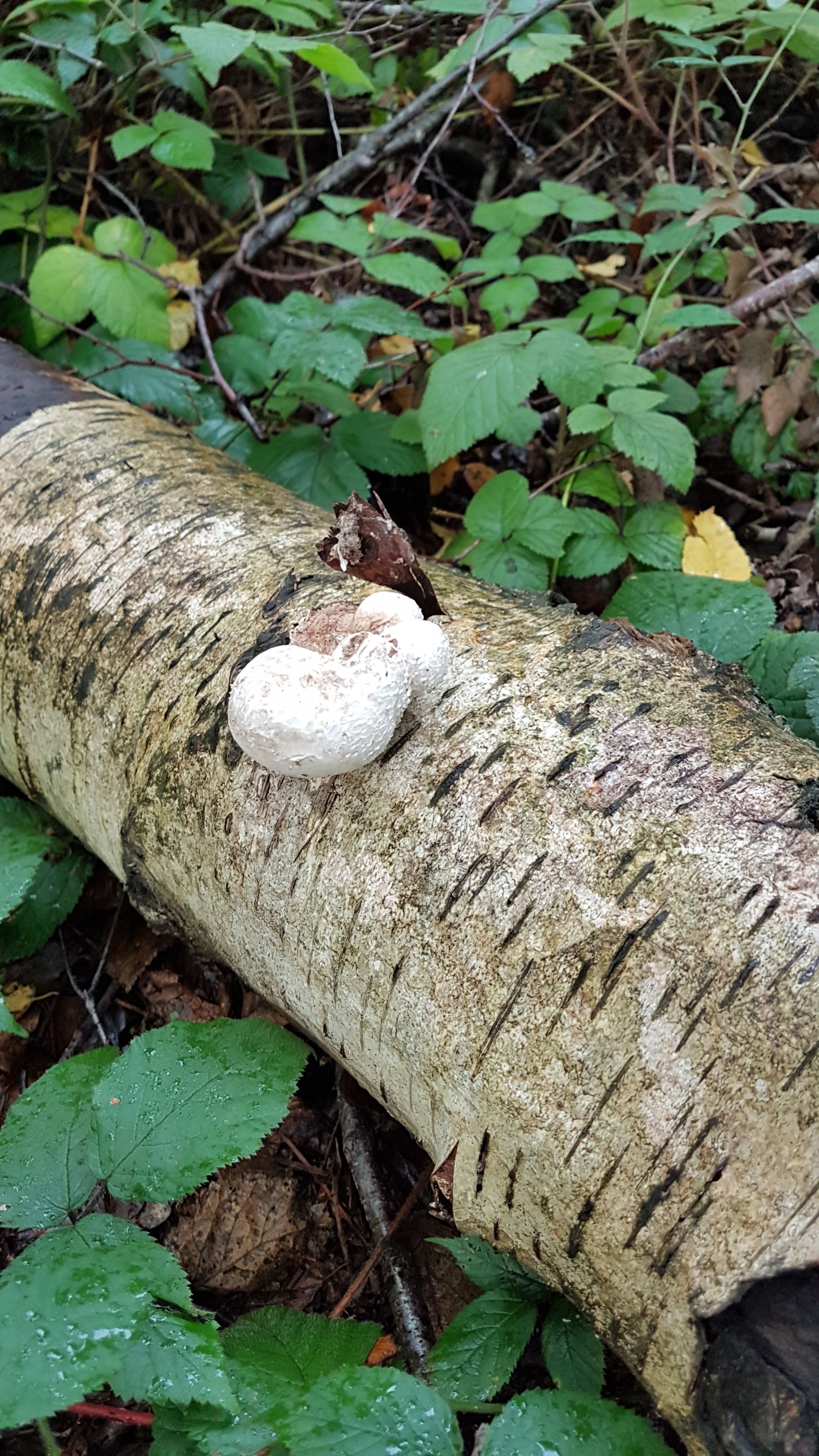
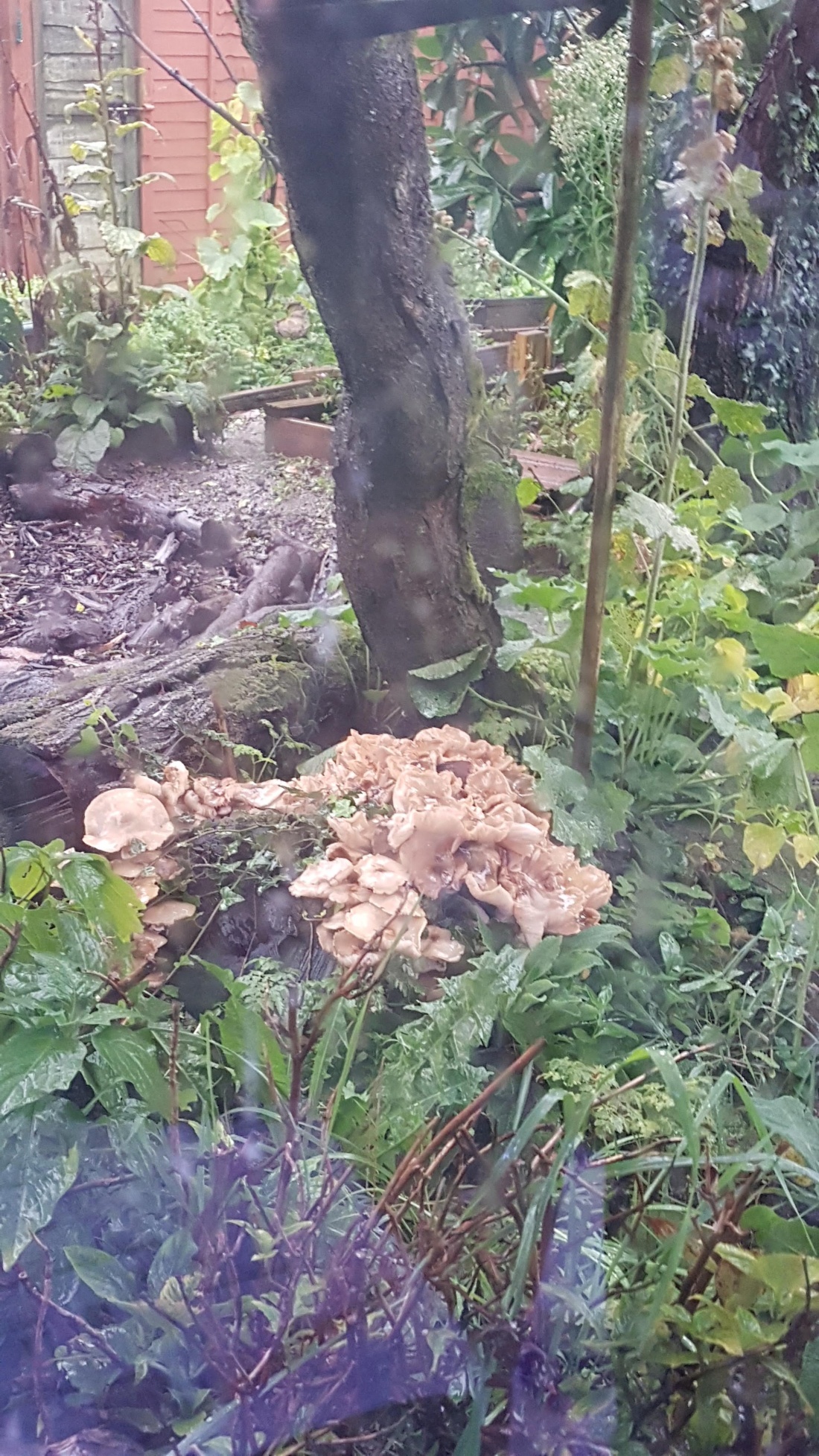
One good thing about not swimming this morning was going out for a walk through the very misty woods. We sensibly wore wellies and stayed off the paths a lot, as they are quite churned up after the very soggy October we had. There’s some beautiful fungi in the woods again – you can see a Fly Agaric in the cover photo this week that I spotted up near the fishing lake yesterday, and today’s spots are below. I have no idea what they are but I love the autumnal colours (and don’t plan to pick or eat them!).

It would be remiss not to mention the best news of the international week, which of course is the American presidency: I am more excited about Kamala Harris than Biden, but mostly I’m just happy for my US friends and colleagues. I’ll never forget going into work the morning after Trump was elected and finding my American colleague devastated and googling how to renounce her American citizenship.

My plan for the rest of the day is to finally bind the Bento Box quilt after backing it yesterday, and then settling down with cross stitch and Midsomer Murders. We are watching recorded episodes at the moment and the adverts really give you a sense of who is watching ITV3 of an afternoon – mobility aids, life insurance for the over 50s, charity appeals, and conservatory blinds. Still, it’s always entertaining to see just how bonkers the murders can get! It really is a guilty pleasure, and good company on a crafty afternoon. Thing One is now getting into it as well.

See you on the other side of week 34, when I promise my normal cheery service will be resumed. Everyone is entitled to an off day.

Kirsty x

What I’ve been reading:

Now you see them (The Brighton Mysteries) – Elly Griffiths

The Spook Who Spoke Again (Falco) – Lindsey Davis

Nemesis (Falco) and The Ides of April (Flavia Albia) – Lindsey Davis (Audible)

Week thirty two: a roundabout tour of my shed

Last week, post swimming, I designed a new cross stitch pattern as – inevitably – one of us forgets something important. Jill is notorious for forgetting her pants, Sue and I both turned up without a towel one (fortunately hot) day, all of us have had to borrow a tow float or buy a new hat. A checklist was needed, so I had a bit of fun with the graph paper and pencils. I’ll share a picture here when I have stitched it up, but the point of this story is that when I’d finished the design I headed to my shed to find the materials for making.

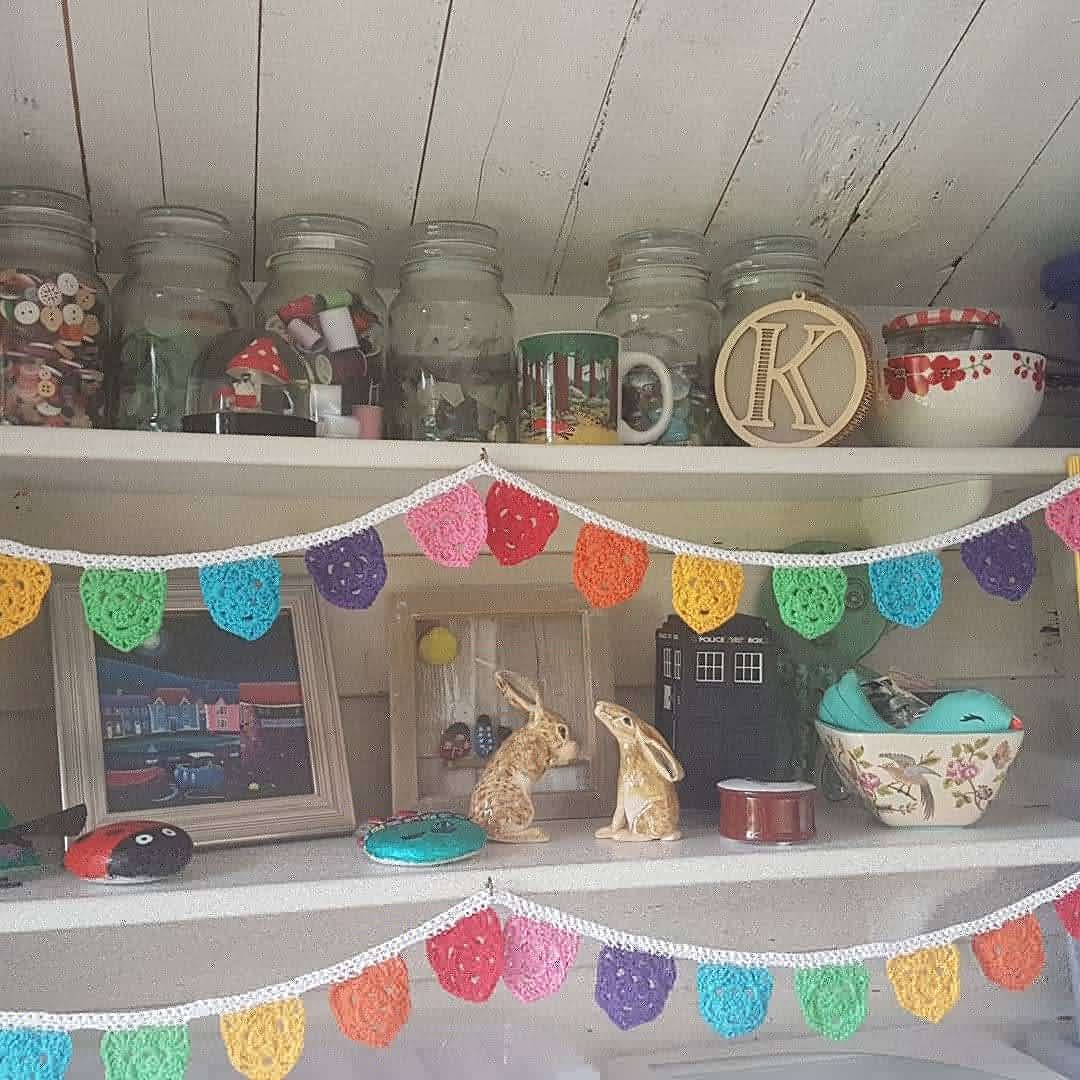
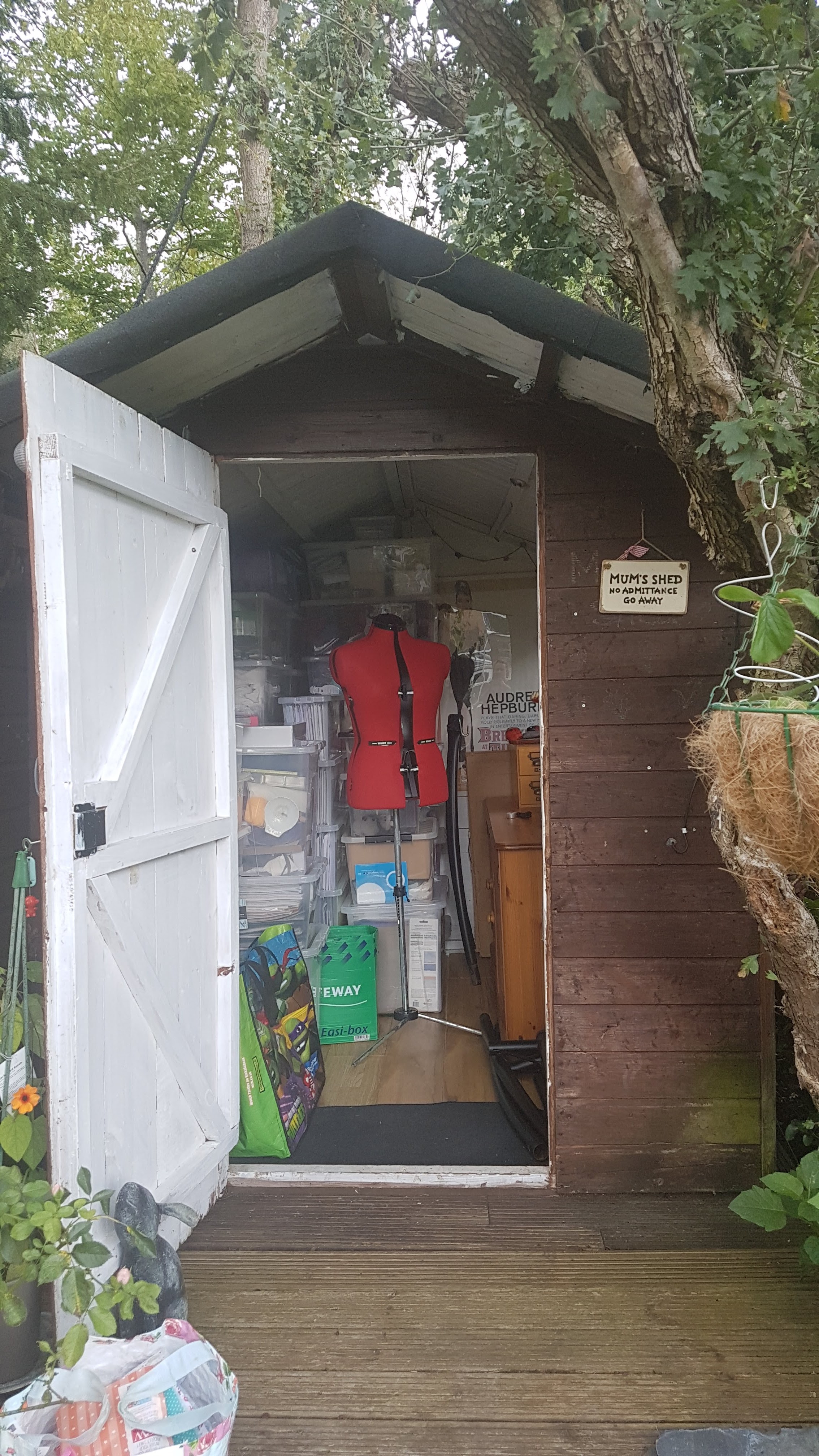
I love my shed. It came from Freecycle, and it only had three sides and no floor so it’s tucked up against my beloved’s shed. It doesn’t have electricity or really enough space to work in, but it’s my shed and it fills me with joy. It’s the home of my frivolous shelves, which you can see in the cover photo this week and in more detail below. Jars of seaglass and buttons, pretty crockery from charity shops, my beautiful hares from AP Ceramics, ladybird rocks, things that remind me of holidays in Aberaeron, and my crocheted bunting.

As the top of the garden is a bank, I had to dig out the hole for it myself – 10′ x 6′, and nearly 3′ deep at the back. Then we laid broken paving slabs, tarpaulin and plastic pallets, gave it a new plywood floor and I painted the inside white and the outside with wood protector. I added a laminate floor made of offcuts from our kitchen and from Freecycle again, and for my birthday a year later my beloved bought me some decking and a trellis so I could sit outside the shed and make things in the garden. It has a solar panel so I can power LED lights, and plug my phone in when I am pottering about up there.

My moongazing hare lives on the deck and only occasionally gets used as a doorstop. I have some Black-eyed Susans on the trellis, and a tiny fairy door. Next to the shed is where I attempt to grow hydrangeas, hollyhocks and the sad plants I bring home from the garden centre on my rather grandly named ‘terraces’ that we created with tree trunks and the earth from the shed dig.

In the shed – and this is really the point of the story, I promise – are all my craft materials and with them the history of how I ended up doing all the things I do.

As a child, I dabbled. My mum tried to teach me to knit during the Odpins craze in the 1980s – Odpins was knitting using one big needle and one small, which meant garments worked up quickly. Not quickly enough, of course, as she ended up finishing the garment for me. (A batwing cardigan, as I remember). Someone gave me a printed tapestry kit of a squirrel for Christmas one year, and I remember loving that, and even attempting a very ambitious design when I was at university that I carted around for years but never finished. That was in the days before I discovered the joy of graph paper and stranded thread. I am glad I never finished it, it was supposed to be a present for my mum and I suspect it would have been so awful it would have ended up in the craft equivalent of the freezer where my school cookery attempts went to die.

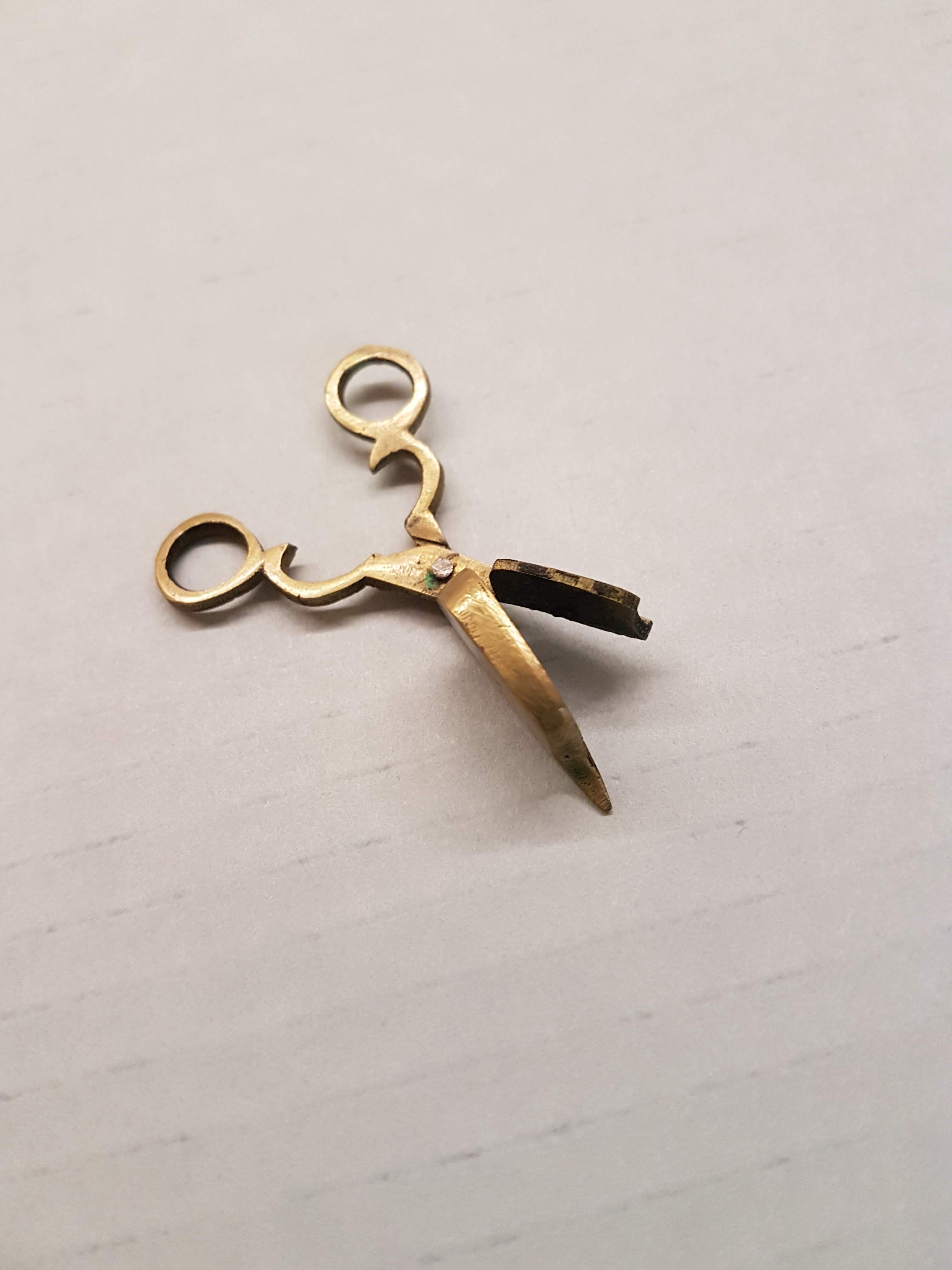
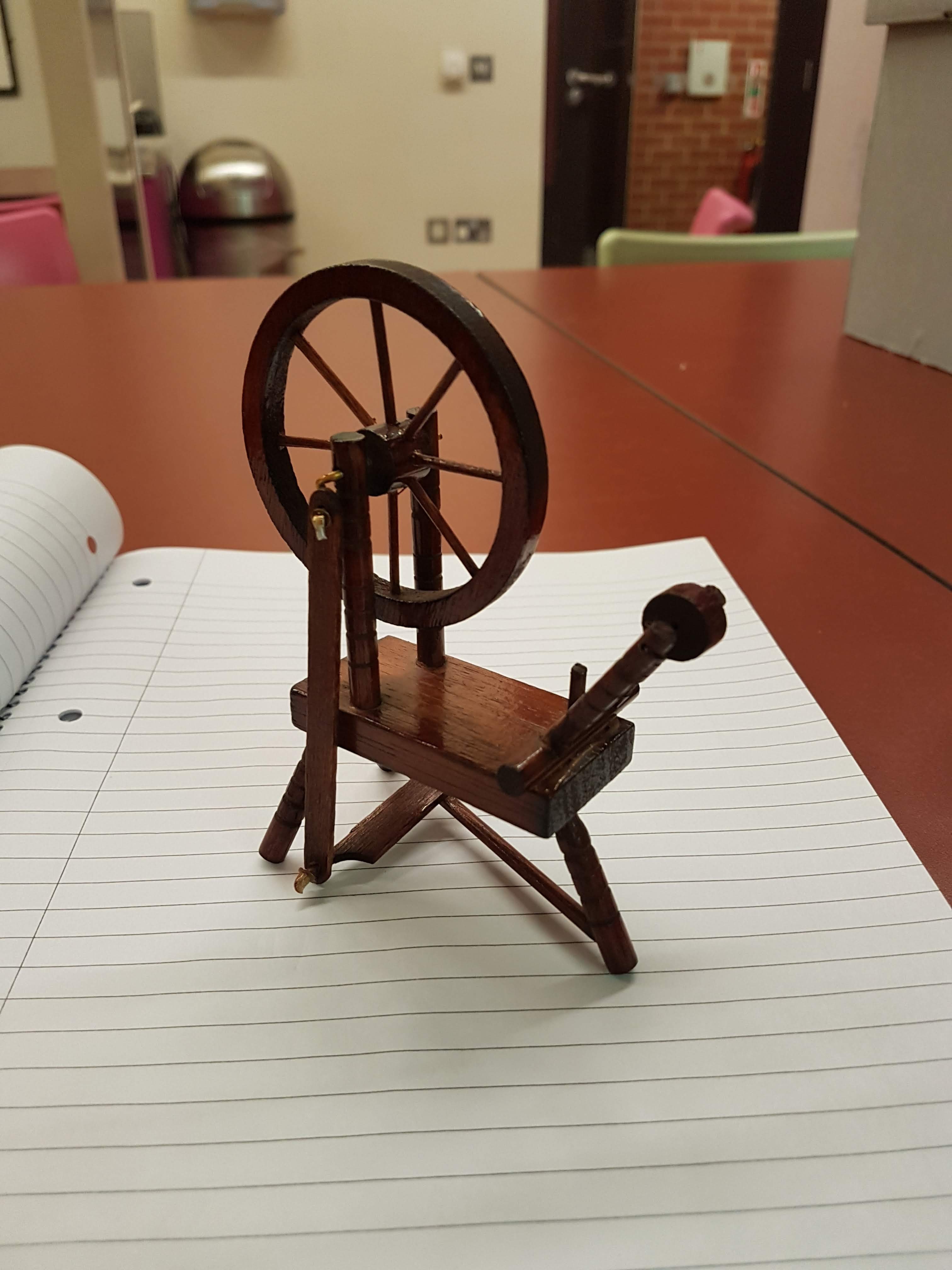
I think I had something like this kit as a child as well – I remember making the purse and the scissor keeper. I found this in the handling collection this week, and it triggered early crafting memories!

So how did I end up with a shed full of craft materials after all those early disasters?

Well, counted cross stitch turned out to be my gateway craft. Way back in 1995 I was looking for a Valentine card for my then boyfriend and couldn’t find one I liked. In the paper shop where I was looking I saw a cross stitch magazine with a pretty pattern for a card on the cover, so I thought I’d have a go. The result wasn’t perfect (much like the boyfriend, in fact) but I loved the process. I was working on the card in the pub where I worked part time, and a customer said his wife did the same thing, and offered to pass me the pattern she was using when she finished with it. It was a Dimensions kit of nine cats in a garden, and again it wasn’t perfect but I really enjoyed making it. I still have the framed picture in the attic – my cats are distinctly cross-eyed and wonky in places, and I’m not sure I used the right colours as I was matching from scraps, but I was so proud of myself.

I like smaller cross-stitches as you can do them on the tube on the way to work – for a few years I was working in Chelsea and living in Epping so I had a long commute! All my Christmas cards for a few years were done on the Central line, in fact, as were many Flower Fairies. I like giant cross stitches too, but there’s only so many you can put on a wall.

In the shed the other day I found my file of finished cross stitch pieces, and I am determined to start using them so they see the light of day. One – a Margaret Sherry cat – has been turned into a birthday card this week. I have a box of kits to work through, too, and that might have to be my 2021 resolution as I am really enjoying cross stitch again at the moment.

Next up was knitting, which I never really mastered as I can’t get the tension right and don’t enjoy enough to persevere with. While I was expecting Thing One I experienced some very odd cravings: Walkers salt and vinegar crisps, Bruce Willis films, and the urge to knit. The last one can probably be put down to a nesting instinct but the less said about Bruce Willis the better. I even watched Hudson Hawk.

Photo by Moviestore/REX/Shutterstock (1550563a) Die Hard: With A Vengeance (Die Hard 3), Bruce Willis Film and Television

Anyway, I bought a book (of course!) and taught myself to knit. Very badly – I created a wonky small blanket, a cardigan where one sleeve was twice the size of the other, a bag I have never used and eventually settled on making phone socks which you really can’t go wrong with. I don’t knit any more but that was really the start of my love affair with self-striping sock yarn.

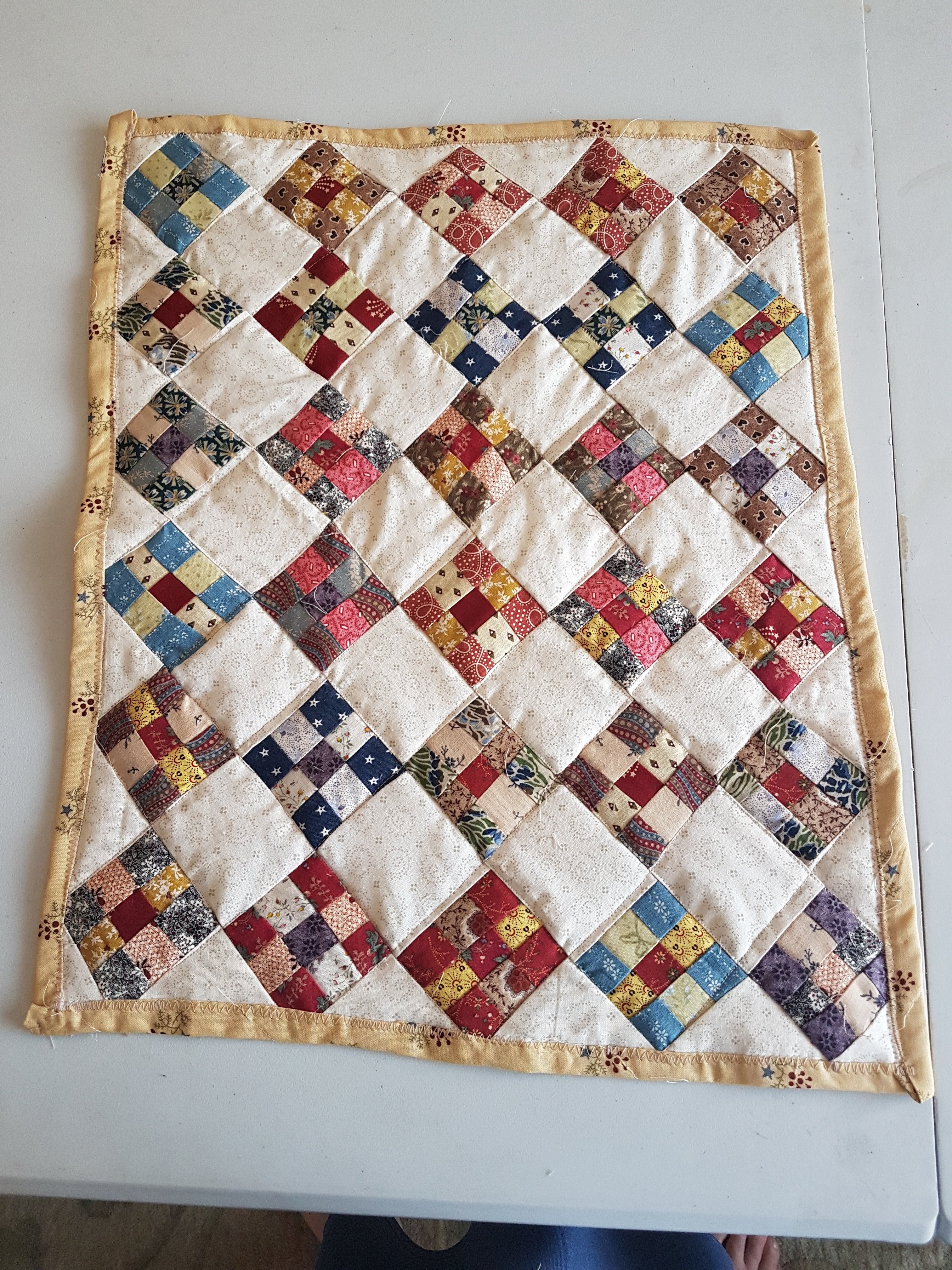
I also tried patchwork after Thing One was born, after a crafty friend and I picked up mini-quilt kits at a stitch show. I finally finished that tiny kit in lockdown this year, along with a much larger Attic Window quilt I started at the same time. There’s nothing like an ambitious beginner!

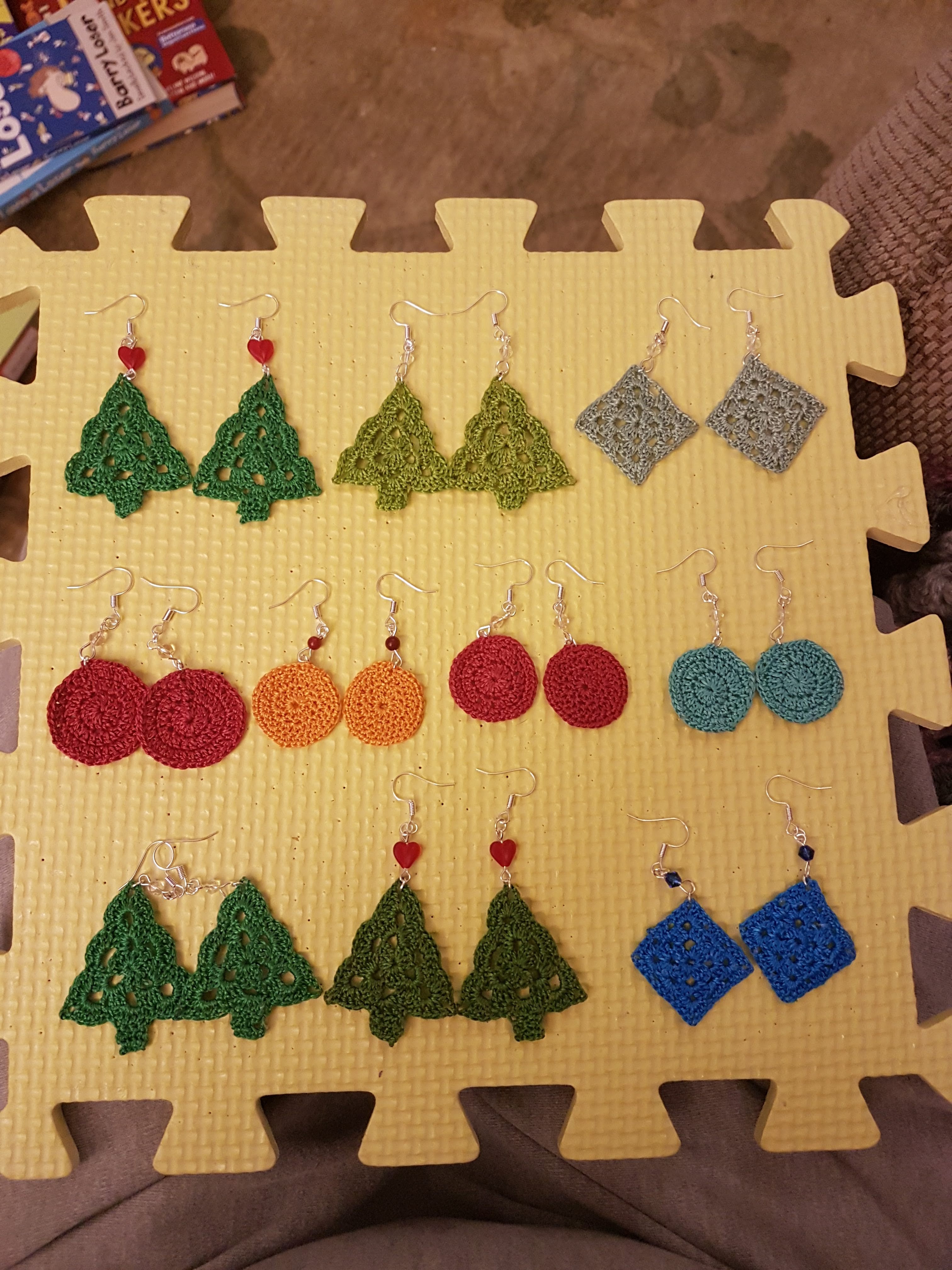
I stopped knitting but carried on with the cross stitching, and tried my hand at simple embroidery. After Thing Two was born I used a bag with an aida (cross stitching fabric) panel to stitch a design of a pair of penguins. Bag charms were quite a thing at the time, so I found myself in the Ebay rabbit hole and discovered beads and findings. One penguin bag charm turned into making jewellery which I still do for school Christmas fairs and gifts, and several boxes full of shiny things. Things One and Two have enjoyed making ‘goth’ jewellery this summer, with ribbon chokers and charms. One of the things I like about making jewellery is that you can combine it with other crafts – I have made crocheted earrings with granny squares and Christmas trees, cross-stitched pendants, origami leaf jewellery, and tiny polymer clay charms.

My mum gave me her sewing machine many years ago, which I never got to grips with, and then after Thing One was born my mother in law gave me her 1960s Husqvarna Viking, which terrified me. We didn’t do much textiles back in school – I have written before about my creative education – and I made a stripy apron back in the one 10 week block we did in first year comp and then nothing else. I used it to back a cross-stitched afghan for Thing One’s first Christmas (that makes it sound a lot easier than it actually was as I has no idea what I was doing!) and then put it away in a cupboard where it lurked until after my MIL died and we moved to North Weald. I became determined to learn how to use it, and started dressmaking. There were a few disasters there, but a friend of mine was learning at the same time so we formed a mini support group. Crafty friends can’t be underestimated: company at the craft shows, someone to share triumphs and disasters with, sources of advice, ideas sharers and crafternoon bee buddies. I have some excellent ones, online and off!

And then one morning I woke up with an overwhelming urge to learn to crochet. My mum and my late MIL (who was an avid crocheter of cat blankets for an elderly cat rescue charity) had both attempted to teach me in the past and I had never got past a wonky chain. I had both yarn and hook, and with the aid of Bella Coco, a couple of handy books and a lot of swearing I taught myself to make a granny square. Crochet quickly became my go-to commute craft, and one unexpected side effect of this has been the number of lovely conversations I have had with people of all ages.

Anyone in London knows that talking to people on the tube is not done but – as we used to find with historic interpretation – anyone doing a ‘domestic’ activity becomes approachable. Sometimes crochet feels like performance art!

My favourite moments have included the two ladies who were watching me put an amigurumi unicorn together and spontaneously applauded when they worked out what it was, and the elderly gentleman who struck up a conversation about what I was making and ended up telling me about his mother’s ‘bottom drawer’ crocheted and embroidered table linen which was always kept ‘for best’. As we got off the tube he thanked me for bringing back happy memories of his mother who had died many years ago. Just this week I was finishing off a square for the Zoom blanket as I was waiting for the bus, and a woman stopped to watch, confiding that during lockdown she’d started embroidery again after not doing anything for 30 years. Craft breaks the ice and makes the world a community. It also makes the inevitable hanging around in tunnels much more bearable.

In 2019 I ran a 10-week after school craft club at my favourite primary school in Bethnal Green – eight children, and we made pompoms, paper plate wreaths, and miles of crochet chain. The real joy of that for me was not the craft, but the conversations that the children and I would have while we sat in the classroom. As we crafted they’d tell me about their day and the things that mattered to them, and going to the school became a highlight of my week: reminding me why we were making a new museum about creativity, and how happy the act of making can make us.

All the materials for my crafts live in my shed, and when I feel the need for inspiration I potter up there and see what makes my heart sing that day; whether that’s a ball of sock yarn, some lovely material or a cross stitch kit. I also have a library of books to fall back on – sometimes just flicking through a book can spark ideas, and the pages of beautiful projects never fail to make me happy. I love a charity shop mooch to find new books, and the Etsy, Pinterest and Ravelry rabbit holes have stolen hours of my life. I don’t mind at all…

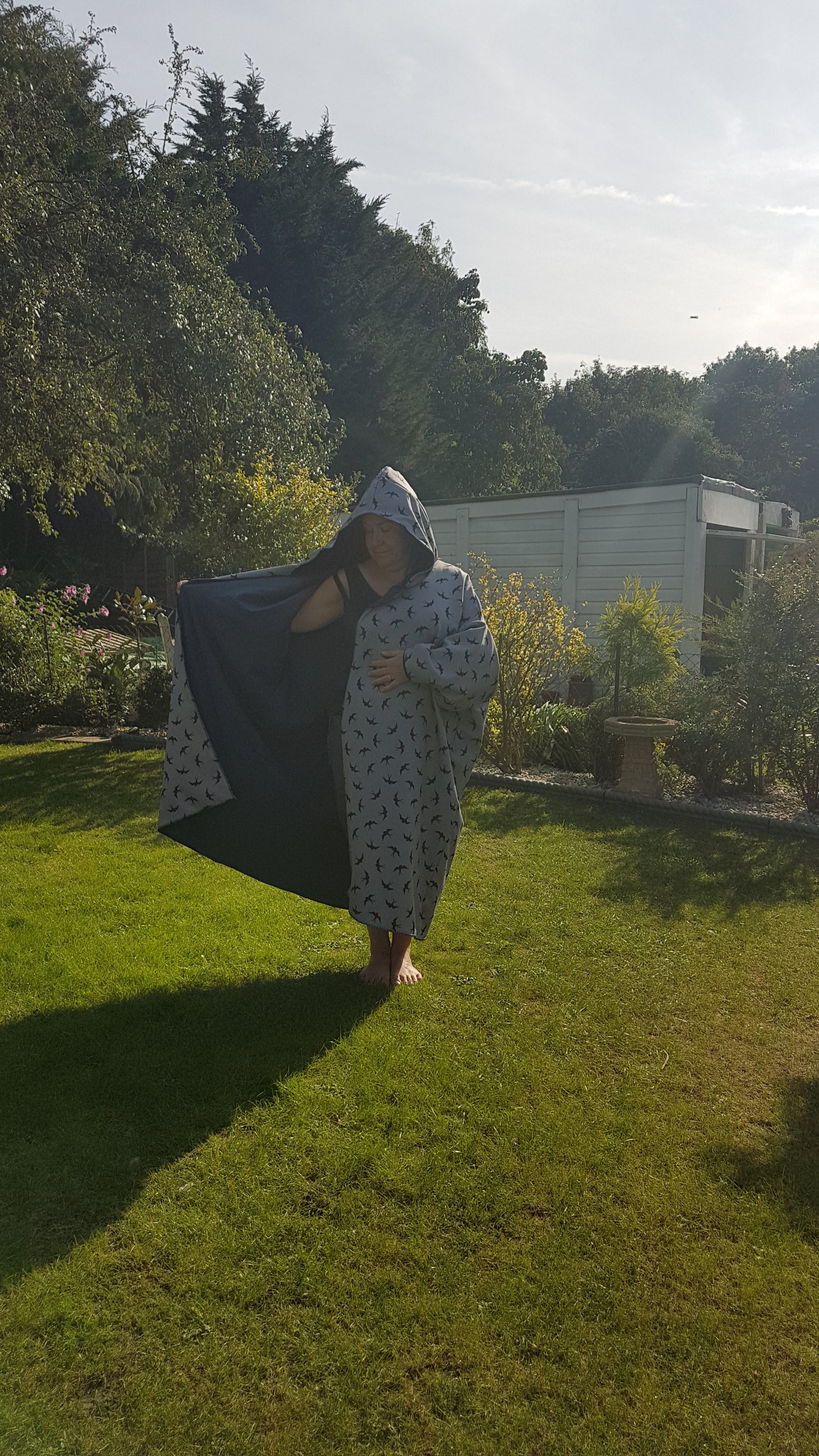
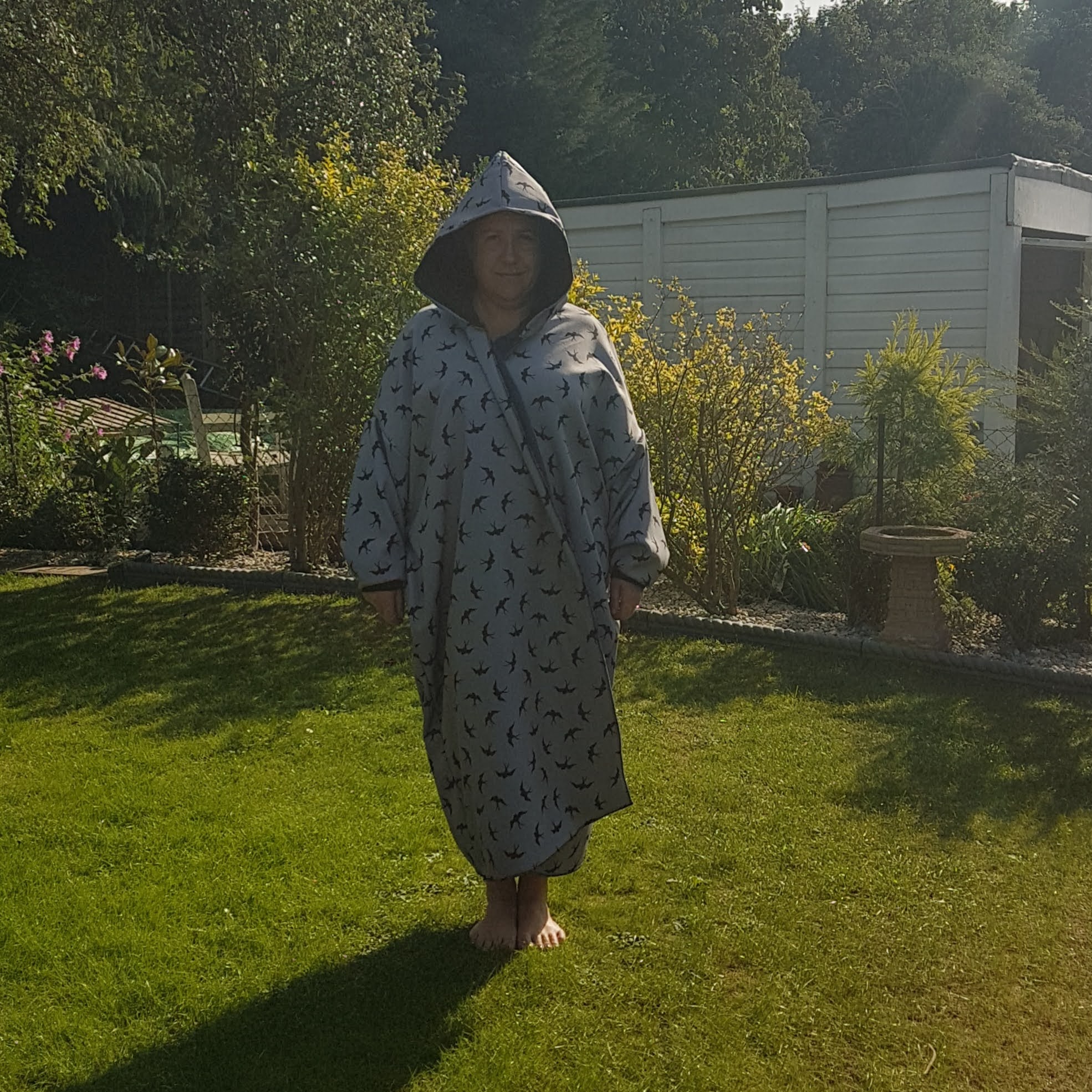
So this week I have been working on the Hydrangea crochet blanket, another post-swim robe for someone up at the lake (who described it as like being wrapped in a hug when she put it on this morning), and the Marble Floor crochet. And ALL of them have made me happy.

So there you have it: how I ended up with a shed, a lifelong addiction to craft shops and a whole set of post-apocalyptic life skills.

Let’s see what week 33 brings…apart from Lockdown part two. Stay safe!

Kirsty x

What I’ve been reading:

Alexandria/Nemesis (Falco series) – Lindsey Davis (Audible)

The Blood Card/The Vanishing Box (The Brighton Mysteries) – Elly Griffiths

Week thirty: in which I am smacked in the head by the inspiration fairy

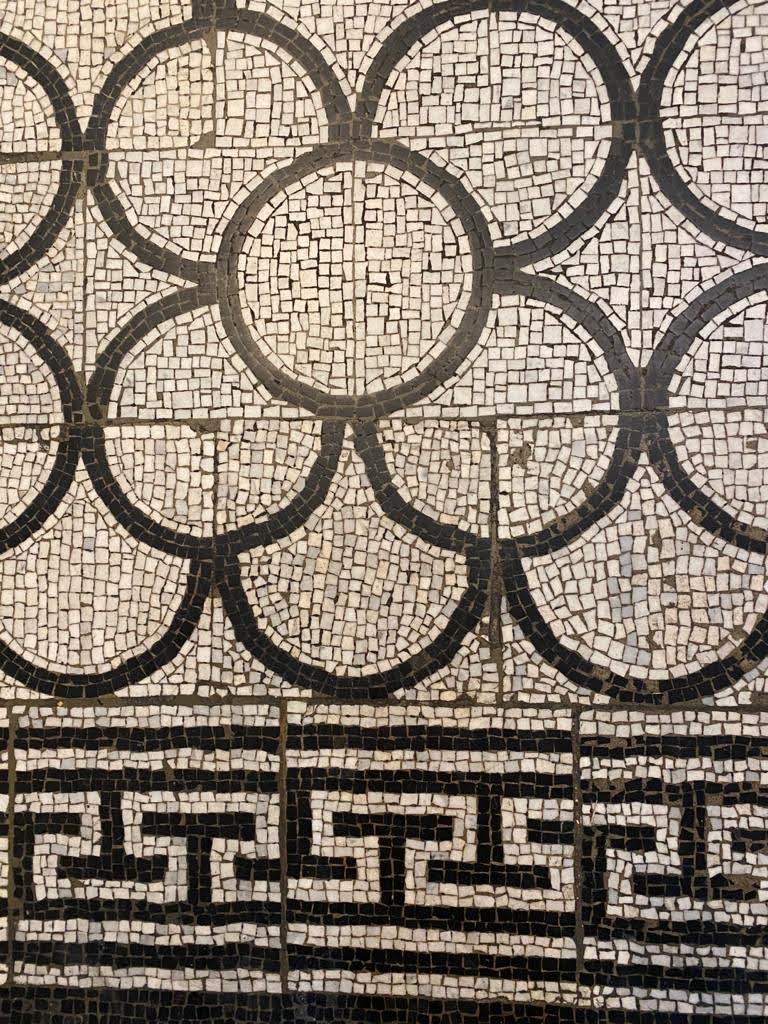
On Friday I woke up with a fully formed and irresistible urge to turn the iconic Marble Floor at the museum into a cross stitch pattern. It’s an idea I have been playing about with for the three years I have worked there, but neither my design skills nor my patience were really up to it.

So what’s changed? Well, for one thing, working on a project which is all about creative confidence, the iterative design process, and building resilience is clearly rubbing off on me! I felt much more prepared to give it a go than I have done previously.

Secondly, the response to the ‘Storming the Castle’ design I blogged about in week 28 has been so positive that I felt as if something more complicated was doable.

Finally, in the ‘Snarky and Nerdy Cross Stitch’ group files I’d seen a lot of references to an open source design programme called Stitch Fiddle, and when I looked into it it seemed easy to use even for a non-designer like me. For a free-to-use application it has great functionality, and even more if you subscribe. You can use it to create knitting and crochet patterns too, and presumably anything else that requires small squares.

So at 8am on Friday I asked any on-site colleagues to take a few photos of the floor for me – a close-up and a wider angle, and a few people sent me some great images. We work in museums, so slightly odd requests come with the territory.

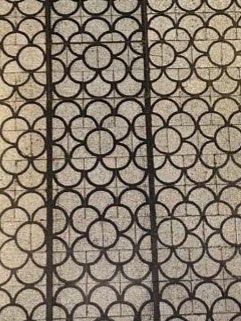
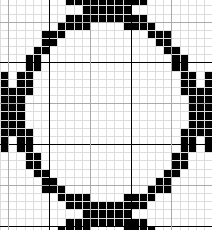
I started with my trusty grid paper from StitchPoint, trying to turn the uneven blocks you can see in the image into a uniform pattern. The blocks were all made individually by women prisoners from Woking Gaol, and some are more even than others, so this was quite tricky to do. I wanted to create a repeating pattern, rather than an exact replica of the floor itself, and I found it hard to translate the tiles onto my graph paper.

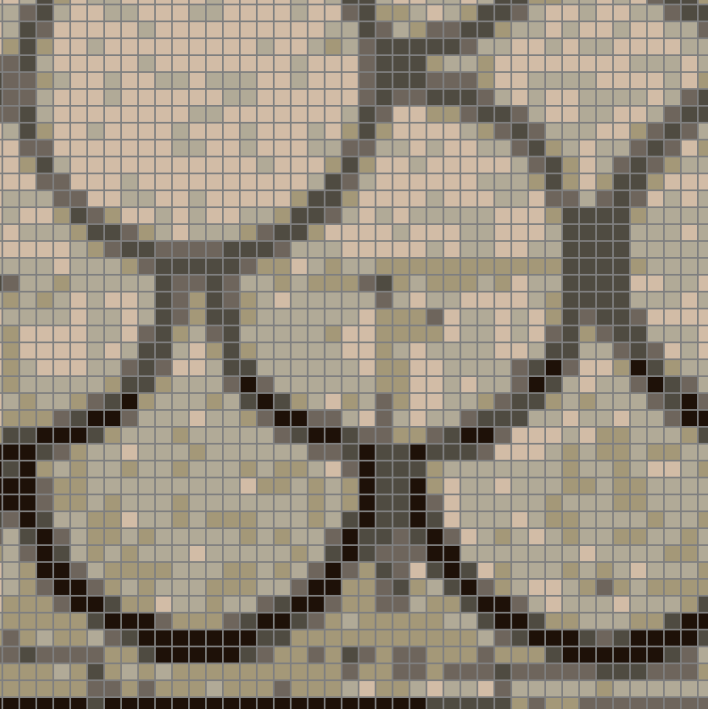
I tried processing the image on the left through another free software application, this time Pic2Pat, so I could see what the blocks would look like on an even grid pattern. This came out like this:

Still not perfect, but much easier to work from! I was able to create a basic circle from this which I then turned into a repeating pattern using StitchFiddle. I haven’t found copy and paste functionality as yet, but for things like this it would be really handy. There is a mirror horizontally or vertically function, but you lose the original and are left with the reflected one only. I did use it later, when I was having problems repeating the fishscale pattern to the left – I flipped it and then carried on working to the right.

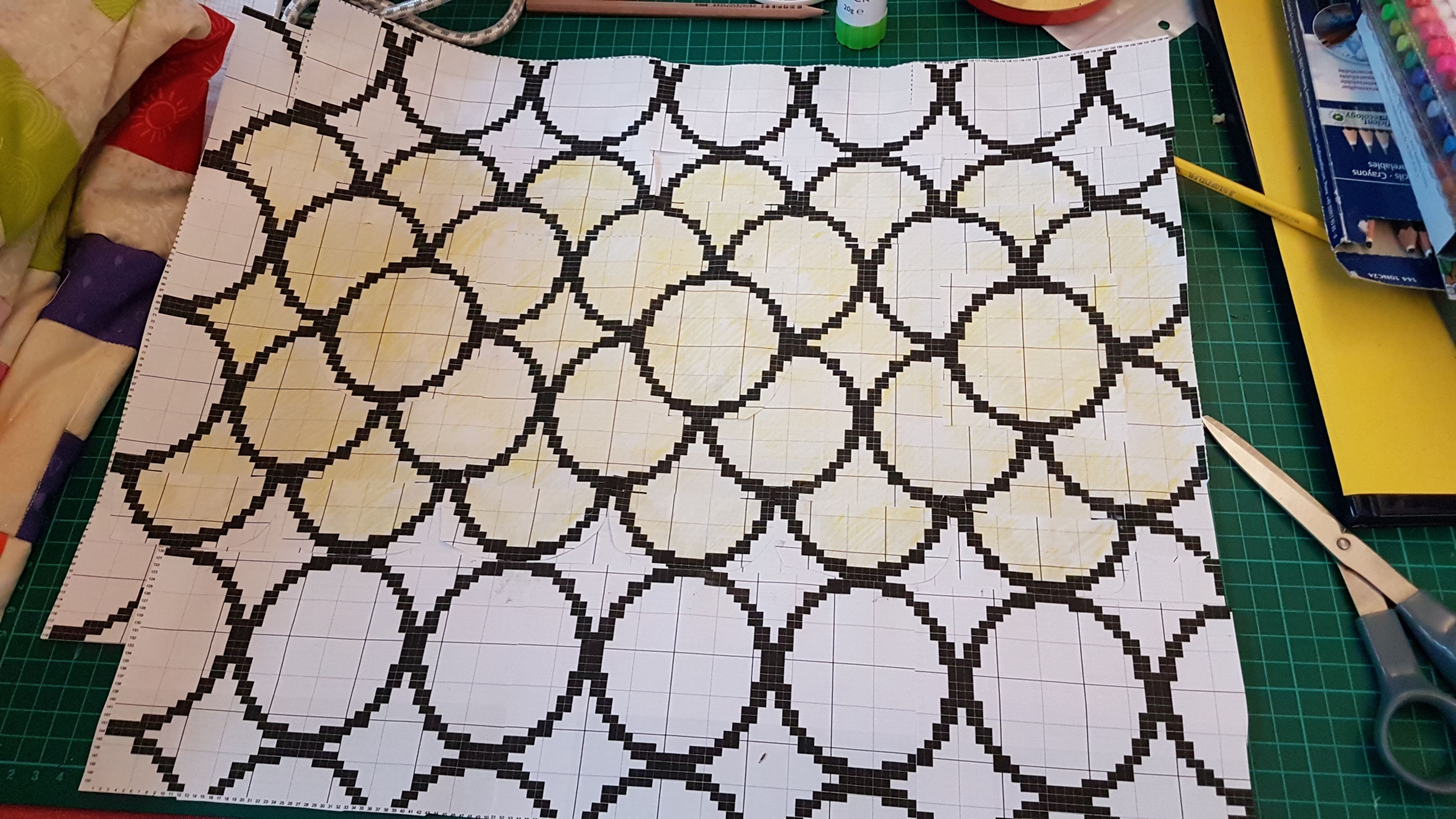
Then it got a bit tricky – I could not see where to start the overlay to create the fish scale pattern on the screen, so I went back to basics: I printed the pattern twice, stuck one together as the base layer and then cut circles out of that so I could layer them up with the handy glue stick and the coloured pencil so I could mark where I was up to.

Finally, armed with this, I went back to Stitch Fiddle and created a final digital version which can be found here. I’m going to add lettering to the version I’m going to make, so have been playing around with alphabets on the printed version – I’m not sharing that yet though! I also made a quick version of the Greek Key border. I can see myself using Stitch Fiddle more in the future, as I’d quite like to make more designs with quotes on.

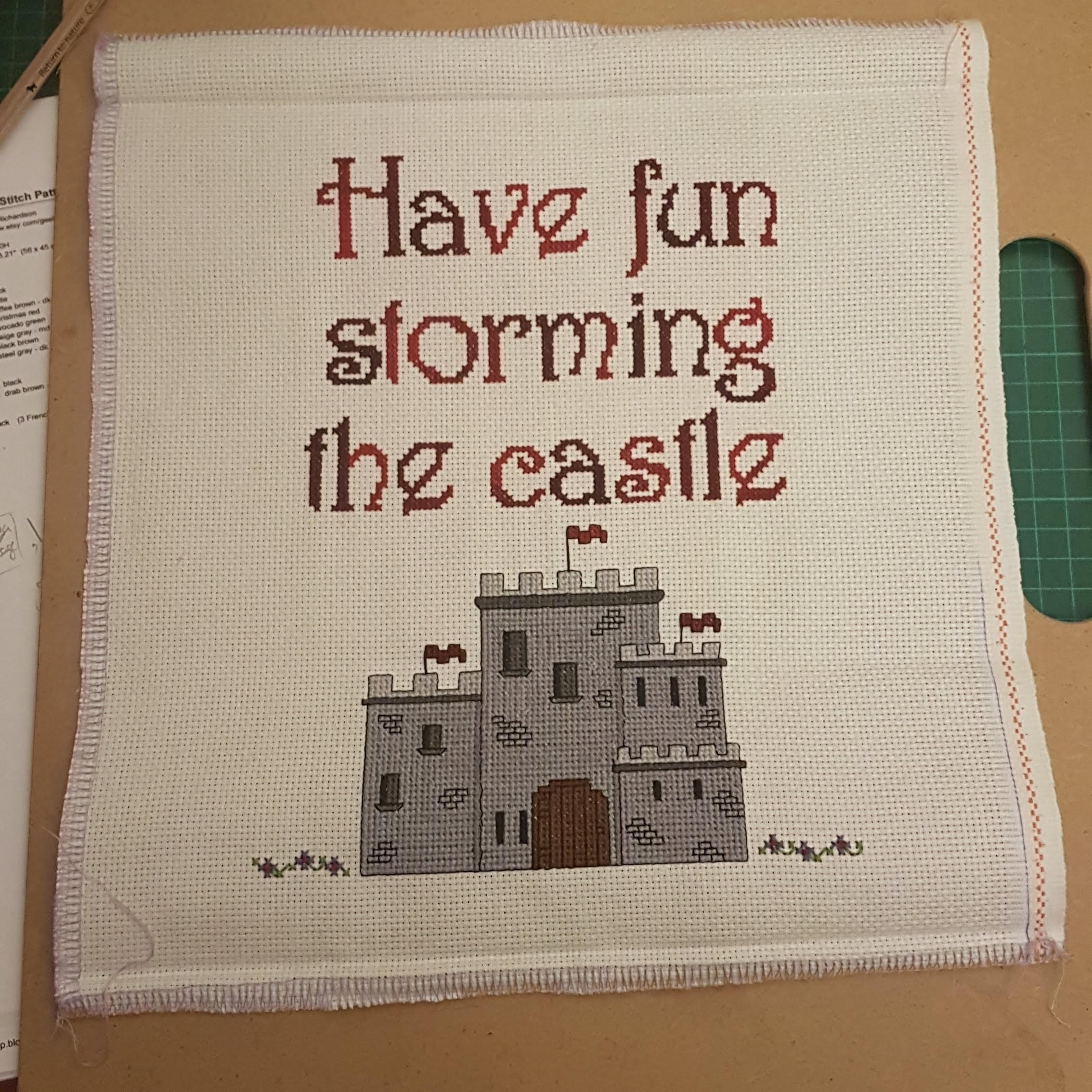
I finished the ‘Storming the Castle’ piece as well, which I am pleased with. I need to iron it, and then decide on finishing – wall hanging or frame? Note the overlocked edges on the fabric too – I’ve never thought of doing that to prevent fraying before but will definitely be doing it every time now!

I’ve also been adding to my portable crochet project – the one I do on tubes, in queues and during zoom conferences when I need to focus. If my hands aren’t busy I find things to fidget with and get very distracted, but a granny square in hand keeps my eyes on the screen. I am making small squares this time, using leftover DK yarn from the stash – when it comes to sewing the ends in I will undoubtedly regret it. This will be a blanket, I think: I am going for a patchwork effect.

Won over by a onesie…

This morning was the third week of winter swimming at Redricks – the weather was cloudy but it wasn’t raining, which after this week of school run downpours was pretty impressive! I really look forward now to getting in the lake, despite knowing that it’ll be even colder than it was last week, and I know the ladies I go with feel the same.

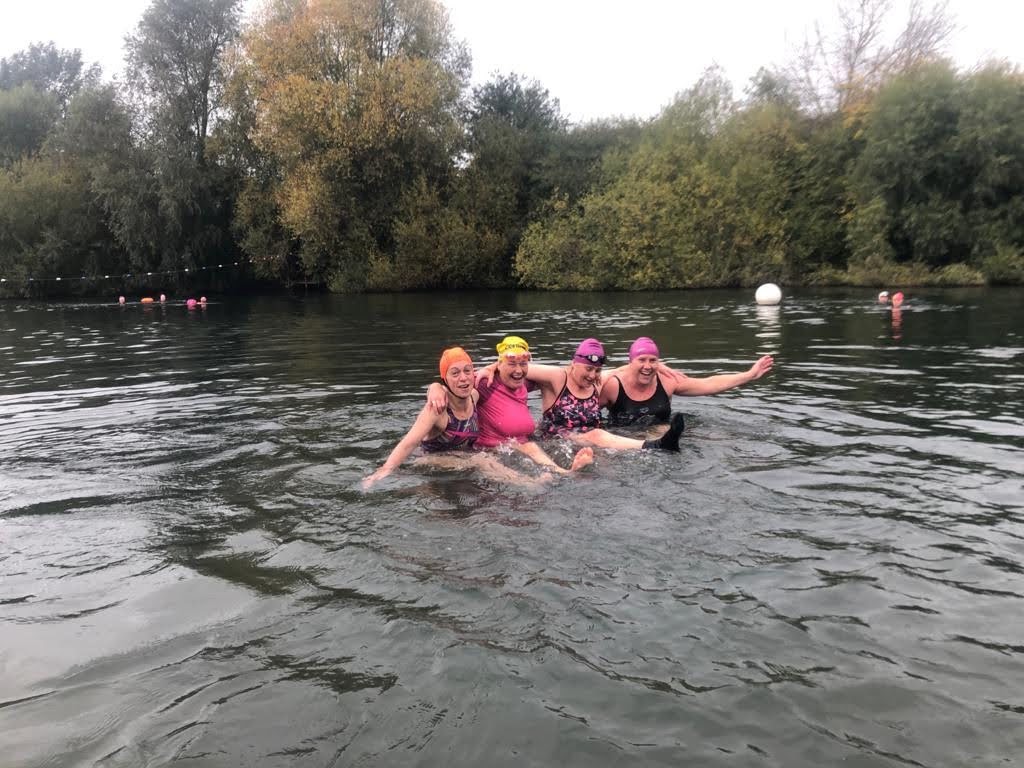
I’m still swimming in a wetsuit, though only 3mm, and I have added neoprene socks and gloves to the kit which make a difference. You wouldn’t think they would, since the cold water is inside them, but there we are. The last thing I do before racing for the towels and hot chocolate is strip the wetsuit off and jump back in the water in ‘skins’ for a splash about which is quite exhilarating. You really do earn the hot chocolate. Here we are this morning – I’m a great believer in the icy plunge, but the other three don’t usually do it and claim that I’m mad.

Ladies of the Lake (photo by Isla Falconer)

The swimming kit bag seems to get bigger every week: mine now contains goggles (which I only wear in the sun), swimming hat, towfloat, a towel, the giant robe I made, a fleecy hat, thermal socks, neoprene gloves and socks…and a onesie. I have resisted onesies for years – possibly as every time I went places like Romford or Harlow shopping there would be fully grown adults wearing them in public. I was totally behind various Tesco and Asda stores when they said people in pyjamas would not be allowed in (I was going to add ‘especially if you’ve made the effort to put full make up on’ to this). But then I tried getting leggings and a top on after a cold swim, when none of your fingers work properly, and decided I’d try one. And – OMG – I was converted. I bought a plain navy zip-up one with a fleece-lined hood and a kangaroo pocket, and it was like wearing a hug. It’s become my go-to for post-swimming wear now: robe on over towel, strip off, pants on and onesie and I’m good to go.

There’s no excuse for this though. Sorry.

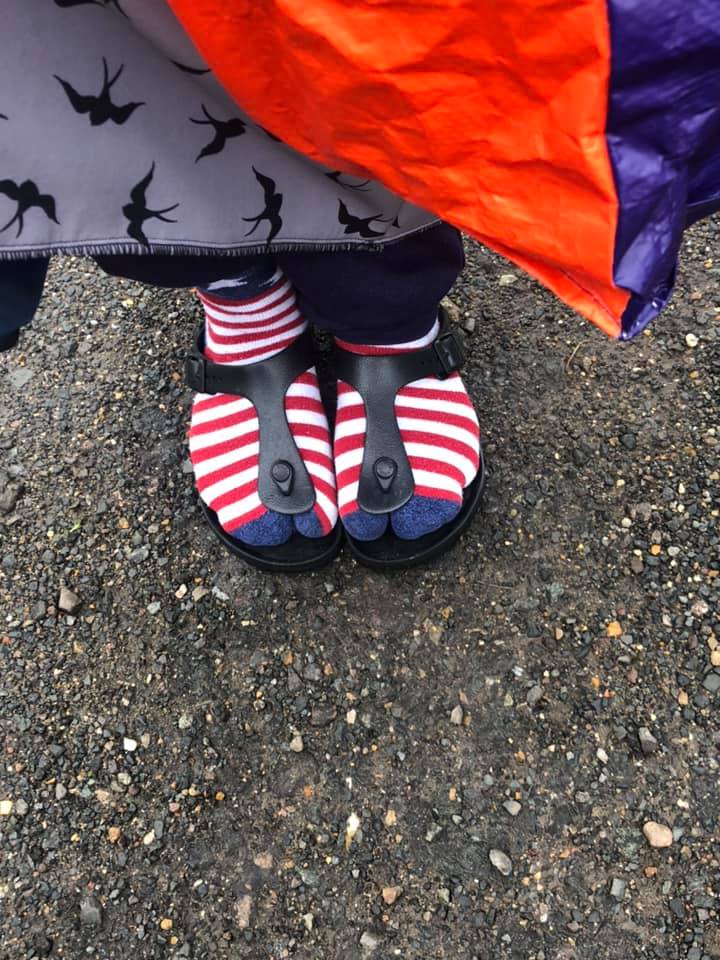
Full English: Photo by Isla, socks by Primark, sandals by Birkenstock

So that’s been my week. I’m still sorting the learning collection, discovering treasures that have been hidden in cupboards for years. This includes the little-known ‘Strictly Come Dancing’ edition Action Man, whose elastic joints have seized since 1964 into a very balletic pose, and a whole box of mint condition Star Wars figurines by Kenner. This week I’m onto toys (magnetic and mechanical), and hopefully the clothing collection.

And now I’m off to tuck up under a blanket and catch up with Bake Off… See you at the end of week 31!

Kirsty

What I’ve been reading:

Battle Ground (The Dresden Files) – Jim Butcher

Hard Time (Time Police) – Jodi Taylor

See Delphi and Die/Saturnalia (Falco) – Lindsey Davis (Audible)

Podcast: You’re dead to me (BBC Sounds app)

Week twenty nine: the magic of stories

Well, this has been a pretty miserable month so far for those of us working in the museum sector. Last week the V&A announced redundancies as part of the ‘recovery programme’, and this week the Museum of London followed suit. They aren’t the first by any means, and they won’t be the last: the Museums Association have a redundancy tracker on their site which this morning stands at just under 3,000 across the UK. Thank heavens for the unions – if you aren’t in one, join now.

These initial phases overwhelmingly affect the front of house, retail and visitor experience teams: the most diverse, the lowest paid, the ones who were on the front line longest at the start of lockdown, and the ones who were first to come back when we reopened.

You know, the ones who greet you on arrival, help you around the museum, take your payment in the shop. The ones who interact with you and share their vast knowledge: not just about exhibits and displays, but where the best places are for lunch with your fractious kids, what there is for you to do, and what else you might like to see.

And they are so versatile and talented: they research objects for ‘objects in focus’ talks, based on their own passions and interests. They develop and lead family and public tours. They tell stories. They run activities. They manage school groups in their hundreds, juggling the ones who are late for their sessions with the ones who came too early, and they mop up the ones who’ve been stuck in traffic. Spare pants for a damp child? Somewhere to empty the sick bucket? No problem.

They are also the ones in the line of fire when the building is evacuated, when there’s a first aid emergency, when the object they came specifically to see is no longer on display, when the café is too expensive, when the toilets aren’t working, when the school groups are too noisy, when there’s too many children in the museum. They smooth ruffled feathers with a smile on their face (even if they then come to the learning office for hugs and emergency biscuits).

Outside their museum jobs they are artists, illustrators, poets, designers of all types, PhD students, writers, jewellery makers, textile artists. Those beautiful props and puppets that support the stories you bring your kids to? Chances are they made those.

Some are hoping that the VE role is the first step onto the museum learning ladder, and some of my favourite colleagues over the years have started here. They are the ones who have the greatest understanding of the visitors for whom they are programming content, and who are the most outward facing.

We understand that these are strange and difficult times and the choice is to shed staff or potentially face the closure of museums across the country, possibly permanently. This week the Culture Recovery Fund announced lifeline grants awarded to smaller organisations – up to a million pounds – which will make a huge difference to their survival. I was really pleased that the Epping Ongar Railway, in my village, is one of the recipients.

It seems particularly insensitive, therefore, for the Independent Parliamentary Standards Authority to announce this week that MPs would be receiving a £3,360 pay rise next year ‘in line with growth in public sector pay’. It will be interesting to see if other public sector workers – nurses, police, fireman, culture and heritage workers, street cleaners etc – are awarded rises at the same scale. I don’t think I’ll put money on it.

Seeking comfort in the familiar

Its been suggested that people with anxiety disorders or depression seek comfort in rewatching familiar films or TV series. You know what’s going to happen and you don’t need to process any new information: which, this year, when we have had so much to take in, has been particularly important. My version of this is re-reading books, and probably explains why I can only listen on Audible to books I have already read!

So this week I have been thinking about books from my childhood that I still go back to now.

  1. I’m going to start with the wonderful Dido Twite books by Joan Aiken. Officially this series starts with The Wolves of Willoughby Chase, but I was introduced to them with Black Hearts in Battersea. These have elements of steampunk, mystery, adventure, the Arthurian legend and more. I was really pleased to discover a few years ago that there were some later books in the series that I hadn’t read. Joan Aiken also wrote magical short stories – I loved the collection A Necklace of Raindrops, illustrated by Jan Pienkowski.
  2. The Little House books by Laura Ingalls Wilder. There’s eight of these in the original canon, and some that were published posthumously which were based on her diaries. Highly romanticised ‘autobiography’, these books follow Laura and her family from the little house in the Big Woods (Wisconsin) to the wilds of Dakota, through to her marriage to Almanzo Wilder and their move to Missouri. I introduced Thing 1 to these books when she was in primary school, and she loved them too.
  3. The Railway Children by E.Nesbit. First serialised in 1905, this story dealt with some quite adult themes for the period – the imprisonment of the children’s father for spying, Russian dissidents – and I cry every single time I read it. Don’t even get me started on the film – I love both versions. The Psammead books are great too (Five Children and It, for example), as is The Book of Dragons.
  4. The Anne books by L.M. Montgomery. Starting with Anne of Green Gables and finishing with Rilla of Ingleside when our disaster-prone, red-headed heroine is all grown up and sensible, I love them all. So do my youngest sister and my niece, and I have started reading them to Thing 2 when she feels the need for a bedtime story.
  5. The Moomin books by Tove Jansson. Thing 2 is named after the author. Moomins are small, hippo-like creatures who inhabit Moominvalley. The Moominhouse is always open to wanderers and people in need – mischievous Little My, who gets left behind by the Mymble who just has too many children; Thingummy and Bob, who find the Hobgoblin’s treasure; free-spirited Snufkin; the Hemulen; the Snork and the Snorkmaiden. Moominmamma’s heart and handbag are big enough for everyone.
  6. Susan Cooper’s The Dark is Rising sequence. Arthurian legend brought into 1960s/70s England and Wales. Magic and legend. Good versus evil. Don’t watch the film, not even Christopher Eccleston could save it.
  7. The Weirdstone of Brisingamen by Alan Garner. I do love the way magic appears in the real world – whether that’s fairies at the bottom of the garden, or the urban fantasy that I love now, I like the idea that there’s more to the world than we can see. I recommend The Owl Service by the same author, too.
  8. The Hounds of the Morrigan by Pat O’Shea. Pidge accidentally releases an evil serpent from a book, and he and his sister end up involved in a battle between good and evil. There’s lots of help from Celtic mythological characters, it’s funny and touching and I really, really wish the author hadn’t died before finishing the sequel.
  9. The Sword in the Stone by T.H.White. More Arthurian legend. This is the first part of The Once and Future King set, and it’s the one most people are familiar with from the wonderful Disney adaptation. The story of The Wart, an orphan looked after by Sir Ector and bullied by his foster brother Kay, this is the early days of King Arthur, before he pulls the sword from the stone. The rest of the books are pretty wonderful too.
  10. Honourable mentions go to The Wind in the Willows by Kenneth Grahame, The Water Babies by Charles Kingsley, Lewis Carroll’s Alice stories, Charlotte’s Web by E.B.White, C.S.Lewis’s Narnia books, the Swallows and Amazons series by Arthur Ransome, the Green Knowe stories by Lucy M. Boston, Stig of the Dump by Clive King (and more – oh, so many more!)

There, that’s made me feel much more cheerful!

Jumper weather

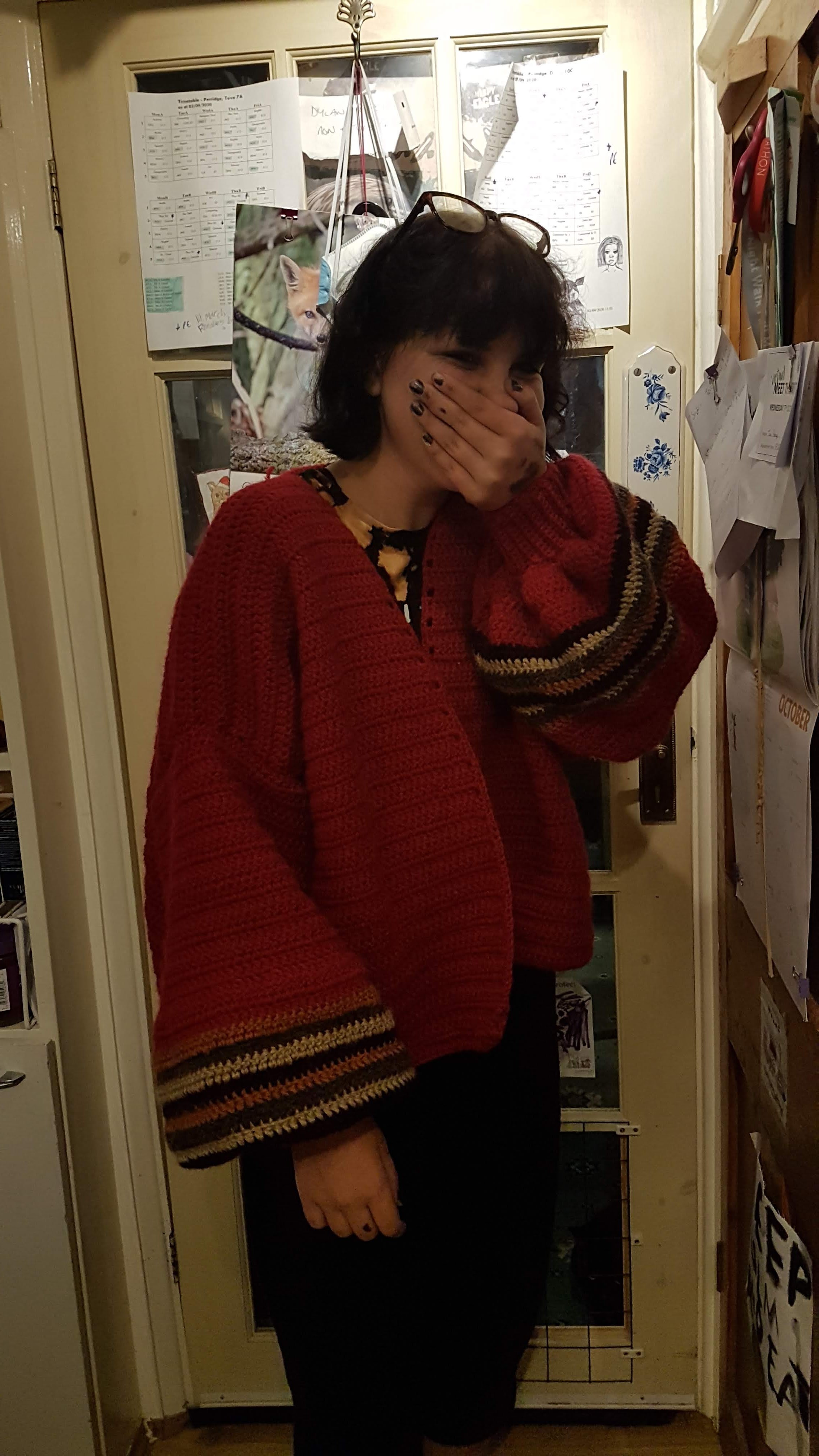
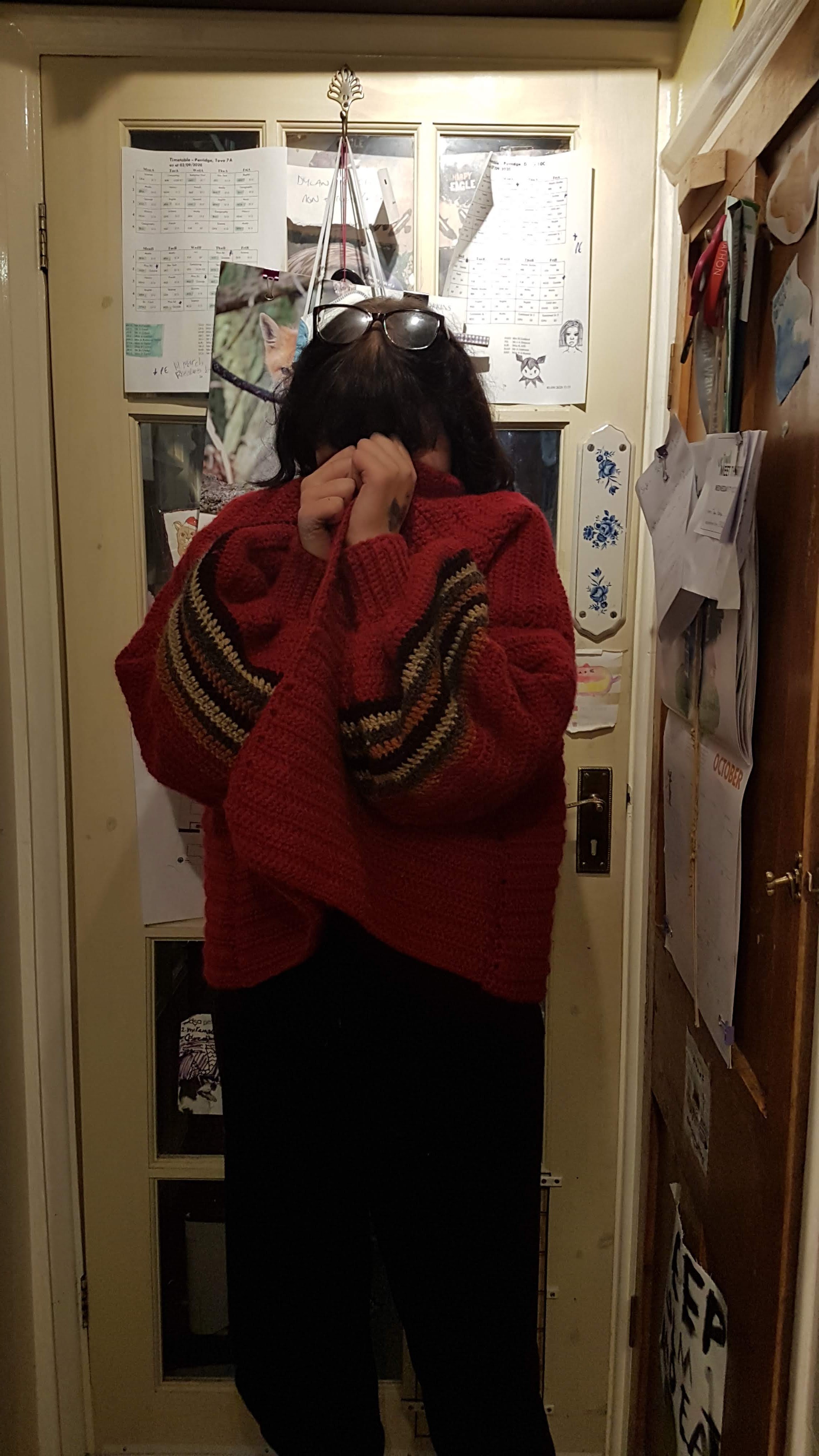
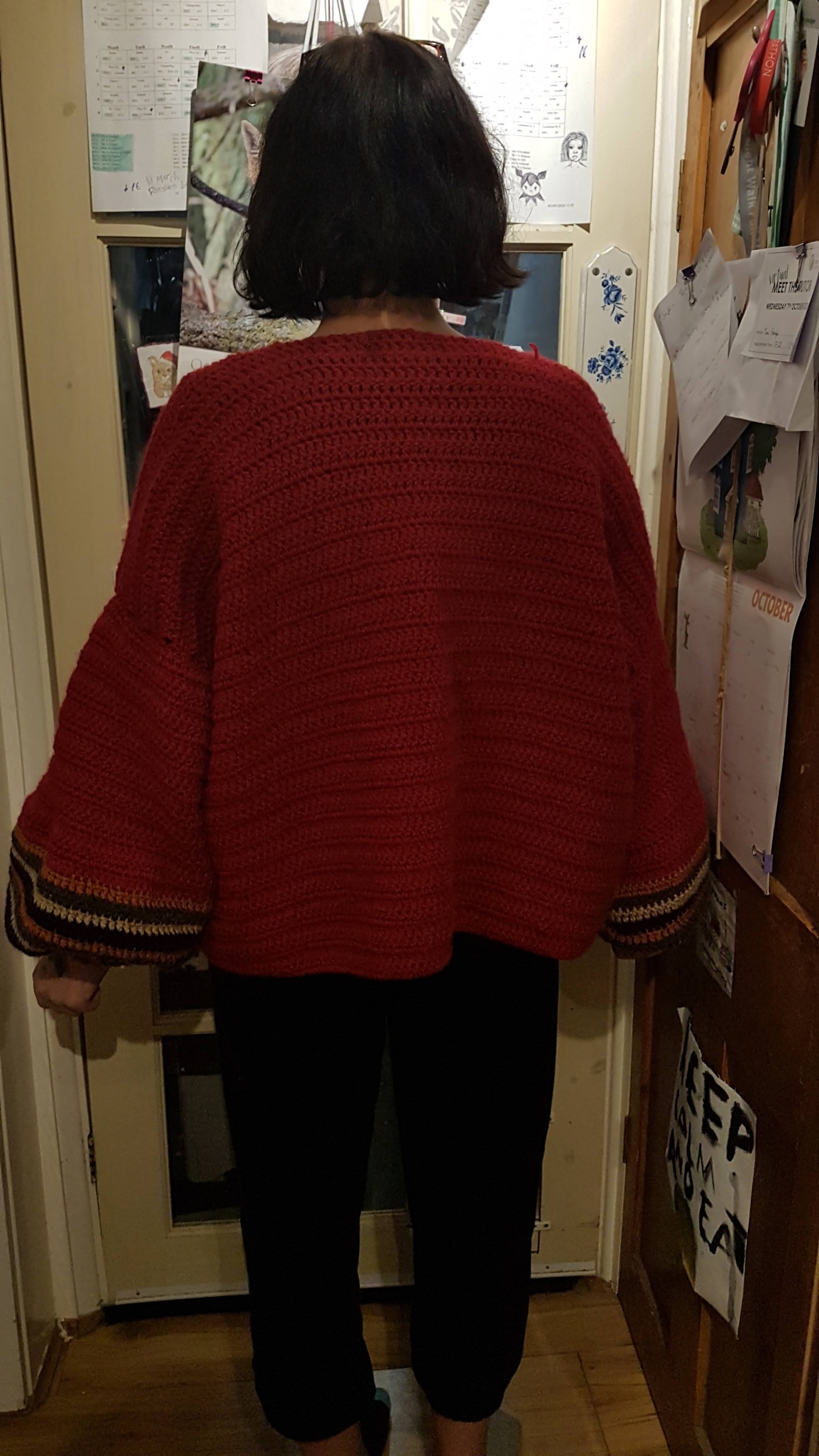
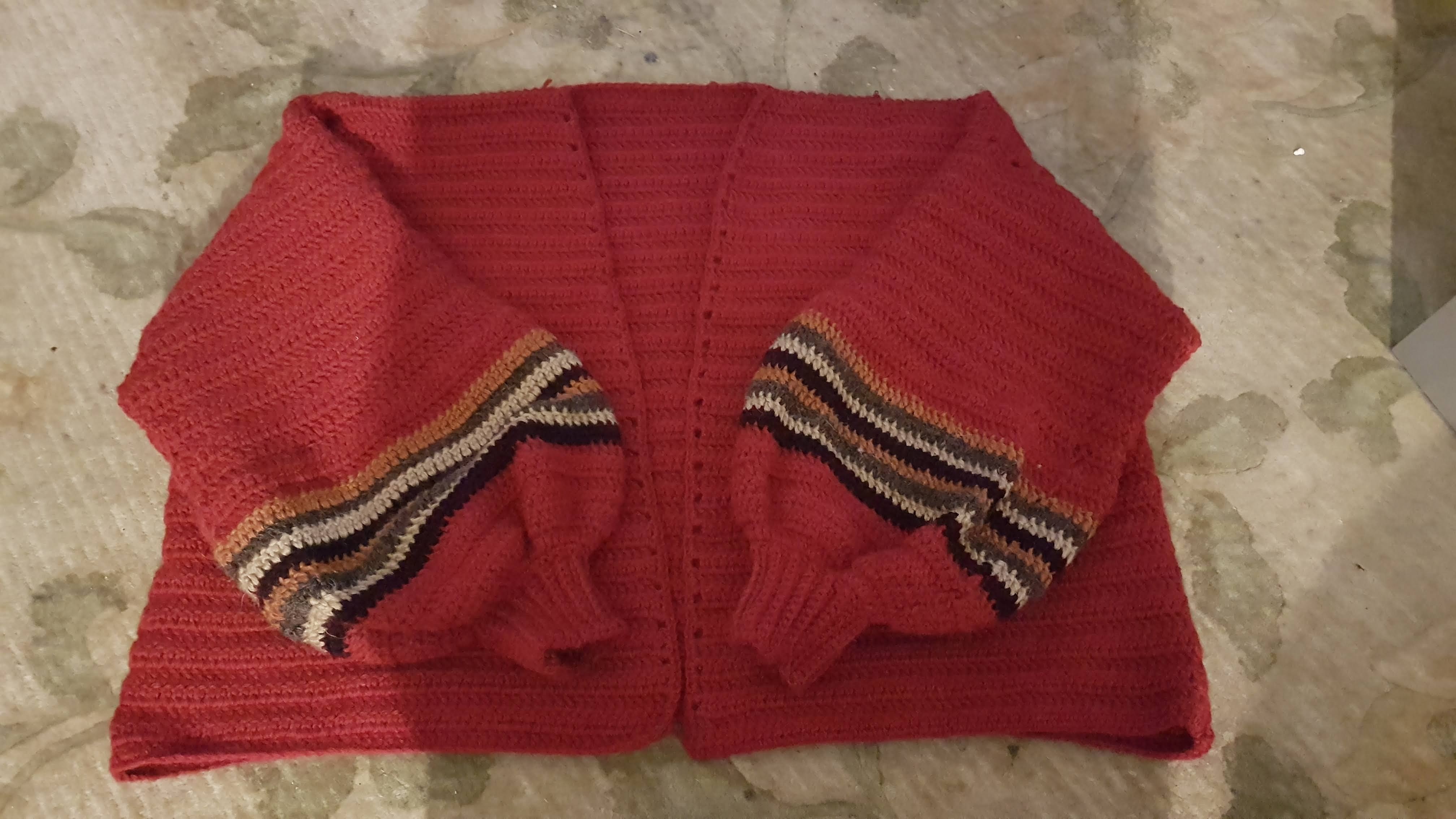
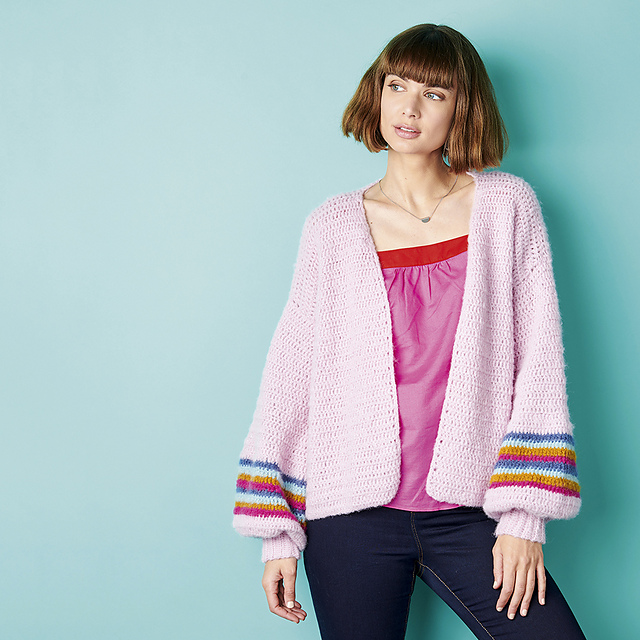
I finished the crochet cardigan this week, and I LOVE it. It’s so cosy and warm, and the alpaca in the yarn makes it very soft. It’s oversized so I can fit layers underneath, and I can see this getting a whole lot of wear this winter. Thing 1 kindly modelled it for me, even though she protested as it wasn’t Goth enough.

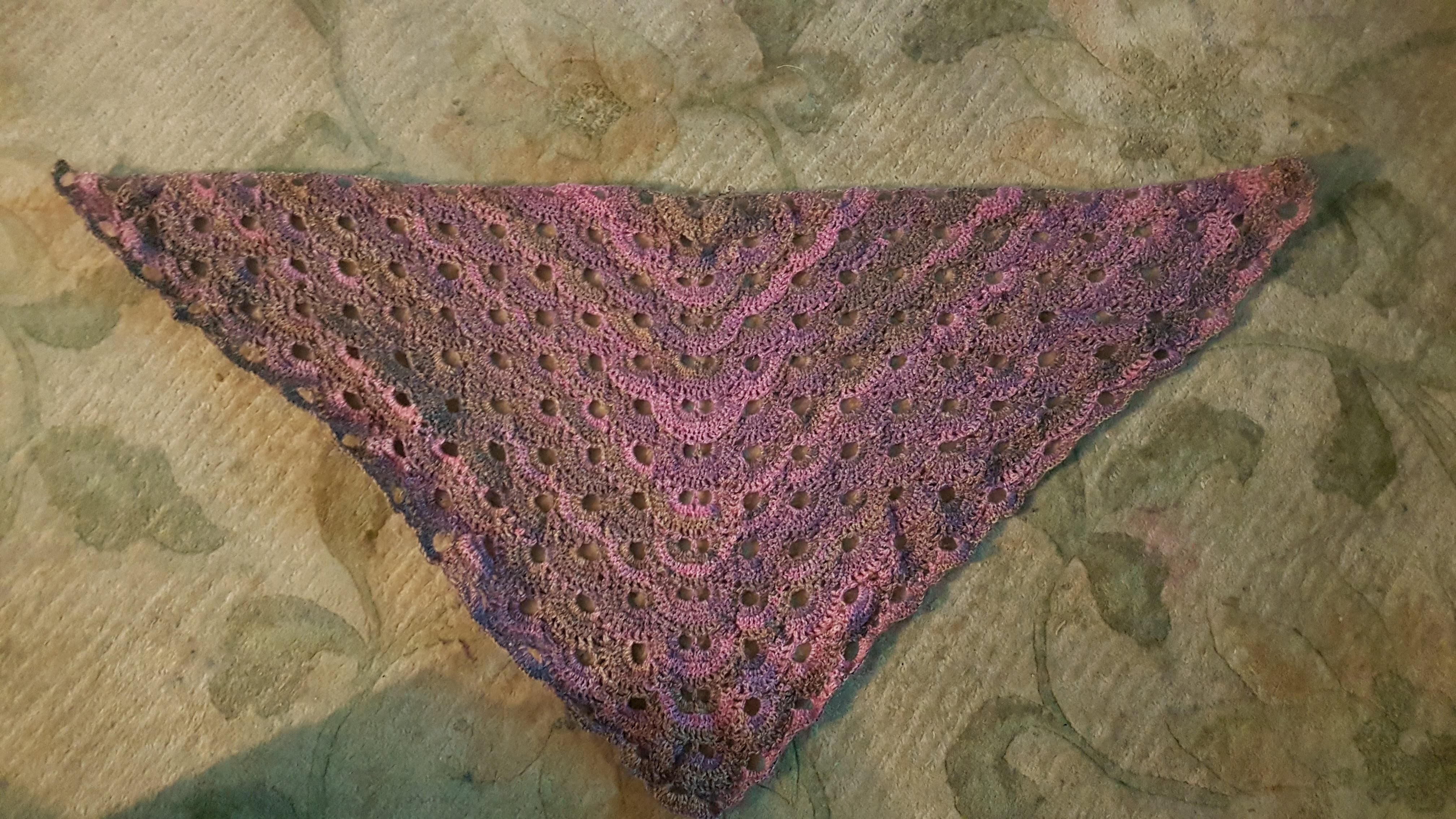
The (Corona)Virus Shawl is also complete, using three balls of Drops Fabel – it’s not huge, so will be more of a scarf. What am I going to do in queues now?

I have started a stashbuster blanket for my new portable project – tiny (three round) granny squares in DK, using up leftover yarn from a couple of other blankets. I’m going for a patchwork effect this time, with lots of bright colours. My Coast blanket has another couple of rows – it just needs to be a foot or so longer, I think. The trouble with making giant blankets is that you get so toasty that you need a nap…

As you can see from the link, the Coast blanket is by Lucy at Attic 24 who designs the most gorgeous colourways and blanket patterns. It’s a shame to keep them in the house, really, so I am tempted to make one of her bags to carry around.

Tiny magic

Thing 2 has been going out for walks this week with some of her friends and their dog – she’s growing up and is enjoying being a bit more independent. Yesterday they were out with other friends so she went for a walk with me instead. Her only stipulation was that it had to be a muddy walk, so we duly donned wellies and headed off in search of puddles.

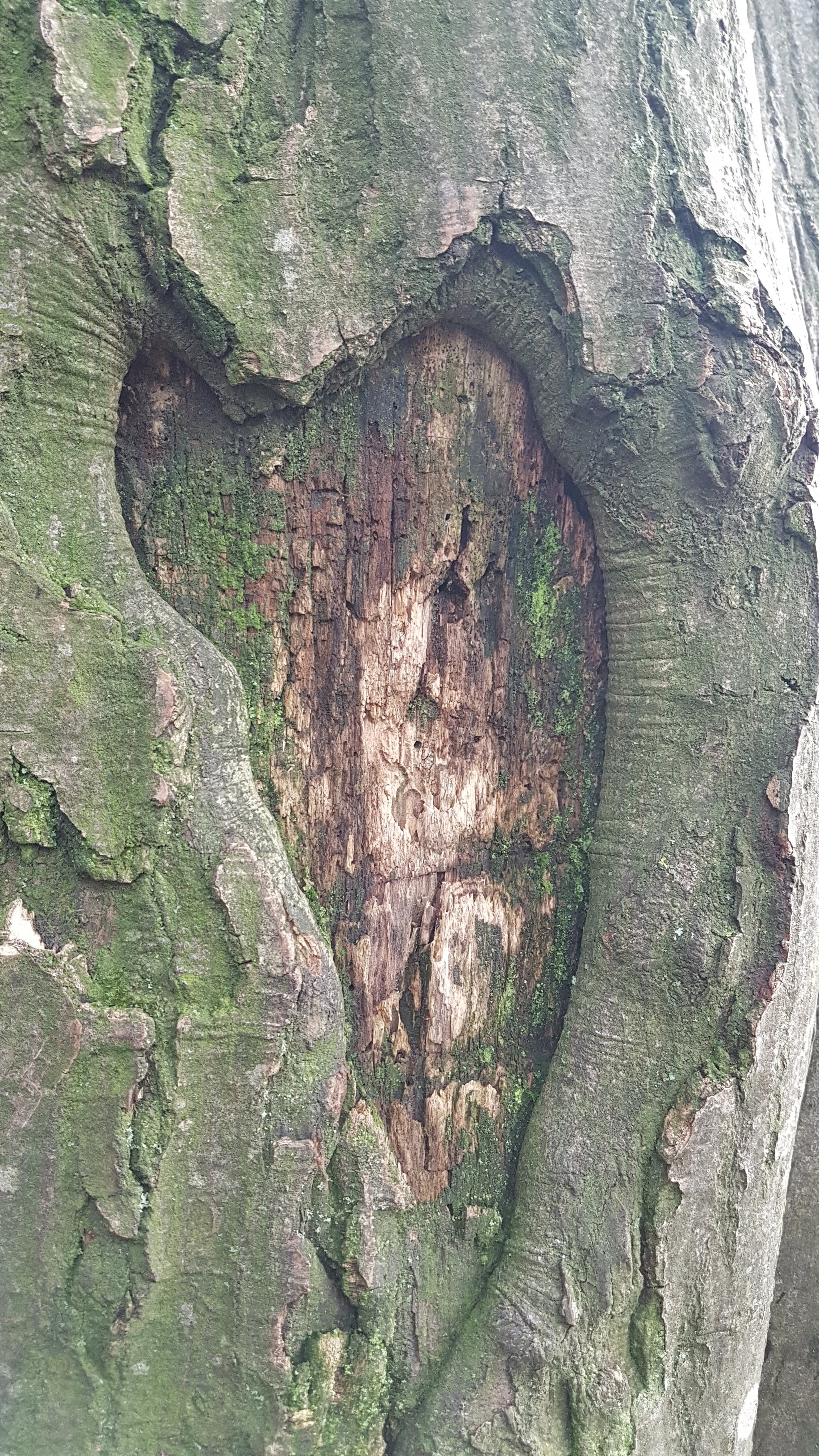
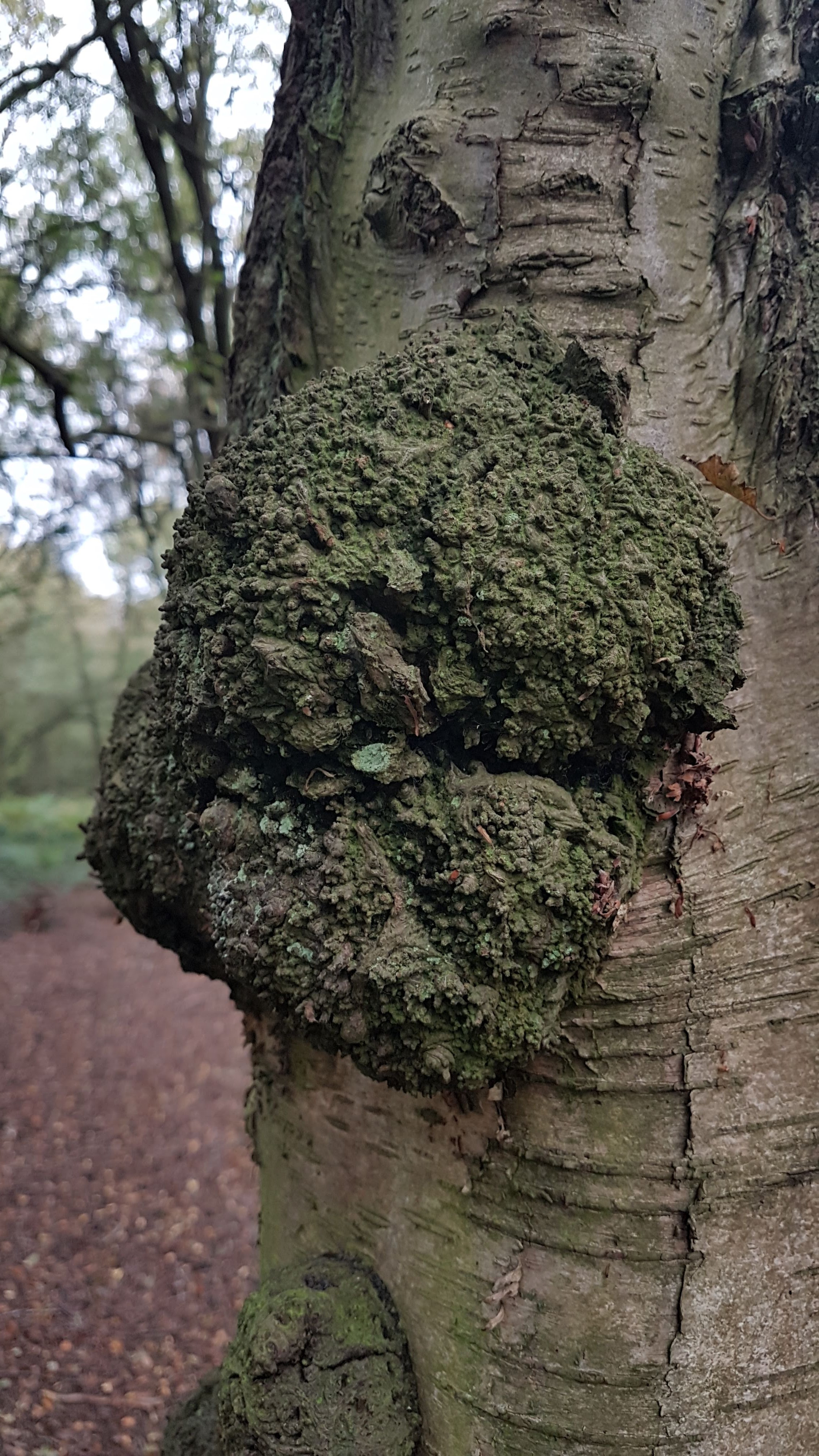
We ended up by the rope swing after tramping through the fields, and after a bit of play we wandered back through the woods. Thing 2 spotted some hearts in the trees while I was looking at textures, and then we started seeing lots of tiny things – tree fungi, mushrooms and moss that we enjoyed taking close-up photos of.

It was lovely to have some time with her. We crunched through leaves, looked under fallen branches and she even wanted to hold my hand occasionally….

This morning the intrepid Perimenopausal Posse headed off to Redricks for our second week of winter swimming – 11.8 degrees in the water, and sunny. Colder but less rainy than last week which really made a difference! Apparently we should be practising with cold showers in between swims….ha!

So that was week 29. I wonder what week 30 has in store?

Kirsty x

What I’ve been reading

A Song for the Dark Times (Rebus) – Ian Rankin

The Postscript Murders (D.S. Harbinder Kaur) – Elly Griffiths

The Accusers/Scandal Takes a Holiday (Falco) – Lindsey Davis (Audible)

Listening to…

You’re Dead To Me (podcast) – Greg Jenner

Week twenty-eight: when is a learning collection not a learning collection?

This week I have been braving the Central Line (well, on two days at least) and going back into the museum to make a start on sorting and decanting the Learning Collection. The tube is still quite busy in the early mornings, and I am puzzled by the number of people who don’t know how to wear a mask properly.

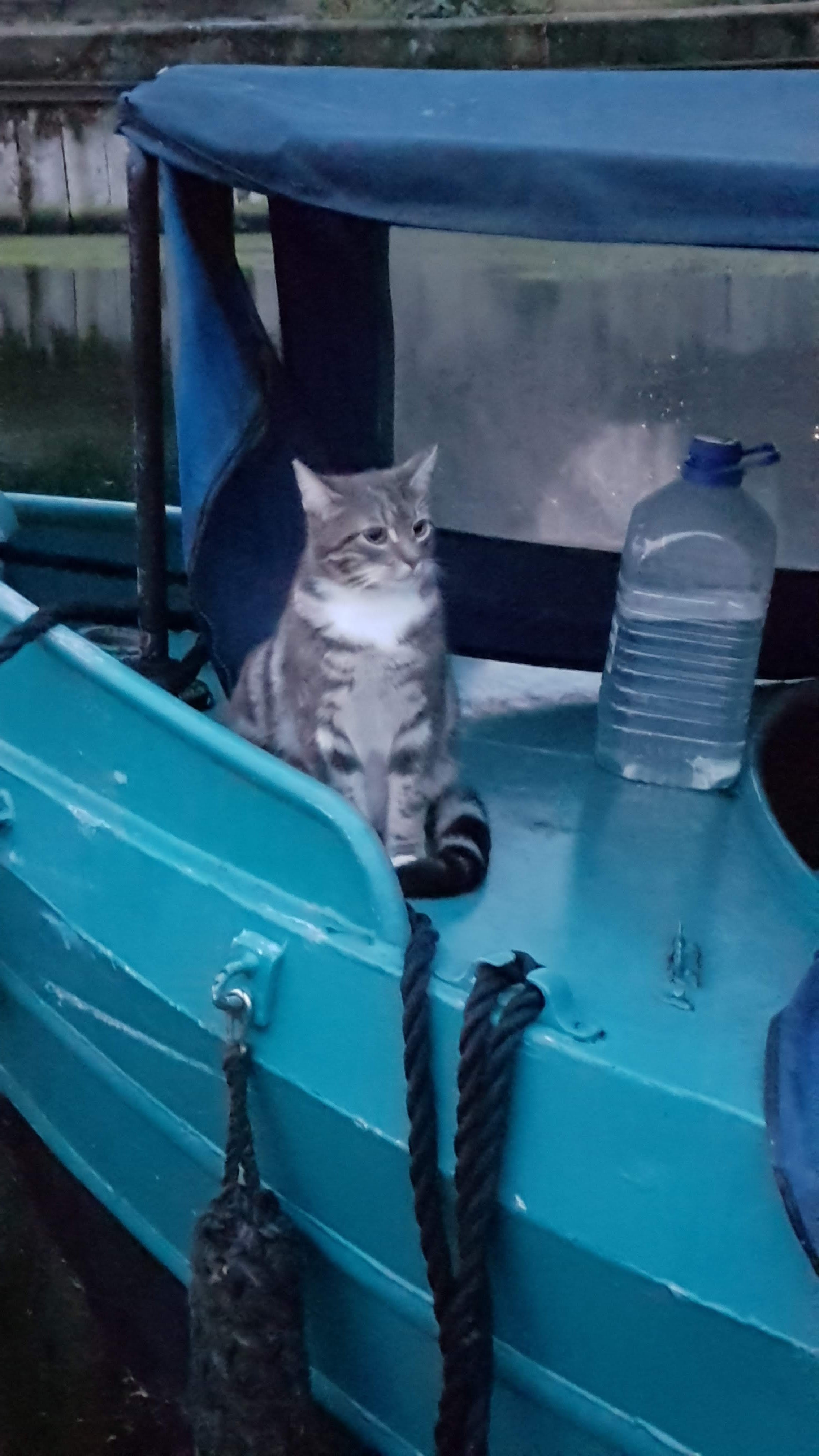
One morning I got off the tube at Mile End and walked up the canal to Victoria Park, which meant I spotted this gorgeous kitty watching the world go by from one of the houseboats.

The learning collection, as it currently exists, is a large, unwieldy and somewhat random selection of items relating to childhood: toys and games, dolls and teddies, children’s clothing and shoes, nursery items, dollhouse items and so on.

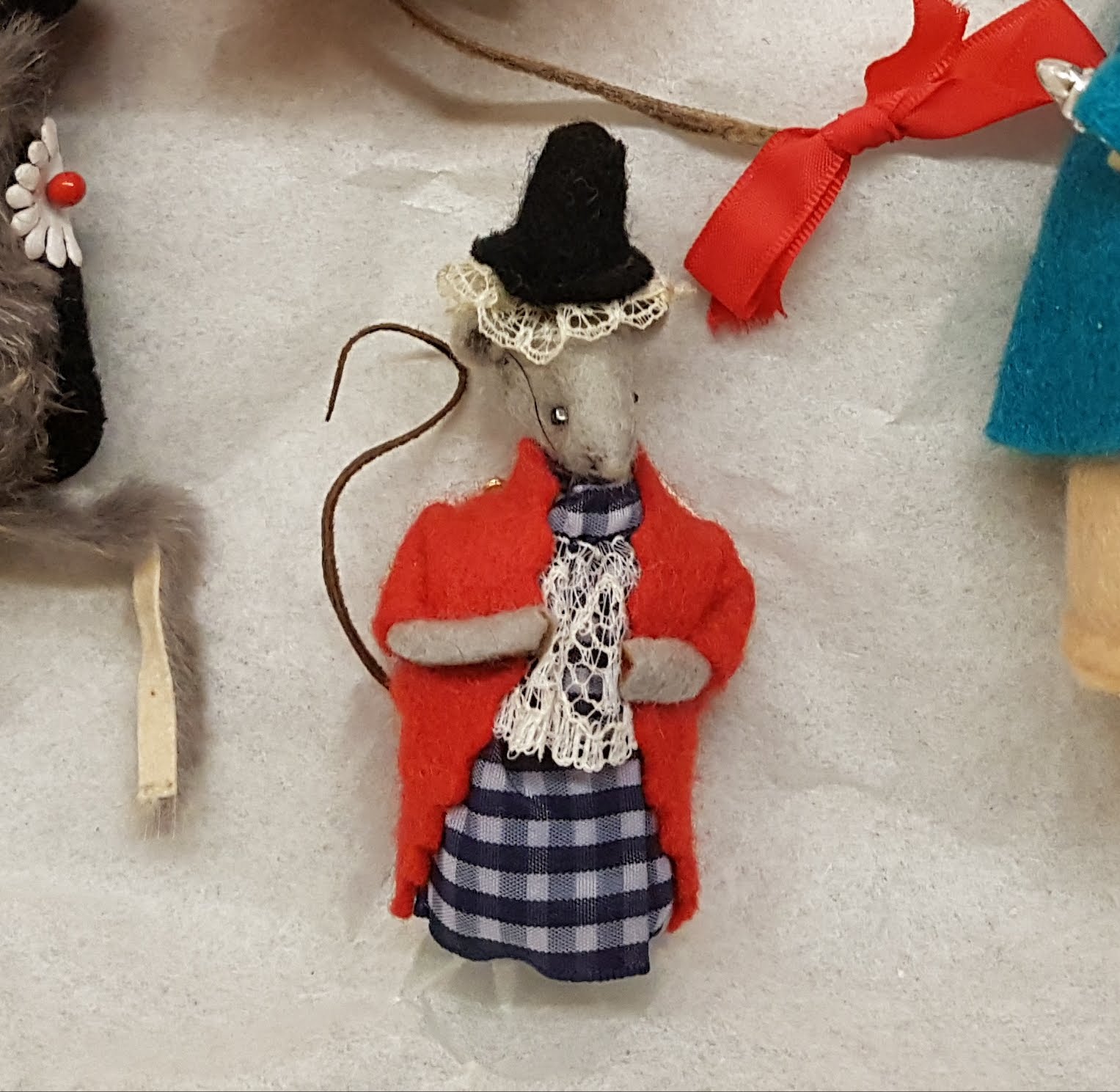
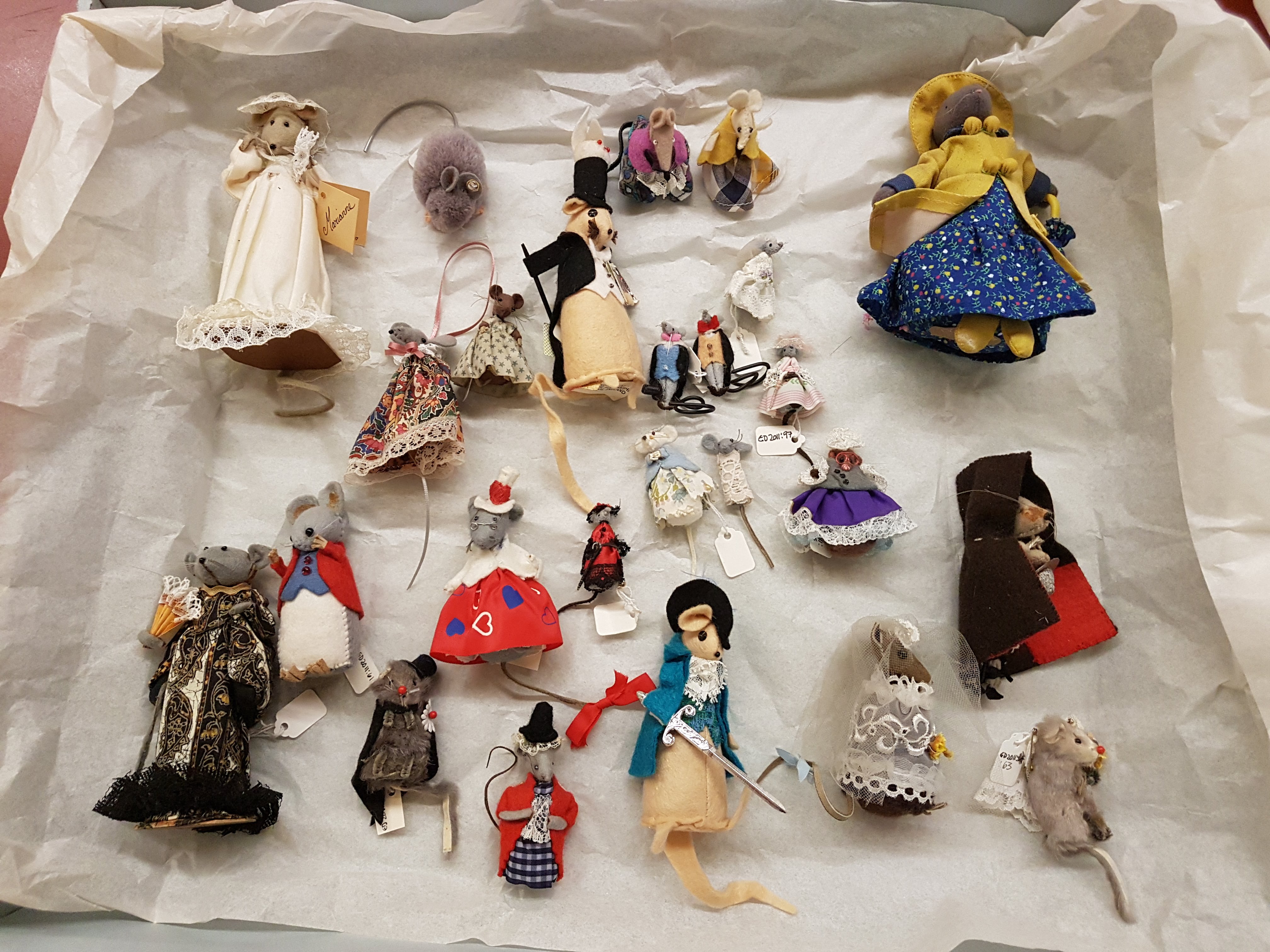
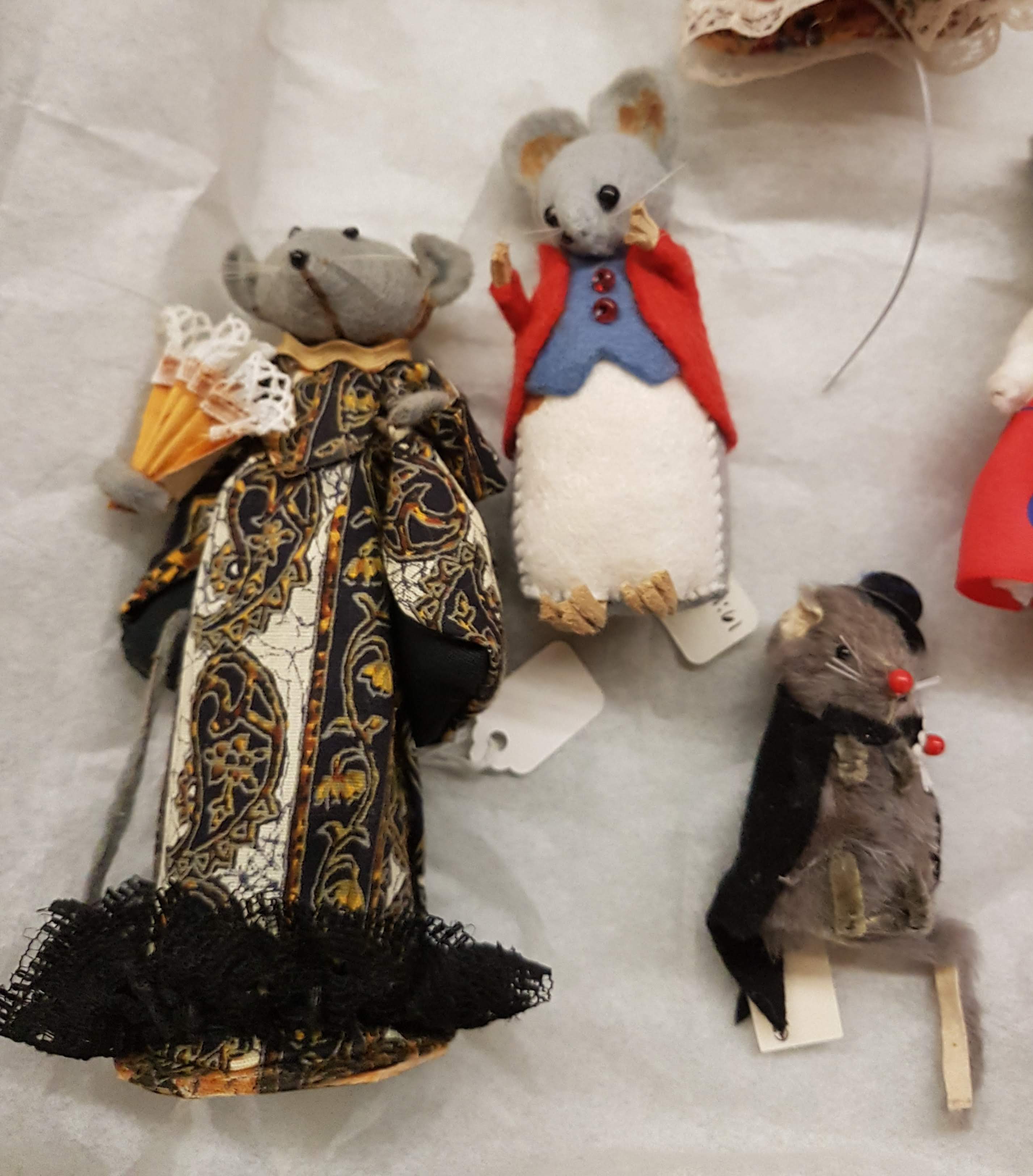
Some things are charming – the collection of tiny mice, for example. Bride and groom mice, magician mouse, Welsh lady mouse and many more. They are dressed beautifully in Liberty fabrics, and the detail is wonderful – but what are they for? They aren’t the sort of things children would play with, being more ‘collectable’ than practical, but they are a wonderful example of a child’s collection. How does a collection like this start? How did the child display them? What can I do with them?

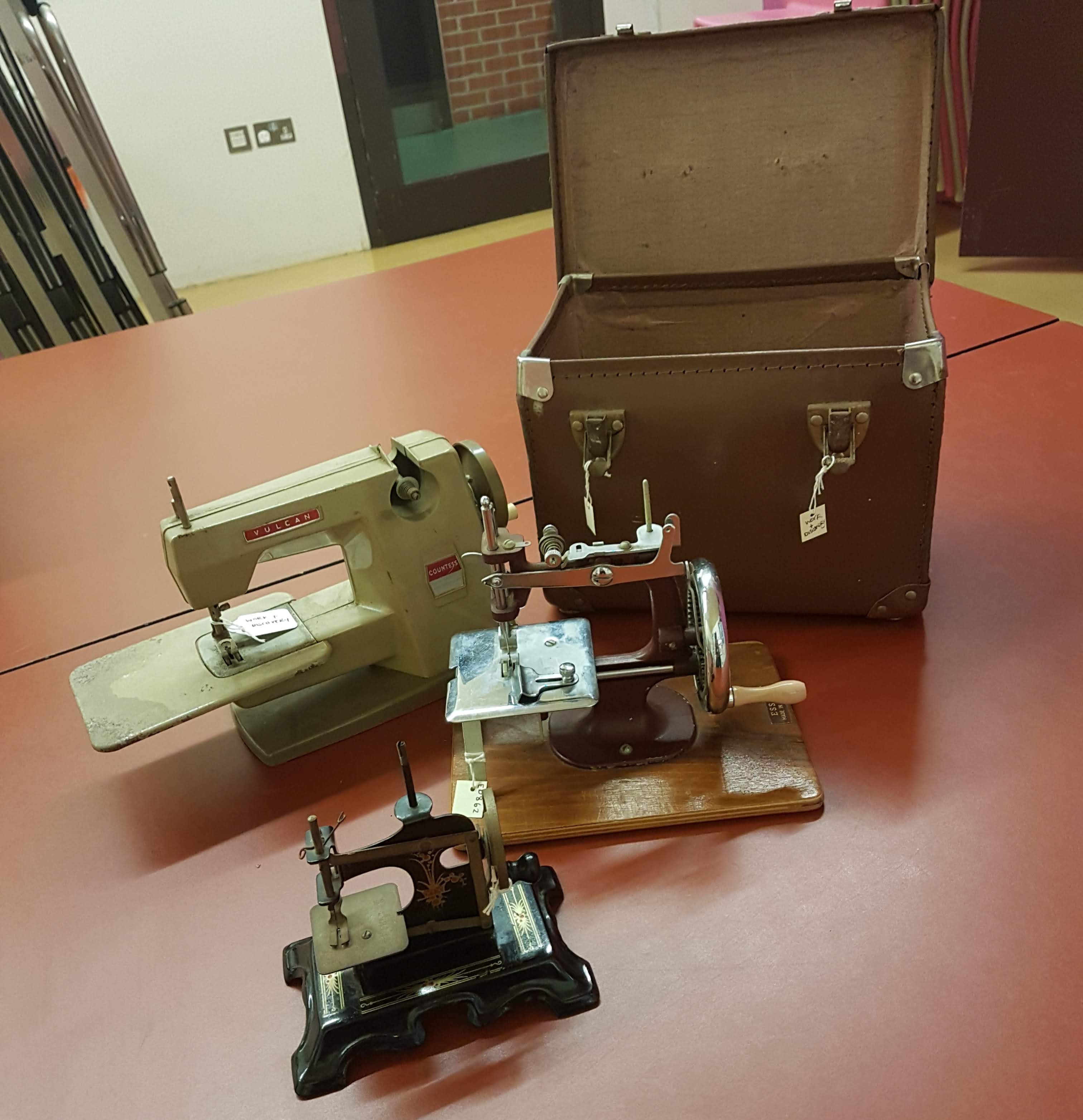
Some are practical – objects designed to introduce a child to the grown up world of work. Working sewing machines and typewriters, small tool kits – in solid metals and woods, not the brightly coloured plastics of today. These are objects designed to be used, to build a child’s skills.

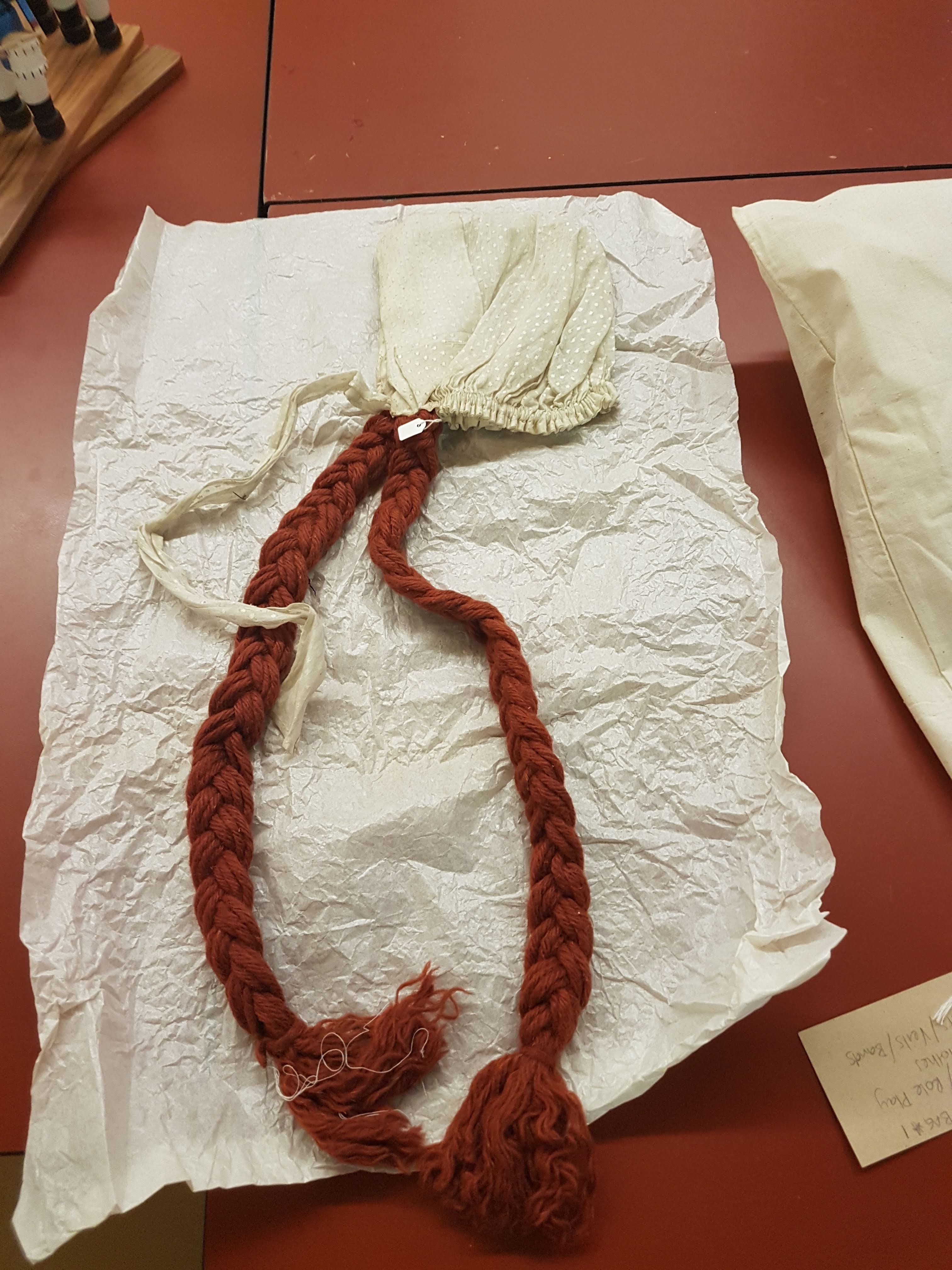
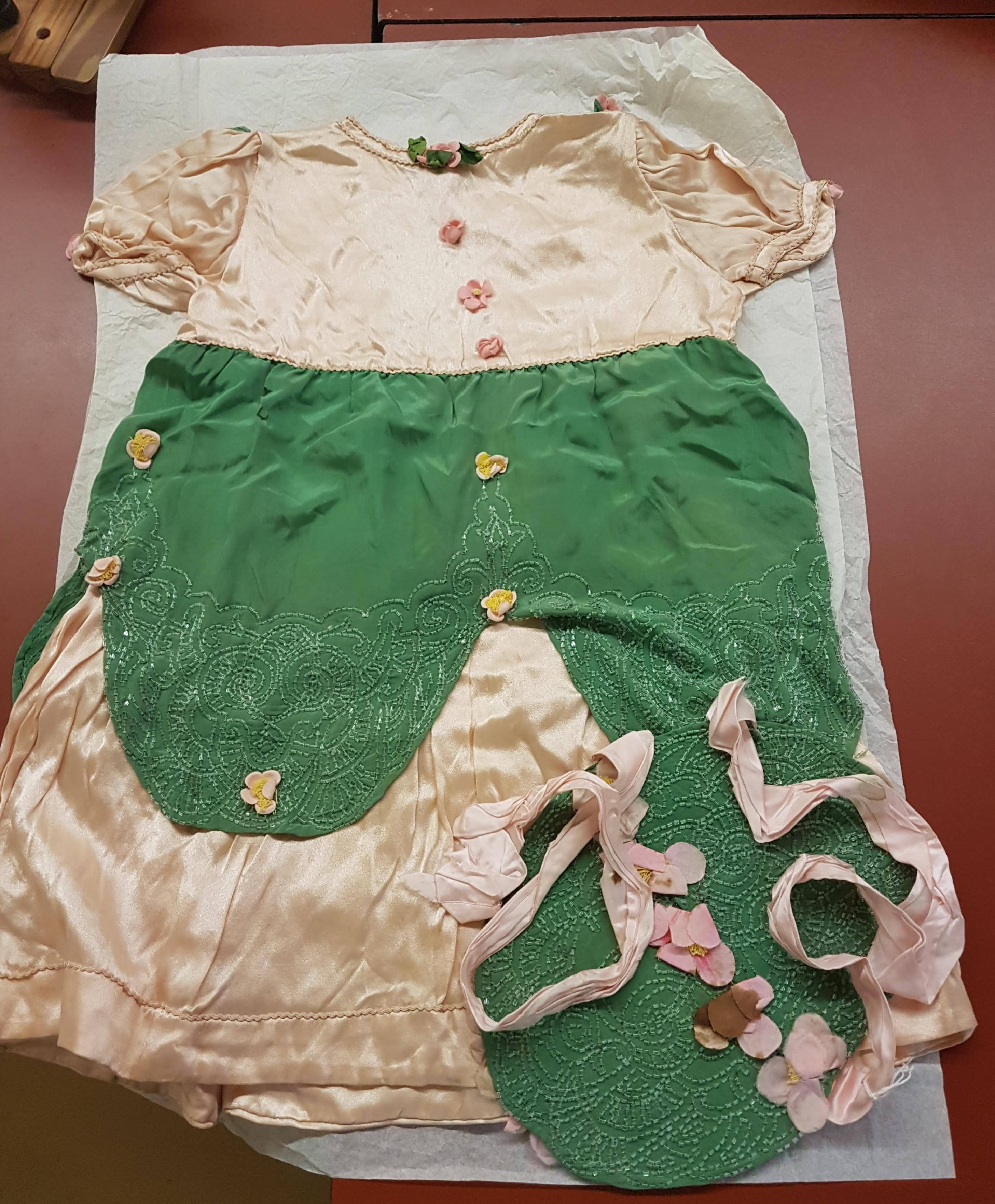
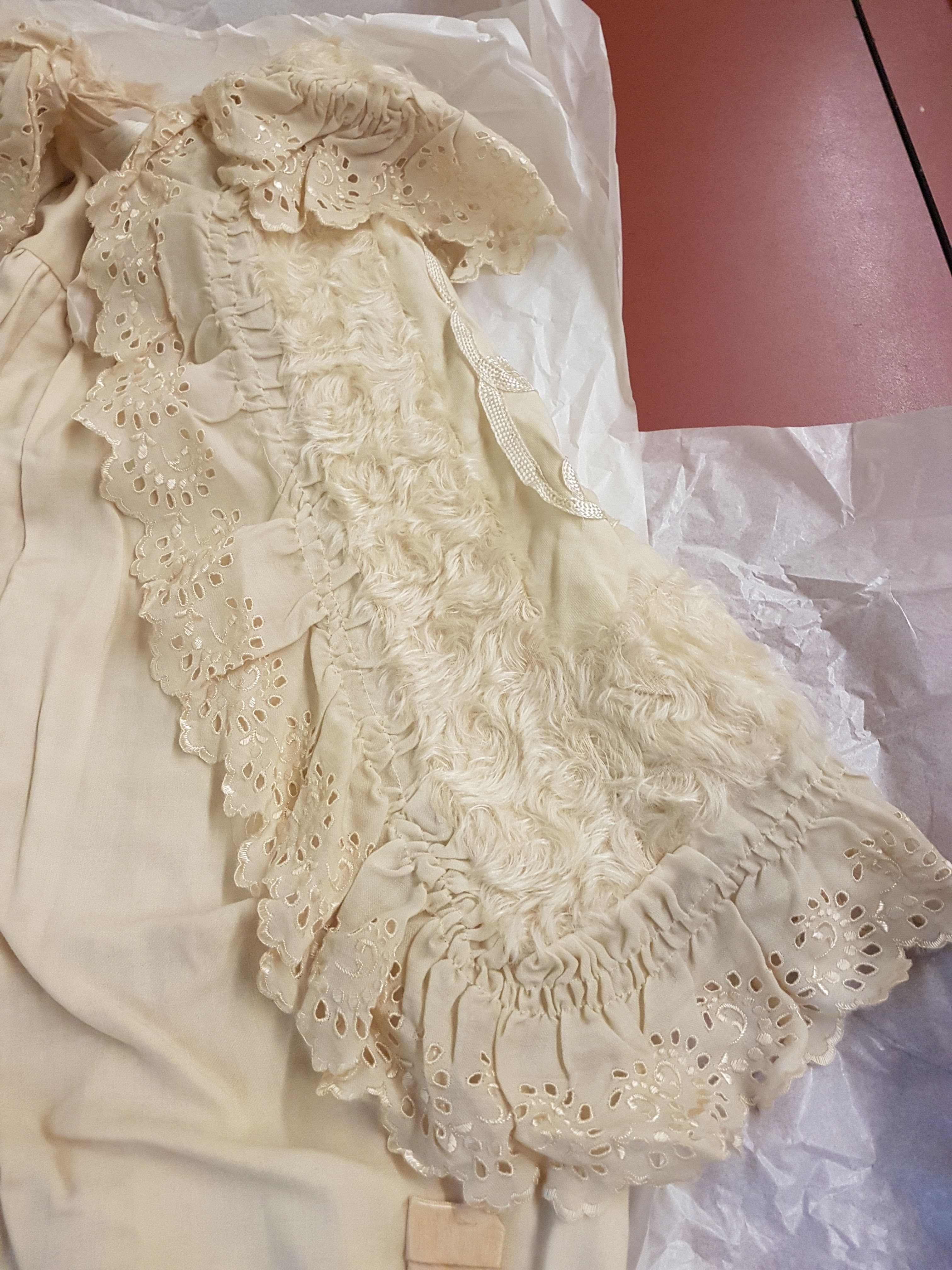
There are, of course, hundreds of items of children’s clothing, from the ceremonial to the practical, and a lovely dressing up collection which echoes the museum’s own collection of fancy dress costumes. Some are handmade or hand embellished, some are worn and much loved. Many predate the fashion for colour as a gender identifier for children – the older clothes are white and cream and colour comes in with the more modern items. Like in many collections, it’s often the ‘fancy’ clothes that have survived – the ones bought for special occasions or ‘kept for best’. But there are so many examples – how many baby bonnets and barracoats does one collection need? And how do I decide which are the ones to keep?

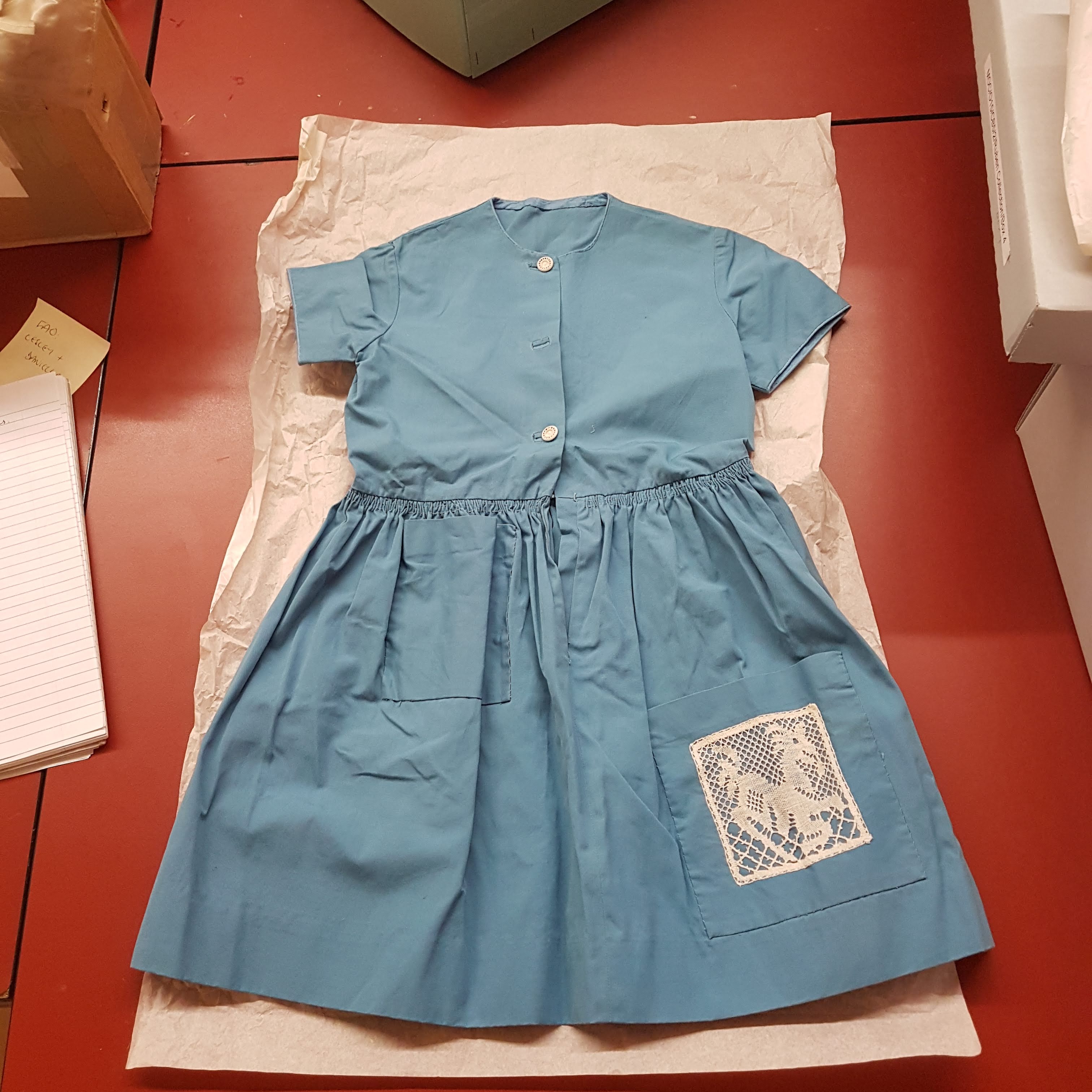
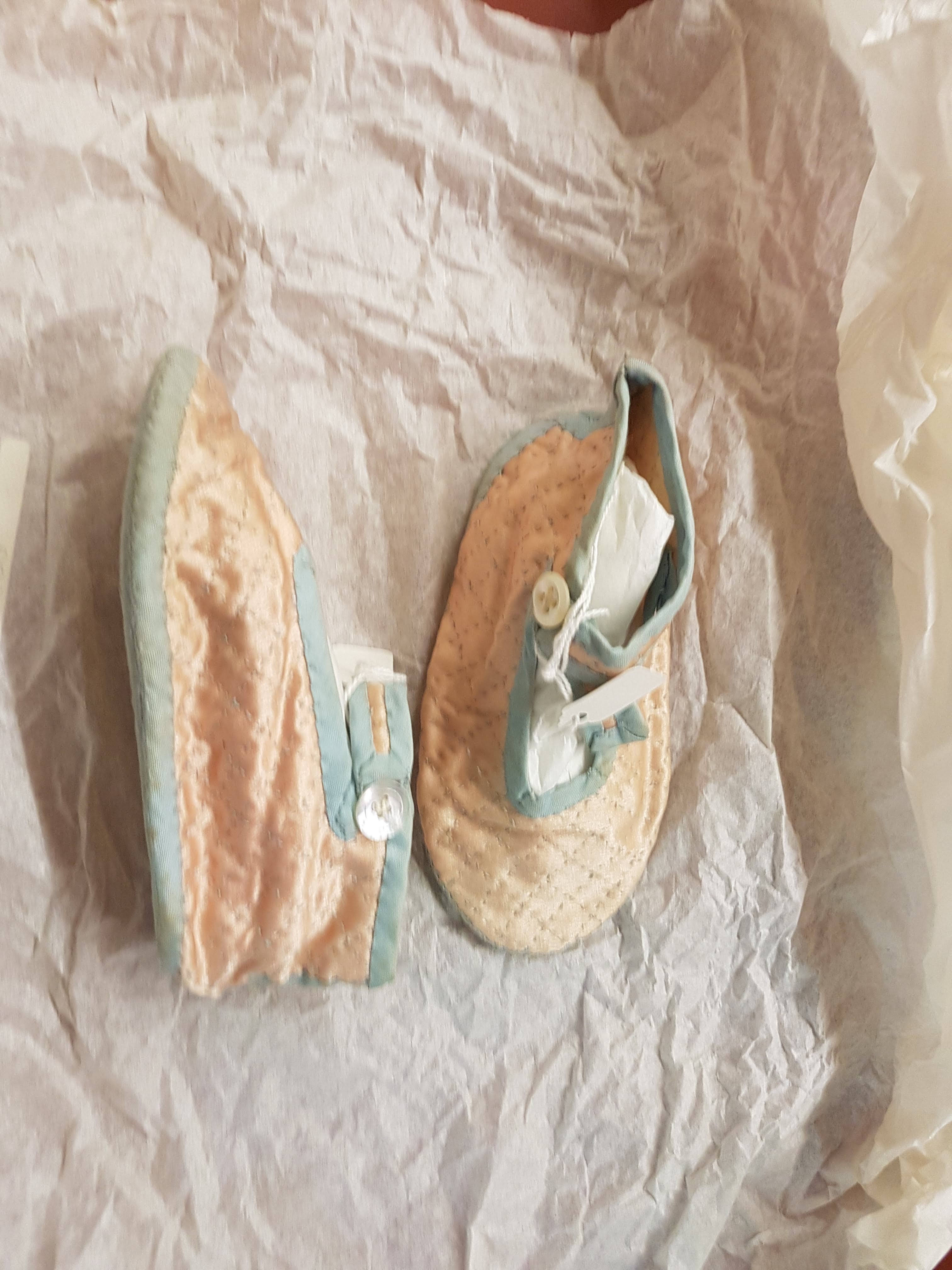
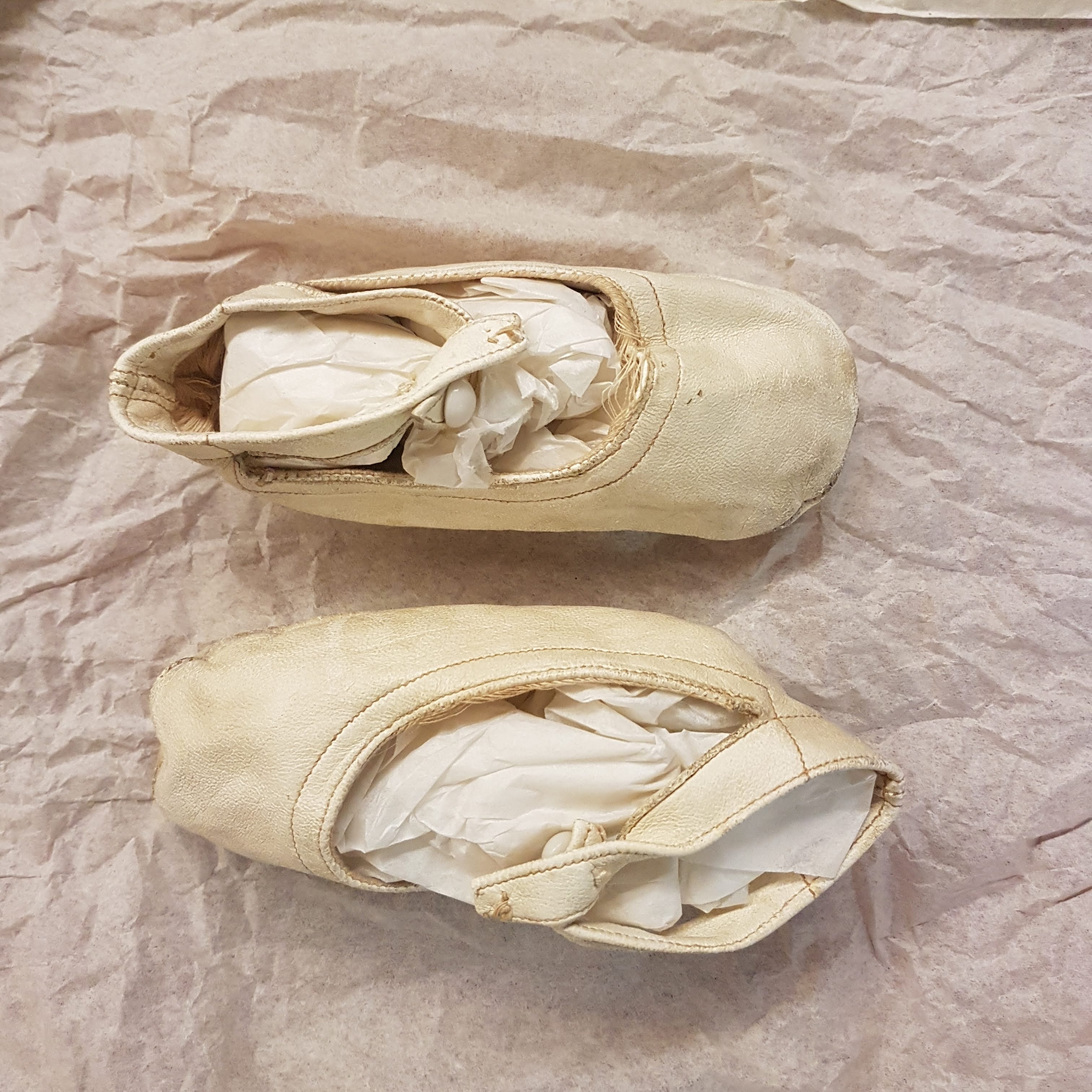
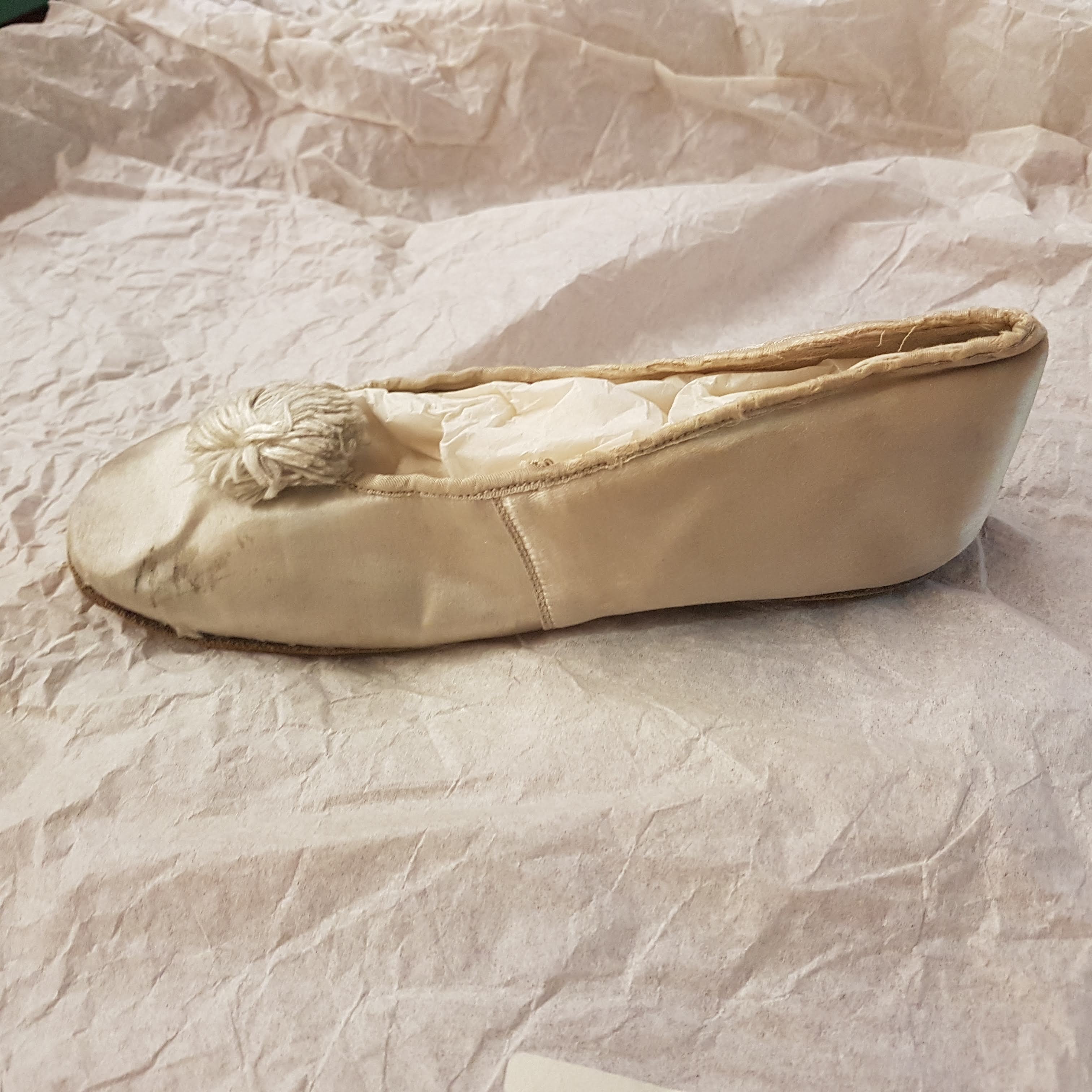
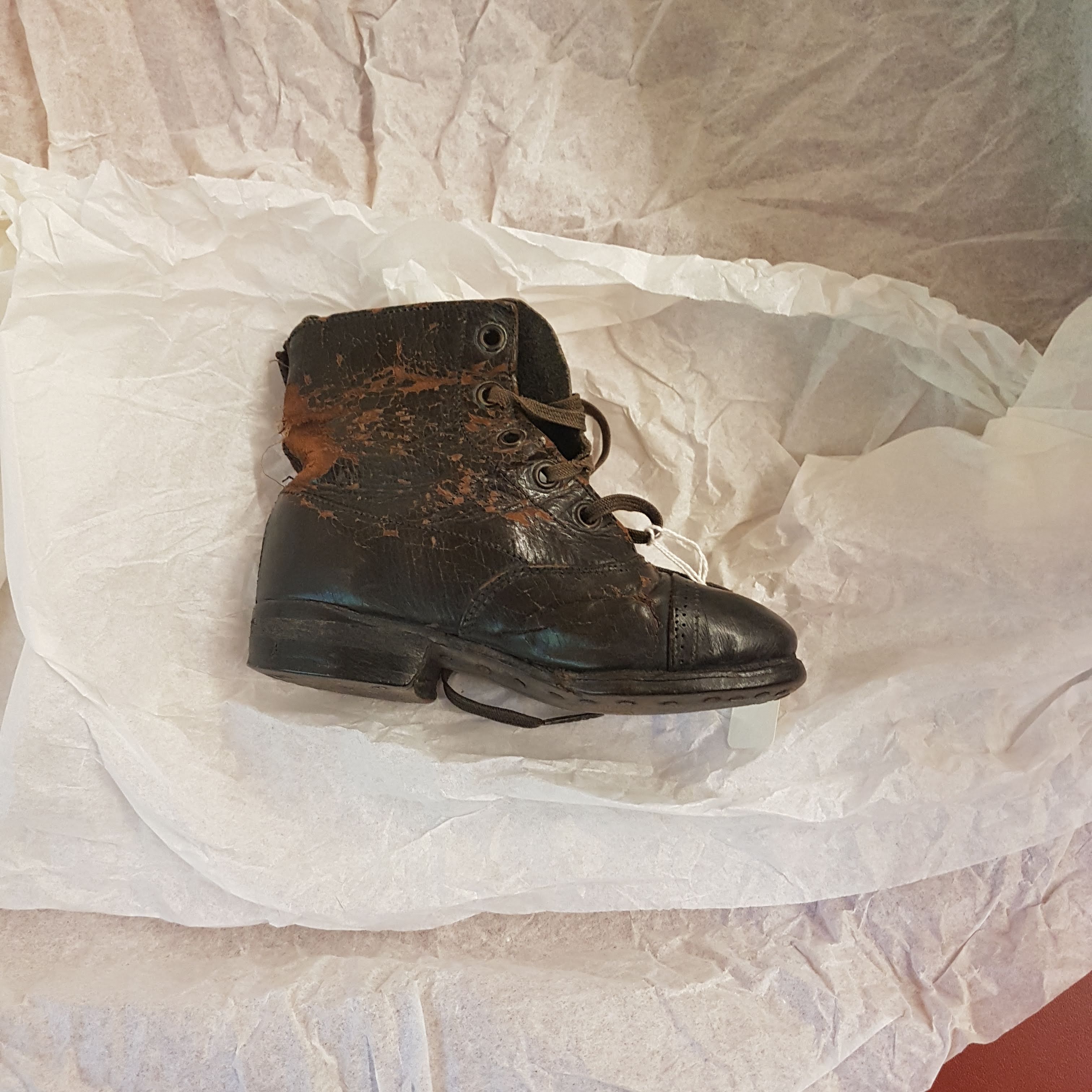
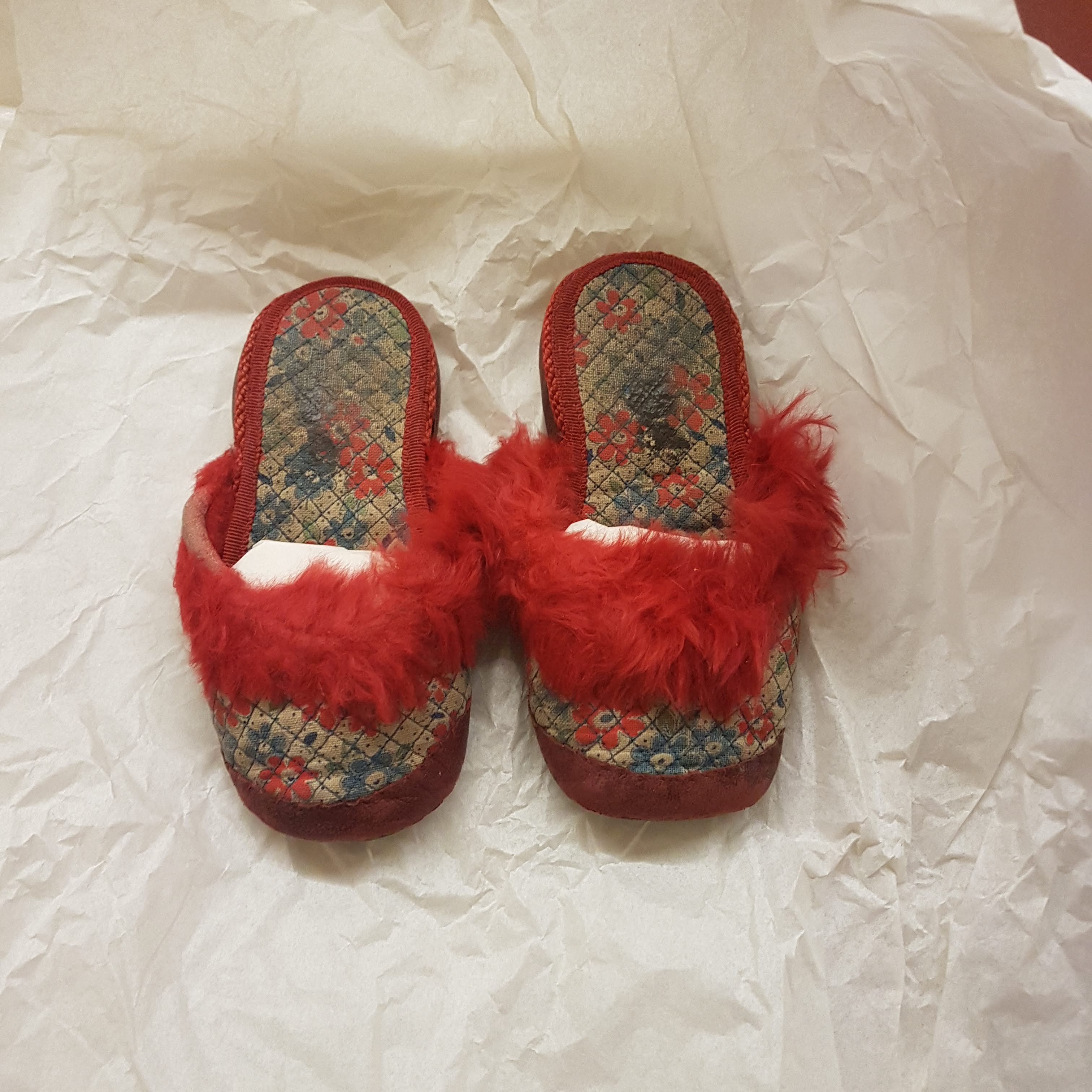
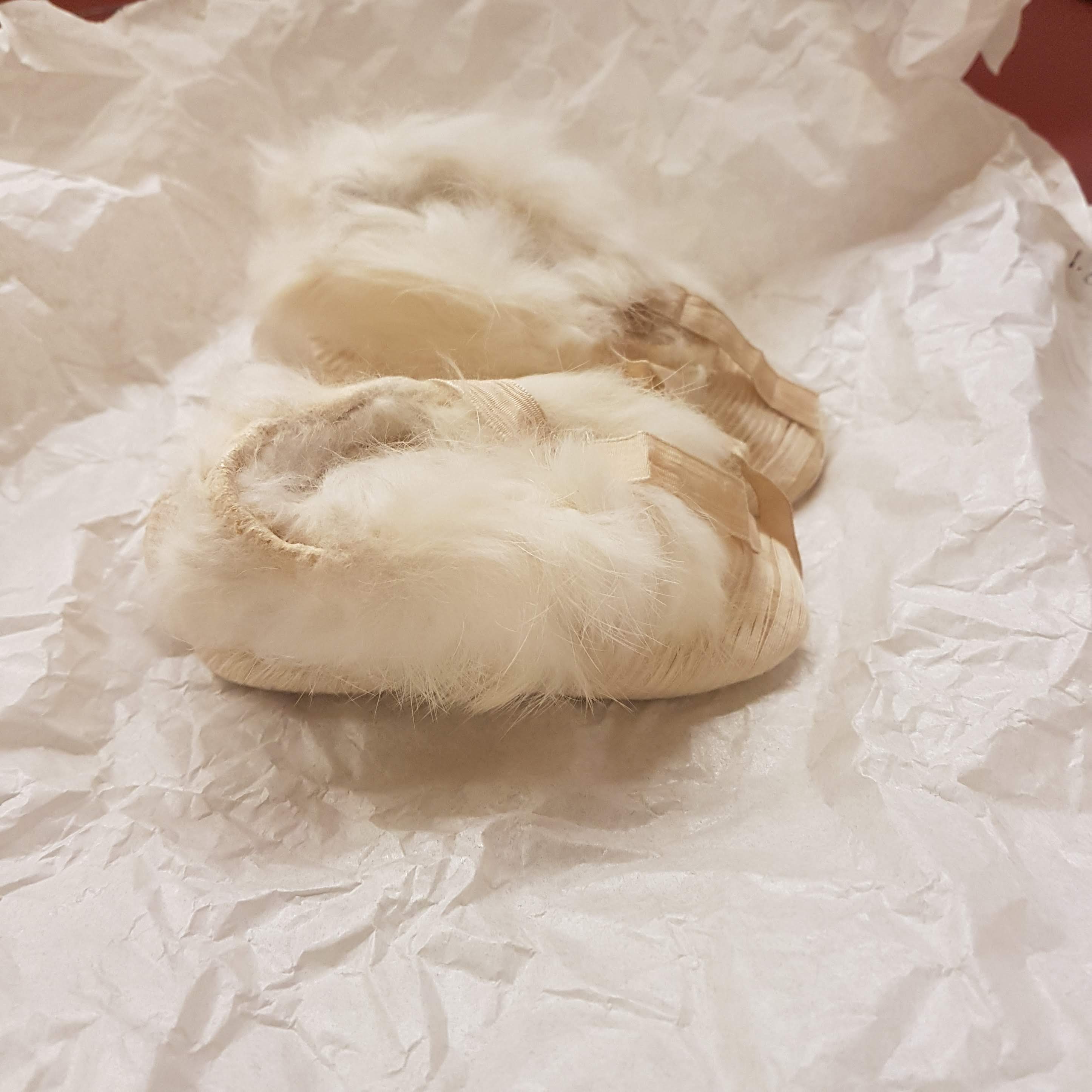
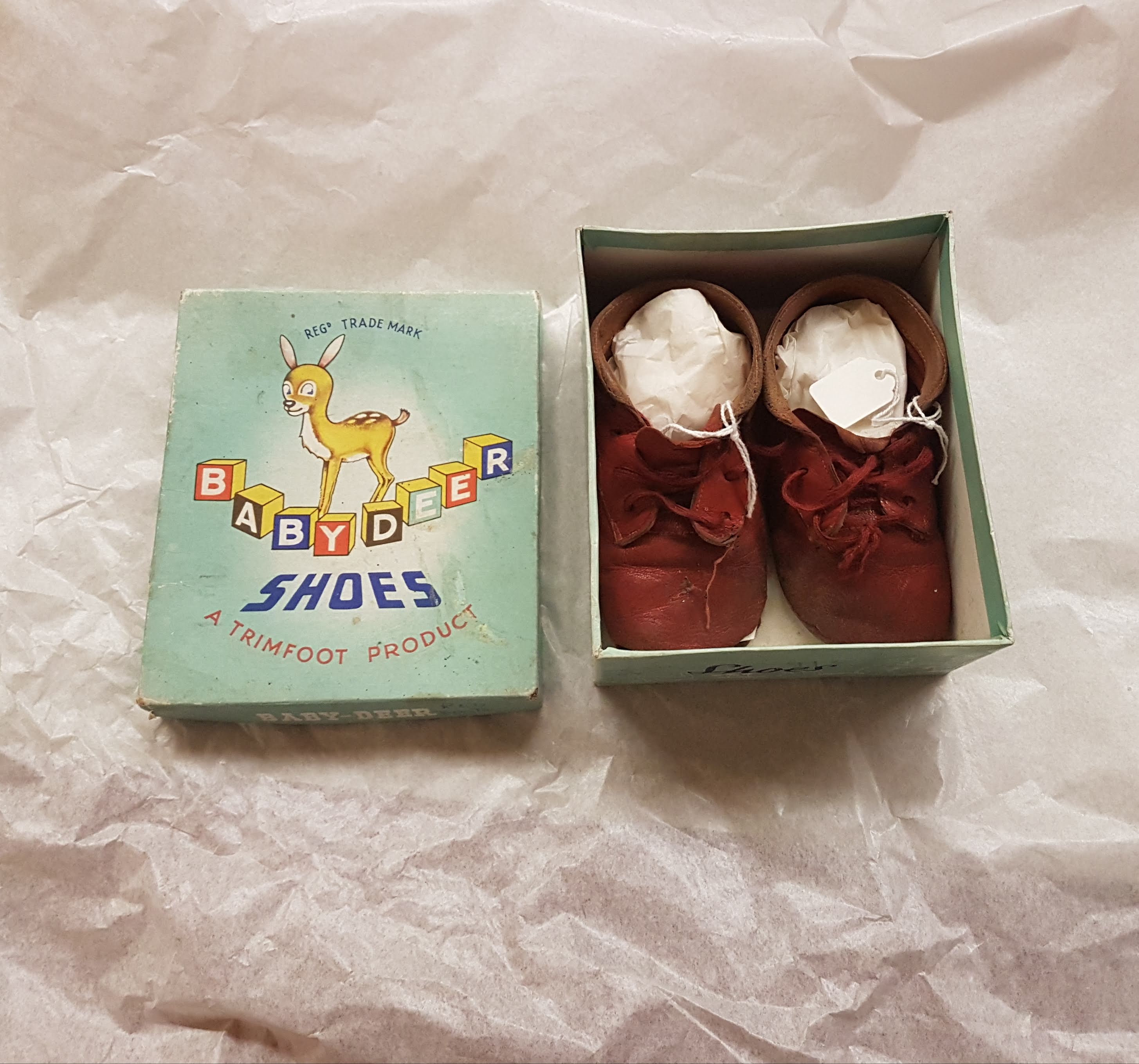
And the shoes – oh, the shoes! It’s a family joke that I have too many books and too many shoes (I don’t believe either of these concepts) so to find a box of tiny footwear in the cupboards was a treat for the eyes. Party shoes in pom-pommed satin, marabou-trimmed baby slippers, practical Start-rite sandals, a single, much repaired boot, kid ankle-straps, handmade quilted pram shoes and more.

There are boxes and boxes of card games (some very non-PC) and board games, of Hornby train sets, terrifying dolls, teddies, model farms, toy cars, construction kits. Toys that children have coveted at Christmas and written hopefully on birthday lists: Weebles, Playmobil, Barbies. An excellent collection of learning toys by the designer Fredun Shapur – brightly coloured and eminently touchable. Toys that bring joy to the people that see them – but they are so rarely seen by anyone except the learning team and the odd student or researcher. These thousands of objects are stored – exquisitely wrapped and catalogued thanks to years of hard work by some very dedicated volunteers – in tissue paper, calico bags and archival quality boxes. In dark cupboards, in basement classrooms, and no one ever sees them or touches them. They don’t spark joy any more, they just get audited every so often. Occasionally I have taken a few objects out – some to sessions at the V&A, working with dementia sufferers as part of an ‘arts prescription’. Some have been to Great Ormond Street or other hospital schools, but these excursions are the exception rather than the norm.

One of my jobs at the moment – now that we have no schools in the museum – is to decant this collection, rationalising it to meet the vision and purpose for the new museum. I also want to rebrand the collection as a handling collection, not a learning collection: to make its practical purpose explicit and, most of all, to get it out of those cupboards. We’re a museum, so we have lots of cupboards full of objects that people can’t touch – both the glass ones on the visitor floors and the treasure troves below. We don’t need any more.

We need a learning collection that people can get their hands on and learn from: does that teddy feel as soft as it looks? What happens if I turn him upside down? How do I make that train set go? What does that button do? Children – and adults! – are curious by nature, and we learn best through play and experience. A learning collection that you can’t do either with isn’t living up to its name.

It’s a daunting job but an interesting one! It’s going to take a few weeks, and then I need to find homes for the objects we are not going to keep. I’d like to see them go to other museums, to schools library services, to schools and to historical interpreters. If you’re any of these things – or if you can add to this list – please do let me know!

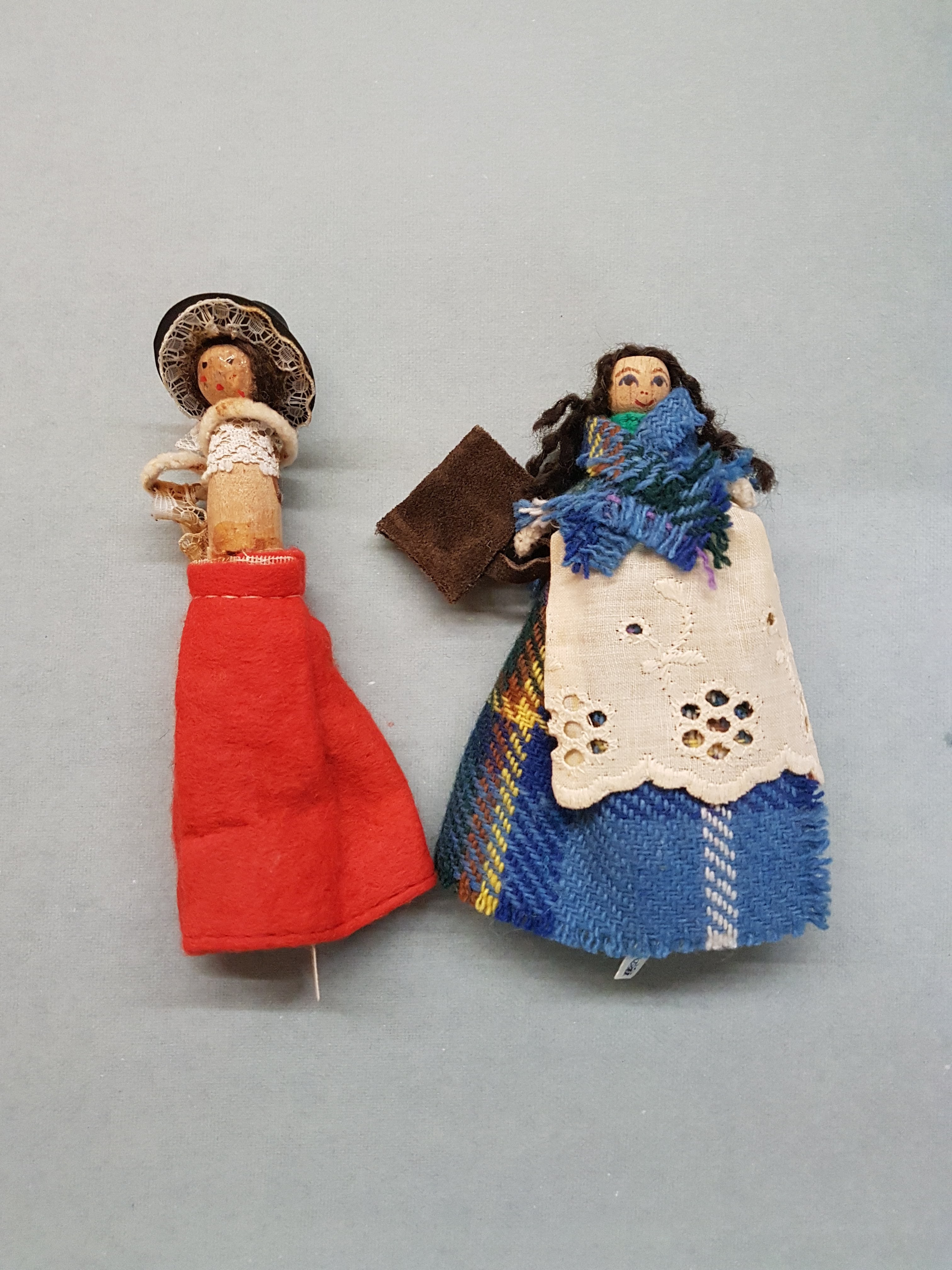
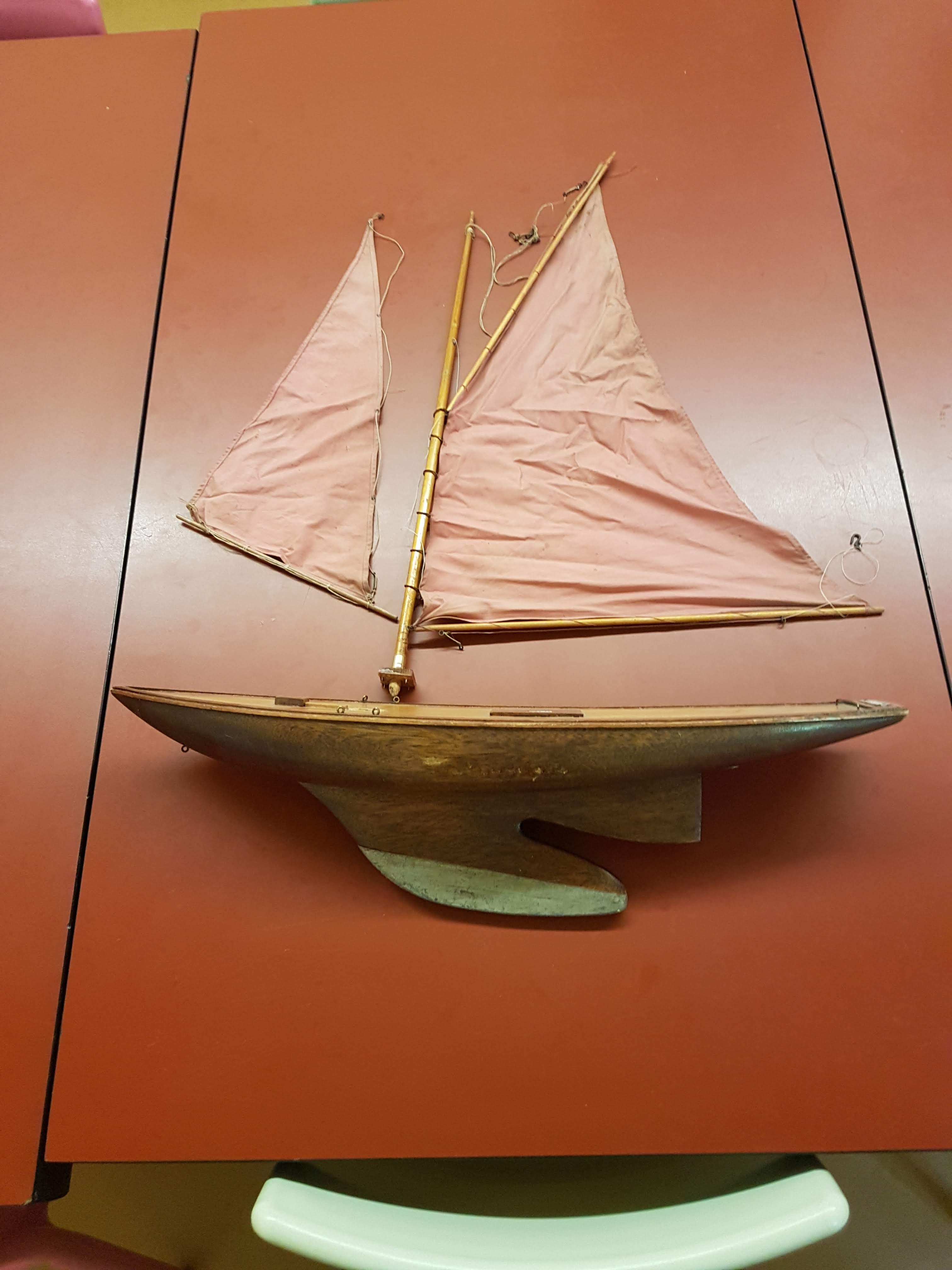
Here’s some of my favourite odd objects from the cupboards to be going on with, taken when I was auditing the collection in 2018….

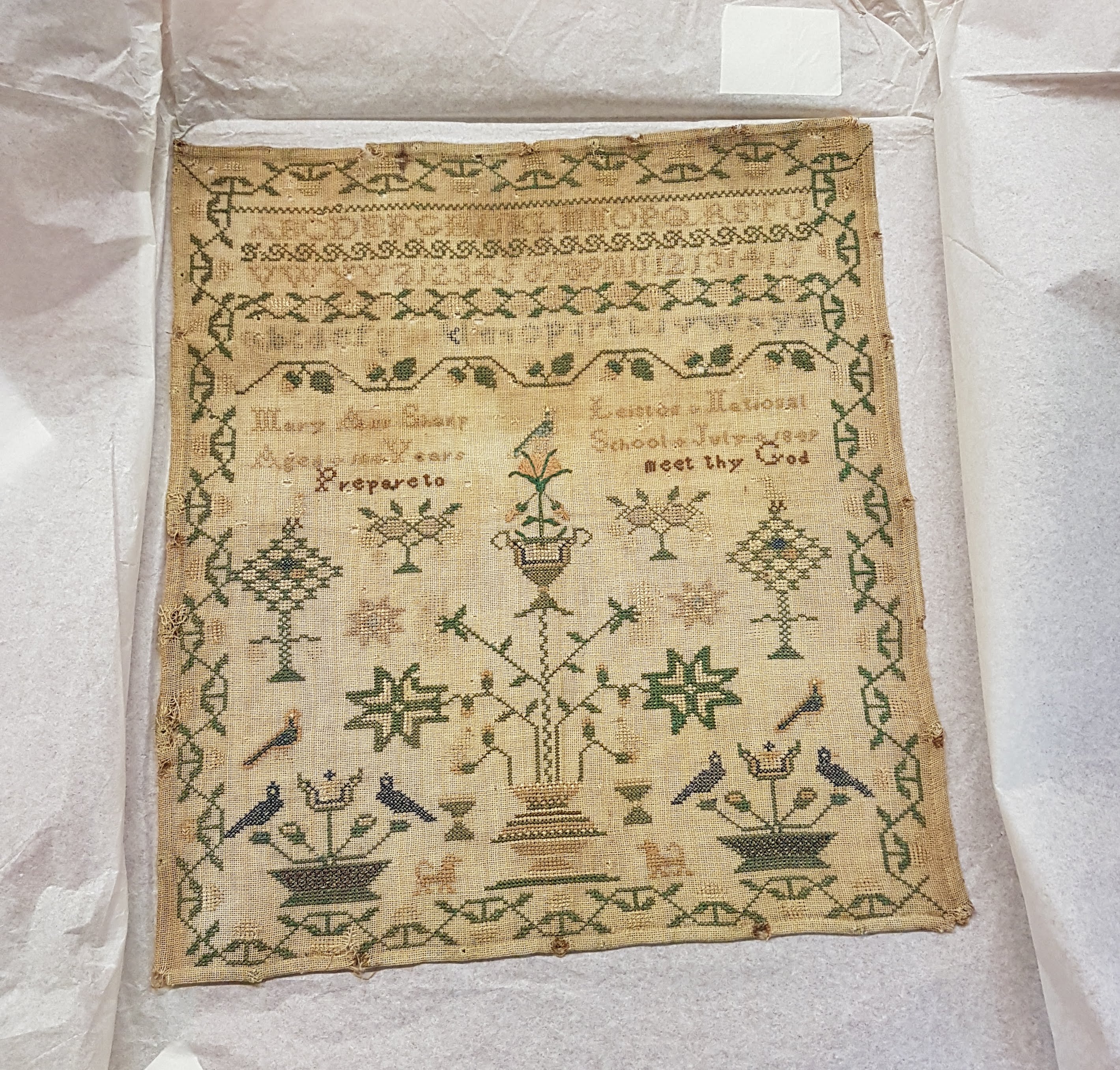
And – as a brilliant segue into this week’s crafty section – here’s a sampler…

Castles and cross stitch

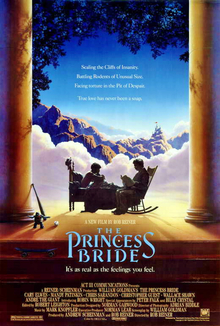
A couple of weeks ago I shared a Princess Bride reference cross stitch I’d made and turned into cards for my family to make them laugh. That was someone else’s design, but it got me thinking about other quotes I’d like to see in stitches.

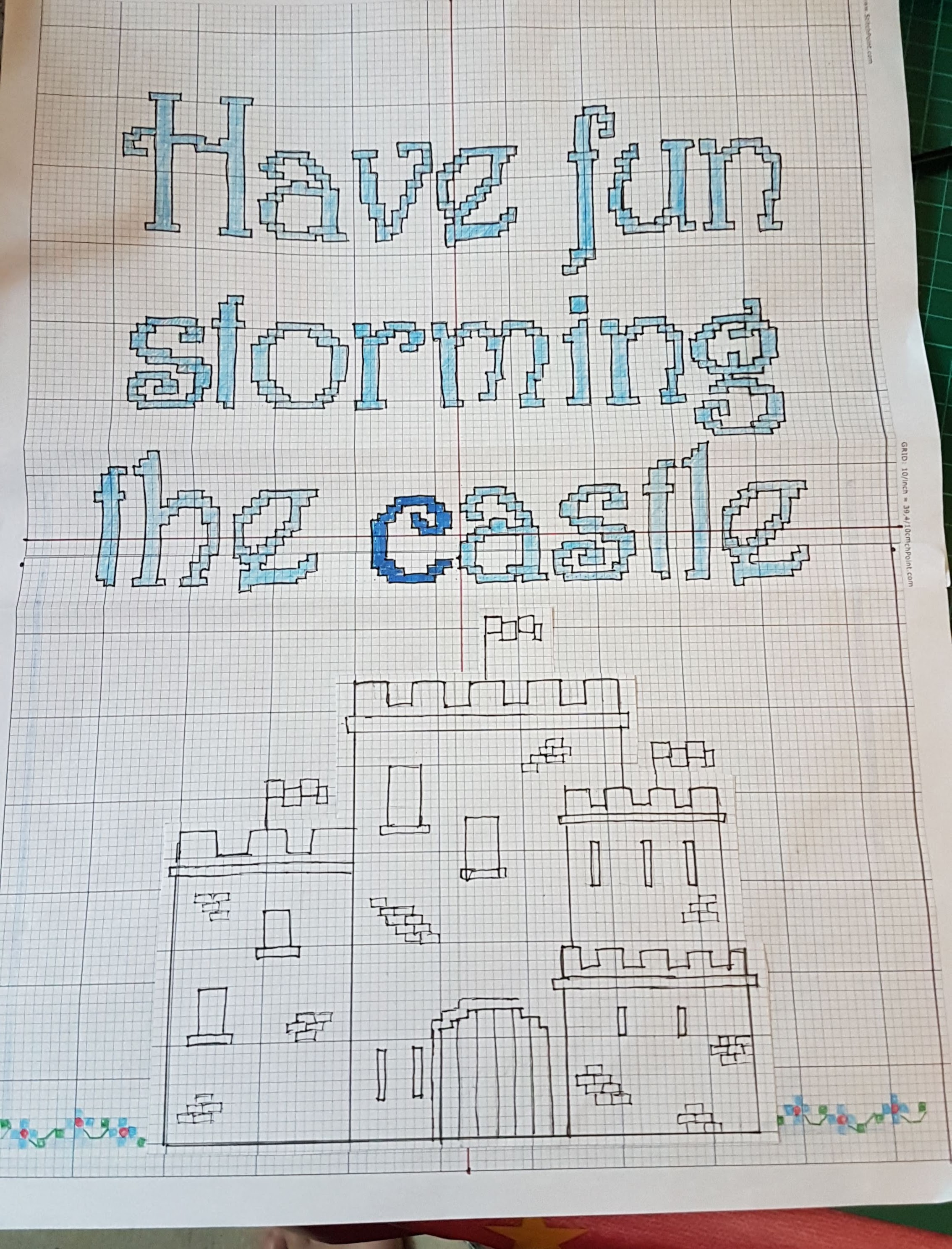
One of these is ‘Have fun storming the castle!’, which Valerie calls after Westley, Fezzik and Inigo leave to stop Buttercup’s wedding to Prince Humperdinck (yes, he of the to-do list). I had a look on Etsy, and there were some designs but none of the castles were quite right. Some had turrets. Some were positively Disney-esque. Some were pink. None of them looked worthy of storming, so I had a go at creating my own.

Being from South Wales gives you pretty firm ideas of what a castle should look like, and most of them have been stormed at least once in their histories and (mostly) survived to tell the tale. I grew up in Raglan, which has an excellent castle, so I knew the impression I wanted to give with my design.

Raglan Castle: worthy of storming.
(Image by Charles Taylor, http://www.ecastles.co.uk/raglan.html)

I’d mapped out the lettering a few weeks ago, using a shaded font from a book I have had for about 25 years. I remember buying it in the craft shop in Aberystwyth while I was a student there. It’s now out of print but does appear on Etsy or Ebay occasionally. I wasn’t happy with the spacing so with the aid of scissors and sticky tape I adjusted the spacing and started to transfer the pattern.

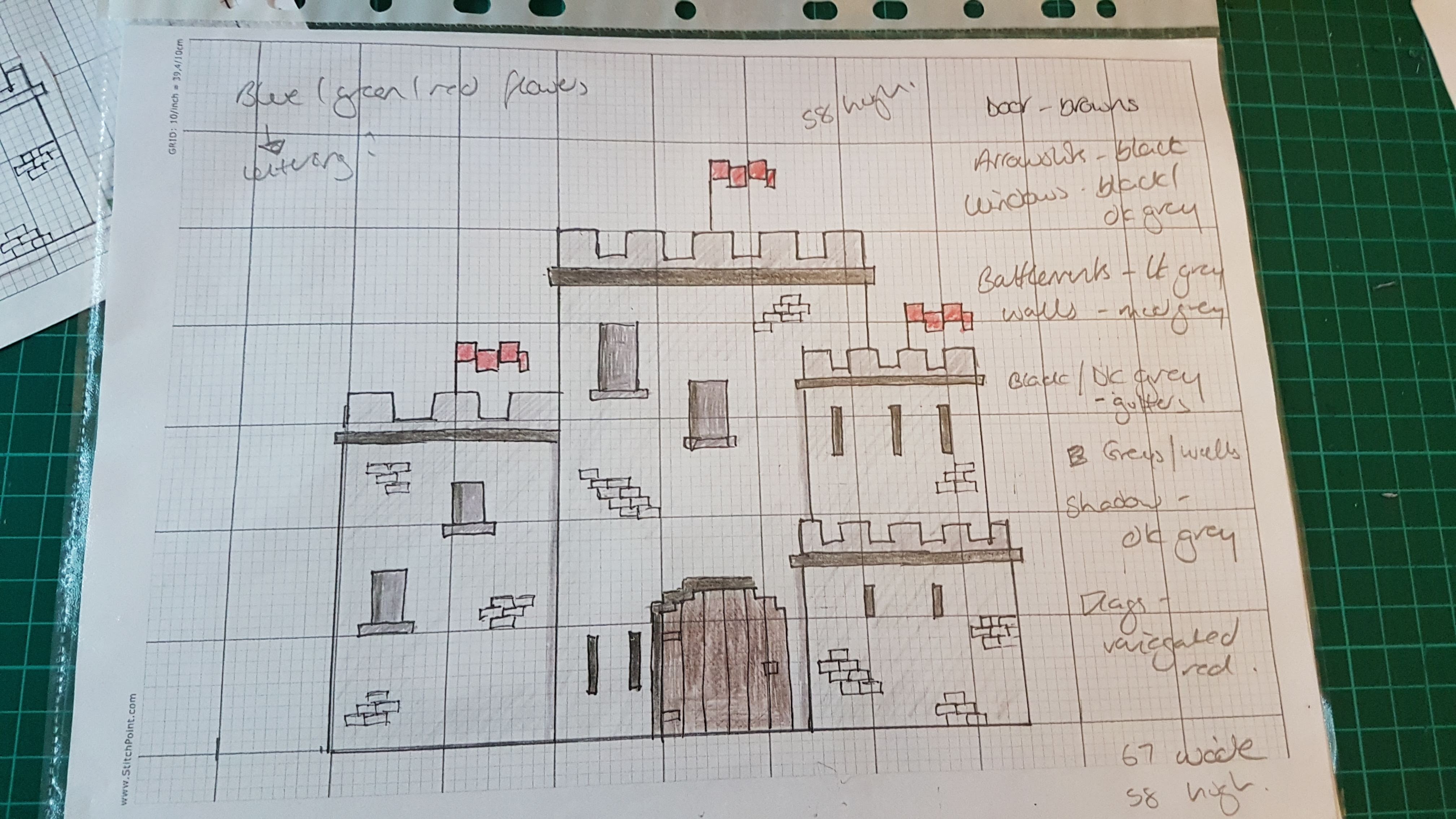
Once I’d placed the lettering on my graph paper I knew how wide the castle needed to be. I wanted towers, a big door, arrow slits, battlements. I wanted pennants. I wanted windows. (I also wanted a moat but decided that was one step too far).

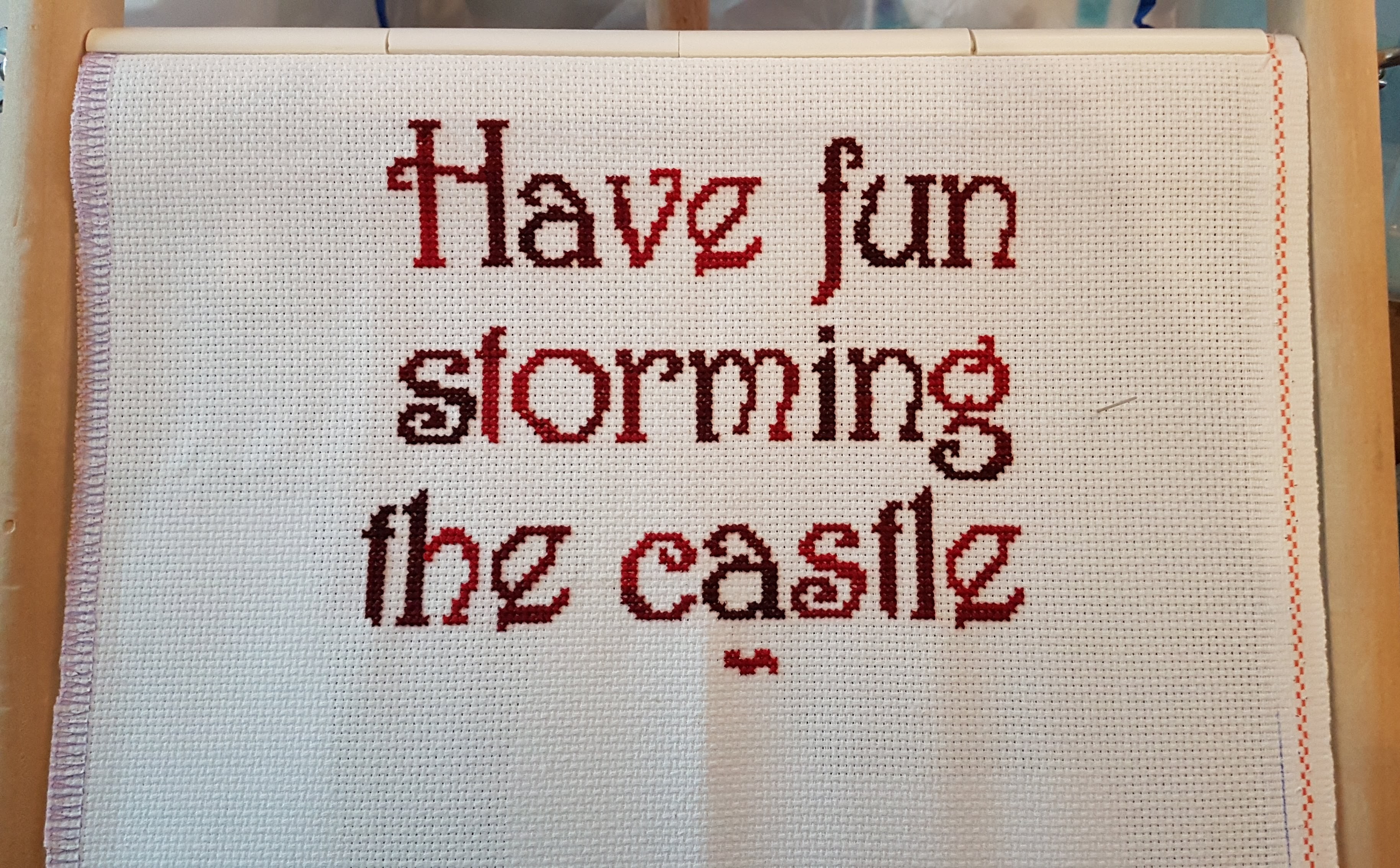
I started with a main tower with a slightly smaller one on each side, but I couldn’t get the crenellations even on the central one, so I played with the widths: there’s still three towers but its a lot less symmetrical. I’m using several shades of grey to create different areas (which would have been a LOT easier if I’d been able to lay hands on my DMC shade card) and will use backstitch to highlight areas of stone. I’m using 3 strands of cotton over 14-count white aida for good coverage, and it’s coming on well so far – lettering is complete apart from backstitching. The variegated thread is DMC 115, my favourite shade.

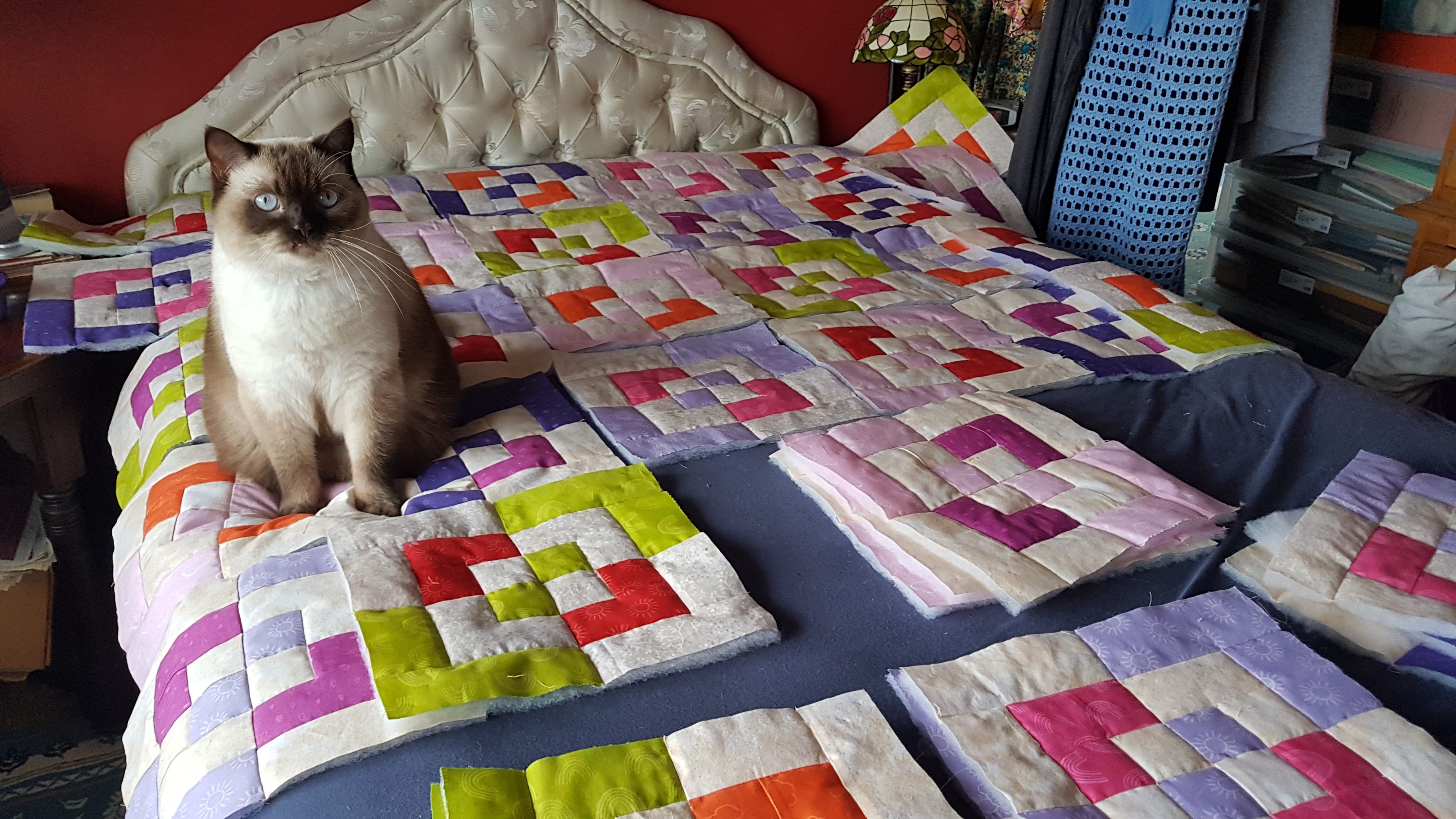
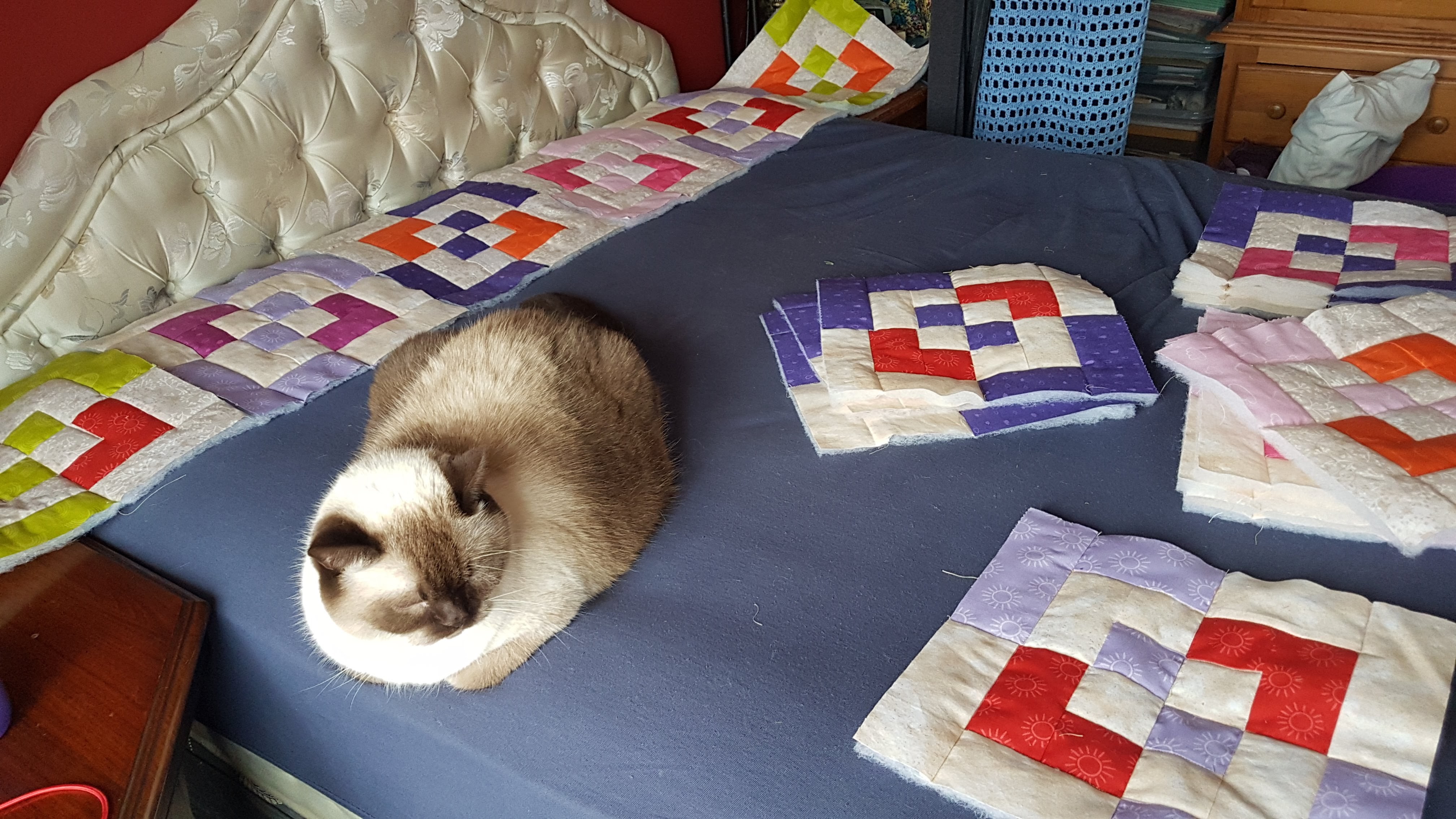
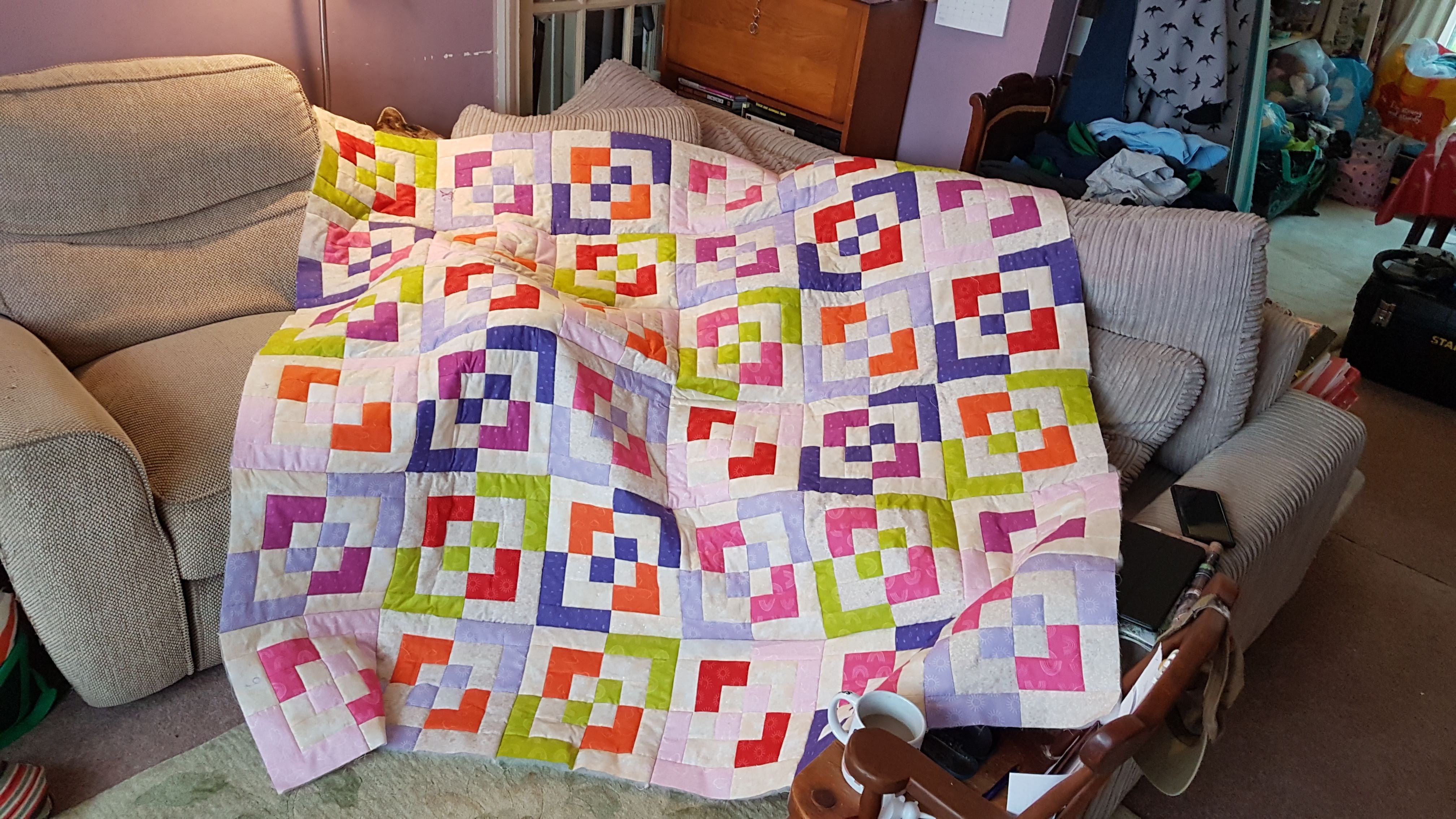
I have put the Bento Box quilt top together this week too. As you can see, Bailey was being incredibly helpful. Not shown is him digging under each block as I laid it out, which made the whole process a lot longer!

The top row is an inch shorter than the rest and I am not quite sure how that happened! I’ll have to do a block extension in the same colours and hope no one looks too closely! I’m going to back it with a cotton double sheet and I am considering whether I need a border. I have fabric left from all the colours, so I am tempted to do a striped one if it won’t detract from the Bento Box blocks.

I also got round to picking some of my Chinese lantern plants (physalis) for drying – they look so pretty in my shed, and when they are dried I think I’ll add them to the vase with the crochet daffodils.

To-do or not to-do…

And now it’s October, and I have to work four days a week – practically full time! Back in week one I made a to-do list of things I wanted to do during lockdown. This feels like a good time to check back on that and see what I managed.

Here it is:

  • Purple jacket (a 1950s design that the sleeves wouldn’t work on, so I gave up in a huff and its been hanging from the curtain rail for about four years)
  • Crochet diploma – I made it to lesson 7, so need to pick that up again
  • Say Something In Welsh course – no progress made. Duolingo is coming on well though!
  • Coast ripple blanket (Attic24 pattern) – several rows done, and the weather is cool enough to work on this again
  • Long waistcoat – frogged the whole thing and reused the yarn in a cardigan that I only have one sleeve to go on
  • Attic window quilt (that I cut out when I only had one child)
  • Mini quilt (er, ditto)
  • Seurat cross stitch – at least I only started this last year! – ok, two years ago. I have nearly finished the whole top section, so some progress has been made.
  • Couch to 5k (again) – made it to week 4, twice, and damaged my ankle both times. I did take up open water swimming though!
  • Spring clean the shed, evicting the winter spiders…and being realistic about what I will actually use in my stash, then donating the rest

OK, I didn’t achieve everything but I don’t feel lazy – there’s been a lot of things made that weren’t on this list, and I have made a sizable dent in the stash through quilting. And I’ve really enjoyed writing this blog! The discipline of posting every week has been good for me.

So, that was week 28. Let’s see where week 29 takes us…

Kirsty x

What I’ve been reading:

Heartbreak Hotel/Night Moves (Alex Delaware) – Jonathan Kellerman

The Jupiter Myth/The Accusers (Falco) – Lindsey Davis (Audible)

Week twenty-seven: in defence of craft

Here I am again, having survived my first trip to Tesco in two months. Survived is the right word – I haven’t seen it so busy since March, with people stocking up on goods in case the country goes tits-up (the technical term!) again. I’d just like to say I’m not hoarding anything except chocolate malted milk biscuits. Fat chance! The freezer is full, the cupboard is overflowing….and I bet I’ll still end up in the Co-op at least once this week. How does the Horde eat so much? Will their father eventually turn into a chocolate digestive? And…what did I forget?

On Friday I virtually attended an inspiring Zoom conference run by the Craft Council, entitled ‘The Future of Craft in Education‘, which was fascinating (catering was awful though…). I didn’t think staring at a screen for the best part of six hours at the end of the week would be possible, but it was over almost too soon. The organiser ensured talks were short, breakout groups were well-organised and I am in awe of the person who managed the tech as it was seamless.

What happens when you clear a space for your tablet and notebook.

Imagine my horror when the head of one of the big academy chains declared that in order to help children ‘catch up’ with their education they would be abandoning creative subjects in favour of maths, English and. Science. The head of my daughters’ academy (who is, tellingly, from a drama background) was keen to reassure us that they would be looking at how to build core subject knowledge into the rest of the curriculum so students didn’t miss out. Much as I rant about the National Curriculum, it does set out the need for a broad and balanced education. I could wish that the cross-curricular links made explicit in Design Technology were mentioned to other subject teachers, but that’s another conversation!

However, during the pandemic ‘craft’ has come into its own, both as a source of well-being and as a way to do all those little things around the house that people haven’t had time for before: upcycling and mending clothes, cooking and baking, DIY, as well as the things we would more commonly identify as ‘crafts’. In August, Hobbycraft reported a 200% boom in online sales since the start of the pandemic, and as a dedicated online craft shopper I know that demand was high across the sector. There’s been a lot of focus across the cultural sector on the benefits of arts on well-being, and a slew of articles (like this one and this one) have been written on why craft is good for you. Lockdown – particularly for those of us on furlough – has given us permission to craft, to take up new hobbies and to revisit old pleasures. Various friends have taken up embroidery, started sourdough baking, experimented with cyanotype printing, made furniture, followed Bob Ross tutorials. I have loved seeing all their beautiful work on social media and it would be sad if these activities stopped when the world goes back to ‘normal’. The Crafts Council launched their brilliant ‘Let’s Craft’ initiative during lockdown, providing packs for families in need, via food banks and community hubs. This was really important at a time when some families were struggling to put food on their tables and luxuries were – literally – not on the menu.

The last ten years or so have seen a huge drop off in the take up of creative subjects at GCSE and above, especially Design Technology: perhaps due to the government focus on EBacc achievement, perhaps due to a belief that a ‘creative career’ isn’t one you can make a living at, and that all your education should be focused on an end goal of a ‘good job’ rather than on the transferable skills like problem-solving and team working that creative subjects can foster in children. My own secondary school pushed two routes: academic and vocational. I really wish I’d taken some creative subjects at GCSE, as I have definitely found more use for those skills than I have for French and Computer Studies!

And while this recognition of the benefits of craft is long overdue, it’s also a further threat to craft in education. Craft is currently being touted as something that can help children’s recovery, with their wellbeing, but not as a proper subject. Back in the eighties when I was in school there was a subject called ‘CDT’ or ‘DCT’ – craft, design and technology (or design, craft and technology) so craft was right there in front of us. It was in woodwork, in metalwork, in textiles. You could get an O-level with the word ‘craft’ in it – it was a proper subject. You learned how to use machinery (and hopefully how not to cut your finger off like every CDT teacher ever), how to transform a flat drawing into a 3D object, and how to make an apron. Technically the word still exists in the subject ‘Art, Craft and Design’ – but more often this also becomes just ‘art’ or ‘art and design’.

Somewhere along the line that word ‘craft’ was dropped and with it the importance of making. Design became the whole of the thing, even though even Sir Terence Conran said that

…I have always been concerned with the practical aspects of design, and relate my work to the manufacturing process. I have never designed anything that I wouldn’t know how to make myself.

The word craft became associated with craft fairs, with the sort of crochet your gran does, with the WI or the Mothers’ Union….with women, in fact. It became marginalised. It’s not a coincidence that the take-up of DT is mainly by boys, and the reverse is seen in art take up.

Yet…

Craft is democratic. It’s the great leveller – anyone can do it, and the past six months shows that they have. You can have a degree in it if you want – but you don’t have to. There’s so many tutorials on YouTube, on Craftsy, in books and magazines, that you don’t need to go to school to learn it. I crochet, quilt, cross stitch, make clothes – and I have taught myself to do these things.

Craft is community. Manu Maunganidwe, one of the speakers on Friday, spoke of his first experience of craft in the Somali village where he grew up. People came together to build a new house – they brought time and skills and they made a house from the ground up, because you can’t build a house by yourself. He spoke passionately about the need for children to experience tools and making.

Craft is haptic. It connects you through the sense of touch, through the experience of materials: choosing the fabric for a dressmaking project by stroking and folding it to see how it creases, squeezing the yarn at a yarn show, the squish of mud when a child makes mud pies. It is sensual. The process of making is sensory – sanding wood to make it smooth, smooth clay, the pull of embroidery floss through fabric.

Craft is resilience. You make a mistake, you try again. Later, when you begin to design your own projects, you try something out, you tweak it, you try again. This is the same iterative process that designers go through.

Craft is cross-disciplinary: You apply knowledge to solving problems: maths is invaluable across all manner of crafts (to crochet a sphere you need your times tables!), yarn dyers use science, a crochet pattern is a simple code. Last year I made a crochet model to demonstrate hyperbolic planes (negative space) for a maths session, mimicking shapes in nature.

Craft is cultural. Children from all communities grow up surrounded by traditional crafts in their homes: fabrics, art, cooking, embroidery, hairstyling. This is not reflected in the current curriculum. A key part of the day was about how craft could help with anti-racism, and my resolution is to seek out diverse makers for the new schools programme to reflect our local area.

Craft is expression: emotional and artistic. I can’t draw but I can make. No, I can’t draw yet. I will draw.

Craft is co-ordination. Barbara Hepworth, the sculptor, wrote that she had a thinking hand and a doing hand. You need hand-eye co-ordination to hit a nail with a hammer, to direct a needle to the right hole. I am a kinaesthetic learner and I learn by doing, through muscle memory. Crochet helps me focus. I can make a granny square while watching a Zoom conference without looking at my hands. If my hands are empty I find things to fidget with.

One sleeve completed during the craft conference

Craft is revolution. Not just in the William Morris Arts and Crafts Movement sense of revolution, but a quiet, beautiful revolution. Yarn bombing is a public, visual way to express an idea or an issue. After the terrorist attacks in Manchester and on London Bridge thousands of us knitted, crocheted or sewed hearts with a message of support and love for the residents of our cities as well as the victims of the atrocities. I sent some to Manchester and yarnbombed Canary Wharf and the Central line with messages of hope and love. Craftivism is a thing. This week on Radio 4’s Four Thought there was a fascinating programme on ‘gentle protest’ that you can find here.

In how many of these statements can you replace the word craft with the word art?

I know there are things I have missed here: please do share what craft is to you, and why you do it!

The last act for the conference was to make a pledge to craft education – something the Craft Council have been asking people to do for a while. Mine is to carry on pushing craft to anyone who’ll listen, and to be proud to be a ‘crafter’.

And while I’m on the subject…

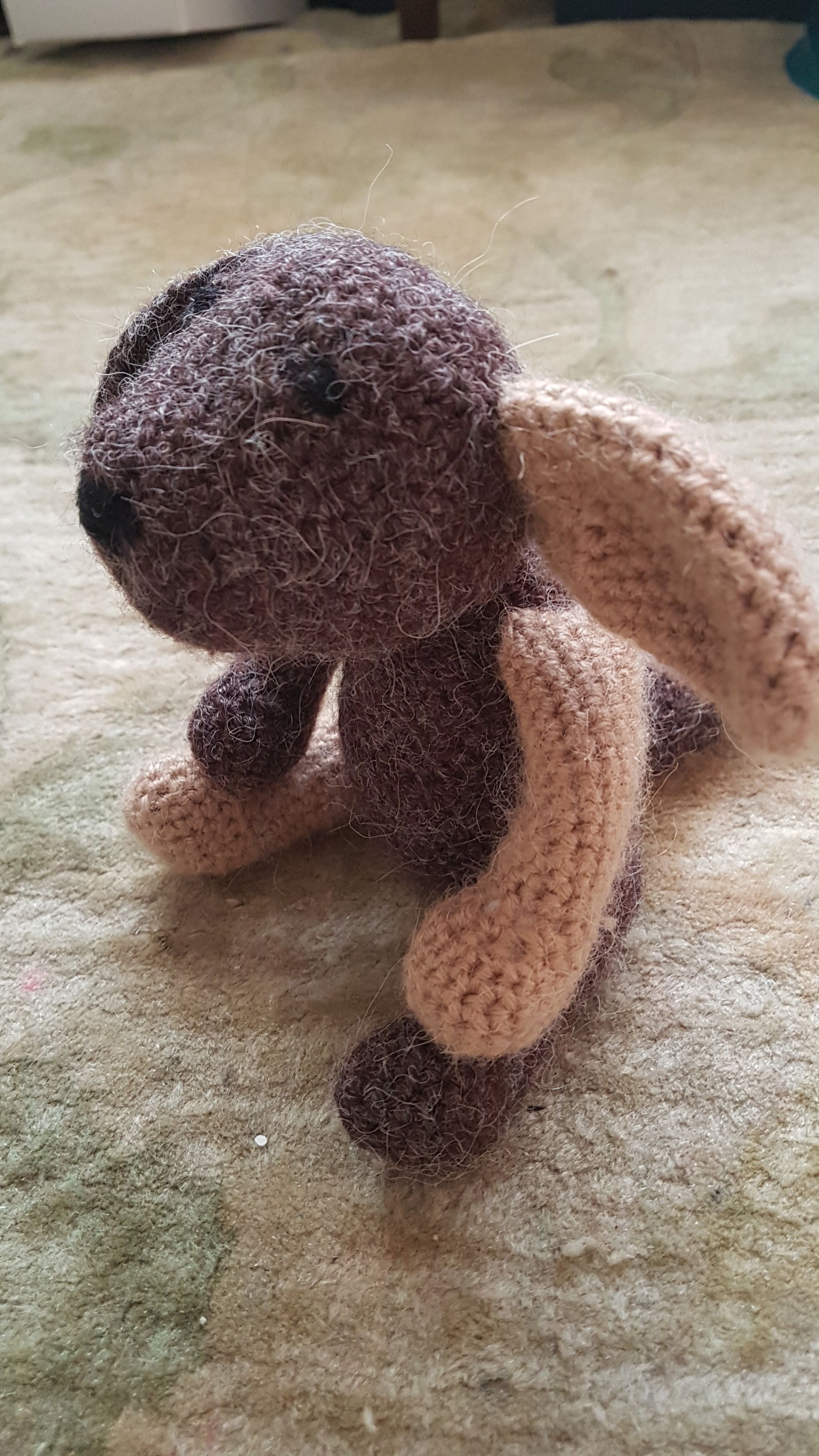
Here’s the finished crochet puppy for the small girl who isn’t allowed a dog – at least she won’t have to pick up after this one! The cardigan is lacking one sleeve, but I have done the cuff so it won’t take long. We are watching the new series of Ghosts so I am staying awake long enough to finish things!

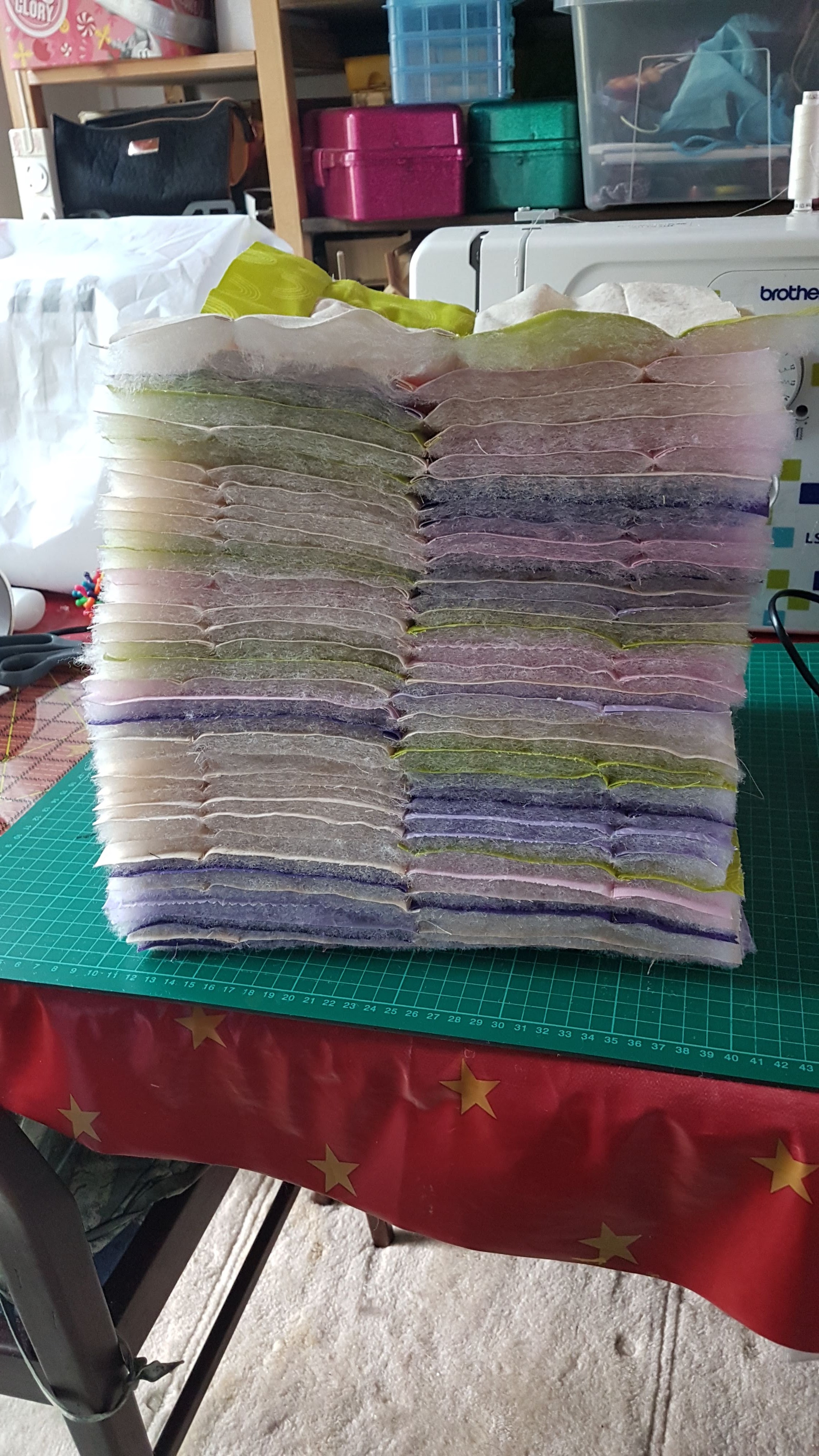
I also have a giant pile of fluffy quilted blocks – I had to make three more in the end, which still need to be quilted, but then I can start putting the bento box quilt together.

Wild wanders

I went out for an early walk this morning for the first time in a while. The weather has been a bit blustery for the last couple of days, and it really feels as if Autumn has arrived.

The clearance of scrub on the fields behind us is now finished and the brambles have been piled up in stacks all over the place, exposing the pylon anchors left when they put the power cables underground in the 90s. They reminded me this morning of standing stones – twentieth century monoliths. I am heartbroken at the damage to wildlife habitat – there were no deer to be seen this morning, though there was a prowling fox, several green woodpeckers, and lots of rabbits.

There have of course been a few swims – one late afternoon on Thursday. The light is so different at that time of day, with the sun low over the trees. The water is getting colder – around the 17 degrees mark, and I did feel it when I got out of the lake on Thursday. I am in charge of hot chocolate, which always reminds me of post-swim treats when I was young. Machine hot choc back then – I hope mine is better!

The temperature in the lake this morning was 13 degrees, the coldest we have swum and we very sensibly got out after half a lap (about 400m). I tested the DIY dry robe and I was positively toasty! However, this will be me for the rest of the day:

Teddy has autumn nailed

So that’s my week! It flew by. Next week I am going in to the office – how exciting! Is there still life west of Epping? It’s been a long time…

Kirsty x

What I’ve been reading

Breakdown/Heartbreak Hotel (Alex Delaware) – Jonathan Kellerman

A Body in the Bath House (Falco) – Lindsey Davis (Audible)

Week twenty-six: “When I was your age, television was called books.”

Wow, six months into this blog and the world still isn’t looking normal, with the R-rate between 1.1 and 1.4 and local restrictions in place in many areas of the UK. The testing system is failing again (offering people in Northern Ireland a test in rural Essex is definitely not a mark of success), and advice from the government is inconsistent around keeping bubbles open or closed. Apparently you can go on an organised grouse shoot with 30 people but your kids can’t socialise outside school with a group of children they have spent the day inside a classroom with.

Anyway. This is not a political blog so I’ll mooch on back to the things that make me happy, like books.

Crime fiction is one of the world’s best selling genres and there’s a host of theories as to why this might be. Exploring human nature, sensational crimes, the tension and excitement as the protagonist come closer to the perpetrator and inevitably finds themselves in danger, our need for justice and the triumph of good over evil. Or is it – as Dorothy L. Sayers wrote in 1934 – that “Death seems to provide the minds of the Anglo-Saxon race with a greater fund of innocent enjoyment than any other single subject.” Whatever – a good detective novel sucks you in, keeps you on the edge of your seat and wide awake till the last page. Our heroes always have to break the rules a bit to get the job done, too. Don’t we all want to be a bit maverick sometimes?

“Commander, I always used to consider that you had a definite anti-authoritarian streak in you.”
“Sir?”
“It seems that you have managed to retain this even though you are authority.”
“Sir?”
“That’s practically zen.”

Terry Pratchett, Feet of Clay

This week’s reading (and listening) list has all been male detectives – not planned, just what’s been coming up as I finish one book and choose something new from the virtual shelf of shame on my Kindle. I wrote a while ago about my love for girl detectives, so it’s really only fair that the boys get a look in too.

My first experience with Nancy Drew’s male counterparts was – of course! – Franklin W. Dixon’s Hardy Boys series. While I was never as fond of these as I was of Nancy and her girlfriends, I did pick them up from the library when I saw them. As I got older and was allowed freer range on the parental bookshelves, I read my way through John D.MacDonald’s Travis McGee books (starting with The Deep Blue Good-By). Luckily both my parents appreciate a good crime novel, so I had a lot of choice! So here, in no particular order, are some of my favourite ‘boy’ detectives – let me know who I’ve missed.

  1. Marcus Didius Falco – by Lindsey Davis. Set in Ancient Rome, these are well-researched and funny.
  2. Sam Vimes – Terry Pratchett. Discworld again (Not sorry. All human (and human-adjacent) life is here).
  3. Inspector Lynley (and Sgt. Barbara Havers as his common-as-muck sidekick) – by Elizabeth George. Posh but resisting it. Touched by tragedy. The first one I read was Playing for the Ashes and then I hunted down the rest.
  4. Richard Jury (and posh sidekick Melrose Plant) – Martha Grimes. A few of the later ones got a bit existential but they’re back on track now.
  5. Harry Bosch – Michael Connelly. I have my friend Elaine to thank for this, as she gave me Angels Flight when she’d finished it and off I went to the library for the rest. What would we do without libraries?
  6. Dave Robicheaux – James Lee Burke. Wonderfully flawed antihero here, beautifully written and set in a very atmospheric Louisiana.
  7. Nick Travers – Ace Atkins. Also set in the American south. A blues detective!
  8. Stephens and Mephisto – Elly Griffiths. Set in Brighton, a policeman and a stage magician. Elly Griffitths’ female creation – Ruth Galloway – was in my last list, and her YA novels are shaping up nicely too.
  9. Dr Siri Paiboun – Colin Cotterill. Set in 1970s Laos, Dr Siri is the chief coroner, occasionally possessed.
  10. Inspector Singh – Shamini Flint. Set in Singapore.
  11. Alex Delaware – Jonathan Kellerman. Consultant psychologist to the LAPD, helping his friend Milo Sturgis.
  12. Lord Peter Wimsey – Dorothy L. Sayers. Witty and very of its time – Sayers described him as a cross between Bertie Wooster and Fred Astaire.
  13. Myron Bolitar – Harlan Coben. A sports agent with a posh (but psychopathic) sidekick.
  14. Elvis Cole and Joe Pike – Robert Crais. Elvis cracks wise, Joe is the strong and silent type. Very strong, very silent.
  15. John Rebus – Ian Rankin. Possibly the ultimate maverick cop. Atmospheric Edinburgh this time – I do love it when the landscape/cityscape almost becomes a character in its own right.
  16. Commissaire Adamsberg – Fred Vargas. Honourable mention for her Three Evangelists series, too.
  17. Kenzie (and Gennaro) – Dennis Lehane. Another beautifully drawn city – this time Boston. Accidental library discovery when I was making up my book numbers.
  18. Kinky Friedman – eponymous. Slightly mad, very funny.
  19. Leaphorn and Chee – Tony Hillerman created the characters and his daughter Anne has continued the series. Navajo mysteries, full of legend and landscape.
  20. The Vinyl Detective – Andrew Cartmel. We never find out his name.
  21. Easy Rawlins – Walter Mosley. A charity shop discovery when I picked up Blonde Faith
  22. Dirk Gently – Douglas Adams. Solving mysteries through the interconnectedness of all things.
  23. Last – but not least – Brother Cadfael – Ellis Peters. Medieval monk with a crusader past, set in Shrewsbury during the Anarchy (between King Stephen and Empress Matilda (or Maud))

I’ll stop there, I promise! The wonderful thing about books is that there will always be more people with the urge to write, there will always be friends to recommend new discoveries and – I hope – there will always be libraries.

Anybody want a peanut?

My family’s all-time favourite film (and book) is The Princess Bride. I know I have found kindred spirits when they can quote the film at length and they know what to say to the word ‘Inconceivable!’ We first saw it on VHS (yes, that long ago!) on Bonfire Night in the 1980s, before we went to Monmouth to see the fireworks, and it immediately took on favourite status. I think all of us have our own copies of the book and the film, and it was one of the first ‘proper’ films I sat down with my children to watch.

Theatrical release poster (image from Wikipedia)

The book starts with the line “This is my favourite book in all the world, though I have never read it,” and author William Goldman maintains the conceit that it’s an abridged version of ‘S. Morgenstern’s Classic Tale of True Love and High Adventure”. It’s got everything, it really has:

““He held up a book then. “I’m going to read it to you for relax.”
“Does it have any sports in it?”
“Fencing. Fighting. Torture. Poison. True Love. Hate. Revenge. Giants. Hunters. Bad men. Good men. Beautifulest Ladies. Snakes. Spiders… Pain. Death. Brave men. Cowardly men. Strongest men. Chases. Escapes. Lies. Truths. Passion. Miracles.”
“Sounds okay,” I said and I kind of closed my eyes.”

It also has the greatest to-do list ever. On being invited to see Count Rugen torture our hero Westley, Prince Humperdinck tells us:

“Tyron. You know how much I love watching you work, but I’ve got my country’s 500th anniversary to plan, my wedding to arrange, my wife to murder, and Guilder to blame for it. I’m swamped.”

So when this pattern turned up on the Snarky and Nerdy Cross Stitch group on Facebook I knew I had to make it – the designer shared it as a free PDF, bless her. I couldn’t find any of my black thread skeins anywhere, so ended up using perle cotton, but it looks OK.

I’m also working on a crochet dog for a small person’s birthday – its become a tradition for these two children to challenge me to make things, including a shark and Totoro. I haven’t made a dog before, but found this pattern on Ravelry. I’m using Stylecraft Alpaca DK from the stash, as it’s quite fluffy and tactile, so I hope she likes it!

This week’s last make has been a smaller version of the giant blanket for a friend’s daughter. She chose her own softshell fabric, in a pretty pink with a quirky umbrella print, and wanted it ‘between short and long’. I put kangaroo pockets on the inside and outside, and as there was fabric left over I whipped up a matching drawstring bag. Here it is being modelled by Thing 2, who’s a bit taller than the recipient.

The bishop-sleeved cardigan now has one front section and the back – the yarn is holding out so far!

Hello, hello…am I on mute?

Still working from home! It’s been a good week though with some interesting conversations, notably with the brilliant Bilkis from You Be You. We met first way back in March, shortly before lockdown, when we had an inspirational conversation about breaking down gender stereotypes and how we could work together in Bethnal Green. I do love meeting people whose default response is ‘how do we make this happen?’ rather than a ‘let’s think about it’. I felt really motivated after our Zoom chat!

The other thing in my mind this week is our Learning Collection, which is huge, unwieldy and – to be frank – occasionally terrifying. There are some beautiful objects in there but also boxes of dismembered dolls, damaged wax and porcelain dolls and more. I am terrified of masks and dolls, so I do like to know what’s in a box before I open it. We need to edit the collection to make it relevant to future learning, so I’m very keen to get back to site and start! Preferably before we go back into lockdown…

So that was week 26. Half a year. What’s the last quarter of 2020 going to bring?

Kirsty x

(cover photo by Isla Falconer)

What I’ve been reading

Dark Sacred Night (Bosch and Ballard) – Michael Connelly

The Wedding Guest (Alex Delaware) – Jonathan Kellerman

Ode to a Banker (Falco series) – Lindsey Davis (Audible)

Week twenty-five: pink hair, don’t care

There are definitely days when I feel a lot of sympathy for my parents, who brought up three daughters and lived to tell the tale. We have all turned out to be fairly normal and well-adjusted adults, despite the usual teenage (OK, and adult) decisions that probably had mum and dad tearing their hair and added a few ‘natural lights’ (as my hairdresser says) to those hairs that remained.

Monday was one of those days. During lockdown Thing 1 has been ‘experimenting with her aesthetic’ (so she tells me) and has pretty much settled in as a punky Goth. Not a problem – the black hair, the eyeliner, the (fake) septum piercing, the Docs*, the ripped tights and fishnets are all things I can live with as they’re temporary and the look suits her. We’ve been at home for an extended period, after all, and rules have been relaxed in many ways to make the separation from their friends easier.

The one thing I have been firm about, however, is that any extreme hair changes would need to be cut off before going back to school – yes, their big sister could bleach the ends out and they could have any colour hair they wanted until September. Hot pink, punk purple, bright green, mermaid blue, whatever – but it had to go before school started. Thing 1 went for a short bob quite early on and her dad did an undercut for her which her big sister had bleached and dyed, but that could be hidden. Her school rules say ‘no extreme haircuts and any hair dye can only be in natural colours’. The black dye she was sporting was fine, in that case, and the bleached undercut could be cut in again which would remove the bleach. She had been complaining that her roots were showing, and I had said that we’d get some hair dye next time I was in the supermarket but apparently this wasn’t fast enough.

So, on Monday I went off to get Thing 2 from school as she hadn’t taken the bus by herself at this point – Thing 1 wasn’t back in till Tuesday. When we got back Thing 1 was wearing a headscarf and looking suspiciously innocent. She had dyed her roots and her scalp magenta**. I mean, really magenta. Definitely-not-a-natural-colour-by-any-stretch-of-the-imagination magenta.

Then I noticed the eyebrow slit.***

At which point I turned into my mother.

*Apart from the Docs, which are obviously a design classic and I wear them myself.

**I made her wash it out the following day – top tip here people: Head and Shoulders shampoo is great for removing excess hair dye. The roots are still pinkish but at least her head is a normal colour.

***There isn’t much I can do about the eyebrow except take a lot of photos and use them to embarrass her when she’s older.

Cake and cover ups

I mentioned last week that I was off to make an apple fudge cake to try and make a dent in the glut of apples from our little eating tree in the garden. I have no idea what variety they are but they are a pretty pinky-red and the flesh is pink-tinged too, but the texture is a bit woolly. Thing 1 and my beloved are not fans of fruit, Thing 2 and I prefer a crisp, tart apple and Thing 3 can’t be expected to eat them all himself so I have been using them to bake in place of cooking apples. We had a cooking apple tree until a few years ago, but sadly it fell victim to honey fungus and we had to take it down.

I’ve used this recipe before and while I find it a bit dry, its great with custard or some vanilla ice cream. It’s a Simon Rimmer one from Something for the Weekend, and its very simple to make. I used Thornton’s Dairy Fudge as it was all they had in the Co-op, but I expect you could jazz it up with a flavoured fudge – a Baileys one would be delicious!

On the rare chilly mornings up at Redricks Lake – and as we start thinking about how we’ll keep swimming through the winter – we have been eyeing up people’s Dryrobes and wincing at the price tag. I was pretty sure I could make something similar that would keep me warm and allow enough room to get in and out of a wetsuit, so I had a go this week at a trial version.

I started with a wearable blanket pattern in adult size – in this case, the free (and very easy to follow) Billie blanket by Do It Better Yourself Club, which comes in two lengths and can be lined or left unlined. I chose to make the lined version and used softshell fleece fabric for the outside, two large (bath sheet sized) microfibre towels for the body lining, and cotton jersey for the cuffs and hood lining.

Softshell fleece has a woven shower proof front and a microfleece backing fabric, which means its wind and water resistant as well as warm and breathable. It has a similar feel and handle to a scuba fabric, so it’s quite flexible and easy to sew. I used my overlocker for the whole construction, which made it super speedy, and only used my sewing machine to topstitch around the hood to hold it in place.

I first made the blanket as it says in the pattern, though I didn’t do a proper hem as a) I wasn’t convinced my sewing machine would like the four layers of fabric and b) I really couldn’t be bothered to measure it. I just sealed the outer and inner together with the overlocker. It was HUGE! This was the XL size as I wanted it to be roomy enough to change in – frankly, we could all have changed in there. At the same time.

Size XL. My own personal tent.

Once I’d tried taking it on and off, I decided that it might be easier if it opened down the front, rather than having to take it on and off over my head, particularly in cold damp weather when you just want to wrap up in something warm.

So, I sliced it down the centre and overlocked those edges together too, which has made it much more manageable. I’ll use sticky velcro down the front for a quick seal and will also put some down the left front, so it can be wrapped more closely.

The microfibre towels had enough fabric to line the front and back, though the back is a bit of a box and cox job as I had to piece it together! It’s very cosy and weighty enough to be comforting, and I think it’ll be good for the winter. It probably took about 4 hours to make and the cost was considerably less than a proper Dryrobe. Can’t wait to test it out!

I’ve also been working on a different sort of cover up, using some Stylecraft Alpaca DK yarn in lovely autumn colours that I have been hoarding. I had started making a self-drafted long waistcoat with it, but wasn’t inspired by it and wasn’t sure I’d wear it, so I unravelled it last weekend and put the yarn back in the shed until the right pattern came along.

On Wednesday I beetled off to the shed and got the yarn back out again, as in this month’s Simply Crochet magazine the perfect pattern appeared. Well, not perfectly perfect as the recommended yarn was aran weight and mine was DK, but I made a tension square using a hook two sizes larger and it came up to the right size. I just hope I have enough yarn as Stylecraft have discontinued this line – it’ll be down the EBay rabbit hole if not!

Image and Pattern copyright Cassie Ward for Simply Crochet

The pattern is a Bishop-sleeved cardigan – they have used a pale pink as their main colour, but I’m using a lovely red with some toning colours for the sleeve stripes. Using two strands held together it’s working up quickly – I have almost finished the back now.

Hi ho, hi ho…

…it’s not off to work I go. It’s quite odd trying to get back into the swing of work and our major capital project while still being at home, although I must confess it’s been a lot easier this week with no children around to ‘help’! On Tuesday I attended whole Teams meetings with no one wandering behind me to see who I was talking to, typed complete sentences and wasn’t interrupted once with demands for food or mediation. I do feel as if my head may well start spinning on my neck and explode as there’s so much to take in, but by Thursday I was up to this month’s emails. Hurray!

That was my week then! The cover photo was taken at sunrise on Monday, looking towards Ongar from the top of the common. The image below is from the same walk – I loved the way the trees were framing the sun – and the wasp nest is from a fallen tree at Dial House. This was only part of it – it must have been hge!

Wasp (?) nest in a fallen tree at Dial House

See you at the other end of week 26!

Kirsty x

What I’ve been reading

A Capitol Death (Flavia Albia series) – Lindsey Davis

Further Adventures of Carlotta Carlyle: Three Mystery Stories – Linda Barnes

Two for the Lions/One Virgin Too Many (Falco series) – Lindsey Davis (Audible)