278: girls’ night out

On Tuesday Things 1 and 2 got the train into London and we had a grown-up girls’ night out. It’s the first time we’ve done this, and we had a most excellent evening in Islington.

They chose Nando’s for dinner and afterwards we walked up to New River Head where I smushed history into their brains whether they wanted any or not. I showed them the historic graffiti in Myddelton Passage, and Clerkenwell Green, and nice houses in old streets, and then we went to the ballet.

Sadlers Wells had sent an email out with free tickets for Pete Townshend’s Quadrophenia, A Mod Ballet and two colleagues had given it rave reviews after seeing it the previous week. I’ve never been to a ballet before, and neither have the girls, so we weren’t sure what to expect. We were in the stalls, so we had a good view (give or take a few tall people) and the girls were absolutely rapt from the first moment. To be fair, so was I. It was magical.

The set was minimal and whizzed on and off the stage in a surprisingly elegant fashion. The costumes by Paul Smith were sharp and the music – by Townshend’s wife Rachel Fuller – echoed The Who’s originals. The set was enhanced by gorgeous, atmospheric projections – condensation on diner windows, the sea at Brighton, dramatic city scenes. It’s a long time since I’ve seen the film but the story of Jimmy came through strongly. We did the evening properly, with a programme and ice creams in the interval, and I think the girls enjoyed the whole experience.

Thing 2 turned to me at the interval and said, ‘Mum, this is SO GOOD!’ and Thing 1 told me she LOVED it. High praise indeed. The length of the voice messages T2 was leaving for her friends afterwards was a dead giveaway, too, and I think they’d like to go again. I know I do! It was SO GOOD and I LOVED not just the ballet but a night out with my beautiful girls.

It’s been a very educational week all round, really. I’ve had two days in schools testing the new STEM x local history session. Chris, Toni and SJ have done four days – with Chris in Victorian kit as ‘Charles’ and Toni and SJ in hard hat and hi vis as ‘Emma’, our modern day engineer. We’ve been in classrooms and playgrounds, worked with 240 kids and and generally had an excellent time. It’s been so much fun watching the sessions develop – adding in new interactive sections and tweaking others. It’s definitely better in a large area like a playground or hall, especially when the 30 small people are being used to demonstrate the workings of a pump with three umbrellas and a lot of masking tape. I interviewed some of the kids at the end of one session and the message was that they loved the activeness and all the props, wanted the rest of the school to join in, and requested that we brought a person from the future in as well so they could compare that too. I promised I’d see what I could do…

The format we’re using – someone appearing from the past to compare and contrast similar projects with a modern engineer – is one that Chris and I have used successfully in the past at Museum of London Docklands when our modern engineer encountered Isambard Kingdom Brunel. On that occasion we compared the Thames Tunnel and the Thames Tideway project, and used the children to model the Greathead Shield and how to dig into sand safely. One of our more challenging hosts spoke to me afterwards and said ‘well, I get that Brunel was an actor, but how did you get a real engineer to come and do this?’. I took that as a win, and one teacher said that it was the best session they’d ever been to.

This time round we’re including illustrations – and bringing them to life with the pump activity – such as ‘Monster Soup’, No Fishing and No Swimming signs (communication without language), and a portrait of Hugh Myddelton and his excellent beard. There’s also umbrellas, ping pong balls, lengths of piping, beads, buckets, pinwheels and high vis jackets. There’s the story of the king falling into the frozen New River, Charles Dickens complaining that he pays for a large cistern but never has enough water for a bath, and – Chris, we missed one! The complaints from the people in Pall Mall when they found live eels in their pipes! We’re testing with some older children next week – I wonder whether they’ll ask such good questions?

Other things making me happy this week

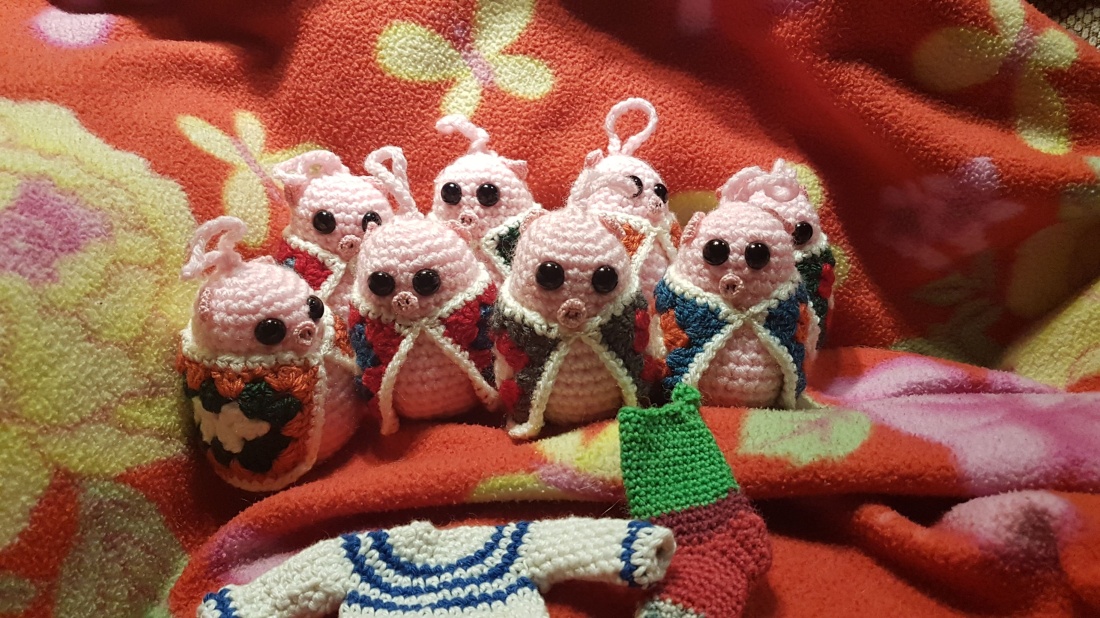
  • A crochet project I can’t show you yet as it’s a surprise
  • A much-needed evening swim with Sue – the water was 26.4 and balmy, the ducks were flipping up and down feeding in the weeds and the little shoals of fish were zooming about in the shallows
  • Ice lollies.
  • Cally Fest last Sunday – it rained and it shined, we saw almost 300 people and a lot of cute dogs. This weekend its Whitecross Street Party, and we have a great activity planned. I’ve given strict instructions to the team to slather on the Factor 50 as it’s going to be HOT.
  • An excellent conversation with the black cab driver today about the New River – he grew up on Amwell Street and now lives in Enfield and runs along the New River Path every day.
  • Whitecross Street Party!

This week we have the second of our community access panel meetings, and I’m really looking forward to next weekend… and a couple of days off after 12 straights days of work.

Kirsty x

What I’ve been reading:

Blood Lines/Blood Pact/Blood Debt – Tanya Huff

Amongst Our Weapons/False Value – Ben Aaronovitch (Audible)

The Wild Life – John Lewis-Stempel

253: whose voice is it anyway?

On Monday afternoon I had one of those newfangled online chats with Claire Adler, a heritage, culture and community consultant who – a long time ago when she was still at Hackney Museum and I was still a teacher – was the person who got me involved in museum learning through a teacher focus group. A few months ago she posted on LinkedIn about the idea of ‘capable environments’, which are those where everyone can thrive. You can read more about them here. As I may have mentioned once or twice, my current job is at a small arts charity which is in the process of building a new home in the heart of Islington, and we are committed to being radically inclusive, and a place of belonging and welcome for everyone.

This is a big ambition for a small organisation, but one we’re passionate about and we dedicate significant time to looking at what we’re doing through the lens of access and inclusion. I spend a lot of time talking to other organisations, and to people who may not have ‘a visit to a gallery’ on their to-do list, and for whom cultural activity comes quite a long way down the list of priorities for a whole range of reasons. This is particularly so while we’re still mired in the depths of the cost-of-living crisis. Even a ‘free’ venue has things that need to be negotiated, especially when you have children who can spot a museum shop or cafe a mile off.

Cultural confidence is another blocker: is this a place for me? Will people know I’ve never been to a gallery before? What do I do while I’m there? Will there be ‘people like me’ there too? Can I take my own lunch? Is there a prayer room/quiet space/changing places toilet? What happens if my son/daughter/family member has a meltdown? For so many people, a spur-of-the-moment visit isn’t an option, and this is doubly so if it’s out of the comfort zone or a new place.

Physical access is another concern. We’re in an extremely fortunate position in that we’re not redeveloping an existing museum or gallery but rather bringing a derelict building back into use and so have a pretty blank slate when it comes to designing out any barriers that prevent access. Bolting on mitigations after the fact is always harder, especially in historic buildings. There’s lots of handy regulations and information out there to help you, too, and consultants who’ll assess your site, your offer and so on.

But…. if there’s one thing I’ve learned in the past seven years of co-design, co-creation, co-production, co-curation and conversation (isn’t that a nicer word than ‘consultation’?) it’s that you can read up all you like, you can bring your own experience to bear and that of those you care for and spend time with (‘lived’ experience and ‘loved’ experience, as it was described in a webinar I attended not long ago) but there’s no substitute for going out there and asking the people who you hope will become your core audience and the best future advocates for your site.

Obviously you can’t recruit a representative of every single group of people to sit on an ‘access panel’ and (since we believe in paying people for their time) we definitely can’t afford to. So how do we ensure that people and their needs are not only represented but included in what we’re doing? Particularly as including specific groups of people automatically excludes others, which is the opposite of what we’re going to do with the Centre.

First, we’re taking the Social Model of Disability as our starting point, and working from the principle that removing barriers and considering people’s needs before we build makes things better for everyone – for example, if you’re hanging an exhibition consider who needs to see the images before you put them up rather than having to provide ramps or steps after you’ve opened. Trust people to know what they need, and be open to hearing them. When we committed to co-creation at Young V&A we spent a lot of time considering what this meant in practice, and what it meant in the end was that everything we thought we knew – as people who had been children at some point – was wrong, so we needed to throw preconceptions out of the window and be open to being guided by the participants. I called it ’embracing the chaos’ and some of those projects were absolutely chaotic but truly joyous and mind-opening experiences. I still have the odd conversation where people want an idea of what the outcome of a co-project will be, but I remain committed to genuine co-ness. It would be easier if I could say ‘yeah, it’ll be x or y’ but that’s imposing our wants on people and not being guided by theirs.
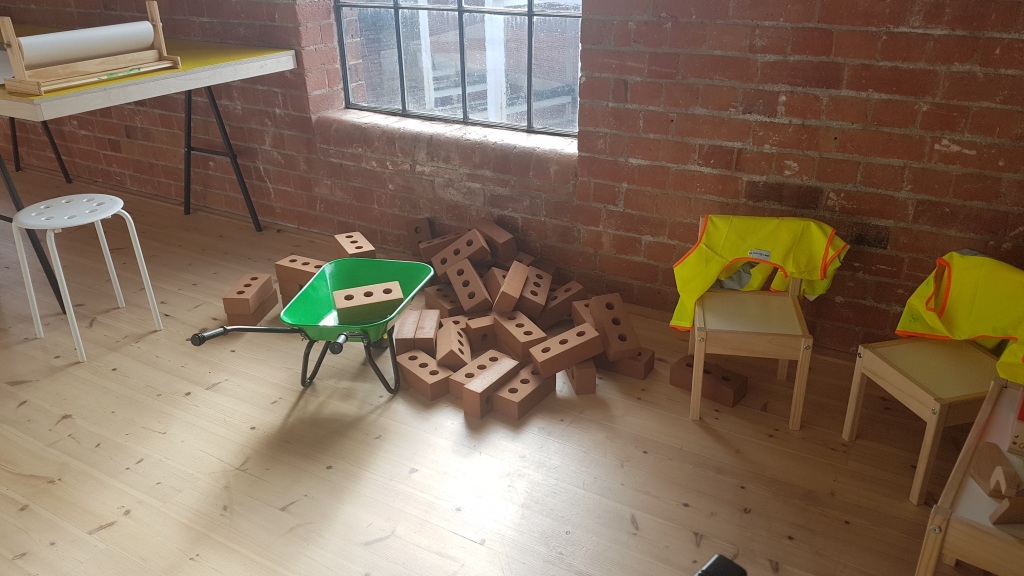
Admitting you don’t know everything when you’re supposed to be the experts is quite hard – but people of all ages are the experts in their own lives, and doubly so when you consider intersectionality as well.

And this is where conversation comes in, of course – chatty, informal moments as part of other events such as our play activities over the summer where one of the questions we asked was what would help them to visit as families. We’d made it explicit when we recruited families that everyone was welcome, and considered their needs when we planned events. As guided by the social model rather than the medical model, we asked what they needed to make their visits easier rather than asking for unnecessary medical information. Someone telling me they have a diagnosis of this or that is meaningless, but telling me that their visit can be made easier with ear defenders, a well-signposted accessible toilet, a quiet room, step-free access etc – that’s helpful, non-intrusive and ensuring these and other facilities and equipment are freely available and that this information is easily found on a website benefits everyone.

Working with organisations like Euan’s Guide and looking to people like the accessible museum award-winning Barnsley Museums is also good practice – and one of the best things about museum and galleries and the people who work in them is that as a general rule we love talking about what we do to other people so there’s lots of advice available about how to do things well. Yes, it would be quicker if we didn’t talk to people about everything from physical access through to exhibitions via signage, play, learning programmes and what people want to do when they’re through the doors, but how can we be radically inclusive and representative of all our visitors, staff and volunteers if we’re selective about the voices we hear and the people at the metaphorical table?

My vision as Head of Learning and Participation is that when we open the doors we’ll be somewhere that’s part of people’s daily routine: on the way home from school families stop in to spend time in the gardens or trying their hand at whatever’s on offer in the creative space; that we’re the go-to for somewhere to go on a rainy day; that teens come and hang out with us because they know they’re welcome; that we get to know our locals by name. Last week’s inspiring talk by Amy Akino-Wittering at Young V&A about their successful and radically inclusive front-of-house recruitment process will hopefully guide our own process later in the year. Watch this space….

Things making me happy this week

  • Interesting inclusive faith training on Thursday
  • 12k walk on Saturday morning
  • A great meeting with someone about a project related to one of my favourite writers
  • Bumping into Jill at St Paul’s though I was unable to convince her to sack off her meeting and head home with me instead!
  • A visit to talk to the team at Langley Academy, where museum learning is built into the curriculum…
  • …which meant I got to stay overnight with London sister and have coffee with my Eton buddy
  • A visit to Lift Youth Hub to meet the team and envy their views over London
  • Coffee with Miriam on Saturday afternoon

Today I am off to Waltham Abbey Wool Show with Heather for a day of squishing and possibly sniffing yarn.

Same time next week then!

Kirsty x

What I’ve been reading:

Fearless Fourteen/Finger-Licking Fifteen/Sizzling Sixteen/Smoking Seventeen – Janet Evanovich

My Animals and Other Animals – Bill Bailey

Million Dollar Demon – Kim Harrison

Guards! Guards!/Men At Arms – Terry Pratchett (Audible)

231: are you coming out to play?

Friday was the first day of our new community co-design project. You remember, the one that was giving me sleepless nights last week in case no one turned up or it rained all day or it was a total disaster, that sort of thing. I have form for this sort of thing – on one school trip all those years ago I managed to lose two children and a parent helper – so it’s not unreasonable to worry!

Luckily it all seemed to go very well – 18 people came along and we took 18 very similar people back to Islington so I am counting it as a win. The Panda coach turned up on time – one of the children was very excited, as they had apparently ALWAYS WANTED to go on a panda bus. I didn’t know Panda Buses were a thing, but there we are. A bonus point to me… Another child had never been on a coach before so the adventure started early for her! No one was sick and we had exactly the right amount of snacks for the day. Pom-bears were the most popular – Valentina, my colleague, hadn’t heard of them before, although my director says they go very well with red wine. We’re a cultured bunch, us.

The visit this week was to Royal Botanic Gardens, Kew, where they have a children’s garden which explores in a very playful way all the things plants need to grow – sun, water, earth and air – in four zones. The idea of the project is to take local families to different playful green spaces (next week is Holland Park Adventure Playground) and then in the final week we’ll work with a play artist to construct models of play opportunities which will be shared with the architects and landscape designers to inspire our own new gardens. Each day is being live illustrated by illustrators, so we can see what families engage with most, and what captures their imagination. We also gave all the participants their own sketchbooks to record whatever they wanted, and one to a small girl who was fascinated by illustrator Grace Holliday’s sketching and was peering over her shoulder. We told her dad all about the Centre – no engagement is ever wasted!

Valentina and Grace met us at the entrance to the Gardens, having left me in charge of the bus journey, and we headed off to the Children’s Garden and Earth area where we found huge sandpits, slides like earthworms and wooden playhouses as well as logs and ropes to help people up a large mound. The younger children enjoyed the sand while the older ones (the group ranged from 5 – 16) enjoyed the sunshine. The second space was Water, where there were pumps and rivulets, with a paddling zone complete with stepping stones. Climbing structures were, again, more popular with all but the youngest children. The round structures you can see in the images above were in the Sun area next to Water, along with some huge eucalyptus trees and some very cheeky baby jackdaws. I loved the use of coloured perspex in the tunnel. Few people seemed to use this area, perhaps because it wasn’t obviously ‘playful’.

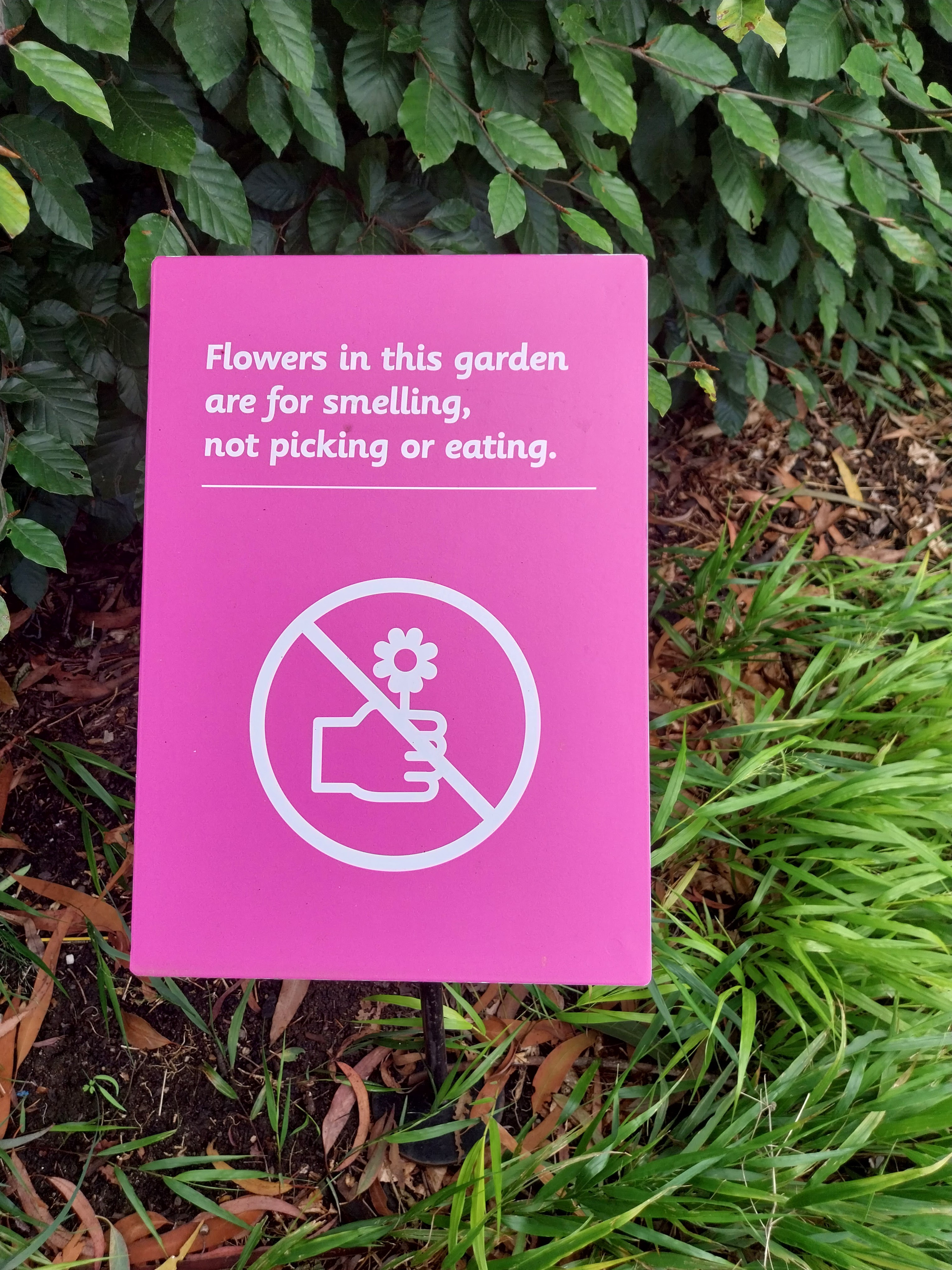
We liked the ‘rules of enjoyment’ scattered through the gardens as well as at the entrances – ‘Our trees are for hugging not climbing’; ‘Our plants are for smelling not picking or eating’ and others – offering alternatives to engagement rather than ‘don’ts’. There are clear paths to each area as well as stepping stone paths through flower beds to encourage exploration. They close the space for quiet sessions but the space overall didn’t feel as if it had been designed with accessibility in mind – there weren’t obvious alternatives to climbing frames or the paddling area for wheelchair users, for example, and I couldn’t find any information on the accessibility map on the website (which is also hard to read). I would have liked to have seen this information in a variety of easy to find formats on the website, particularly as we had at least two children with Austistic Spectrum diagnoses on the visit. Kew has a great facilitated community and access programme but for independent visits the information isn’t obviously available. I am happy to be corrected on this, of course, but this is the sort of information we know our visitors need to have.

We went to the Family Kitchen for lunch, where we provided children’s lunch boxes and pizzas for the grown ups. The toilets are sensibly located there too, and a playful handwashing station. Kew have also put a shop in there and an extremely expensive Hackney Gelato ice cream parlour, which I am quite sure a lot of parents could have done without, especially as entry to Kew isn’t cheap.

After lunch we went to the Air space, which was the most popular with our families – little trampolines sunk into the floor, rope swings, colourful windmills and a giant hammock, and lots of things (pollen, apparently) to jump from and on and over. Again, things to climb on were most popular – the Oak Circle, a huge oak tree ringed by a high level walkway, attracted all the children, while a bench ringing the tree provided some much needed seating and shade for us! Grace Holliday, our illustrator, captured so much movement and joy in this zone.

The usual herding of kittens through a final visit to the loos and retrieving them from the shop ensued, and then it was back on the bus to Islington through a lot of traffic which seemed to be Taylor Swift’s fault, at least according to the coach driver who had to battle back round to Harrow afterwards. I’m looking forward to the next adventure, and hopefully the families are too!

In other news…

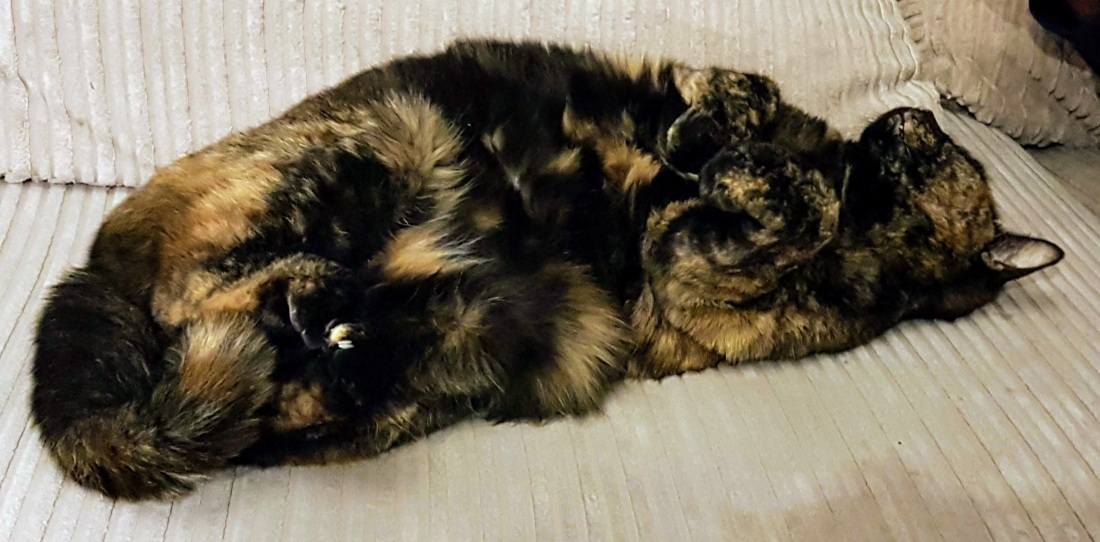
Poor Lulu cat had to have a sleepover at the Royal Veterinary College this week, which meant a long car journey each way. She was at pains to tell us how unhappy she was about this, especially when speed bumps and potholes made their presence felt. We finally have a diagnosis though – she has not one but six bladder stones and an operation is needed to get rid of them as they aren’t the sort which can be zapped or dissolved. Thank heavens for insurance, which covered the £1548 cost of her stay. She now has bald patches on her legs, chest and belly and took a good 48 hours to forgive me.

Cat attempting to disappear

Thing 3 had his ingrown toenail operated on (and they did his other foot just in case). He was very brave and looked like a duck when he came home. No photos of this, though.

Things making me happy this week (aka ‘The Happy List’)

  • Thing 1 got an A in her first T-level exams – we are incredibly proud of her and her hard work after a rough year last year.
  • Thing 2 finally gave in and made me a lemon drizzle cake. It was excellent.
  • I put my quilt top together and stuck a lot of paper hexagons onto fabric hexagons, for which I have a cunning plan.
  • Making the Sew House Seven Wildwood dress. No photos, it needs to be on to look its best. I managed to get the skirt front backwards so it wraps the wrong way. Who knows how I did it, but there we are. It’s green.
  • Seeing the London Museum’s new logo make it into Private Eye‘s ‘Pseud’s Corner’ not once but twice….in the same issue. I love the Museum, having worked there for 12 years, but loathe the pigeon and ‘splat’
  • Three days off – some sewing, some sleeping, some KFC with Thing 1, some reading
  • The finale of The Umbrella Academy – such a good series, and great use of Megan Mullally and Nick Offerman. It made me want to rewatch DC Titans though.

And that’s it from me for the week – I must go and throw pizzas at teenagers in the hope of pacifying them. Thing 2 has three friends over for a sleepover – ‘sleep’ being a very relative term.

Same time next week then 🙂

Kirsty x

What I’ve been reading:

The Covent Garden Ladies – Hallie Rubenhold

Honeycomb – Joanne M. Harris (Audible)

1989 – Val McDermid

The Full English – Stuart Maconie

The Last Voice You Hear – Mick Herron

159: you can’t go wrong with a good omelette

Last week’s bug continues fine, and is still rampaging merrily through my immune system. Having started with a sore throat it moved to my right ear and is causing raging tinnitus, a cold sore the size of Belgium on my face, and a migraine of mammoth proportions followed by severe post-migraine hangover yesterday. Next time I have the temerity to say how healthy I am, someone ssshhhh me. Please. It’s prevented me from going swimming today, that’s how miserable it is.

I am sure it was not helped by the persistence of couriers in making my life difficult on Tuesday, when I spent several parts of my day standing in the rain awaiting vans of various descriptions. The first company was an hour late as a driver had called in sick and no cover had been arranged, so we were an hour late to the museum. The second company arrived in a Luton complete with hoist and all our kit from the storage unit but first attempted to unload outside the museum gates, then reversed just inside, and then we finally got exasperated and ordered them to reverse up to the loading doors where they proceeded to unload a unit’s worth of kit at hoist height rather than making things easy for any of us.

By the time the Addison Lee courier started causing me grief my language had become…. Anglo-Saxon, to say the least. Despite being given an address he parked a ten minute walk away in a different street, didn’t phone the pick-up contact, and when he had finally picked up the boxes after she’d been standing in the rain for twenty minutes we watched him drive the weirdest route possible to Bethnal Green, then drive round the block five or six times (hurray for the tracking system). Finally I went outside next time he came round and shouted at him. Apparently he couldn’t find the gate. Yes, the gate. The gate with ‘Young V&A’ on it. And a phone number to call for access. I queried why he didn’t, perhaps, phone me for guidance as he had my phone number as the drop-off contact. This stumped him. Fortunately for his ears and my continued account with Addison Lee I decided to relieve him of the boxes (which he had unloaded into the road instead of onto the pavement where the dolly was) and refrain from further conversation. If they have the temerity to charge waiting time there will be words. They are rapidly sinking down my bottom ten courier list, creeping up behind Hermes/Evri and DPD.

We did go for a team lunch at The Full Monty on Globe Road, which made the world a sunnier place despite the rain. If you find yourself in East London in need of a big, reasonably priced lunch, try here. Especially try the omelettes.

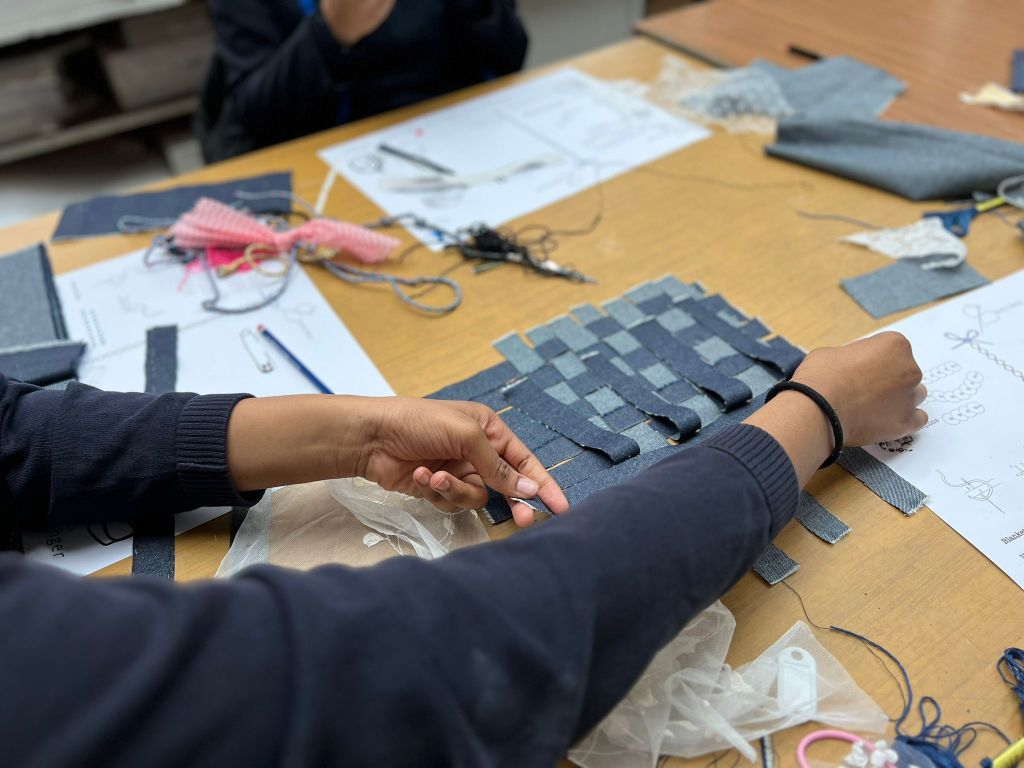
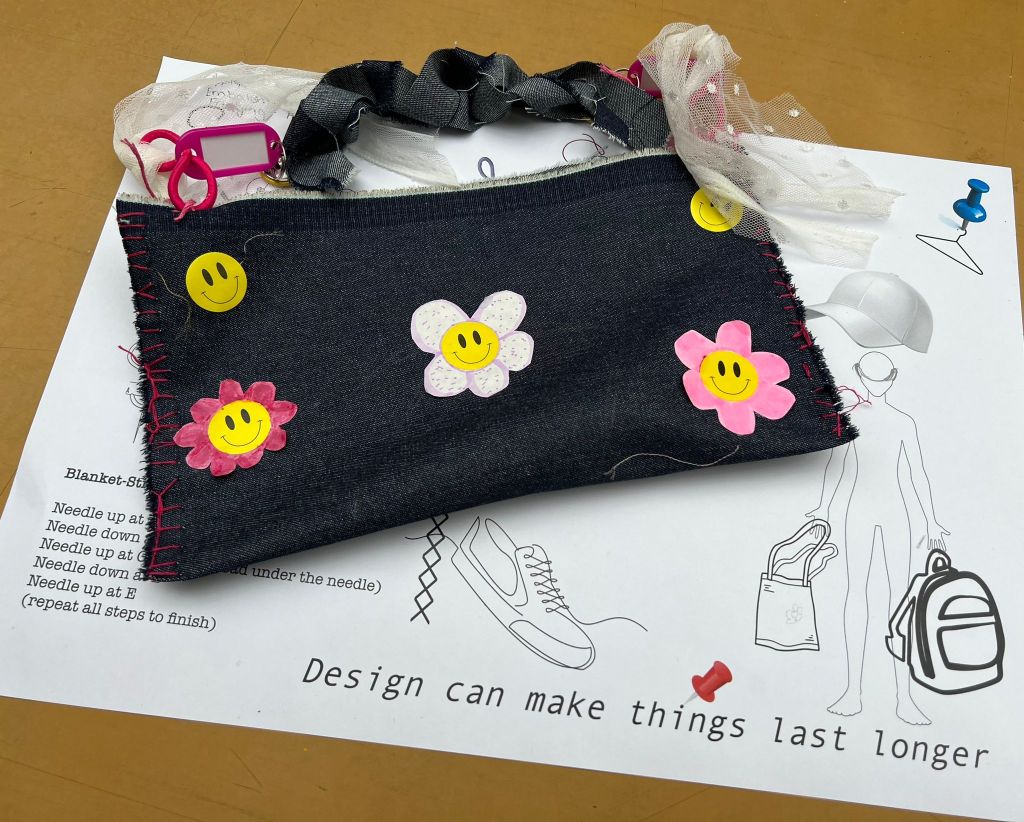
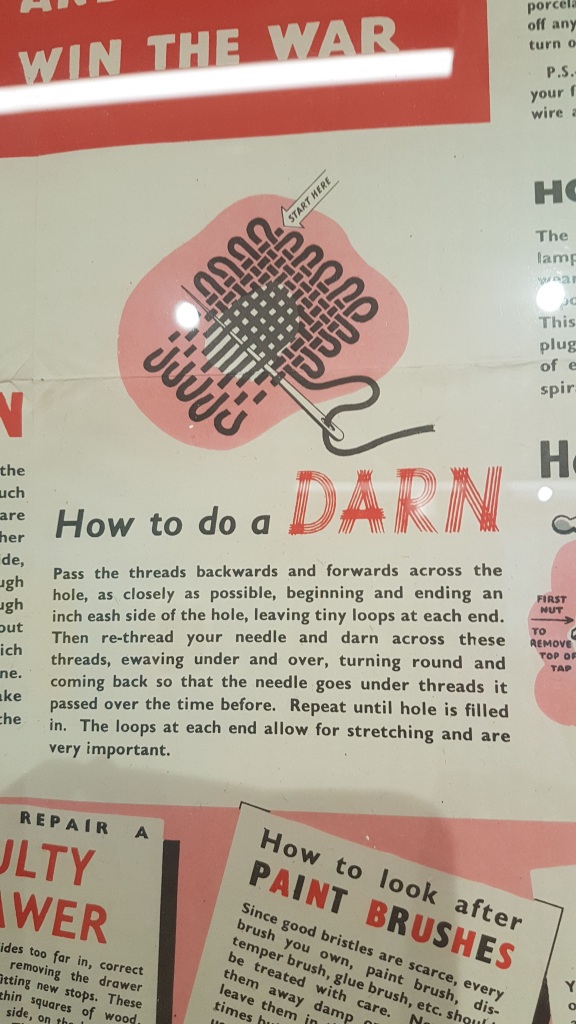
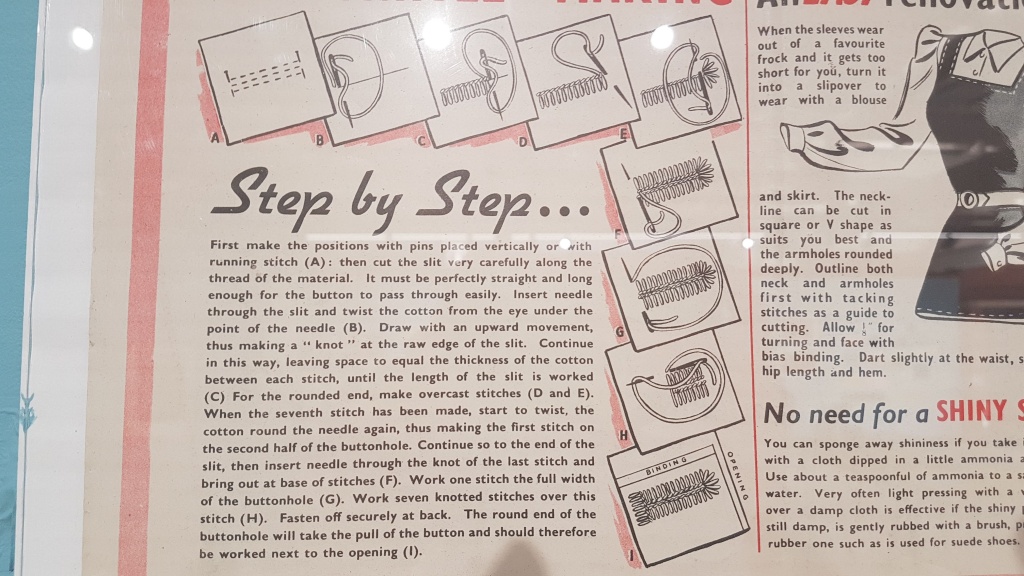
Wednesday was a much better day, as I got to spend it out at my favourite secondary school in Ilford again, testing the last of the KS3 sessions for the Design gallery. Working once again with the very lovely Scott Ramsay Kyle on the ‘Design makes things last longer’ case study, we looked at different techniques for mending and embellishing fabrics using a range of materials. Starting with denim (not that we’re obsessed or anything) and encouraging them to work in threes, we encouraged them to think about how things could be added to make something different. All the Year 7s wanted to make bags (individually or as a group) and all the Year 9s wanted to annex the embroidery threads to make friendship bracelets, which wasn’t what we’d asked for but at least there was a lot of skill sharing going on! They were banned from wearing them in school but the teacher suspected that they were all going to say ‘we made them in DT sir!’ if challenged.

It was very clear which of the girls had previous experience with any kind of hand or machine sewing, but it was also evident that the others were mostly keen to learn. One thing that came across in the evaluations was that they valued just having time to sit and make, and wanted more lessons like that.

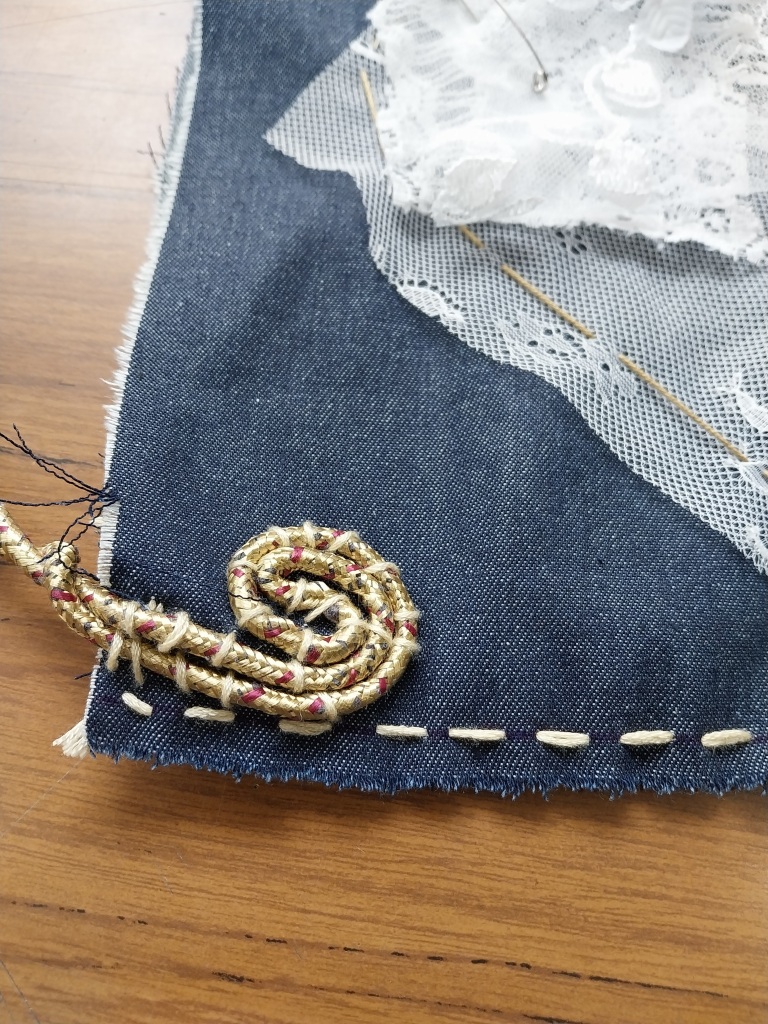
Scott had brought along a range of different embellishments like key tags, stickers and badges, cords and scraps of lace, and there was a very retro vibe about some of the outcomes, especially in Year 7. Lots of joining with big safety pins or acid house smiley faces, and tied on lace – you can see one of the bags above right. I also really liked the weave on the above left, which she joined with lots of pins and badges rather than sewing (below centre). Many of the girls (it’s a single-sex school) wanted to come back at lunch time and carry on working on their pieces, which I think I’ll take as a win! Although we’d planned this session as a 90-minute one, I think it’s going to end up as a full day option with lots of time for exploring and being inspired by the gallery collections.

Other things making me happy this week:

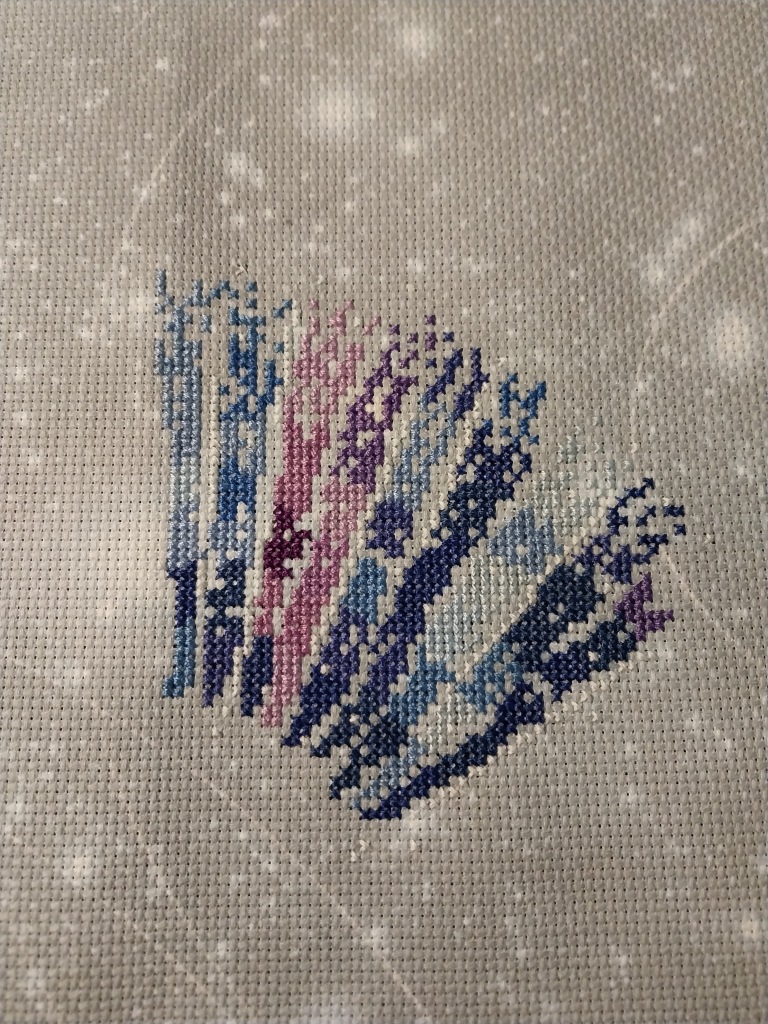
  • Progress on my Visit Tokorozawa cross stitch
  • Frogging half a sock as it wasn’t making me happy. Also deciding not to finish a book for the same reason. Life is too short.
  • Finding a hole in the foot of my woolly tights – now I can practise all those mending techniques!
  • Scoring eggs in the Co-op yesterday
  • Indira Varma narrating the latest audiobooks of the Discworld Witches series.

I am off to do useful things with my day! Till next week, then, when I’d quite like my ear to be working again.

Kirsty x

What I’ve been reading:

The Truth/Equal Rites/Wyrd Sisters – Terry Pratchett (Audible)

Paper and Blood – Kevin Hearne

Asterix volume 1 – Goscinny & Uderzo

The Vesuvius Club – Mark Gatiss. (Gave up about a third in. Dreadful. Arch. Don’t.)

The Bridgerton series – Julia Quinn. To remove the previous listing from my brain.

155: back! Back!! BACK!!!!

This week we were finally able to share the opening date for Young V&A – it’s been a long time coming, and there’s still lots to do before we open the doors, but as of 1 July we will be back! Back!! BACK!!! as Smash Hits magazine used to say (a long time ago, obviously). All the things I’ve rambled on about on here – blue blocks, shoes, creativity etc – will all start to make sense.

Unveiling the news this week

It’s all very exciting but also quite daunting: I know that the sessions we have planned for the new school programme are interesting, and I know that the galleries are dynamic and interesting and aimed carefully at the different age groups (but still with content for everybody), but WHAT IF NO ONE COMES? We all know that schools are suffering at the moment from teacher strikes (which I fully support), from delivering a pay rise and associated pension/NI contributions unfunded by a spiteful government, from lack of supply teachers, LSAs and other post-pandemic staffing issues. School trips – however much they benefit the students and support the curriculum – are staff-heavy, planning-heavy, resource-heavy. Gone are the days of primary schools with ‘enrichment co-ordinators’ who would take the trip planning load off the teachers.

This is without even considering the ethics of asking parents to fork out cash – for travel, for a facilitated session, for theatre tickets, for entry to charging sites, for exhibition tickets even at a discounted rate – during a cost-of-living crisis. We are free to enter but have to charge for sessions: during closure we’ve been able to offer our sessions free, and this has helped us engage thousands of children across Tower Hamlets, but once we reopen that has to change. My children haven’t gone on theatre trips at secondary school as the cost of that trip is equal to a month’s bus fare for them or two weeks’ school dinners. I hate saying no, but the reality is that for many people culture comes second to food. I had a conversation with a North London secondary school teacher last term who was going back to her headteacher to tell them that she couldn’t justify running food technology (Home Economics, for those of us that remember Smash Hits) this year if it meant asking families to provide the ingredients.

Historically, too, the majority of school trips have been linked to history, geography or English – museums and theatres, heritage sites etc. Design Technology, unless at GCSE isn’t high on the priority list and this is particularly the case for Key Stage 3. I think of this as the Cinderella Key Stage: past SATs and before GCSEs, and no one knows quite what to do with them, when really this should be the point where schools are working hard to spark their interest in creative subjects before they have to make their GCSE options. I do feel that unless their school (not just individual DT teachers, who are without exception wonderful, passionate people) recognises the benefits of DT and other creative subjects in developing the skills children need to make it in the world today (problem-solving, collaboration, communication and so on) they are being short-changed. However, unless there’s a sea change in the government, causing them to create a culture of learning where students are helped to learn skills they need in 21st century life rather than to pass exams, I can’t see this happening. I’m very lucky to have been piloting my KS3 sessions in just such a school but research into the way DT, art and so on are delivered across my key boroughs means they are in a minority.

In previous roles my way around this was to develop cross-curricular sessions: history and maths, history and science, history and pretty much anything we could cram in, especially for primary schools where cross-curricularity is a selling point. This doesn’t work for secondary schools except in ‘enrichment weeks’ and I haven’t seen one of those for a while. School budgets seem to be focused on buying in enrichment or PSHE activities, like the ‘drugs bus‘ which Thing 2 will be visiting this week and which caused much bemusement/hilarity in the office this week. ‘Maddie’s Crack Shack’, after all, sounds more like a CBeebies series than a hard-hitting educational opportunity.

TL;DR: Please, schools, give KS3 a chance. And come and visit me.

Things not keeping me awake at night:

  • charity shop book finds
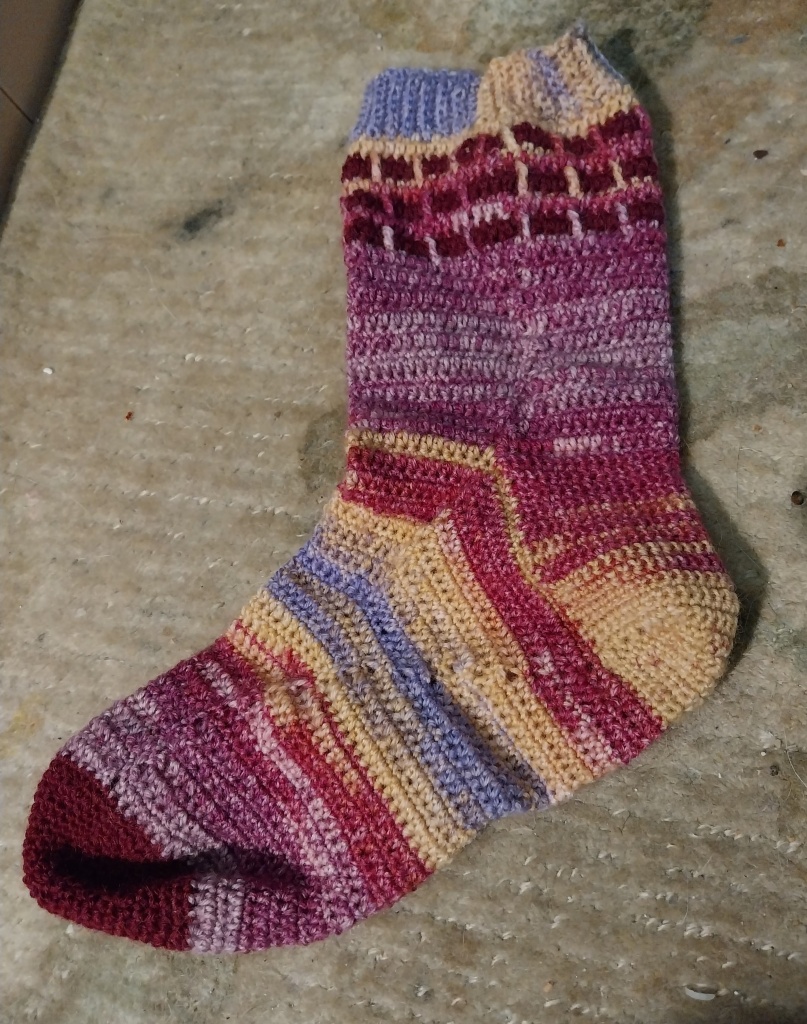
  • finishing one of my Calecentine Socks on the tube
  • swim with Rachel for her birthday yesterday morning
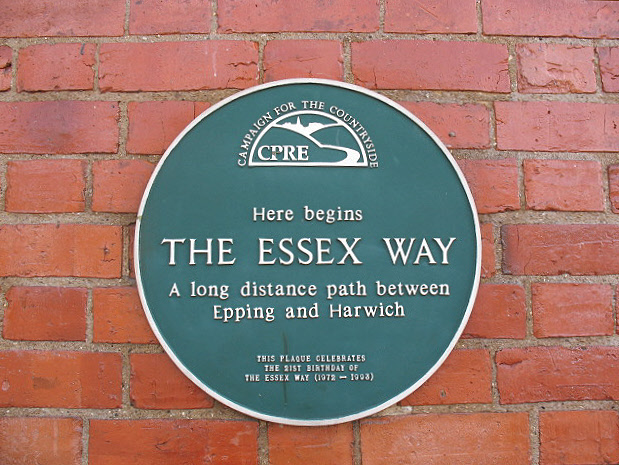
  • 20k training walk this morning – a 10k that got out of hand along the Essex Way from North Weald to Ongar and a bit…
  • Up to date on the Temperature Supernova
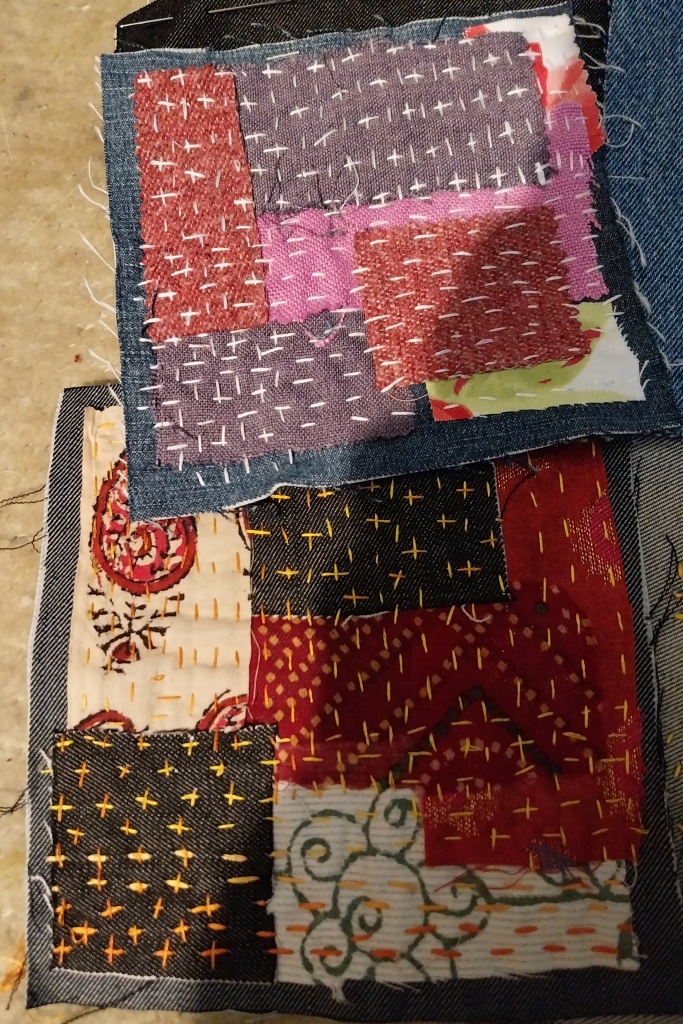
  • Finishing my boro patches from the Restoration London workshops
  • This afternoon’s nap, as soon as I have hit publish on this….

See you next week!

Kirsty x

What I’ve been reading:

Snuff/Raising Steam/Making Money – Terry Pratchett (Audible)

Turn Coat/Changes – Jim Butcher

142: If the shoe fits…

‘Mummy has too many shoes and too many books,’ my daughters used to say to random strangers in shops (admittedly said shops were often purveyors of these commodities, as we trekked about the abundance of charity shops in Epping). I can’t argue with the former, but in the case of the latter it’s more that I don’t have enough shelves as you can never have too many books.

Imagine my joy, dear readers, when the development of the new museum gave me the perfect excuse to create a whole schools session ALL about shoes. When we were rationalising the learning collection prior to closure I made sure we kept the shoes (apart from the Crocs we used in the seaside session), and this week I have been testing the shoes session at a local secondary school. Called ‘If The Shoe Fits’, it’s a user centred design session for Key Stage 3 again and our guinea pigs were Year 9 students. An enormous thank you to my friend and crafty partner in crime Heather who is a DT teacher there, and to her head of department at Davenant Foundation School for letting me loose in her classroom.

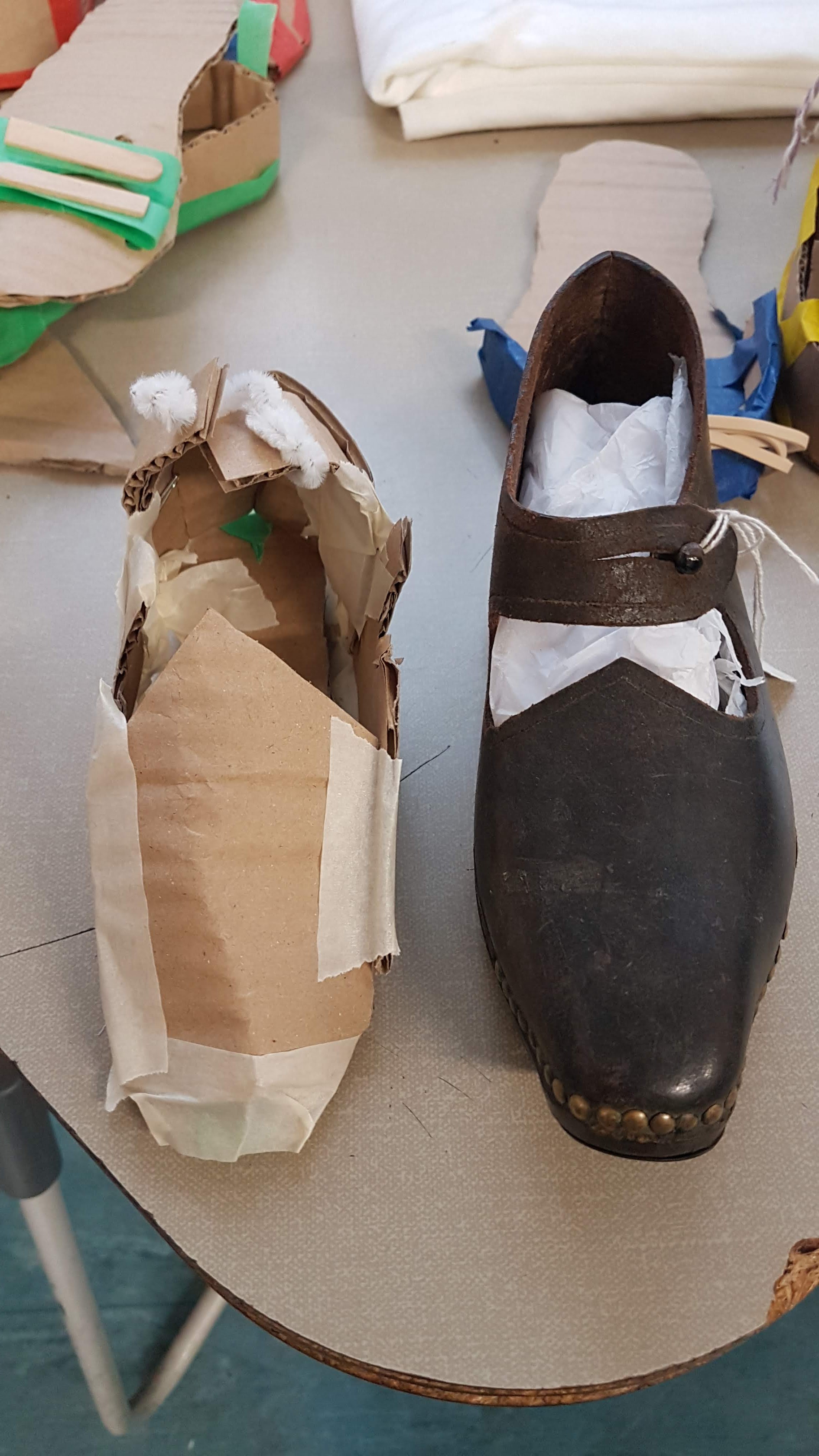
We started by thinking about school shoes vs the shoes we choose to wear off-duty – who decides what school shoes look like; are there rules; what qualities the shoes need to have; why we choose our trainers (22 out of 24 Y9s prefer Nikes). Each group then did a ‘mystery shoe’ activity, comparing a historic shoe to a modern shoe. All the shoes were from the collection – from centuries old children’s clogs (these haven’t even been creased miss, are you sure they’re old?) to new pieces which will feature in the design gallery like Vans Autism Awareness skate shoes.

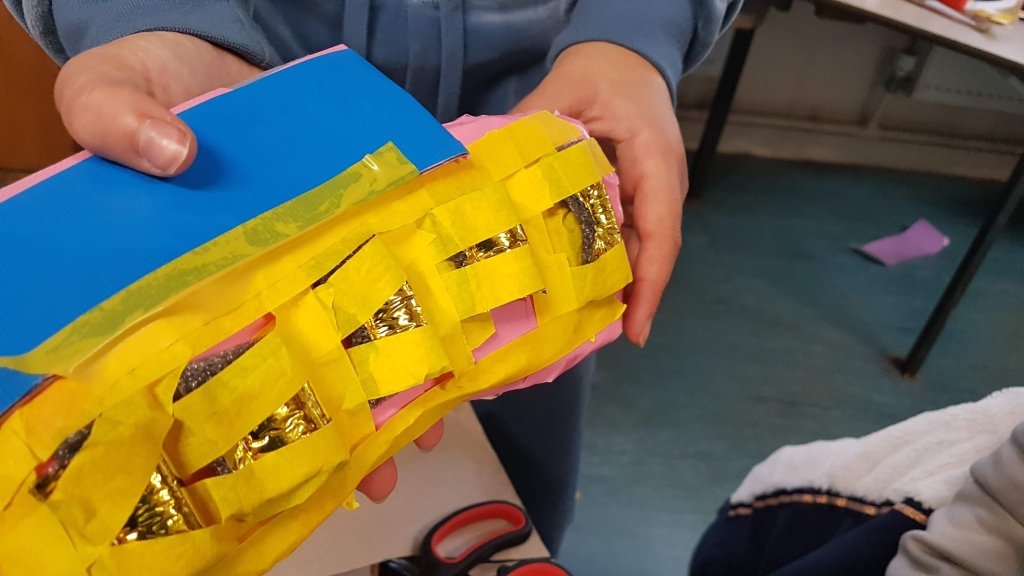
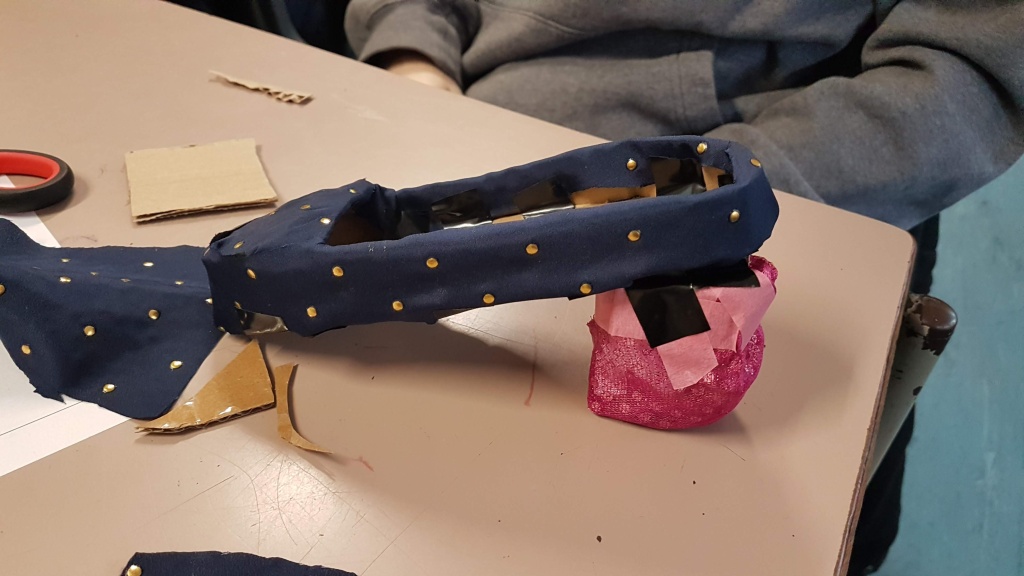
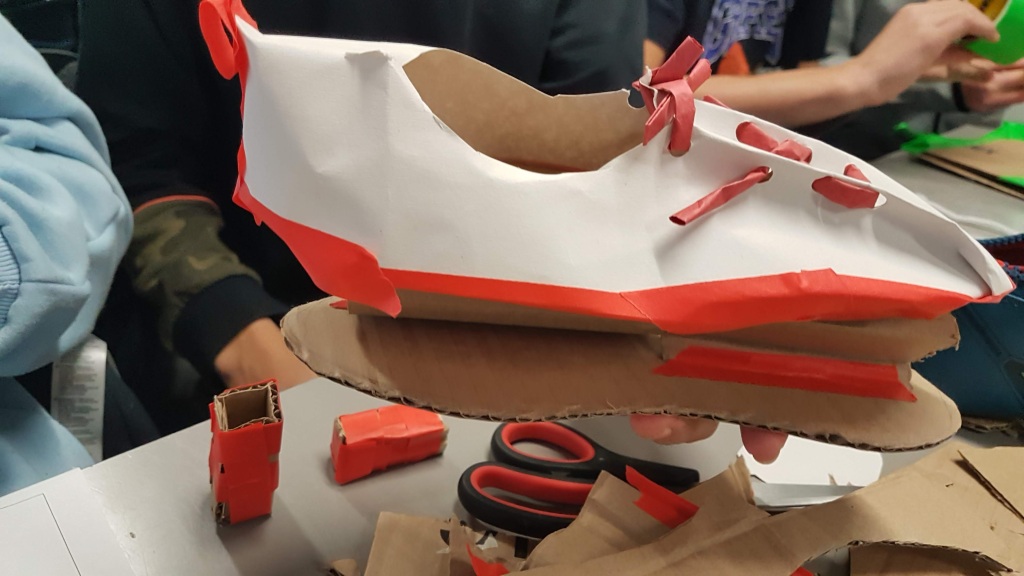
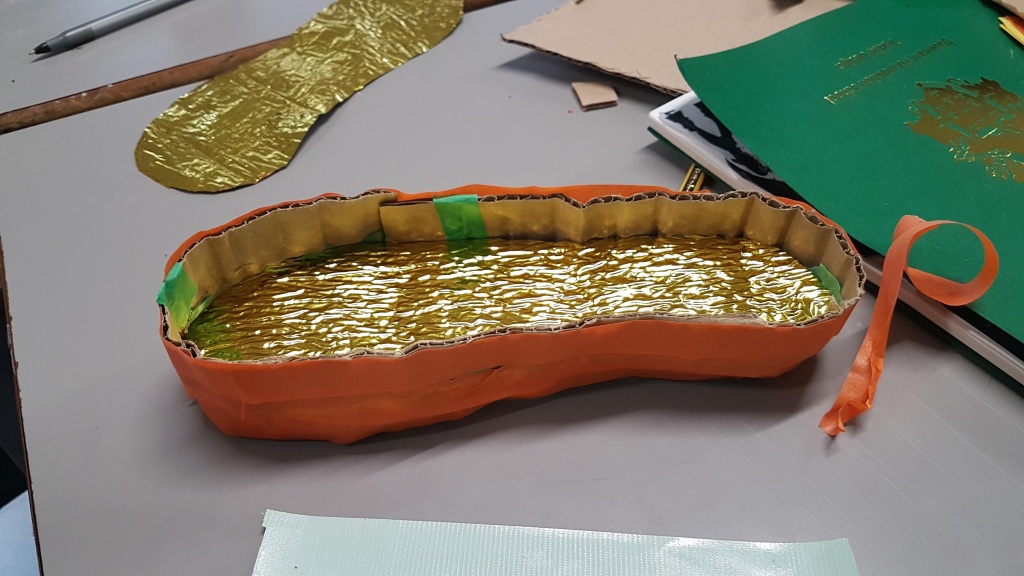
Then they had a go at making a model of one of the shoes, using materials like cardboard, lolly sticks, tape and more. Some were amazing – the exquisitely detailed version of a child’s leather party shoe created from masking tape and cardboard, complete with rosette, for example, or the clog, with paper straws to represent the ‘horseshoe’ on the bottom. Proper sparking clogs, as the song goes. The students demonstrated amazing creative problem solving skills, thinking about how to represent fastenings, how to make the cardboard curve more flexibly, and how to hold materials together. We deliberately don’t give them glue or staples, partly as there’s collection involved but also because Pritt Sticks are a waste of time with anything but paper and the students get frustrated and turn to tape anyway.

It was a fast paced session so we were strict on time and many of the students wanted to finish their models, but after we allowed this on day one we were firmer on day two. Removing the need to sketch or draw before making takes away the ‘I can’t draw’ problem (I have this) and allows them to get straight into working in 3D.

We then talked about being ‘fit for purpose’ and the idea of specific shoes being used for specific purposes – from steel-toed construction boots and firefighter boots, football boots and cycling shoes, pointe shoes and Lady Gaga’s ludicrous heels, running blades and running shoes for various conditions – and they annotated images in answer to a set of questions. I used images of female sports players and firefighters, male ballet dancers (urgh, look at his legs Miss!) and made sure they were diverse to reflect the students themselves.

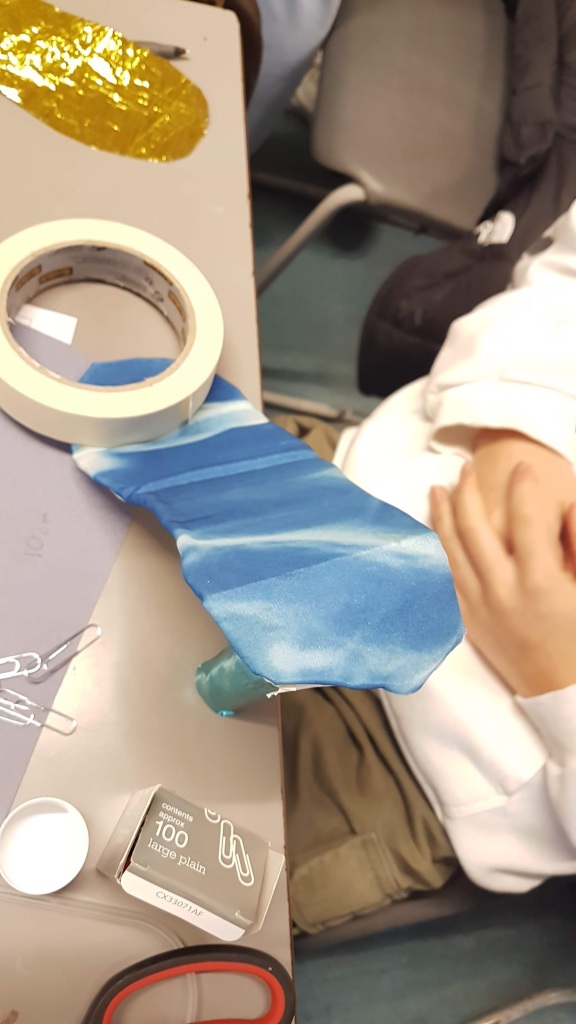
The final activity was to create a shoe for a specific person – real or fictional – so they filled in a sheet about the qualities, materials and properties needed and, with additional materials like fabrics, felt, laminate insulation and more, created their own shoes. The outcomes were amazing, with super-bouncy running shoes, shoes for the art teacher, convertible heels-to-flats for their mum, and more.

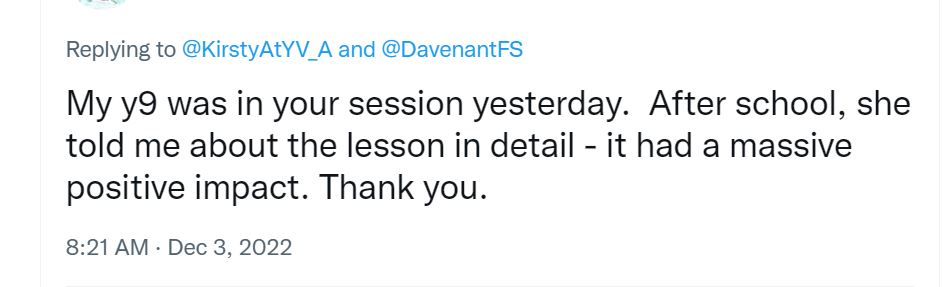
I tweeted a thank you to the school for allowing me to pilot the sessions with their students, and this response came back, which made my day! This is one of the sessions we’ll be opening with next year, and I can’t wait to be running it alongside a whole gallery full of amazing design.

A note on Christmas music

If you’re like me, your Facebook feeds will be smattered with people going on about bloody ‘Whamageddon’ and whether they are in or out, whether a cover version counts and so on. SHUT UP. No one cares.

Other things making me happy this week:

  • Opening night at the Geek Retreat in Harlow. We had a lovely time.
  • A cracking day at Epping Christmas Market yesterday
  • Liqueur chocolates for breakfast. It’s advent, it’s allowed (thanks for the calendar, mum)

Now I must go and get ready for today’s Christmas fete, this time a school one in North London, and then the Museum of London grand reunion this evening. Same time next week!

Kirsty x

What I’ve been reading:

Aberystwyth Mon Amour – Malcom Pryce

Don’t Need The Sunshine – John Osborne

Terry Pratchett: A Life in Footnotes (Audible)

141: more meetings than you can shake a stick at

Well, that was a week of highs and lows, it really was. One of those weeks (another one of those weeks) when you’re in so many meetings that you haven’t got time to do your job, but this week it got on top of me and sparked a meltdown panic attack on Wednesday which was definitely the low point.

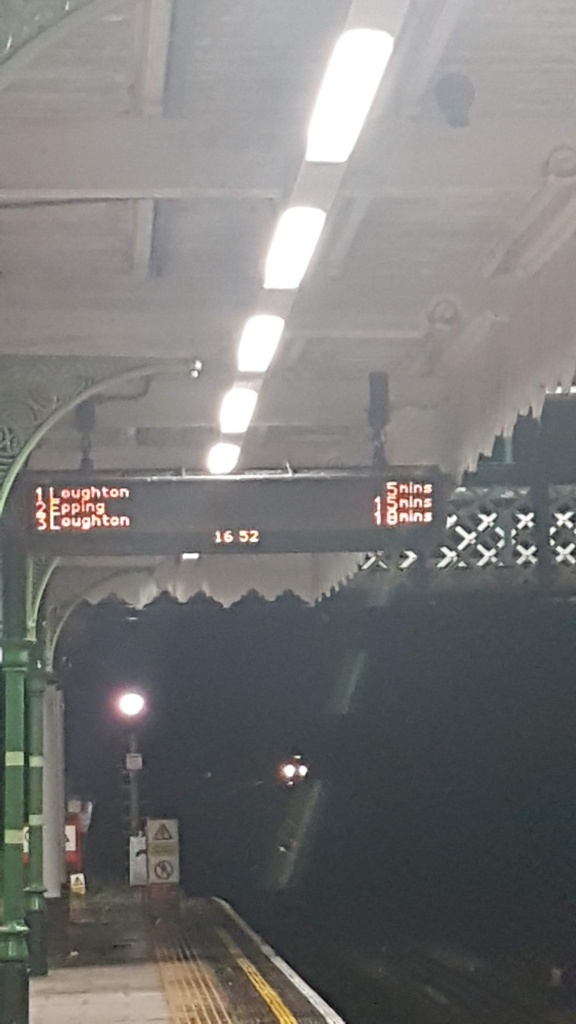
The problem with not having a museum to do museum learning in is that every time you want to deliver a session – piloting new content – you need to take all the kit that in business-as-usual times would be in a handy cupboard, pack it in boxes and suitcases, seriously consider taking two 84 litre Really Useful Boxes and a massive wheelie suitcase on public transport to the school (in Ilford, in this case, on a train strike day) and then get real and book a cab. We had two sessions booked at a school where the DT department are up for almost anything, so we took the kit over on Monday – thanks to the aforementioned train strike and the seemingly interminable November weather, the journey took the best part of two hours to go 15 miles. Then, having delivered the kit to the school, I had another several hours in traffic to get home. Oh joy. What is described as ‘managed decline’ on the Central Line meant three out of four trains were terminating at Loughton, and there was an 18 minute wait for the first Epping train….which then waited five minutes at Loughton for the next terminating train as the changeover driver was on that one. I have decided every time I have to wait fifteen minutes for a train to Epping I am going to claim a refund. A faff, but the service is appalling at the moment: 42 minutes to do a 12 minute journey (four stops!) is unacceptable.

Tuesday – the day of the sessions – was amazing. I have been working with a designer called Lea Jagendorf to develop sessions which support two of the case studies in the new Design Gallery: ‘Design Can…’ is the starting point and these two sessions supported ‘Design makes things last longer’ and ‘Design responds to people’s needs’. It turned out Lea had been set as homework for the two classes, so she was confronted with 45 A3 posters all about herself…

We have built a learning collection of objects which will be in the new gallery, from the anti-hostile design DEFIANT by Hamzah Al Asadulloh to adaptive clothing by Tommy Hilfiger and Vans, alongside pieces by Petit Pli and Expandals. The sessions offer opportunities to brainstorm ideas, to try rapid prototyping with a variety of materials, and to collaborate on responding to briefs. Both classes had some amazing ideas and we’ll be seeing them again to do some co-curation for the same gallery in a couple of weeks. This week I am testing the final design session – ‘If the Shoe Fits’ – which explores user-centred design through our collection of historic and modern children’s shoes, with lots of practical making with a very varied set of materials. Support from my fabulous creative learning facilitator – who feels about materials the way I feel about shoes and books – has been invaluable.

The less said about Wednesday morning the better, but luckily the team around me are amazing and they got me through the rest of the day – which finished in Bethnal Green with a ‘sneak peek’ for local teachers. I overcatered, but the staffroom at the school benefited the next morning! It’s so good to be able to share what we’re doing behind the scenes and to ask teachers what they want from us. Miriam retrieved me from the station, fed me dinner and we played D&D which is always a high point of the week. Three of us brought lebkuchen as game snacks – it’s that time of year again!

Thursday was a day of actually achieving stuff (emails! work! planning!) which made me feel a lot better, and Friday was an adventure to Clerkenwell to meet the designer Sam Hecht of Industrial Facility who along with his partner Kim Colin made a collection of under-a-fiver objects from all over the world. They are loaning it to the new Design Gallery, and this is what we’ll be co-curating with the Ilford school the week after next. The collection is full of little oddities like magic potato peeling gloves and a terracotta foot scrubber: things designed for a specific purpose, some of which meet the need and others – like a combined craft knife and scissors – don’t. I’ve had fun tracking the objects down to create a handling collection, so my Amazon algorithms are a bit skewed at the moment. Clerkenwell is one of my favourite bits of London, all little courts and alleyways with a mix of new and ancient buildings. I also got to use the Elizabeth Line – the easiest change at Stratford and only three stops! It’s making my inner tube nerd very happy, that line, and I am looking forward to being able to hop onto it at Stratford and go all the way to Ealing to see London sister.

Other things making me happy this week…

  • Speaking of London sister – it was her birthday on Friday and despite postal strikes her present and card arrived, and she likes them.
  • The Christmas cake is baked and ready to be fed with rum for the next few weeks
  • Lots of crochet done in preparation for the Christmas Market next week
  • Dog walk with Miriam, Jill (who’s got up two days running!) and the house elves, followed by a mooch round the market, coffee, pastries and a good therapeutic giggle.
  • Tom Waits on Spotify
  • A glorious swim at 9 degrees with Jill this morning, with much swearing as we got in.

Now I must go and do the ironing, before spending some time with a glue gun and various other bits and bobs.

See you next week!

Kirsty x

What I’ve been reading:

Quite – Claudia Winkleman

Murder Before Evensong – Revd. Richard Coles

Don’t Need The Sunshine – John Osborne

130: return to Derby

On Thursday morning I found myself at St Pancras station at the ludicrously early time of 7am, ready to catch a train to Derby for the GEM Conference 2022. GEM is the Group for Education in Museums and a key source of useful information, jobs in the sector, and occasionally some very bad Friday afternoon jokes (you know who you are!). My lovely colleague Chinami and I were down to present in the graveyard slot on Friday afternoon, when I fully expected there to be about three people left to talk at. Chinami kindly let me do all the talking myself in the end and acted as my cheerleader.

The theme for this year was how museums can think outwards, and there were some amazing presentations from members. Some member presentations that really stood out for us were the Street Museum project from Durham, the Cornwall Museum Partnership’s Culture Card for young people in care and care leavers, how Welsh museums can engage with schools and the new Curriculum for Wales, and Hull Museum and Ferens Art Gallery’s project around expanding relationships with deprived communities. I was also inspired by the workshop I attended on Friday afternoon on making museums more accessible and inclusive with the Yorkshire Accessible Museums Network. We held a minute’s silence for the Queen on Friday morning, acknowledging her patronage over the decades to museums and the arts in general.

It was good to be back in person at a conference, and to see an ex-colleague, to talk about our own museum and to find out about others. Hopefully we’ll be able to go and visit some over the next few months!

Anyway, for once the train was on time and we made it to the utterly wonderful Museum of Making in Derby Silk Mill without reference to a map, thanks to our visit in March with the rest of our team. It’s a lovely walk along a river, past lots of Victorian buildings and geese and, for some reason, some nice bronze sculptures of turtles. I like Derby more every time I see it: the town centre has some amazing old buildings and an enormous number of historic buildings. And a LOT of places of worship. I mean A LOT – even the restaurant where we ate on Thursday night was formerly a chapel. (The restaurant was Annie’s Burger Shack, by the way, where I had the the New York Yankee Brisket burger and Chinami had the Bacon Blues with extra mushrooms.) I even like the baby goths and emos hanging out along the river, listening to the Smiths.

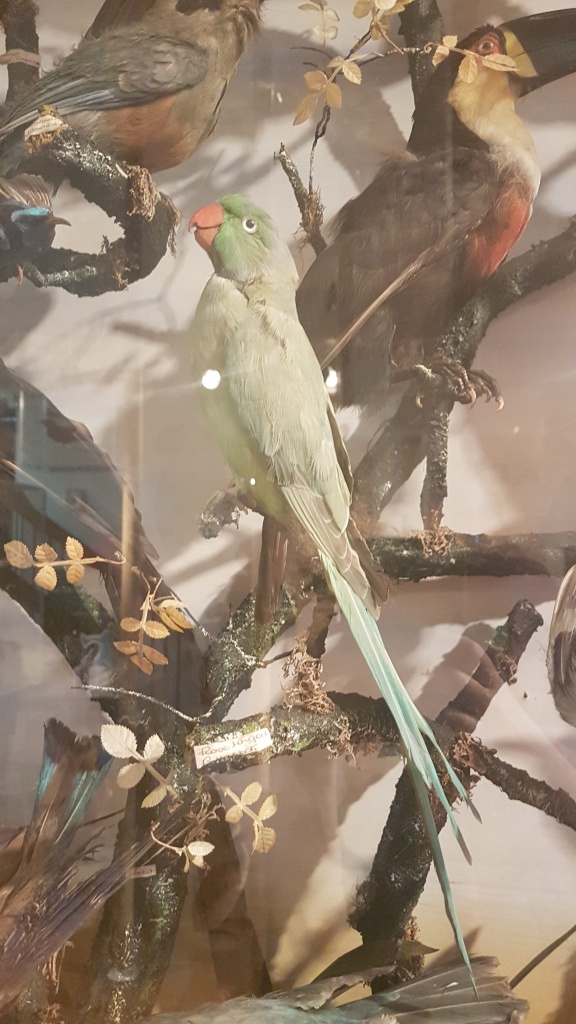
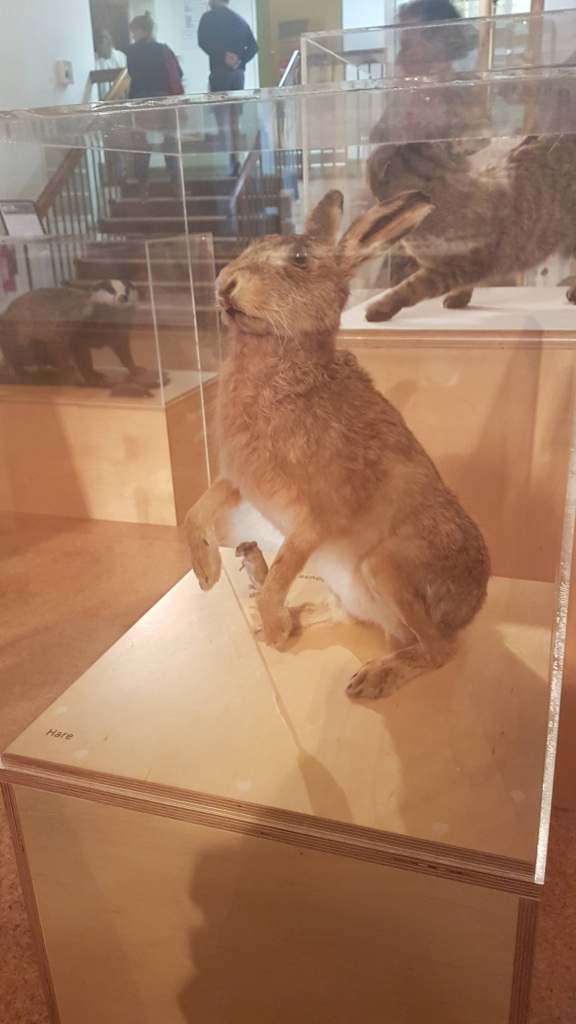
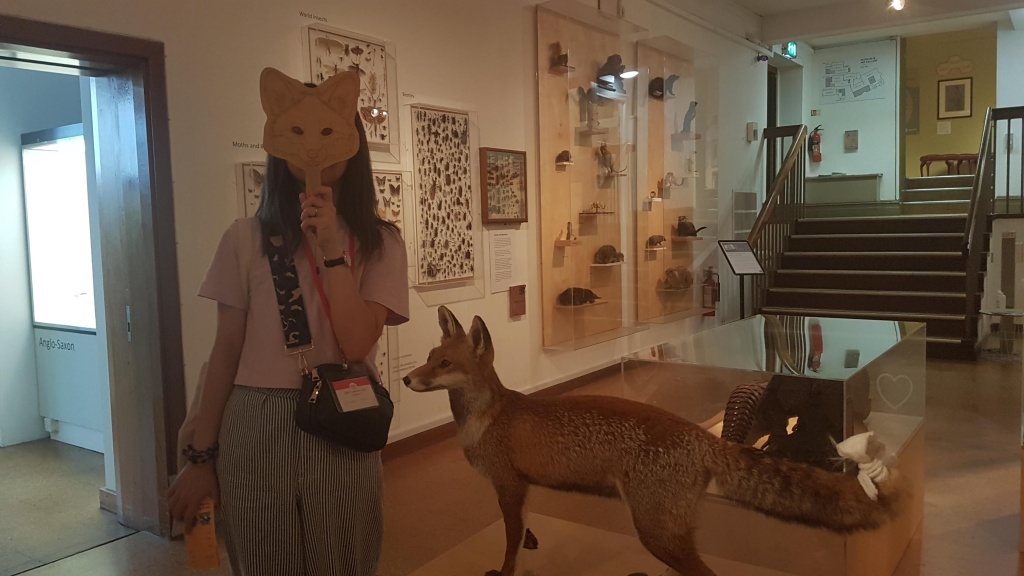
On Thursday afternoon there was time built in for delegates to go and see a range of places, including the Crown Derby factory. We chose to go to the Derby Museum and Art Gallery where we were given a very light touch tour by their head of visitor experience. Derby Museum is one of those wonderful local museums that’s a bit of everything: a natural history gallery that’s been beautifully co-curated and co-created with local families who selected the exhibits and then helped to build the cases in a re-designed space. There had previously been a smaller room, which was much loved by families, so it made sense to involve them in developing the new one. There is a fox by ethical taxidermist Jazmine Miles-Long, which is touchable and at child height, which can be seen in the bandaged tail. There are wooden masks which help you to see in the way an animal does, and the birds are cleverly displayed in a ‘forest’ of wooden trunks. The skeleton of a prehistoric hippo lives in here too, and some wonderfully pickled specimens like an octopus.

We also liked the archaeology gallery and the peek into the atrium above the library. There’s a corridor with a display of busts, which a small child was saying hello to, and a gallery dedicated to local painter Joseph Wright. The museum’s young people’s group had worked on the interpretation in this space, and had created a timeline of his life where they had highlighted his struggles with mental health as well as his successes. I loved the fact that they had called him Joe, and with the number of self-portraits he painted in different costumes he was clearly an early proponent of the selfie!

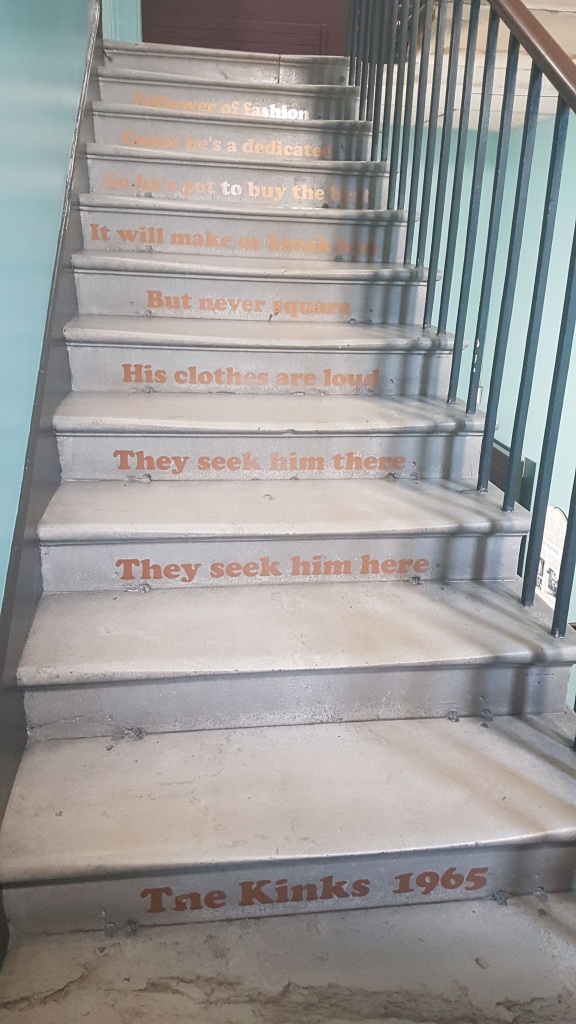
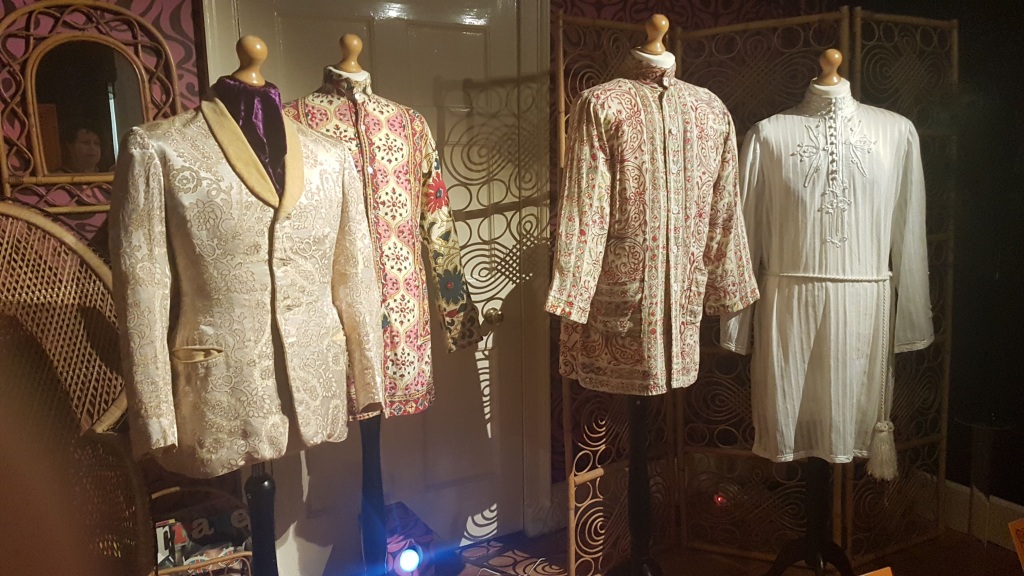
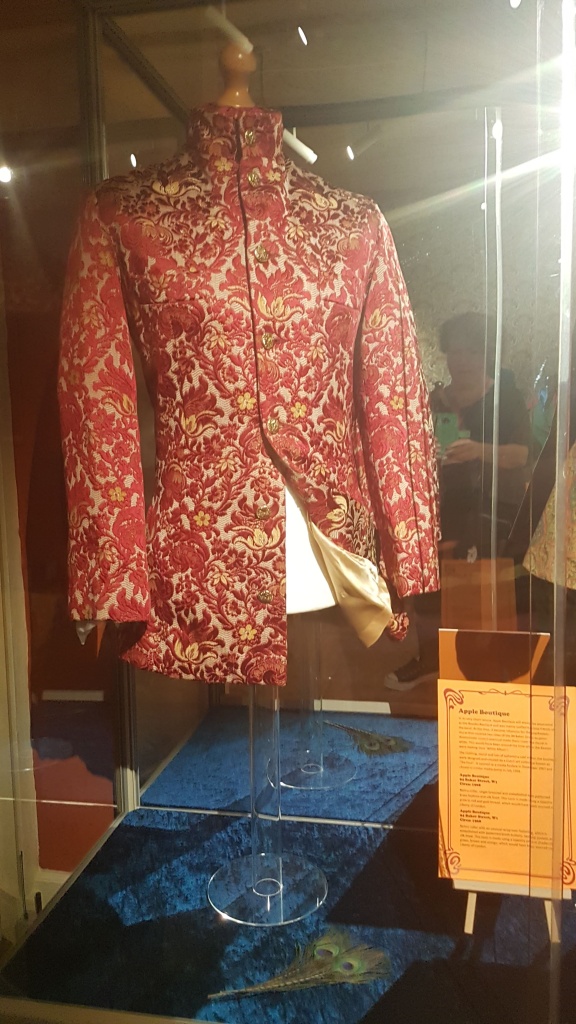
We had time to pop over to Pickford’s House too – a Georgian house museum about three minutes walk away from the Museum. There are four floors, where you can see recreated rooms and – the reason I wanted to go – the Peacock Revolution exhibition about men’s fashion from 1966-1970. This has some gorgeous clothes and a great soundtrack, and I coveted several of the brocade jackets. There;s a new Toy Theatres room too, taking me back to the first exhibition I worked on at Museum of London Docklands.

The final exhibition we saw was at the Museum of Making itself, called Do It Yourself? which is in partnership with the BBC’s centenary celebrations. Bright, open and cheerful with lots to do for children, it didn’t take long to go round. We liked their charging model, where your ticket is valid for the length of the run and they also have pay-what-you-think days and a monthly free day. Under 16s are free. The rest of the museum is free and well worth a visit.

But how did your presentation go, I know you are all dying to ask. I was talking about the Young Collective project that I have written about previously and I think it went quite well. Well, no one got up and ran away and they laughed in the right places, so I will take that. One nice chap said afterwards that I had the ‘room in the palm of my hand’ which was very sweet – it was only half full at that point, of course. I was very nervous, having never spoken at a conference before, and I will probably hate the recording when they share it, but I enjoyed writing it and there is a lot of interest in the museum in the sector. The next one is at M-Shed in Bristol in October, which will be the Dress and Textile Specialists 2022 Conference. M-Shed is another of my favourite museums, so I am looking forward to going back there too!

We made it back to Derby station in between thunderstorms (just!), the train was on time and I think the children were pleased to see me…

Other things making me happy this week:

  • an inspiring morning at the Make First symposium at the Crafts Council
  • a visit to the library today
  • 2/3 of the children back at school
  • the prospect of a couple of trips to Wales in October
  • a whole lot of Eddie Izzard albums on Spotify

See you next week!

Kirsty x

What I’ve been reading:

Mr Mercedes/End of Watch – Stephen King

Lies Sleeping – Ben Aaronovitch

110: so what does a typical week look like?

This week our new learning facilitator joined the team, after a gap of five months since we broke the last one left us to go freelance. It’s a funny time to be recruiting for a museum team, as we don’t have a physical museum and we’re all working in interdisciplinary mode to support the different projects. This new one – we shall call her E – was a printmaker and an art teacher before she joined the gang this week.

A big museum welcome to our new starter

One of the questions several of the candidates asked us when we were interviewing for the role was ‘what does a typical week look like?’. Once we’d done the sage ‘oh yes, what a great question’ bit, followed by the slightly hysterical laughter bit, we were quite honestly able to tell them that at the moment there is no such thing. When we are back in the museum next year (from my lips to God’s ears, as the saying goes) things might settle down as we can set up a programme, but right now we’re all about R&D, testing new sessions, keeping ourselves on the radar and supporting each other’s programmes (formal, informal and creative). Formal, for me, means Early Years in formal settings right the way through to teachers – both serving and trainee – and post-grad students. Informal is families, early years informal settings, and pretty much everyone else. Creative is pop-ups, festivals, salons and everything else.

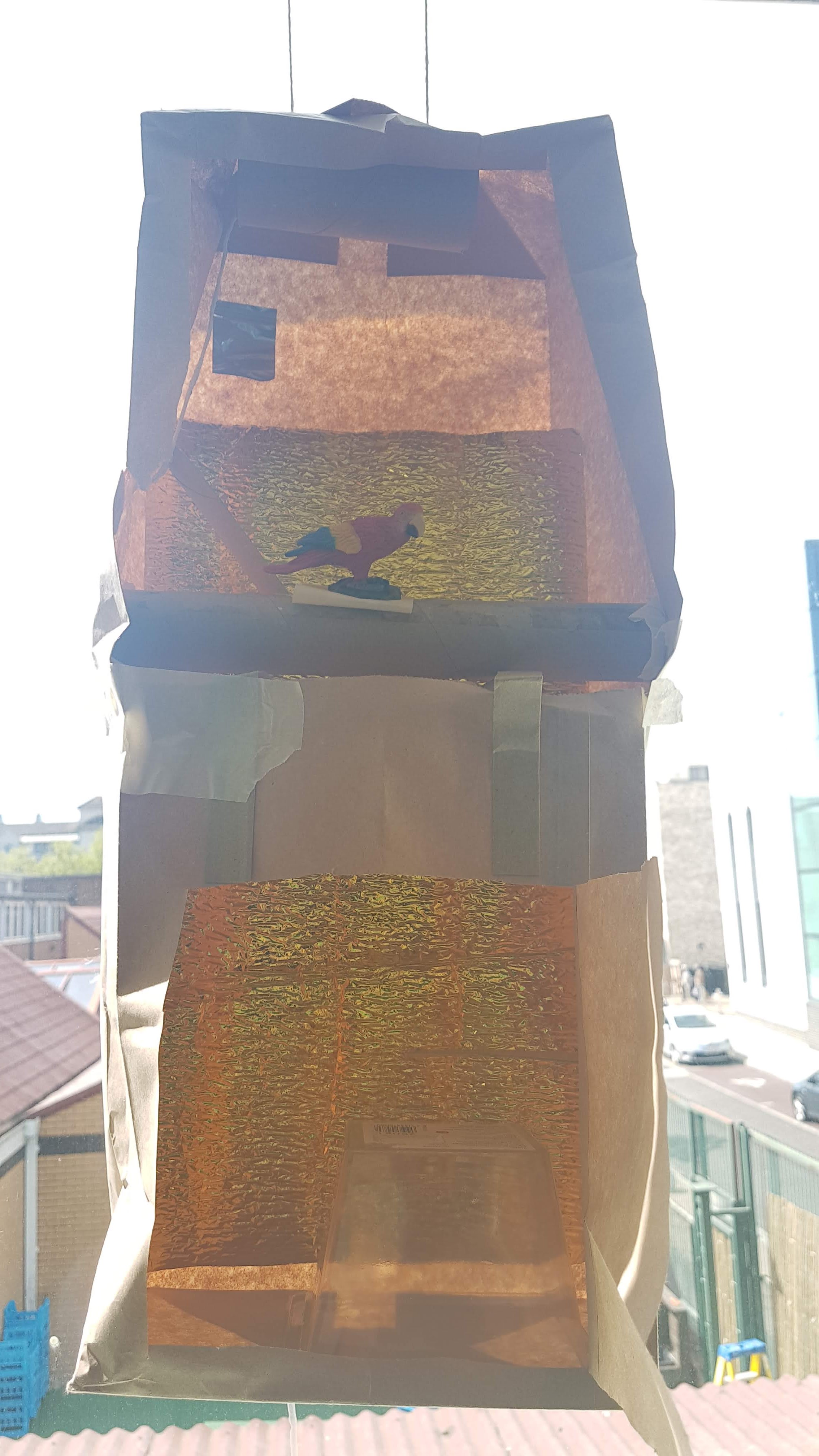
This week, for example, was only four days thanks to the Easter bank holiday but I like to think we packed enough in for five. E joined us on Tuesday morning and we introduced her around the museum, dragged her off for lunch in the staff canteen, made her sit in on Teams meetings about projects she knew nothing about (to be fair, they are in the development stage!) and abandoned her to the tender mercies of the IT team. Wednesday started at South Kensington and then ended in East London with a DT teacher training session for my favourite teaching alliance, including the bit where I didn’t have enough resources and challenged one team to find their own in the classroom (amazing result) – the outcome was a brilliant parrot house from the Think Small session, created from lunch bags and things they found around the room.

Students using their initiative

Thursday was a stay and play session for early years children with speech and language delays in Whitechapel, where we were testing a sensory play kit designed by Play Build Play, followed by more time at the museum. Friday was back at South Ken, where we had meetings, lunch in the garden and then spent a couple of hours prepping for a filming project, making fans and colour samples.

Cutting and sticking – yes, this is my job

Another week might have seen us out with the blue blocks at a pop-up, a play street or a school playground; running an afterschool club; delivering sessions in a classroom or hall; working at a youth centre with a designer; filming with various creatives; or any number of other things. Some weeks have a lot of meetings in, these days mainly on Teams or Zoom so we do get excited when we meet actual people. Sometimes we go and have brainstorm sessions at another museum, or go and see other galleries. Some weeks we get a day at a desk! I love the days when I’m out working with people of all sorts of ages, interacting, building, playing and making up stories and mad ideas. Equally I love being with the team, bouncing ideas around and problem solving, being creative and thinking about the potential for the new spaces we’ll be working in. I love researching and creating sessions, using museum objects to inspire. I consider a teacher training session to be a failure if at least one of the trainees doesn’t ask me how to get into museum learning, and this week it was a whole table of them.

But a typical week? There’s no such thing. Thank heavens.

See you after the next one!

Kirsty x

What I’ve been reading:

Piece of my Heart/Friend of the Devil – Peter Robinson

Insidious Intent – Val McDermid

Amongst Our Weapons – Ben Aaronovitch

Doctor Who: Eleventh Doctor Tales (Audible)

108: a couple of anniversaries

This week I celebrated not only the 4th anniversary since our stroppiest cat and this week’s cover star, Lulu, came to live with us, but also my 20th anniversary of working in museums – a long time, I agree, but a decision I have never regretted since making the leap out of the classroom way back in 2002.

One question I get asked a lot, usually by teacher training students who are already looking ahead in terms of their careers, is ‘how did you end up in museums?’ ‘By accident’ is my usual answer. Back in the heady days of properly funded Education Business Partnerships, when teachers not only got to go and do CPD but had supply cover paid for by the EBP as well, I went on a couple of training days – one at the Golden Hinde, where we got dressed up in Tudor sailor gear and spent the day doing the sort of thing children got to do on a school trip, and one at the National Army Museum where we experienced object handling and various other aspects of museum learning. I don’t think I had realised that working as an educator in museums was an actual career choice until the then head of education there, Andy Robertshaw, said that they were recruiting and on the off-chance I applied. I had just started an MA in Museums and Galleries in Education at what was then the Institute of Education (now gathered under the wider UCL umbrella) but not with any intention of moving out of teaching, more as a way to be a better humanities co-ordinator. I moved house a month later, and hadn’t heard anything, and a few months after that in February half term I had an irate phone call from the HR team there asking if I’d be attending the interview the following day. Somewhat bewildered and battered from OFSTED the week before and – quite honestly – out of my head on Benylin Day and Night tablets from the inevitable half term germs, I went for the interview. To this day I remember very little other than ranting about the marginalisation of history in the curriculum but something must have worked as they gave me the job.

I loved it. I got to teach the subject I loved but without parents evenings, PE or music lessons in the week, and on weekends and in the holidays we did family events, live interpretation, talks and conferences – in that team, we all did everything. Interminably, at times: if someone gave me the kit and the powerpoint I suspect I could still do the Florence Nightingale session, fondly known as the Mary and Flo Show, or the Civil War. I moved to Museum of London Docklands three years later, where I got to learn a lot about London (one of my other great loves) and create a lot of sessions, and then to the V&A Museum of Childhood in 2017 (now the Young V&A, of course) where I am helping create a new museum.

There have been tricky moments, I’m not denying that: the repeated restructures of the last few years and seeing the impact of these on colleagues has been really hard. Every so often I throw my toys out of the museum pram and declare that I can’t possibly work for them any more and last year that tantrum lasted about six months instead of a couple of weeks, but then I remembered that I actually do love my job and want to see the project through.

I still tell those teacher training students and serving teachers who ask me that it’s the best job ever, and happily attend careers sessions and work weeks to talk about what not only I do but all the other people who make a museum work: kids assume that the only staff are the ones they see, like the security, shop and front of house teams, and are amazed when they hear about the back of house team who make sure everything runs smoothly. Mine’s the best job, though.

As if by magic, the Shopkeeper appeared

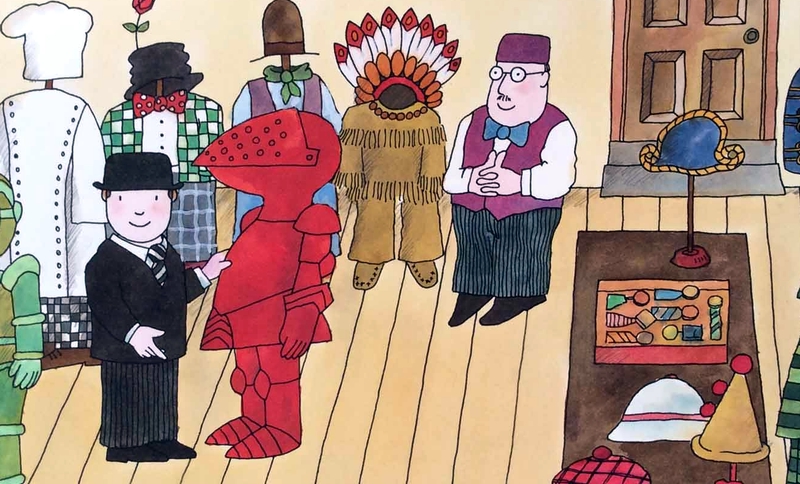
This week the great shopkeeper in the sky appeared to take beloved author David McKee off back to reality. Those of us of a certain era will remember the bowler-hatted and suited Mr Benn and his visits to the fancy dress shop where he was cast into a series of costumed adventures before heading back to his peaceful existence on Festive Road. King Rollo was also his creation, and younger children will know Elmer the Elephant, the mischievous patchwork pachyderm.

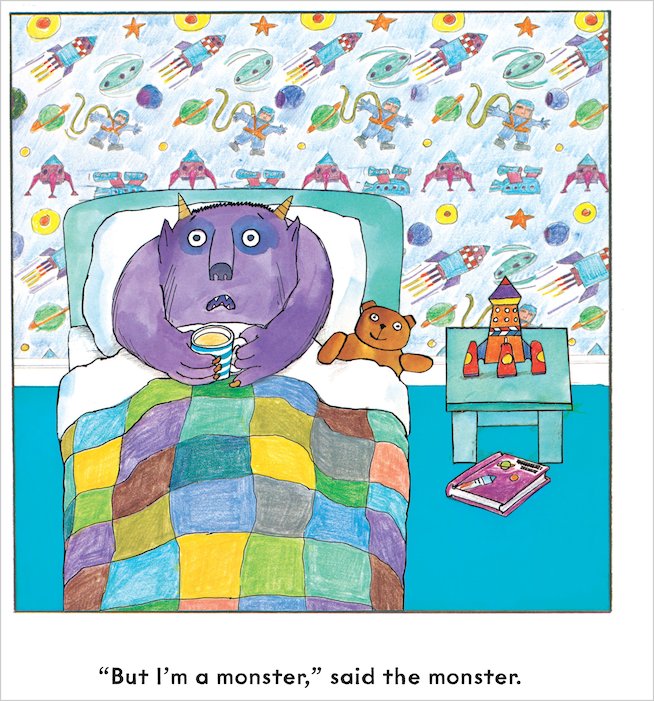
My favourite, and one which I have read literally hundreds of times to both my own kids at bedtimes and to classes of children at storytime, is Not Now, Bernard, the story of a boy who finds a monster in the garden. He tries to tell his mum and dad about the monster but they’re too busy to listen. Poor Bernard gets eaten by the monster, who proceeds to go into the house and create chaos, but the parents don’t even notice their son has been eaten. The bemused monster finds himself tucked up with milk and a teddy bear.

This was a wonderful book to read aloud: the children recognised the distracted parents and gleefully acted out the repetitive ‘Not NOW, Bernard’ lines as we read through. I can still hear Thing 2’s baby croak as she joined in. Thank you, David McKee.

See you next week,

Kirsty x

What I’ve been reading:

Dry Bones That Dream/Innocent Graves/Wednesday’s Child/Dead Right – Peter Robinson

On the Bright Side – Hendrik Groen

Doctor Who: Tenth Doctor Novels vol 4 (Audible)