Well, here we are with post 104 and that means I’ve been knocking these weekly rambles out for a whole two years.
And what an odd two years they have been. I have just looked back at week one, where I made a list of projects I was going to finish and some of them did get done, but several didn’t. Let’s mark them as ongoing (all the best action lists do this) and move on to the next item. We are still in the grip of Covid-19, despite the prime idiot’s best efforts to convince us otherwise by throwing parties and stuff: once again, this week more of my friends and family have tested positive at the same time than at any other point. It’s the second time round for one friend’s daughter, and the first time was less than six weeks ago. The tube is ridiculously busy and so many people aren’t wearing masks (I forgot mine a week ago and felt quite reckless, but after the person I was with tested positive two days later I have remembered it every day). It almost feels as if Covid is ‘soooo 2021’ and now we have to get on with worrying about nuclear buttons and Putin’s ‘special military operations’ instead.
This week I worked at an awards event – a black tie do, hosted by the fabulous Robert Llewellyn (aka Kryten from Red Dwarf). He was very professional and a thoroughly nice chap, and I got to be a glamorous assistant and hand awards to the presenting sponsors as they came up to announce the winners. One of the speakers has since tested positive for Covid, so I am still testing daily as I’m out and about in schools a lot at the moment and I don’t really want to be the one that carries it back in with me! I wore a red velvet M&S dress that I had grabbed in a charity shop without even trying it on as the last time I had to dress up was for this same event in 2019, and – quite honestly – who still fits into anything from back then?? Luckily it fit like a dream, and for £6.50 it was definitely worth it.
I finally got home at just before 1am, in a cab with a lovely driver who talked to me all the way home which meant I at least stayed awake! Back in London for teaching the next morning, I was so tired that I had a proper senior moment with my brain on autopilot: I got off the DLR three stops early, and had to get on a bus to get to the school I was working at. The sessions – Imagine This, delivered by artist, writer, facilitator and all round fabulous person Julia Deering – were a good way to spend a morning. Designed to get kids thinking about set and costume design, they are an explosion of colour and imagination with the end result of amazing jungles, ice caves, castles, restaurants, game worlds and seasides peopled by heroes, magical characters and (on this occasion) Sonic the Hedgehog. I’m back at the school this week with the ‘Think Small’ session. I always think you get the measure of a school as you walk through the door, and this one is so welcoming and friendly. The pupils are confident and happy, and keen to share their ideas – we’ve really enjoyed spending time with them. I was at another school in the afternoon to cover a coding club session, and somehow I made it back home without falling asleep anywhere – two days later I’m still shattered, though I did make it out to swimming this morning and for a walk yesterday. If anything has proved I can no longer party like it’s my birthday, it’s a midweek late night….
The #8 bus to Bethnal Green, looking surprised I was still awake
And that’s been week 104 – here’s to year 3 and more weekly rambles through the life of a middle aged muddle.
This week has mostly been about resetting my brain, one way or another – as you’ll have seen in previous posts, it’s been a busy few months with various work projects and all the other things that go with being a mostly-functioning adult. I took a couple of days off mid-week, as for the first time in many years I was in danger of having too many days to carry over into the next leave year.
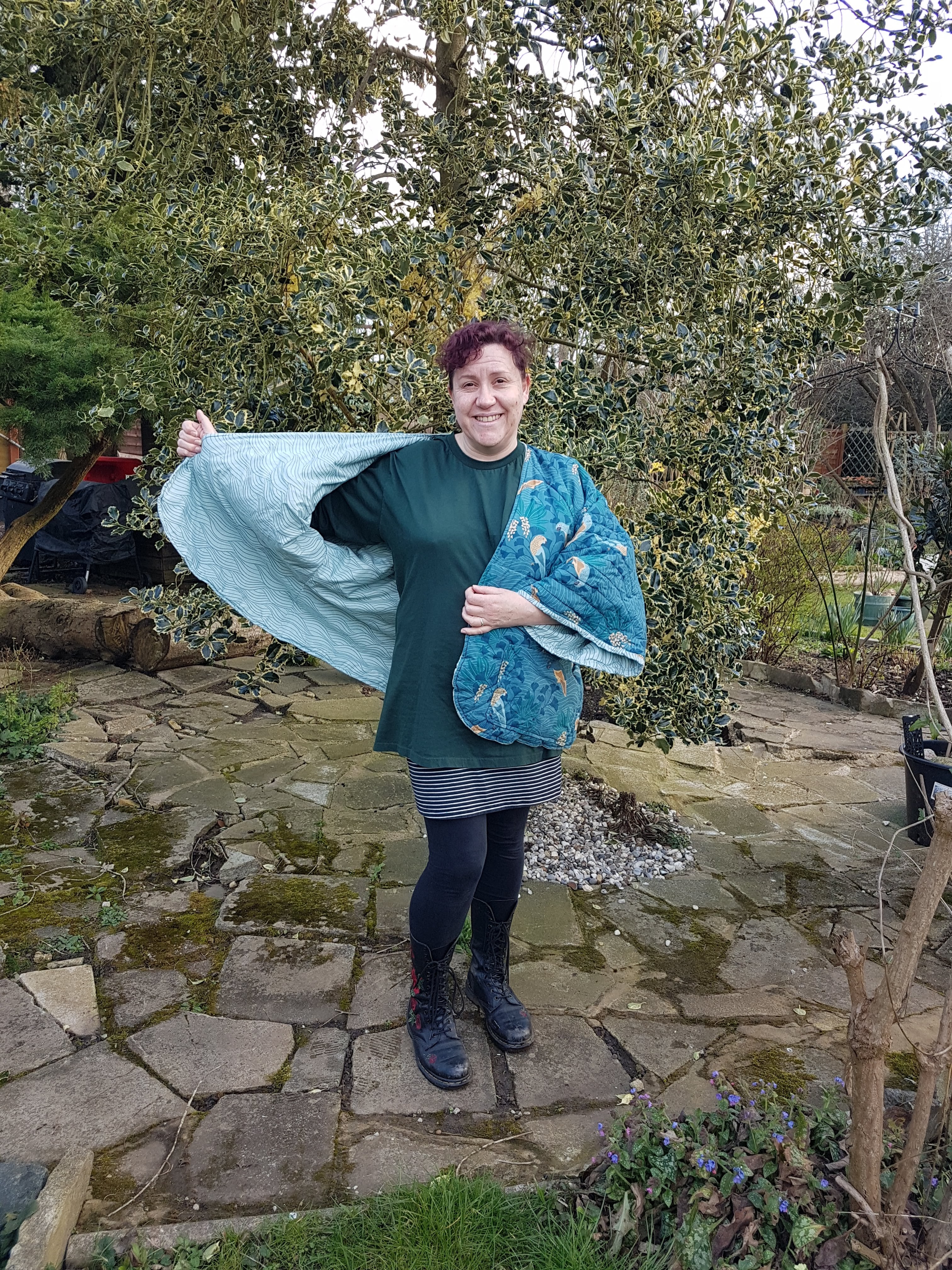
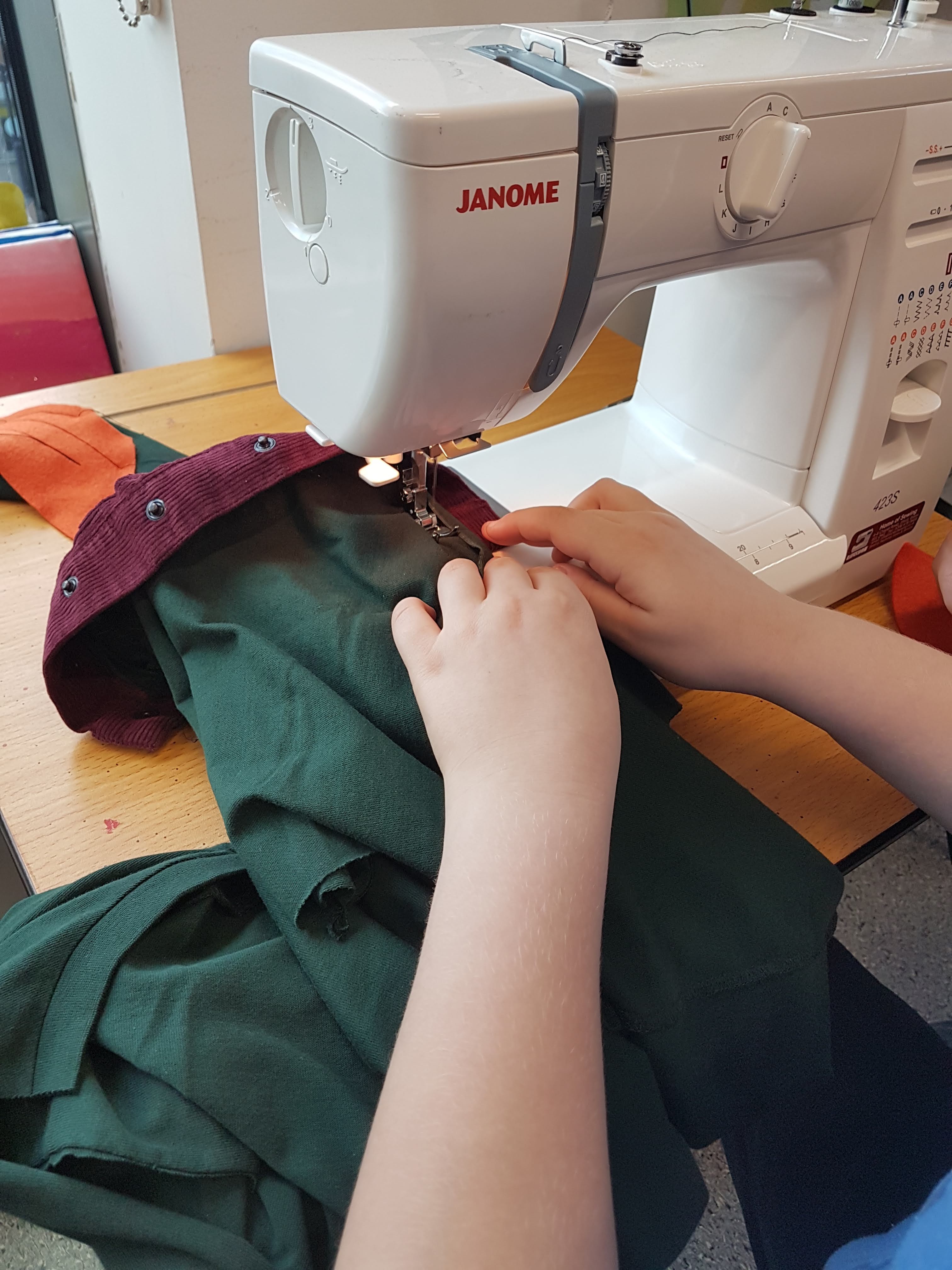
As these were days just for me, I took them ‘off-off’, as opposed to making a list of practical things I needed to do – you know, opticians appointments, running errands and so on – and planned a sewing project. Folkwear Patterns, one of my favourite companies for a good dramatic piece, have recently published a jacket pattern in their new Basics range which I liked the shape of. I do love a ‘statement’ piece, as fashion magazines would say.
“A collection of simple patterns based on the premise of folk clothing, these pieces are easy to sew, easy to fit, comfortable to move and work in, and are a great canvas for creativity. Make these pieces simple and plain or embellish till your heart’s content.”
Another thing I’d been keen to try after my adventures in patchwork during lockdown was to make a quilted piece of clothing, so with a straightforward pattern this seemed a good time to try it. Seamwork, which also has an excellent range of patterns, has a link to a tutorial for making on how to quilt fabrics for garments so I headed there for some help.
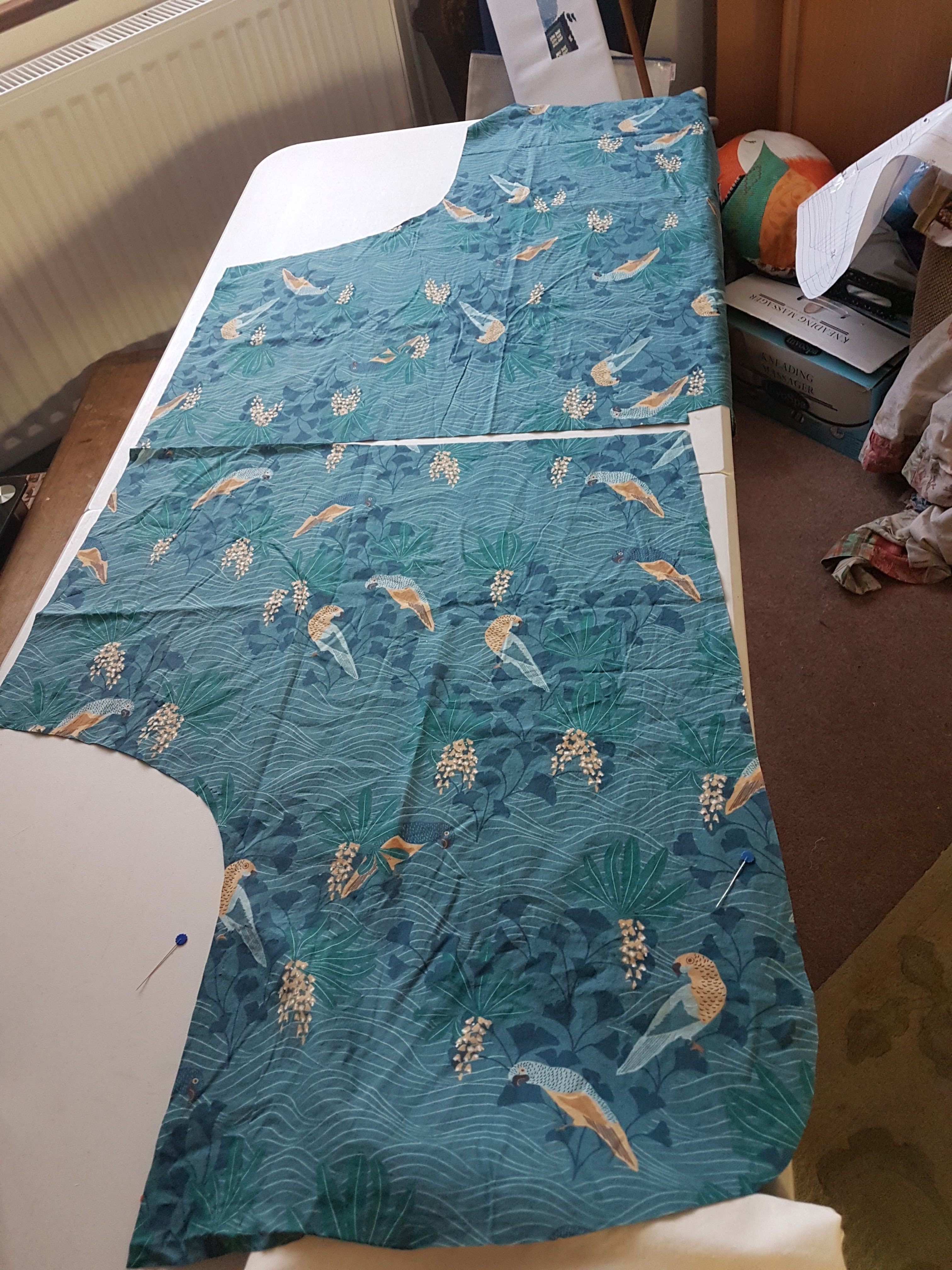
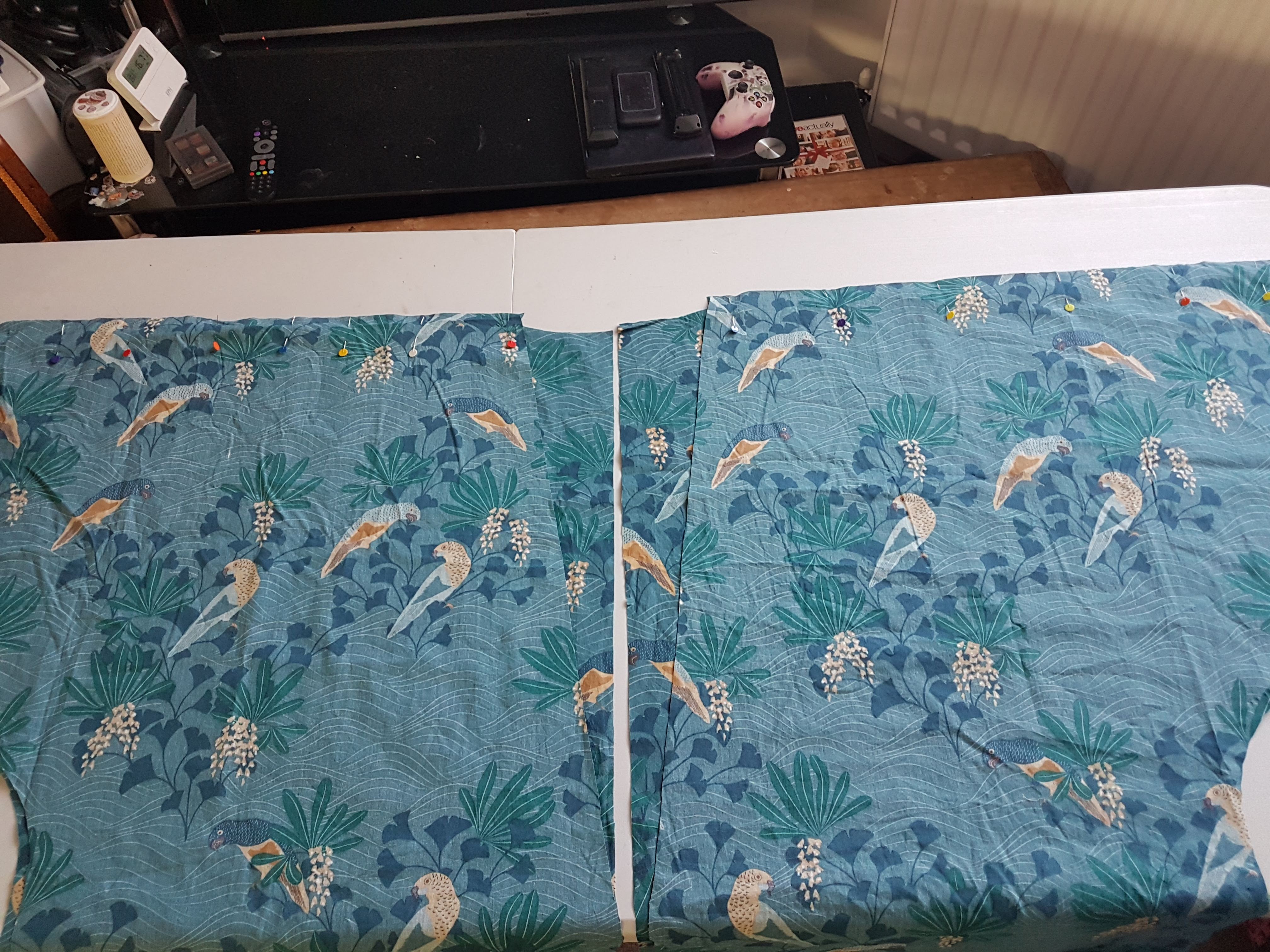
The first issue I ran into was fabric choice – the pattern, as the front and back are cut as a single piece, isn’t suitable for a one-way print. The fabric I wanted to use for the outer layer – a double duvet cover in a dark teal green, with parrots and leaves – was (of course) a one-way print so I had to do a bit of cutting and sticking before I could sew. Pretty simple – I found the shoulder line, sliced the pattern along it and cut the back and front separately before sewing them back together and treating them as a single piece. Next time, I’ll remember to cut out the lining pieces before I cut the pattern so I don’t have to stick it back together! I chose to cut two sizes larger than my actual size, as I wasn’t sure how much room I’d lose when I quilted it. For the bottom of the quilt sandwich I used a polycotton sheet, as it wouldn’t be seen and was pretty much the same weight as the outer.
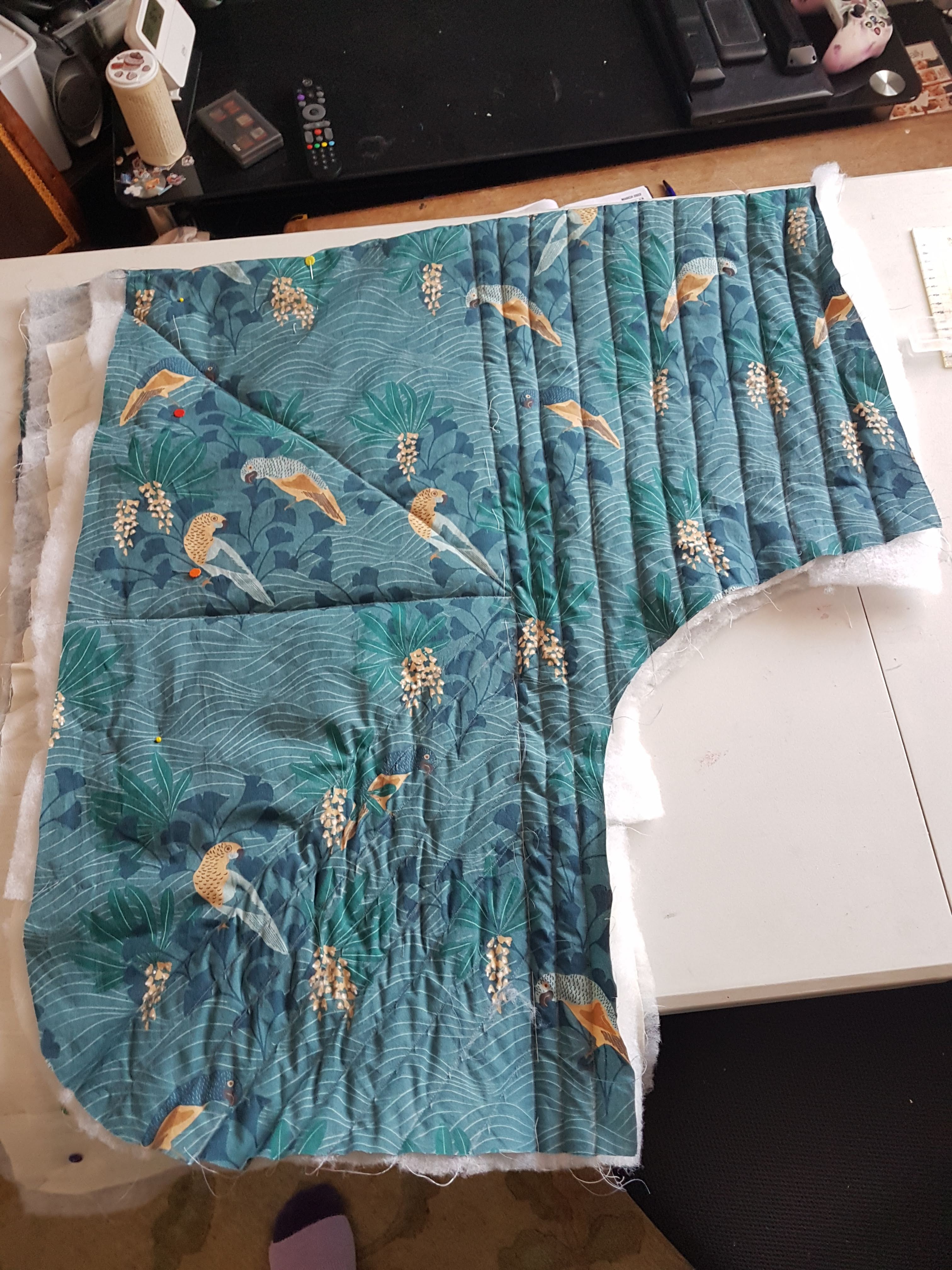
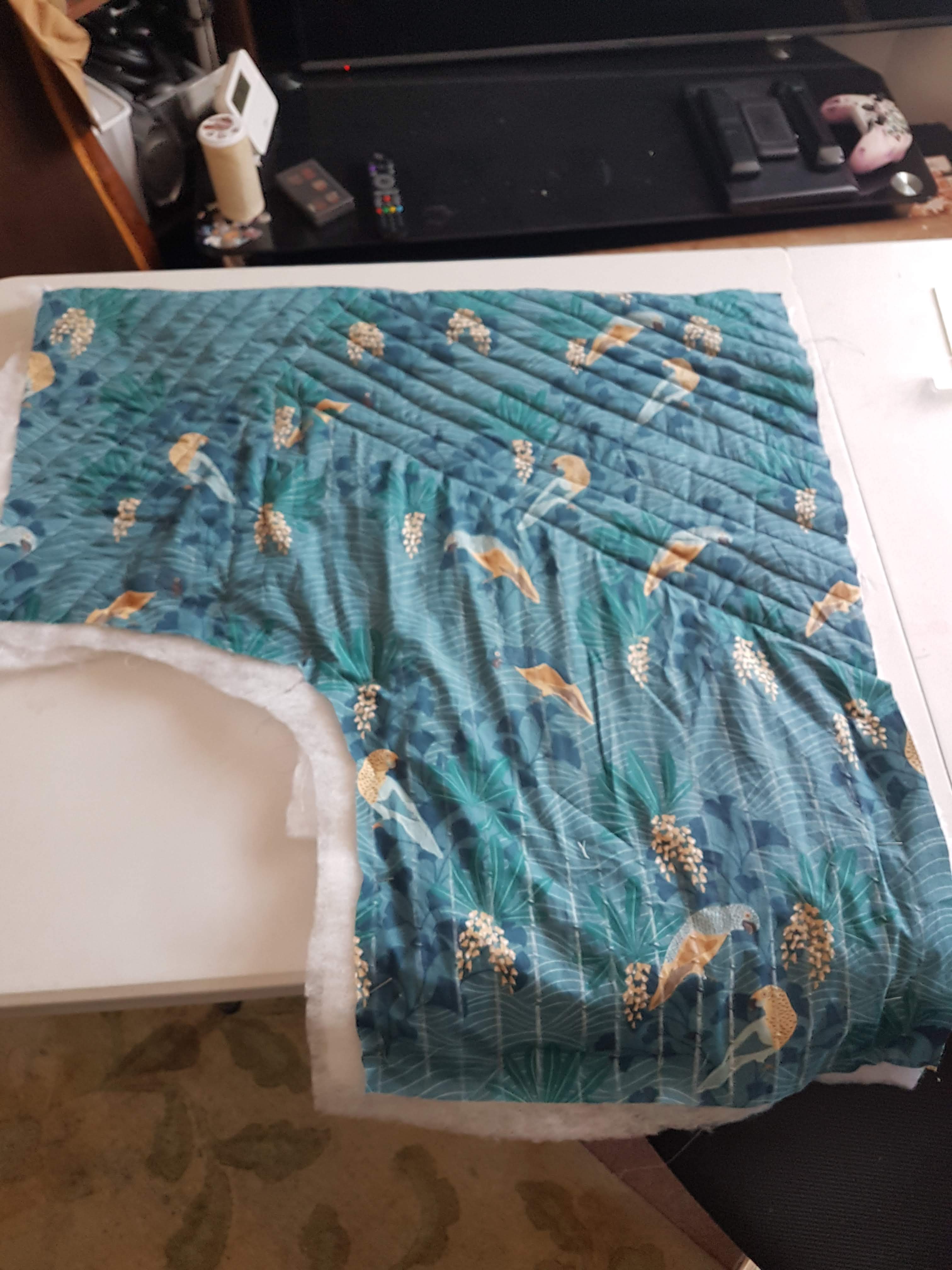
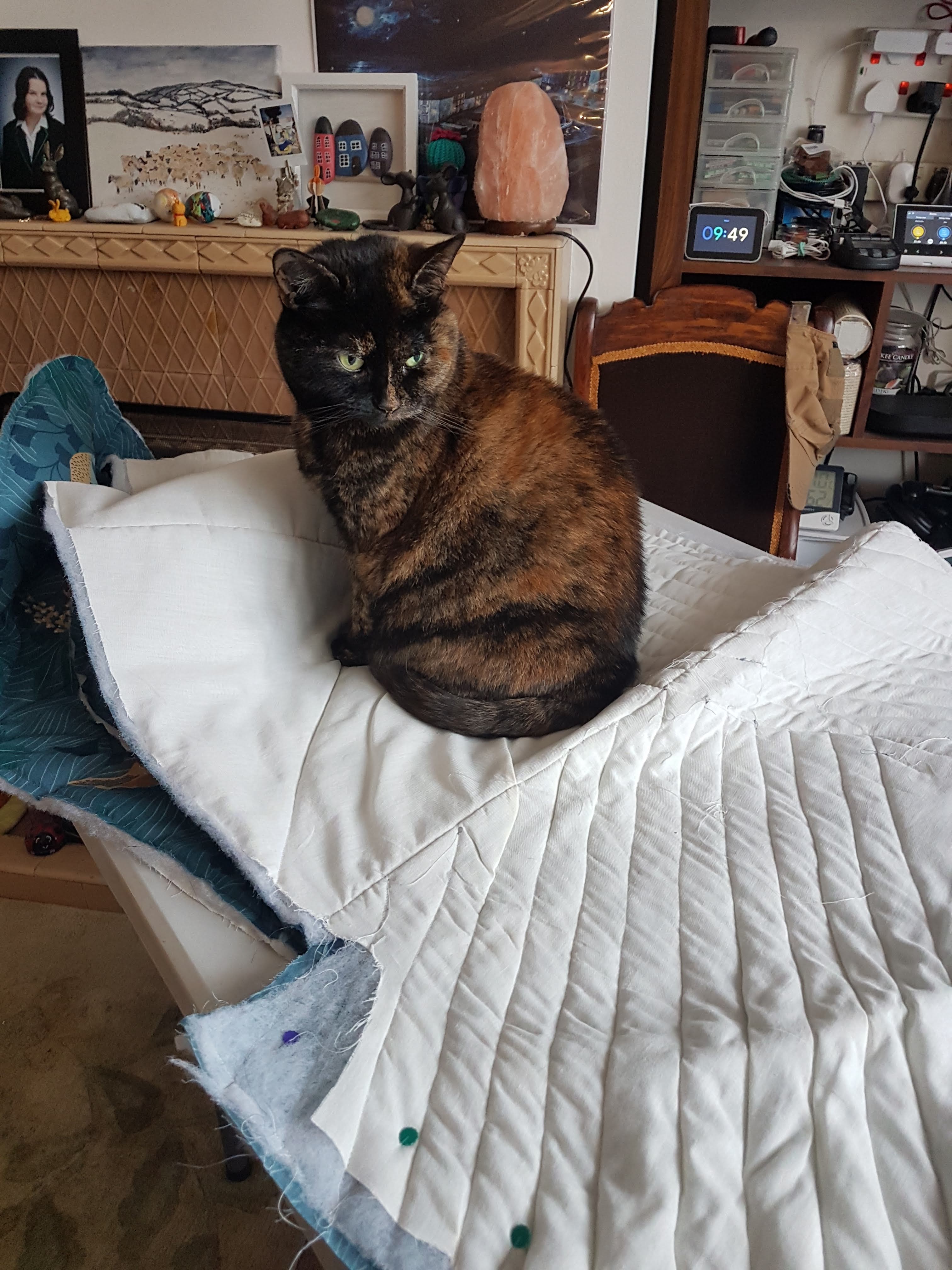
Once I’d cut all the bits out I started following the quilting tutorial, and never have I been so relieved that a garment had a full lining. I didn’t use enough pins/clips/nails/double sided sticky tape to hold the ‘sandwich’ together so the sheeting moved around like mad, bunching up and generally teaching me not to be lazy with my pinning. Luckily the aforementioned lining hides the disaster inside. I didn’t have quite enough batting to use single pieces, so one side is very much pieced together! Another reason to be glad of the lining….
FrontBackQuality control by Lulu
I chose to quilt in straight lines, but only did small sections at a time so I could change the direction of the lines. You can see the front and back sections above – the chalk marks on the back are where I changed my mind and decided to leave sections unquilted as I liked the effect. The angles marked on my quilting ruler were very helpful here. The pattern isn’t symmetrical across the left and right halves of the jacket but the patterns and lines are roughly the same. I really liked the vertical quilting on the front sleeves and the ‘V’ shapes on the back.
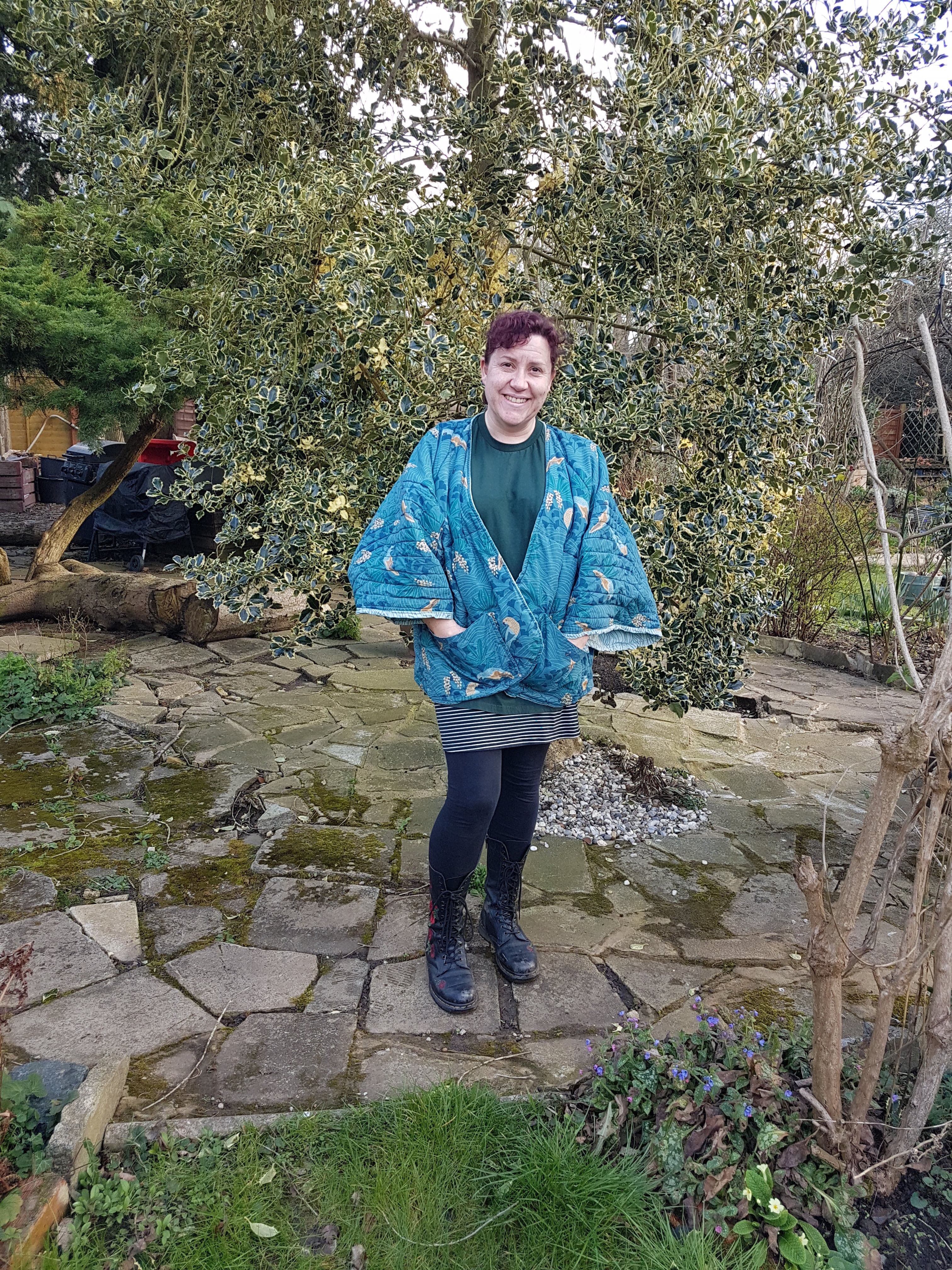
Having quilted the bottom half of the front it dawned on me that I hadn’t accounted for the pockets which would cover my lines, so before I added the pockets I lined them up, marked lines on them and stitched ‘mock quilt’ lines so they’d fit in. I decided to change the pocket opening as well, as the side opening pockets looked as if everything would fall out. They’d be great for hands but not so good for things like keys, phones, pet dragons, shiny rocks, emergency waffles and so on. I went for a top opening – they’re very generous pockets, too, which is always good.
Day two was about construction. I trimmed the lining to match the outer, to take account of the quilting. Sewing the jacket together was very straightforward with only three seams (underarm/side and back) on each layer. The lining was attached with a single seam around the neckline and bottom hem, and then the sleeves were bound and the pockets added. I topstitched all around the hemline, threw the whole thing in the washer and dryer to get rid of the chalk marks and to fluff up the batting, and then gave it a press.
The back!The lining!The front with pockets!
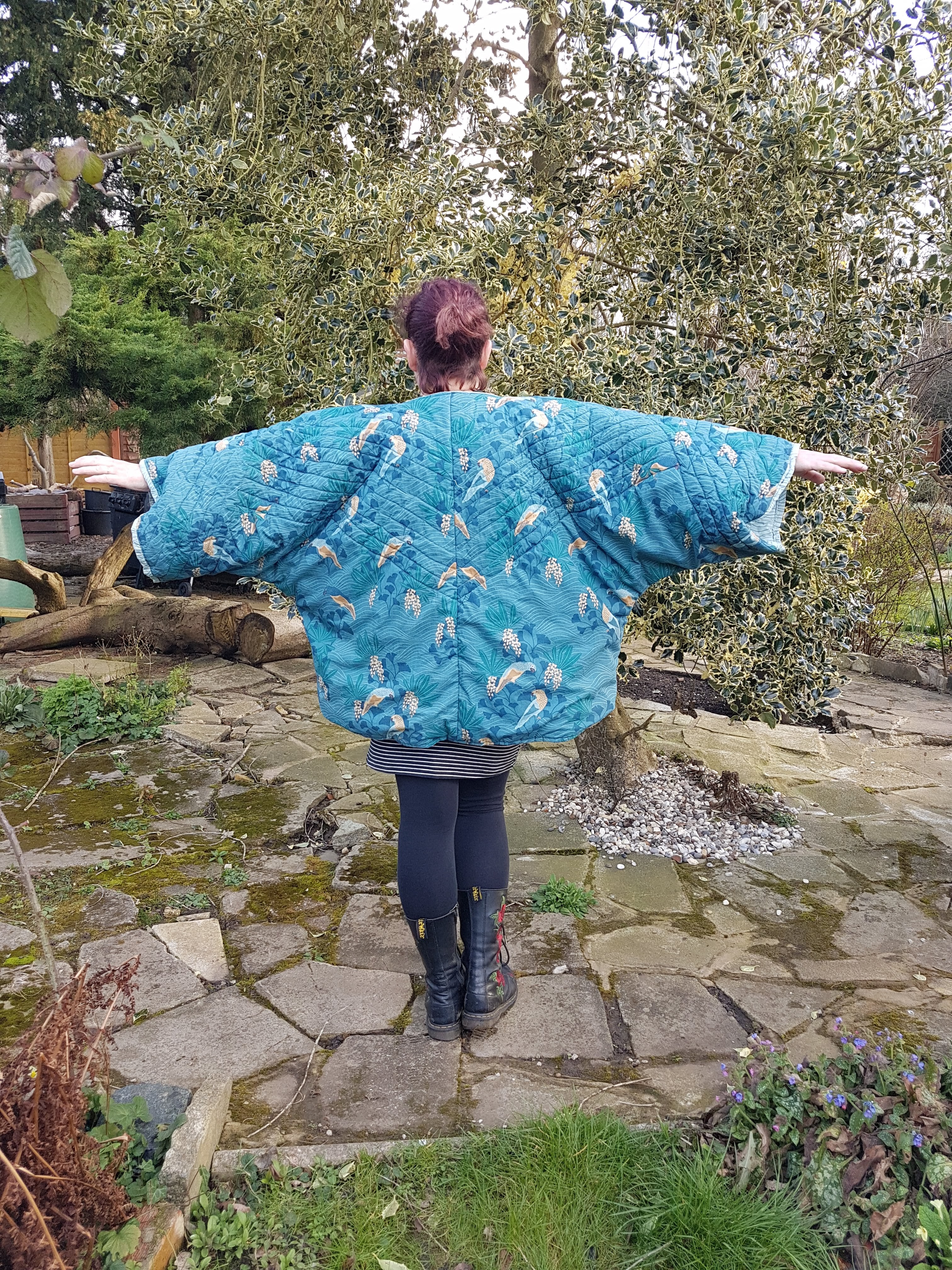
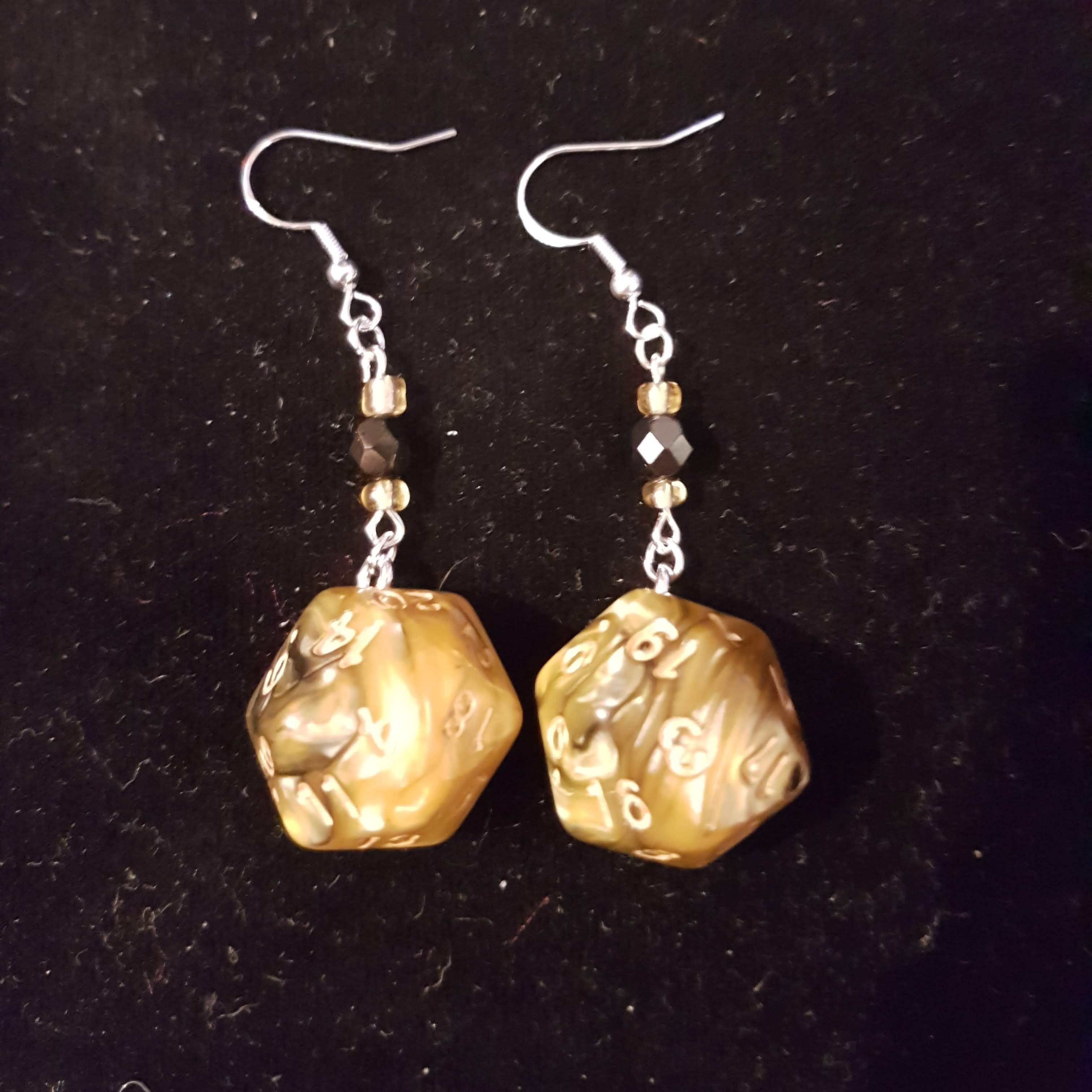
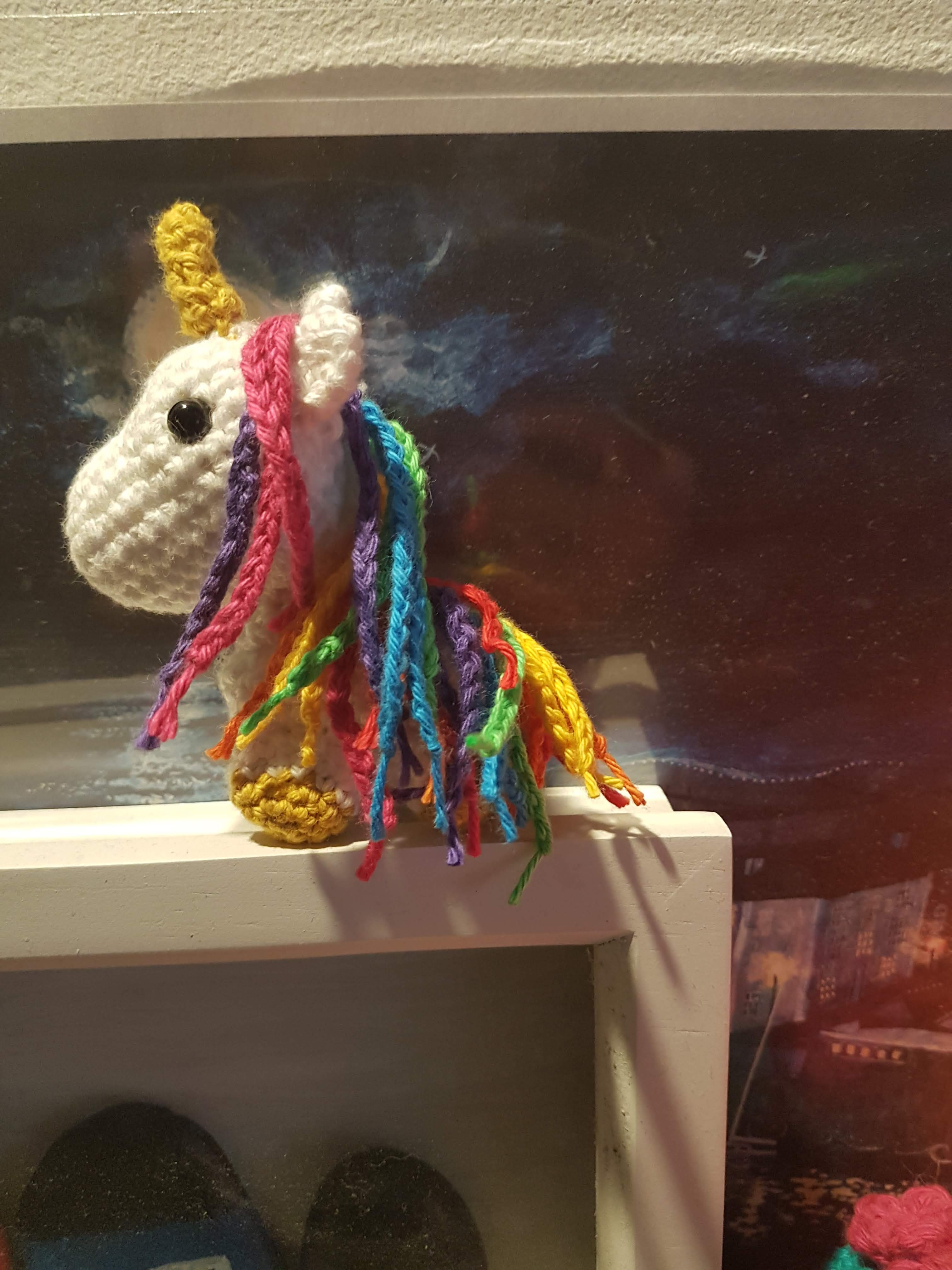
Having convinced Thing 1 to take some photos for me, I was all done – two days of singing along to loud music (classic rock and ska punk, mostly) and sewing something that’s made me really happy. It’s great to throw on, it’s lovely and warm and has big pockets as well as being dramatic enough for stalking the galleries of the V&A – you know you’ve nailed it when a visitor asks where you got it from. I teamed it with a black skater dress (also made by me) and a pair of platform boots – and new earrings also made this week. You can see them below, along with the alpaca beret (from one of the crochet mags) and a rainbow tinycorn.
I’ve also finished the Mental Health First Aid qualification I was doing, and went for a long walk with friends that ended up with toasted teacake and hot chocolate with a mountain of cream and marshmallows at the market. Last night was a meal out with some girlfriends at the local Indian restaurant – it’s been far too long since we’ve done that!
This was secondary school week, when our year six kids find out which school they’ll be off to in September. For the lucky ones (including us) it’s your first choice school but others may not have fared so well. In our village, it’s a bit of a lottery – the majority of the children will have selected the school in Epping and will probably have got in, but if they’re in the half of the village that’s past the library they won’t be entitled to school transport as they’re closer geographically to the school in Ongar. Unfortunately as it’s so oversubscribed they haven’t got a chance of actually getting into Ongar – we got Thing 2 and 3 in on the sibling rule as Thing 1 started there when it wasn’t oversubscribed as Ongar parents didn’t want to send their darlings to a new school.
This is the first year the school has had a full cohort of students from Y7-Y13, as it’s been building year by year as a new academy. It has its issues (a severe shortage of maths teachers this year) and I shall be watching their options system with interest as it appears to be more focused than I’d like on the government’s EBacc targets than on the children’s own wishes, but we’ve been happy with it for all the kids. One of the reasons I chose Ongar was because it had more of a creative focus, and you all know creativity is one of my favourite things, but that does appear to be changing. Thing 2 will be making her GCSE options next year, so I will have my eye on it.
Still, that is not the subject of this week’s blog really – it’s more of a long-winded intro. This post is really about me, and Thing 3, and growing up and stuff. He wants to be allowed to walk home from school on his own which might not seem like a big thing in the grand scheme, but…
…one of the best things that’s come out of the pandemic is that I’m still working from home quite a lot and doing the school run a few afternoons a week. For me this is still a novelty. Apart from when I was on various maternity leaves, when school run was a pain as it meant wrestling the others into a buggy and coaxing a tired little one along the mile walk home up a big hill, this is the first time I’ve really had to do this. Our wonderful childminders did it for years, which I can’t complain about as we couldn’t have managed without them, but not me.
So, three afternoons a week I put the laptop to sleep and head off up to the school to collect Thing 3, and I get to brace myself as he hurls himself across the playground at me for a hug. I do the playground thing and chat to other parents, and I know which parents are attached to which child. I get to walk home and chat with my son as he tells me all about his day. This week we’ve compared secondary school notes. Sometimes I’m able to return the many favours my friends have done for me when the Central Line has failed or when I was ill last year, and pick up their children as well. It’s been easier to say yes to playdates. It sounds daft, but these are some of the things I missed as a working parent – once, when Thing 1 was in Year 4, my beloved and I both did school run and another parent did a double take and said ‘I didn’t realise you two were together‘. That was how often I wasn’t there…
And now he is into his last two terms at primary school and from September he’ll be on the bus with his sisters or my beloved will be picking up, and I won’t get to do it any more. So, sorry son, but I’m making the most of you while I still can.
A finish or two
February on the temperature galaxy55 colours, 15,434 stitches……but so worth it for the neon effectPattern from Simply Crochet – I’ll be making another D20 for the D&D baby
This week I have a couple of days off as I didn’t have any time off in half term, and am plotting and planning what to do with that free time! I’m thinking the new Folkwear Basics jacket, and maybe an afternoon nap or two.
Until week 103 (wow!) then…
Kirsty x
What I’ve been reading:
The Library at the End of the World – Felicity Hayes-McCoy
The Innocents – Harlan Coben
Doctor Who: Tenth Doctor Novels vol 2 (Audible)
The Unlikely Pilgrimage of Harold Fry/The Music Shop – Rachel Joyce
Over the last few weeks I’ve listened to a four part podcast from the BBC World Service’s The Compass, called ‘Why We Play‘. Each part explored a different phase of life, from childhood through to old age, and the impact and potential benefits of play. It covers things like video games, which can help adolescents navigate issues around anxiety and depression; why we shouldn’t stop playing in old age; the importance of play in making sense of the world in the early years; and how play can increase productivity at work. I won’t go into too much detail here but it’s an interesting listen.
As part of a team developing a museum dedicated to young people, where play is one of the key themes, we bang on about play a lot. I even go off to colleges and universities occasionally and talk about how important it is, referencing people like Johann Pestalozzi, Friedrich Froebel, Maria Montessori alongside toy designers like Patrick Rylands.
PlayPlax, 1968, Photograph: David Levene/Guardian
You may not recognise Rylands’ name but for people of my generation his toys will have been part of your childhood. He was the creator of Playplax, which – along with its direct descendant Super Octons – was still a staple part of nursery kit in the late 1990s. He talked about Playplax as something that was ‘just stuff’: there were no pre-determined outcomes, only what the child made of it.
“A toy that does everything by itself, does nothing for the child. The main purpose of a toy is to enable children to enter into a world of make-believe, as it is in this way that children relate to reality.”
Patrick Rylands
The power of these little perspex squares is amazing: when we were doing some training with a childcare setting in the summer on how to use the big blue blocks we took the Super Octons along and several of the adults latched onto them and spent ages with them. A teenage girl at Epping Forest College made a set of sunglasses in a session which she was very proud of. People love the simplicity of slotting the shapes together, of mixing the colours and building up and out. The blue blocks (and Lego, and any building kit!) have the same effect – they are an invitation to play, to build and create.
Where was I? Oh yes, banging on about play again. Going out and talking to teenagers can get a bit depressing at times as a) they don’t want to talk back to me, so getting them to answer questions is like squeezing money out of HMRC and b) they often tell me that you stop playing when you stop being a child. The definition we often use, both in the sociology and the play sessions, is that childhood lasts from birth to puberty, although we do discuss legal and social definitions as well. They talk about play – when I can get them to talk at all – as something they ‘used to do when they were young’ (thanks, 15 year olds!) or as something they do with younger siblings or cousins.
There are many definitions of play, especially when you start getting all academic about types of play and things (it’s Sunday, so I won’t) but the very simplest one, the one I use when talking into the teenage void, is that it’s something you choose to do for enjoyment and recreation, rather than for a serious purpose. If you ask them what they do for fun, they tell you that they go and hang out at Westfield (other shopping centres are available, apparently), play online games and so on. Some may play football or skateboard, some might have a hobby that they enjoy, and some – very occasionally – admit to enjoying the odd board game at Christmas or with family. They then often mention Monopoly, which to me is less a game and more a form of hideous torture, but there we are. I’m still not sure they agree that their non-game activities are ‘play’ but at least they are talking to me.
Before I joined the museum, the Importance of Play session finished with a chance for the students to play with various toys that they had seen in the galleries – a teddy bear’s picnic, dolls house, Playmobil sets, building blocks etc – and their task was to set them up as they might if they were inviting nursery children to join in and then we’d discuss what children might learn. This might be fine or gross motor skills, social skills, colour matching or maths. After several months of the teenage void I noticed that as we walked into the classroom the students were more interested in the activities than in the talk, so I flipped the session and invited them to play at the start of the session. It was a revolution, as far as I was concerned, and the sessions became much more open: they’d play, and then we’d ask them the same questions about what young children might learn. But now they’d answer me, and they’d talk about their own activities, and were more confident in sharing their prior knowledge.
The podcast (see, you knew there was a point) made me think about whether I was practising what I preached, to coin a phrase. Am I playful enough in my adult and work life? You all know what I enjoy doing – I make things, I hurl myself in lakes and so on – but do I play?
Sometimes, I admit, I forget: having to be a proper grown up and keep other people alive, negotiating peace settlements among children, being the grumpy one that makes them turn the Minecraft off and so on are not conducive to playfulness. But I sing and dance in the kitchen while I cook those dinners and spin passing children into a twirl, and sometimes have the urge to bake a cake and smother it with Smarties ‘just because’. When London sister and I went to Ireland for our niece’s First Communion there was a bouncy castle and we regressed entirely, spending a lot of the afternoon on it and ganging up to bounce our mum off the apron at the front; playing with the niece and nephew and being entirely silly. When we have our big family holidays the various children often accuse us of being childish, as we tend to get a bit giddy.
Things 2 and 3 do enjoy board games and both of them will help me if I get a jigsaw out at Christmas, and Thing 2 likes to play with beads and make things. Thing 1 enjoys playing with make up and will be doing a course at college next year which will teach her about special effect make up. Popular games here have been Tsuro, Mijnlieff and Horrible Histories’ Stupid Deaths games, as well as traditional fare like Pop-up Pirate, Hungry Hippos and Connect 4. My mum bought us Sorry!, in a vain attempt at revenge for the Christmas when she got so annoyed at being sorried once too often that she threw it across the room and we’ve never let her forget it. It failed – I just saved it till she came to stay and made her play it with them.
Last September I joined a Dungeons and Dragons campaign – I used to play when I was at uni, so when I was invited to join this set of characters that I’d already made voodoo dolls of at the Dungeon Master’s request, I jumped at the chance. So every Thursday night I wander off down the road with my dice and my tablet and for a couple of hours I’m a bardic gnome (or possibly a Gnomic Bard) with a magical dragon plushie I haven’t brought into play yet, a set of spells and a good excuse to make extremely silly puns on a regular basis. And I love it – I’m still finding my feet and sometimes my dice hate me and conspire to kill me, but it’s so much fun. Some weeks are tense and battle filled (I got grappled by a giant monstery thing!) and other weeks are completely daft and giggly (last week we ‘helped’ someone with the world’s most uncomfortable first date) but I love it. Some weeks, if we have people missing, we end up playing board games and that’s great too. One of my lovely colleagues also plays D&D, and we often sit over coffee and talk about our campaigns – neither of our partners play, so we can nerd out in safety!
A secondary school I visited a few months ago, which is for boys with social, emotional and behavioural needs, has a D&D room. These boys can go and work through different scenarios in a safe space, giving them a set of coping skills they can apply in real life. They might not run into owlbears or svartalves in the streets of East London but the skills they learn are very much real.
All our new learning sessions will have elements of play as well as imagination and design, so I’m learning to build it more into my work life. Enforced playfulness in work life can be excruciating, especially when confronted with ‘role play’ activities in training sessions, but being more playful in how I build activities is definitely more fun!
So, I might not be entirely playful – but I’m working on it….
With that, I’m off to do the ironing and then I’m going to play with some yarn. See you next week!
Kirsty x
The House at the End of Hope Street/The Dress Shop of Dreams/The Witches of Cambridge – Menna van Praag
This feels like a pretty momentous week, what with it being my 100th blog post and so on, but in reality it’s been one where I have mostly been unconscious at 8.30pm every night after a full-on day – yes, even on Friday when London was being battered by Storm Eunice, for which I have been soundly told off by the clan.
As I may have mentioned once or twice before, the museum I work for is in the middle of a spectacular reinvention and part of the process is making sure we have young voices throughout the museum, reflecting what’s important to them in the 21st century and co-creating work with them which will be on display. I am attached to the Design gallery, where we are exploring some key messages – one of which is around sustainability. Our target age range (though anyone can use the space) is 11-14, and so we’re working with a local youth service called Spotlight.
Spotlight is the sort of youth space that I would have loved to have access to growing up (heck, I’m pretty keen on it now!). It has media spaces like a radio station and tech rooms, a boxing gym, dance studio, cafe, games room, fully equipped music studio, health and wellbeing services on site, friendly and accessible youth workers who have a great relationship with the young people and (where we’ve been working this week) an art and fashion studio. This last is underused, as it’s a space where the young people aren’t quite sure what they can do in there, but hopefully we’ve changed that this week!
The project kicked off on Tuesday with a trip to the V&A all the way over in South Kensington, with 15 young people, the designer Scott Ramsay Kyle who was the creative on the project, one of our freelance team, a few Spotlight staff and me all on a minicoach bringing back memories of school trips for the adults at least. In stop/start London traffic it was a miracle we only had to pull over once for a girl to be sick, but it was a close call!
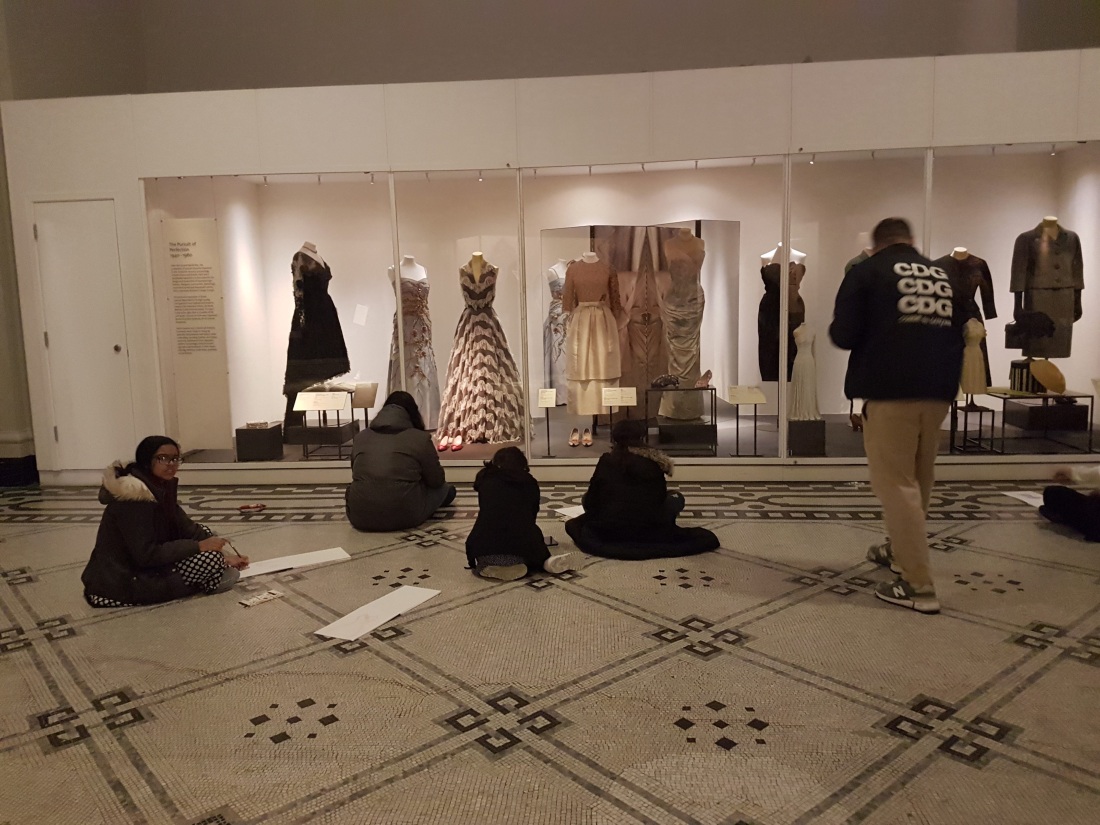
The V&A is still closed to the public on Tuesdays so the young people (YP) were in VIP mode – we fed them lunch, where they were joined by our Director and some of the curatorial and learning teams, and then we took them to Gallery 38 where our collection is currently being stored and conserved in preparation for going back on display in 2023 when Young V&A opens. Katy and Trish, two of the curators, showed them some examples of historic clothes and talked them through some of the processes used to make them. The YPs were amazed that sustainability was a ‘thing’ several hundred years ago although not so much in the 1960s. I won’t go into too much detail here as I have to write an ‘official’ blog post about the project soon.
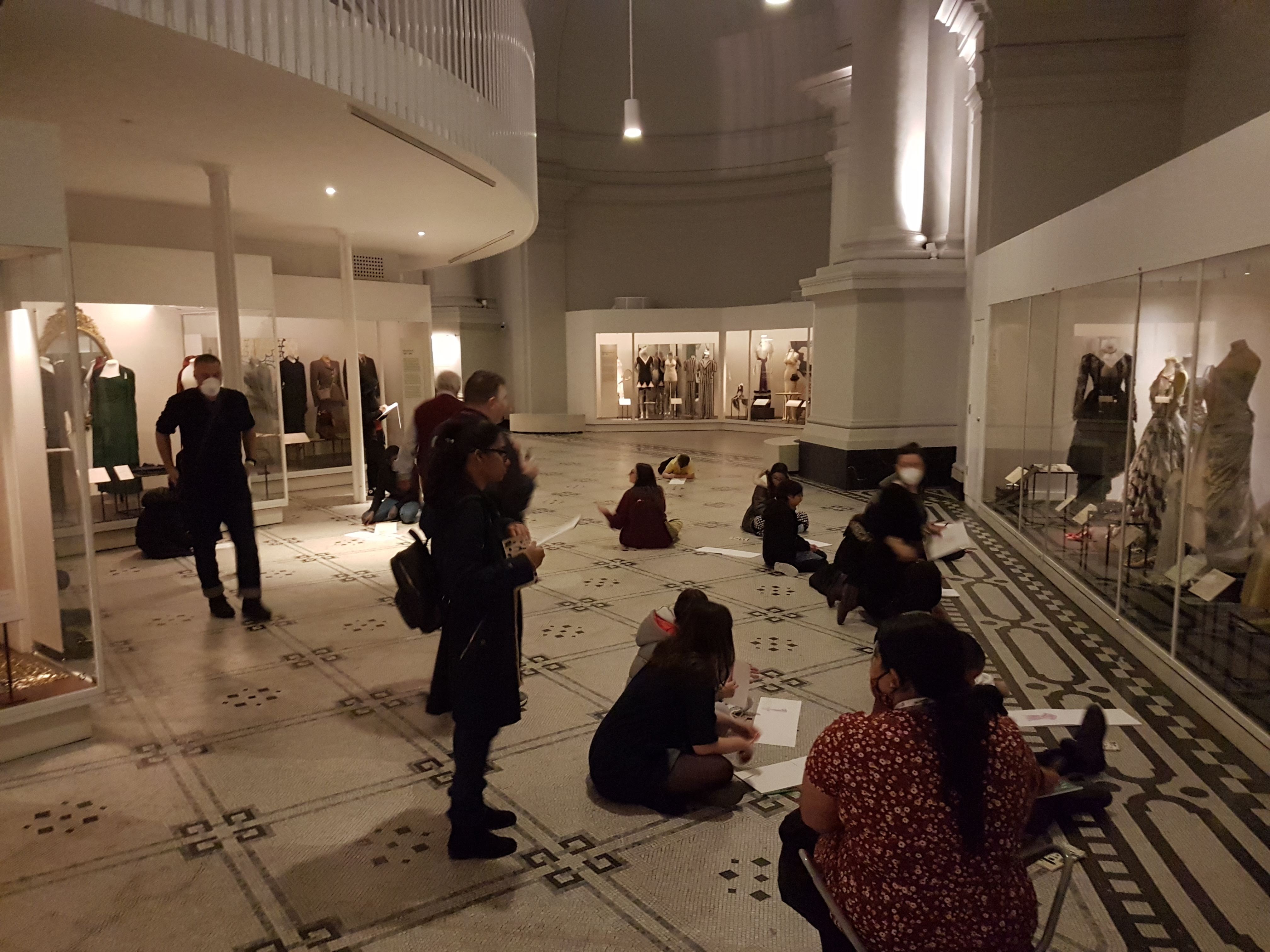
We spent some time in the fashion gallery exploring clothes through the ages, mark making in their new V&A sketchbooks and focusing on detail and embellishment. Watching children and YP make the mental connections between new and existing knowledge is always a joy – the gaggle of Year 8 Bengali girls who had been learning about the East India Company in school spotted a dress made from the very fabric they’d been learning about, which caused a twitter of excitement and recall of history lessons. Only one of the YP had been to the museum before, on the previous project so the space was very new to them. South Kensington is a long way from Poplar both physically and psychologically, and while many had been to the Science Museum or the Natural History Museum the V&A hadn’t figured. Being able to sprawl on the floor to draw, to have access to all the knowledge they needed from curators and to navigate the space on their own terms made the galleries accessible.
VIP access to the fashion gallery
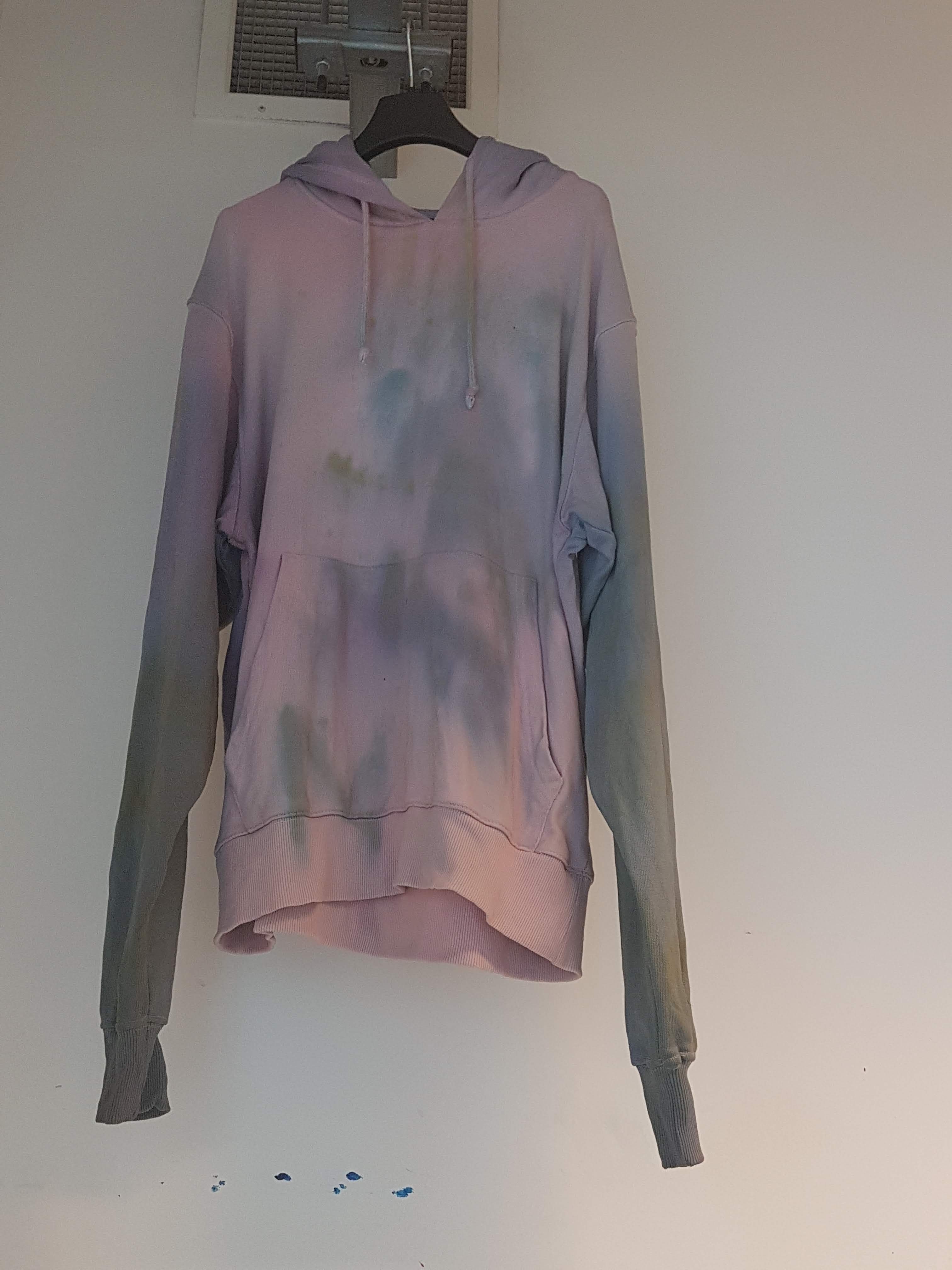
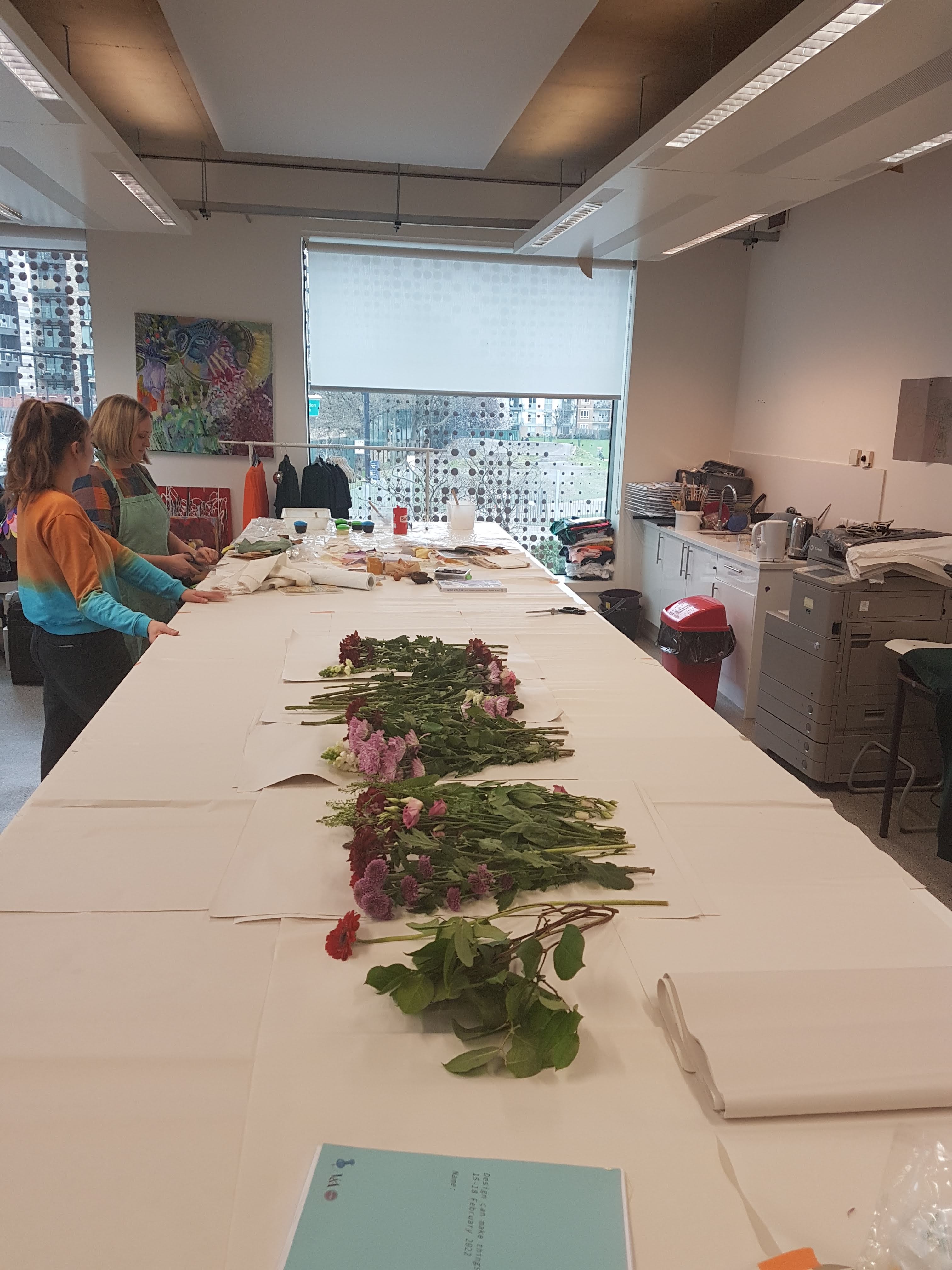
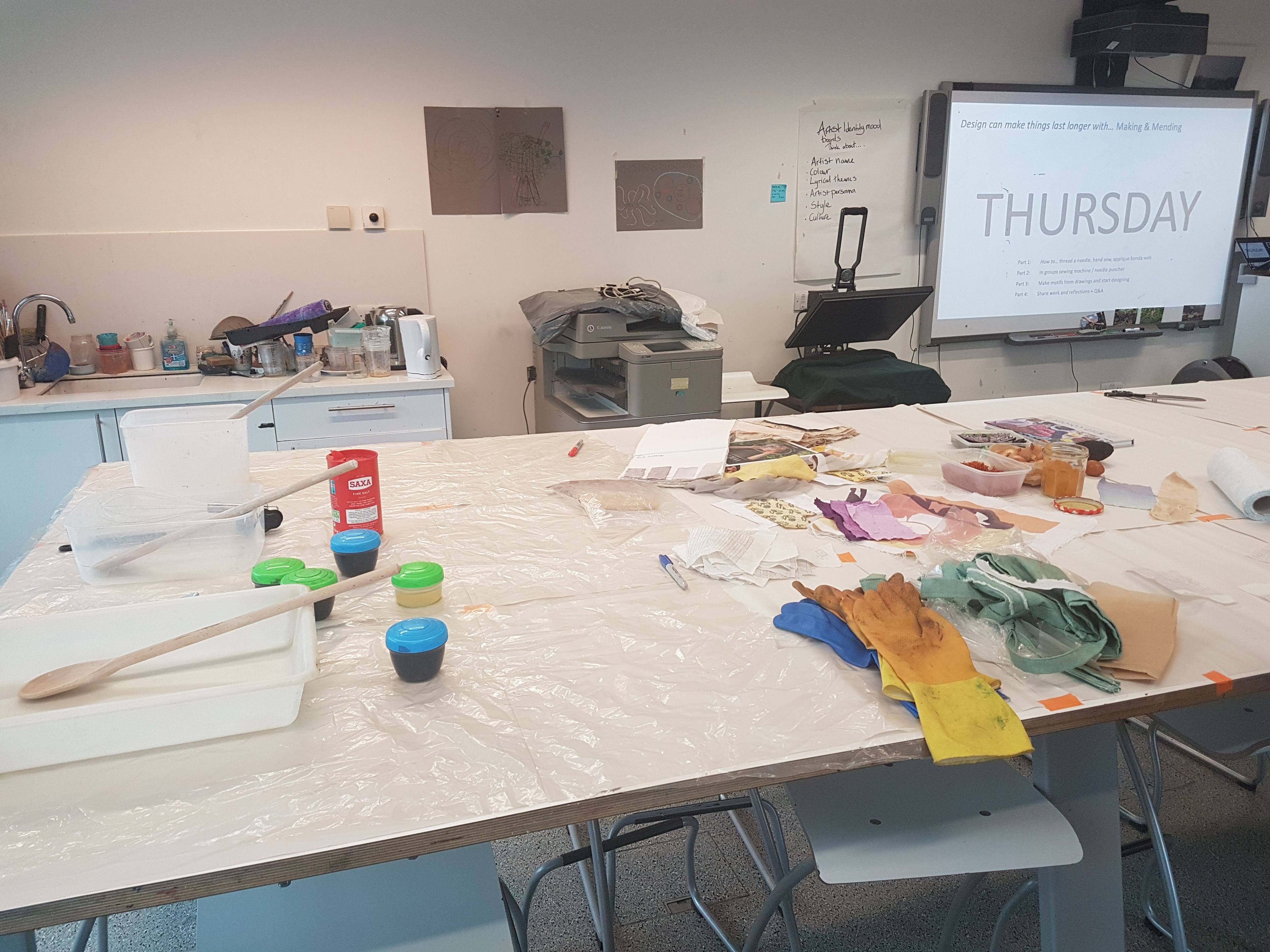
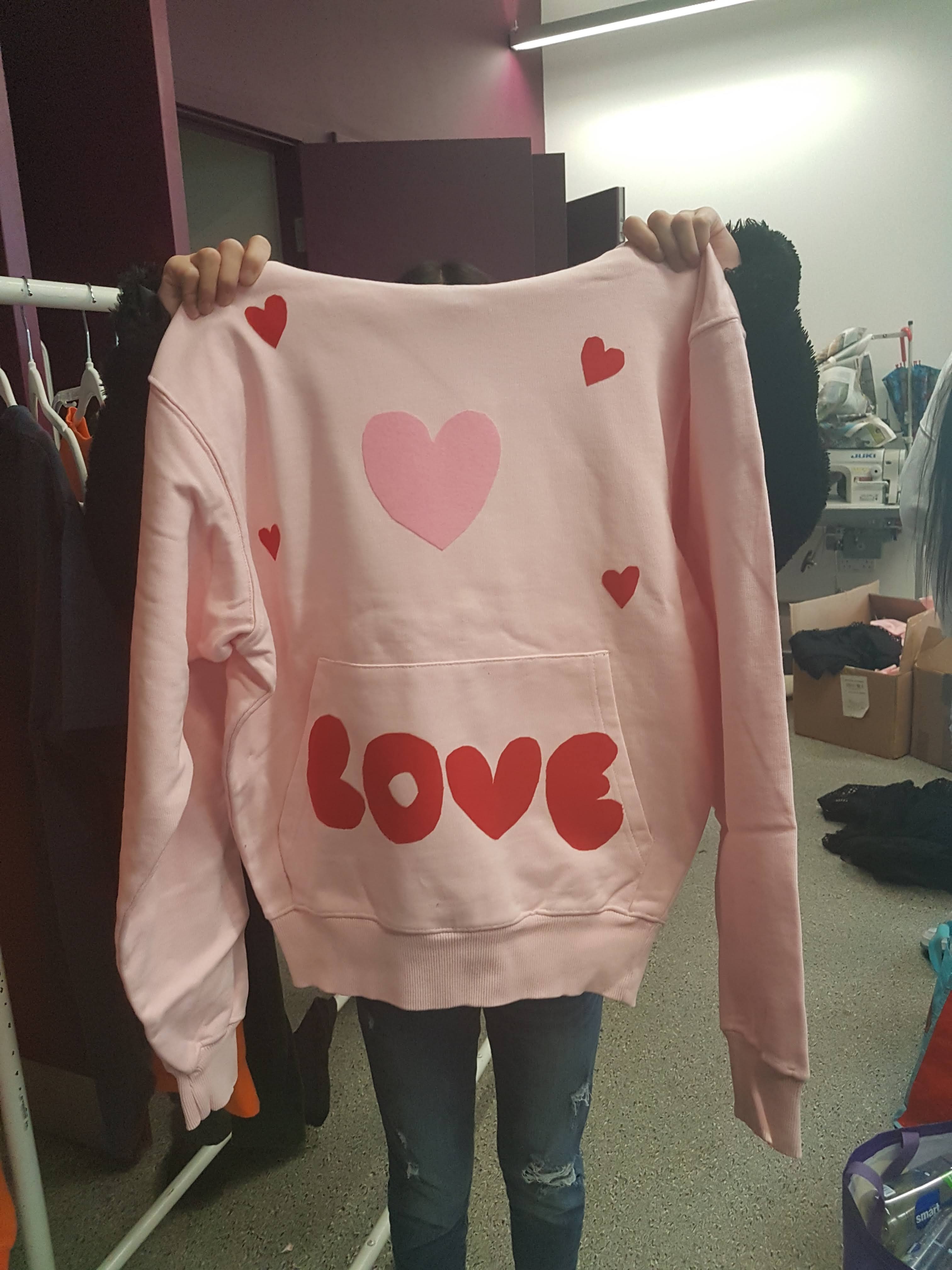
The rest of the week was back at Spotlight with fluctuating numbers of YP – but always a hard core of two or three who came along all week and surprised themselves with what they created. Wednesday was all about fashion and nature, so we worked with two creatives on different aspects of this. Hanna Whiteman explored natural dyes with the YP, helping them create swatches from red cabbage, turmeric and safflower and exploring the effects of different additives. Memunatu Barrie worked from cut flowers and textures found in the park outside, exploring how to create texture and line on paper. We finished up with a dye experiment, hanging the sleeves of a pink hoodie into the dye vats overnight. We only had four YP that day which given the messiness and excitement of the dying was probably a good thing! We were also joined by Maraid Mcewan, our inclusive designer in residence who came along for the rest of the week.
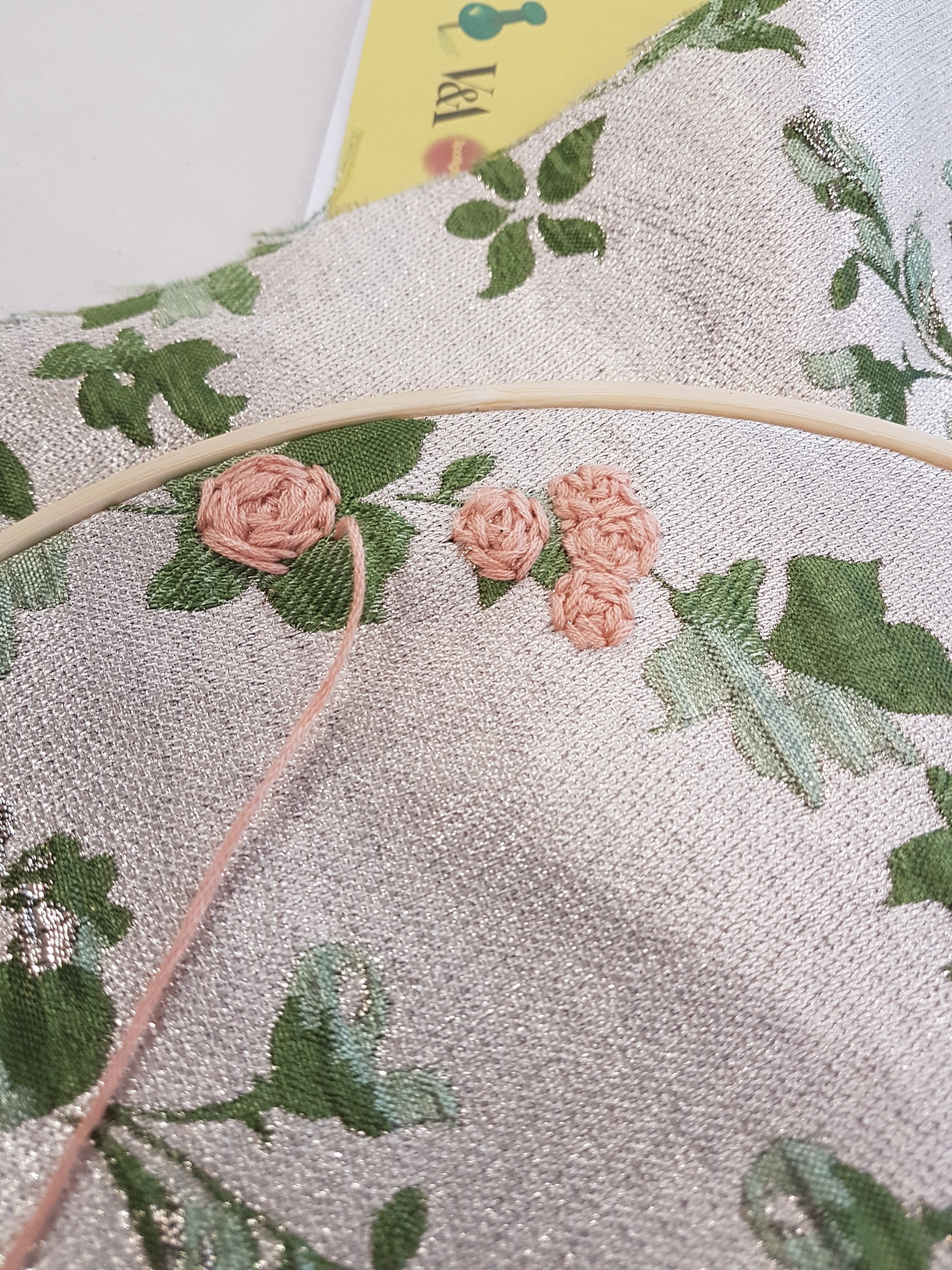
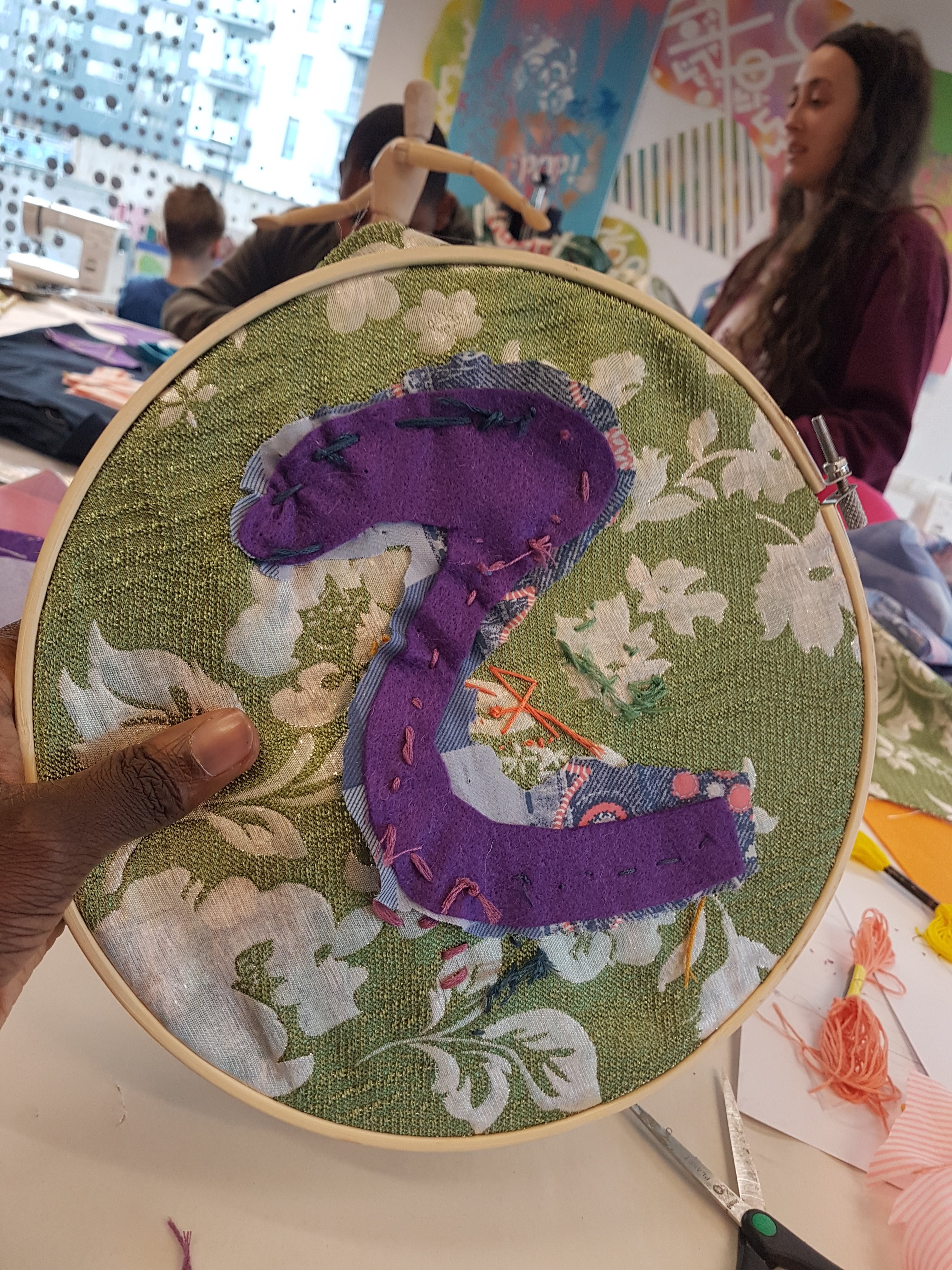
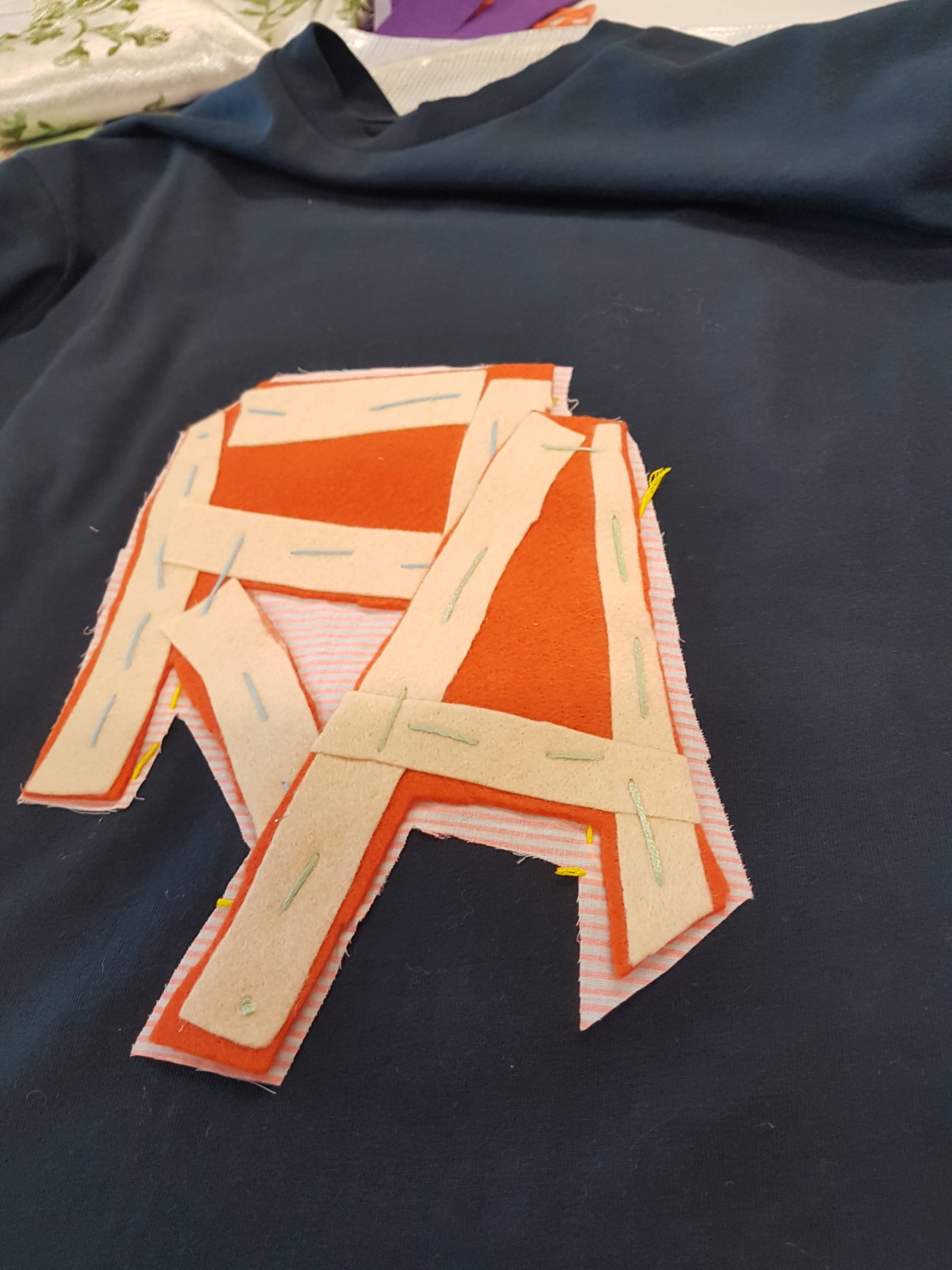
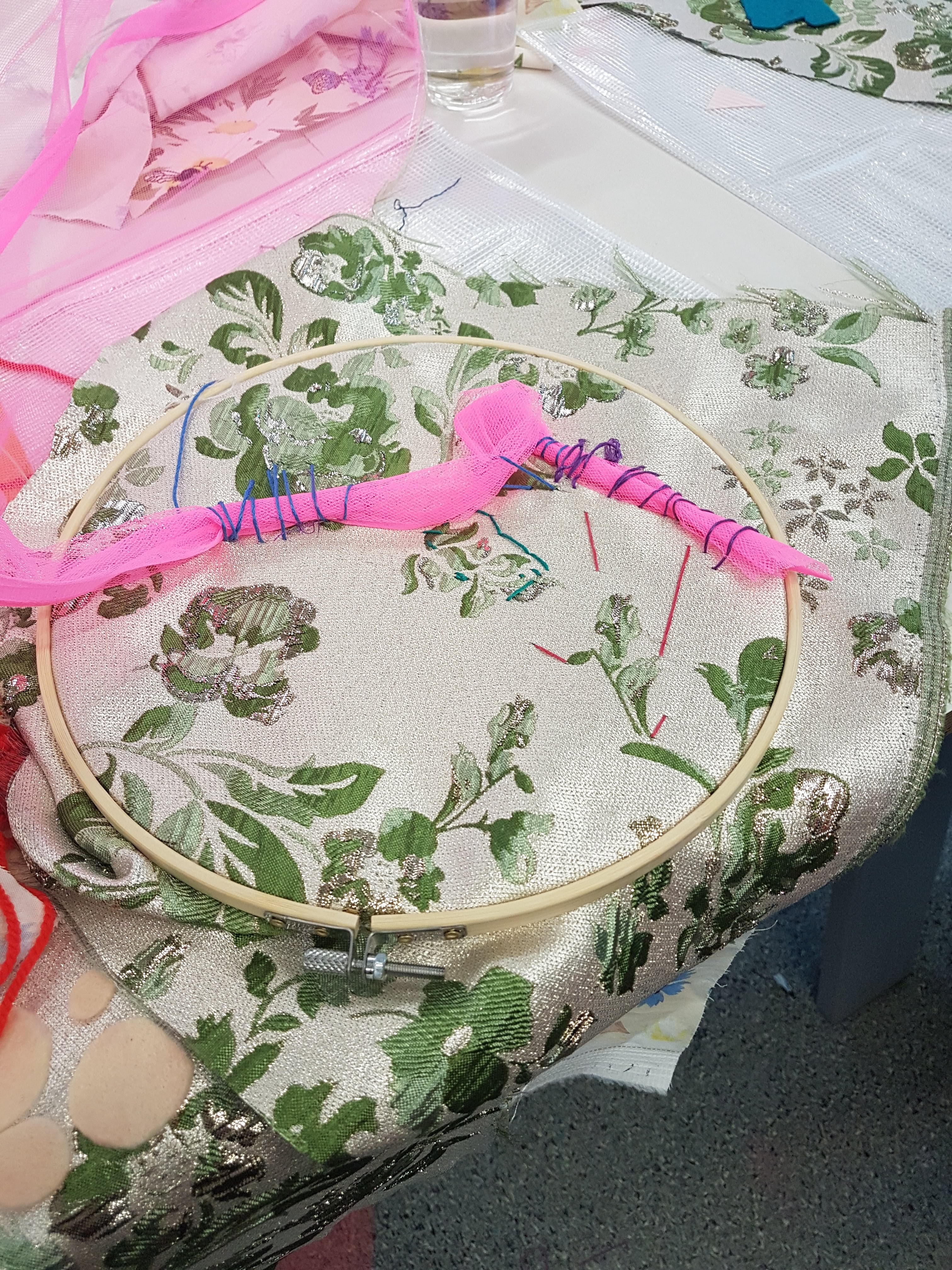
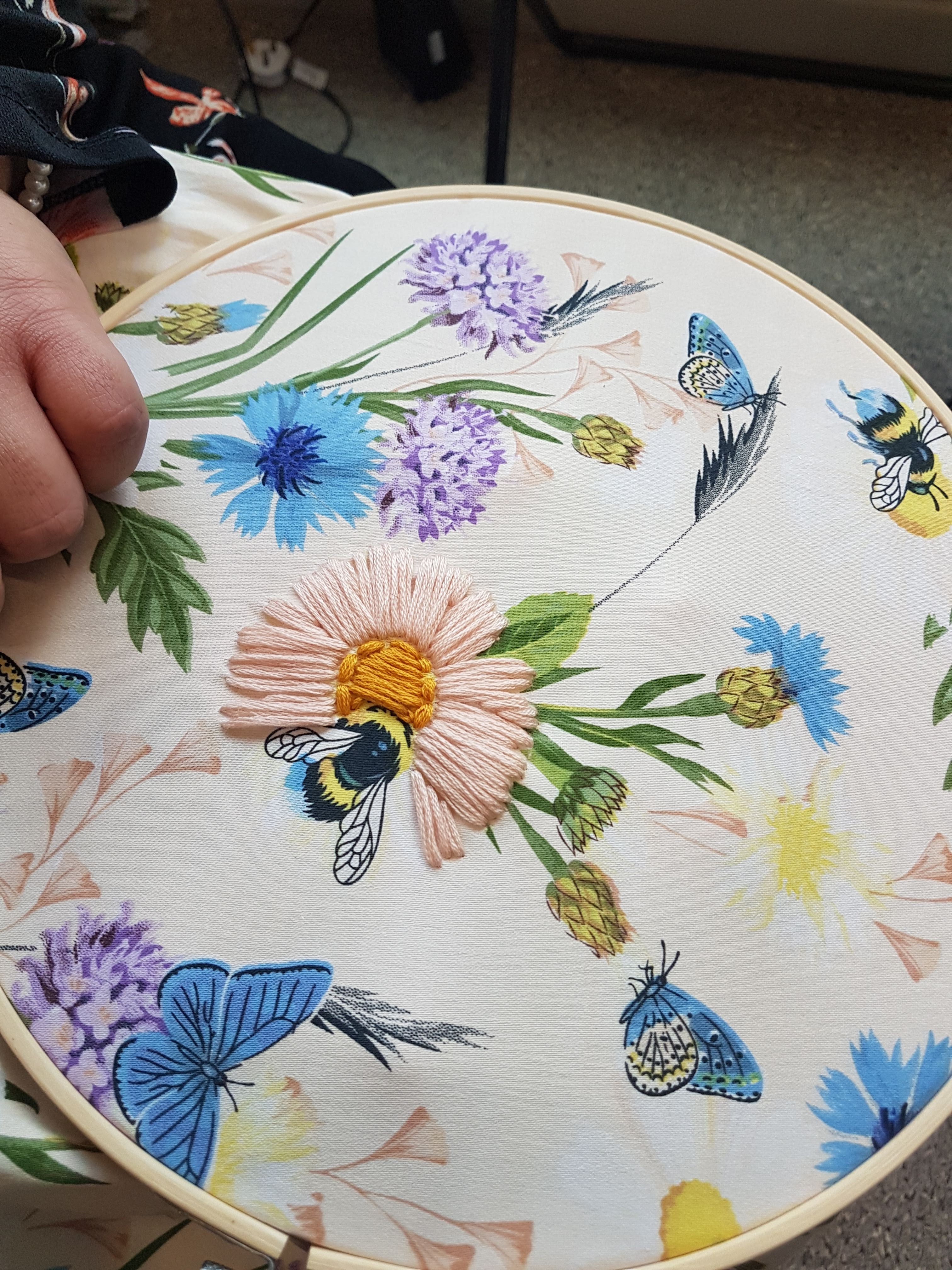
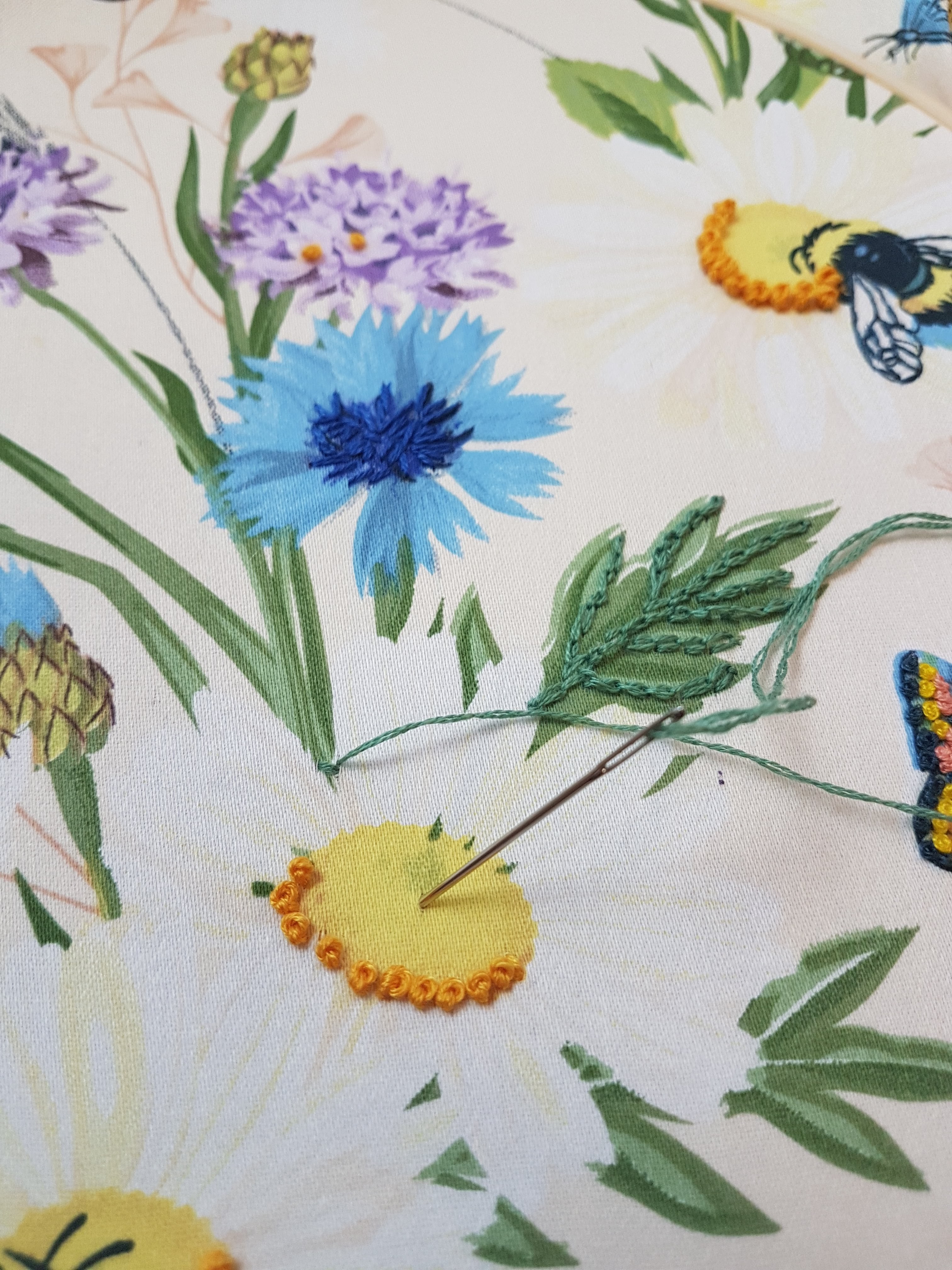
On Thursday we broke out the deadstock fabric and charity shop finds and introduced some sewing skills – curator Trish joined us again, and we explored mark making on fabric with embroidery thread and layering using bondaweb and felt. Some of the YP took their hoops and threads home to work on, as they were so engaged in the process. Trish, Maraid and I also got pretty attached to ours, as did Lydia the brilliant youth worker. There had been an SEND open day in the morning so we attracted a range of YP with different needs in the afternoon, and as there were so many adults it worked really well in terms of the level of assistance we could provide. As I know from helping the Things sew at home, it’s much easier with many pairs of hands to help thread needles and untangle knots! Although our target range for the project was 11-14, the centre works with YP with additional needs up to the age of 25 and we will be an inclusive museum so everyone was welcome to join the session.
This one is mine…I do love a French knot!
On Friday, despite Storm Eunice making an appearance just before midday, we saw 15 YP over the day – some carrying on with their embroidery, some remaking clothes by embellishing and adding materials, some discovering the studio for the first time as they had only signed up to the centre on the previous day. There was some knitting, some draping on mannequins, fabric painting, more bondaweb as the YP customised clothes, but such a creative buzz all afternoon. We sent them all away with their hoops and embroidery (‘what – we can keep them? They’re for us?’) and the things they’d made. The injection of coffee mid afternoon from the cafe was much needed – if you find yourself down in Poplar in need of refreshment, the cafe makes quite possibly the best chocolate brownies I have ever tasted, and a good range of other food at very reasonable prices too.
Other quotes from the week included ‘I’m eleven years old and I’ve made two outfits in two days!’ (one of which was his own interpretation of a 17th century waistcoat he’d sketched on Tuesday), and ‘This is the best place EVER’ from one of the new sign-ups.
Although Scott and I were shattered by the end of the week, we were blown away by the talent and creativity we’d seen over the week and we can’t wait to go back to finish up their co-creation at Easter.
Customised hoodieRe-using skirt hardware to make waistcoat buttonsI think this hoodie sums up the week nicely
See you next week!
Kirsty x
What I’ve been reading:
Torchwood – First Born (Audible)
Ninth Doctor Novels vol 2/Tenth Doctor Novels vol 1 (Audible)
The Lost Art of Letter Writing/The Witches of Cambridge – Menna van Praag
Yesterday my best friend and I marked off the third on the list of the Magnificent Seven cemeteries of London with a trip to Tower Hamlets Cemetery Park. I’m rather ashamed that, despite living or working in the borough for 22 of the 25 years I’ve been in London, this is the first time I’ve visited what turned out to be a really pretty and peaceful spot smack in the middle of Mile End. We discovered a mutual love of graveyards back in Preston when we were at university together, so this is a thirty year old tradition. For once we weren’t exploring in pouring rain, which is usually the case on our expeditions!
Here it’s more about the nature than about the big names buried in the site, and there are no enormous monuments or mausoleums like those on our previous adventures at Highgate and Kensal Green. We were also not chased by strange men jumping out of a skip, or confronted by a pickled baby. We did have a very good mocha from a tiny coffee TukTuk called the Blue Daisy though. Many of the headstones are tiny, well below knee height, and all the stones are higgledy-piggledy and crammed together as a lot of the park was cleared by the GLC in 1967 after it was closed in 1966.
There are local ‘names’ buried there – the wild animal importer Charles Jamrach, for example, whose story I told for years in my London immigration sessions at Museum of London Docklands. Clara Grant, the social reformer and ‘Bundle Lady of Bow’ is there, also remembered in the name of a local primary school. She believed that children could not learn effectively if they were cold, hungry and unhappy – it’s a sad fact that more than a century after she started the ‘farthing bundle’ scheme there are still huge numbers of children in poverty in Tower Hamlets. There’s the grave of Alfred Linnel, who was trampled by a police horse in Trafalgar Square when he attended a protest against the Bloody Sunday violence the week before. You can also see the Blitz Memorial, built of the bricks of damaged houses from Poplar and commemorating those who died in the Blitz. There are public graves, such as that of 27 of the people who died in the Princess Alice disaster in 1878.
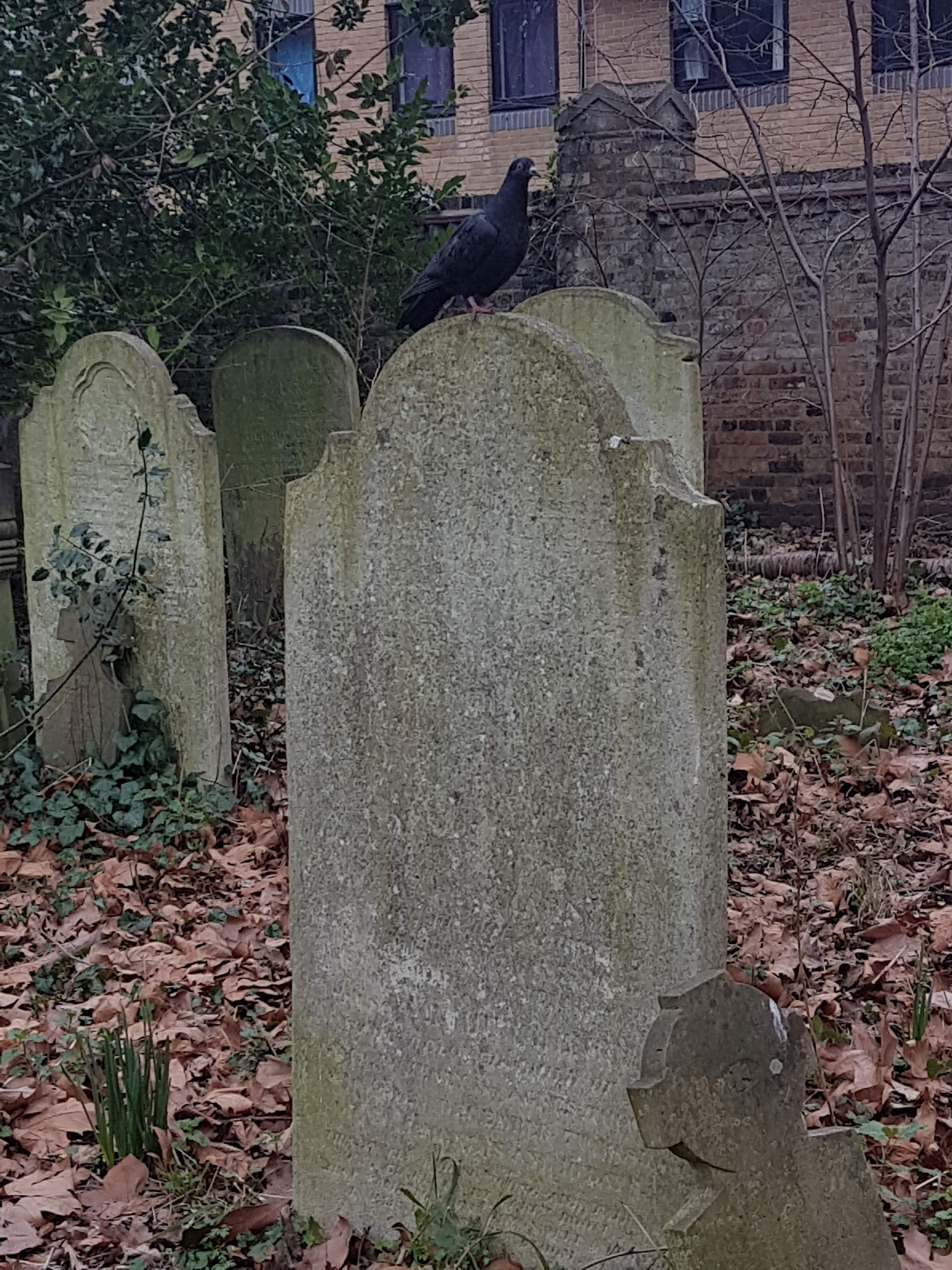
The site was declared a local nature reserve in 2000, and even in this urban area with the District Line rattling past we heard the drumming of a woodpecker and the shrieks of the now-ubiquitous parakeets. The ground was covered in snowdrops, winter aconite and crocuses and there were plenty of magpies, squirrels and this rather Goth pigeon lurking about. He was patient enough to let us take a photo before flying off.
Spot the pigeon.
After a good wander around the paths and desire lines we decided we’d walk through to Spitalfields for lunch – a good two mile wander along some of the side streets and then along the Mile End and Whitechapel Roads where you can still see some gorgeous houses among the Pizza-Go-Gos and fried chicken joints. Whitechapel and Spitalfields markets were buzzing, unlike Oxford Street where I’d been working on Friday. You forget what a stranglehold the Arcadia Group had on the British high street until you see the empty shop fronts of House of Fraser, Debenhams, Top Shop and so on. (Soho, where I had a meeting in the afternoon, was reassuringly busy and grubby still, complete with businessmen taking three or four attempts to go through the ‘private dancing downstairs’ door and ‘rooms by the hour’).
I really fancied noodles so we went to Xi’an Biang Biang Noodles on Commercial Street, where we both had the hand-pulled BiangBiang noodles with beef in special sauce. Gloriously splashy and messy and well-earned after our long walk. All in all a good day out, and our next one will be Brompton Cemetery in April.
This week it’s half term and I have an exciting co-creation project lined up with Spotlight and the mixed-media and materials designer Scott Ramsay Kyle, which will be full on but fun. See you on Sunday!
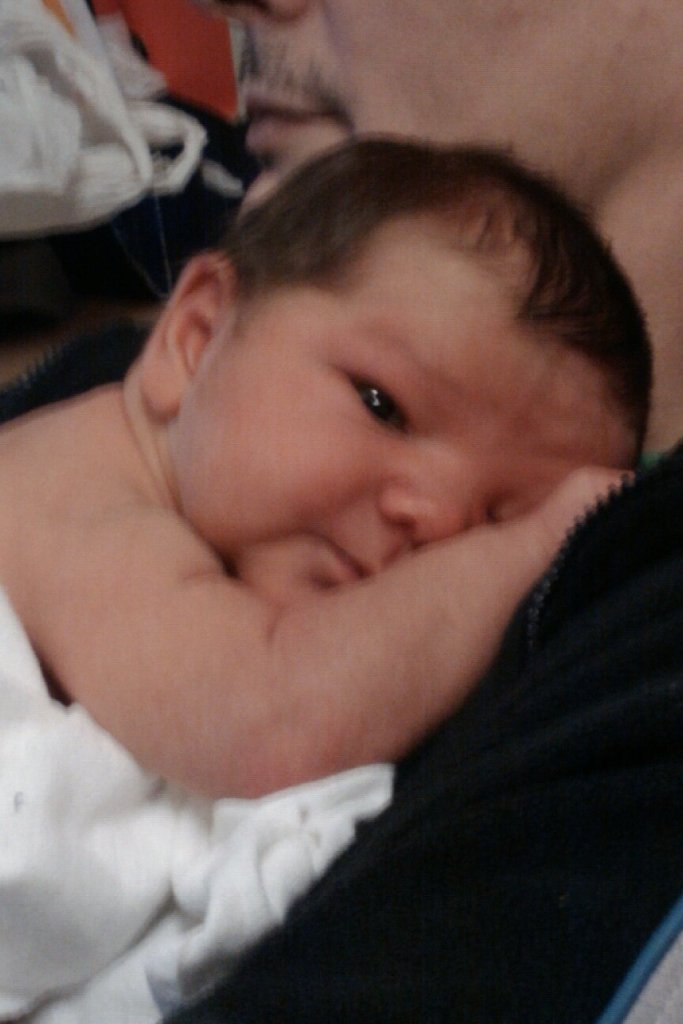
…so said my friend K 11 years ago this week, as she was lined up to babysit when Thing 3 decided to make an appearance. Ha, I said, nothing’s happening tonight, not even a twinge.
An hour later my waters broke, contractions were already well advanced and my sister was on her way over to relieve K. Thing 3, The Boy, my surprise baby arrived three hours later – four days early.
If you were to ask me how I felt during that pregnancy the answer would be – then and now – ‘worried’. How would we afford a third baby? We had decided we’d stop after Thing 2 but by the time the letter arrived from the hospital to tell my beloved to make an appointment it was too late. We’d just got back from a week in France with my parents, and we’d had to stop six times between Calais and Caen for me to have a wee – my period wasn’t due for another two weeks so it was too early to test, but I knew. I was almost 37, working full time and with a three year old and a one year old already. The positive test result was not a surprise.
I was on antidepressants, so they got me off those. The 12 week scan was normal but the blood tests came back with high risk of Downs Syndrome, so I had CVS testing which came back with good news but also the news that this little pudding was going to be a boy – which really was a surprise, after his daddy had produced four girls. I refused to believe it completely until he arrived! I was referred to a consultant – despite being ludicrously healthy, with no problems in my previous two pregnancies. Each time I saw the consultant or his registrar I asked why I was seeing them and got a different answer every month – none of which were very helpful and I never saw the same person twice. They kept sending me for scans which were all normal, they decided to send me for the blood glucose test much later than they should have done (also normal), and the only result was that I became more and more worried. At 36 weeks I got cross and demanded that I was signed off by the consultant as otherwise I wouldn’t be able to have the baby in the birthing centre (as it happened he was a labour ward baby as they were so busy that night – we were the last ones in before they closed the ward to new arrivals).
He was probably the easiest of all three of the Things – apart from not sleeping anywhere but on me at night for his first few days which meant I got no sleep at all. I think this is often the case for third babies as they basically have to drag themselves up. I probably enjoyed his babyhood more because I didn’t get post-natal depression this time round, and he went onto a bottle at 12 weeks as I couldn’t keep up with his feeding.
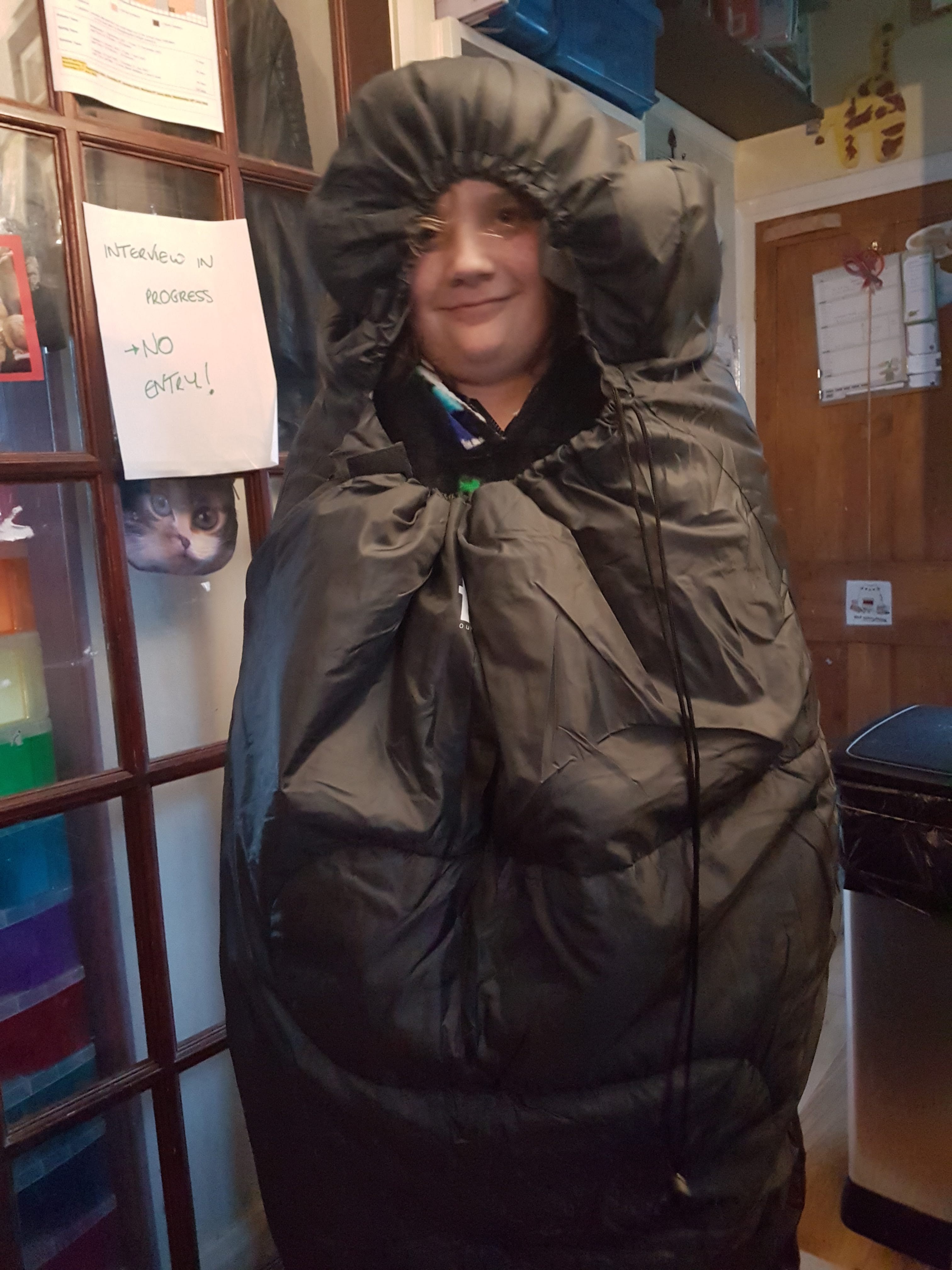
And now he’s 11, went off to his first Scout camp yesterday (OK, his dad went to get him at 11pm as he was homesick for the cats apparently) and is off to secondary school in September. No more school runs (I have only really done these on a regular basis since lockdown so the novelty has yet to wear off!) where I have to brace myself for a hug as he launches across the playground at me. He’s nearly as tall as me now, with longer hair and a nice line in snark – can’t think where he gets that from. He’s still my baby though.
In other news….
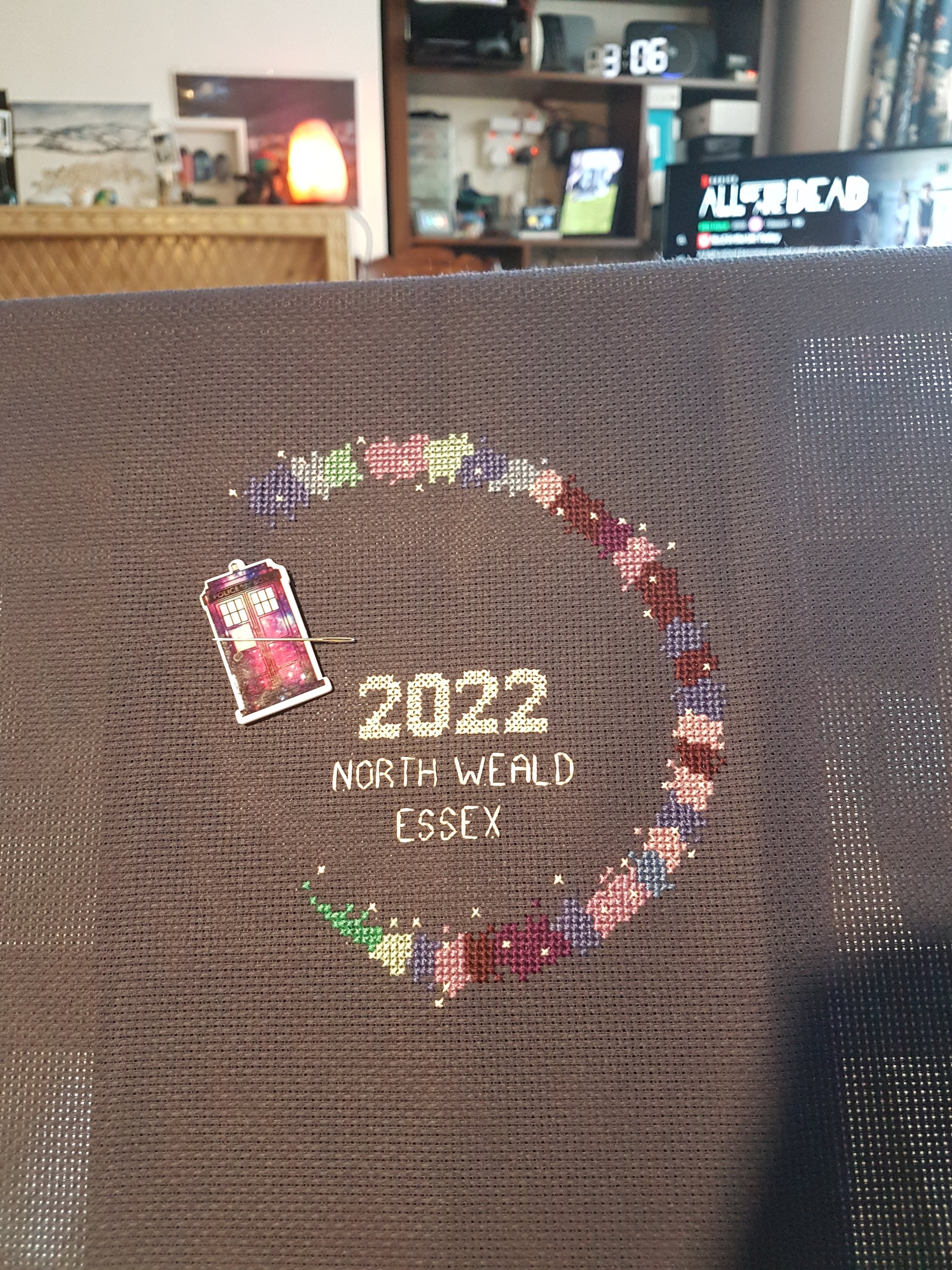
This week I made a dragon (called George) as a prop for our D&D game, and started this year’s temperature tracker. I’m using this Rainbow Galaxy pattern by Climbing Goat Designs for 2022.
I’m also working on the Neon Pikachu (still), yet more pigs in blankets, and another unicorn… work truly is the curse of the crafty classes.
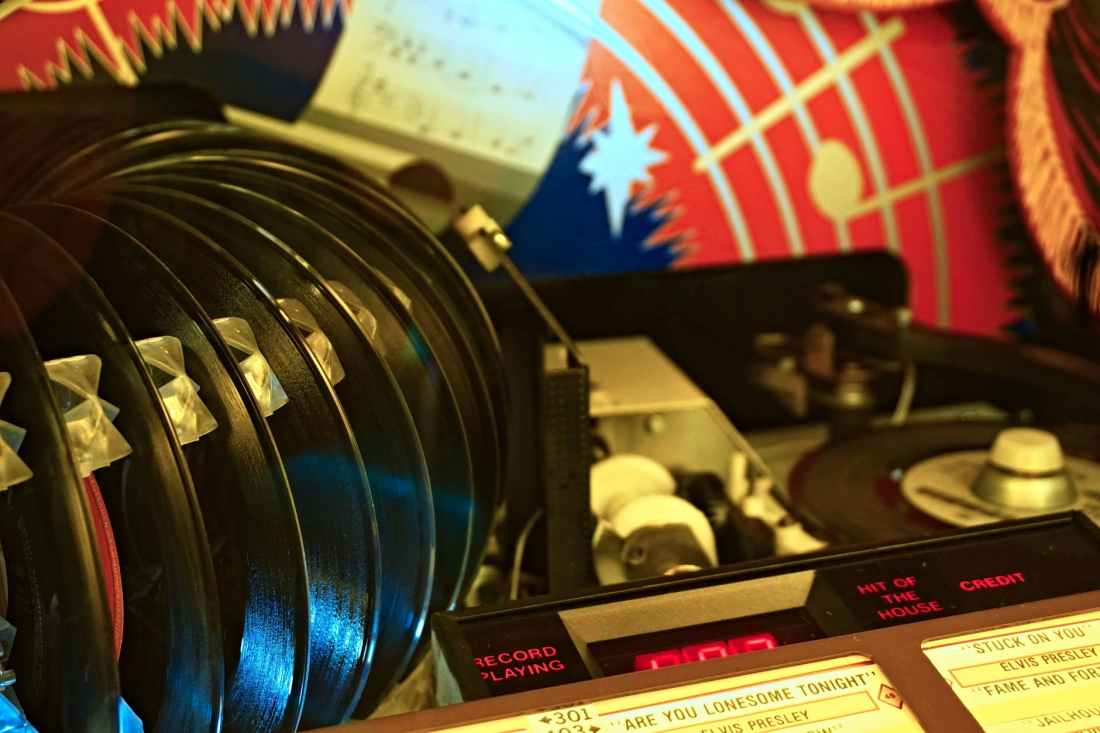
Imagine your local pub’s jukebox permanently set on shuffle. (Give me a moment here to remember the days when I had a local pub with a jukebox – it’s been a while, after all). A jukebox filled with songs with songs from the last 70 years. Some of which you like and some of which you don’t, and you don’t get to choose what’s playing.
This is the mental jukebox – songs that appear in your head for no reason whatsoever in many cases. The song that’s in your head when you wake up. The one that’s triggered by some advert or other, or a random sample in something the kids are listening to. Sometimes it’s an earworm, a song that you’ve picked up along the day and that just won’t go away. In my case they have often appeared from nowhere. It’s oddly specific at times: it’ll play a cover version rather than the original. Those of you who see me over on Facebook (other social media platforms are available) will know that I share some of the less embarrassing musical moments, and I’m quite sure that my friends are grateful I don’t share the rest.
This morning, for example, the mental jukebox treated me to The Hippopotamus Song by Flanders and Swann. I don’t know why, but there we are.
Earlier in the week, in no particular order, we’ve had:
My Favourite Things – Julie Andrews. I am not a fan of musicals with children in, as my sisters have used to their advantage over the years, so this was particularly annoying.
In the name of sanity I have given in and generally just enjoy what’s being played (except when it’s Julie Andrews. A line has to be drawn somewhere, after all). Sometimes I even sing along.
Finally on this week’s playlist I give you ch-ch-ch-ch- Changes by David Bowie and a….
…brilliant David Bowie segue into my heroes this week…
…and they are (once again in no particular order) Joe Lycett and Jack Monroe, aka @BootstrapCook for not sitting down and shutting up. You may well have seen them in the news this week, but in case you’ve been hiding under a rock…
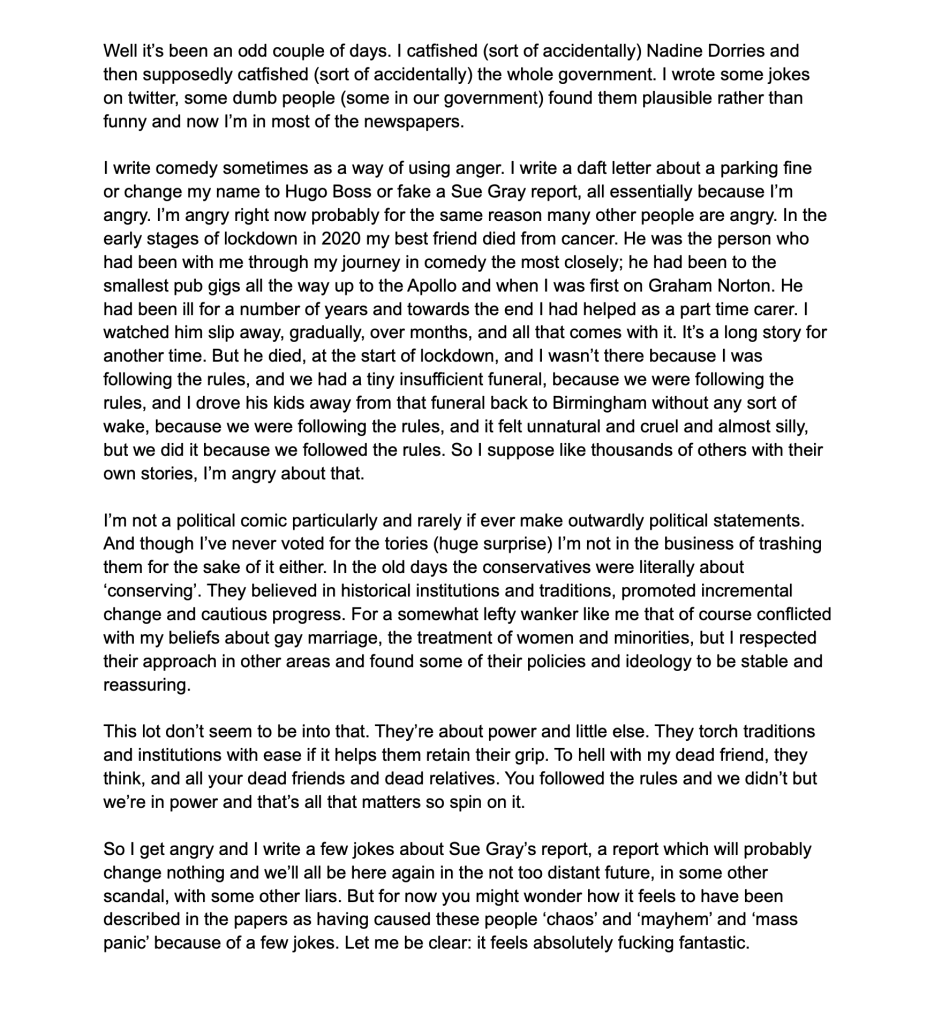
Joe Lycett ‘leaked’ a spoof version of Sue Gray’s report into so-called ‘Partygate’ and the repeated alleged breaking of the Covid rules by the government. In a classic case of ‘first line only’ information gathering this apparently sent Westminster staffers into a tailspin, with panic dialling to MPs and frantic headless chickening. The email address ‘ItsAllSueGravyBaby@aol.com’ was not enough to let our leaders know this wasn’t an actual leak… Joe followed this up with a wonderful, emotional open letter about why he’s so angry.
Joe Lycett’s open letter
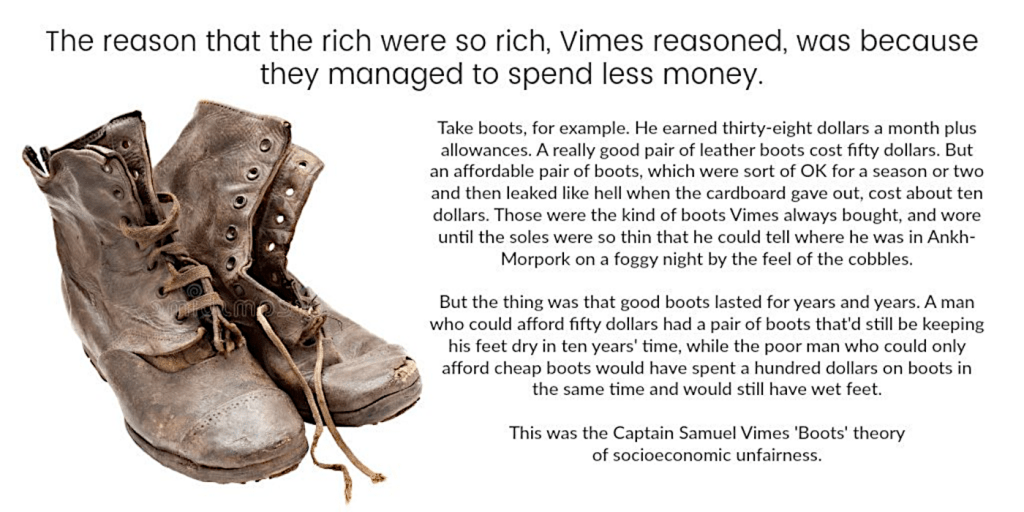
Jack Monroe also got angry, this time about the rise in the cost of living for the poorest end of society with basic food prices rising up to 340% – read it here – which has led to her working with the Office for National Statistics on a project called the Vimes Boots Index. As a former food bank user who struggled to feed herself and her son on £10 a week, she knows what she is talking about and has tracked food prices for more than 10 years. The ONS are now exploring better ways to track inflation and the Terry Pratchett Estate have given permission for the use of the Vimes Boots Theory to support this. If you don’t know the Vimes Boots theory of socioeconomic unfairness, see below….
You can help Jack Monroe build the Vimes Boots Index by sharing your receipts (with identifying data removed) – either old online shops lurking in your deleted mails or clearly scanned paper ones from the bottom of your shopping bag collection – at vimesbootsindex@gmail.com. It’s not fair that a ‘dine in for £10’ deal with luxury meal, wine and pudding has remained fixed for 10 years while at the other end of the scale Iceland is losing customers to foodbanks and some of Asda and Tesco’s own staff are relying on benefits to top up their wages so they can feed their families.
See you next week.
Kirsty x
The Golden Basilisk/The Diamond Sphinx – Maria Andreas
Radio: The Compass – Why We Play (BBC World Service)
This week I was sad to hear that the incomparable Meat Loaf has died at the age of 74. London sister and I saw him at the O2 on the Last at Bat tour in 2013 and he was struggling then – the voice was going and he was using oxygen off stage, presumably to help with his asthma. It was still a great show – it was celebrating the Bat out of Hell anniversary, so interspersed with the songs were video interviews with Jim Steinman, ‘Mighty’ Max Weinberg and others. It was a memorable show but we were pretty sure we wouldn’t be seeing him live again.
While I wouldn’t say Mr Loaf was one of my all time favourite artists, he’s not far off – not just because of the the music but because of the memories that go with them. Dead Ringer for Love casts me back to the Nag’s Head in Monmouth, while Paradise by the Dashboard Light is a road trip favourite. All his songs – dramatic, not theatrical according to Meat Loaf in an interview with Terry Wogan in 1982 – are perfect for singing along to in kitchens, pubs and cars even when you are not a singer (like me). His style has been described as ‘blustery, wounded romantic-on-the-brink-of-a-breakdown’. Loud is the key – ‘everything louder than everything else’, in fact – and with passion, much like himself. Meat Loaf was larger than life himself – funny, personable, engaging, entertaining.
Primordial Radio were playing a lot of Meat Loaf yesterday while I was crafting and each song raised a smile. Many friends have shared their own favourite songs on social media, referencing pubs and old friends – recollections of VI form or college, in many cases. Could you ask for a better legacy as a singer? RIP, Marvin Lee ‘Meat Loaf’ Aday.
The rest of the week
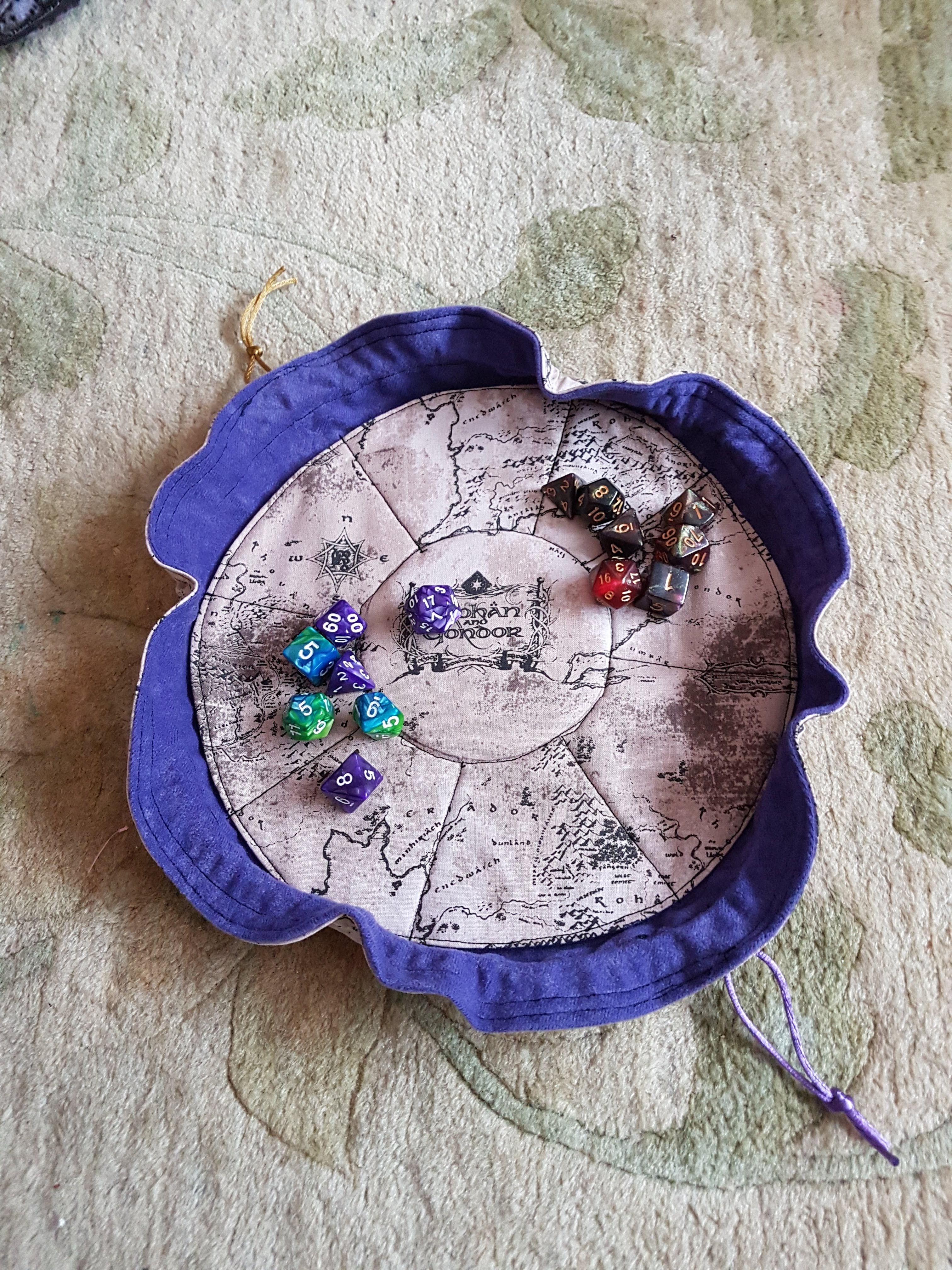
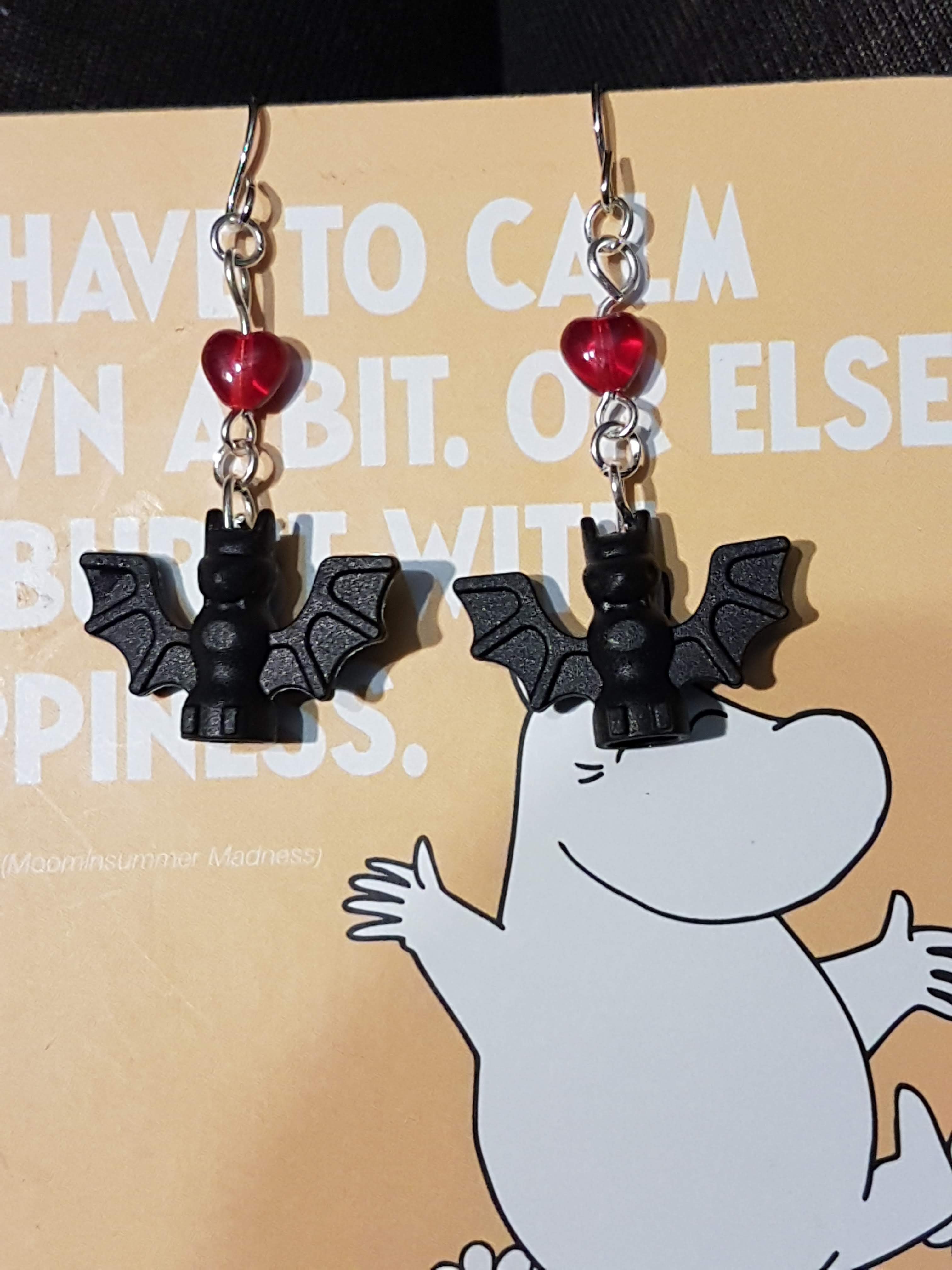
Has been pretty much business as usual, to be honest – a trek to south Kensington, another one to Hackney Wick and a lot of meetings in between. My favourite geeky friend has her birthday today so yesterday I had fun making her gifts while singing along to the radio – a dice bag and a pair of earrings. I made mermaid scale ones and bat wing ones – using dolls house miniatures – and took a vote on which I should give to her. Her husband had already ordered the Lego bat ones! The dice bag has Lord of the Rings fabric with purple (her favourite colour).
LOTR fabricMiriam had the batwing ones – I took a vote!A commission by a friendLego bats
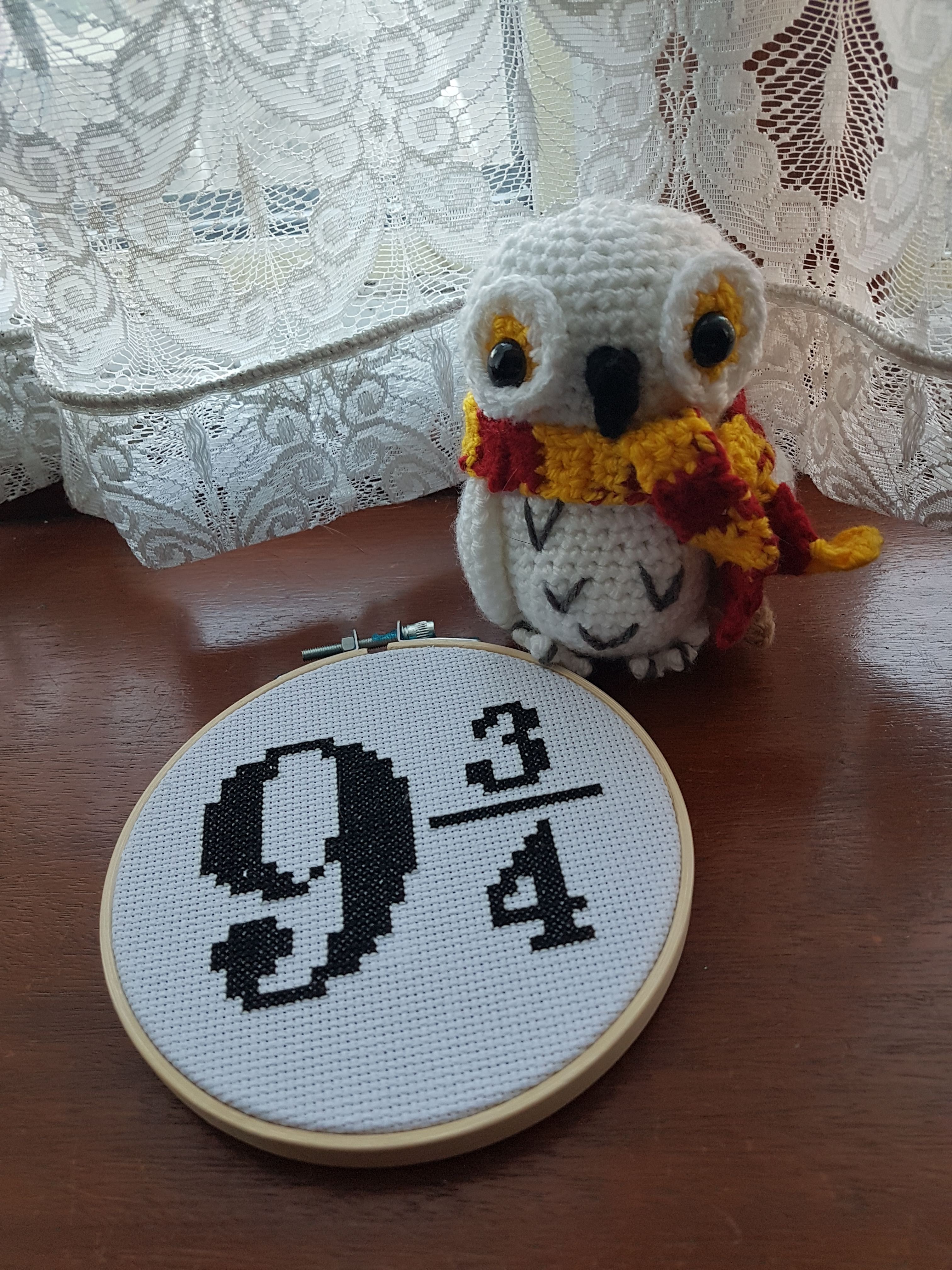
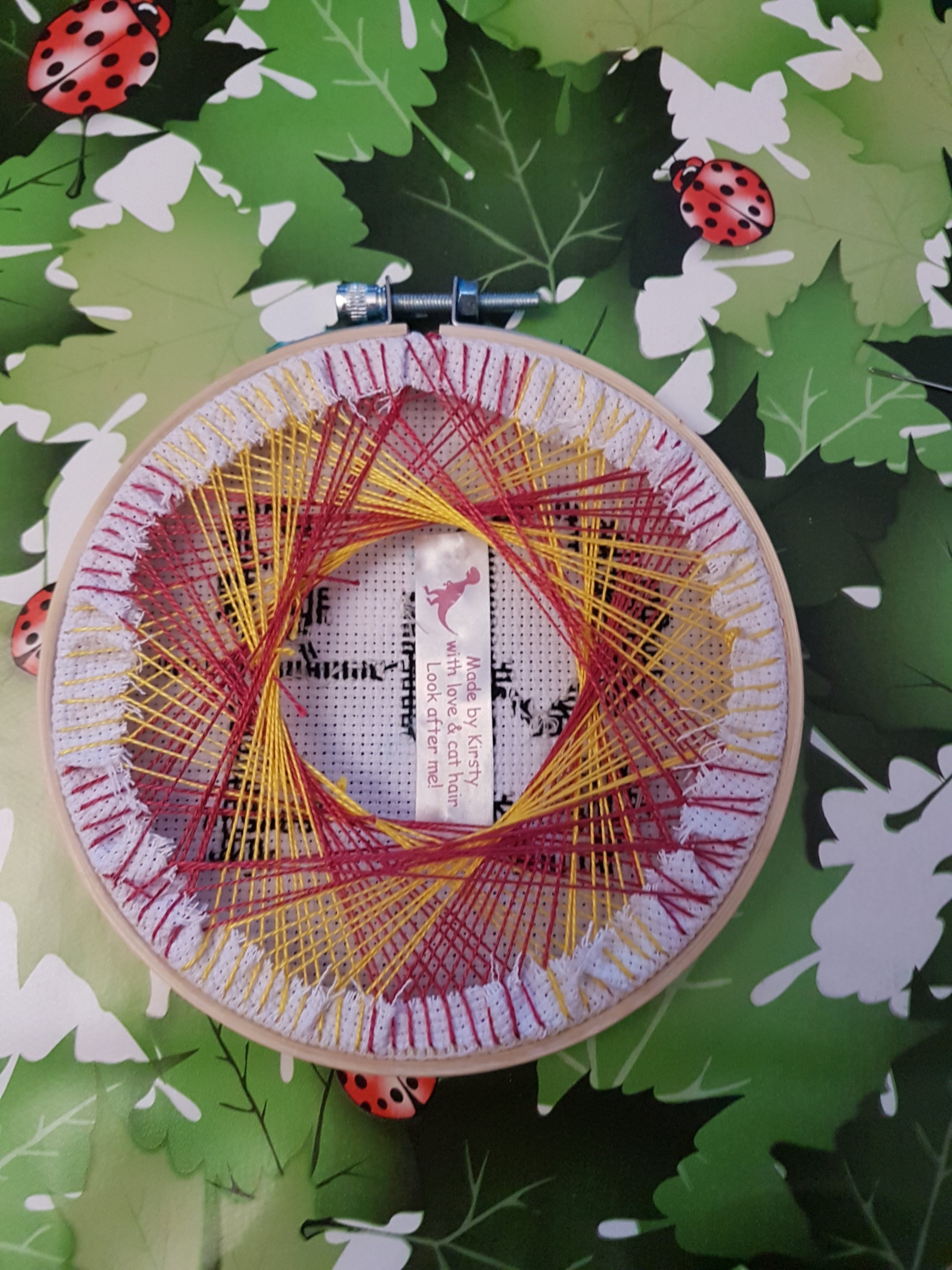
My adorable nephew/godson is in a Harry Potter phase, so a snowy owl winged its way over to NI for his birthday this week, and the 9 and 3/4 cross stitch (with glow in the dark outline and Gryffindor colours backing) is off to Yorkshire.
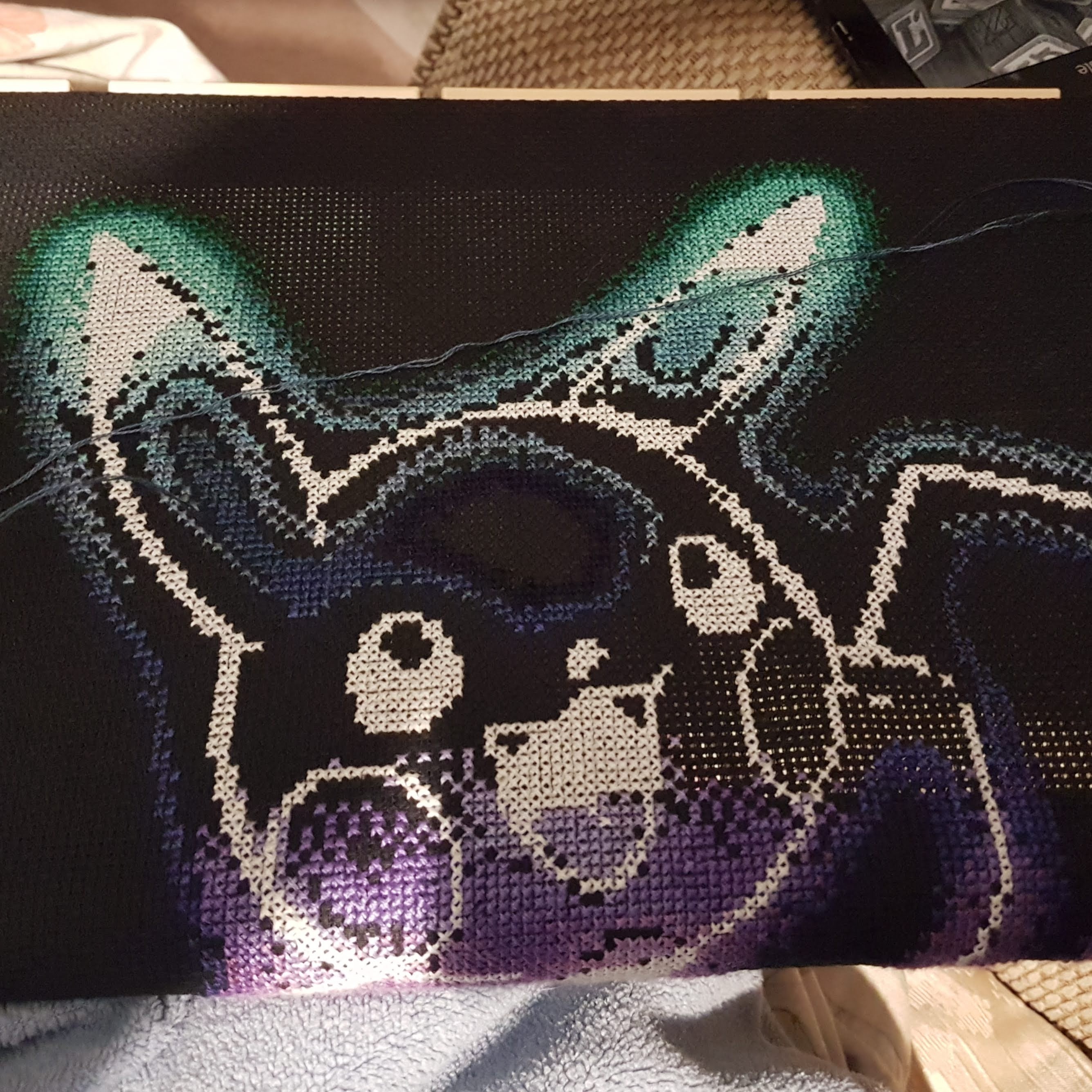
Neon Pikachu is going slowly….black aida is a pain to work on but the colours look amazing.
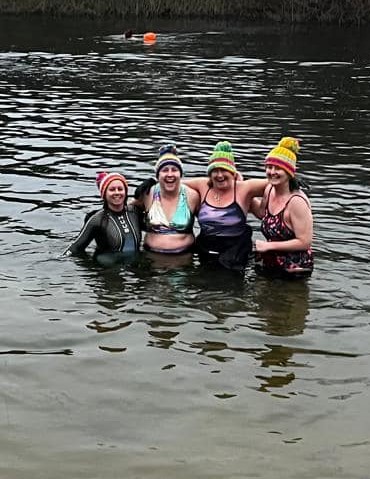
This morning the lake was 2.5 degrees and the swimming lane was limited by sheets of ice – we lasted 10 minutes (most of which was getting in!). Madness but the mental reset is so worth it.
Mummy tummy and all. L-R – Isla, me, Sue, Jill. No Rachel!
See you next week!
Kirsty x
What I’ve been reading:
The Sapphire Manticore/The Golden Basilisk – Maria Andreas
This week started with the postponement of the final night of The Socially Distant Sports Bar’s live tour, which had been scheduled for Cardiff Motorpoint Arena the night before the Wales vs Scotland game of the Six Nations. My gig buddy Jen and I were looking forward it it: a night away with comedy and perhaps one (or two) drinks, and a good catch up since she has left London and is now living in the frozen North and watching birds for a living or something. It’s not the first thing that’s been put back a few months – Damien Jurado was rearranged for April, for example, but I was really, really looking forward to a night of belly laughs and to being somewhere else again.
I like live entertainment – whether it’s a decent pub band or Bruce Springsteen at Wembley, a small folky gig or a comedy night, a play or a musical. The best gigs – no matter how big they are – give you a sense of intimacy, a shared experience even in the most soulless of venues (the O2 at Greenwich, for example). Generally the people around you are fans too, or at least music fans, and they are willing to be carried away on the same wave: the roar when the intro of a fan favourite kicks in, or the big hits. There are shared moments from previous experiences: Jen and I were haunted by a very loud drunken person for several gigs, who we never saw but we knew he was there by his frequent bellows of ‘Play Wonderwall! Play Wonderwall!’ in between songs or when the singer was chatting. Jen and I have never seen Oasis together, so we are always a bit mystified by this. He was at a gig when I was there but Jen wasn’t, which felt quite wrong and I had to text her so she could share.
I’m not surprised the gig was postponed and I know it’ll be great when it finally happens, but I’m so tired of not being able to look forward to things any more because it just makes the disappointment of postponement that much worse. If Covid could sod off now I’d really appreciate it, please and thank you – that’s something we are all looking forward to.
Who doesn’t need a mini-me?
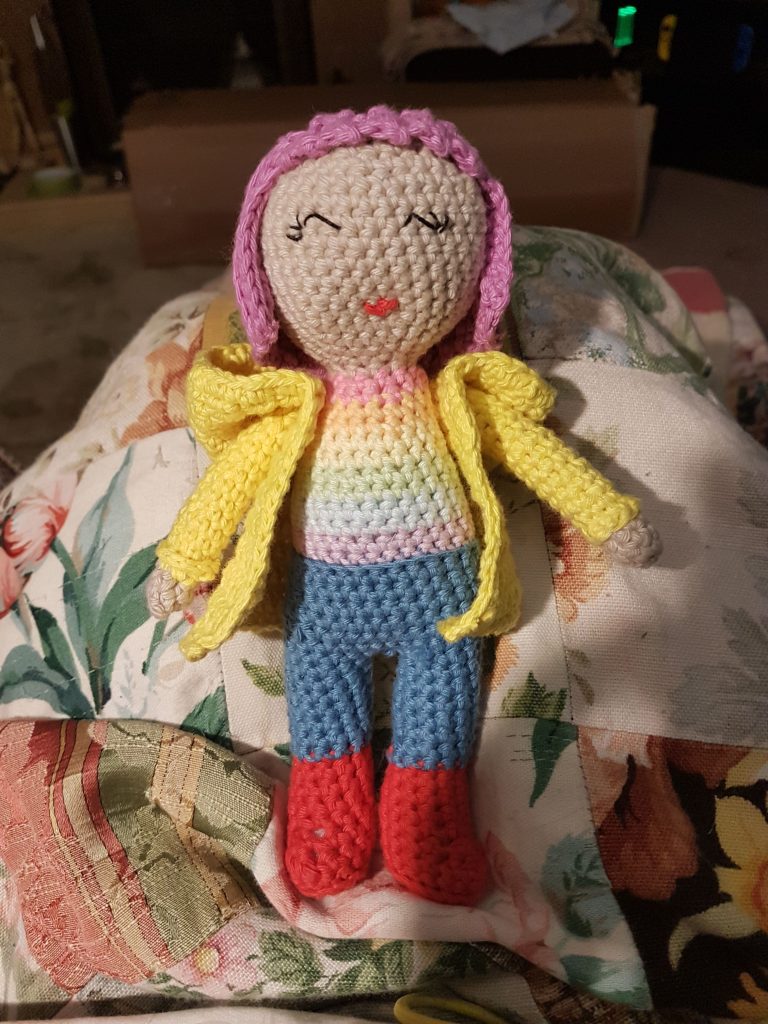
Just before Christmas, in an issue of Inside Crochet (issue 143), there was a little pink haired doll who reminded me of my last line manager Andrea – knowing she had a birthday coming up in January I made it and packed it off to sunny Leigh-on-Sea.
I’ve also been messing about with some jewellery ideas, so watch this space – I really shouldn’t be allowed unsupervised on ebay, but there we are. Ten more pigs in blankets are underway, a neon Pikachu cross stitch, a couple more snowy owls – not enough time in the day, it seems!
See you next week, when I might be a lot less disgruntled. More gruntled?
Kirsty x
What I’ve been reading:
The Glass Gargoyle/The Obsidian Chimera/The Emerald Dragon – Maria Andreas
Torchwood: The Radio Dramas/Torchwood Tales (Audible)