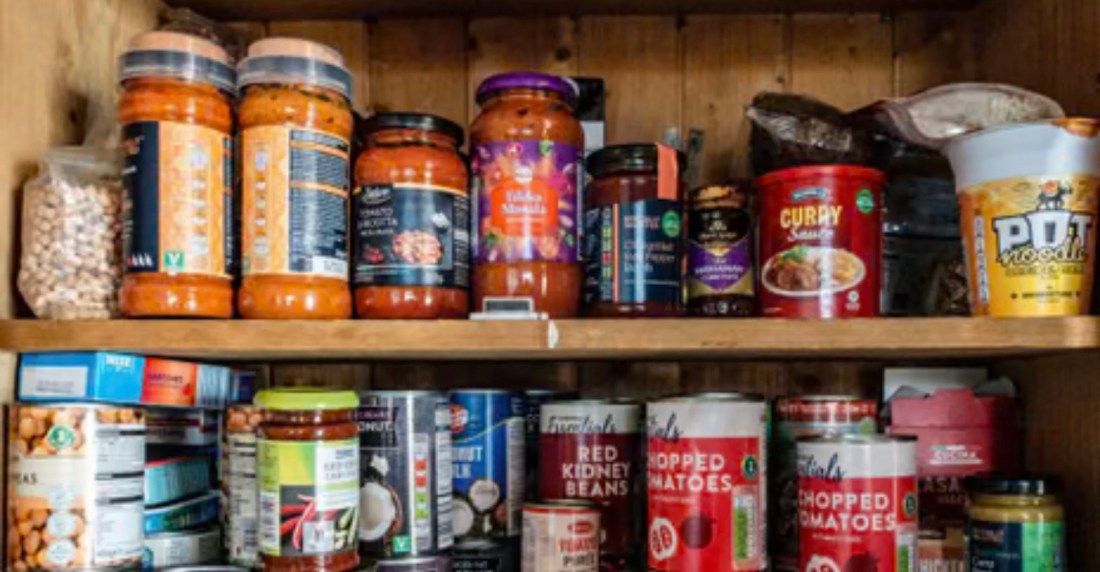
This week there’s been a lot in the news about the need to be prepared for a whole range of potential emergencies like total power failure, bad actors, foreign hackers, anarchy, riots and so on. We’re all supposed to be stashing enough tinned and long life food, water, medicines, hygiene products and pet food to get us through a fortnight of national disaster, along with copies of important documents, cash, wind up torches, batteries, radios and a list of helpful phone numbers. A go-bag for fires, floods, zombie attacks. Blankets, sleeping bags, things to keep the kids amused when their phones run out or TikTok goes dark. Board games are an option, though presumably not Monopoly as that’s guaranteed to cause societal breakdown in your house as well as outside.
I can see some issues with the list above, as getting your doctor to provide you with a prescription for prepper purposes is quite unlikely. Other problems that have been put forward have been lack of space for storing the stash (stashing the store?) and also – probably more of an issue given the economy – the number of people living in food insecurity who can’t afford to eat day to day let alone to stockpile. People mutter about food banks filling that gap but I have a feeling that people will be buying those extra tins for their own families now rather than donating,
It’s something I’m considering doing although my main problem would be stashing enough food somewhere in the house to supply a growing 15 year old Thing 3, and also enough of the right sort of food to keep Thing 1 fed as she is and always has been a picky eater. Thing 2 will just mix stuff together according to her mood.
Tinned vegetables are recommended, corned beef, tuna and sardines, beans, soups, tinned chilli and bolognese, UHT milk, dried fruit and nuts. Pasta, rice, instant mash and porridge, chocolate. Huge jugs of water. The list of food above is more of a ‘won’t eat’ list for Thing 1, and that’s before she even gets onto the need for oat milk. Wes Streeting clearly does not have teenagers to contend with, and definitely not teens who can sniff out a stash of chocolate biscuits through several layers of lead insulation.
So assuming I can find somewhere to stash my disaster store (other than the salad drawer, which none of them look in and which is so far safe) it will probably have to include the following:
Approximately one million tins of Ravioli, which they all eat
Sausages and beans, in a can (a nod to my small nephew there)
Spaghetti and sausages (I don’t like beans)
Heinz Cream of Tomato soup in large quantities
Curry Pot Noodles (blame their father)
Tuna in spring water (the cats get the water)
Corned beef and tinned potatoes for hash, maybe with some dried onions
Dried fruit (mostly for me) and a locked stash of biscuits
A barista’s dream of oat, almond and semi skimmed milk
Coffee. Otherwise I’m not going to make it through this let alone the kids.
Wind up torches so my little wind up merchants can see to wind each other up
A big pile of books, also handy for insulation and building a fort to hide in
A large yarn stash and crochet hooks. For sanity and blankets, obviously. Crochet is a post apocalyptic life skill, you know.
The other stuff on the list, though the government have stopped short of actually publishing a list in case of precipitating the food shortages.
So there we are. Apparently this is SOP in European countries who are all much better prepared than we are for national disasters and so on. I wonder what makes the UK different? Answers on a postcard…
This week – like last week – has been very much about recruitment for our new team. Advertise, gawp at number of people applying, shortlist, interview, appoint. Straightforward, yes? Yes! We’re lovely people with a track record of building a team of people who bring new talents and perspective to our rapidly growing team. We like meeting people and we’re very relaxed in our interviews – one person said this week that they’d never been offered a cuppa in an interview before. Why not? We’re not trying to scare people. You don’t get the best out of people if they’re a bag of nerves, and the likelihood of you ever having to perform in the same way again when you’ve got the job is slim. I had a line manager in a previous role who was an absolute teddy bear, but looked so serious in interviews that everyone was scared of him. He made serious notes, never smiled, and kept the chat to a minimum. Eventually we got him to smile, which made interviews a lot less stressful all round.
I find that being human and smily is a good way to get the best out of people. The role we’ve been interviewing for this week is an early career position, so the interviewees have all been young and most don’t have a huge amount of interview experience. It’s been lovely chatting to them, watching them relax when they realised we actually want to hear about their experiences, letting some of their personality come through – these are the moments when we know whether or not we can work with them and whether they’ll be good in the welcome team. Sure, we’ve had to prompt them at times to answer the whole question – but I have lots of interview experience and these days I write the question down and blame the brain frog. We send about half our questions in advance so they have time to prepare answers, and encourage them to use their notes to answer. For some roles we send all the questions in advance – there are so many people in the arts, culure and heritage sector who have some form of neurodivergence and they really appreciate this. If one candidate asks for the questions in advance then everyone gets them, so everyone has the same opportunity.
Many of our candidates also attend our online or in-person info events, where they can meet some of team – including their potential line manager – and ask any questions they like. Almost like interviewing us, really, before they apply for the role. We’ve had questions about access, toilets, chances to use their other skills, progression routes – nothing is too daft.
Trust us – we want to give people who want to work with us every chance to get to interview stage and to get the job. Our job packs are comprehensive. We’re London Living Wage employers, we’re Disability Confident and feedback (unsolicited!) from applicants both successful and unsuccessful thanks us for making the application process open, easy and inclusive, telling us that they felt more confident about applying after the info evenings.
Inevitably some people don’t get to the interview stage, and while we obviously can’t interview 300 plus people (or 200 plus for the one closing tomorrow) and some people won’t get through, here’s my top tips for getting to the interview stage and beyond from the point of view of a shortlister/interviewer/line manager.
Look carefully at the essential criteria and tailor your supporting statement to these. We don’t look at your employment or education history (often they’re redacted) and this is all we shortlist on.
Provide examples of how your experience meets the essential criteria. Saying ‘I am a great team player’ is fine, but why are you a great team player? What in your experience makes you say that? Tell us about a time when you worked as part of a team, and how you contributed. Think about transferable skills if you’re early in your working life.
Use AI sparingly – it’s a useful tool, but when we’ve seen the same opening paragraph so many times we can recite it by heart and in unison, you aren’t standing out to us. If you do use it, make sure you read it through and personalise the output to your own experience. We’ve also run the job description through ChatGPT and asked it to write the job application, so we know what it looks like.
Don’t write ‘please see attached CV’ instead of a letter. If we’ve asked applicants to complete a form there won’t be an option to add a CV, so all your time has been wasted. And ours.
Writing ‘I’d be great at this job and when you interview me I’ll tell you why’ is neither big nor clever, and just ensures we won’t be interviewing you (actual example from a role in my previous job. Just don’t.)
Don’t write ‘I haven’t actually downloaded and read the job pack but this is what I assume will be needed to do the role’.
Remember that we’re looking for the right person for the job, so show us that you’re that person in a logical way.
If you have questions about the role and there’s an option to ask – ask!
If you don’t get to interview stage, we can’t always provide feedback on why – when there’s 300 plus applicants it’s just not possible. We – unlike some other places – always tell you if you’re unsuccessful, but can’t give individual responses.
We understand it’s frustrating not to get an interview, especially when you’ve been trying for ages to get a job and nothing is working, but my top tip here if you’re early career is to ask someone who’s in a management position, or a teacher or lecturer, to have a look at your application vs the job description and to give you some feedback. It is soul-destroying, I know, and the heritage/art sector is saturated at the moment with people looking for work.
Through to the interview stage? Well done!
We’ve chosen YOU out of all our applicants. This means we believe you can do the job, so show us why you’d be the best at it.
Smile! Not in a mad way, but be open and friendly. We’re excited to meet you.
Look smart – it doesn’t have to be a full-on business suit in our sector, but looking clean and shiny creates a good impression.
If you’ve been sent questions in advance, prepare for them – test them out on other people at home to make sure you’ve covered everything. It’s fine to use and take notes in an interview. We aren’t trying to catch you out!
Ask the panel to repeat the question if you need to – writing it down also gives you thinking time. Top tip.
Try not to patronise the panel. We notice that sort of thing. We’re quite bright underneath the friendly exterior.
There’s usually a chance to ask questions at the end – come with some pre-prepared ones about the organisation, that show you’re keen to work with them, that haven’t been answered in the job pack.
Try not to use the word ‘trainspotter’ in an interview with a well-known transport organisation. It’s all downhill from there. Trust me on this.
Didn’t get the job? Ask for a debrief on why – usually they’ll be happy to give feedback at this point, and if they’re not the sort of organisation who will provide it then you don’t want to work for them.
Didn’t get the job at interview? My Dad tells me it’s all good interview experience. Use the feedback and you’ll be more confident next time. The right role is out there, I promise.
Turning an £8 Tesco duvet cover into a dress and a skirt, both by Sewing Therapy. Super easy to layer and wear, and the skirt came together from print to finished garment in a couple of hours.
Early morning coffee with an ex London Museum colleague, catching up and exchanging capital project progress – reassuring each other that photographing accessible door furniture and obsessing over chair finishes is perfectly normal