I have mentioned before that I’m a bit of a reader and have been since an early age. I suspect, given that my parents are also big readers, that it was partially self-defence and then it became a habit. Both parents read to us and created their own stories – Galumphus the Dragon was my dad’s character, and Jeremy John stories came from my mum. I continued to listen in when my much younger sister was being read to, and for me one of the joys of teaching was story time at the end of the day; whether that was a picture book or, further up the school, a chapter book.
One of the last sessions I created at the Museum of London Docklands was a sensory, interactive story called ‘The Cinnamon Birds’, as an introduction to the idea of international trade for Key Stage 1 and family groups. I loved telling it – from gathering my audience Pied Piper-style, moving through the museum with a beautiful dragon puppet on my shoulder, to casting a story spell with tales of cunning merchants and wafts of magical scents and treasures from a pirate chest.
At the V&A Museum of Childhood, we had a hardcore of parents and children who would come every day for the Animal Magic session at 2pm, led by the Activity Assistants who used puppets, music, projection and more to bring both classic stories and their own work to life. It didn’t matter how often the families heard We’re going on a bear hunt! – this time was part of their daily routine. (Lia, one of the former AAs, has now set up her own business with her mum creating sustainable story sacks, with all the contents and materials sourced from charity shops and community markets. I love this idea – check them out, they are Oranges and Lemons and their product is wonderful).
I still love listening to stories – when I’m commuting I can be found on the Central Line listening to audio books and crocheting my way to work. I refuse to confess to the number of times I have missed my stop as I was distracted by an exciting bit…
When my Horde were small I took the opportunity to gather the books that I had loved as a child, as well as discovering new stories. So here are some of our favourite picture books*….
- The Tiger Who Came To Tea – Judith Kerr. This is more than 50 years old now and still wonderful. Also her Mog books, and her autobiographical ones. When we get back to whatever normal looks like, keep an eye out for the touring exhibition from Seven Stories.
- Where the Wild Things Are – Maurice Sendak. Another classic from the 1960s, and I love it. A wild rumpus always sounds like fun.
- Dear Zoo – Rod Campbell . My bunch all loved lifting the flaps and shouting along with the words, making animal noises. I bought this one at Stansted Airport on the way to France with Thing 1, and her Grandpere spent a lot of time reading it to her on that holiday.
- The Very Hungry Caterpillar – Eric Carle. Another one they loved to recite with me, or finish the sentences when they were very small.
- Hairy McLary from Donaldson’s Dairy – Lynley Dodd. We had a CD with these stories too, and David Tennant was perfect as the narrator. Thing 2 also loved The Dudgeon is Coming.
- Is it bedtime, Wibbly Pig? – Mick Inkpen. Every parent knows the torture of bedtime! Wibbly Pig’s Silly Big Bear always makes me cry.
- No Matter What – Debi Gliori – big thinking for little people.We still love them even when they’re naughty!
- My Big Shouting Day – Rebecca Patterson. Another one of Thing 2’s favourites. I think she identified with the main character (so did I).
- Dinosaur Roar! – Henrietta and Paul Stickland. We got this one free from Bookstart and Thing 3 LOVED it.
- Tiddler – Julia Donaldson and Axel Scheffler. All this pair’s books are wonderful, but this one was their favourite.
- Funnybones – Janet and Allan Ahlberg. Thing 3 thought this was hilarious. They also loved Each Peach Pear Plum and hunting for the fairytale characters in the illustrations.
- Tell Me A Dragon – Jackie Morris. I fell in love with her glorious, magical illustrations through another Bookstart book – Can you see a Little Bear? – which she illustrated for James Mayhew, and when Tell Me A Dragon came out with a dedication to Terry Pratchett, I bought it for myself. Of course I read it to the children too. Her work with Robert Macfarlane in The Lost Words is exquisite and I was lucky enough to catch the exhibition at the Foundling Museum in 2018.
- The Dancing Tiger – Malachy Doyle. Thing 2’s nickname is ‘Tiger’ so we read a lot of books about tigers! This is one of my favourites. We don’t stop dancing when we get old!
- The Mousehole Cat – Antonia Barber.We discovered this one via a CBeebies bedtime story, read by Shobna Gulati, and bought our own copy. Thing 1 loved the Storm Cat.
- That Pesky Rat – Lauren Child. Runner up here goes to Who wants to be a Poodle? I don’t – I love her collaged illustrations.
- I Really Want to Eat a Child – Sylviane Donnio. Another of Thing 2’s favourites! She has always been the most anarchic, subversive child and this story really appealed to her.
- Lost and Found – Oliver Jeffers. All of us loved this one – there’s a beautiful TV adaptation too.
- Penguin – Polly Dunbar. This one was a library story time discovery when Thing 1 was small. Inevitably she would have fallen asleep in the buggy on the walk to the library but I always stayed for the story!
- Not Now, Bernard – David McKee. Poor Bernard! And poor monster…
- Whatever Next – Jill Murphy. Thing 3 solemnly informed his playschool aunty that ‘Mummy said I am allowed to go to the moon….but I can’t go up the chimney.’ That one took a bit of explaining.
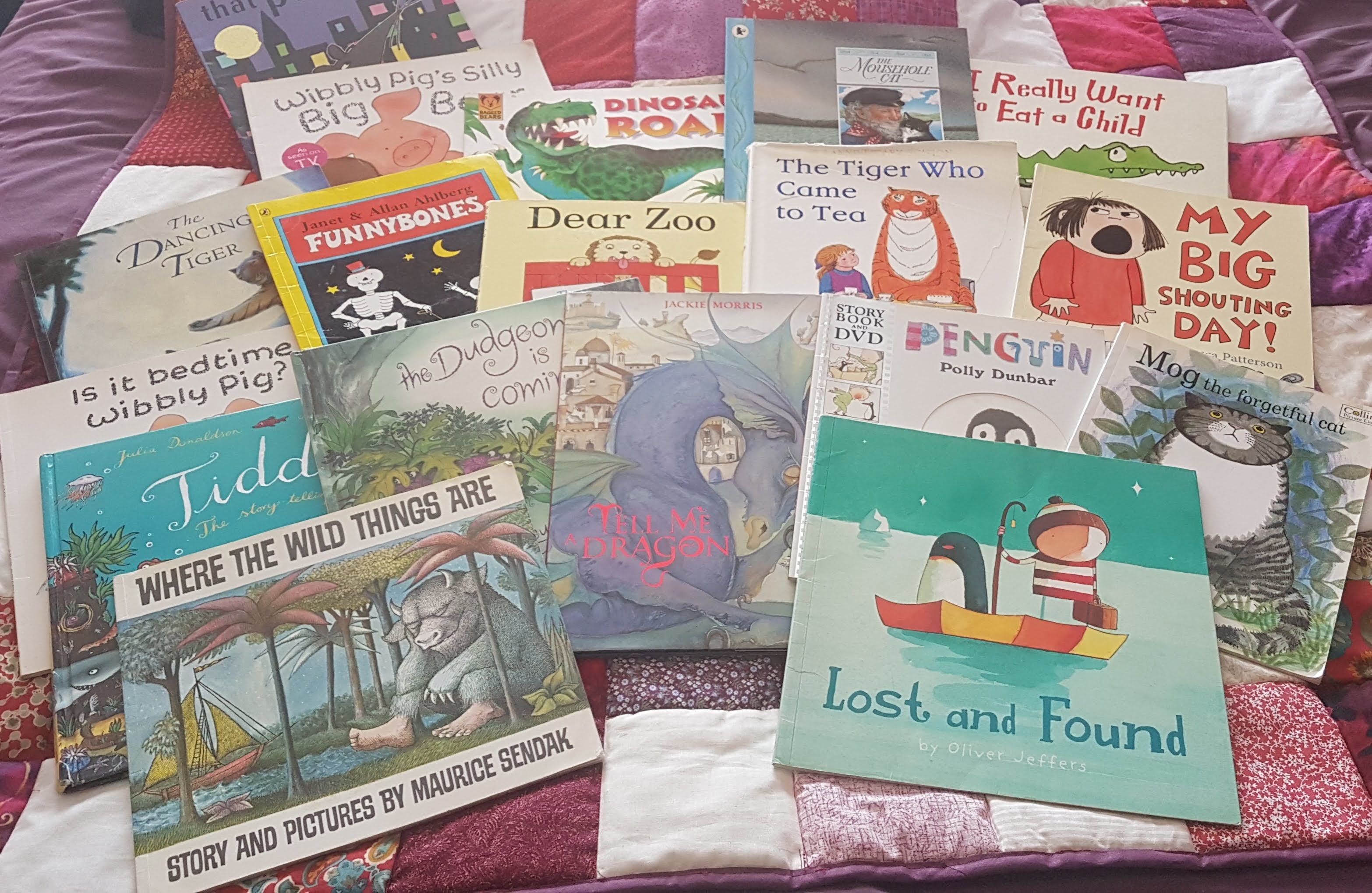
Special mentions also to Mayer Mercer’s There’s a Nightmare in My Cupboard, The Bear’s Toothache by David McPhail, Green Eggs and Ham by Dr Seuss, and – finally, I promise – Lost in the Toy Museum by David Lucas. So many schools read this before visiting the museum that we eventually offered it as a session, and it was very popular.
Thing 2 still occasionally asks for a story – we read The Ordinary Princess by M M Kaye earlier this year, and we’ve started Anne of Green Gables. Thing 3 likes to listen in… he is the biggest reader of them all at the moment.
Even once children have learned to read themselves, there is magic in hearing a story well told. Reluctant readers may find their way in to reading this way, and I always told worried parents that as long as their children were reading, it didn’t matter what it was. Reading schemes, while worthy and phonically sound, are often boring. Find what they want to read and let their imaginations fly!
What are your favourites?
(*not affiliate links, just Amazon. Other book sellers are available!)
Morgan jeans finished at last…
….and they are my new favourite thing. I bought the pattern after making Closet Core’s Ginger skinny jeans, which I wrote about in Week Fourteen. The fly hadn’t gone well, but I liked the process of making the jeans and thought I’d try something in a style I wouldn’t usually wear. I bought some bargain midweight rigid denim from The Textile Centre – the first package disappeared in the post but they were really helpful in replacing it. I buy from them quite often, as they are very reasonably priced and the fabrics are always great quality.
The pattern instructions were very clear – the indie designers are far better than the Big 4 (Simplicity, Vogue, Butterick, McCalls) pattern companies at providing step by step instructions, and usually have good photographs of the process.
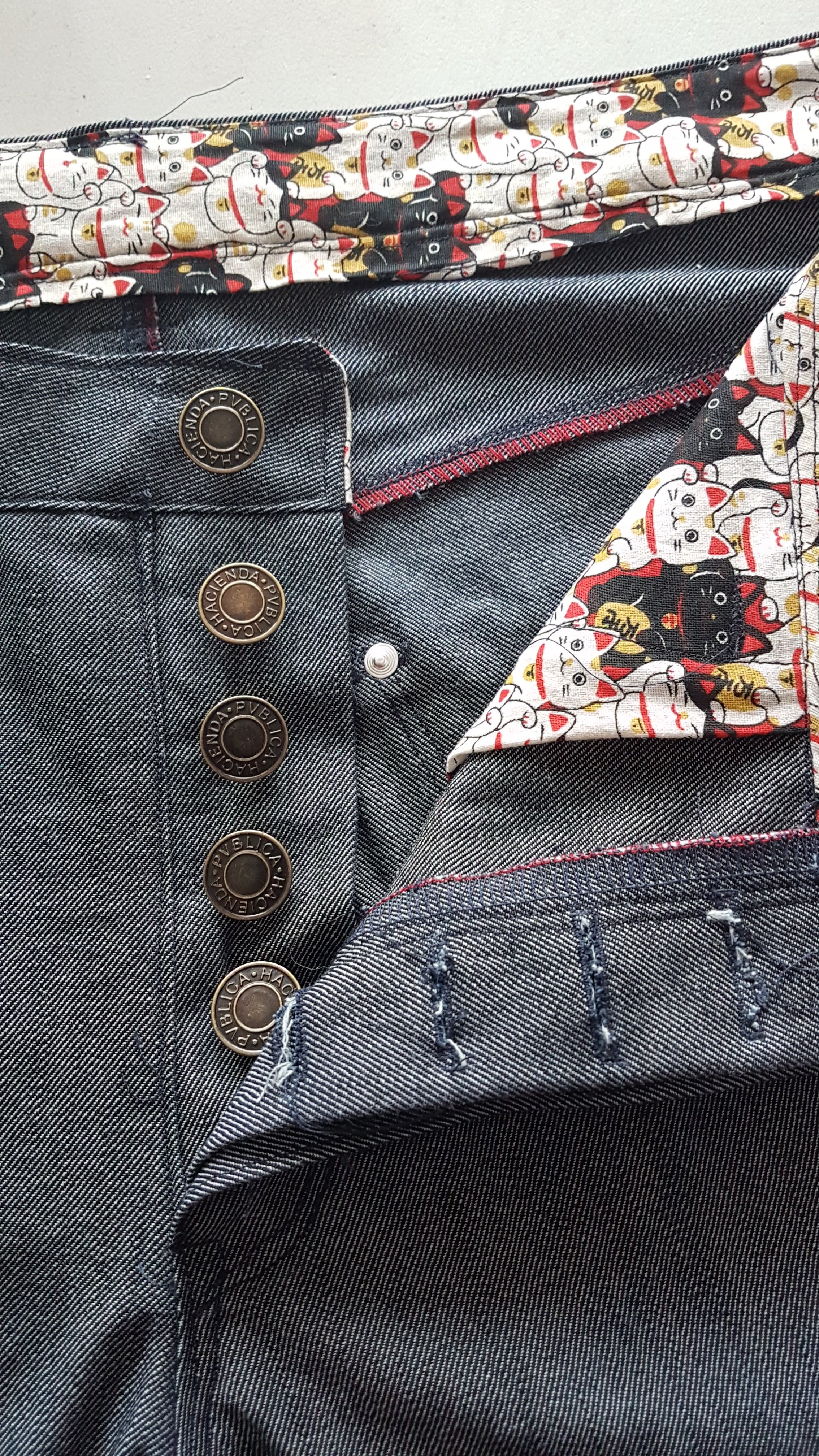
Well, these were a dream make, even when I put one of the pocket linings on backwards and had to frog it. I was trying to take special care with the pockets as I’d got them the wrong way last time. I even re-cut one of the pocket linings as I was using a directional print and didn’t want it upside down, even though under normal circumstances no one will be looking at the inside of my jeans! The maneki neko fabric was from Ali Express, and it’s a good 100% cotton quilting weight. Expect to see more of it in a future quilt!
In terms of sizing, I took out 5mm from the straight leg seam allowance, but I don’t think I needed to so I’ll leave it in next time. I also took out some length in the leg – 5cm, this time – and I think this was about right. I like the cropped length with my trusty Birkenstocks.
I was very careful with the fly, after last time, and this time I got it right. I also went the whole hog and added rivets, belt loops and made my own ‘brand’ patch using a woven label from The Pink Coat Club. Both the jeans buttons and the rivets came from EBay.
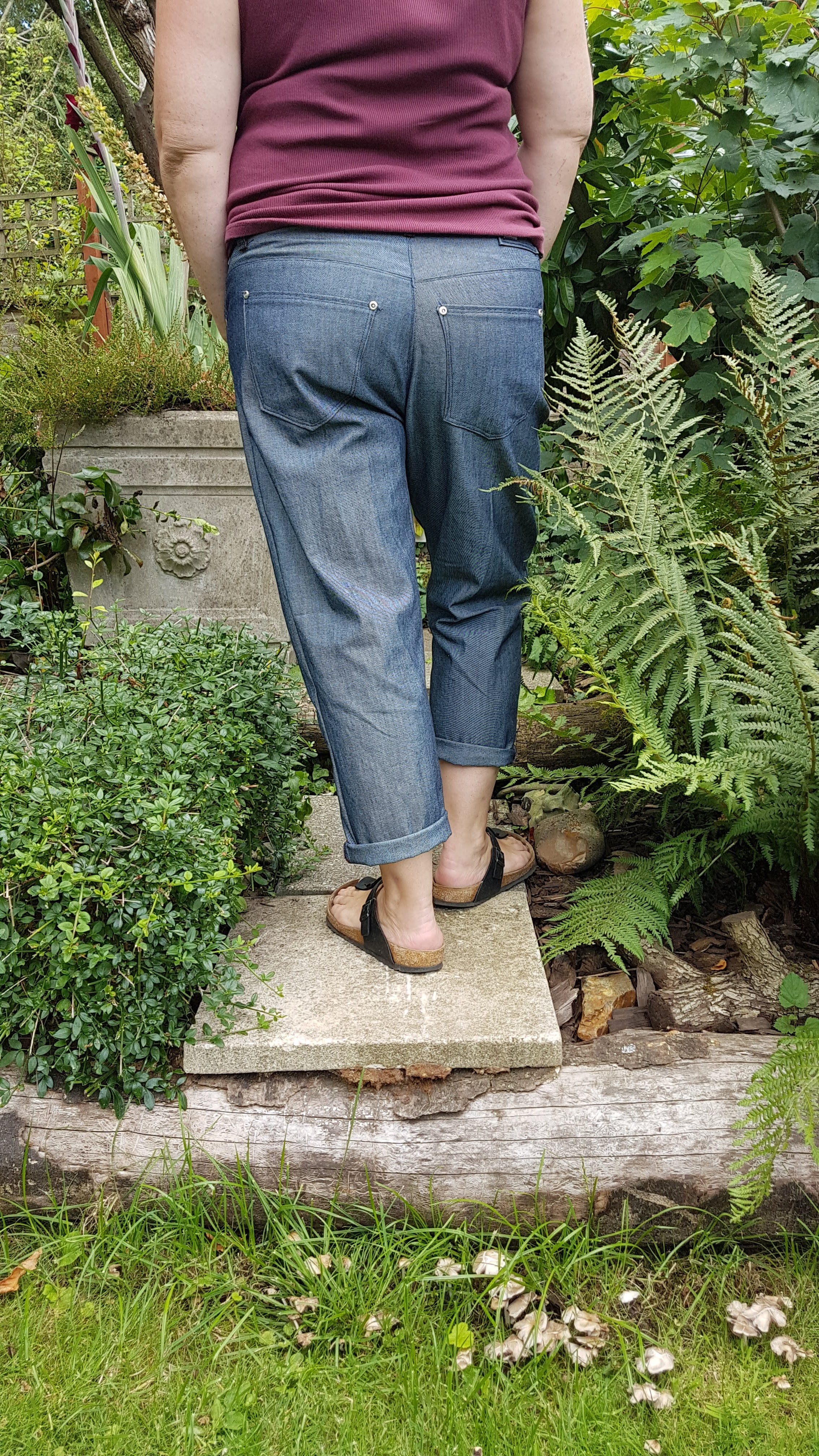
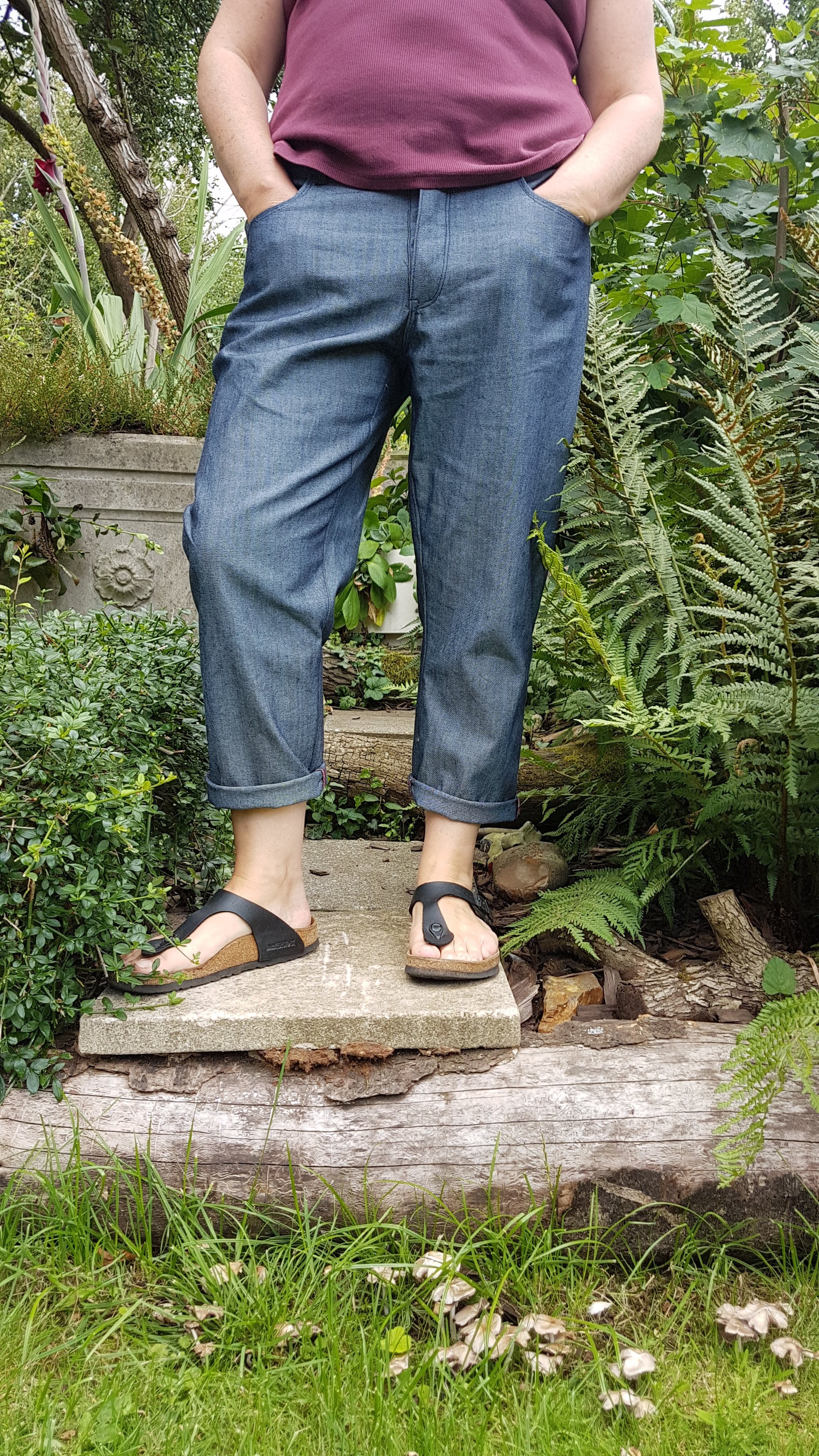
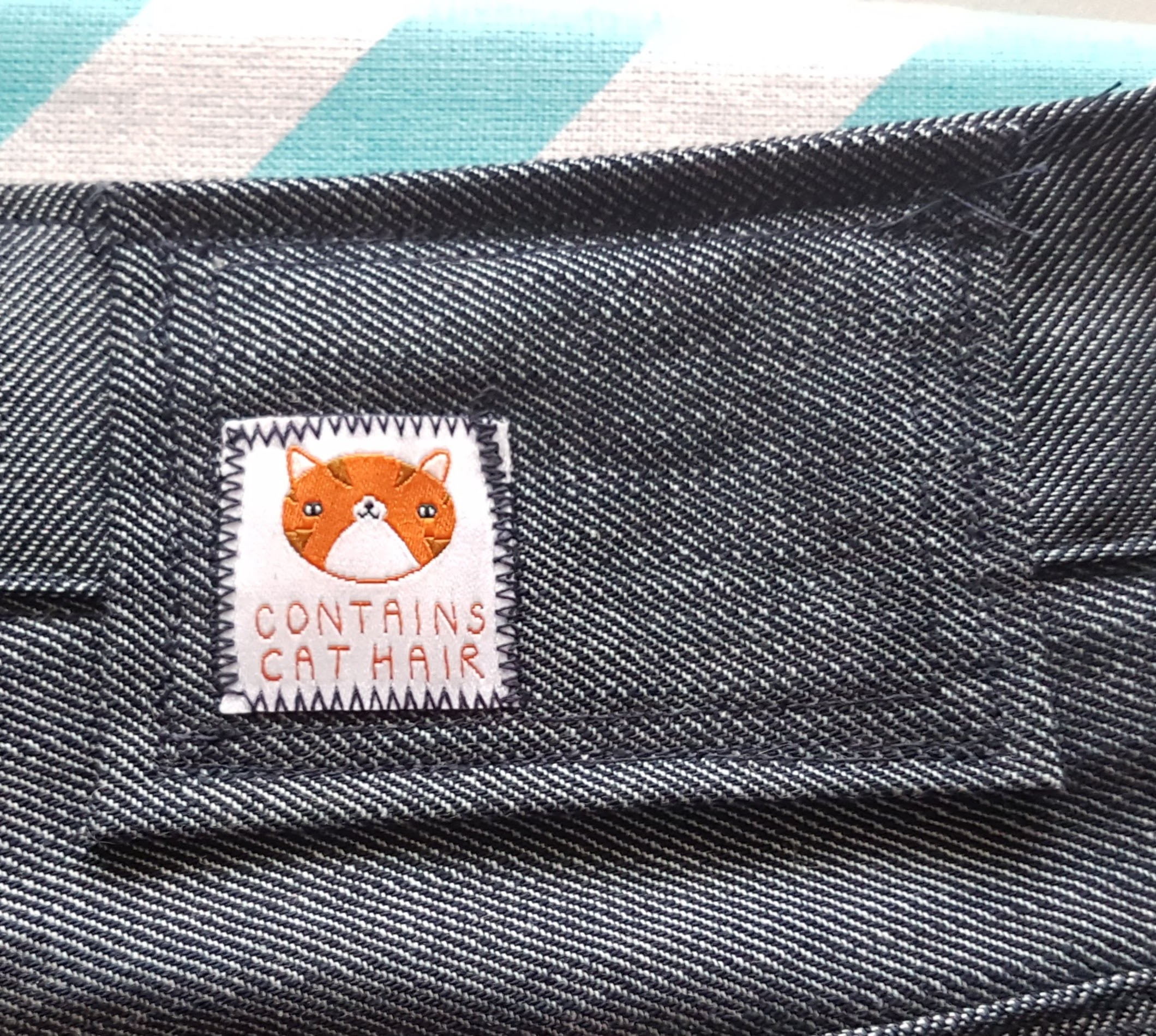
Overall I am pretty pleased with them, though a sewing friend suggested I made the pockets a bit smaller and placed them a bit higher to be more flattering, which I will do next time. I have some black cord that will work well with this pattern, so there *will* be a next time! I wore them on Tuesday, when I ventured onto a train to take one of my stepdaughters to an appointment, and they were so easy to wear, even as the temperature rose.
I remembered my mask, too – home made, of course.

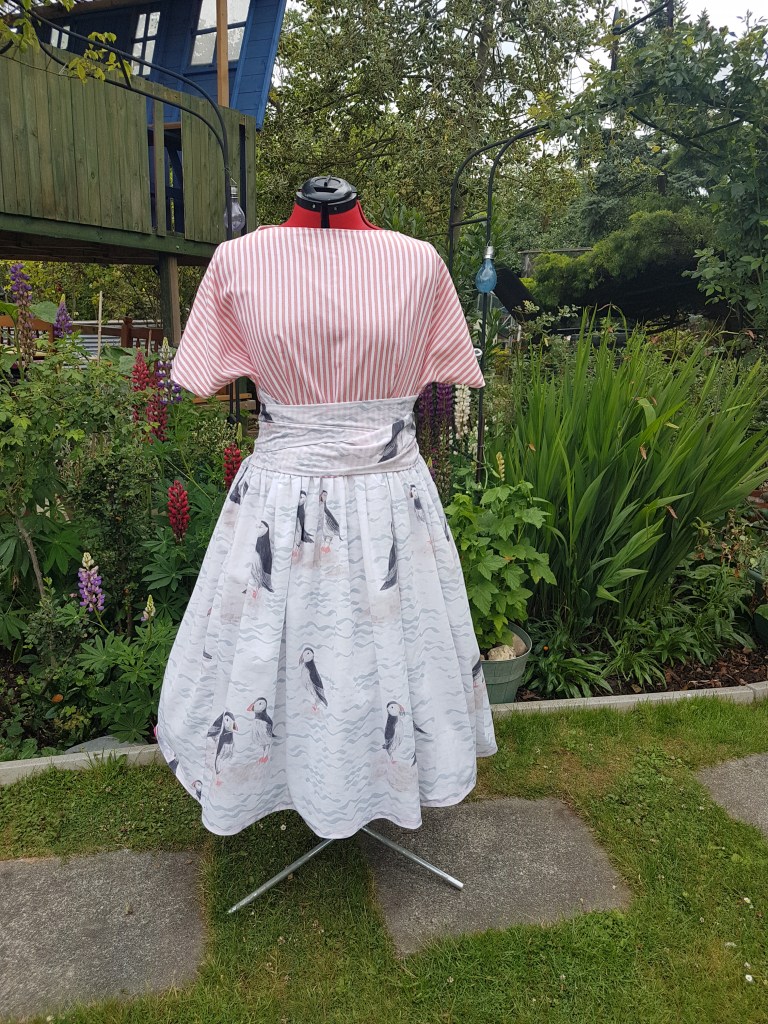
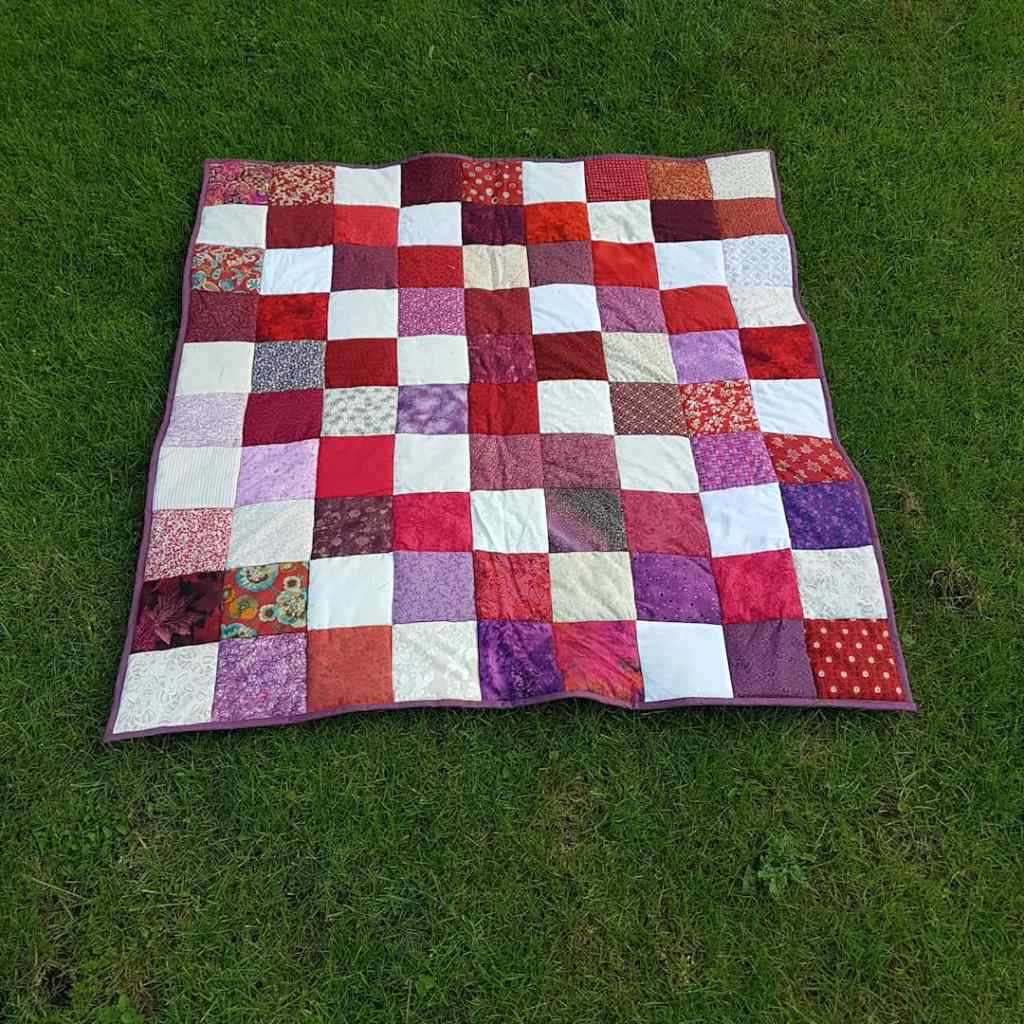
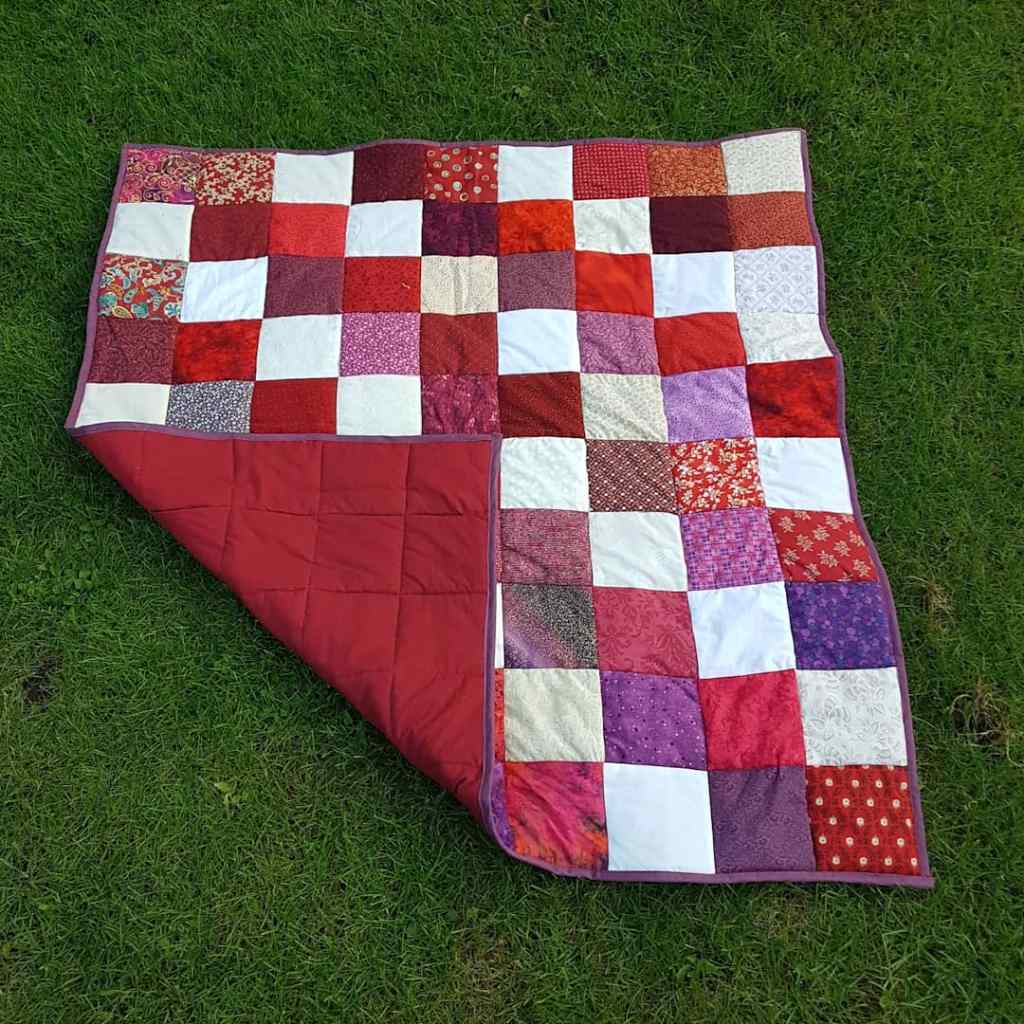
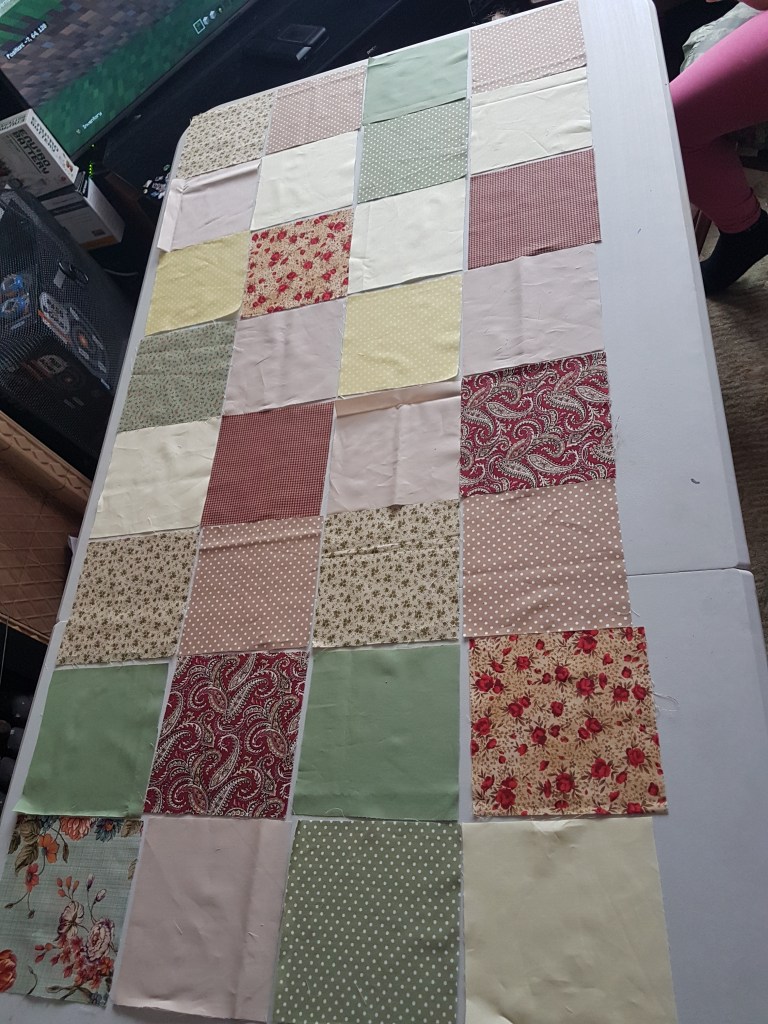
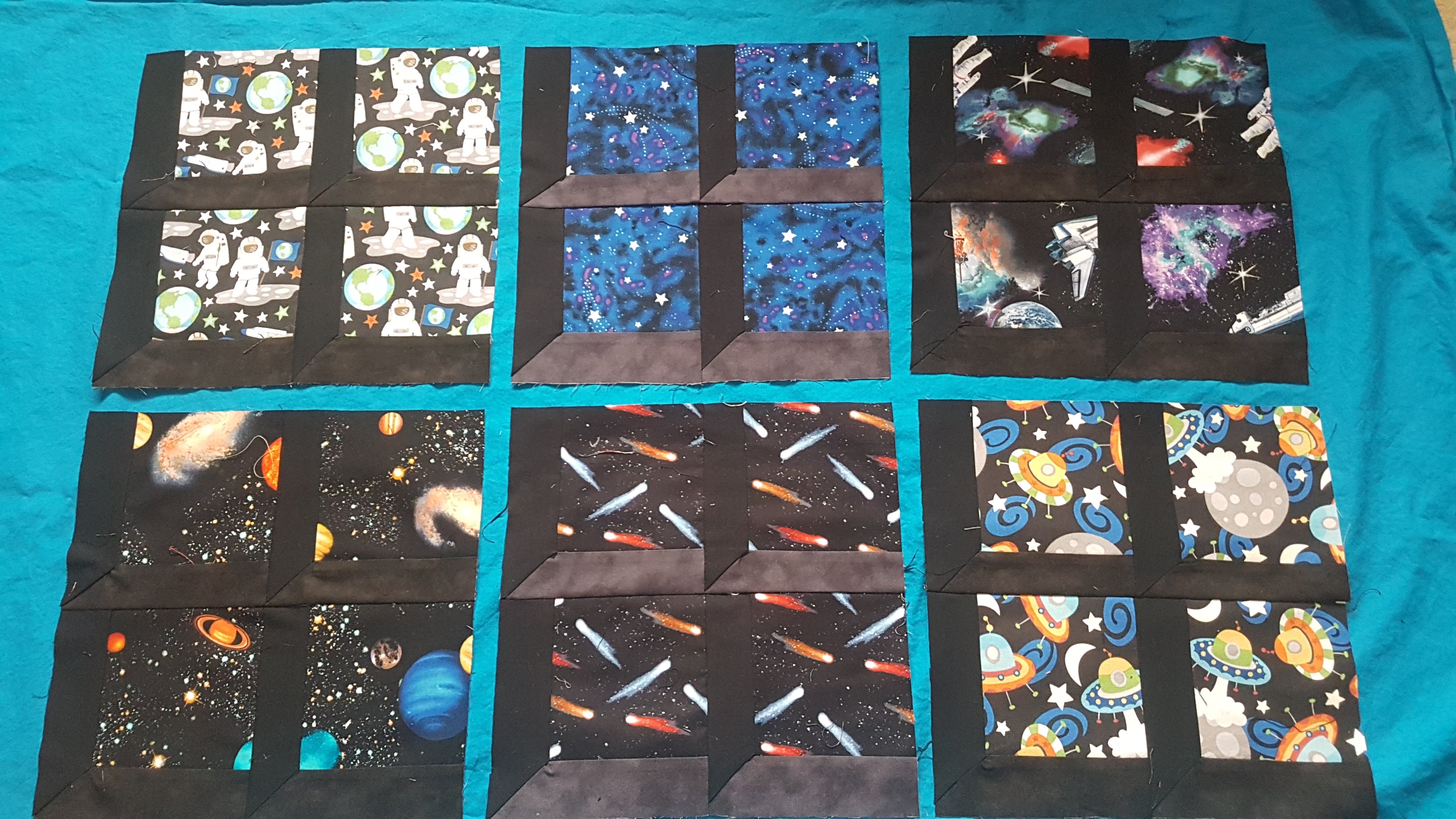
I’m still working on my attic windows quilt, and will hopefully finish the top this week. I am going to attempt sashing between blocks, so let’s see how that goes! Here’s the different blocks laid out on the fabric I have chosen for the sashing. I’ve tried to be quite accurate with my sizing – I trimmed the single window squares to the same size and squared off the edges before putting them into the larger blocks, and the larger blocks have been squared to 11 3/4″. I’m not entirely sure how big this is going to end up! I have a double duvet cover (well, the reverse of one -the front is going to be a circle skirt) for backing, so hopefully that’ll be large enough!
As an aside – I have a Quilting board on Pinterest, and I opened up the site in a new tab to remind me to have a look at it when I’d finished writing this. An hour later, I realised I’d fallen down the rabbit hole and rather than looking at the pins on the board, I’d got about 30 tabs open, had pinned a whole new set of ideas and still hadn’t finished this post!
Adventures in the great outdoors


I haven’t done quite as much swimming this week as one of my buddies was working up in London, but we have managed a couple of early morning plunges and a late afternoon dip, which was most welcome when the temperatures were in the high 20s. We swam just as the sun was starting to go down, surrounded by damselflies and ducks, and it was quite blissful. We did about a lap and a half, so just over a kilometre.
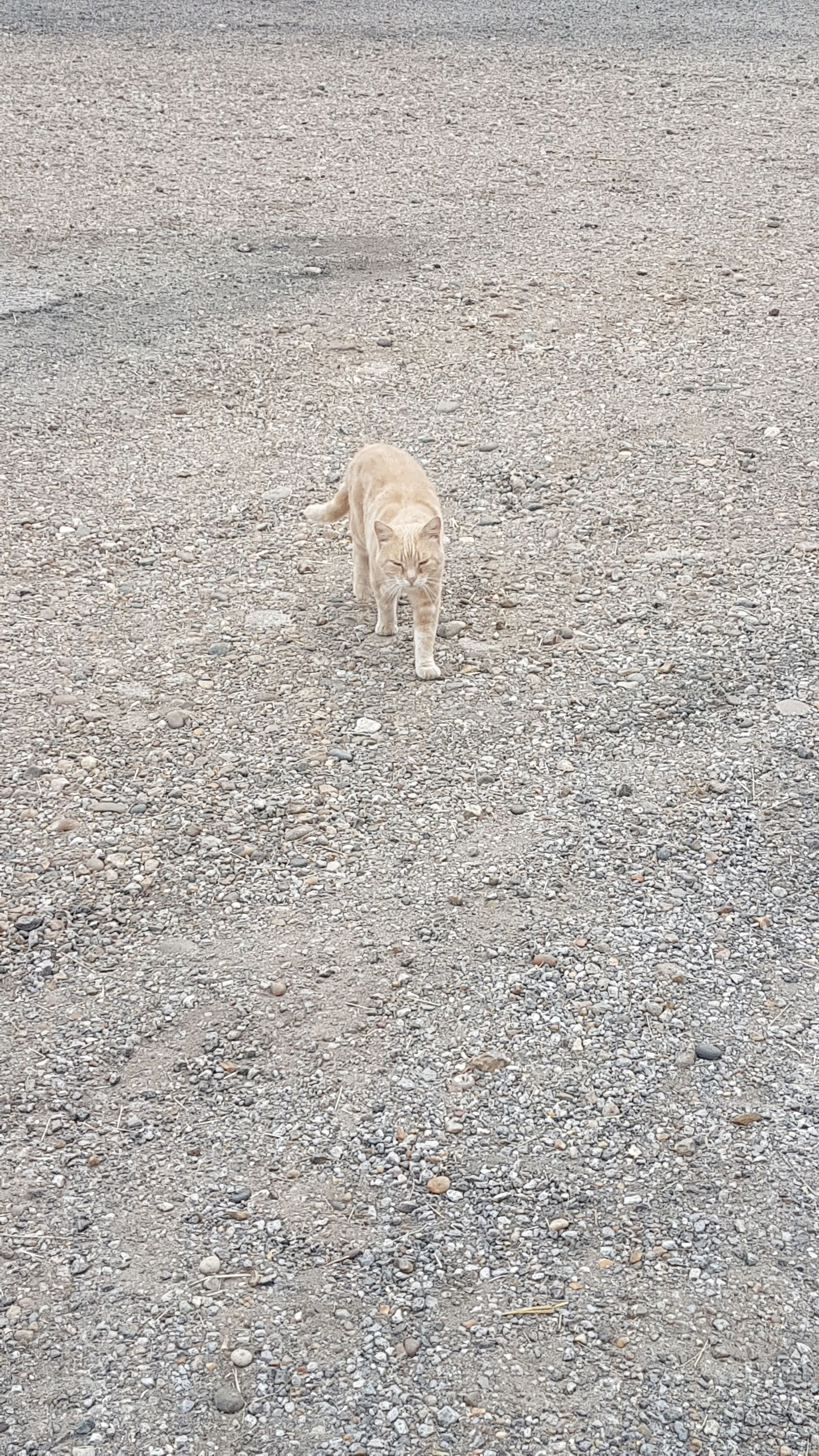
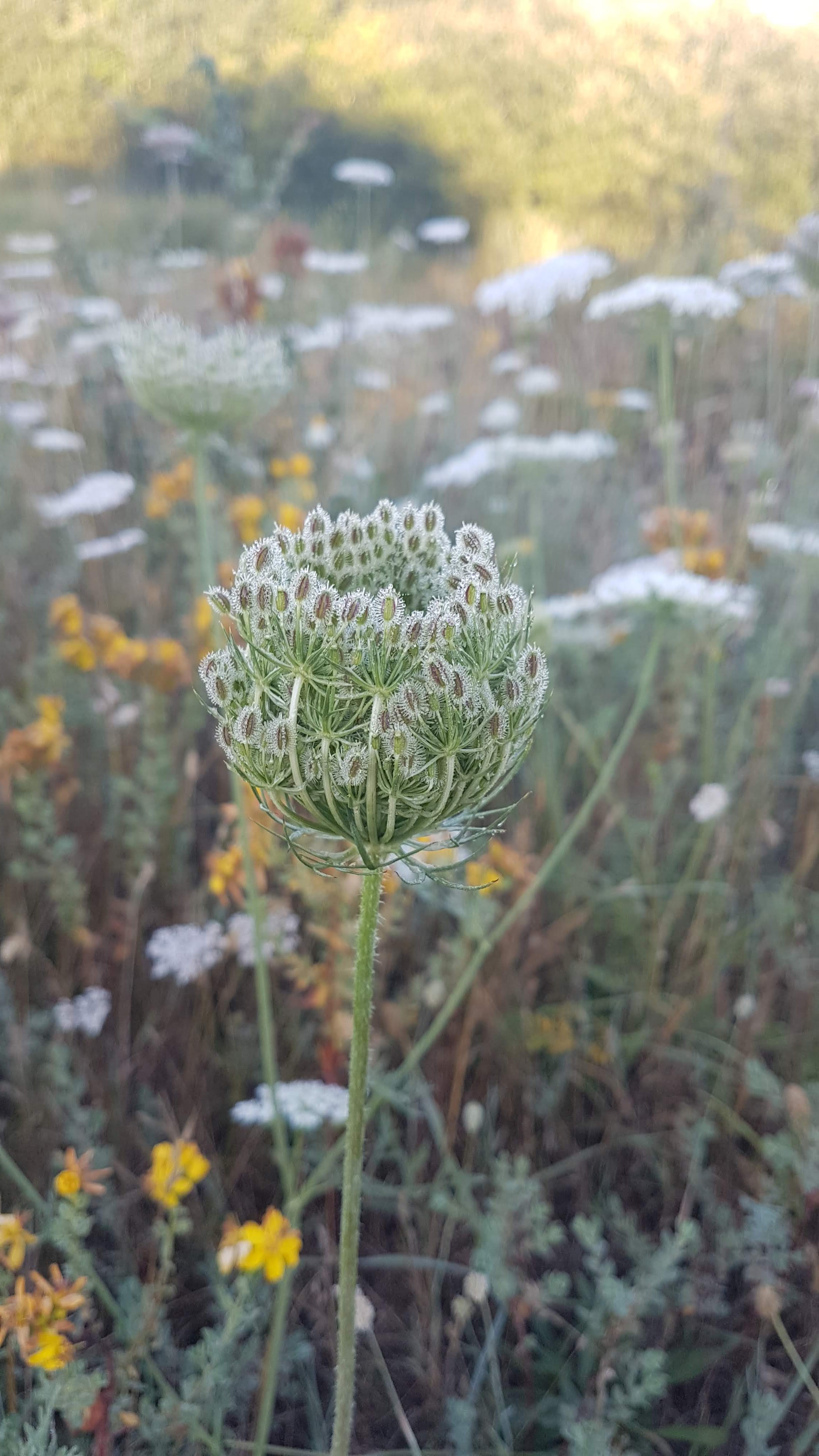
Early morning walks have been good too – we are more than 70% of the way towards the August 30k challenge I mentioned last week. One morning we went round the fields via the flood meadow (see this week’s cover photo) which is filled with wild flowers, and on another via the farm where we finally coaxed the little black barn cat close enough to pet. There’s a lot of black cats on the farms round here! His marmalade friend joined in with the fuss too. Next time we walk we are going to take boxes and pick blackberries, as the hedges are groaning with them.
How does your garden grow?
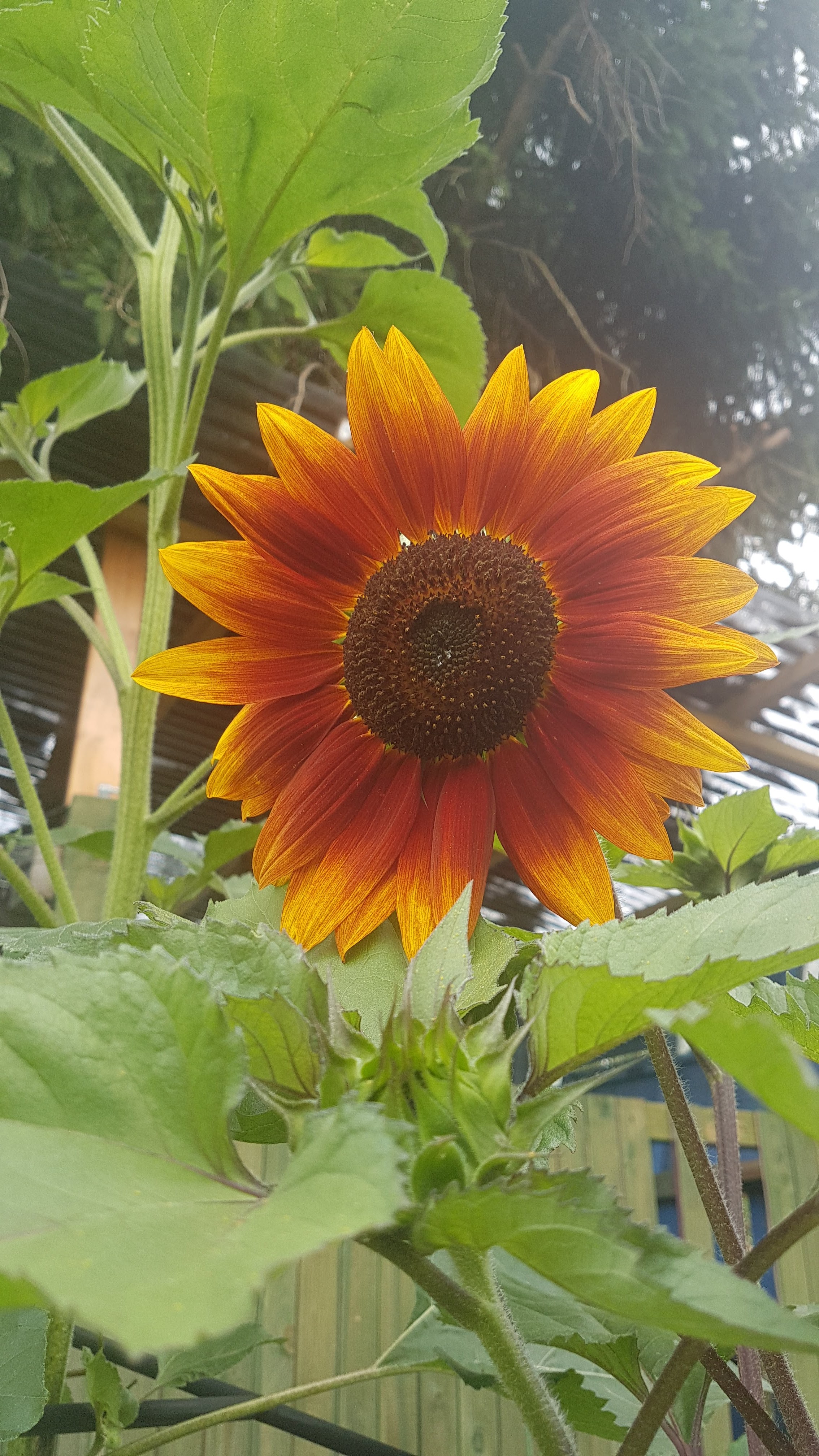
Closer to home, the garden is looking beautiful – one of the sunflowers is now nine feet tall, and hasn’t flowered yet! The sunset-coloured one below is probably about seven feet tall (you can see the stalk of the big one behind it), and the bees love them. The squirrels will also love the seeds when the flowers are finished.
We also made a trip to the garden centre for compost and came home with more sad plants – these two Black Eyed Susans outside my shed, these flame-like celosia that look like Calcifer from Howl’s Moving Castle, and some heliotropes and calla lilies.


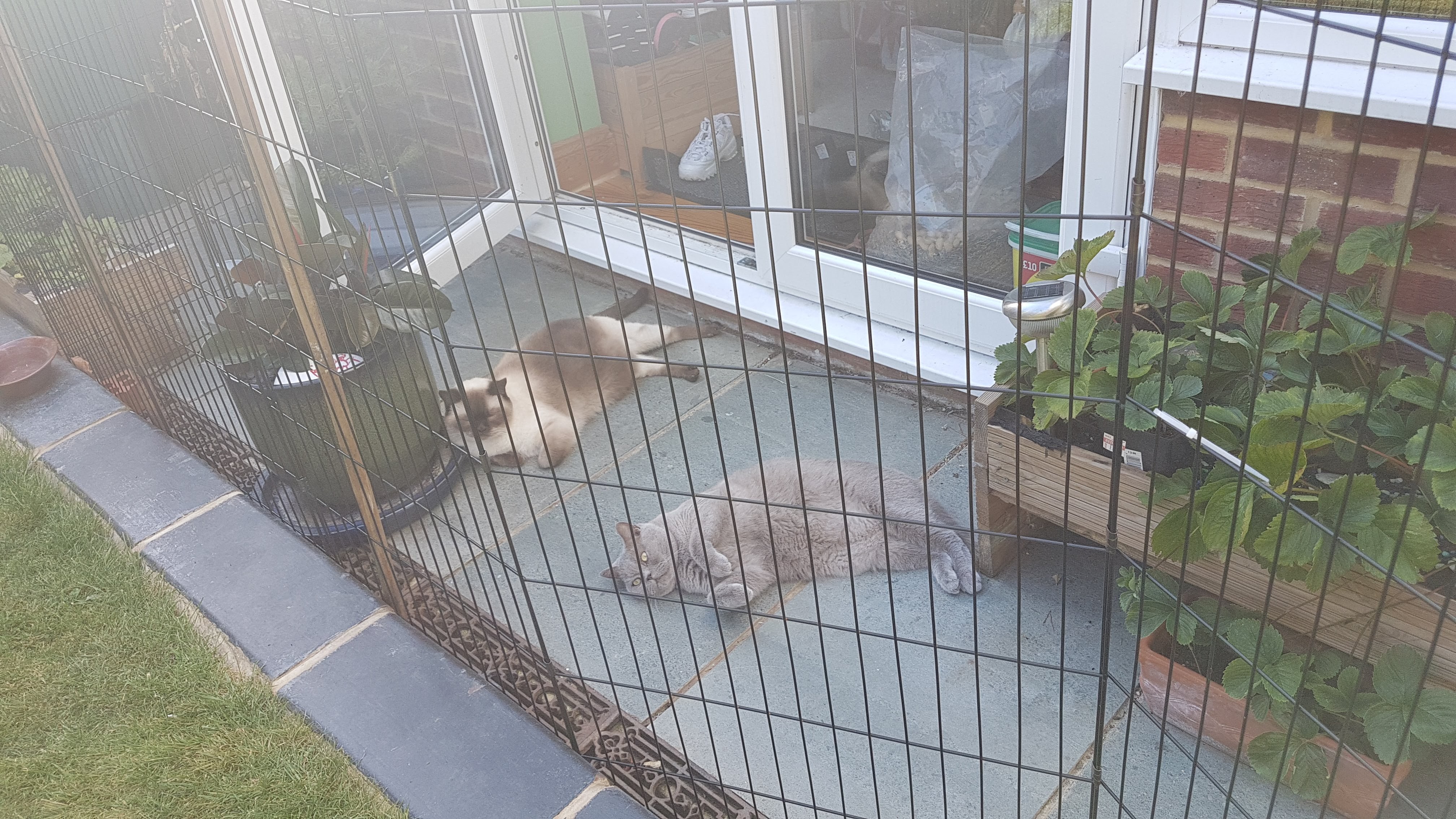
Bailey and Teddy are making the most of their catio, as you can see – they love being able to come outside and watch the birds close up. The catio is made of a dog cage, bits of fireguard and a lot of cable ties. We keep adding bits on to try and stop Lulu escaping, as she’s a bit of a Houdini!
Hey, what happened with that job interview?
We heard mid-week that we hadn’t been successful but the consensus view is that we don’t mind! We enjoyed the process and we can continue to work together on the project at our own museum with a new understanding of each other’s skills and experiences, and how well we work as a team. Hopefully we also started people thinking differently about how job shares can work, and got them thinking about what innovation might look like in a multi-site organisation!
You can find out more about the V&A East project here and about the Museum of Childhood transformation here.
And that’s it from me for the week – I have a kitchen full of kids causing chaos, more in the tent in the garden, and I probably ought to supervise!
Same time next week for week 21 then!
Kirsty x
What I’ve been reading
American Demon – Kim Harrison (the new Hollows novel! Yay!)
The Pearl King (Crow Investigations) – Sarah Painter
Time to Depart (Falco series) – Lindsey Davis (Audible)