…hot. Weather continues hot, with all that entails: men thinking it’s appropriate to go shirtless on the Underground, for example. For the avoidance of doubt, it isn’t, and no one wants to see those tattoos. The annual competition for the hottest underground line. Co-ops all over the country decorated with ‘this fridge is broken’ signs. Airconditioning units sold out. Dust and pollution replacing pollen in the noses of everyone in the city. The daily checking of BBC Weather (other apps are available) chasing the rain which is always just a few more days away. Online articles with top tips on how to beat the heat, at varying costs depending on which paper is currently clickbaiting you.
So, in the spirit of the season, here are my top tips for not going completely mad in the ongoing heatwave:
Lucozade Ice Kick on the train to hydrate. Two for £3 in the co-op at Farringdon (their fridges are working) bought just before you get on the train
Keep a stash of water bottles in your freezer. Not to drink, but to wrap in tea towels and take to bed at night.
Calippos. At least one a day, orange for preference but strawberry is nice too.
Carry an old fashioned fan and while away your horrible journey imagining you’re in Bridgerton. These are apparently very big on the fashion show front rows at the moment. This may be the only time I’ve been ahead of the trend, as I’ve had them in my handbag for years
Water sprays and an electric fan at night. Spray yourself, not the fan. This is important.
Consider alternative routes home if the tube is rammed. Think of it as an adventure. The overground lines are airconditioned.
Think seriously about moving to a polar region.
Cool showers before bed, but not cold.
Soak a tea towel in cold water and drape it round your neck (or over your entire body, but you’d need a bigger towel) and lie in a dark room. Science, apparently. Evaporation. Whatever.
Try not to touch a single other person with any part of your body.
Glare intensely at anyone who suggests holding meetings outside.
Finally getting to deliver the Little Owls storytime at work – The Tiger Who Came to Tea this week – and planning next week’s activity
Walking through the fields with a very well-behaved Dobby, who didn’t bark at anything for a change
Not the local bus services
A solo mooch round Brentwood on Monday, trawling the charity shops
Helping Thing 2 apply for apprenticeships
Rewatching The Commitments and introducing Thing 2 to this gem, after the sad loss of Glen Hansard this week (and Sam Neill and Bill Oddie in July as well – enough, 2026, enough!). Go and watch Once if you haven’t seen it again…
This week – like last week – has been very much about recruitment for our new team. Advertise, gawp at number of people applying, shortlist, interview, appoint. Straightforward, yes? Yes! We’re lovely people with a track record of building a team of people who bring new talents and perspective to our rapidly growing team. We like meeting people and we’re very relaxed in our interviews – one person said this week that they’d never been offered a cuppa in an interview before. Why not? We’re not trying to scare people. You don’t get the best out of people if they’re a bag of nerves, and the likelihood of you ever having to perform in the same way again when you’ve got the job is slim. I had a line manager in a previous role who was an absolute teddy bear, but looked so serious in interviews that everyone was scared of him. He made serious notes, never smiled, and kept the chat to a minimum. Eventually we got him to smile, which made interviews a lot less stressful all round.
I find that being human and smily is a good way to get the best out of people. The role we’ve been interviewing for this week is an early career position, so the interviewees have all been young and most don’t have a huge amount of interview experience. It’s been lovely chatting to them, watching them relax when they realised we actually want to hear about their experiences, letting some of their personality come through – these are the moments when we know whether or not we can work with them and whether they’ll be good in the welcome team. Sure, we’ve had to prompt them at times to answer the whole question – but I have lots of interview experience and these days I write the question down and blame the brain frog. We send about half our questions in advance so they have time to prepare answers, and encourage them to use their notes to answer. For some roles we send all the questions in advance – there are so many people in the arts, culure and heritage sector who have some form of neurodivergence and they really appreciate this. If one candidate asks for the questions in advance then everyone gets them, so everyone has the same opportunity.
Many of our candidates also attend our online or in-person info events, where they can meet some of team – including their potential line manager – and ask any questions they like. Almost like interviewing us, really, before they apply for the role. We’ve had questions about access, toilets, chances to use their other skills, progression routes – nothing is too daft.
Trust us – we want to give people who want to work with us every chance to get to interview stage and to get the job. Our job packs are comprehensive. We’re London Living Wage employers, we’re Disability Confident and feedback (unsolicited!) from applicants both successful and unsuccessful thanks us for making the application process open, easy and inclusive, telling us that they felt more confident about applying after the info evenings.
Inevitably some people don’t get to the interview stage, and while we obviously can’t interview 300 plus people (or 200 plus for the one closing tomorrow) and some people won’t get through, here’s my top tips for getting to the interview stage and beyond from the point of view of a shortlister/interviewer/line manager.
Look carefully at the essential criteria and tailor your supporting statement to these. We don’t look at your employment or education history (often they’re redacted) and this is all we shortlist on.
Provide examples of how your experience meets the essential criteria. Saying ‘I am a great team player’ is fine, but why are you a great team player? What in your experience makes you say that? Tell us about a time when you worked as part of a team, and how you contributed. Think about transferable skills if you’re early in your working life.
Use AI sparingly – it’s a useful tool, but when we’ve seen the same opening paragraph so many times we can recite it by heart and in unison, you aren’t standing out to us. If you do use it, make sure you read it through and personalise the output to your own experience. We’ve also run the job description through ChatGPT and asked it to write the job application, so we know what it looks like.
Don’t write ‘please see attached CV’ instead of a letter. If we’ve asked applicants to complete a form there won’t be an option to add a CV, so all your time has been wasted. And ours.
Writing ‘I’d be great at this job and when you interview me I’ll tell you why’ is neither big nor clever, and just ensures we won’t be interviewing you (actual example from a role in my previous job. Just don’t.)
Don’t write ‘I haven’t actually downloaded and read the job pack but this is what I assume will be needed to do the role’.
Remember that we’re looking for the right person for the job, so show us that you’re that person in a logical way.
If you have questions about the role and there’s an option to ask – ask!
If you don’t get to interview stage, we can’t always provide feedback on why – when there’s 300 plus applicants it’s just not possible. We – unlike some other places – always tell you if you’re unsuccessful, but can’t give individual responses.
We understand it’s frustrating not to get an interview, especially when you’ve been trying for ages to get a job and nothing is working, but my top tip here if you’re early career is to ask someone who’s in a management position, or a teacher or lecturer, to have a look at your application vs the job description and to give you some feedback. It is soul-destroying, I know, and the heritage/art sector is saturated at the moment with people looking for work.
Through to the interview stage? Well done!
We’ve chosen YOU out of all our applicants. This means we believe you can do the job, so show us why you’d be the best at it.
Smile! Not in a mad way, but be open and friendly. We’re excited to meet you.
Look smart – it doesn’t have to be a full-on business suit in our sector, but looking clean and shiny creates a good impression.
If you’ve been sent questions in advance, prepare for them – test them out on other people at home to make sure you’ve covered everything. It’s fine to use and take notes in an interview. We aren’t trying to catch you out!
Ask the panel to repeat the question if you need to – writing it down also gives you thinking time. Top tip.
Try not to patronise the panel. We notice that sort of thing. We’re quite bright underneath the friendly exterior.
There’s usually a chance to ask questions at the end – come with some pre-prepared ones about the organisation, that show you’re keen to work with them, that haven’t been answered in the job pack.
Try not to use the word ‘trainspotter’ in an interview with a well-known transport organisation. It’s all downhill from there. Trust me on this.
Didn’t get the job? Ask for a debrief on why – usually they’ll be happy to give feedback at this point, and if they’re not the sort of organisation who will provide it then you don’t want to work for them.
Didn’t get the job at interview? My Dad tells me it’s all good interview experience. Use the feedback and you’ll be more confident next time. The right role is out there, I promise.
Turning an £8 Tesco duvet cover into a dress and a skirt, both by Sewing Therapy. Super easy to layer and wear, and the skirt came together from print to finished garment in a couple of hours.
Early morning coffee with an ex London Museum colleague, catching up and exchanging capital project progress – reassuring each other that photographing accessible door furniture and obsessing over chair finishes is perfectly normal
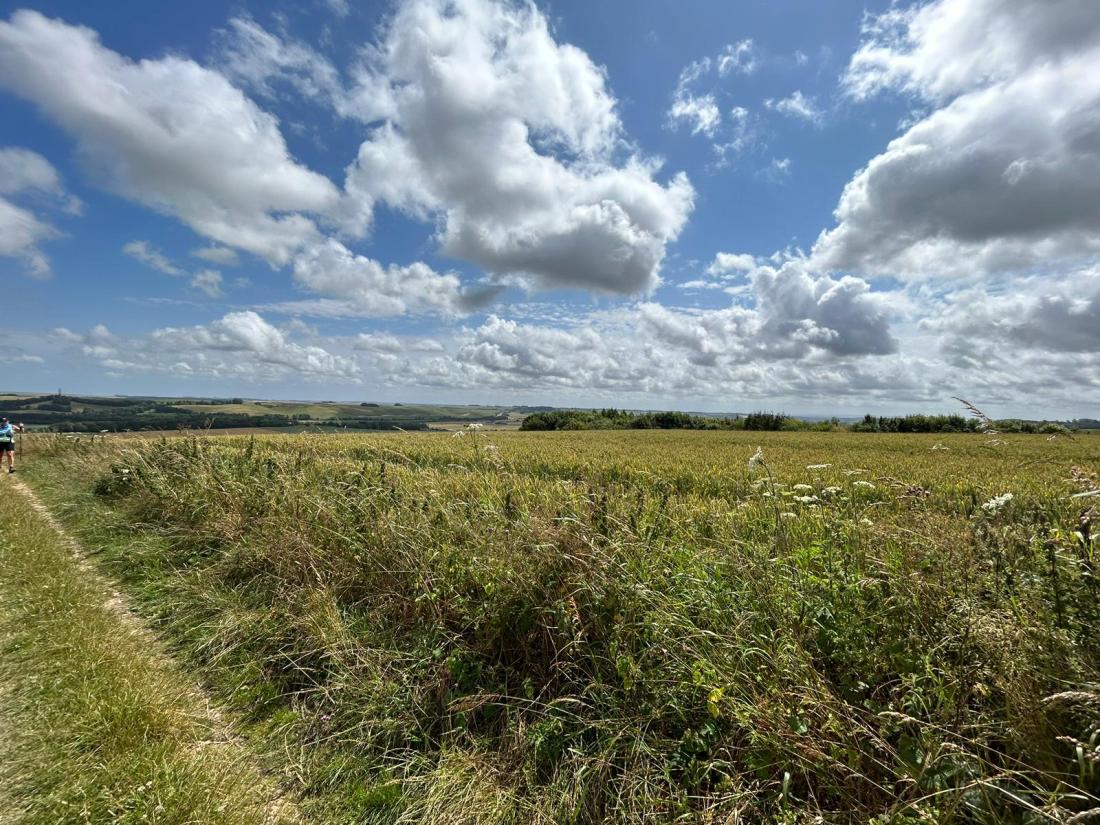
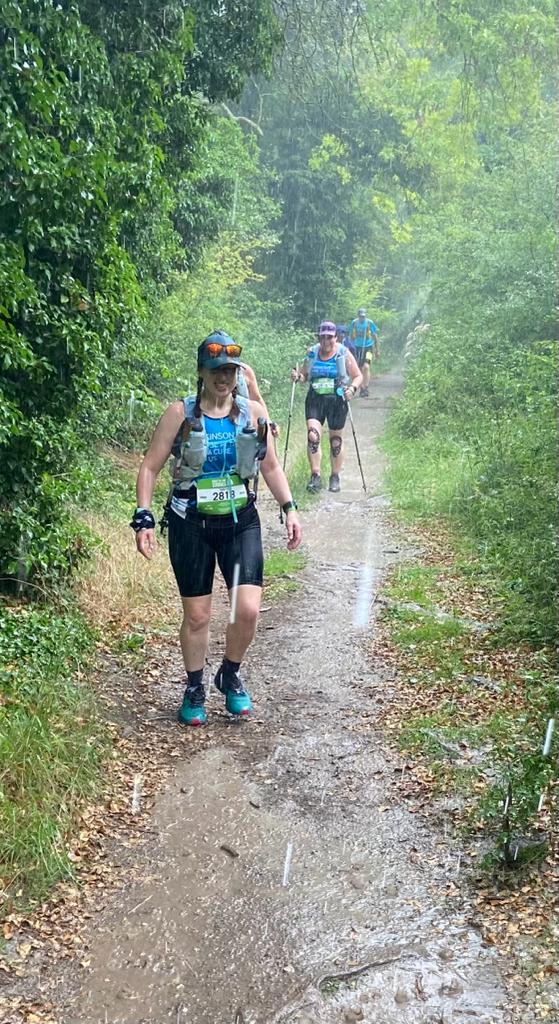
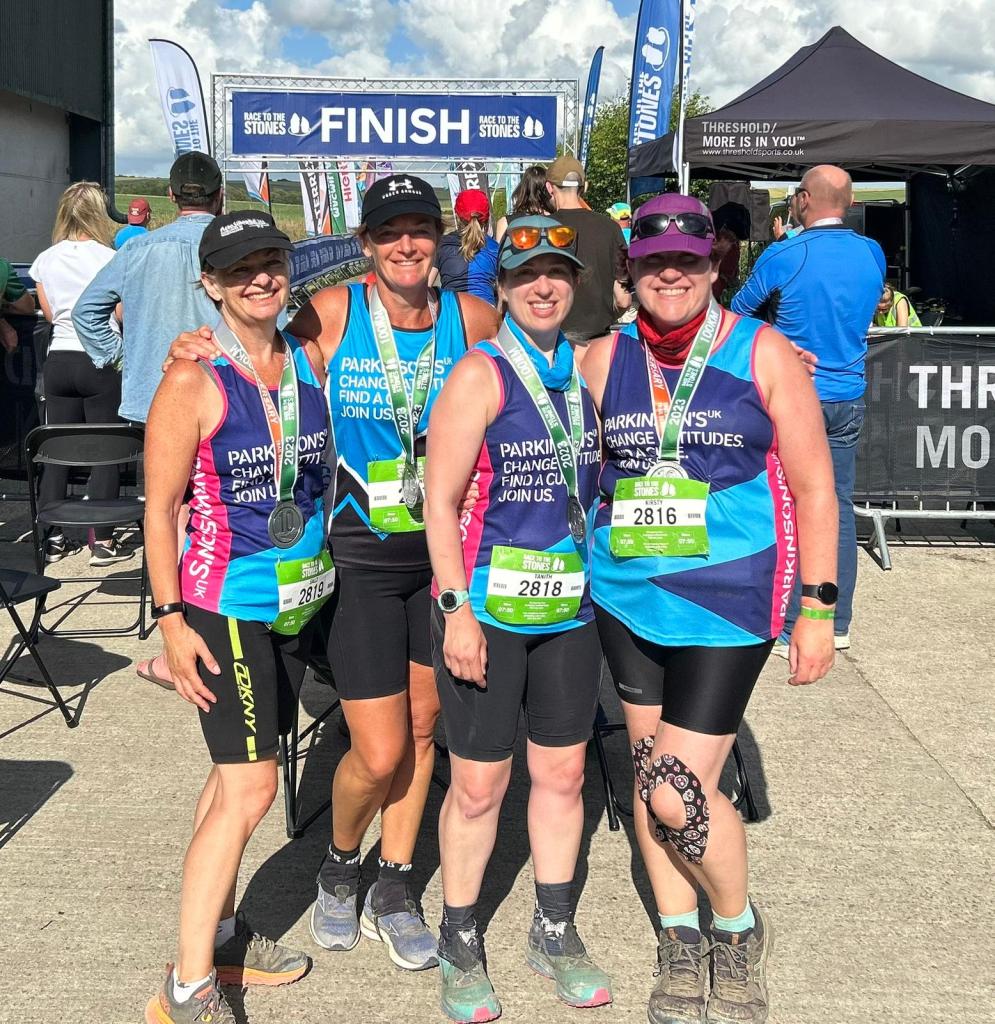
Or, things we know now that we didn’t know last week, by Gwrachod Ar Daith (witches on tour). Faithful readers will know that earlier this year we all signed up to do an ultramarathon to raise money for Parkinsons UK. The event was Race to the Stones, 100km along the Ridgeway from Lewknor in Oxfordshire to Avebury in Wiltshire.
We all finished it – not together, but I was only a few minutes behind the others – and over breakfast this morning we put together this handy guide for anyone else signing up to an event like this.
Before the event
Do the training.
No, really. Do all the training, no matter how often you run/do classes/other things. DO THE TRAINING.
Test your shoes and socks. Find what works for you. Your feet will thank you.
Train in the kit you’re wearing on the day. Test your fuelling. Race Day is not the day to experiment.
Three days to go:
No, you’re not coming down with Covid/flu/Bubonic Plague/the screaming lurgy. This is pre-race hypochondria.
Pack early so you can repack at least five times in consultation with your race buddies
A whole bag for your snacks is perfectly reasonable.
Carb load. Pasta or rice every day for a week? FINE.
You will question your life choices. A lot.
The day before:
Eat well. Hydrate. This is not the time for an Indian takeaway and a few pints of Cobra.
Get an early night, because you’re going to be awake very early.
Not all glamping sites are created equal. When they say ‘cooking facilities in each tent’ ask for details, because you don’t want to be messing with a fire pit at 5am. Also ask if ‘complete luxury’ includes bedding. Thank heavens we had our sleeping bags and pillows for the following night.
On the day:
Have that last wee. You won’t regret it.
Start with your team even if you know you won’t finish with them. Have a plan, find your pace and don’t feel you have to keep up. Enjoy it!
Even if you haven’t had a single blister in training you’ll get one on the day.
Use the walking poles and you won’t get sausage fingers.
Small children proffering Haribo are angels in disguise.
Weather happens. Slather on the suncream and bug spray, have the waterproof.
Talk to people. I had some great conversations, and it takes your mind off the distance.
Check in with people, say hi, make sure they’re ‘re ok. It’s an ultra and it’s hard mentally as well as physically.
Use all the pitstops, especially if there are piglets.
Eat ALL the snacks. Fill your bottles. See the medics if you need to but don’t sit down too long.
At some point everyone and (almost) everything will smell better than you.
Look up sometimes and see the scenery!
Just make it to the next stop: bite sized chunks!
Basecamp:
Shower, eat, sleep. Do not be tempted to party into the night, there’s another 50k tomorrow.
Earplugs are your friend. We used Loop ones. .
Eat breakfast.
Rehydrate. Keep warm.
Post-race:
Book a hotel.
Don’t sign up to next year on that wave of post-event euphoria.
Be really bloody proud of what you’ve achieved.
Eat ALL THE FOOD.
And now I need some food!
Kirsty x
What I’ve been reading:
Alexandria/Nemesis – Lindsey Davies
Amongst Our Weapons/Rivers of London – Ben Aaronovitch (Audible)